
How do I figure out which prompts my buyers are asking AI assistants?
Short answer
Build the list from things you already own instead of guessing. Your Search Console terms, sales calls, support tickets and lost-deal notes hold the questions buyers ask. The only work is turning keyword shorthand into the full questions people actually type. Then run each one and keep the ones where assistants give a real answer and name products.
Take the questions from four places you already have
Lists written in a meeting read like they were written in a meeting. They are short, they use your market's name for things, and they miss the detail real questions carry.
Real questions are longer and messier. They mention a job, a limit, a budget or a tool the person already uses, because someone typing them is describing their situation rather than searching for a term.
Work through these four in order. Each takes under an hour.
- Search Console terms. Export 12 months, drop your brand name, keep the top 100 by impressions. These are proven questions written in shorthand.
- Sales calls. Take your last 20 deals and pull every question asked out loud. This is where the job titles and limits live.
- Support and trial tickets. Filter to the trial period. These are the practical worries people check before committing.
- Lost-deal notes. The comparison questions you lost on are the ones where a rival is being recommended right now.
Tidy them into single wordings and count how many of the four sources each appeared in. Anything in two or more goes to the top.
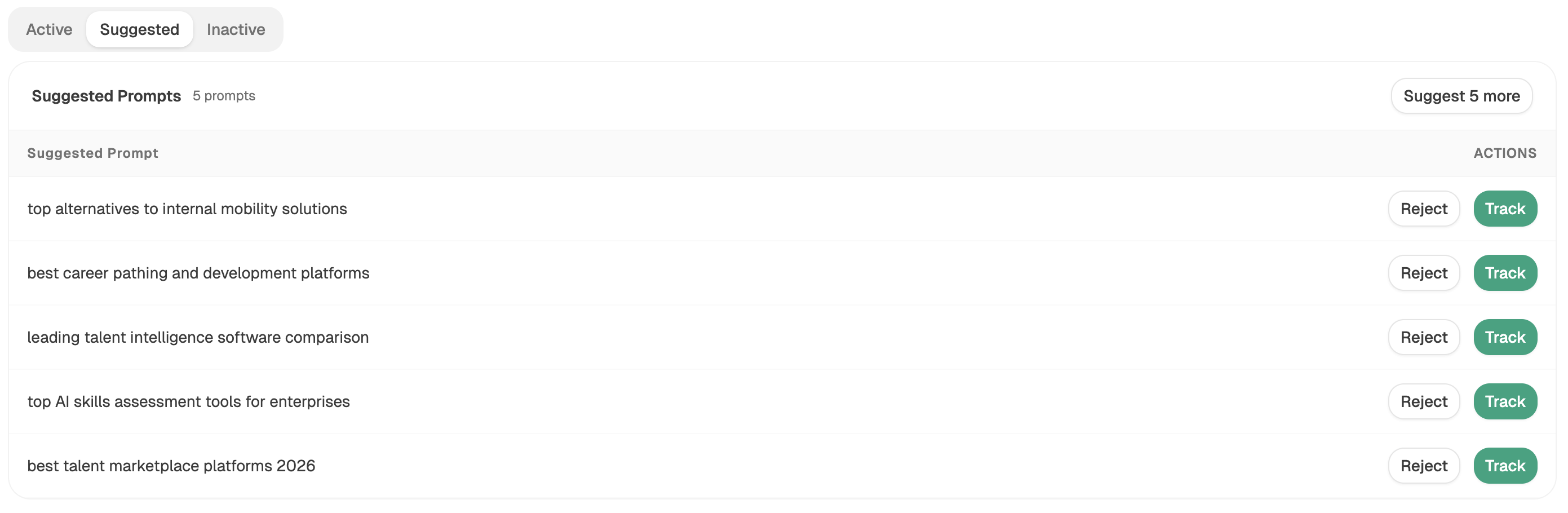 Once a question is tracked it carries its own history, so answers can be compared over time instead of checked once.
Turn shorthand into a real question
This is the step that decides whether the list is any good. A search term is a fragment. A question has a situation attached.
| What Search Console shows | What a buyer actually types |
|---|---|
| "attribution software" | "What attribution tool works for a B2B company with a six month sales cycle?" |
| "hubspot gsc integration" | "How do I get Search Console data into HubSpot without an engineer?" |
| "[competitor] alternative" | "Cheaper alternative to [competitor] for a three person marketing team" |
| "content audit template" | "How should a small SaaS team run a content audit with limited time?" |
Add exactly one detail from your buyer research. One is deliberate. Our research found that short questions carrying three or more pieces of detail got brands named in 81.0% of answers, against 41.5% for questions with none, though those two bands rest on 10 and 6 prompts so read it as a direction rather than a rate. Detail helps, and stacking four invented limits creates a question nobody types.
Keep the detail honest and the list stays true to life, which is the difference explained in what's the difference between a real tracked prompt and a synthetic one.
See what question length does to your numbers
Length is not a free choice, and it is worth knowing the shape before you finish the list. In our own state of AI search research, brands got named at very different rates depending on how long the question was.
| Question length | Brand named | Sources used |
|---|---|---|
| 1 to 5 words | 34.2% | 3.11 |
| 6 to 8 words | 61.6% | 5.21 |
| 9 to 12 words | 51.7% | 4.67 |
| 13 to 20 words | 19.6% | 4.93 |
| 21 to 35 words | 10.6% | 4.33 |
| 36 or more words | 11.3% | 3.70 |
The high point is 6 to 8 words and the low point is 21 to 35. Notice that the number of sources barely moves while brand mentions collapse. Long questions still pull plenty of sources, they just stop naming brands.
Treat this as a rule of thumb rather than a law. The 21 to 35 band holds 131 prompts, but the 1 to 5 and 36-plus bands rest on 6 and 7 prompts each. And once we adjust for everything else, doubling a prompt's word count moves mention probability by -4.3 points with a confidence interval running from -22.1 to +13.5, which crosses zero. The raw pattern is real in our sample. The causal claim is not one we can make.
So a list full of short category questions gives you a flattering number, and a list full of long situational ones gives you a harsh one. Neither is wrong. You just have to keep the mix steady, or your trend line is measuring your own editing.
Run them before you commit to watching them
Run every question once across ChatGPT, Perplexity and Google AI Mode, then keep only the ones that pass three checks.
- The assistant gives a real answer rather than asking what you mean.
- The answer names products or a type of product, so you could appear.
- It is a question a buyer would ask, not one only a competitor would.
Expect to throw away a third. That is the process working. Google's AI features documentation is worth reading alongside this, since being eligible follows ordinary indexing rather than any submission, so a question you cannot appear on is usually a content problem.
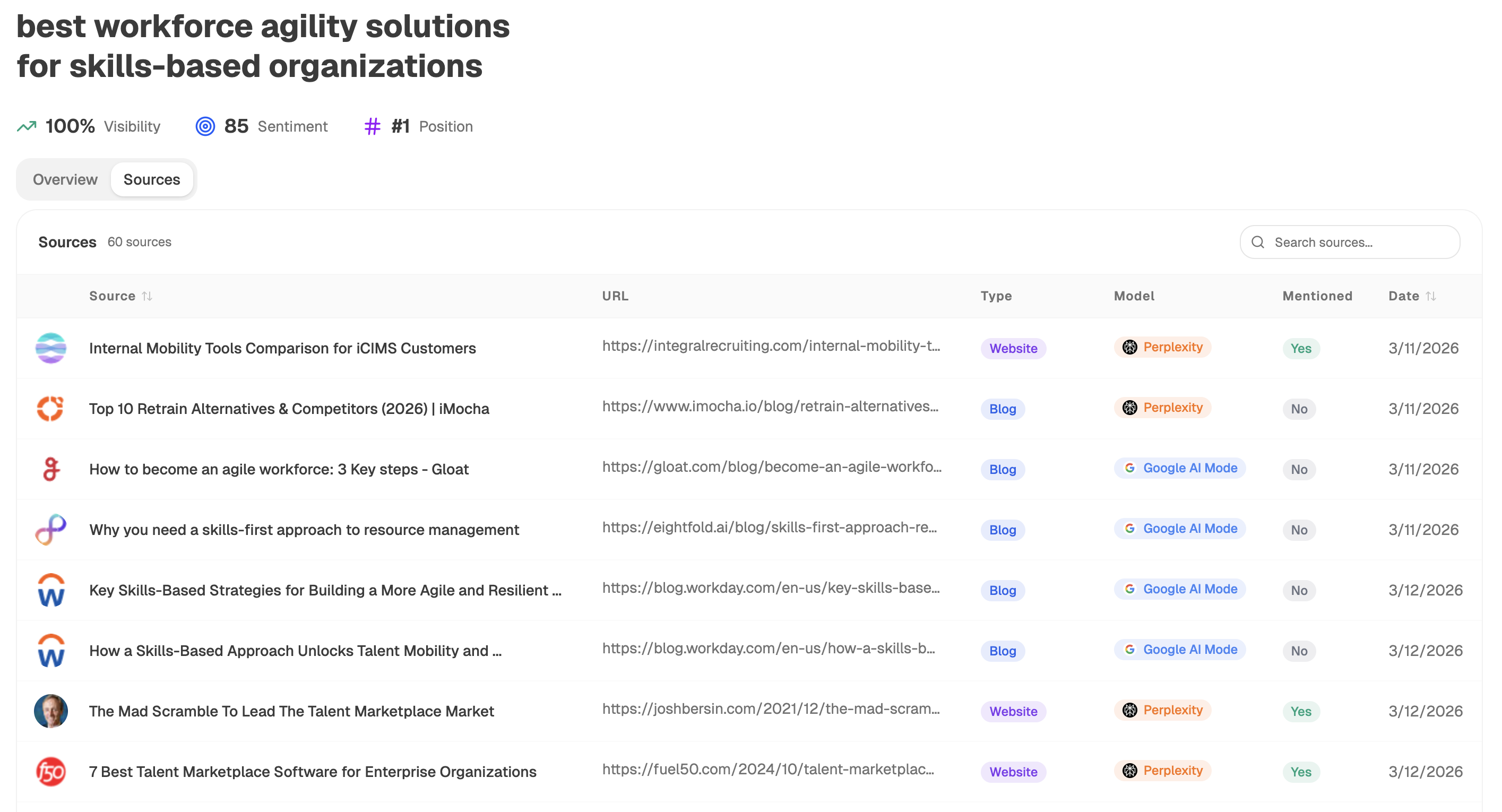 Each question holds its answers per provider, so validating the list is reading rather than guessing.
Build the whole thing in Analyze AI
Start (manual, your questions as a file-csv plus a vault badge for BUYER_PAIN_POINTS) → GSC Top Keywords for Site to attach real impressions → Transcribe Audio on any calls you have not mined → Inject Brand Context pulling your buyer pain points so the rewriting step uses your language → Prompt LLM turning each term into a full question with one detail → Prompt Responses executing every candidate live and returning whether the answer was real and who was named → Conditional throwing out anything that failed the three checks → prompt-cluster-brief recipe grouping what survives → Export CSV.
Inject Brand Context is doing more work here than its place in the chain suggests. Rewriting is where generic wording sneaks back in, and feeding your documented buyer pains into the step that does the rewriting keeps the output in your buyers' words instead of the model's. What survives becomes your tracked set and feeds visibility measurement from then on.
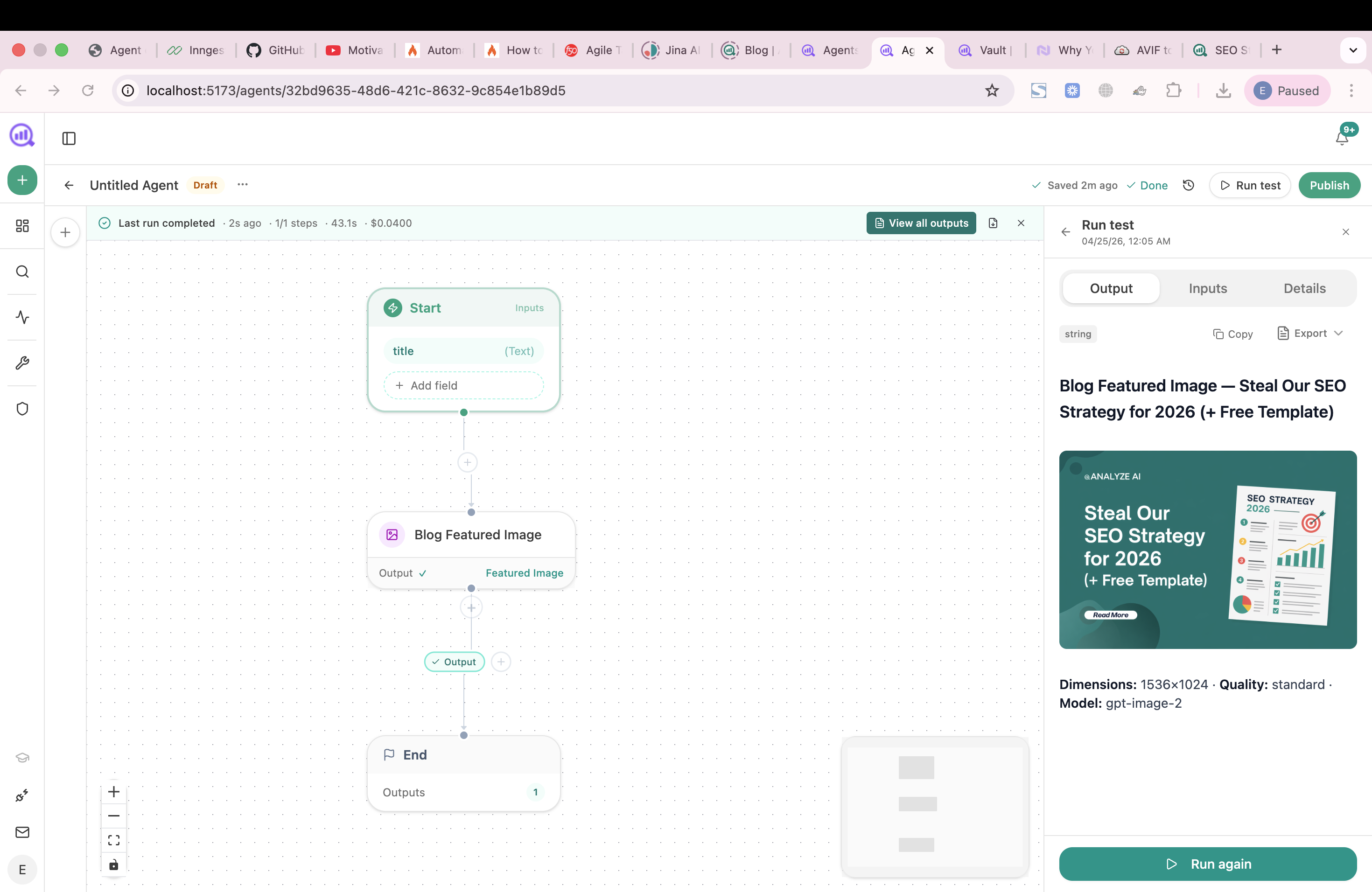 One workflow takes you from raw search terms to a validated, grouped question set.
FAQ
Related answers
- How do I find high-intent AI prompts when there's no search-volume data for prompts?
- How can sales-call language improve my topic research?
Build a question set from evidence, not guesses
Analyze AI turns your search terms, calls and lost deals into real buyer questions, runs them live, and tracks the ones that matter.
Start your free trial