
How do I find high-intent AI prompts when there's no search-volume data for prompts?
Short answer
Score the answer instead of the question. Ask each question three times per assistant. Then note four things. Do products get named? Does the answer recommend rather than explain? Are the sources comparison and review pages? Do the same brands keep coming back? Score three or four and it is a buying question.
Score four things you can actually see
There is no search volume for AI questions and there will not be one. What you can see is how the assistant chose to answer, and that choice tells you whether someone is shopping.
Ask an assistant what something means and you get an explanation with general sources. Ask it which tool to pick and you get named products and comparison pages. You do not need to know how many people asked to know which kind of question it is.
Ask each question three times per assistant, then give it a point for every one of these that holds in at least two of the three runs.
| What to look for | Why it matters |
|---|---|
| Products get named | Assistants only bring up products when the question calls for it |
| It recommends rather than explains | The answer is helping someone choose |
| Sources are comparisons and reviews | The assistant reached for buying content |
| The same brands keep appearing | The answer is steady enough to be worth fighting for |
Three or four points and the question belongs in your tracked set. Zero or one and it is a teaching topic, so treat it as a blog idea rather than something to measure. A two is worth asking again in a month, because unsettled questions move.
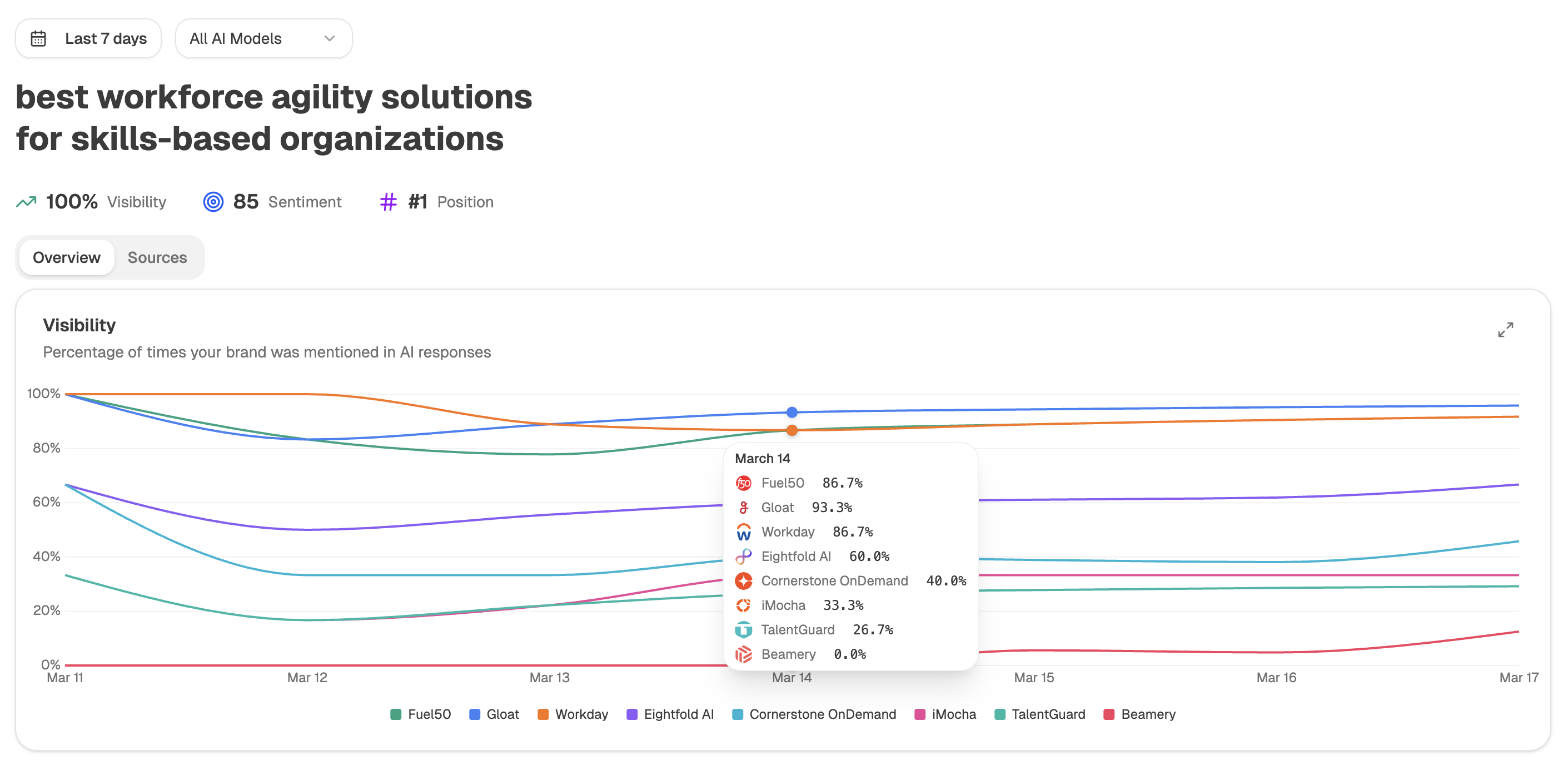 Tracked questions show the brands named and how often, which covers two of the four things you are scoring.
Watch the sources, because assistants disagree
The source check does work the others cannot, because it varies so much between assistants.
Our own state of AI search research covers 115,843 citations. Lists, comparisons and reviews made up 34.4% of what Perplexity cited and 33.1% of Google AI Mode. On ChatGPT they were only 13.9%, because company sites and product pages took 68.8%.
So a question can be a buying question on all three and still need completely different work on each. That is a planning fact, and it is why the score stays per assistant instead of being averaged.
Score one question end to end
Take "best attribution tool for B2B SaaS" and run it three times per assistant.
| What you checked | ChatGPT | Perplexity | Google AI Mode |
|---|---|---|---|
| Products named | 3 of 3 | 3 of 3 | 3 of 3 |
| Recommends | 3 of 3 | 3 of 3 | 1 of 3 |
| Comparison sources | No, product pages | Yes | Yes |
| Same brands each time | 4 brands steady | 5 brands steady | 3 brands steady |
| Score | 3 | 4 | 3 |
Track it. The useful part is the disagreement. ChatGPT is answering from product pages. The other two are answering from other people's comparisons. So winning this one question means two jobs, not one. Strengthen your own page, and earn a place in review content. An averaged score would have hidden that.
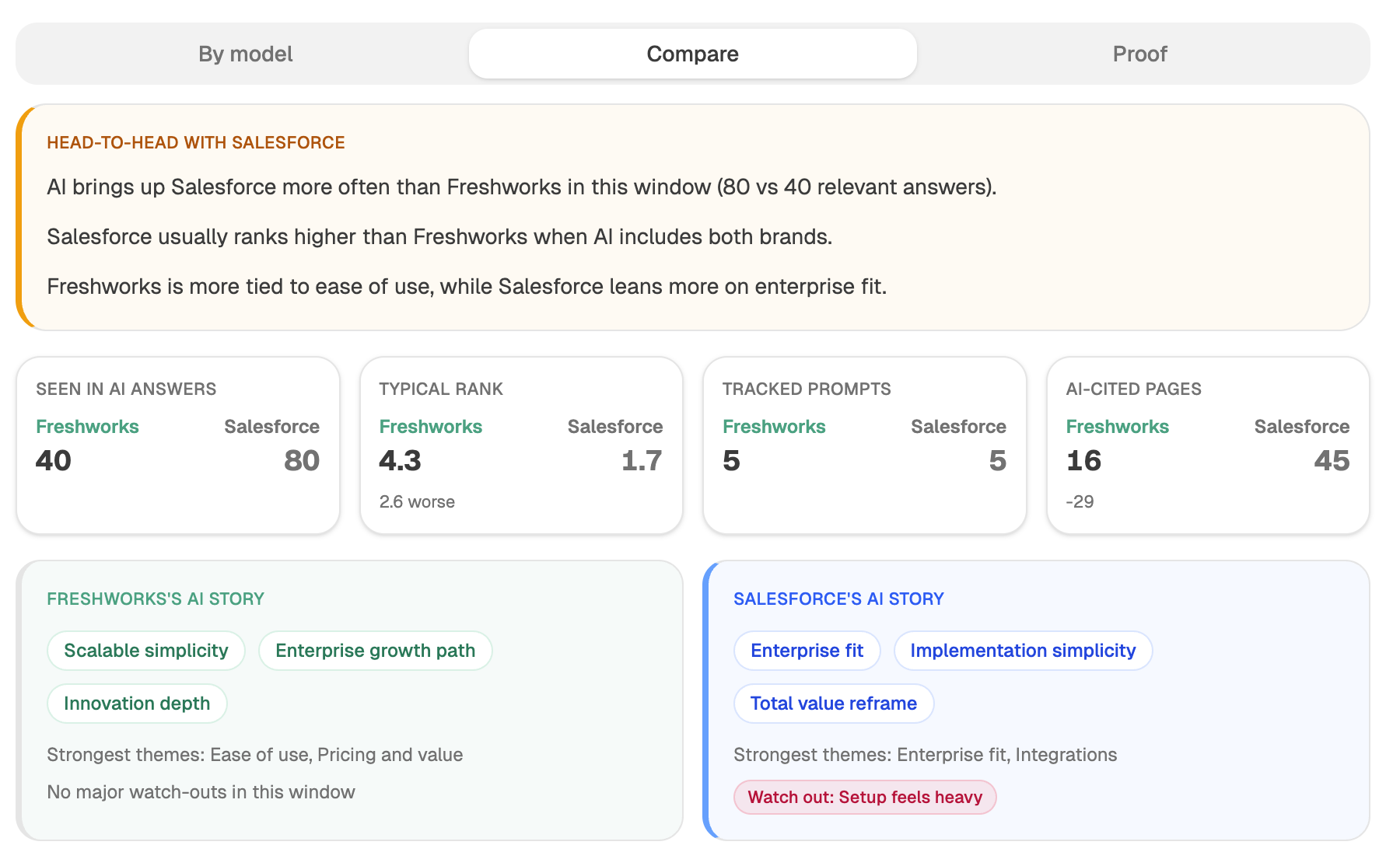 Keeping the read per assistant is what makes the disagreement visible, and the disagreement is usually the actionable part.
Use repeat runs to tell steady from noisy
The fourth check earns its place. Our research found that once a brand had been mentioned, the next check mentioned it again 83.2% of the time on ChatGPT, 84.2% on Google AI Mode and 83.3% on Perplexity. After a miss, the next check mentioned the brand only 9.9%, 11.5% and 12.1% of the time, across more than 1,600 pairs of runs on each assistant.
Two things follow. Being present tends to stay present, so a question you win is worth real investment. And being absent tends to stay absent, so one missing answer is not something to wait out.
This is also why one run proves nothing. Researchers make the same point, arguing visibility should be read as a spread rather than a single snapshot. Three runs per assistant is the minimum that tells steady apart from lucky. How many times should I run a prompt before trusting the result covers where extra runs stop helping.
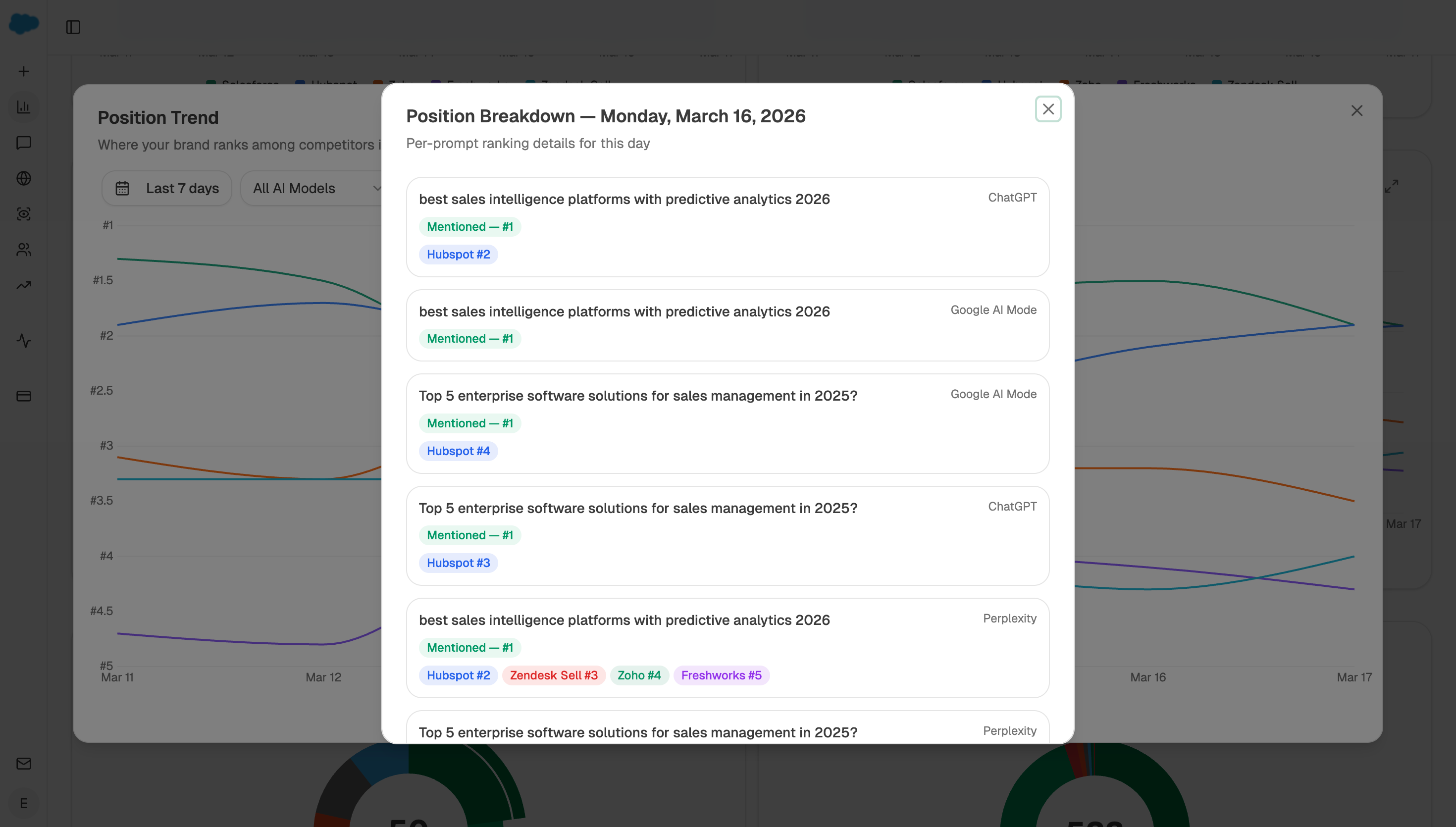 The visibility chart plots how often you are named across repeated runs, which is the view that separates a steady presence from a lucky answer.
Build the scoring run in Analyze AI
Start (manual, your candidate questions as a query-set) → Prompt Responses executing each one three times per assistant and returning the answers and the brands named → Citation Share sorting the cited pages so you can score the source check → Prompt LLM giving each question its four-point score per assistant → unmentioned-prompts recipe pulling out the buying questions where you never appear → Get Perception Quadrant placing you against rivals on what survives → Get Visibility Events for month-to-month movement once you start tracking → Conditional promoting only questions scoring three or more → Export CSV.
Everything downstream depends on the Conditional promotion gate. Without it every candidate gets tracked. Your set fills with teaching questions no product ever appears on. Then your visibility score drops for reasons that have nothing to do with your content. Gating on the score keeps the number honest, which is the same problem described in why did my AI-visibility score change after I added new prompts.
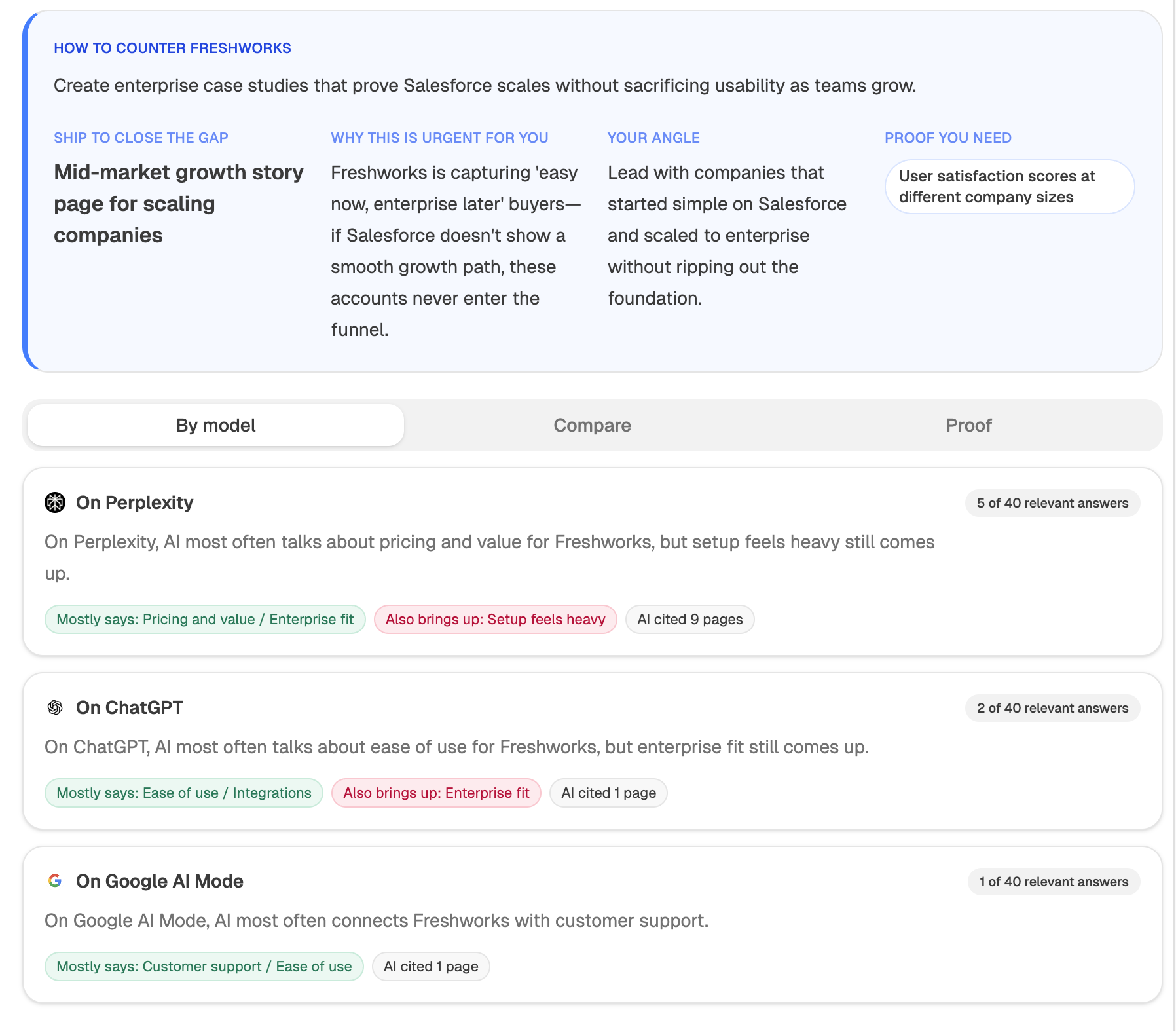 Perception separates being named from being recommended, which is the difference between appearing on a question and winning it.
FAQ
Related answers
- How do I figure out which prompts my buyers are asking AI assistants?
- Are zero-search-volume topics worth writing about?
Score questions on what the answer shows you
Analyze AI runs your candidates across assistants, scores them on products named, sources used and steadiness, and tracks only the buying ones.
Start your free trial