



Summarize this blog post with:


In this article, you’ll see exactly why we built Analyze AI, what every other AI visibility platform we tested gets wrong about this category, and how we approach the work differently.
The short version is this. Almost every tool sold today as an “AI visibility platform” is sold like a dashboard. You pay for the dashboard. You stare at the dashboard. Then you go figure out what to do about it on your own, with the SEO, content, PR, and ops teams you already had.
That works fine if you have a corporate strategy team and an internal analyst. It does not work for the people we built this for. CMOs running lean. Agencies running ten clients. Content directors whose pipeline is already overloaded. SEO leads who already track ten things and are now told to track AI mentions too.
We spent 90 days running side-by-side tests of Profound, AthenaHQ, Otterly, Peec AI, Semrush AI Toolkit, and Ahrefs Brand Radar against Analyze AI. We rebuilt the same workflows in each one. We watched how much manual stitching each tool forced on the marketing org that owned it. We also watched Profound raise a $96M Series C at a $1B valuation in February, with the rest of the category racing to follow it upmarket.
We came back with four gaps that no amount of funding has fixed. Below is what they are, why they matter, and what we do instead.
Table of Contents
The four gaps every AI visibility tool we tested left open
We are not going to pretend the rest of this category is bad. Profound’s tracker is solid. AthenaHQ has a clean dashboard. Otterly was early. Peec AI is cheap. Brand Radar and Semrush AI Toolkit ship with the suites you already pay for.
The problem is not what they do. It is what they aren’t doing.
Gap 1: Tracking is sold as the product. Acting on it is your problem.
Every tool in this category opens the same way. You add prompts. You add competitors. The tool runs the prompts against ChatGPT, Perplexity, Gemini, Claude, and Google AI Overviews on a schedule. You get a visibility score, a sentiment number, a rank, and a list of citations.
That is where most platforms end the job.
You see that Perplexity stopped citing your pricing page. The tool does not tell you which page to rewrite, what claim is missing, or what proof to add. You see that a competitor jumped six points in share of voice. The tool does not tell you what they shipped, what new pages are pulling the citations, or what to publish next week to counter it.
The work after the dashboard is the work that moves the number. The dashboard is the easy part. The rest, every other tool hands to you.
Gap 2: AI search is treated as its own universe, separate from the SEO and analytics work you already do.
This one is harder to see until you live in two tabs for a quarter.
Open a typical AI visibility platform and you see prompts, models, citations. Open GA4 and you see sessions, conversions, landing pages. Open GSC and you see queries, impressions, clicks. Open your content tool and you see briefs and drafts. None of it is wired together.
We do not believe AI search is a new religion. We laid this out in the Analyze AI manifesto. Buyers still need to find you. Quality content still wins. The way they search changed. The reason they choose you did not. That means AI search is not a new universe. It is another organic channel, sitting next to Google, next to your blog, next to your PR mentions.
Every tool in this category that treats AI search as a separate world forces the marketing org to be the integration layer. You export visibility CSVs. You paste them into a sheet. You match prompts to GSC queries by hand. You guess which AI traffic landed on which page because GA4 attributes a lot of it as direct. That work eats the value of the dashboard.
Gap 3: There is no execution layer. The platform surfaces the insight and walks away.
This is the gap we care about most.
Profound has Agents now. AthenaHQ has an Action Center. Otterly has a GEO Audit module. These are all moves in the right direction. But they are templated, narrow, and confined to AI content workflows. None of them is a substrate. None lets you assemble a complete operations layer on top of your AI search, SEO, content, and CRM data in one place.
A real execution layer looks like this. A schedule that runs Monday at 7am, pulls your visibility deltas, cross-references your GSC top pages, checks which competitors gained citations, drafts a counter-content brief, and lands the brief in Notion before your first meeting. A webhook that fires when a deal closes in HubSpot, pulls the deal notes, and drafts a case study. A trigger that fires when a journalist mentions you in a negative context, researches the article, finds the author’s email, and drafts three response options in your tone of voice.
Most “agents” in this category are pre-built content templates. That is not the same thing.
Gap 4: Pricing punishes the question, not the value.
Look at where the category actually sits in 2026.
|
Tool |
Entry price |
What you actually get |
|---|---|---|
|
Otterly Standard |
$189/mo |
100 prompts, 4 engines. Gemini and Google AI Mode are paid add-ons. |
|
AthenaHQ Self-Serve |
$295/mo (annual) |
3,600 credits. Each AI response burns one credit. ACE Citation Engine is Enterprise-only. |
|
Scrunch AI |
$300/mo |
350 prompts. |
|
Profound Lite |
$499/mo |
Tracker plus limited Agents. Multi-account is not supported. |
|
Ahrefs Brand Radar |
$699/mo |
Bolted onto an Ahrefs plan you also pay for. |
|
Semrush AI Toolkit |
~$745/mo |
Bolted onto a Semrush plan you also pay for. |
Two patterns repeat. Either the pricing is credit-based, which means your invoice goes up the moment you increase monitoring cadence or test more prompts. Or the pricing is bundled inside a suite you were already paying for, which means you are paying twice for the SEO data the AI module was supposed to use.
You are also paying for a dashboard. The execution layer is sold separately, if it exists at all.
How Analyze AI closes each of these gaps
We did not build Analyze AI to be a better dashboard. We built it because the dashboard was the smallest part of the job.
Here is how we approach each gap.
Solution 1: Every visibility signal lands on something you can do this week
We track the same things every other tool tracks. Visibility, sentiment, rank, citations across ChatGPT, Google AI Mode, Perplexity, Claude, Gemini, Copilot, Grok, and DeepSeek. The difference is what happens after.
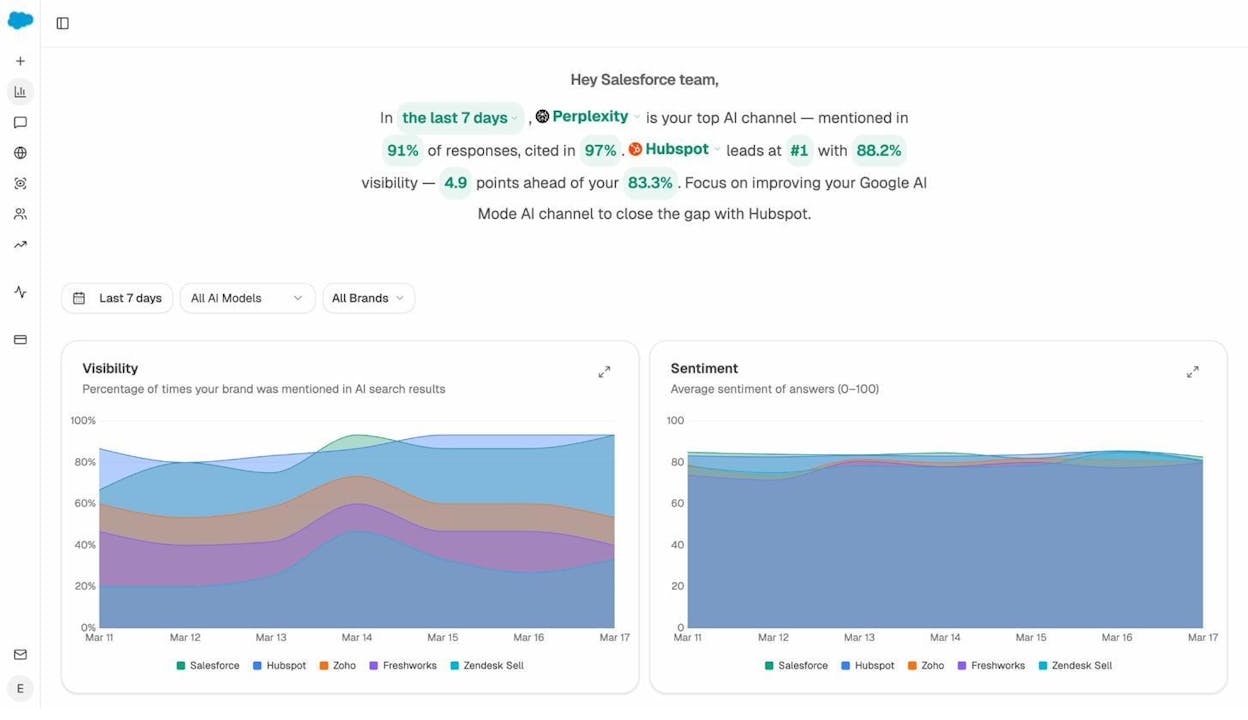
The overview opens with a one-sentence summary written for your brand. It tells you which engine is your strongest channel, which competitor leads, and what the gap is. You do not have to interpret the chart. The interpretation is the chart.
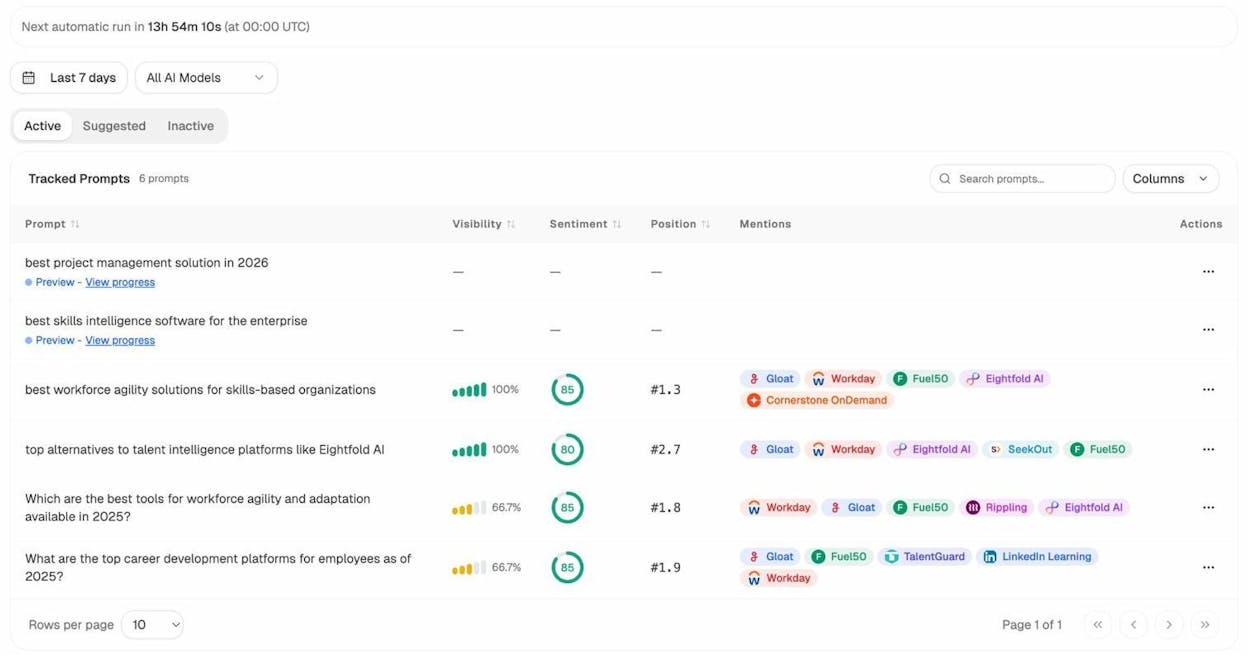
From there, your tracked prompts live in one table. Visibility, sentiment, position, the mentioned brands, and a click-through to the full AI response across each engine.
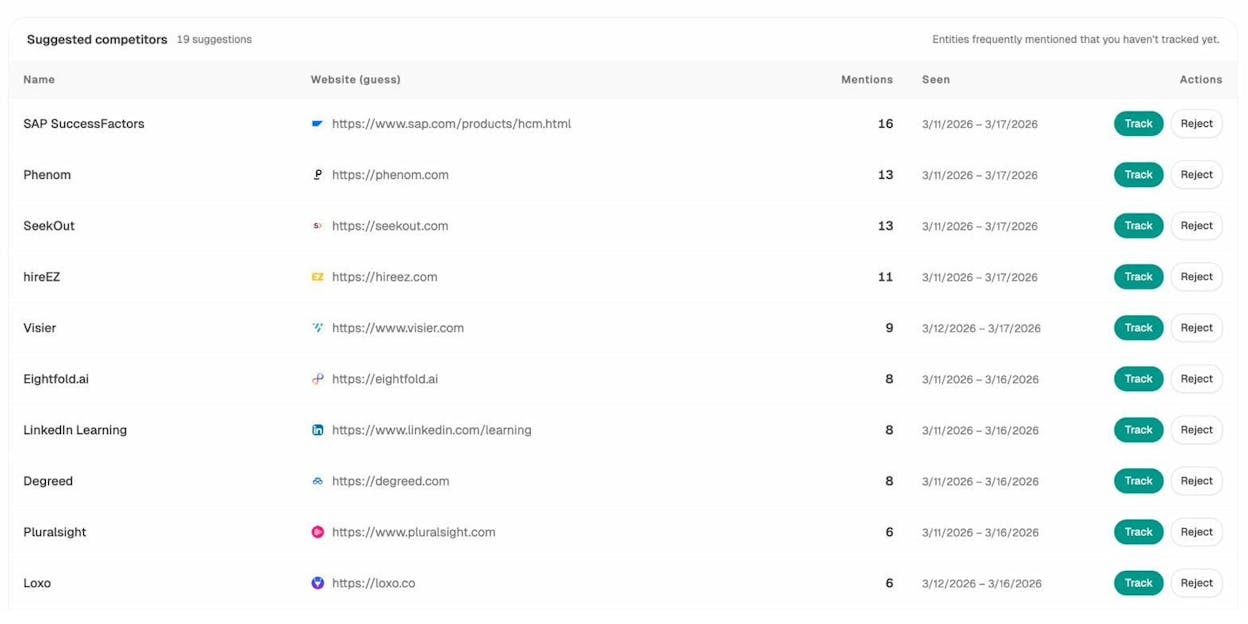
When competitors start showing up where you do not, the Competitor Intelligence dashboard names them, surfaces how often they appeared, and shows you the prompts where they win.
That data flows into the Perception Map, which positions every tracked brand on a presence-versus-narrative-strength quadrant. If your story is strong but you are not visible, you have a distribution problem. If you are visible but your story is weak, you have a content problem. The map names the problem instead of leaving it for you to diagnose.
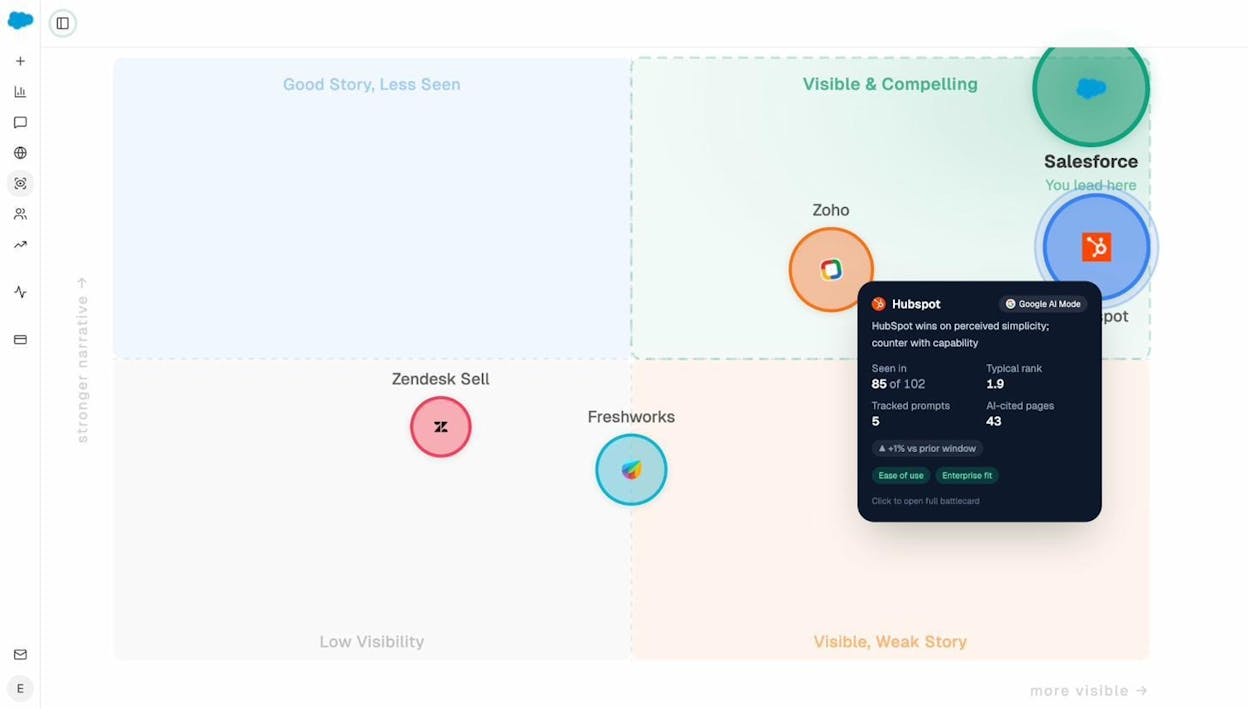
Hover any competitor and the AI Battlecard opens. Typical rank, AI-cited pages, the one-line angle they win on, and the counter you can ship.
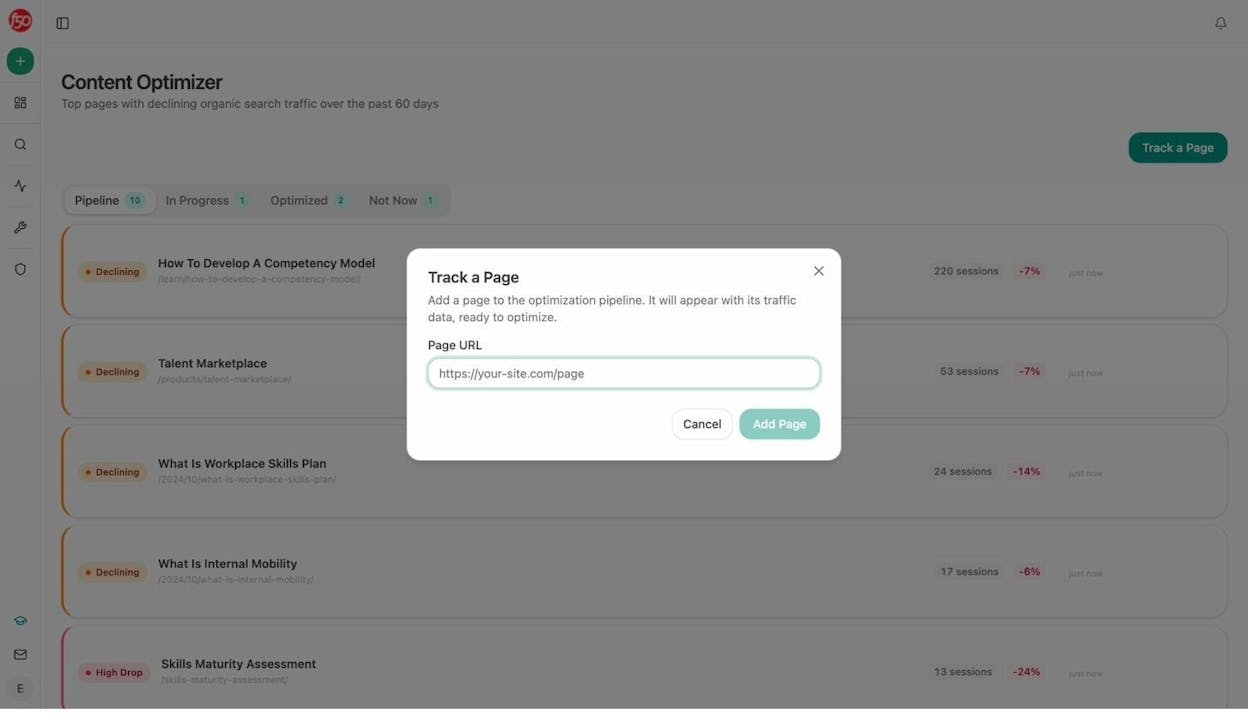
When a visibility drop becomes a content task, the AI Content Optimizer takes any URL and walks it through an audit, a brief, a rewrite, and a QA gate.
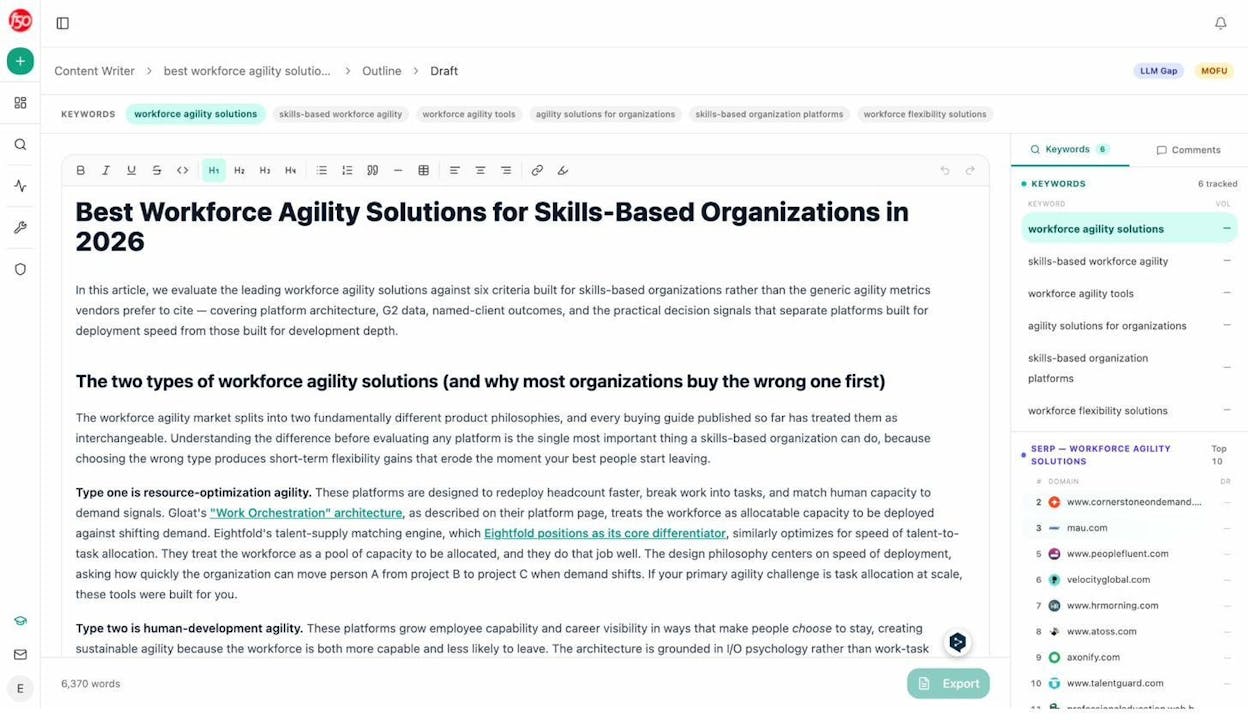
When you need a brand-new asset, the AI Content Writer does the research, builds an outline, and drafts the full piece against your brand voice, with the live SERP and AI gap markers visible in the side panel.
And every Friday, your team gets a Weekly Email Digest that ranks the highest-impact action of the week. Not a chart. A specific page to publish, refresh, or reclaim.
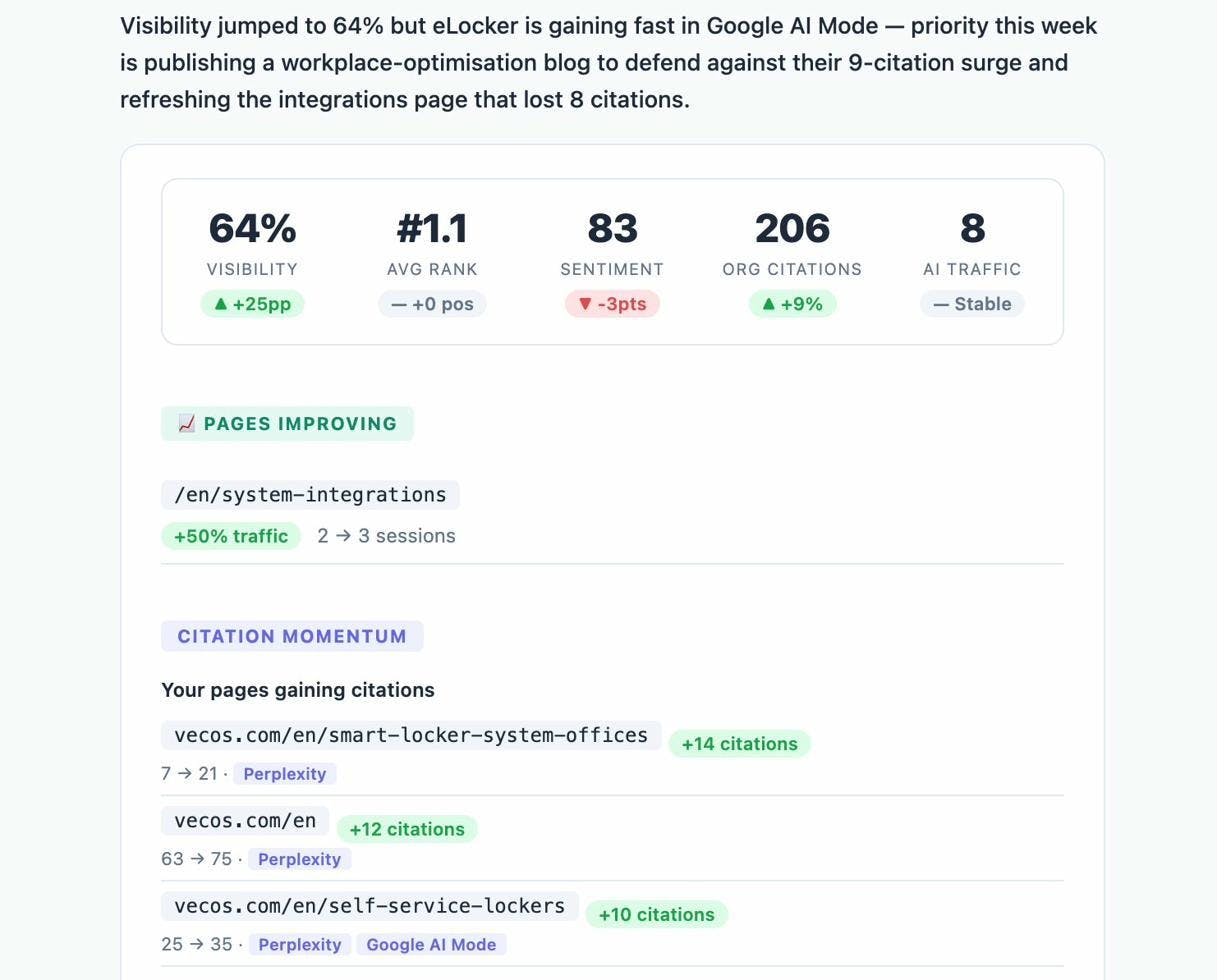
If you only read one section of this article, this is the one. Every other tool ends at “here is what you saw.” We end at “here is what to ship.”
Solution 2: AI search lives next to your SEO, GA4, GSC, and citation data, because it is the same channel
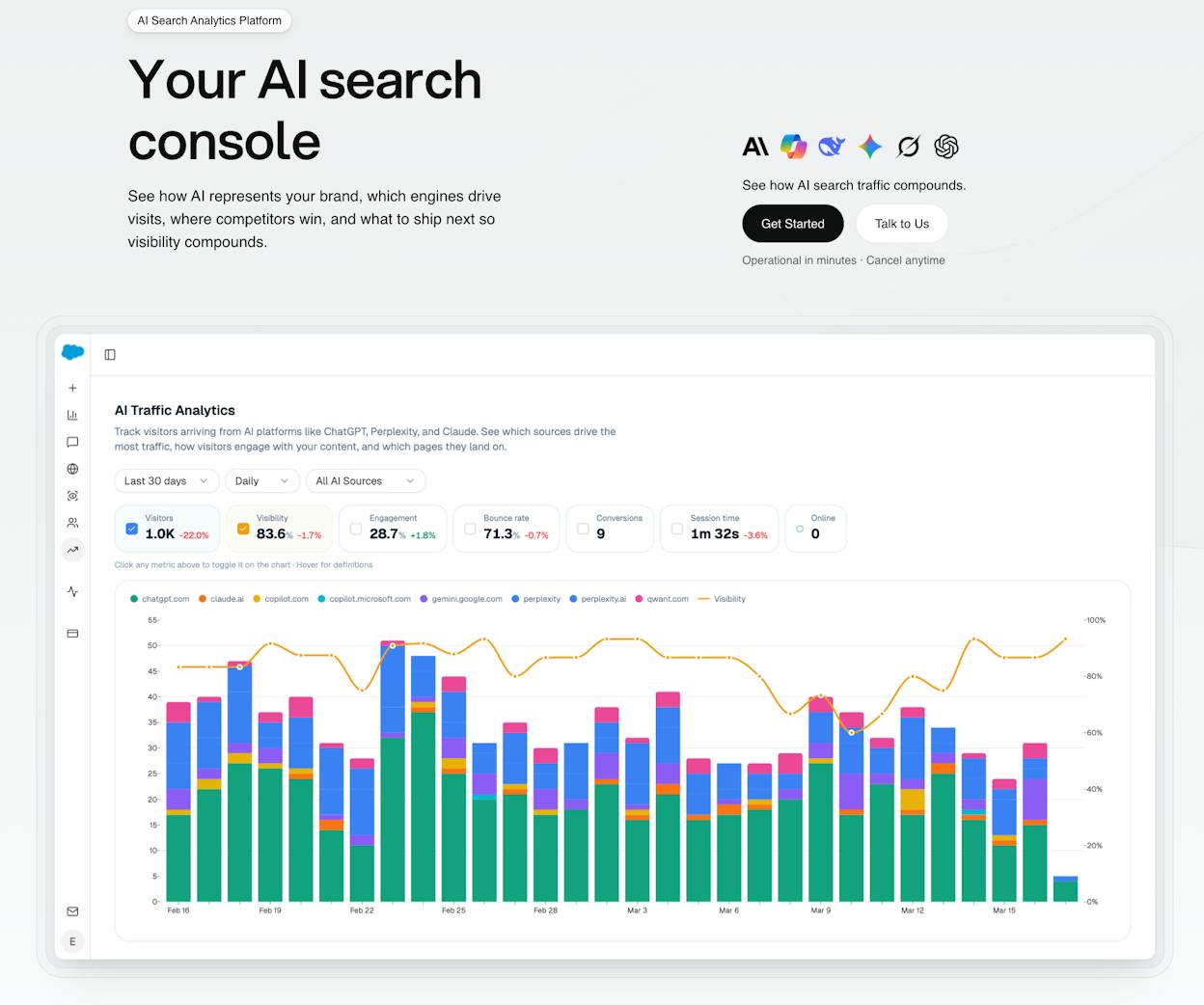
When you connect GA4 to Analyze AI, every visit from ChatGPT, Claude, Perplexity, Gemini, Copilot, and the rest lands in AI Traffic Analytics.
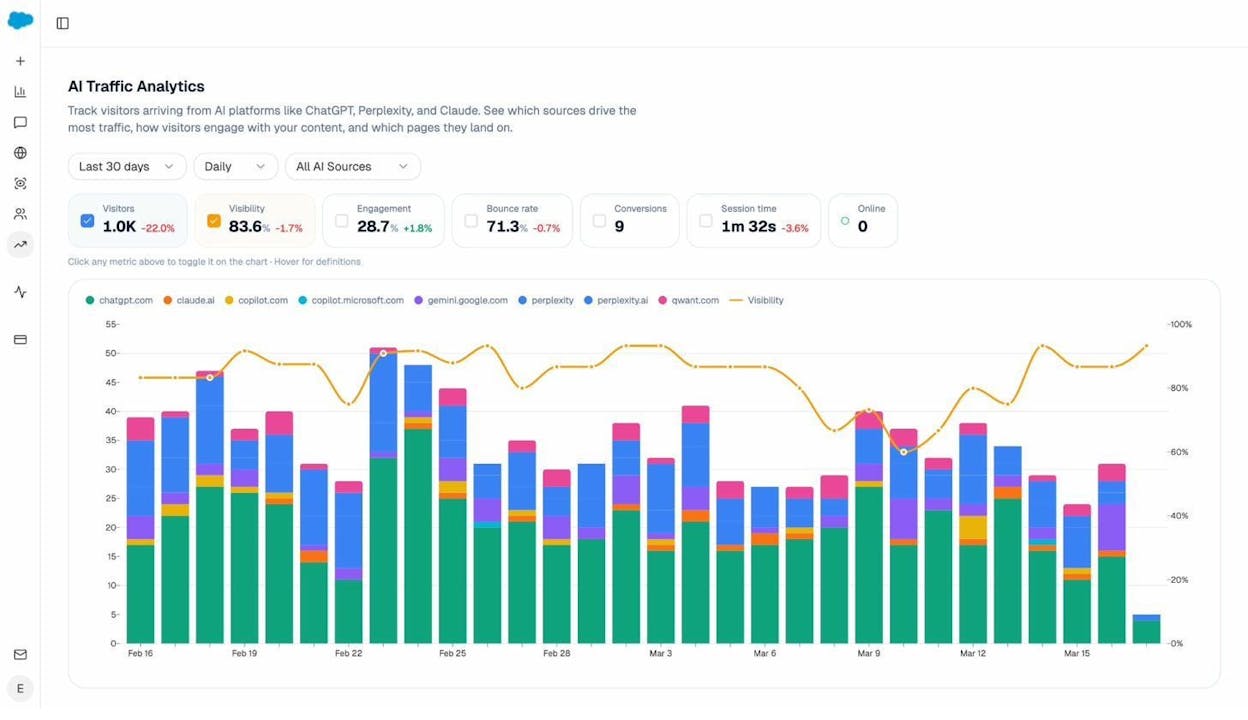
You see visitors, bounce, engagement, session time, and conversions per engine, per landing page, per day. The Recent AI Visitors table shows individual sessions. Country, device, source engine, time on page, exact URL.
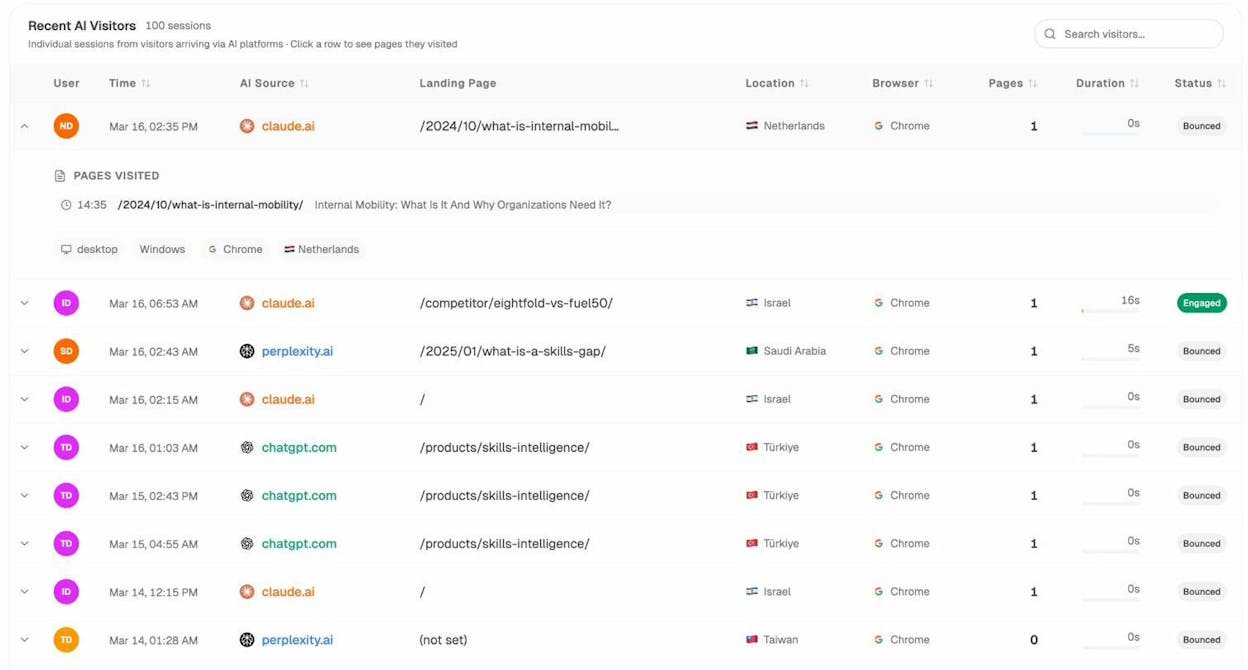
That is the part most “visibility” tools cannot show you. It connects mentions to sessions to revenue. Without that, you are optimizing in the dark.
Citations work the same way. The Sources dashboard shows every URL the AI engines cite when they answer questions in your category. Top domains. Content type breakdown. Filter by engine, by brand, by date.
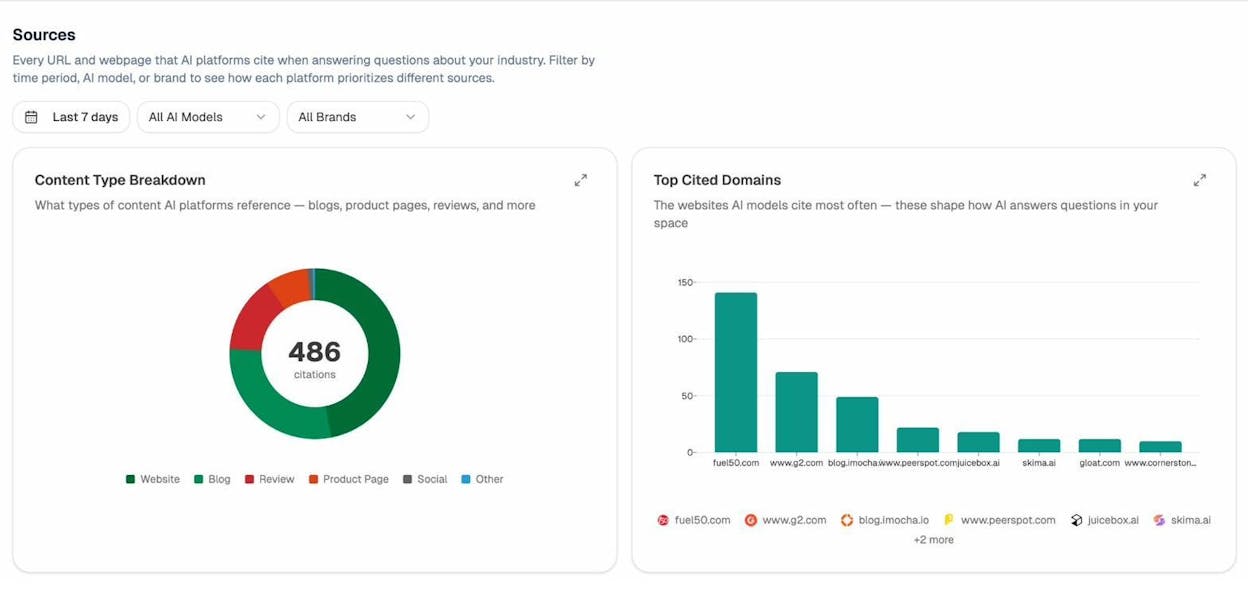
That gives you a working list of the eight to twelve domains that shape AI answers in your space. You stop guessing at link building. You start targeting the publications models already trust.
When you need to look up something one-off, like a new prompt you have not tracked yet, Ad Hoc Prompt Searches runs it against all engines on demand. No commitment. No setup.
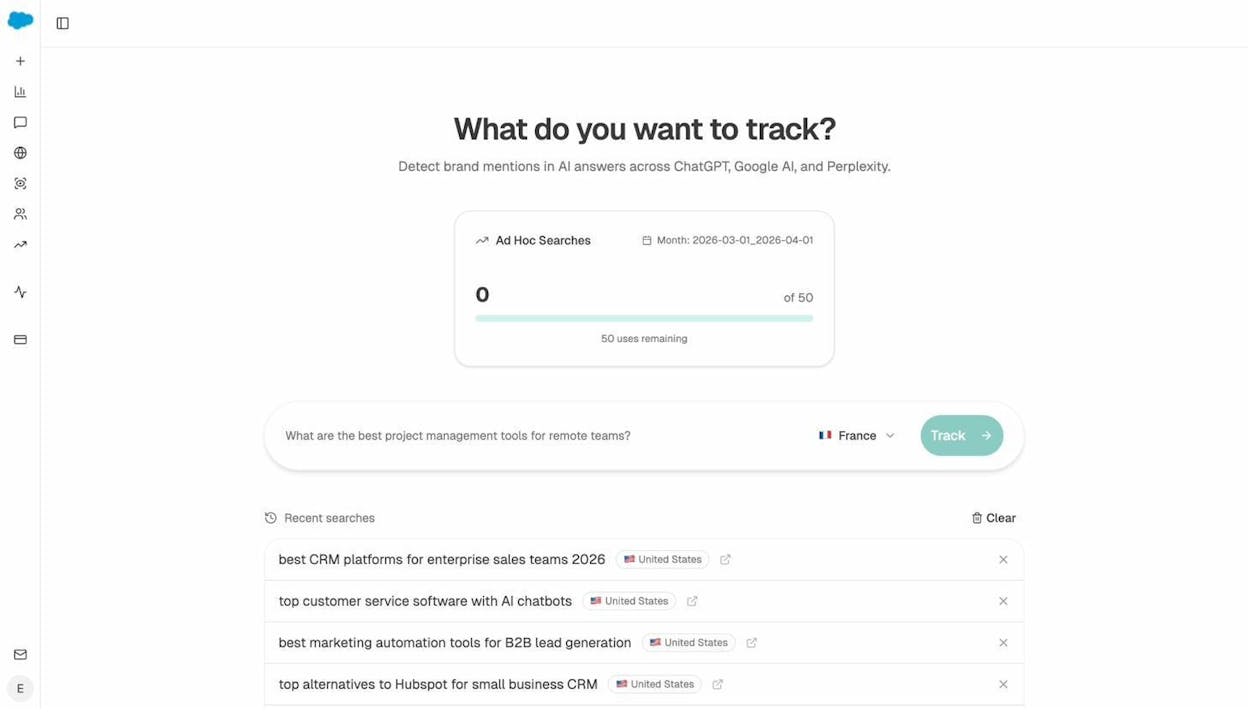
The point is unification. SEO data, AI search data, traffic, citations, content briefs, and prompt research live in one platform. You stop being the human integration layer.
And because we believe AI search is another organic channel, not a replacement, we ship the same free utilities you would already use for SEO work. A keyword generator, a keyword difficulty checker, a SERP checker, a website authority checker, a broken link checker, and a website traffic checker. They are free because the work of growing organic visibility, in Google and in AI, sits on top of the same primitives.
Solution 3: The Agent Builder is the execution layer the rest of the category is missing
This is the part we never undersell, because it is the part that ends the manual work.
The Agent Builder sits underneath Analyze AI as a programmable substrate. It ships with 180+ nodes, 34 pre-built data recipes, 13 input primitives, and 3 trigger modes.
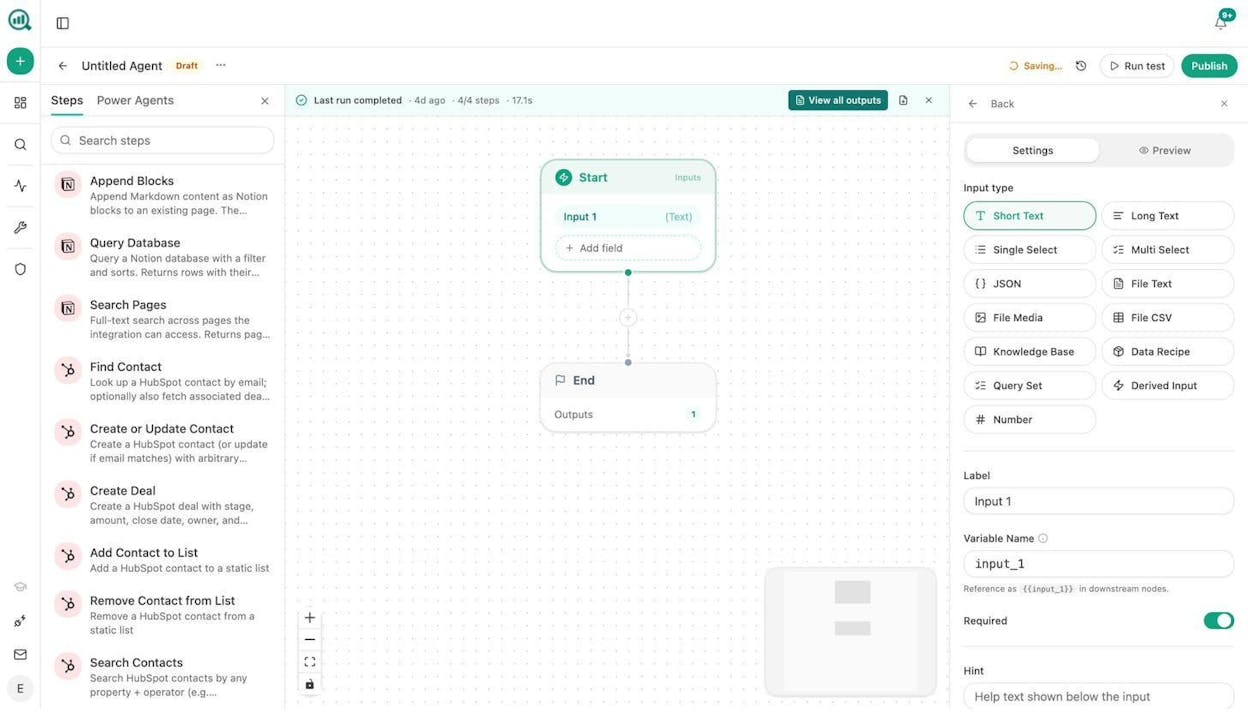
The triggers are manual, schedule, and webhook. A manual run is an on-demand specialist. A schedule is a virtual employee that runs every Monday at 7am, never forgets, never goes on vacation. A webhook is reactive. A deal closes in HubSpot, an email lands in Mailgun, a form submits in Tally, and the agent fires before a human knows it happened.
The 180+ nodes cover Claude, GPT, Gemini, Perplexity, Exa search, Parallel Deep Research, the full DataForSEO suite, Semrush data, Google Search Console, GA4, Hunter, Tomba, HubSpot, Notion, WordPress, Sanity, Contentful, Mailchimp, the Analyze AI native visibility nodes, the AEO Content Scorecard, image generators, and exports to CSV, DOCX, PDF, HTML, and Markdown. The data recipes pre-bake the queries most teams write five times a week. Share of voice. Visibility losers. Competitor gaps. Citation magnets. Declining pages. Funnel coverage. Stale content. Prompt cluster briefs.
What that means in practice is this. The work other tools surface and walk away from, Analyze AI ships as a working agent in minutes.
A few real examples we run for our own customers:
-
Monday board prep. A scheduled agent that pulls share of voice, AI traffic, new HubSpot deals, and competitor message shifts, asks Claude to write the executive summary in your brand voice, exports a DOCX, and emails it to leadership before your first standup. Replaces the four-hour analyst chase that no one has time for.
-
Content refresh fleet. A weekly agent that finds declining pages, scrapes each one, rewrites it for freshness and AEO, and updates the post in WordPress when the score crosses a threshold. The “quietly losing rankings” problem solves itself.
-
Daily visibility regression alert. An agent that runs every morning, finds prompts where your visibility dropped meaningfully, and posts to Slack with the source URLs and a counter-content brief.
-
Closed-won to case study draft. A webhook that fires when a HubSpot deal moves to won, researches the customer, pulls the deal notes, drafts the case study in your voice, and lands it in Notion for legal review.
-
Quote-on-demand. A Slack slash command that takes a topic, injects your brand voice rules, pulls recent news, and replies in the channel with three quote options. Useful when a journalist pings you on a Friday afternoon.
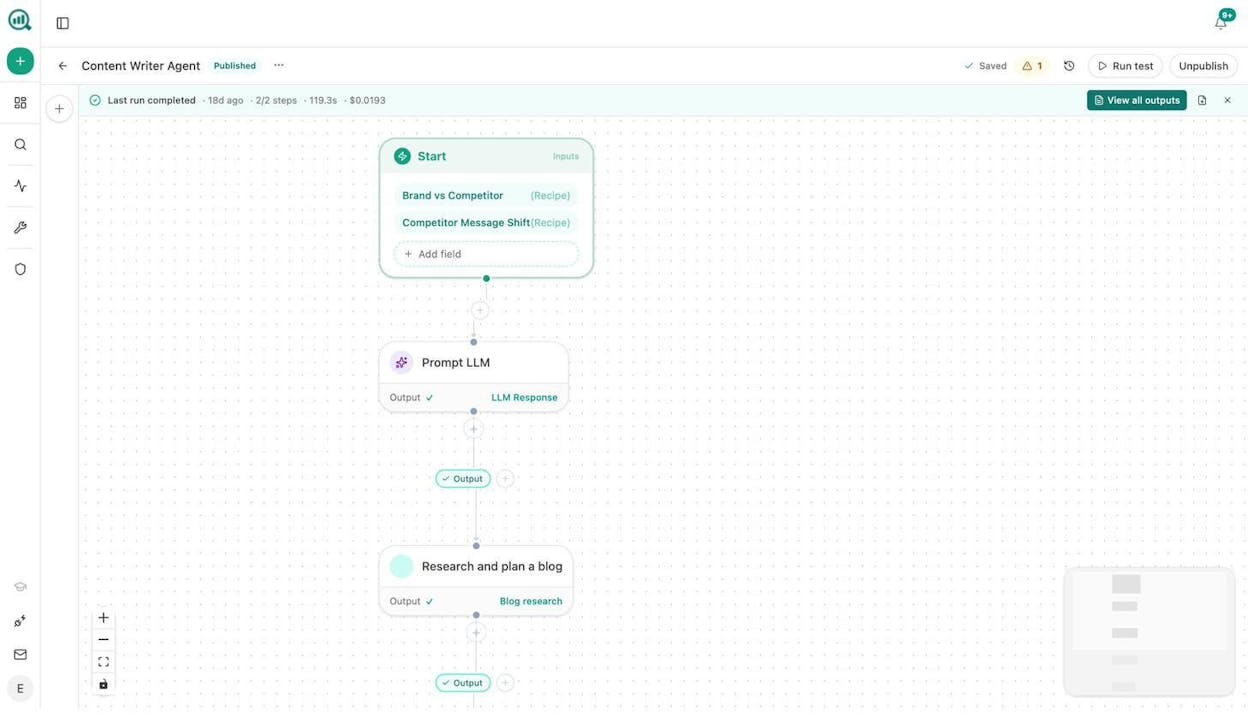
We covered the full inventory in the Agent Builder feature page. The point is not the node count. The point is that AI search visibility, content production, CRM hygiene, PR response, sales enrichment, and recurring reporting are all one trigger away. You stop running a “tracking workflow” and an “SEO workflow” and a “content workflow” in three different tools.
You run one platform that already has the data in the room.
Solution 4: Pricing that does not punish you for asking the question
The Analyze AI pricing page is flat and predictable. The Growth plan includes daily prompt tracking, ad hoc prompt searches, unlimited competitor tracking, AI traffic analytics with GA4, the Content Writer, the Content Optimizer, weekly recommendations, unlimited seats, and priority support. The Pro plan adds more engines, more prompts, more workflows. Custom plans unlock unlimited prompts and daily recommendations.
No credits. No “Gemini is a paid add-on.” No “the citation engine is Enterprise-only.” No suite tax.
The full comparison view of what you get at each tier sits in the comparison pages where you can match Analyze AI head-to-head against Profound, AthenaHQ, Peec AI, Semrush AI Toolkit, and Ahrefs Brand Radar.
What this looks like in your week
The four gaps and four solutions read like product positioning. The shift is more concrete than that.
If you are a CMO, you open Slack at 7am Monday and the board update is already in your inbox. Visibility, AI traffic, pipeline, what changed, what you are recommending. Not next week. This week.
If you are an agency lead, reporting day stops existing. The Monday client briefing pack runs once per client and lands in the right Slack channel with the right letterhead. The pitch deck for a new prospect takes thirty minutes instead of three days because the audit agent already pulled the domain overview, the competitor compare, the AI visibility check, and the keyword opportunity.
If you are a content director, the editorial calendar runs itself. Uncovered prompts get clustered into briefs. Briefs move to drafts. Drafts get gated by the AEO scorecard. Anything under the threshold goes back to the writer. You stop being the bottleneck.
If you are an SEO or AEO lead, you stop running ten dashboards. You see the visibility number, the citation number, the AI traffic number, and the SEO baseline in one place. When the number drops, the platform names the page, the prompt, and the fix. When the number climbs, you double down.
If you are a PR head, you know about a crisis before your CEO does, and the response brief is already drafted in your voice.
That is the difference between a dashboard and a platform.
The shorter version
Most of the AI visibility category is built on a single bet. That marketers will pay for a dashboard, look at it twice a week, and figure out the rest on their own.
We built Analyze AI on the opposite bet. That visibility only counts when it lands on a page you publish, a brief you ship, a battlecard you arm your sales team with, a citation you reclaim, a deal you close. That AI search is an organic channel, sitting next to Google and content and PR, not a separate religion. And that the operations layer between “I see the problem” and “I shipped the fix” is the actual product.
The dashboard is the cover charge. The agent builder is the building.
If you want to see how the four pieces hold together for your own brand, start a free trial or book a 15-minute walkthrough. You will see your prompts, your competitors, your AI traffic, and a first agent running against your own data before the call ends.

Ernest

Ibrahim


![50 GEO Statistics From Tracking 83,670 AI Citations [2026 Data]](/_next/image?url=https%3A%2F%2Fwww.datocms-assets.com%2F164164%2F1779314907-blobid0.png&w=3840&q=75)


