
How can sales-call language improve my topic research?
Short answer
Calls give you the words buyers use for their own problem, and those are rarely the words on your website. Pull every phrase they use for the problem, the workaround they run today, and what they want instead. Rank the phrases by how many separate deals they appear in. The gap between that list and your own wording is a topic list no keyword tool can give you.
Get the words, not just the questions
Question mining tells you what to write about. Word mining tells you what to call it, and that decides whether anyone finds it.
Vendors name categories. Buyers live with problems. The two names rarely match. Your site says "content operations platform" and your buyer says "we keep losing track of what's been updated". Both describe the same thing, and only one of them gets typed into a search box.
Calls are the only place that gap is visible, because they are the one setting where the buyer speaks first and unprompted.
Budget an afternoon per quarter, on twenty calls.
- Pull transcripts for your last 20 discovery calls, favouring deals that closed either way over ones still open.
- Keep only the buyer's half. Salespeople introduce your wording within minutes.
- Pull out every phrase describing the problem, the workaround, what they want instead, and whose job it is.
- Merge near-duplicates and count how many separate deals each phrase appears in. Deals, not mentions, so one chatty prospect cannot take over.
- Keep anything appearing in three or more.
Three is the line worth holding. Two deals is a coincidence. The list at three or more usually runs to fifteen or forty phrases, which is a manageable thing to work with.
Ask the transcript the right thing
What you ask matters as much as which calls you pull. Ask a model for "pain points" and it hands your own marketing language back to you, because summarising drifts towards familiar phrasing.
Ask instead for exact phrases with the sentence around them kept intact, and insist on the words spoken rather than a tidy-up. The distance between "difficulty maintaining content accuracy" and "stuff going stale" is the entire value of doing this.
Compare the two vocabularies
Now put the lists side by side.
| What buyers say (deals) | What your site says | The problem | What to do |
|---|---|---|---|
| "stuff going stale" (9) | "content freshness governance" | Wrong name | Put their words in headings and intros |
| "nobody owns it after publish" (7) | nothing | Missing topic | Write the page |
| "shows up in ChatGPT" (6) | "AI visibility" | Wrong name | Use both, theirs first |
| "reporting takes me all Monday" (5) | nothing | Missing topic | Write the page |
| "single source of truth" (3) | "unified workspace" | Both are vendor-speak | Low priority |
Two problems, two different fixes. A naming problem is an edit to a page you already have. A missing topic is a new brief. Teams who skip this comparison tend to fix only the naming ones, because those are easier, and never notice that a phrase from seven deals has no page at all.
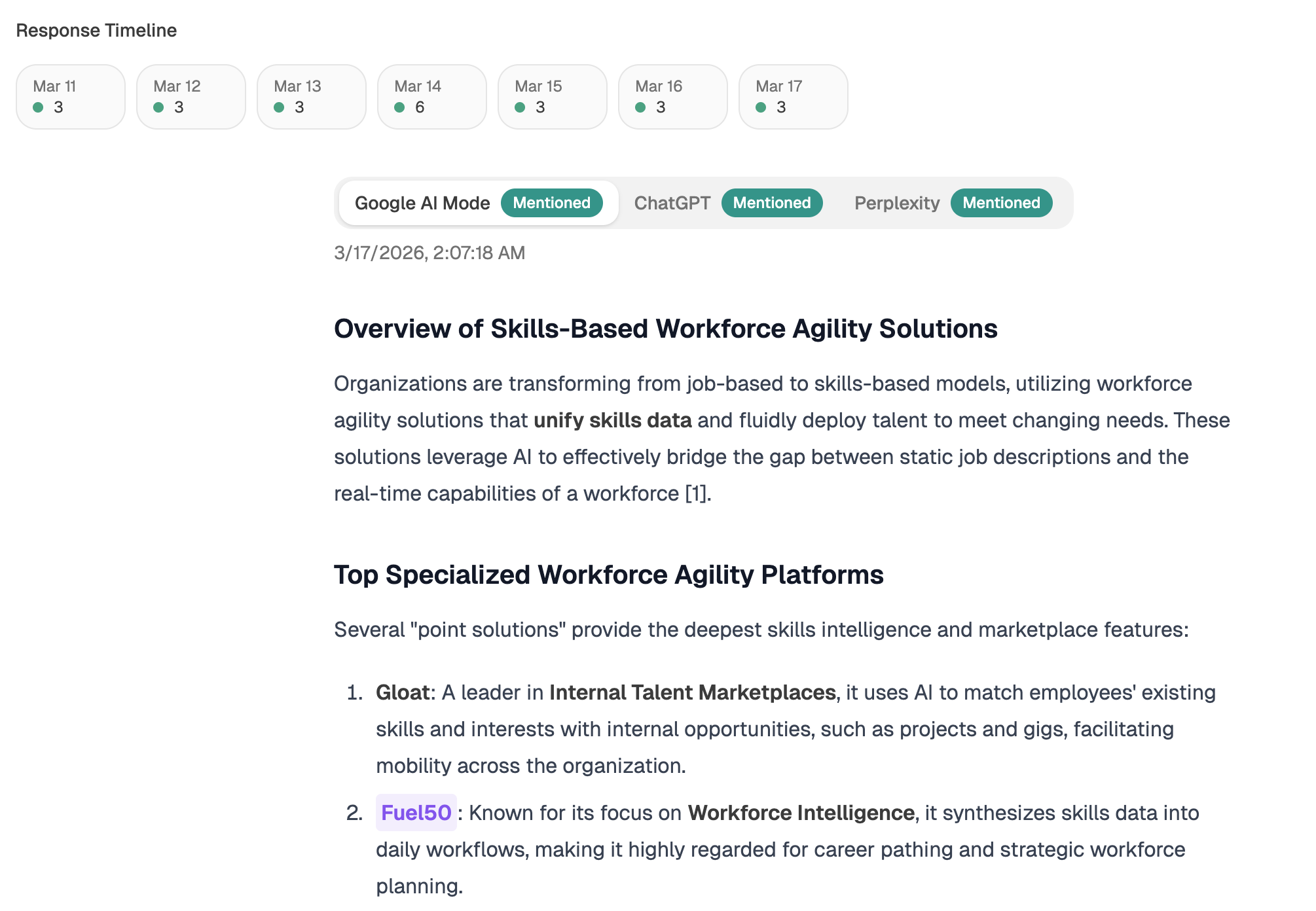 Tracking the buyer's phrasing as a question shows whether assistants recognise the words your customers actually use.
Check which phrases have demand behind them
Not every phrase should become a target. Some are genuinely one person's way of speaking.
Run each one through two checks. Does it show up anywhere in a volume tool or in your own Search Console impressions? And does it get a real answer that names tools when you type it as a question?
Phrases that pass both are unusually valuable, because they carry demand and almost no competition. Everyone else writes in vendor language, so the buyer's wording is often wide open. This is also exactly what Google's guidance means when it asks whether your content offers original information, reporting, research, or analysis, since a phrase list ranked by deal count is research nobody else has.
See which phrases make the strongest questions
The effect shows up in our own numbers. In our own state of AI search research, short questions that mentioned a use case or who the person was got brands named in 76.7% of answers, against 50.8% without. That comparison rests on 7 prompts carrying the angle, so it is a direction worth testing rather than a rate to quote.
Buyer wording is exactly what supplies that detail. "Reporting takes me all Monday" carries a job, a role and a frustration in six words. A category term never does. You can test yours directly with Ad Hoc Prompt Searches in Analyze AI, which runs the phrase across all three assistants and shows you who gets named. Buyer intent keywords covers the ordinary search half of the same list.
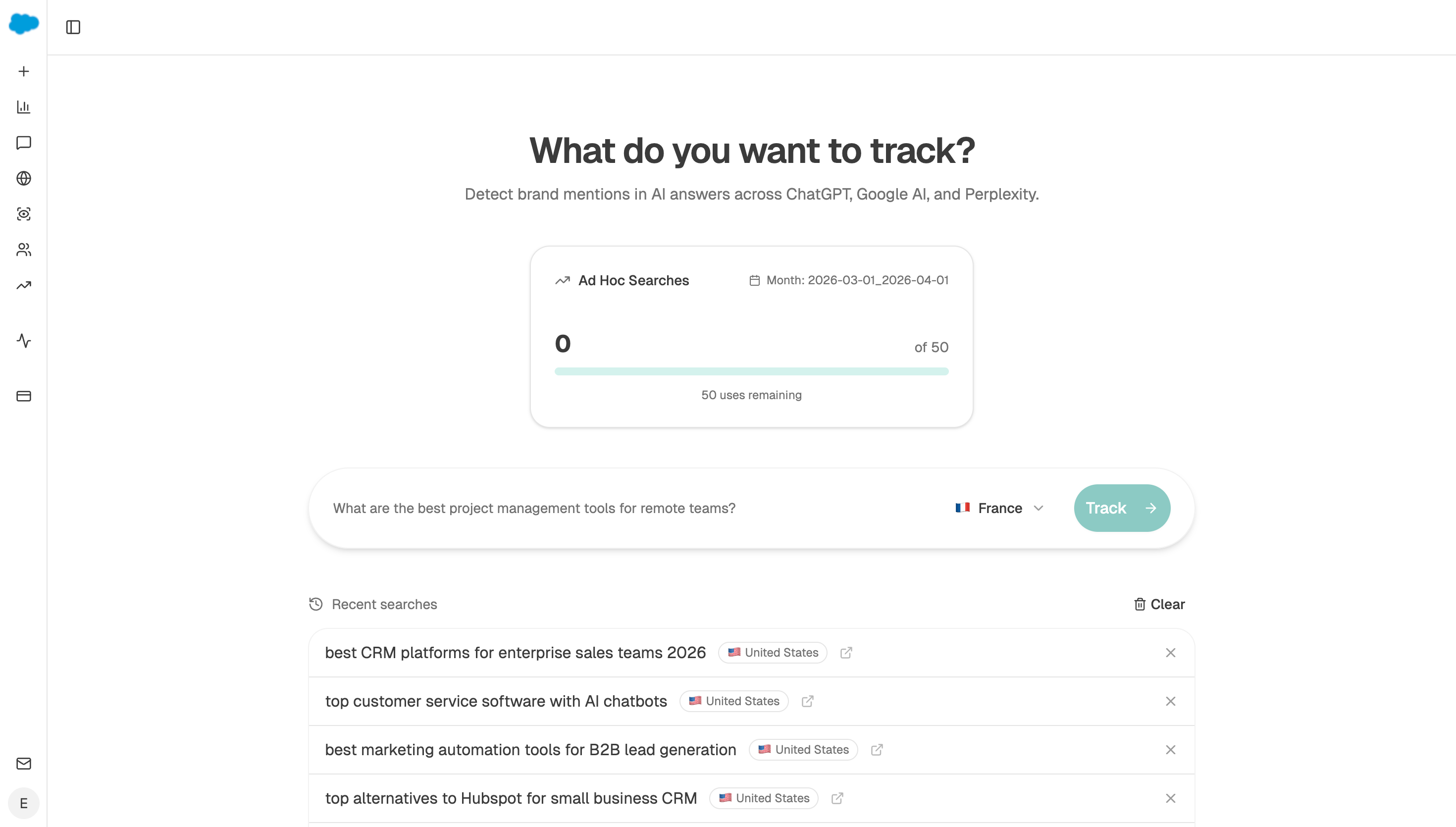 An ad hoc run tells you in seconds whether a phrase from a call produces an answer with vendors in it.
Fire the extraction on the call, not on a calendar
Start (webhook, fired when your call platform finishes a recording) → Transcribe Audio with speaker separation so you can isolate the buyer → Prompt LLM pulling exact phrases from the buyer's turns only → HubSpot Search Deals attaching the deal so you count per deal → Inject Brand Context pulling DISALLOWED_PHRASES and BUYER_PAIN_POINTS so the agent can flag where your own wording clashes → search-demand recipe checking each phrase for search footprint → Send Notification the first time a phrase crosses three deals.
Speaker separation is not a nicety here, it is what makes the whole thing valid. Without it, the agent pulls your salesperson's language back out of the transcript and confirms the wording you already use, which produces a confident report that changes nothing.
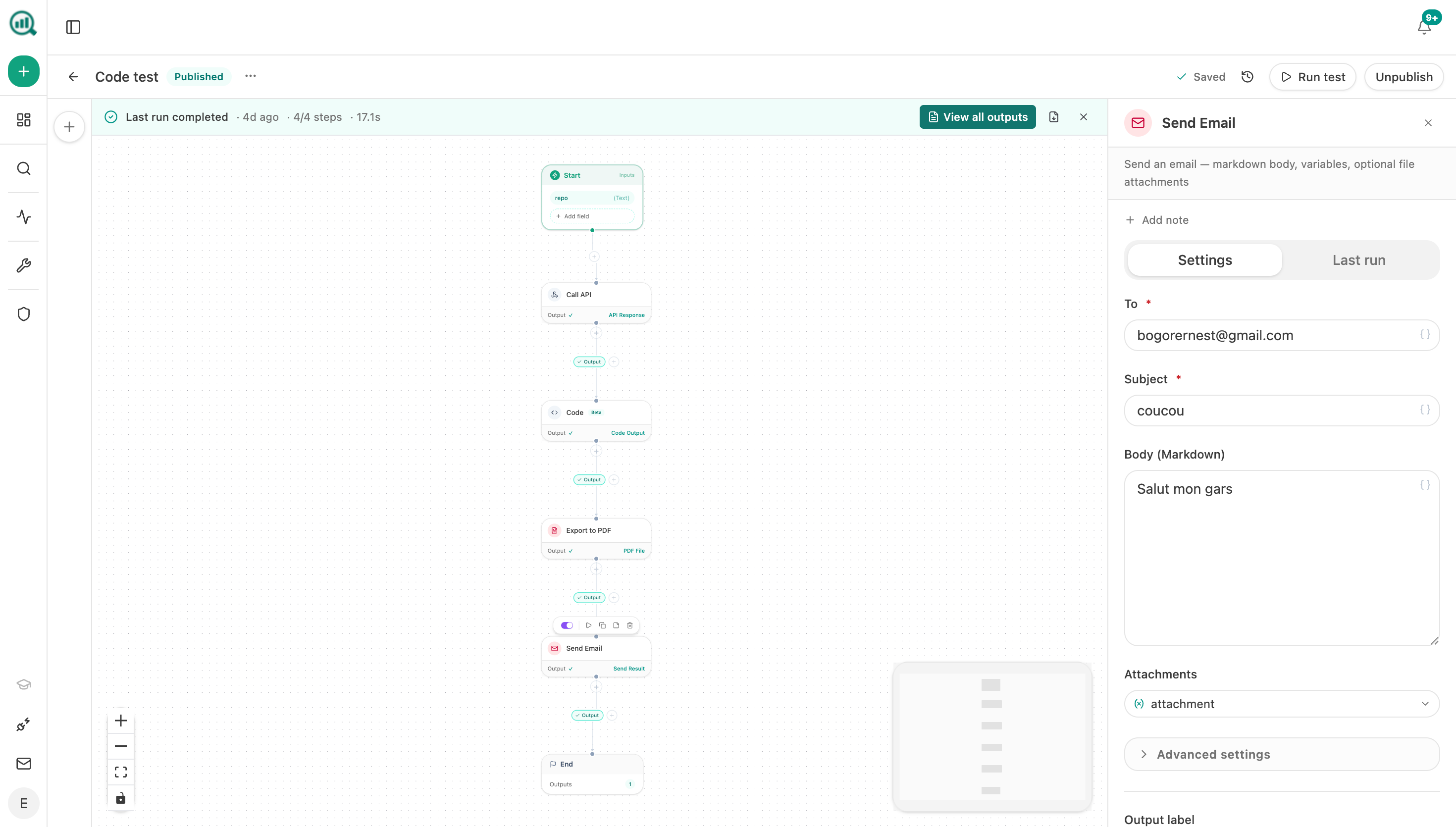 A notification step delivers a phrase to your content channel the first time it crosses three deals.
FAQ
Related answers
- How do I find the questions prospects ask during active vendor evaluation?
- How do I figure out which prompts my buyers are asking AI assistants?
- Why does our content sound the same as every competitor's?
Write in your buyers' words, not your market's
Analyze AI transcribes your calls, ranks buyer wording by how many deals it appears in, and shows which phrases carry real demand.
Start your free trial