
Why does our content sound the same as every competitor's?
Short answer
Because you are all reading the same sources before you write. If the brief is assembled from the top ten results, the piece will contain what the top ten results contain, no matter how good the writer is. Sameness is an input problem, not a style problem, and you fix it by changing what goes into the brief rather than how the draft is edited.
Trace what actually goes into your briefs
Open your last five briefs and list every source behind them.
Most briefs come from three things: the current top ten, a keyword tool, and a competitor's version of the page. Every competent competitor is using the same three. You are all standing in the same library, so the books come out looking alike.
Now list what is not in there. Your sales calls. Your support tickets. Your own product data. Your customers' actual numbers. Those are the inputs nobody else has, and in most briefs they appear nowhere.
That gap is the whole answer. The rest of this is what to do about it.
Add one input nobody else can reach
You do not need to change the process, just the ingredients. One proprietary input per brief is enough to break the pattern.
| Input you already own | What it produces |
|---|---|
| Sales call transcripts | The buyer's own words for the problem |
| Support tickets | What actually goes wrong, in what order |
| Your product data | A number nobody else can publish |
| Lost-deal notes | The objection everyone avoids writing about |
| Your own failures | The exception to the standard advice |
The first one changes the writing fastest. How can sales-call language improve my topic research covers extracting it, and the vocabulary gap it exposes is usually visible in the first paragraph of a rewritten piece.
Check whether the market already hears you as identical
There is a way to test this that does not rely on your own judgement.
Ask an assistant to compare you with two rivals and read what comes back. Analyze AI's Perception view does this systematically, reporting the themes assistants associate with each brand, and Get Perception Quadrant places you against rivals on the same axes. If the themes attached to you and your closest competitor are the same words, your content is not differentiating you, whatever your brand guidelines say.
The brand-contradictions recipe adds a second read, flagging where AI answers describe you in ways that conflict with how you describe yourself.
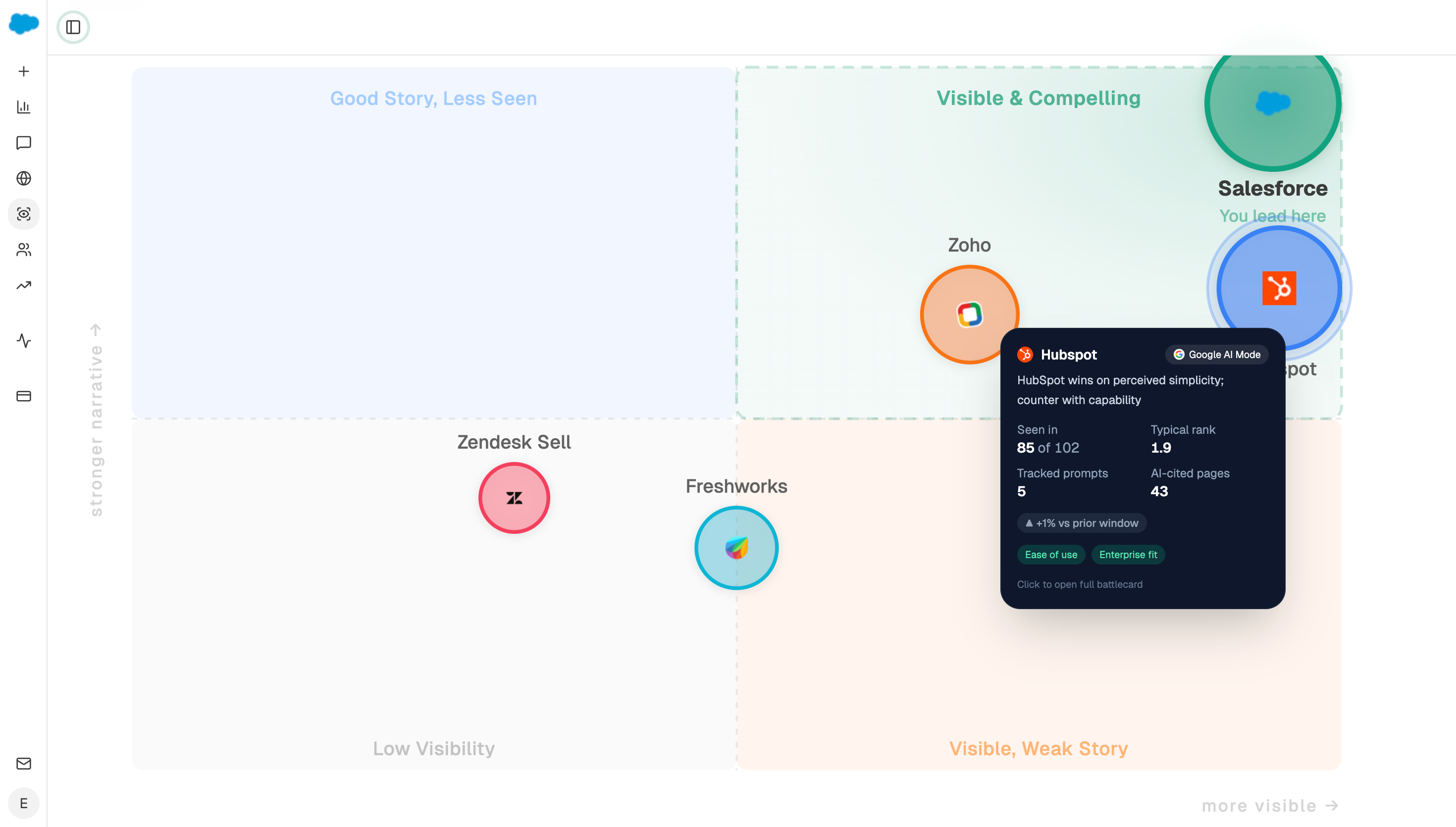 Perception reports the themes attached to your brand, which is the fastest check on whether the market can tell you apart.
Watch for the three habits that produce sameness
Briefing from the SERP. If the brief says "cover these H2s because the top results do", you have instructed the writer to produce a composite. Use the top ten to find what is already said, then write the brief around what is missing.
Sanding down the specifics. Drafts lose details in editing because details are awkward. "We saw this fail on three migrations because the export ran before the mapping" becomes "sequencing issues are common". The second version is safer and worthless.
Approving on tone rather than substance. If review comments are about phrasing and never about whether the piece says anything, sameness will survive every round.
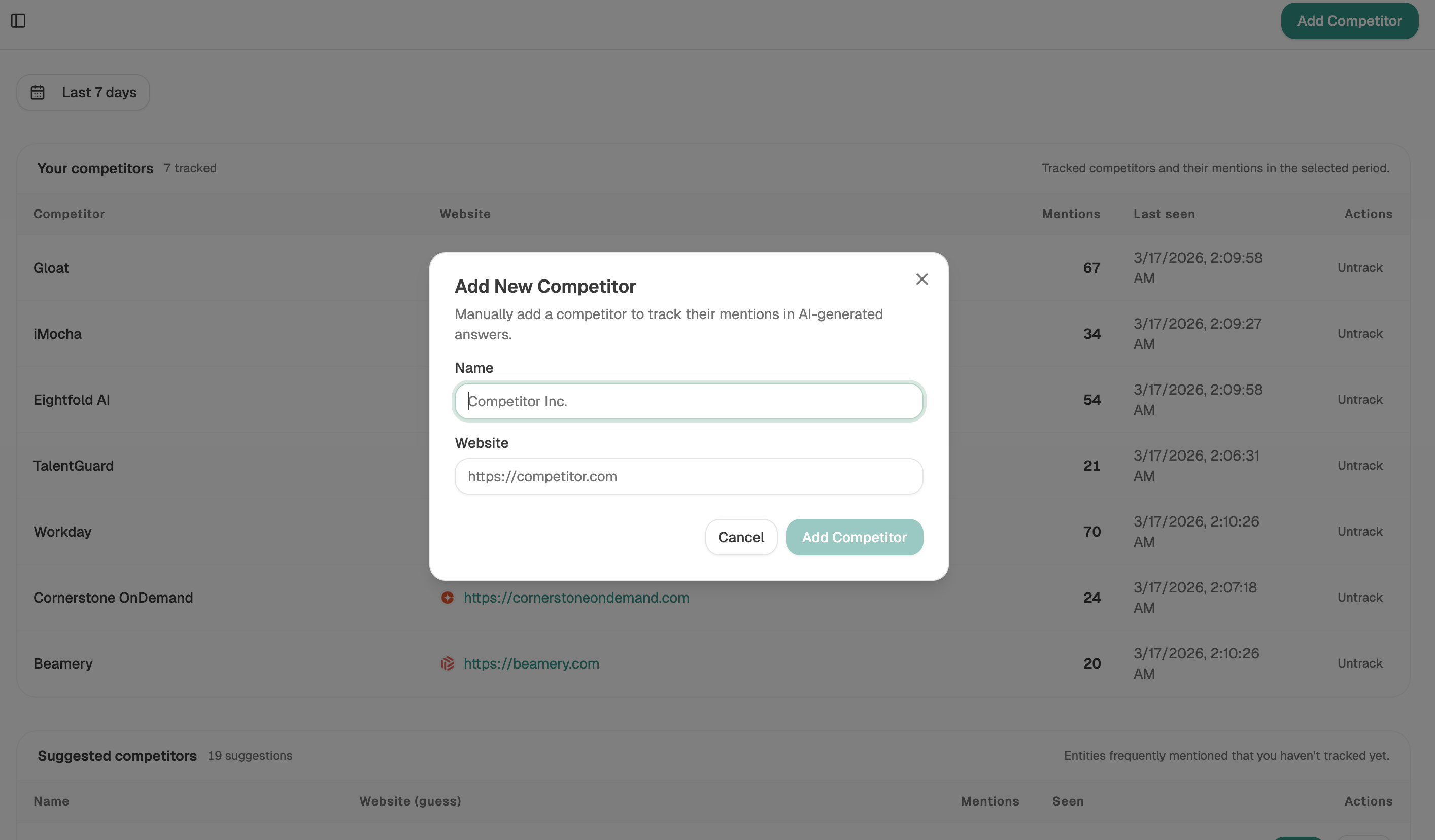 Competitor tracking shows which rivals are named alongside you on the same questions, which is where sameness shows up as a business problem.
Rebuild one brief and compare
Do not reform the whole process. Take one upcoming piece and build the brief differently.
Start (manual, the topic plus a vault badge for BUYER_PAIN_POINTS and PROOF_POINTS) → Transcribe Audio on three recent sales calls about that topic → Prompt LLM extracting the buyer's exact phrasing and the specific problems raised → Inject Brand Context pulling your documented claims, tone rules and disallowed phrases → Generate Research for the supporting context → Content Writer producing an outline built around the call material rather than the top ten → Export Markdown.
Then compare it against the previous brief for a similar topic. The difference is usually obvious to everyone who reads both, which makes the case for changing the process better than any argument.
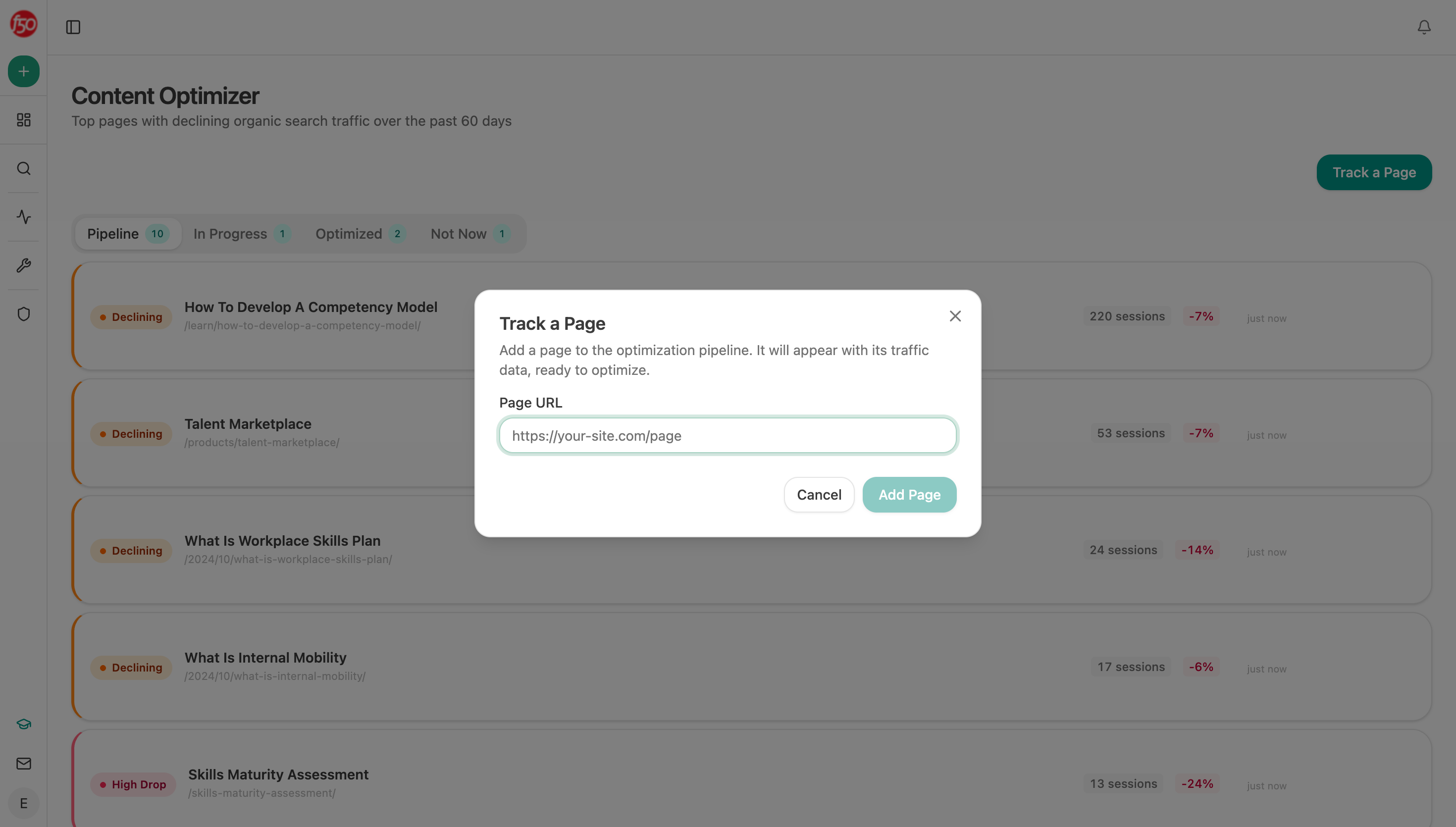 Reading the published page against its brief is how you find out whether the specifics survived production.
Know what sameness costs you now
It used to cost you a ranking position. It now costs you a citation as well.
In our own state of AI search research, across 4,824 pages, page authority barely predicted whether a page was cited. Assistants build answers by pulling passages that add something to the answer, so a page that repeats the consensus has no reason to be selected over the nine other pages that also repeat it.
Google's guidance on creating helpful content points the same way, asking whether a page provides substantial value compared with what already ranks. Sameness fails both tests at once.
FAQ
Related answers
- How do I prove an article adds net-new value instead of summarizing what already exists?
- What should I ask a subject-matter expert to get genuinely original content?
- How can sales-call language improve my topic research?
- What should we publish when our brand recognition is weaker than competitors'?
Find out whether the market can tell you apart
Analyze AI reports the themes assistants attach to you and your rivals, and builds briefs from your calls rather than the top ten.
Start your free trial