
How do I create content sales will actually use in deals?
Short answer
Find out what your reps already paste into emails and build better versions of that. Most sales content goes unused because it was designed for a stage rather than for a moment in a conversation. Then measure adoption the only way that counts: how many open deals it appeared in during the last month.
Ask the one question that reveals everything
Ask five reps to forward you the last ten emails they sent to prospects, then read what they attached or linked.
You will find three things. A small number of pages get used constantly, usually one comparison page and one pricing explainer. A large amount of the material marketing produced is never sent. And reps have made their own versions of things, usually a slide or a paragraph they paste from a notes app.
That third category is the gold. A rep-made asset is proof of an unmet need, built by someone with no time to build things. Ask what each one is for and rebuild it properly.
Build for the moment, not the stage
Sales content fails when it is organised by funnel stage, because a rep does not think in stages. They think in objections that just came up on a call twenty minutes ago.
| The moment | What the rep needs |
|---|---|
| "We're also looking at [competitor]" | One page, honest, with a real concession |
| "Send me something for my boss" | A one-page business case with visible assumptions |
| "Security will need to review this" | A public security and data page |
| "How long does this take to set up?" | A realistic timeline with the bad case in it |
| "We already have something like this" | A page on where you fit alongside it |
| "Can you do X?" and the answer is no | A clear page on what you do not do |
The last row is the one nobody builds. Reps need a graceful way to say no, and giving them one keeps a deal alive that would otherwise stall on a half-answer.
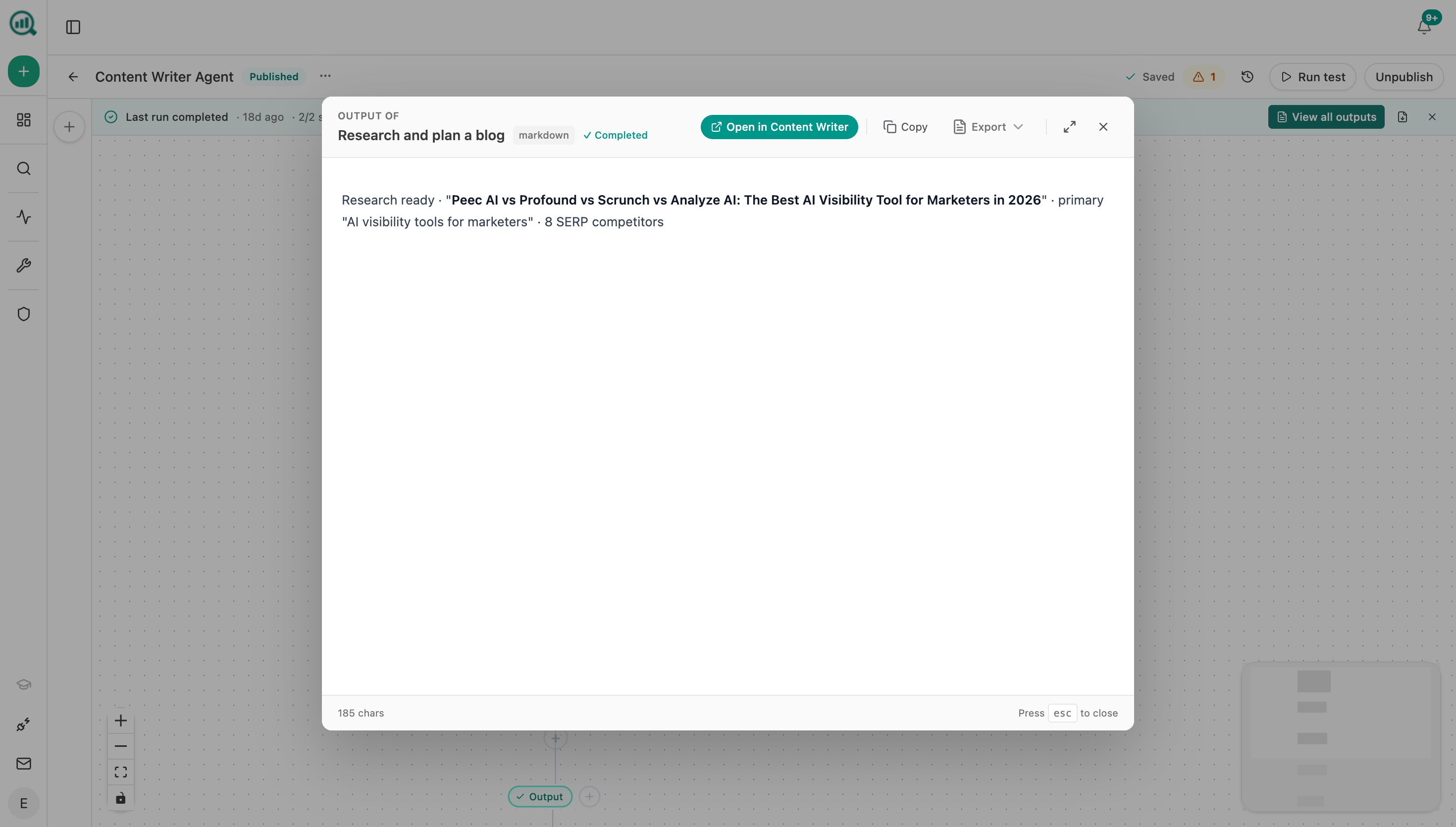 Each agent run hands back a document, which is the format reps can forward without asking marketing to prepare something.
Make it sendable
The practical constraints matter more than the content strategy here.
- One page. Reps will not send a guide, and prospects will not read one.
- No gate. A form kills a forward from a champion to their boss.
- A link, not an attachment. Attachments do not get forwarded and cannot be updated.
- Datable. Put a review date on it so a rep knows the pricing in it is current.
These are the same properties that make something forwardable to an executive, covered in how do I reach decision-makers who never talk to sales.
Measure adoption, not production
The usual metric is how many assets were produced, which tells you nothing. Two better ones.
Deals touched. How many open deals included a link to this page in the last 30 days. Pull it from your CRM's email logging. Anything under five in a quarter is not being used.
Rep recall. Ask three reps to name the assets they would reach for in a competitive deal. Anything nobody names does not exist as far as sales is concerned, regardless of where it sits in your library.
Set a retirement rule up front. If a piece is not used in five deals in its first quarter, either it solves a problem reps do not have or they cannot find it. Both are worth knowing.
Keep it accurate, because reps stop trusting fast
One out-of-date pricing figure in a comparison page and a rep will stop sending it permanently. They will not tell you why.
Run the Content Optimizer across your sales-facing pages quarterly. It fetches the live page and reports what it currently claims, which catches the stale competitor pricing and the feature that shipped six months ago. The proof-gaps recipe flags claims with no evidence attached, which is the other thing reps get caught out by on a call.
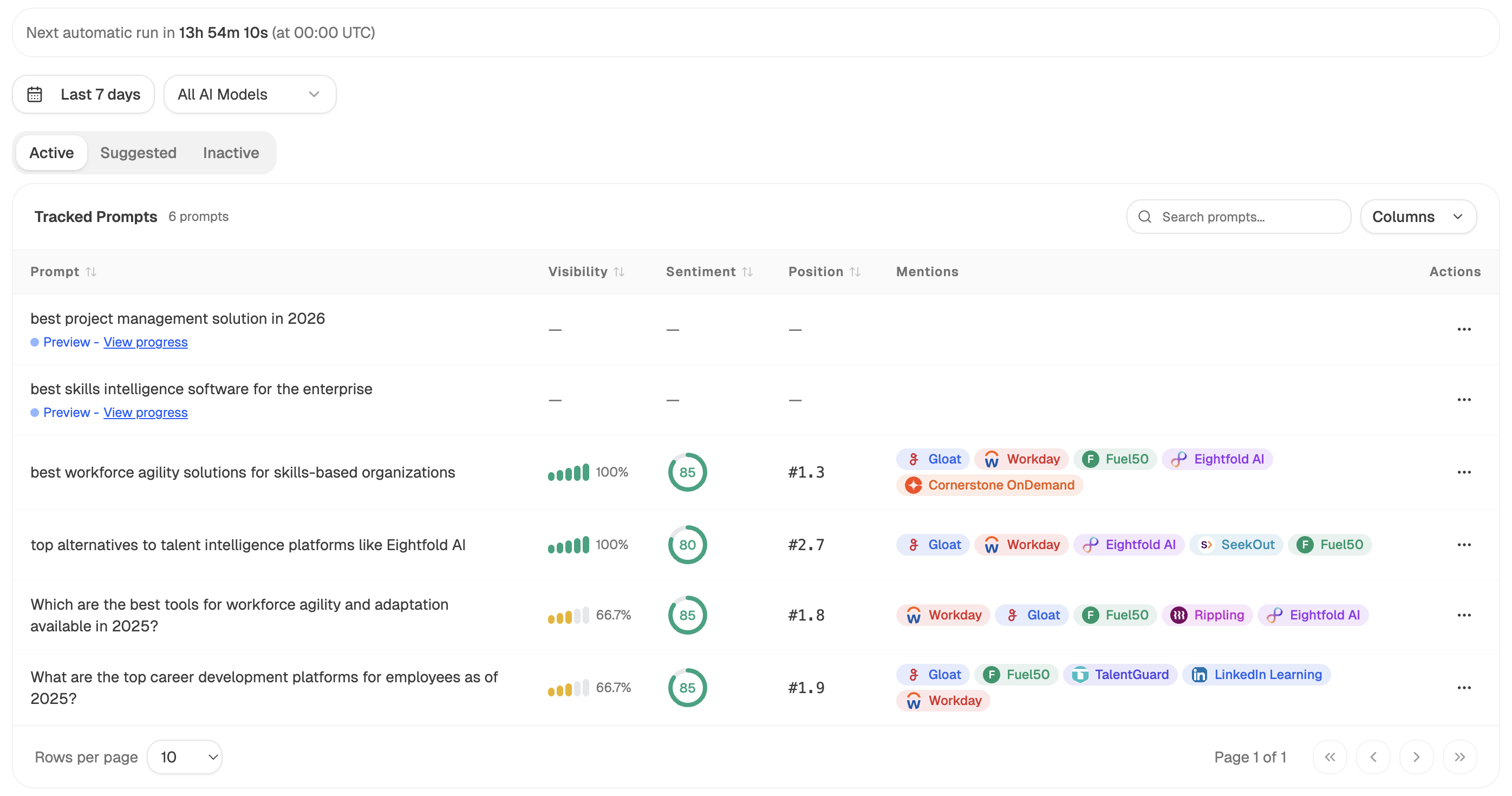 Tracking the questions that come up in deals shows whether the answers buyers get elsewhere match what your reps are sending.
Check what the buyer was told before the call
Reps increasingly walk into calls where the buyer has already formed a view somewhere else, usually without visiting you. Pew Research put the click rate on a source link at roughly 1% of visits where an AI summary was shown, so most of that groundwork is invisible to you.
Analyze AI's Ad Hoc Prompt Searches lets a rep or a marketer run the exact comparison question a prospect asked, and the Perception view shows how you are described against the rival in question. That is genuinely useful pre-call material, and it is the kind of thing reps adopt without being asked twice.
In our own state of AI search research, lists, comparisons and reviews made up 34.4% of what Perplexity cited and 33.1% of Google AI Mode, so much of what the buyer already believes came from third-party comparison content rather than from you.
Wire it to the deal, not the calendar
Start (webhook, fired when a deal moves to a competitive stage) → HubSpot Get Deal with the competitor named on the record → Prompt Responses running the head-to-head question live and returning how each side is described → proof-point-miner recipe pulling approved proof for the points at issue → Export DOCX and Send Notification to the deal owner.
Firing on the deal stage rather than a schedule is what gets this used. A monthly digest of competitive intelligence gets skimmed. A one-page brief arriving when a rep needs it gets opened.
FAQ
Related answers
- How do I reach decision-makers who never talk to sales?
- Should a product comparison admit a competitor's strengths?
- How do I build a reusable library of approved claims and proof points?
Give reps something worth sending
Analyze AI runs the live comparison question when a deal turns competitive and hands the rep a brief with approved proof attached.
Start your free trial