
How do I build a reusable library of approved claims and proof points?
Short answer
Keep one record per claim, and give each one four things: the exact wording, the evidence behind it, the person who approved it, and a date it expires. Then wire that library into the step where content gets drafted, so writers pull approved claims instead of inventing new ones. Without the wiring it becomes a document nobody opens.
Give every claim four fields
A claims library fails when it is a list of marketing lines. It works when each entry can be defended.
| Field | Why it matters |
|---|---|
| The claim, worded exactly | Stops six versions of the same statement appearing |
| The evidence | A link, a dataset, a customer name, a date |
| Who approved it | Someone answers if a customer challenges it |
| Expires on | Forces a review rather than silent ageing |
The expiry date is the field teams leave out and the one that saves you. Customer results, pricing comparisons and performance numbers all rot, and nothing damages a page faster than a confident figure from three years ago.
Add one optional field that earns its place: where this claim may not be used. Some numbers are true for one segment and misleading for another.
Collect what you already have before writing anything new
Most of the library already exists, scattered.
- Pull the claims from your homepage, pricing page and top three comparison pages.
- Add the numbers from your case studies, with the customer and date attached.
- Add anything your reps say on calls that is not written down anywhere.
- For each one, find the evidence. Anything with no evidence goes in a separate list.
That separate list is the useful output of the exercise. In most companies it is longer than expected, and it is what buyers are being told with nothing behind it.
Analyze AI's proof-gaps recipe finds the same problem from the other end, listing pages that make claims without evidence attached, and proof-point-miner pulls reusable proof snippets out of your existing content and citations so you are not starting from a blank page.
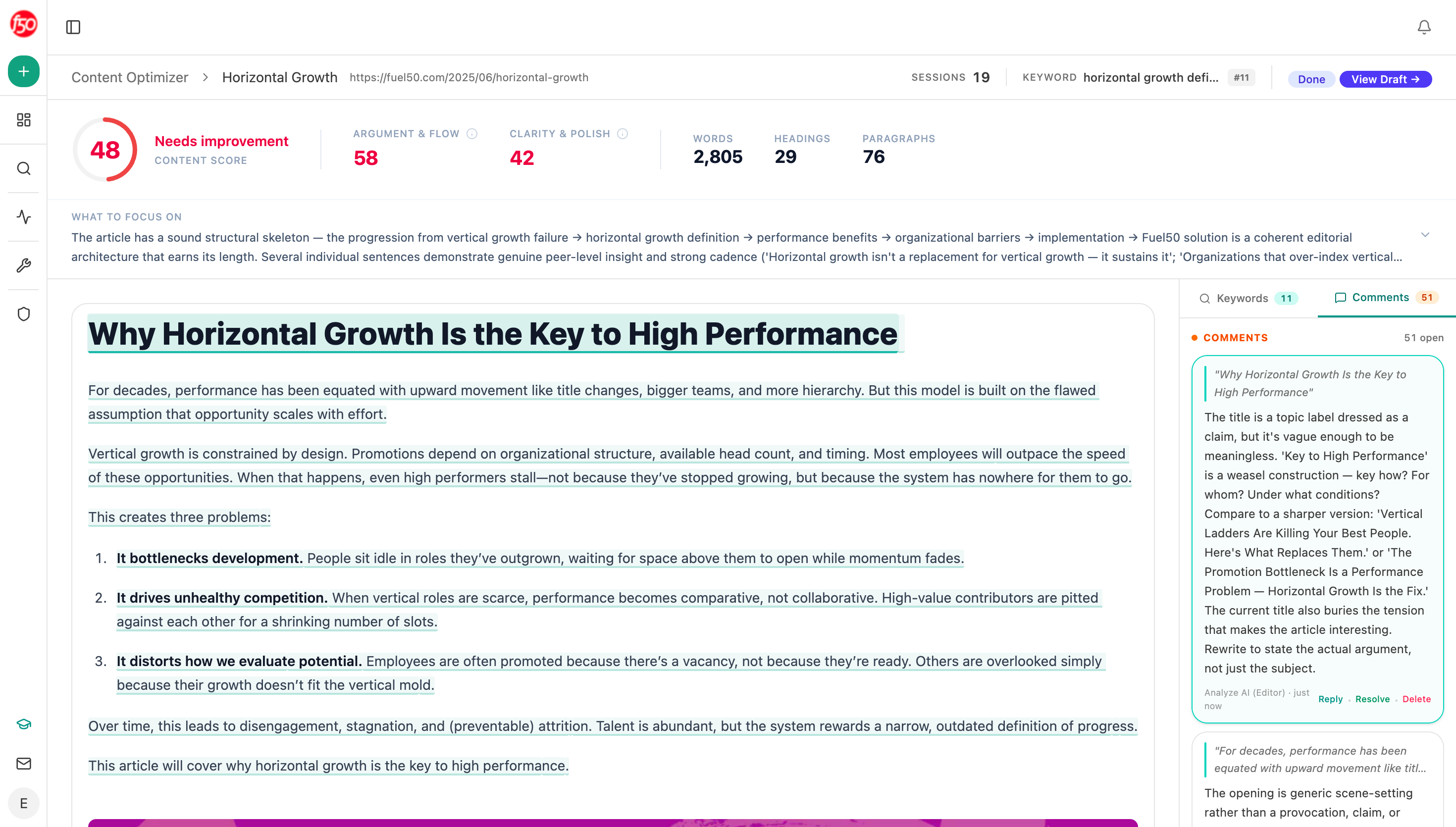 Reading live pages is how you find the claims already in the wild that never made it into any library.
Store it where the drafting happens
This is the step that decides whether the library survives its first quarter.
A claims library in a shared document gets used for a month. A claims library the drafting process reads from gets used permanently, because using it is easier than not using it.
In Analyze AI that is the Brand Vault. It holds structured blocks including PRODUCTS_FEATURES, DIFFERENTIATORS, COMPETITOR_CONTRAST, PROOF_POINTS, CASE_STUDIES, CLAIMS_MESSAGING_RULES, TONE_STYLE, DISALLOWED_PHRASES and REQUIRED_PHRASES. The Inject Brand Context node then pulls whichever blocks a piece needs into the step that generates the draft.
The practical effect is that a writer or an agent producing a comparison page starts with your approved competitor contrast and your real proof points already in front of them, rather than a blank brief and a memory of what someone said in a meeting.
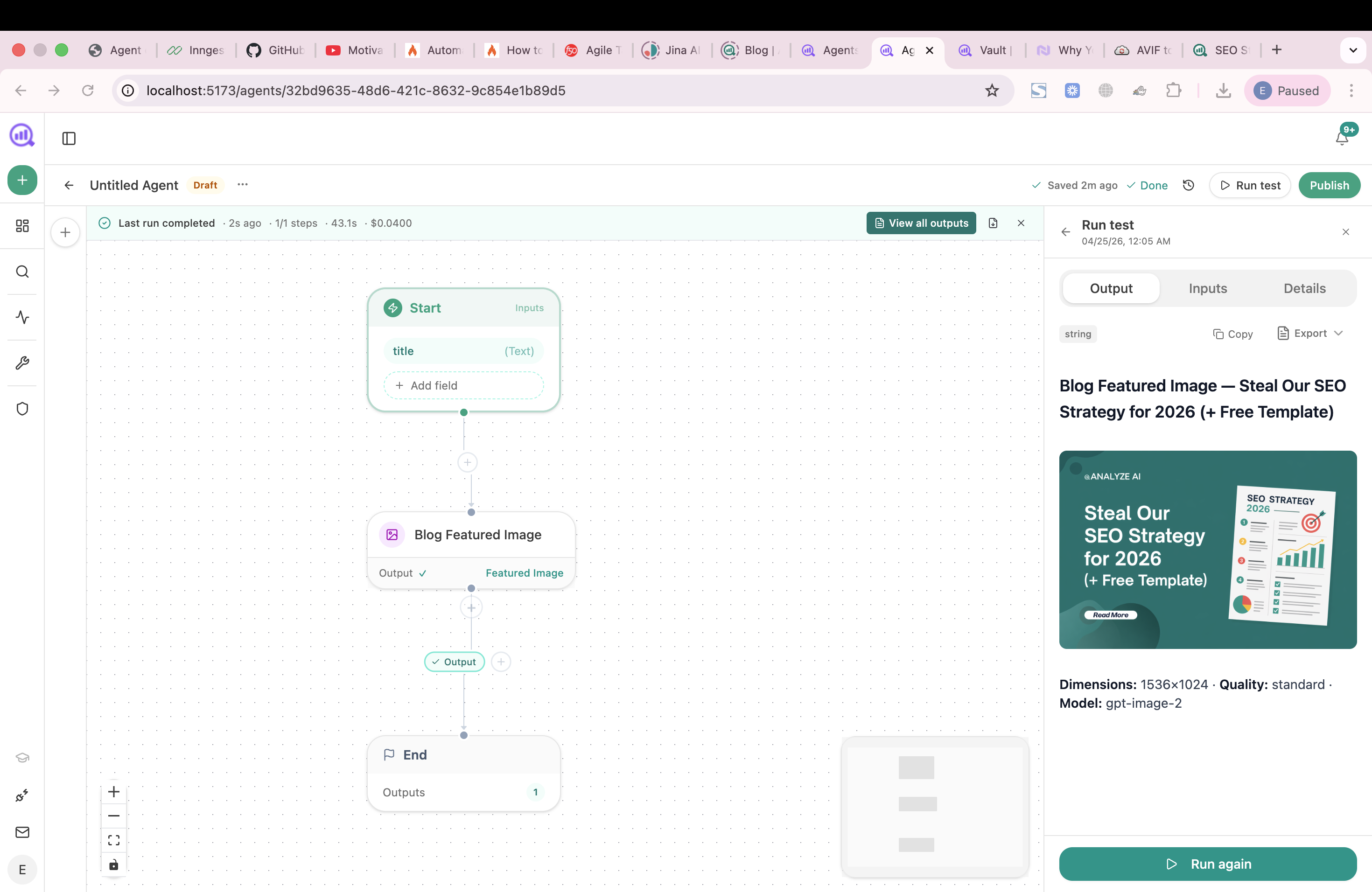 Inject Brand Context sits in the chain before drafting, so approved claims are an input to the draft rather than a review comment on it.
Add the two blocks that stop bad drafts
Two of those blocks do disproportionate work and are usually left empty.
Disallowed phrases. The claims legal has ruled out, the competitor descriptions you have been asked not to use, and the superlatives your market does not believe. Recording them once prevents the same review comment forever.
Claims and messaging rules. The conditions attached to a claim. "This figure applies to customers over 200 seats" belongs next to the figure, not in a reviewer's head.
Together these turn review from a rewriting exercise into a check, which is the same saving described in how do I turn internal expertise into content without making experts the bottleneck.
Keep it from rotting
A library is only trusted while it is current, and currency needs a mechanism rather than good intentions.
Start (schedule, monthly) → proof-gaps recipe listing pages claiming without evidence → Content Optimizer fetching your highest-traffic claim-bearing pages → Code node checking every vault entry against its expiry date → Conditional flagging claims expiring within 30 days and pages using an already-expired claim → Send Notification to the named approver for each one.
Routing the alert to the named approver rather than to a shared channel is the part that works. A claim with an owner gets renewed. A claim owned by everyone expires and stays live on your pricing page.
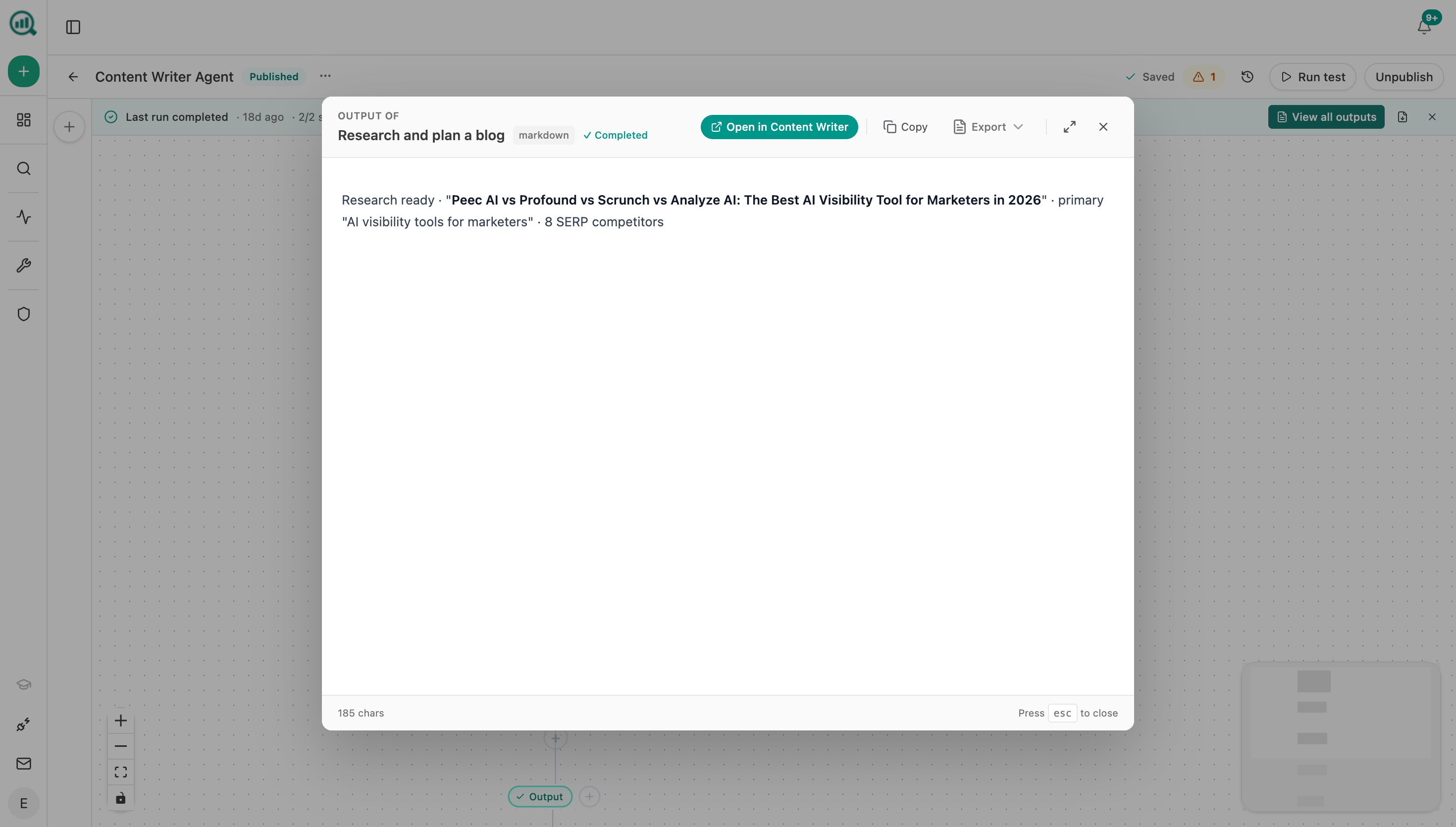 Each run hands back the list of claims to renew or retire, so maintenance arrives as a task rather than a dashboard.
Google's guidance on creating helpful content asks whether a page would be trusted by someone researching a purchase, and whether it presents information in a way that makes you want to trust it. An expired claim on a live page fails both.
FAQ
Related answers
- What kinds of evidence make a B2B buyer trust a vendor?
- How do I turn internal expertise into content without making experts the bottleneck?
- How do I create content sales will actually use in deals?
- Why does our content sound the same as every competitor's?
Put your claims where the drafting happens
Analyze AI holds your approved claims, proof points and tone rules in the Brand Vault and injects them into every draft.
Start your free trial