
How do I prove maintenance created more value than new content?
Short answer
Run two cohorts side by side for two quarters. Take the pages you refreshed and the pages you published new in the same period, record the hours each consumed, and compare the clicks and sales conversations each group produced per hour spent. It is the only comparison that survives scrutiny, because it holds time and effort constant.
Build the two cohorts
The comparison is only fair if you set it up before you start.
- Pick a quarter. Record every page refreshed in it and every page newly published in it.
- Record hours spent on each, including expert, design and engineering time.
- Wait two quarters, so the new pages have had time to rank.
- For both cohorts, pull clicks, conversions and sales conversations for the trailing quarter.
- Divide each cohort's output by its hours.
| Cohort | Pages | Hours | Clicks now | Conversations | Per hour |
|---|---|---|---|---|---|
| Refreshed | 14 | 46 | 9,100 | 21 | 198 clicks |
| Newly published | 9 | 121 | 3,400 | 8 | 28 clicks |
That shape is typical and it is why the comparison is worth making. Refreshes usually win on this measure because the page already has age, links and internal links, so the work goes into content rather than into earning a standing start.
Control for the three things that skew it
The comparison is easy to rig by accident. Three adjustments make it defensible.
Give new pages long enough. New content usually needs two to three quarters to reach its level, and Google's generative AI performance report will not help you shortcut that, since it reports impressions with no clicks and no query data. Comparing one quarter after publication guarantees the refresh cohort wins and the result will be dismissed, correctly.
Do not compare a refreshed high-traffic page against a brand-new long-tail one. Match roughly on the potential of the target query, or report the two tiers separately.
Count the hours honestly. Refreshes often hide effort in diagnosis and approvals. Include it, or the per-hour figure is fiction.
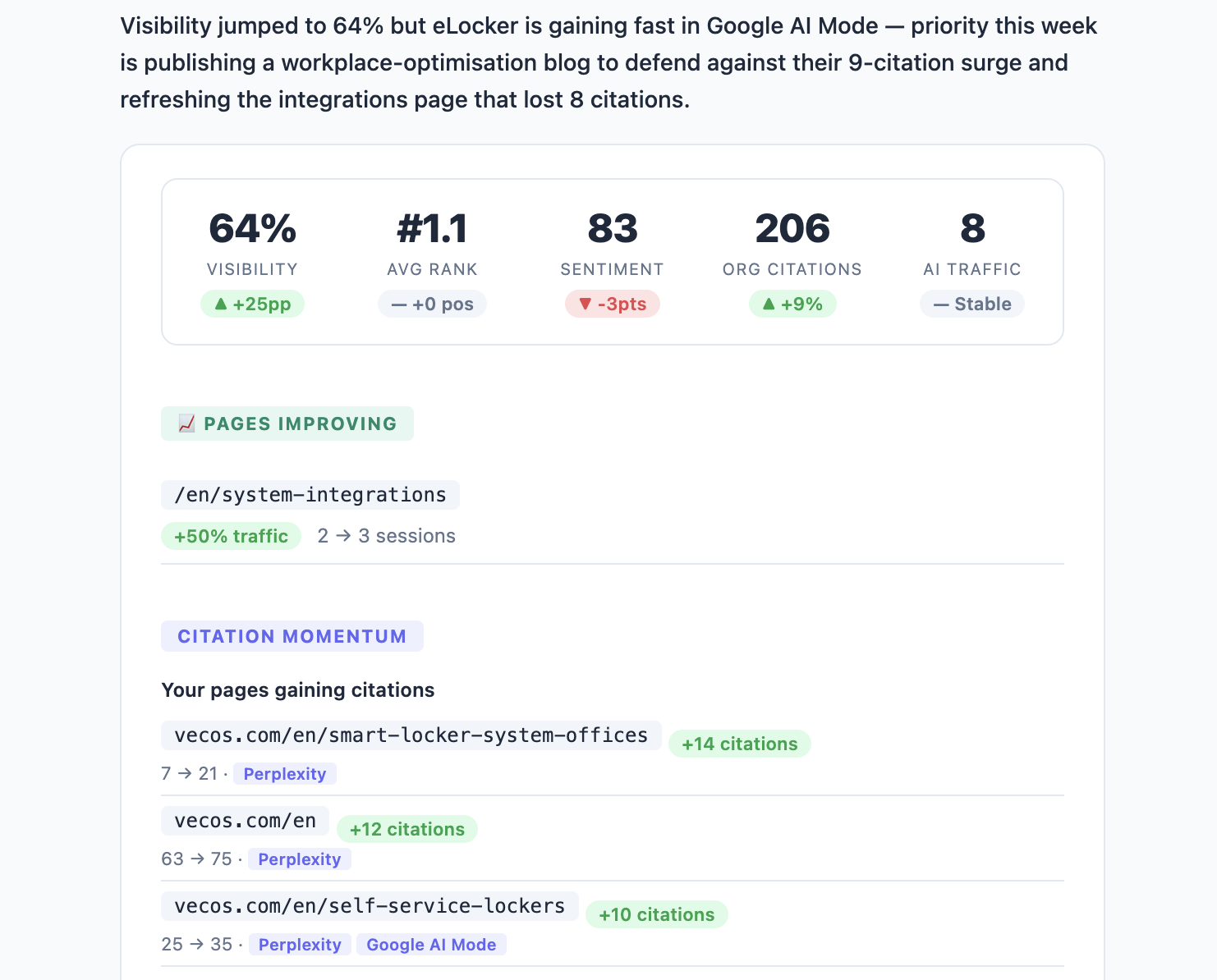 The digest tracks pages improving and gaining citations, which is where the refresh cohort's movement shows up first.
Include the outcomes new content cannot claim yet
Two things belong in the refresh column that a raw traffic comparison misses.
Prevented loss. A refreshed page that held its position while the result page got harder did not gain, and it did not lose either. Value that against the decline of comparable unrefreshed pages in the same period, which is a fairer counterfactual than zero.
Citation recovery. Analyze AI's Citation Pages view and the citation-magnets recipe show which pages assistants use as sources. A refresh that restores citations is reaching people who never appear in your session data, and in our own state of AI search research page authority barely predicted citation across the 4,824 pages we checked, so this is won on content rather than on domain strength.
Report citation movement alongside clicks, and label it for what it is. Being cited means being selected as a source, which is not the same as a visit, and we hold no click figures to convert one into the other.
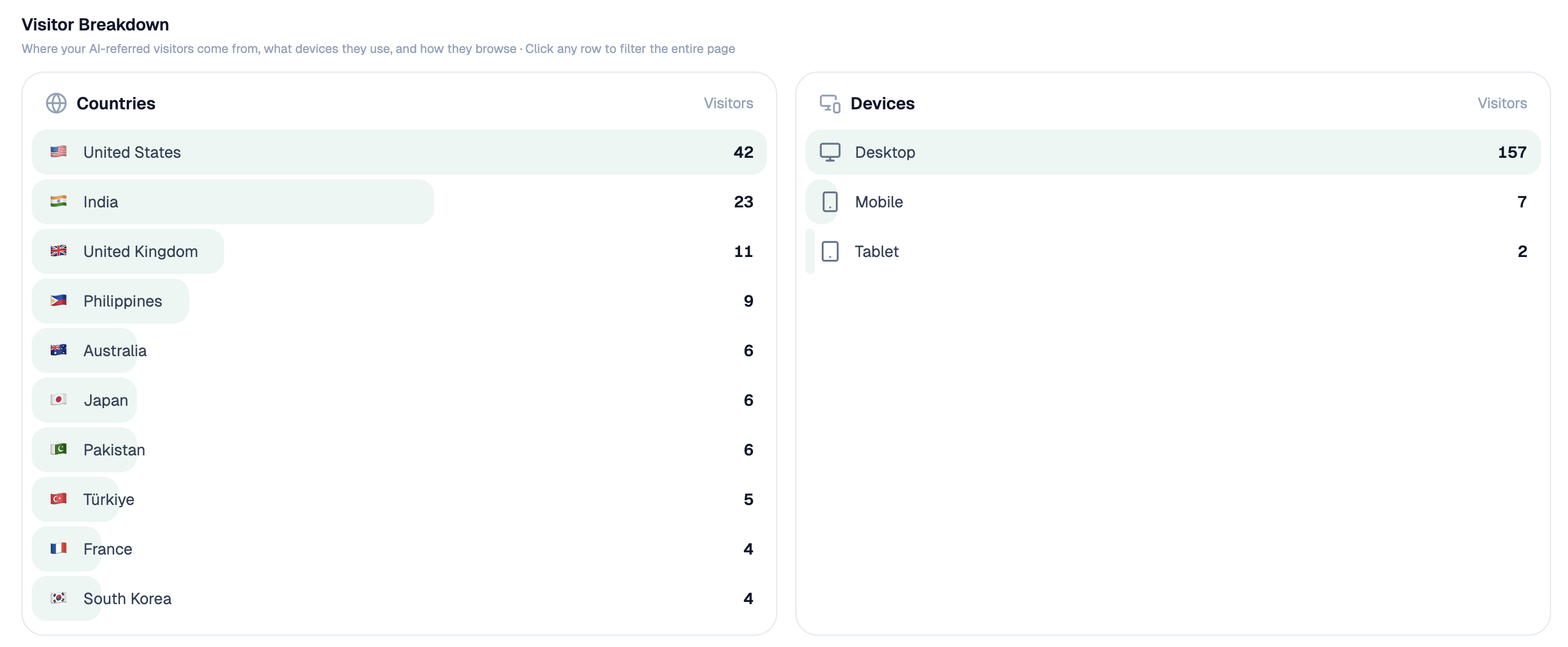 Assistant sessions are reported per landing page, which is the measurable slice of what a recovered citation produces.
Present it as a ratio, not a verdict
The conclusion is almost never "stop publishing new content". It is that the split is currently wrong.
Report the per-hour figures for both cohorts and propose a ratio rather than a winner. Most teams we see are publishing four new pages for every refresh and would be better at two to one. That is an argument someone can accept without anyone losing.
Then rerun the comparison a year later, because the answer moves. A library with full coverage and heavy decay favours maintenance. A library with obvious gaps favours new content, which is the coverage count in when is a bottom-of-funnel page worth more than another blog post.
Run the comparison automatically
Start (schedule, quarterly) → HubSpot Search Deals for conversations attributed to each page → GSC Top Pages for Site for clicks per page over the trailing quarter → workflow-memory recipe holding the cohort definitions and hours recorded when the work was done → Citation Pages for citation movement per page → Code node computing output per hour for each cohort and adjusting for pages younger than two quarters → Export Excel with both cohorts side by side.
Holding the cohort definitions in workflow-memory from the moment the work happened is what makes this possible at all. Reconstructing which pages were refreshed eight months ago, and how long each took, is the step that kills this analysis in most teams.
FAQ
Related answers
- Are we publishing content because it works or because output is easy to count?
- How do I record exactly what changed in a refresh so I can prove it worked?
- How do I prioritize refreshes by past value, demand, conversion, and effort?
- Who should own content maintenance after publication?
Settle the maintenance argument with cohorts
Analyze AI holds your cohort definitions and hours from the moment the work happens, then reports output per hour for each.
Start your free trial