
When is a bottom-of-funnel page worth more than another blog post?
Short answer
Until about 80% of your buying pages exist. Blog topics never run out, but buying pages do. You need one per competitor, one per integration, and one per type of customer. Add pricing, migration, security and setup. Count what you need against what you have. Below 80%, the next buying page almost always wins.
Count the buying pages you need
Blog topics never run out. There is always another post, which is why the argument for one more never gets settled.
Buying pages are different, because the list comes from facts about your business rather than from ideas. Build it once and this question answers itself for two years.
| Type of page | How many you need | Where the number comes from |
|---|---|---|
| Comparison | One per competitor you lose to | Lost reasons in your CRM |
| Alternatives | One per competitor people search by name | Their brand search volume |
| Integration | One per tool a buyer would check for | Your integrations list |
| Use case | One per type of customer you sell to | Who you actually win |
| Pricing explained | One | Always |
| Migration guide | One per competitor you take customers from | Where your wins come from |
| Security | One | Always |
| Setup and onboarding | One | Always |
Now add them up. Say you lose deals to six competitors, have nine integrations, and sell to four types of customer. That is 6 comparison pages, 4 alternatives pages and 9 integration pages. Add 4 use case pages, 4 migration guides and the four standing ones. Your total is 31.
Then count what you have. In a typical audit eleven exist and four of those quote pricing that changed a year ago, so you really have 7 of 31. That is 23%, and every argument about the blog is early until it clears 80%.
Aim for 80%, not 100%
The last few pages are genuinely low value and chasing them is a mistake.
Coverage is lopsided. The two competitors you lose to most carry most of the value, and your ninth integration page serves a handful of people a year. Once the frequent ones exist, the rest are competing fairly with a good blog post, and often losing.
Push past 80% only when a specific pattern justifies it. One enterprise customer type that keeps asking for a compliance page is a better reason than tidiness.
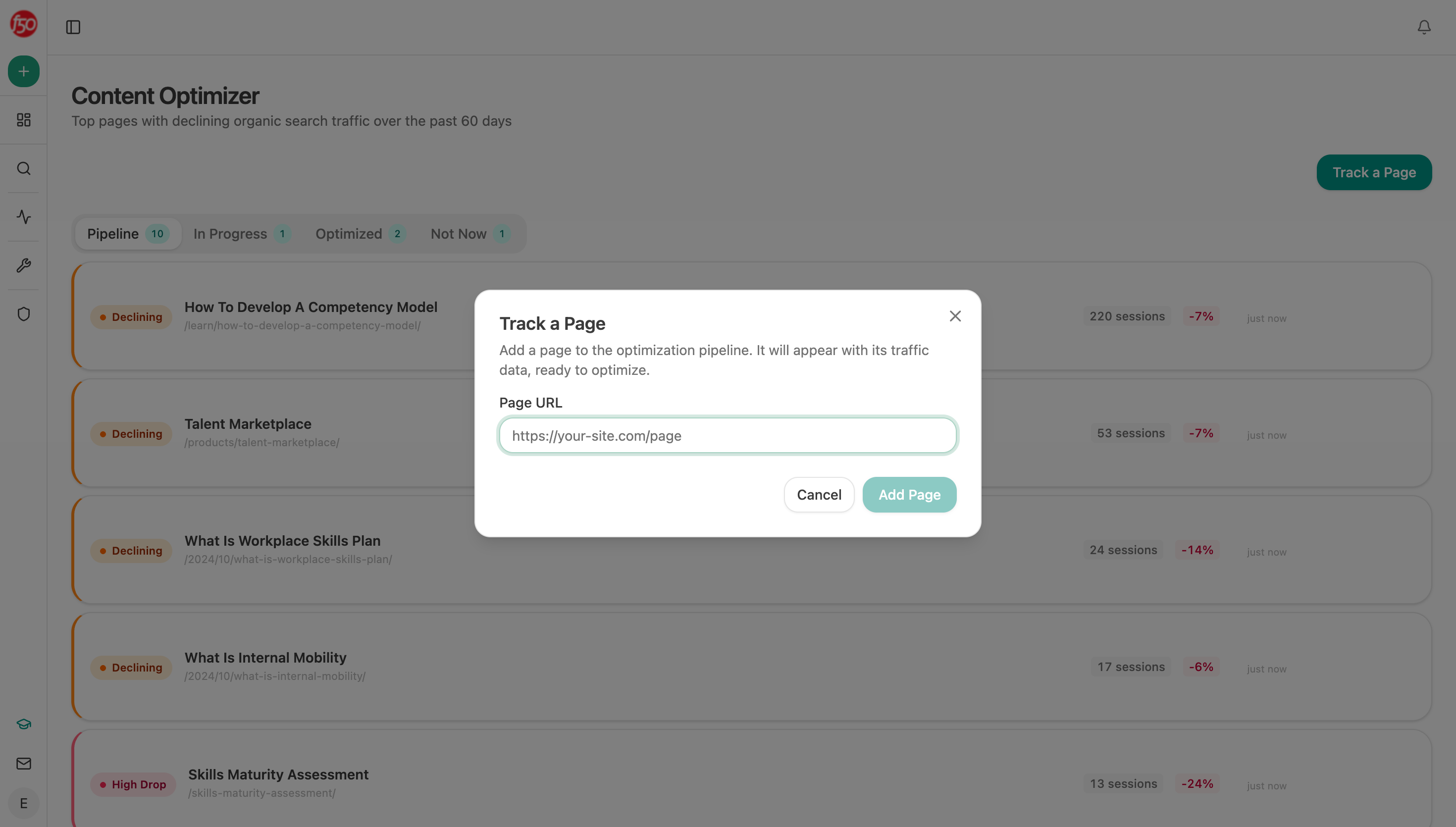 The optimizer reads the live page, which is how you find the comparison pages still quoting last year's pricing.
Know where the blog post genuinely wins
Three places, worth naming so this does not turn into a faction fight.
- Links and citations. Buying pages rarely earn either. Blog posts with original data do, and those links raise the ceiling for the comparison pages you already built.
- Creating demand. If nobody searches for your category yet, comparison pages have nothing to catch. How SEO can capture demand you create elsewhere covers that order.
- Setting the rules. The post that teaches people how to judge your category shapes the shortlist your comparison page later wins.
None of those justify a fourth blog post this month when you are at 40% coverage.
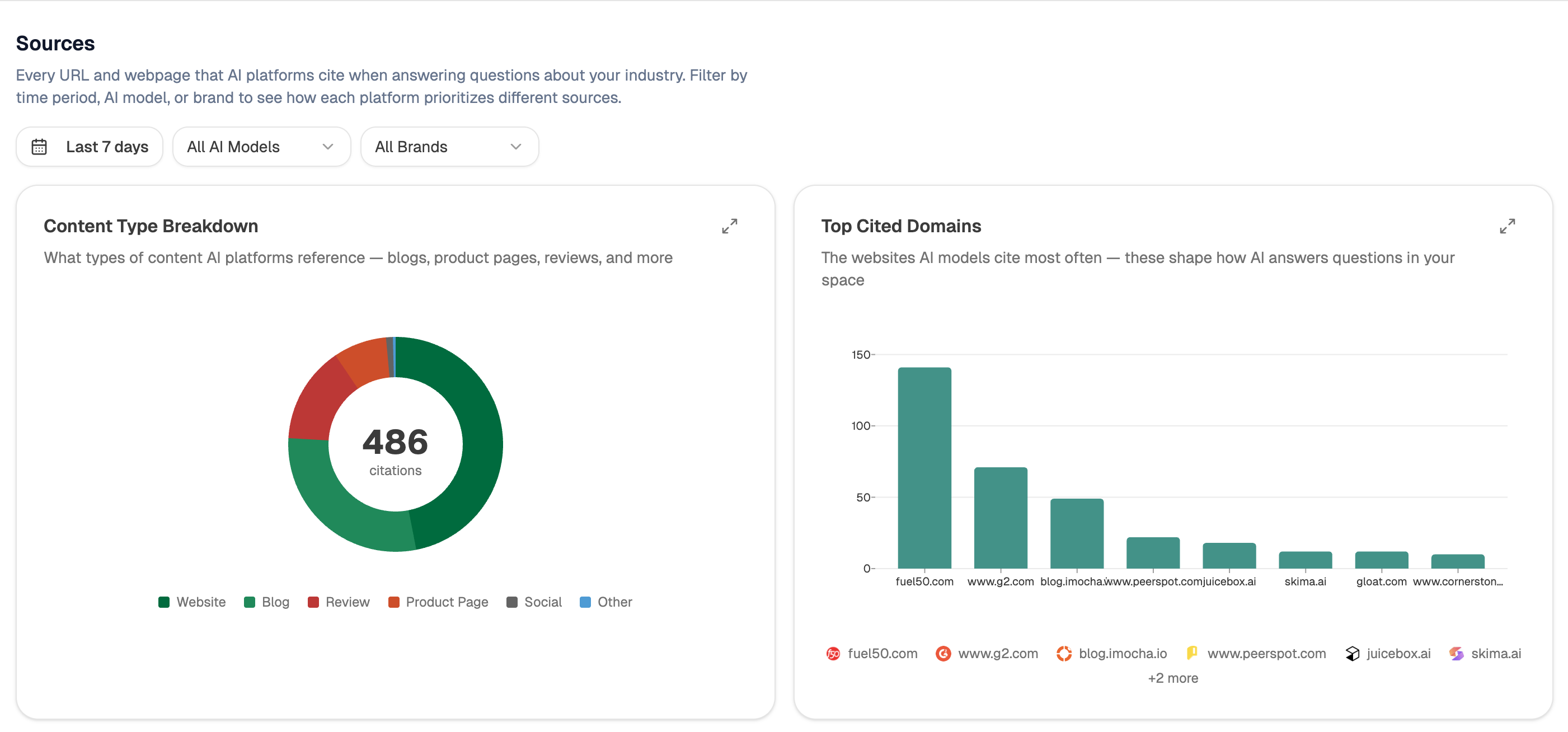 Sources shows which pages get used as references, which is the measurable half of the case for a blog post.
Ask how assistants treat buying pages
They make the buying shelf more valuable, not less.
In our own state of AI search research, company sites and product pages made up 68.8% of what ChatGPT cited. Lists, comparisons and reviews made up 34.4% of Perplexity and 33.1% of Google AI Mode.
Both halves point the same way. Your own product and comparison pages are what ChatGPT reaches for, and other people's comparison pages are what the other two reach for. A thin product page and no comparison coverage takes you out of both routes.
Measuring the return is where teams trip. Assistant visits land in different places depending on where they came from, so read Google's channel definitions before deciding a buying page underperformed. Google's own AI Overviews and AI Mode clicks are filed under Organic Search, and visits with no referrer fall into Direct. Analyze AI splits this out for you in the AI Traffic Analytics view, which separates assistant visits from ordinary organic instead of blending them.
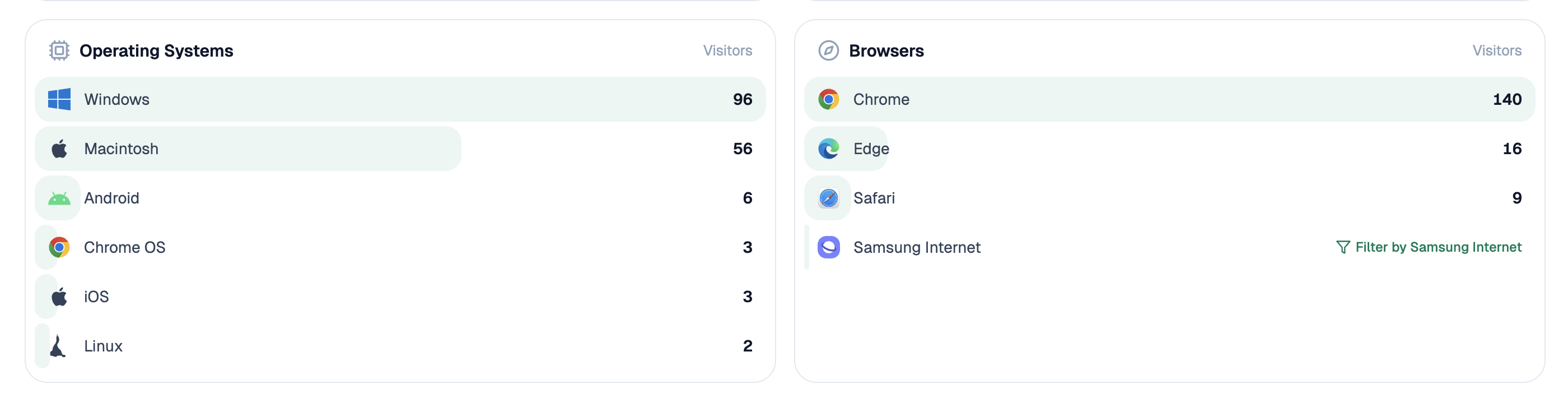 AI traffic analytics reports assistant sessions per landing page, so a comparison page is not judged on a channel report that hides them.
Keep coverage measured automatically
Start (schedule, monthly) → funnel-coverage recipe for page counts and results by stage → HubSpot Search Deals pulling lost reasons and won customer types, so the list rebuilds when your competitive set changes → GA4 Page Breakdown for visits and conversions per existing buying page → Citation Pages showing which of those assistants already cite → Conditional comparing coverage against 80% and choosing which list to recommend → Send Notification naming the single next page to build.
Rebuilding the required list from CRM data is what keeps this honest. A list written in January still says six comparison pages in November. By then you are losing to a rival nobody has written about. Letting lost reasons drive the count means coverage drops the moment a new competitor shows up.
FAQ
Related answers
- Should I prioritize a high-volume informational topic or a low-volume buying question?
- How much top-of-funnel content does a company actually need?
- Should this be an article, comparison page, case study, tool, or service page?
Find out how stocked your buying shelf is
Analyze AI builds your required buying-page list from CRM data, measures coverage, and names the next page worth building.
Start your free trial