
How do I tell if a topic is relevant to my product or just adjacent?
Short answer
Two quick tests. First, check whether search results and AI answers for that topic mention any products at all, because a topic where nothing ever names a product is a topic your audience reads rather than buys from. Second, count how many sentences it takes to get from the topic's natural ending to your product. One is fine. Three means the topic is not yours.
Test one: does anything on the topic mention a product?
Your audience cares about hiring, remote work and burnout. None of those are your topic unless you sell into them. Every content team has a folder of well-written posts that proved this the expensive way.
Interest and demand are different. Interest means someone reads it. Demand means reading it moved them closer to buying. This test tells them apart in about five minutes.
- Search the topic's main keyword.
- Count how many of the top ten are product pages, comparison pages, or lists that name tools.
- Ask the same question in ChatGPT, Perplexity and Google AI Mode.
- Count how many answers name a tool or a type of product.
If fewer than two of the ten results and none of the three answers mention a product, the topic sits outside buying. Writing better will not change that, because the reader is not shopping and neither engine thinks the question has products in the answer.
Our own state of AI search research backs up using the answer itself as the signal. Across 5,755 matched days, brands got named in 32.3% of ChatGPT answers, 33.7% on Google AI Mode and 41.7% on Perplexity. Whether products come up varies hugely by question. A topic that never triggers it anywhere is telling you something the search volume cannot.
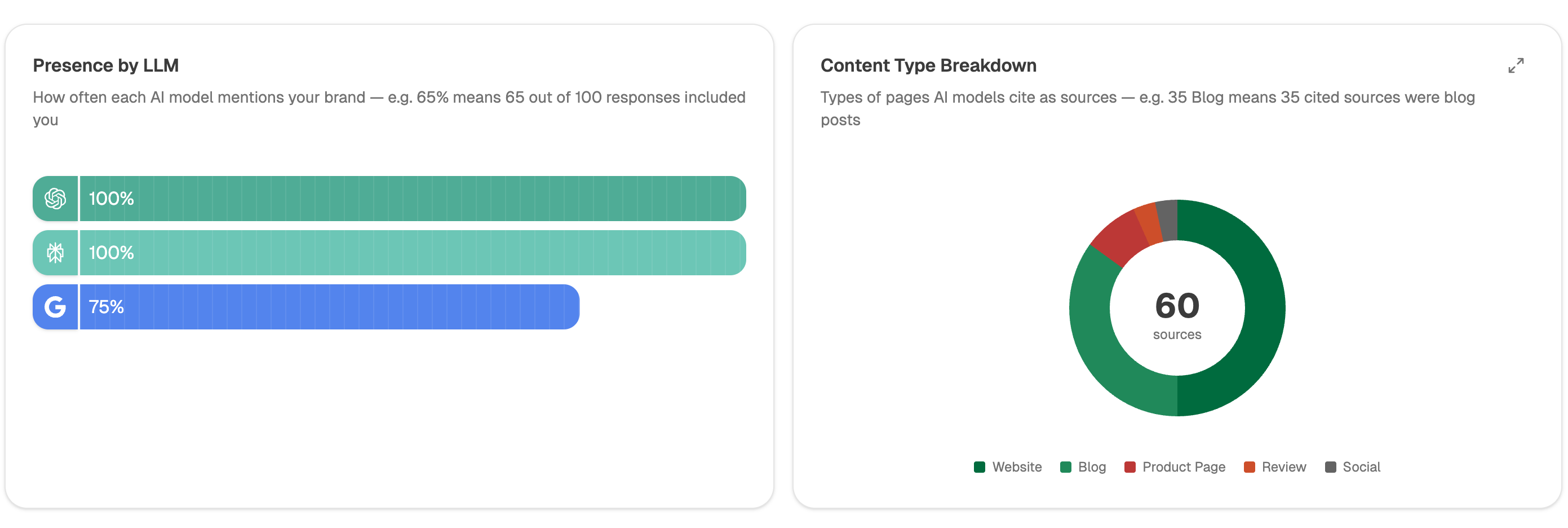 Tracked questions show the brands named in each answer, so you can see at a glance whether the topic surfaces products at all.
Test two: how many sentences to reach your product?
Write the topic's honest ending in one sentence. Then write the sentence that gets from there to what you sell. Count them.
| Sentences needed | How it reads | Verdict |
|---|---|---|
| None | The ending is your product category | Core topic |
| One | A natural next step for the reader | Relevant, write it |
| Two | Needs a paragraph to justify the turn | Adjacent, only with a good reason |
| Three or more | Reads as a sales pitch stapled on | Adjacent, skip |
Try it. Topic: how to run a quarterly business review. Honest ending: a good review rests on numbers everyone agreed before the meeting. Sentence one, teams who cannot agree on numbers usually have no shared place to get them. Sentence two, that is what a reporting tool gives you. Sentence three, which is what we sell. Three sentences, so it is adjacent.
Change the topic to how to report organic revenue to a board and the count drops to one, because the ending already names the thing your product makes.
The count works because it matches what the reader feels. Every extra sentence is a moment where the post stops helping and starts selling. Google's guidance on creating helpful content asks whether a page has a clear purpose for the person reading it, and a three-sentence turn fails that in a way people notice immediately.
Know when an adjacent topic is still worth it
Three cases, all of them chosen on purpose rather than by accident.
- Links and citations. Adjacent topics with original data earn references that lift the pages you do sell from. Budget them as promotion, not as demand.
- Setting the rules. If the adjacent topic is where your buyer decides what to look for, it does work no comparison page can.
- You are moving into that space. The content is the front edge of a product decision.
What fails is the fourth case, where an adjacent topic gets written because it has volume and someone will argue for its brand value later.
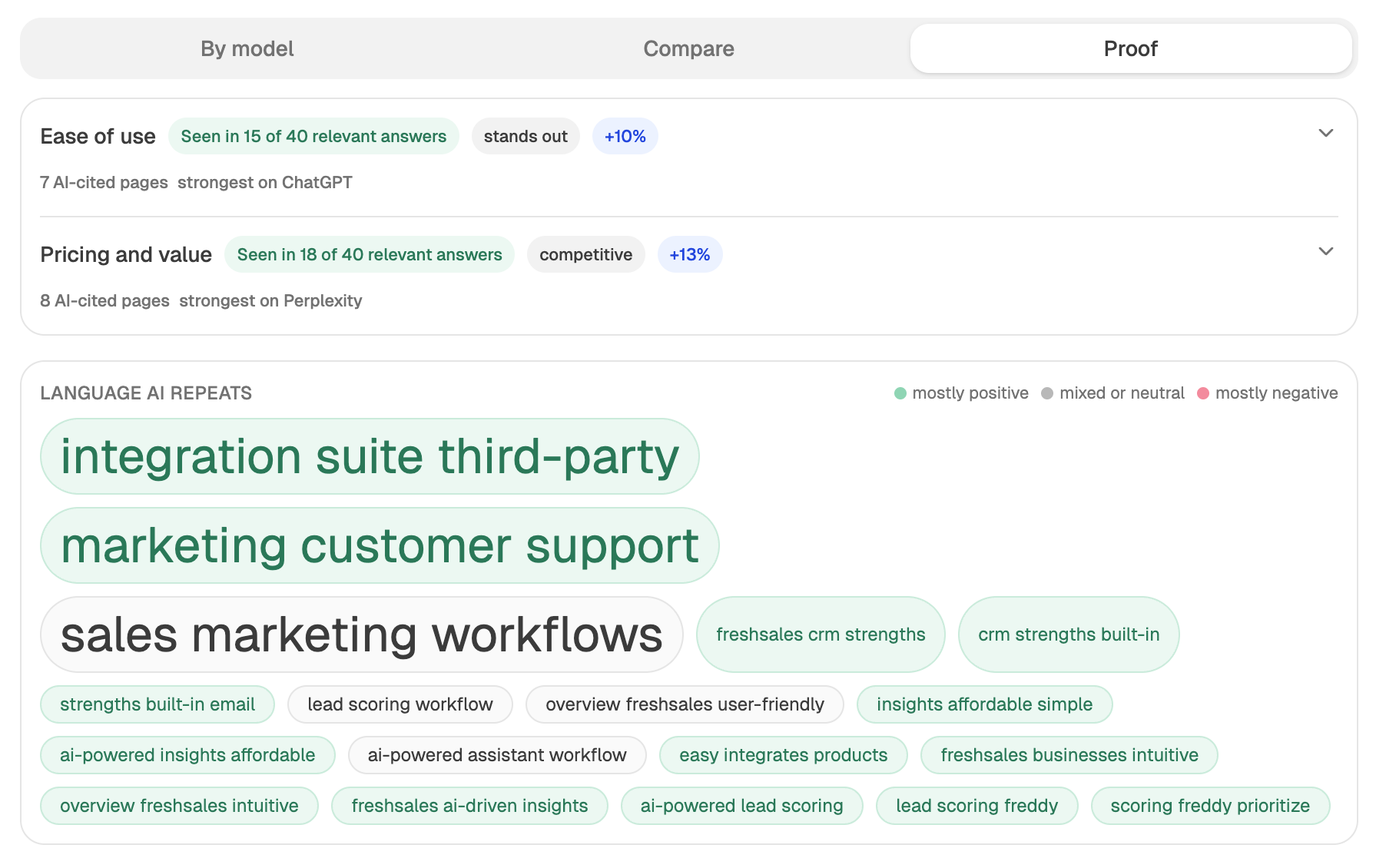 Perception themes show what your market already associates you with, which is a fast read on how far a topic sits from you.
Score every topic at once in Analyze AI
Two tests by hand is fine for five topics and impossible for eighty.
Start (manual, your topic list as a file-csv) → Prompt Responses running each topic live across providers and returning whether products were named and which → unmentioned-prompts recipe for topics where nobody in your market shows up → AEO Content Scorecard on your closest existing page to see whether you could even be picked → Get Perception Quadrant placing you against rivals on the topics that do mention products → Export CSV with a verdict per row.
Build the whole thing around the unmentioned-prompts recipe. It separates two problems that look identical in a spreadsheet. Topics where nobody in your market appears are an adjacency problem and you should stop writing. Topics where rivals appear and you do not are a visibility problem and you should write more, which is covered in why does ChatGPT recommend my competitors but not my company.
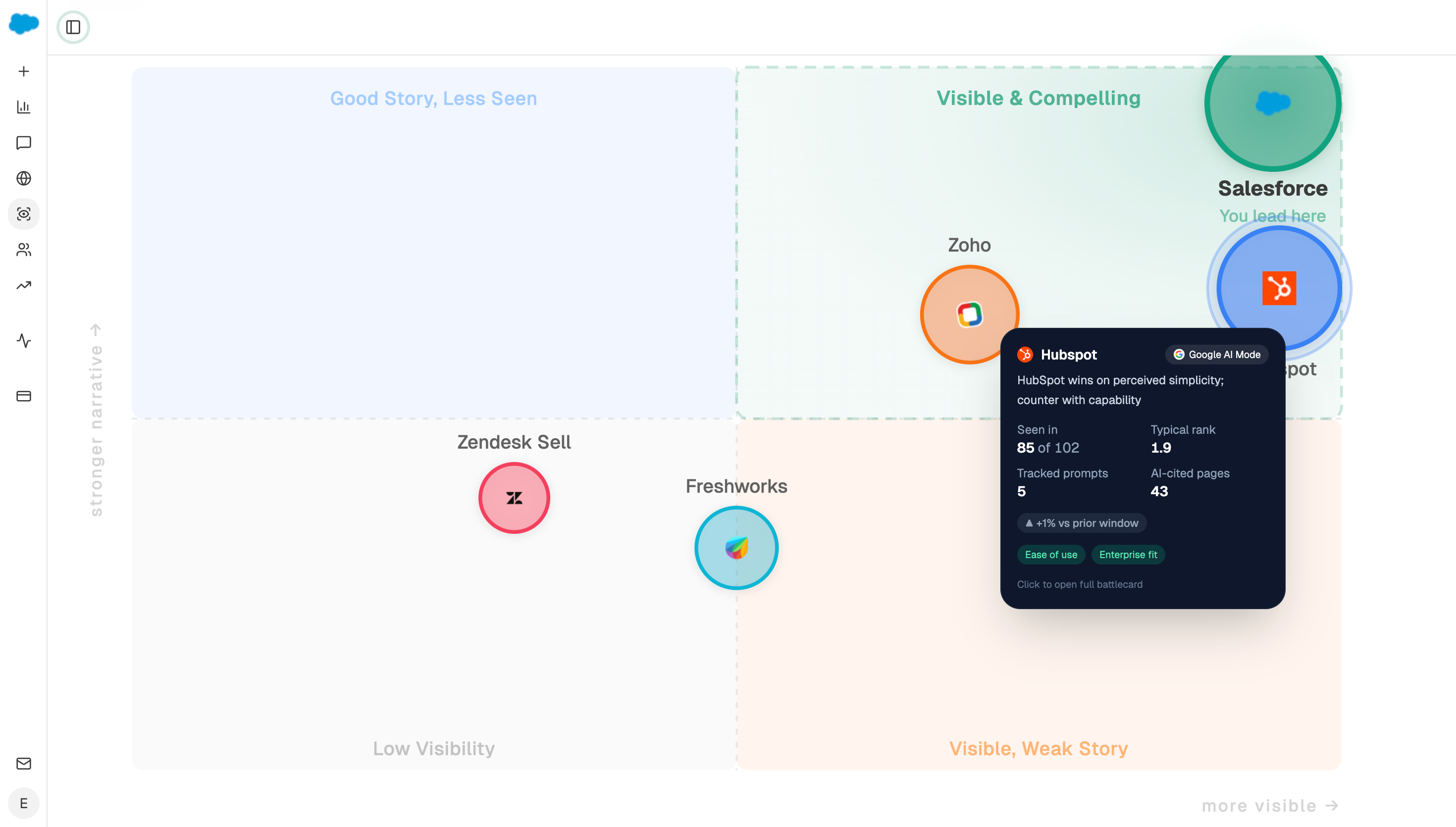 Perception separates being named from being recommended, which is the difference between showing up and being chosen.
FAQ
Related answers
- How do I find topics that attract buyers instead of students and researchers?
- Which competitor content gaps are real buying demand and which are just missing word count?
- Are zero-search-volume topics worth writing about?
Stop writing beautifully about topics that never sell
Analyze AI runs your topics as live questions and tells you which ones mention products, which mention rivals, and which mention nobody.
Start your free trial