
Which competitor content gaps are real buying demand and which are just missing word count?
Short answer
A gap is real when it shows up in two places, not one. Your own impressions, your competitor's actual traffic to that page, the AI answers for that question, and your sales conversations are four separate sources. A gap appearing in only one of them is usually just a page your competitor happened to publish. Make every gap prove itself twice before it reaches a brief.
Know what a gap tool actually tells you
It tells you your competitor has a page and you do not. That is the whole message.
It does not tell you anyone searches for it, that the page gets traffic, that the traffic buys anything, or that your competitor is even pleased with it. Plenty of gaps are somebody's abandoned experiment, and inheriting a competitor's bad quarter is a strange way to plan yours.
The word count version is the same mistake, smaller. A tool says a ranking page covers a section you left out, so someone adds a section. Google's own guidance warns against writing to a word count because you heard there was a right one, and asks instead whether your page is worth more than what already ranks. Three hundred words on a topic nobody asked about fails both tests.
Make each gap prove itself twice
Score every gap against four sources and keep the ones that hit at least two.
| Where to check | What counts as a hit | Where it comes from |
|---|---|---|
| Your own impressions | You already show up for the term or something close | Search Console, 16 months |
| The competitor's page | The page gets real traffic, not just a ranking | Semrush or DataForSEO |
| AI answers | Assistants give a real answer that names tools | Live prompt runs |
| Sales conversations | The question appears in calls, support or lost notes | CRM notes and transcripts |
One hit is a hunch. Two is demand. Three or more and you should be embarrassed the page does not exist.
Run this over a typical export of 150 gaps and you will usually keep 15 to 30. That cut is the whole point. A list of 150 gets worked through in whatever order the tool happened to sort it, which is no order at all.
Work through the filter
- Export the gap list, keeping the competitor URL and the target term.
- Check each term and its distinctive words in Search Console across 16 months.
- Look up traffic for each specific competitor URL, and drop the rows where the page ranks but gets almost nothing.
- Run what is left as live questions across ChatGPT, Perplexity and Google AI Mode.
- Search your CRM notes and call transcripts for the same words.
- Keep anything with two or more hits, and sort by which pair confirmed it. Impressions plus sales conversations is the strongest pair you can get.
Analyze AI does most of steps three to five for you. The competitor-topics recipe returns what rivals cover and you do not, and Ad Hoc Prompt Searches runs the live check across all three assistants at once.
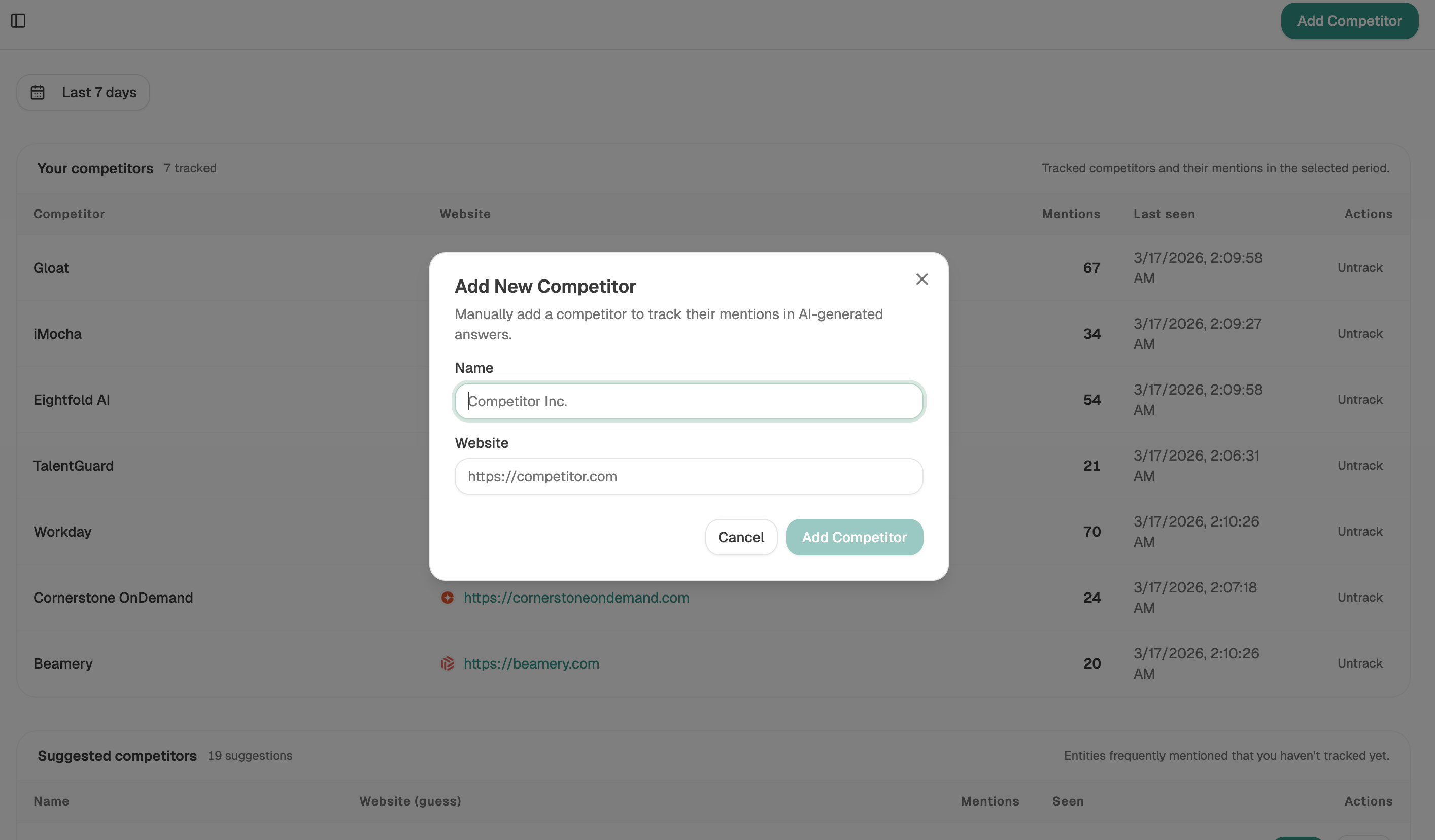 Competitor tracking shows which questions rivals actually own in answers, which beats knowing which URLs they have published.
Spot the three gaps that always fail
Worth recognising on sight, because together they are a big share of any export.
- The abandoned experiment. A page from two years ago with no traffic and no internal links pointing at it. Your competitor stopped believing in it and the tool cannot tell.
- The wrong audience. A genuinely busy page aimed at people you do not sell to. Enterprise vendors inherit these constantly from rivals chasing smaller customers.
- The phantom section. A tool says you are missing a section because ranking pages happen to have one. Check whether any of them rank because of it.
None of these clear two sources, which is the filter doing its job.
Ask whether the AI check adds anything
It does, because the two channels disagree more than people expect.
In our own state of AI search research, ChatGPT and Perplexity built their answers from almost entirely different sets of sites, sharing at least one site on only 25.3% of the days we compared. Perplexity and Google AI Mode overlapped more, at 56.8%.
So a question can be locked up on Google and wide open in assistants, or the other way round. A gap that fails the impressions test but returns real answers with no clear incumbent is a genuine opening, and an ordinary gap analysis will never flag it. Our writeup on brand gap analysis covers reading that second view.
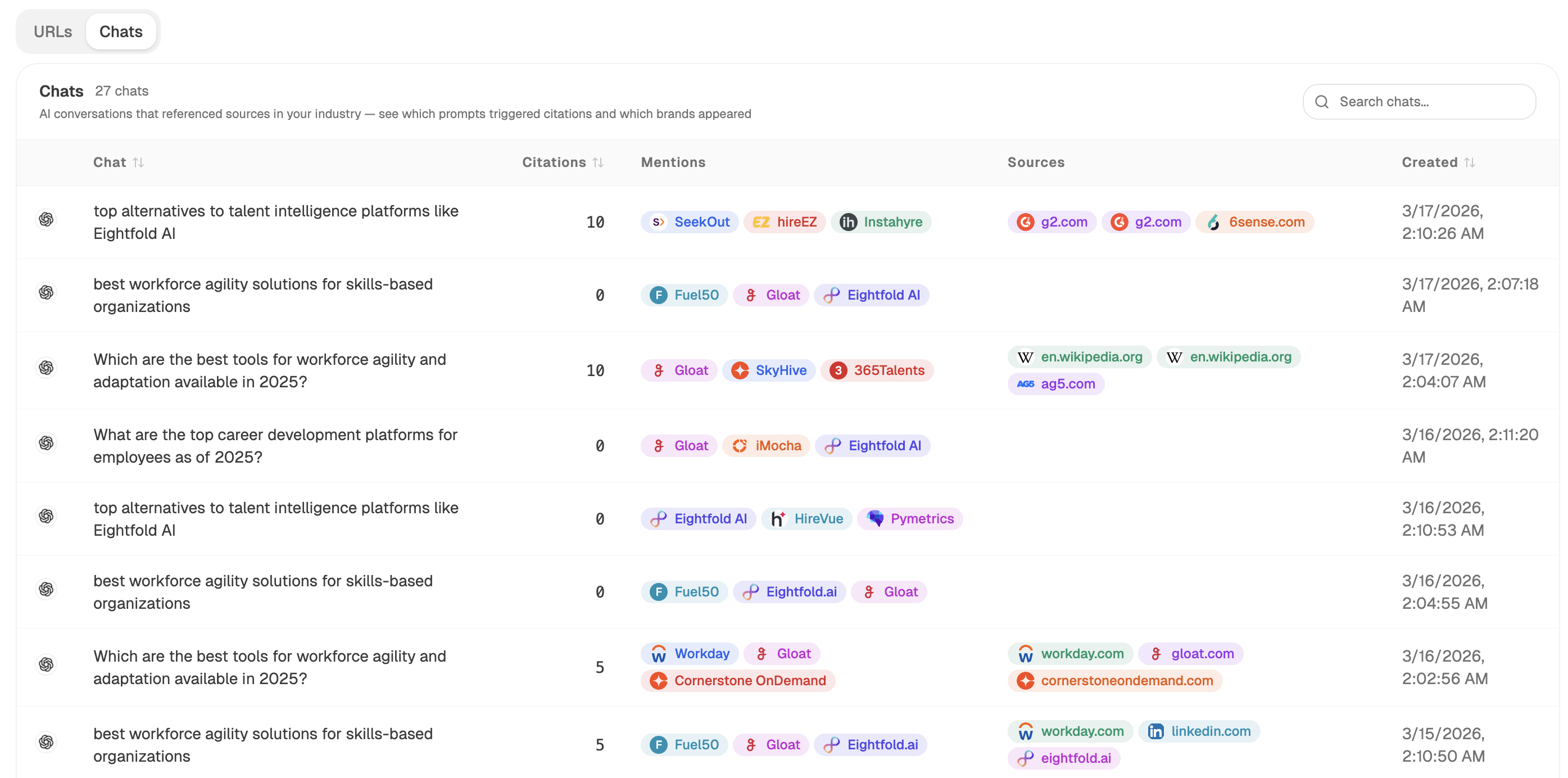 Sources makes the disagreement visible, because the assistants often build the same answer from different sites.
Automate the qualifying
Start (schedule, monthly) → competitor-topics recipe for what rivals cover → Semrush Domain Organic Search Pages for the competitor URLs behind each topic → GSC Top Keywords for Site matched against the same terms → competitor-sources recipe listing pages that cite rivals and never you → Loop running each surviving term as a live question → Conditional keeping only rows with two or more hits → Export CSV sorted by which pair confirmed it.
The competitor-sources recipe is the addition most gap workflows lack. A gap is not only a page you are missing. It is also a page out there that keeps citing your rival and has never cited you. Those are often cheaper to win, because the demand and the ranking already exist and only the mention is missing. How to find and prioritize the pages where a mention would boost your AI visibility covers that route.
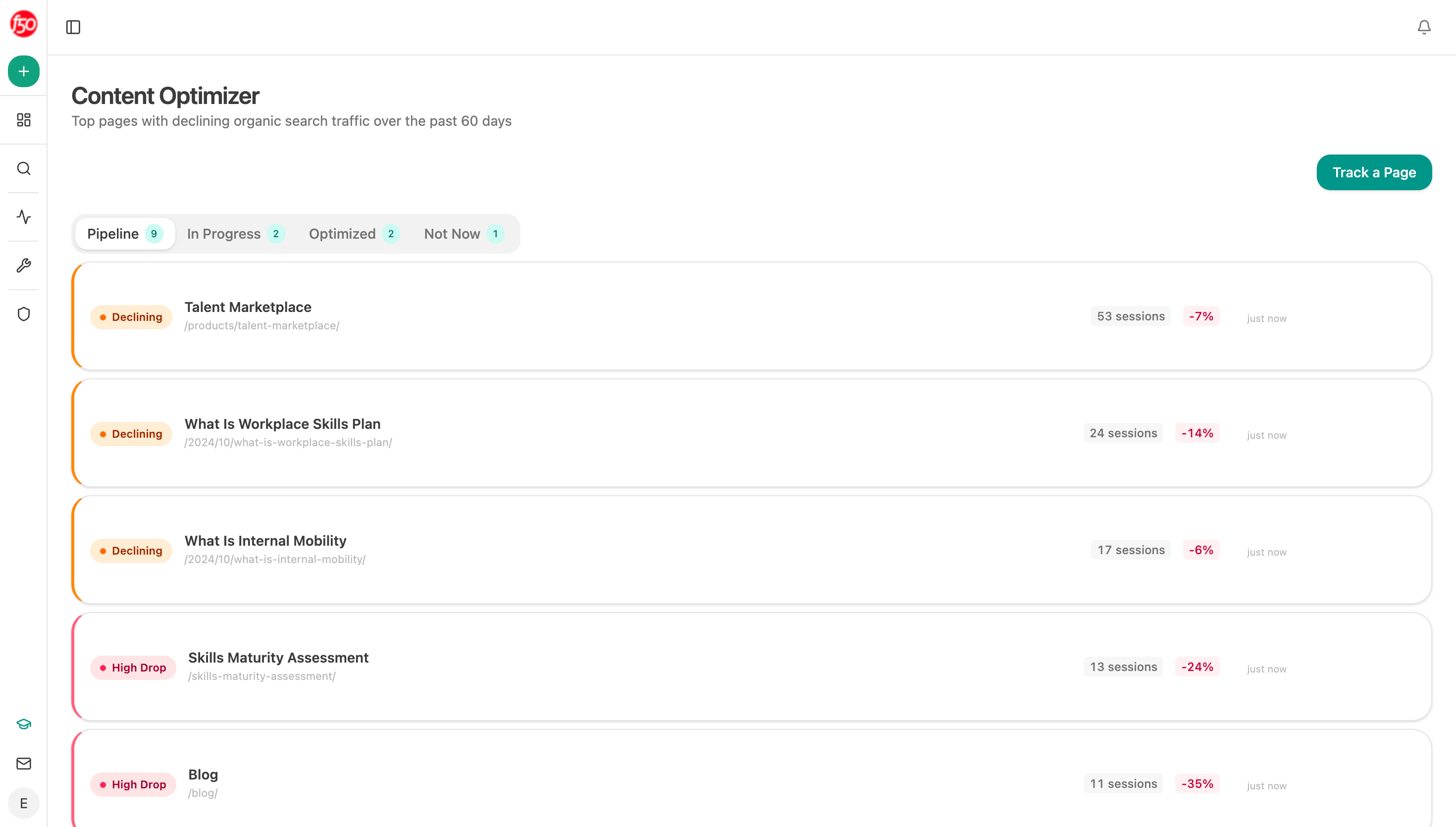 When the gap sits on a page you already own, the optimizer names the missing element rather than recommending more words.
FAQ
Related answers
- How do I find non-brand demand we can realistically win?
- How do I tell if a topic is relevant to my product or just adjacent?
- How do I prioritize content ideas by expected revenue and effort?
Check gaps before they reach your writers
Analyze AI tests every competitor gap against your impressions, their real traffic, live AI answers, and your CRM.
Start your free trial