
How do I turn internal expertise into content without making experts the bottleneck?
Short answer
Stop asking experts to write. Their job becomes twenty minutes of talking and one round of approval, and everything else moves to a writer or an agent. That takes an expert's time from roughly four hours per piece to thirty minutes, which is the difference between a programme that runs and one that stalls in someone's drafts folder.
Count the expert time you are actually asking for
Most expert-led content fails on arithmetic rather than willingness.
| Way of working | Expert time per piece | Pieces per expert per quarter |
|---|---|---|
| Expert writes the draft | 4 to 6 hours | 2, optimistically |
| Expert writes an outline, writer drafts | 2 hours | 4 |
| Expert reviews a writer's draft cold | 1.5 hours | 6 |
| Expert talks for 20 minutes, approves once | 30 minutes | 15 or more |
The bottom row is the only one that survives contact with a real quarter, because it is the only one where the expert is never asked to produce anything in writing. Talking is something they already do all day. Writing is a second job.
Run the twenty-minute extraction
The interview is the whole product. Everything downstream is mechanical.
- Send three questions in advance, no more, so they arrive with something in mind.
- Record the call. Twenty minutes, hard stop.
- Ask for specifics rather than principles. The question bank in what should I ask a subject-matter expert to get genuinely original content is built for this.
- When they say something interesting, ask for the example. The example is what nobody else can publish.
- End by asking what most people get wrong about this. That answer is usually your headline.
Do not send questions the expert has answered publicly before. You are looking for what is in their head and not yet on the internet.
Move transcript to draft without touching them again
This is where Analyze AI does the work that used to sit with the expert.
Start (webhook, fired when your call platform finishes a recording) → Transcribe Audio with speaker separation so the expert's turns are isolated → Inject Brand Context pulling TONE_STYLE, CLAIMS_MESSAGING_RULES and DISALLOWED_PHRASES so the draft sounds like your company rather than a model → Prompt LLM turning the expert's answers into an outline that keeps their examples and numbers intact → Generate Research filling the supporting context around them → Content Writer producing the draft → Export DOCX and Send Notification to the writer.
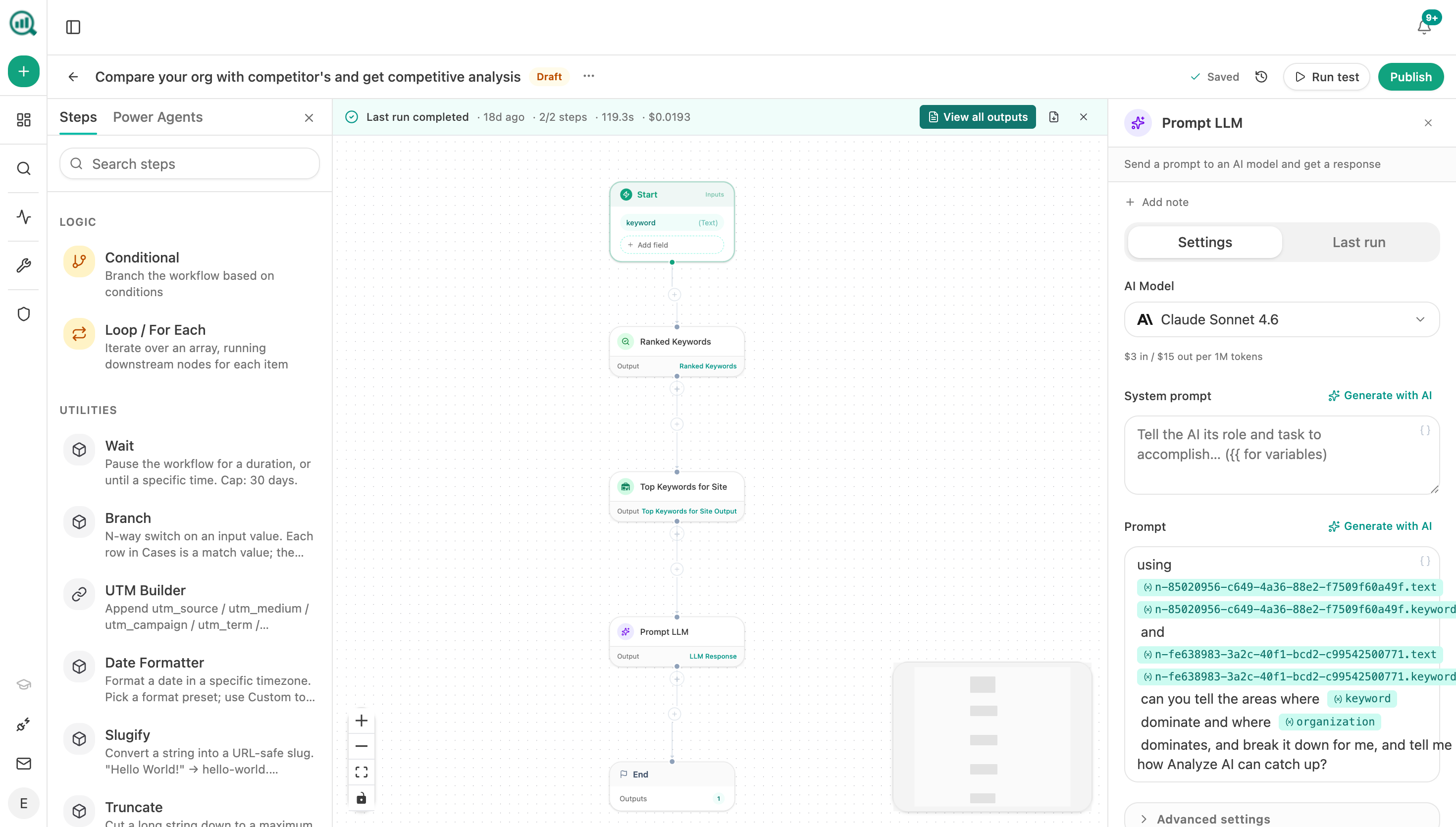 The extraction runs as a chain like this one, with a configured Prompt LLM step doing the work between the transcript and the outline.
The Inject Brand Context node is what makes this survive. Without it, the draft comes back in a generic voice, the expert reads three paragraphs that do not sound like them, and you have lost the trust that made them agree in the first place. Feeding your documented tone and claim rules into the same step that writes the outline keeps their language intact.
Protect the two things only the expert can give
Automating the pipeline creates one risk worth naming. The specifics get smoothed away.
Two things must survive from transcript to published piece. The examples, with their real details, and the numbers, with their real caveats. If the draft turns "we saw this fail on three migrations because the export ran before the mapping" into "migrations often fail due to sequencing issues", you have produced the same article everyone else has. That is the mechanism behind why does our content sound the same as every competitor's.
Add a review step for this specifically. Before the draft goes to the expert, someone checks that every example from the transcript is still in the piece with its details attached.
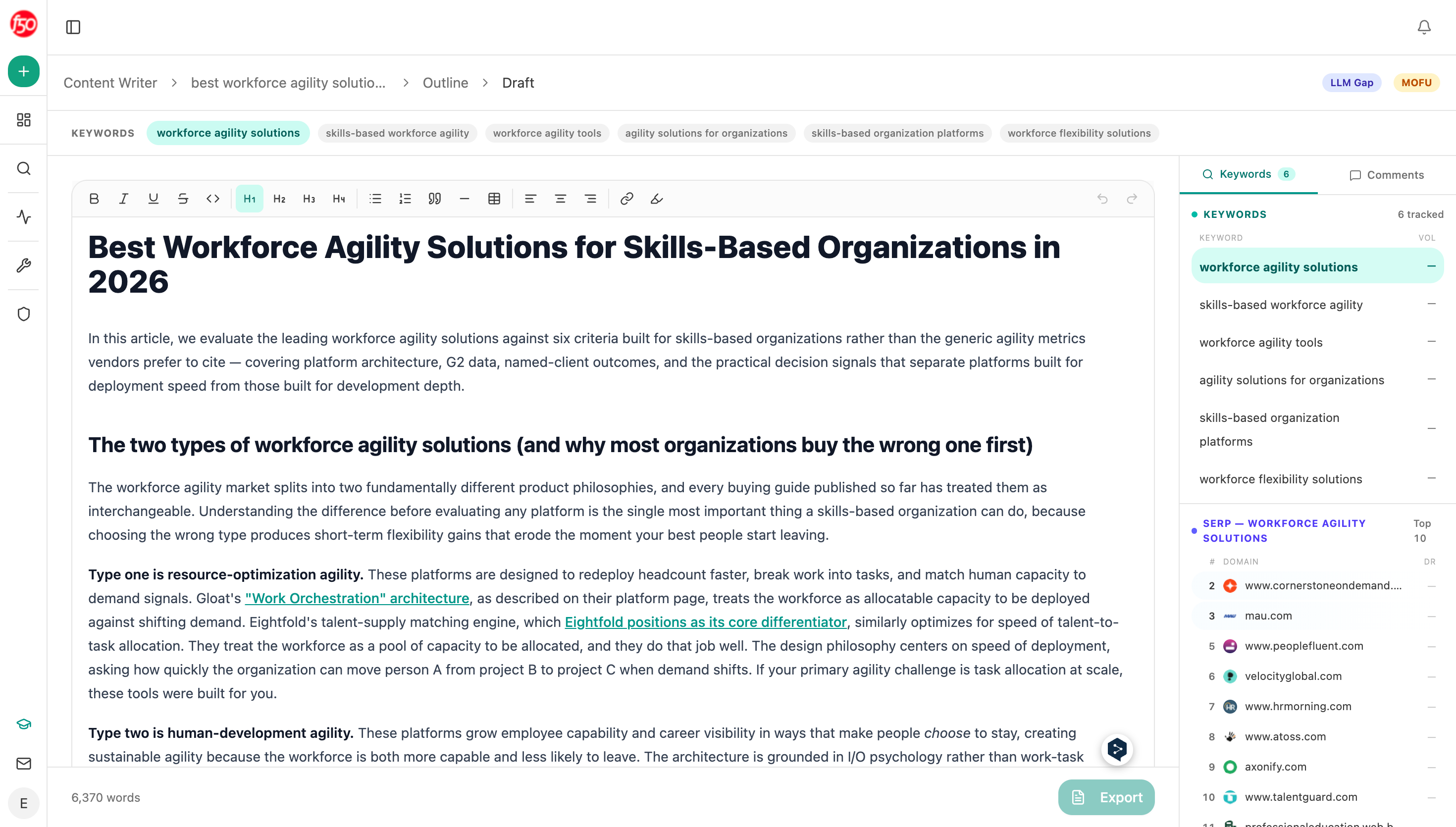 The draft arrives complete, so the expert's next involvement is reading rather than writing.
Make approval cheap
The last thirty minutes of expert time is approval, and it goes wrong in a predictable way. You send a full draft, they read it as a writing sample, and you get line edits on things that do not matter.
Ask a narrower question instead. Send the draft with three specific asks: is anything here factually wrong, is any example misrepresented, and is there a claim you would not defend in front of a customer. That is a fifteen-minute read rather than a rewrite, and it keeps the expert on the thing only they can judge.
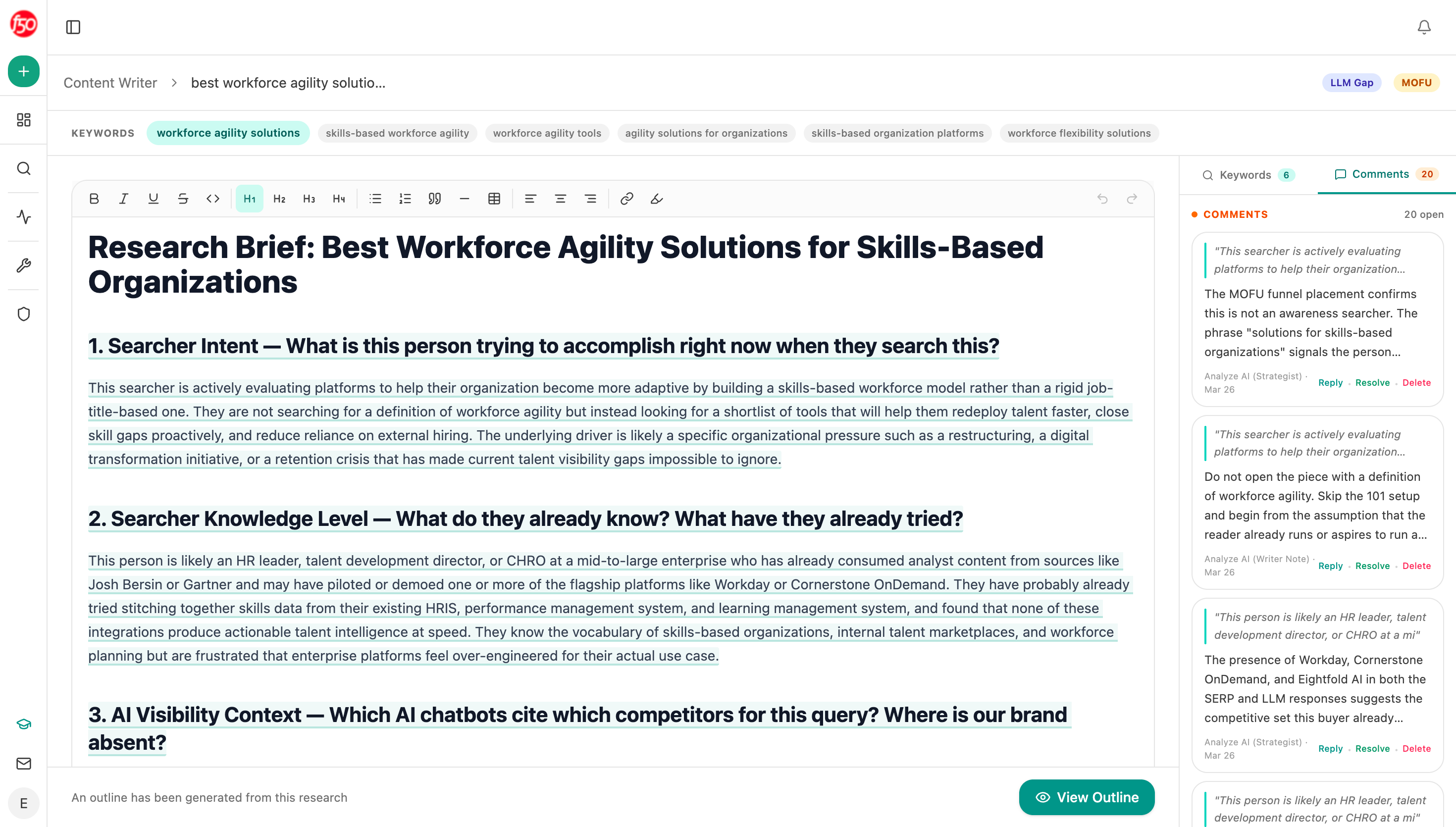 Comments sit against specific passages, so approval is a set of narrow questions rather than an open invitation to rewrite.
Check the output is still distinctive
Run the finished piece through the Content Optimizer before publishing. It fetches the live version and reports what it actually covers, which catches the case where the expert's specifics got sanded down in production. The proof-gaps recipe does the same for claims made without evidence.
Google's guidance on creating helpful content asks whether a page shows first-hand expertise and provides original information. An extraction pipeline can produce exactly that, and it can also produce a fluent summary of nothing, which is why the check belongs at the end.
FAQ
Related answers
- What should I ask a subject-matter expert to get genuinely original content?
- Why does our content sound the same as every competitor's?
- How do I prove an article adds net-new value instead of summarizing what already exists?
- How do I build a reusable library of approved claims and proof points?
Get your experts out of the drafting queue
Analyze AI turns a recorded conversation into a drafted piece in your own voice, so the expert only talks and approves.
Start your free trial