
How do I measure whether thought leadership influenced a deal?
Short answer
Ask, because your analytics cannot see most of it. Add one open question to your demo form and one to your discovery call, then read the answers monthly. Attribution models will not find this reading, since it usually happens on someone else's site, in an assistant, or months before the first visit you can track.
Understand why tracking will not answer this
Thought leadership does its work in exactly the places your tracking cannot reach.
Someone reads a contributed article on an industry site and never visits you. Someone gets your argument secondhand from a colleague. Someone reads a summary inside an AI answer, and Pew Research found people clicked a source link in about 1% of visits when an AI summary was present.
Google's generative AI performance report reflects the same limit from the other side, reporting impressions, pages, countries and dates with no clicks and no query data.
So a model that assigns credit here is inventing it. Anyone selling you a thought leadership attribution number is modelling something they cannot observe.
Ask two questions and read the answers
The reliable method is unglamorous and it works.
On the demo form. One open field: "What made you get in touch now?" Open, not a dropdown. Dropdowns collect the option nearest the top.
On the discovery call. One question from the rep: "Had you come across us before this, and where?" Reps get better answers than forms because people elaborate out loud.
Then read the verbatim responses monthly rather than counting categories. You are looking for specific mentions: an article, a talk, a number someone remembered. Twenty responses a month is enough to see whether anything you published is being named.
Record the exact wording. "I read your piece about content decay and it matched what we were seeing" is evidence. "Google" is not.
Watch two indirect signals in between
Interviews are monthly at best. Two things move faster and tell you whether the ideas are travelling.
Branded search for your ideas. If you named a concept, watch whether people search it. A rising branded or concept search is one of the few unambiguous signs a piece landed.
Perception themes. Analyze AI reports the themes assistants associate with your brand, and the narrative-themes recipe returns how they shift over time. A published position that lands starts showing up in how you get described, usually over a quarter or two.
Neither proves a deal. Both tell you whether the work is having any effect at all, which is the question most teams actually need answered.
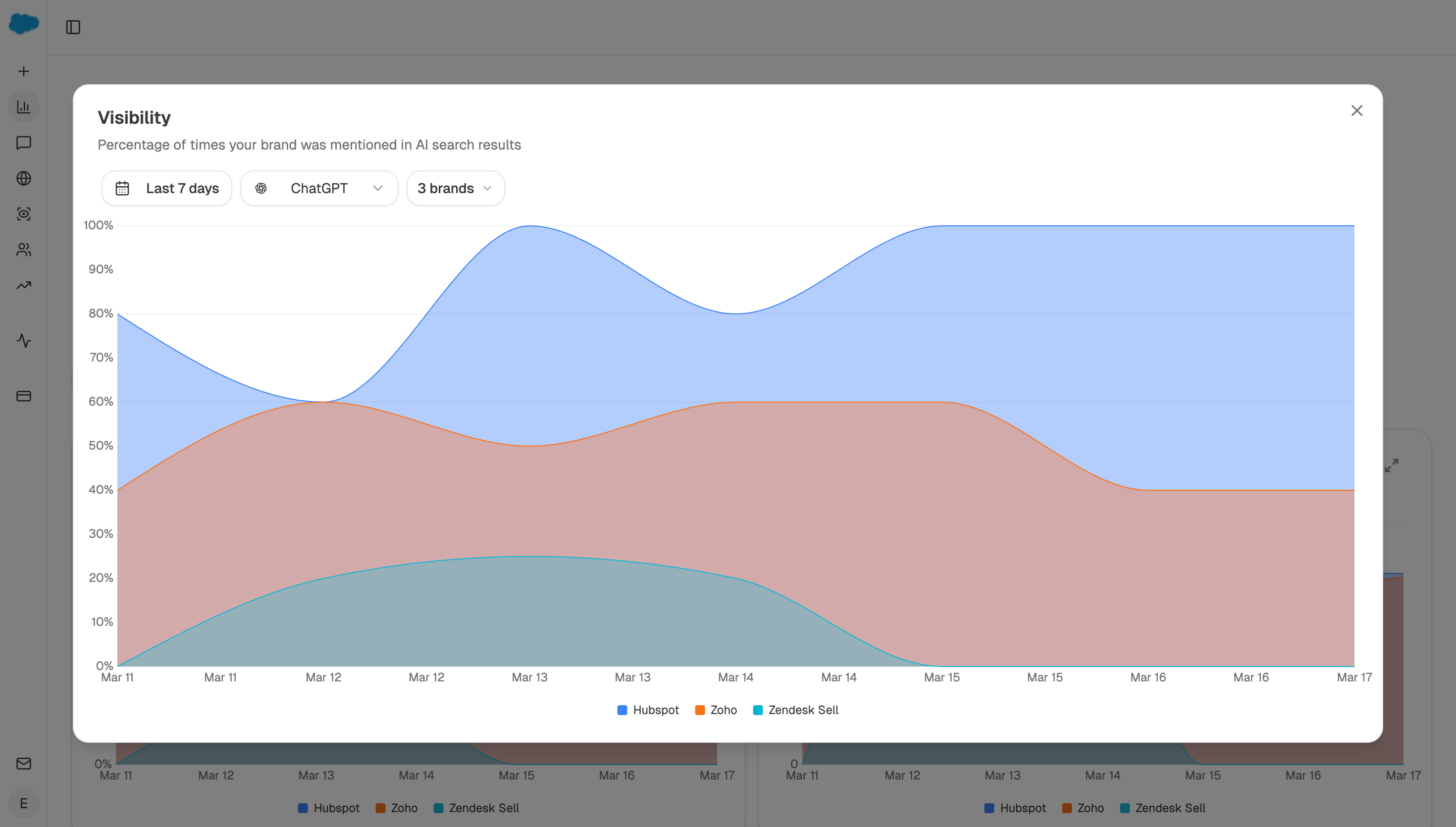 Visibility over time is a slow signal, which is the right speed for judging whether a position has started to land.
Report it as influence, and say what it is not
The temptation is to convert this into a pipeline number so it survives budget season. Resist it, because an invented number collapses the first time someone audits it.
Report three things instead. How many closed-won deals named a specific piece unprompted. Which pieces were named. And the perception or citation movement over the same period.
Then state the limitation in the same breath: this is self-reported and it undercounts, because people forget where they read things. Saying that makes the number you do report more credible, not less, and it is the same discipline as how do I measure organic-influenced pipeline without claiming false precision.
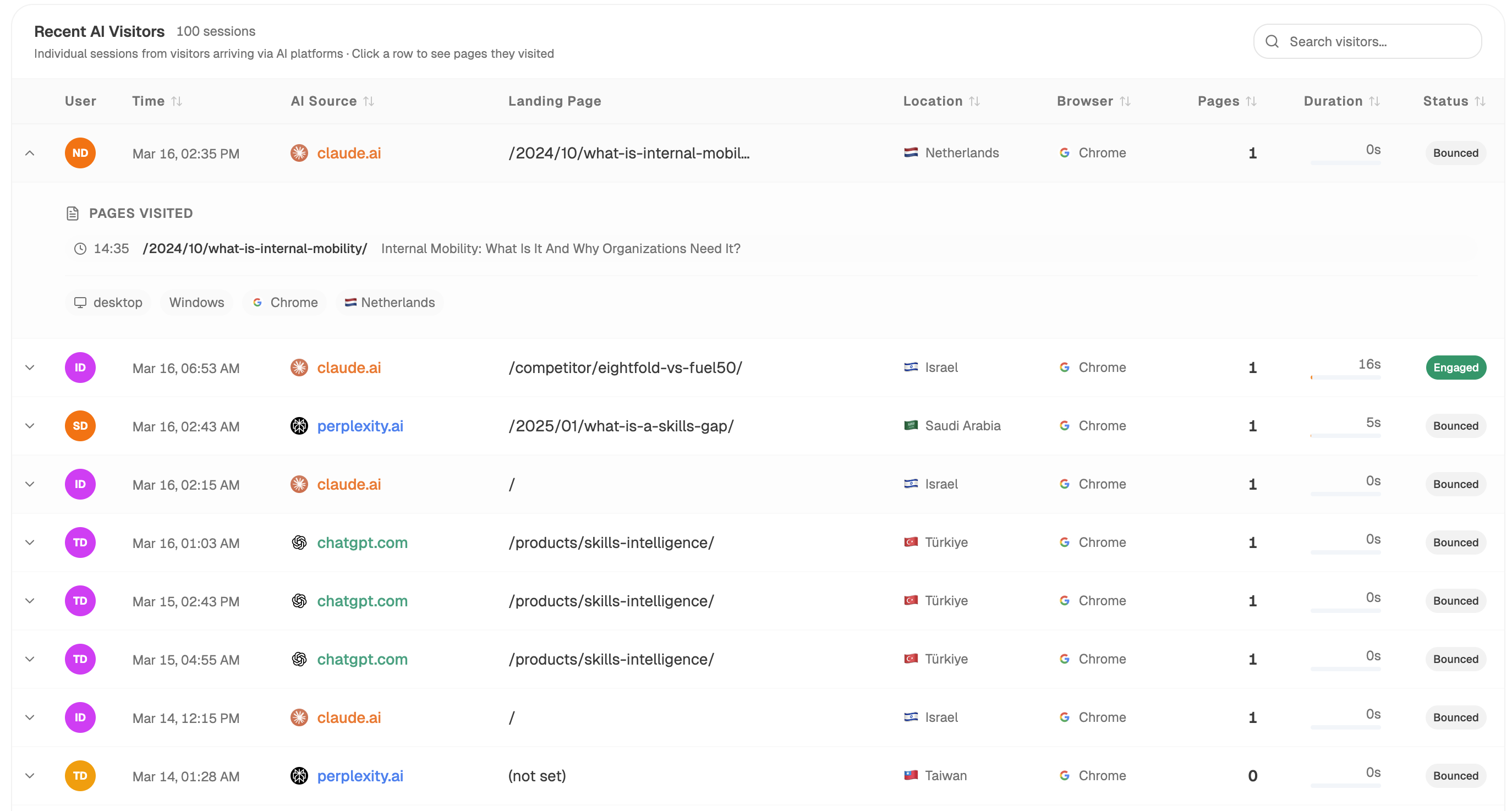 Assistant-referred sessions are visible per landing page, which captures the small share of this reading that does produce a visit.
Set the bar before you publish, not after
The argument about whether thought leadership works is usually had after the fact, which is why it never resolves.
Decide in advance what a successful piece looks like. Named by three customers in six months. Ten new referring domains. Appearing in the sources for two tracked questions. Any of those is a real bar, and a piece that misses all three has told you something.
That is the same discipline applied to educational posts in do generic educational blog posts still deserve budget.
Collect it without anyone remembering to
Start (webhook, fired when a deal is marked closed-won) → HubSpot Get Deal with the form responses and call notes → Transcribe Audio on the discovery call if it was recorded → Prompt LLM extracting any mention of a specific article, talk or idea → Code node matching mentions to published pieces → narrative-themes recipe for perception movement over the same period → Export Excel appended to a running record.
Appending to a running record rather than reporting a monthly total is what makes this usable. One month of self-reported mentions is noise. Eighteen months of them shows which pieces keep coming up, and that list is genuinely useful when deciding what to write next.
FAQ
Related answers
- What makes thought leadership useful to a hidden B2B buyer?
- How should I value content that influences a deal but doesn't create the lead?
- How can I value zero-click exposure when the buyer never visits our website?
- Do generic educational blog posts still deserve budget?
Track the signals you can actually see
Analyze AI reports how the themes attached to your brand shift over time, alongside the assistant traffic that does reach you.
Start your free trial