
Do generic educational blog posts still deserve budget?
Short answer
Only if they earn something other than traffic. Educational posts are exactly what assistants answer in full, so the visits argument is weak now. They still do three jobs: they get cited as sources, they earn links, and they shape how buyers judge your category. Set a measurable bar for one of those before you commission the post, and retire it if it misses.
Accept that the traffic case has weakened
The old argument was simple. Broad educational posts brought volume, volume brought some buyers, and the maths worked.
Two things changed it. Pew Research found people clicked a source link in about 1% of visits when an AI summary was present, and Google's generative AI performance report now reports impressions with no clicks and no query data, which is a fair description of what these posts increasingly earn.
That does not make them worthless. It means you have to be explicit about what you are buying, because you are no longer buying sessions.
Pick which of the three jobs the post is doing
Commission nothing until someone names the job and the bar.
| Job | What it earns | A bar you can check |
|---|---|---|
| Getting cited | Presence inside answers you never see | Cited on 3 tracked questions within 2 quarters |
| Earning links | Authority that lifts your commercial pages | 10 new referring domains in 2 quarters |
| Setting criteria | Buyers arrive with your framing | Named in sales calls, or shows up in perception themes |
Any post that cannot claim a job and a bar is being written out of habit. That is the pattern in are we publishing content because it works or because output is easy to count.
Make it citable rather than comprehensive
If the job is citation, the post has to be built differently from a traditional guide.
Assistants pull passages that add something to an answer. A 3,000-word survey of a topic offers nothing to pull, because everything in it is already in the answer. A shorter piece with a number, a threshold, or a named exception gives the model a reason to reach for you.
Our own state of AI search research checked 4,824 cached pages and found only a weak, slightly negative link between how strong a site is and how widely its pages get cited. Being useful to the answer matters more than being authoritative, which is unusually good news for smaller companies.
Analyze AI's Sources and citation-magnets show which of your pages assistants keep returning to, and uncited-pages lists the ones they never touch. Put both next to your traffic report and the picture changes.
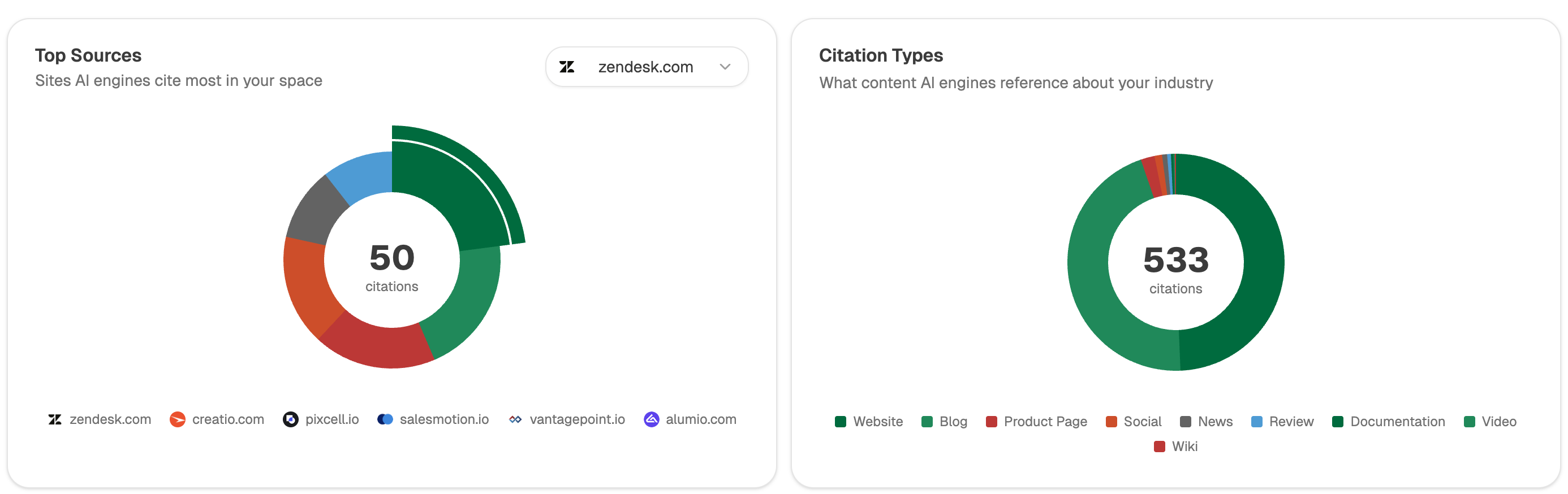 Top sources and citation types show which kinds of content get used in your market, which is what a citation-first post has to look like.
Measure the reach you cannot see
The uncomfortable part of this budget case is that success often looks like nothing in analytics.
A post can be cited hundreds of times, shape how a category is described, and send you almost no visits. If your reporting only counts sessions, it will look like a failure and get cut.
So report the citation number alongside traffic for these posts specifically. Analyze AI's Citation Pages view gives you the count per page, and the scheduled digest reports which pages gained or lost citations since last month. Be careful what you claim from it though. Citation is selection, not a visit, and we do not publish click figures because we do not have them.
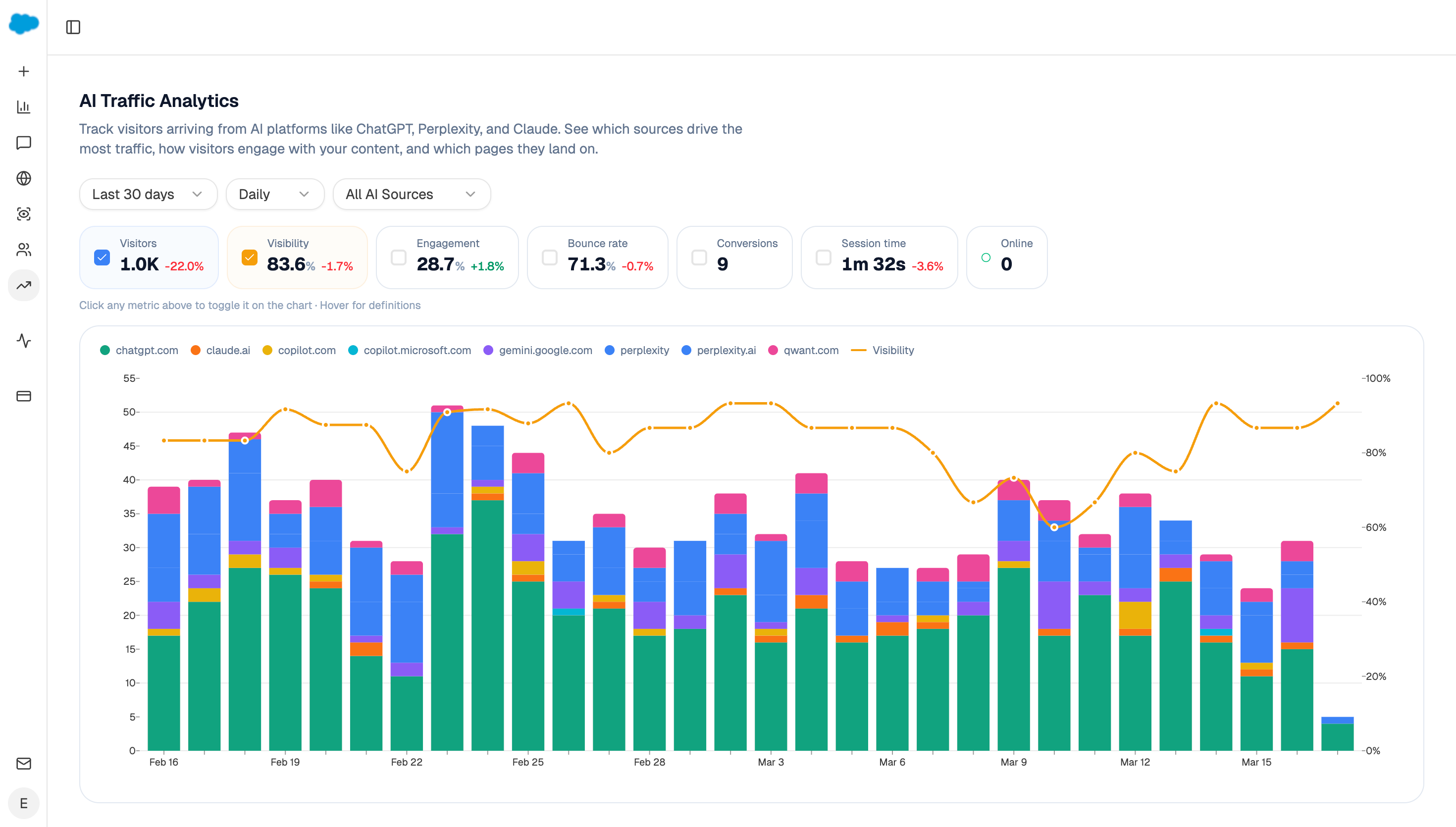 Assistant-referred sessions are reported separately, so the small amount of traffic these posts do send is not lost inside Direct.
Retire the ones that earn nothing
Give each post two quarters against its stated bar, then act.
Posts that hit the bar get kept and refreshed. Posts that miss get one rewrite aimed at the specific job, usually by adding the number or threshold they lacked. Posts that miss twice get merged into a stronger page or retired, which is the decision in when should I rewrite, merge, redirect, or retire an underperforming page.
Doing this properly is what makes the budget defensible. A programme that never retires anything is asking for faith rather than making a case.
Run the review as an agent
Start (schedule, quarterly) → citation-magnets and uncited-pages recipes for the pages assistants use and ignore → GSC Top Pages for Site for impressions and position → HubSpot Search Deals for any opportunities touching those pages → Code node checking each post against the bar recorded in its brief → Branch routing each into keep, rewrite, or retire → Export Excel.
Checking against the bar recorded in the brief is the part to copy. Without it the review becomes a debate about whether traffic is good, which nobody wins, rather than a check against a promise someone made.
FAQ
Related answers
- How much top-of-funnel content does a company actually need?
- Are we publishing content because it works or because output is easy to count?
- What makes thought leadership useful to a hidden B2B buyer?
- How can I value zero-click exposure when the buyer never visits our website?
See which posts earn something other than clicks
Analyze AI shows which of your pages assistants cite, which they ignore, and what moved since last quarter.
Start your free trial