
How do I prioritize content ideas by expected revenue and effort?
Short answer
Divide what an idea is worth by the hours of whoever you run out of first, not by writing days. In most teams that person is your expert, your designer, or an engineer. A piece needing six hours from your expert costs far more than one needing three days from a writer. Score everything that way, then only commit to what that person can actually deliver.
Count the hours you actually run out of
Writers are rarely the bottleneck. Teams who score ideas in writing days end up with a list full of pieces that are quick to draft and impossible to finish, because each one needs forty minutes from someone who has no forty minutes.
So pick the right thing to divide by. For most B2B teams that is expert time, then design, then engineering.
Once you switch, the order changes immediately and the list starts moving again.
Work out what each idea is worth per busy hour
Two numbers per idea, both from things you already have.
What it is worth. Walk a year of searchers through your funnel and cut it by your real chance of ranking, as set out in how to estimate the business value of a keyword.
What it costs. Hours from your busiest person, based on the last five things you shipped.
| Idea | Worth | Expert hours | Design hours | Per busy hour |
|---|---|---|---|---|
| Guide to moving off a named competitor | $18,400 | 3 | 1 | $6,133 |
| Integration setup page | $9,200 | 1 | 0 | $9,200 |
| Original benchmark study | $41,000 | 14 | 6 | $2,929 |
| Explainer on the category | $6,800 | 0.5 | 0 | $13,600 |
Look at what happens to the benchmark study. It is worth the most and scores the worst, and that is correct. It should still get built, but as a deliberate once-a-quarter project rather than the top of a list it would block for six weeks.
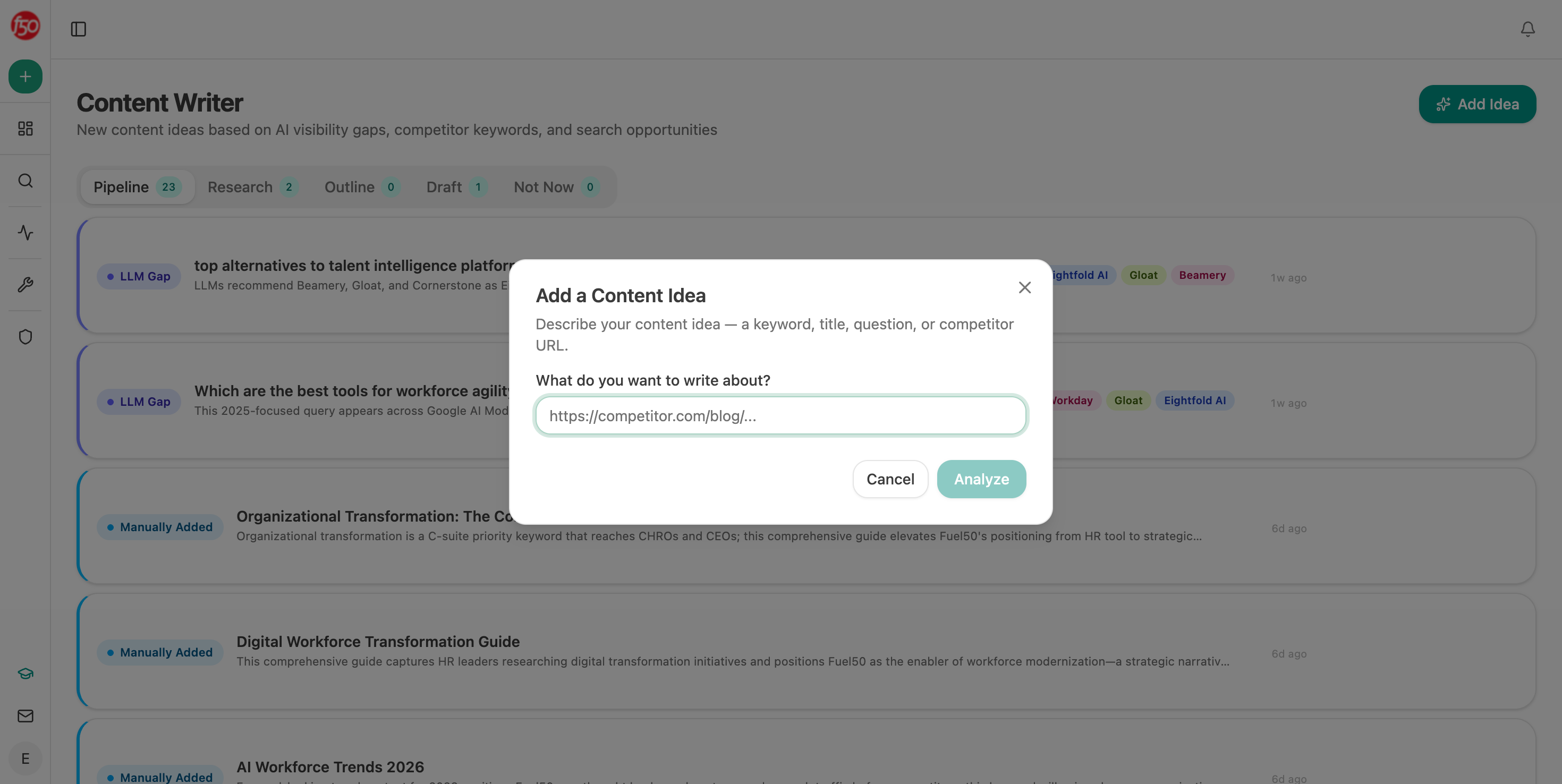 The idea queue is where the ranking has to live, because a list in a spreadsheet stops matching reality within a month.
Base the hours on your last five, not on hope
Hours are the number people make up, so anchor them.
Pull the last five pieces of each type you shipped and write down the expert, design and engineering hours each one really took. Use the middle value rather than the average, because one disaster ruins an average of five. If you have never tracked it, ask the expert rather than the writer, since the writer only ever sees the hours that reached them.
Redo this every six months. Work gets faster as a format becomes routine, and an old estimate keeps a now-cheap format sitting too far down the list.
Fix the three things raw scores get wrong
- New formats always cost more than you think. For the first two of anything you have not done before, multiply your hours by one and a half.
- Ignore rates built on tiny numbers. Anything resting on fewer than 30 conversions goes on a watch list, not into the ranking.
- Reserve some capacity. A workable split is 60% high scorers, 25% pages that must exist even though they score badly, and 15% bigger bets like original research.
That last one matters, because pure scoring eats itself. It always prefers the cheap page, and after two quarters you have a library of cheap pages and no reason for anyone to link to you.
Let AI visibility break ties, not set the score
Keep it in its own column. Our own state of AI search research measures whether brands get named and cited across 22,295 answers and says nothing about clicks, so there is no honest way to turn a citation into money and add it to the first column.
What you can do is flag ideas that serve both channels and let them win close calls. A comparison page that also answers a question where you currently never get named is worth more than its search score alone. Analyze AI gives you that flag through the unmentioned-prompts recipe.
Treat a single check as weak evidence, though. Visibility moves run to run, which is why researchers argue it should be measured across many runs rather than one.
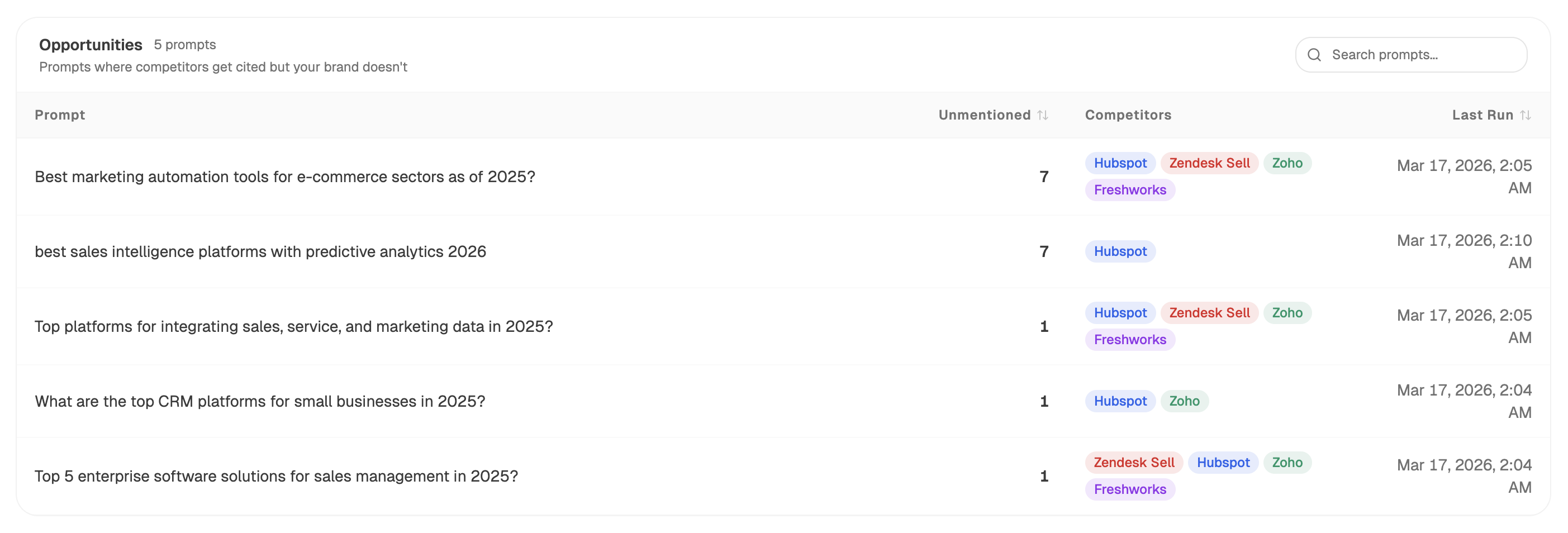 The Opportunities table is the tie-breaker: an idea that also covers a question where you never appear is worth more than its search score alone.
Run the scoring every week without touching it
Start (schedule, Monday 7am) → content-suggestions recipe for gaps and new ideas → opportunity-queue recipe for pages already ranked by opportunity → HubSpot Search Deals for close rate and customer value → workflow-memory recipe pulling last week's ranking → Code node working out value per busy hour and comparing against last week → Conditional dropping ideas resting on fewer than 30 conversions → Export Excel and Send Notification with only what changed.
Two things in that chain do the real work. The workflow-memory recipe gives the agent a memory, so it reports what changed instead of resending the same list until everyone ignores it. And the Conditional stops a quiet month producing a confident ranking that ends up in a quarterly plan nobody checks again.
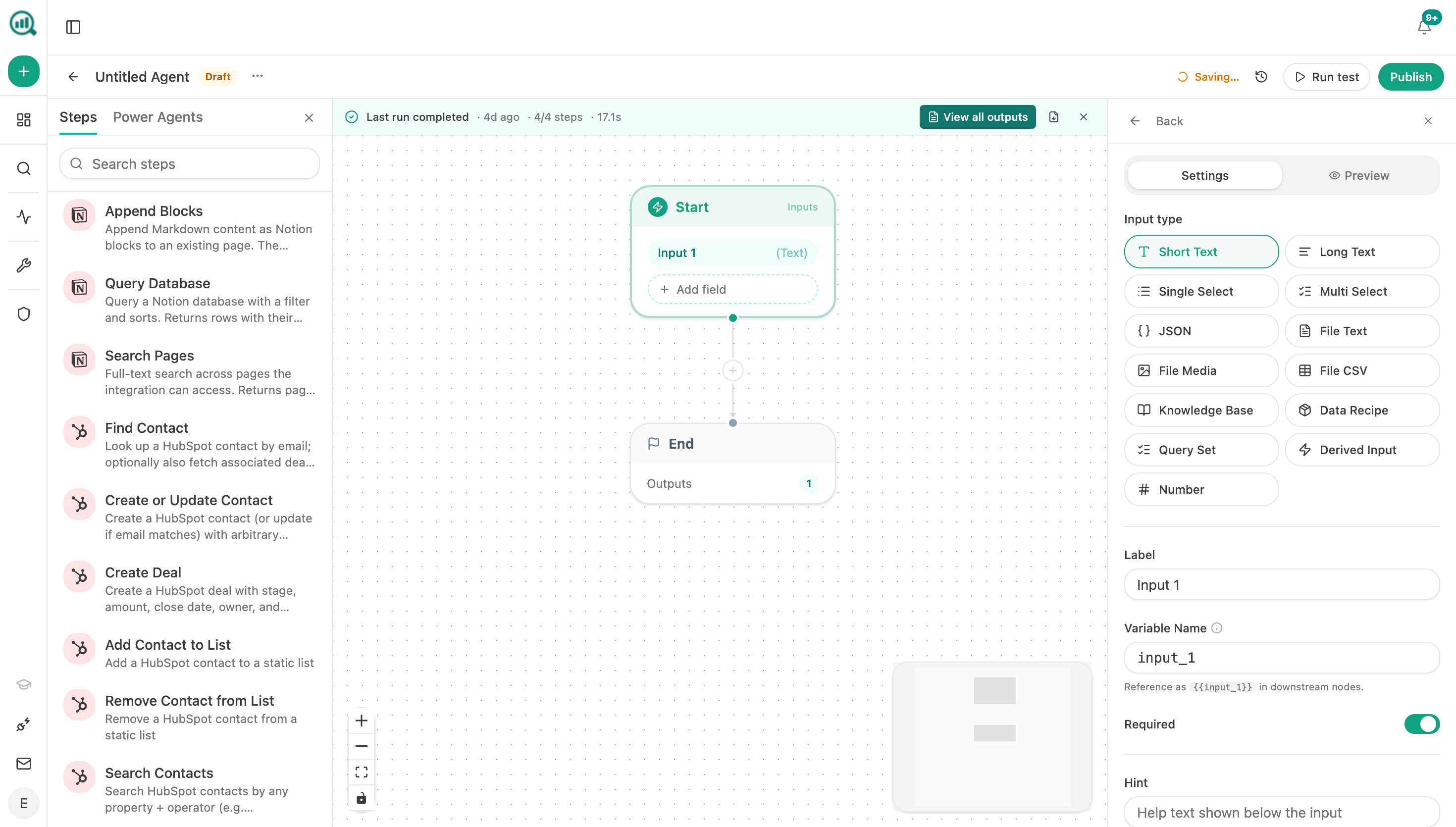 Agents run on a schedule, so prioritising maintains itself instead of ageing quietly in a document.
FAQ
Related answers
- How do I estimate the business value of a keyword before writing the content?
- Should I prioritize a high-volume informational topic or a low-volume buying question?
- Are we publishing content because it works or because output is easy to count?
- How do I use conversion and CRM data to pick my next content topics?
Order your list by what it earns per scarce hour
Analyze AI scores your backlog against real CRM value and your own throughput, then tells you what moved instead of resending the list.
Start your free trial