
Should I prioritize a high-volume informational topic or a low-volume buying question?
Short answer
Work out how many teaching visits it takes to equal one buying visit on your own site. Divide the conversion rate of your buying pages by the conversion rate of your blog posts. For most B2B sites the answer sits between 8 and 20. That means a teaching topic needs eight to twenty times the traffic just to break even, so a topic with five times the searches still loses.
Do the one sum that settles it
Both sides of this argument quote the number that suits them. The blog side quotes searches. The buying side quotes conversion rate. Nobody divides one by the other, so the meeting goes round again.
Here is the sum, and it takes an afternoon.
- In GA4, list your landing pages with visits and conversions for the last year.
- Label each page as teaching or buying, based on what people actually search to reach it rather than what you think the page is.
- Add up visits and conversions for each group.
- Divide the buying conversion rate by the teaching one.
A real shape. Teaching pages bring 61,000 visits and 122 conversions, so 1 in 500. Buying pages bring 4,300 visits and 118 conversions, so about 1 in 36.
That means teaching pages need roughly fourteen times the traffic to produce the same result. Your teaching topic has 12,000 searches and your buying question has 1,200. That is only ten times, so the buying question still wins.
Remember the buying question is cheaper to win
The sum above assumes you win both. You will not win them at the same speed.
| Big teaching topic | Small buying question | |
|---|---|---|
| Who you are up against | The biggest names in your market | Often nobody in particular |
| Time to page one | Six months to a year | Weeks to a few months |
| What it takes to be believed | 2,000 words and original research | 800 words and real specifics |
| How fast it goes stale | Fast, everyone rewrites it | Slow, few bother |
So the buying question usually wins twice over. It has a lower bar to clear and it costs less to get there. That is why teams who do buying questions first can show results in the same quarter, while the big teaching piece is still in review.
Know when the teaching topic really does win
Three situations, and they are worth naming so this does not become dogma.
- Your buying pages are already done. Once every comparison, pricing, and integration page exists, the next one is worth less than your first good teaching post. When is a bottom-of-funnel page worth more than another blog post shows how to count that.
- The teaching topic is where buyers decide what to look for. If people build their shortlist rules on that page, it is doing work no comparison page can do.
- You need links and citations. Buying pages rarely earn either. Teaching posts with real data do, and those links lift everything else.
Put a number on that third one before you accept it. Give the piece a bar you can check in six months, like ten new sites linking to it, or showing up in three tracked prompts. Analyze AI can check the second half for you through Citation Domains, which lists the sites and pages assistants pull from. "Brand value" with no bar attached is how a teaching programme survives three years without evidence.
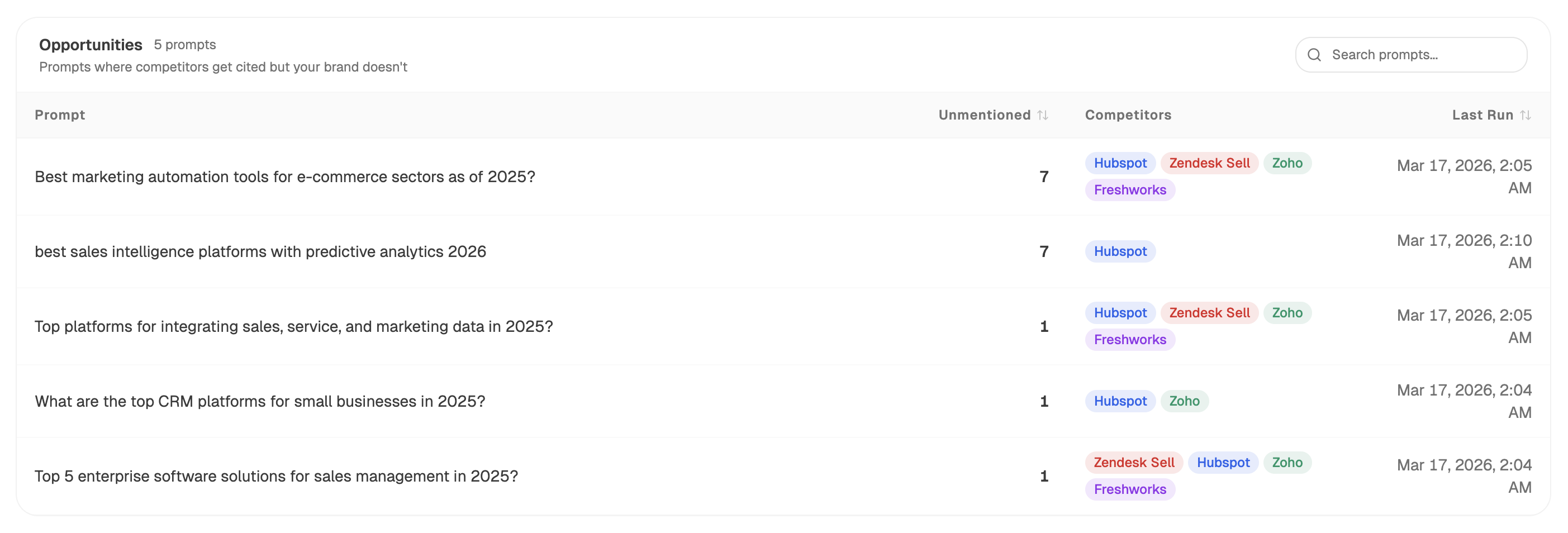 The Opportunities table lists the questions where rivals get cited and you do not, which is the citation half of that two-quarter bar.
See which side AI search favours
It sharpens the same gap rather than changing it.
Teaching questions are exactly what assistants answer in full. Google's own generative AI performance report reflects that, showing impressions, pages, countries and dates but no clicks and no search terms. So for teaching topics you are increasingly measuring reach rather than visits.
Buying questions behave differently. In our own state of AI search research, short prompts asking for a recommendation or the best option named a brand in 63.1% of answers, against 46.4% for prompts that did not ask, across the 22 prompts carrying that angle. Vendor questions are where assistants introduce vendors, which is the same conversion gap showing up in a new place. Neither channel replaces the other, and full-funnel marketing is the wider picture.
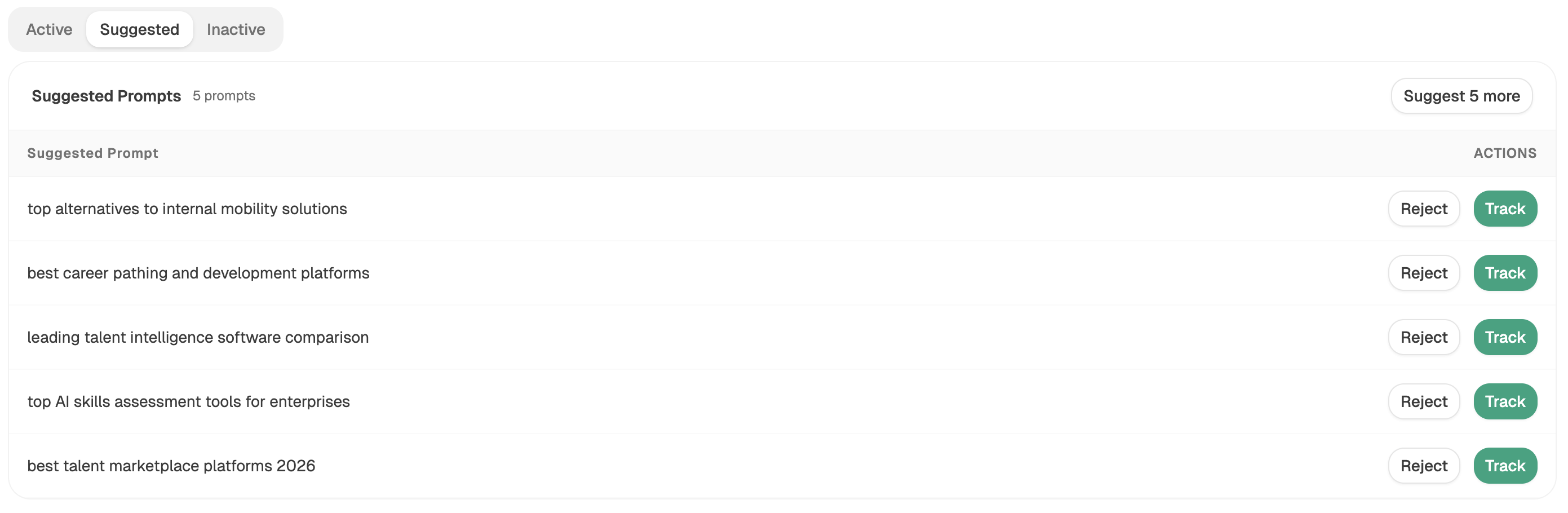 Tracked questions show how often you are named on buying questions against teaching ones.
Ask an agent which one to write
Start (manual, two candidate topics typed in) → funnel-coverage recipe returning page counts and results per stage → GA4 AI Landing Pages for conversions from assistant visits → GSC Top Pages for Keyword to see who holds each result → Prompt LLM doing the division and comparing it against the search volumes → Branch with three answers: write the buying question, write the teaching topic, or fix a bigger gap somewhere else.
The Branch node earns its place because the honest answer is often the third one. When funnel-coverage shows a whole stage with two pages against thirty elsewhere, the agent tells you the real gap is not the one you asked about.
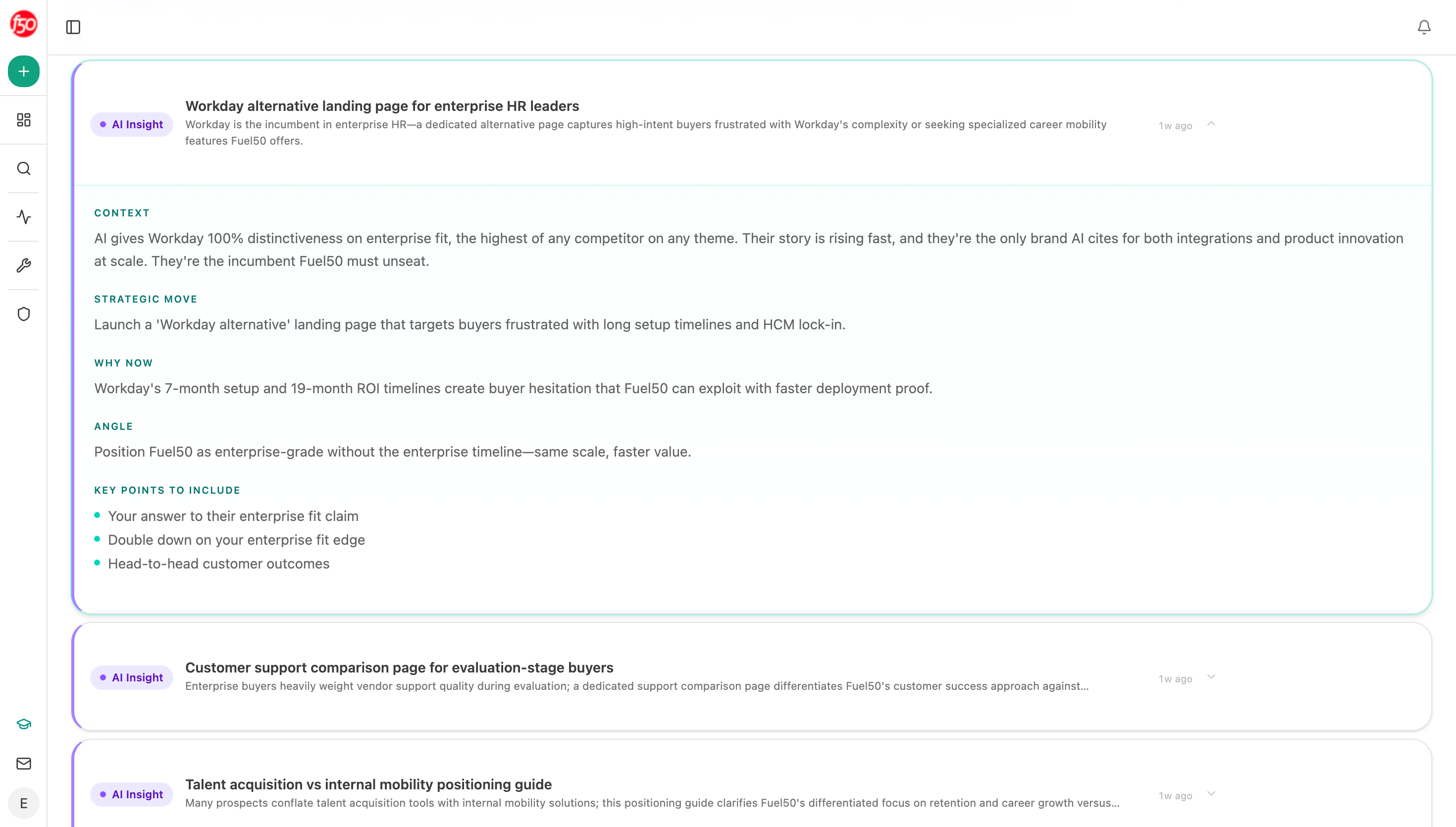 Each idea carries the evidence behind it, so the decision survives the next planning meeting.
FAQ
Related answers
- When is a bottom-of-funnel page worth more than another blog post?
- How much top-of-funnel content does a company actually need?
- How do I estimate the business value of a keyword before writing the content?
- Which low-volume keywords are most likely to drive revenue?
Settle the argument with your own numbers
Analyze AI works out what each type of page converts at on your site and compares your two candidate topics against it.
Start your free trial