
How do I spot content decay before it becomes a big traffic loss?
Short answer
Stop watching traffic, because it moves last. Four things fall before it: citations in AI answers, click-through rate at a held position, average position drifting inside page one, and impressions. By the time sessions drop enough to notice in a monthly report, the page has usually been sliding for two or three months.
Watch the four signals in order
Decay runs in a sequence. Catching it early means watching the front of the chain rather than the end.
| Signal | Where it shows | How early |
|---|---|---|
| Citations in AI answers stop | Analyze AI Citation Pages | Earliest |
| Click-through rate falls at the same position | Search Console | Early |
| Average position drifts, still page one | Search Console | Middling |
| Impressions fall | Search Console | Late |
| Sessions fall | GA4 | Last |
The top row is the newest and the most useful. A page losing citations is being passed over as a source while still ranking, which means something better exists and the ranking has not caught up yet.
The second row is the classic one and it is still underused. It matters more than it used to, because when an AI summary sits above the results Pew Research found a source link was clicked in about 1% of visits. If your position is unchanged and your click-through rate has fallen by a third, the result page changed around you. A new feature, a richer competitor snippet, or an AI summary now sits above you.
Set thresholds so you are not reading noise
Every one of these moves week to week. Pick a threshold and only look when it is crossed.
Working figures for a mid-sized library, checked monthly against the same month's prior quarter:
- Citations down 30% or more on a page that was previously cited, with traffic flat. Investigate now.
- Click-through rate down 25% with average position within half a place. Investigate now.
- Position drift of more than 1.5 places inside the top ten. Watch, do not act.
- Impressions down 20% across three consecutive months. Investigate.
Use three months, not one. A single month moves on seasonality, and acting on it produces a lot of rewriting that changes nothing.
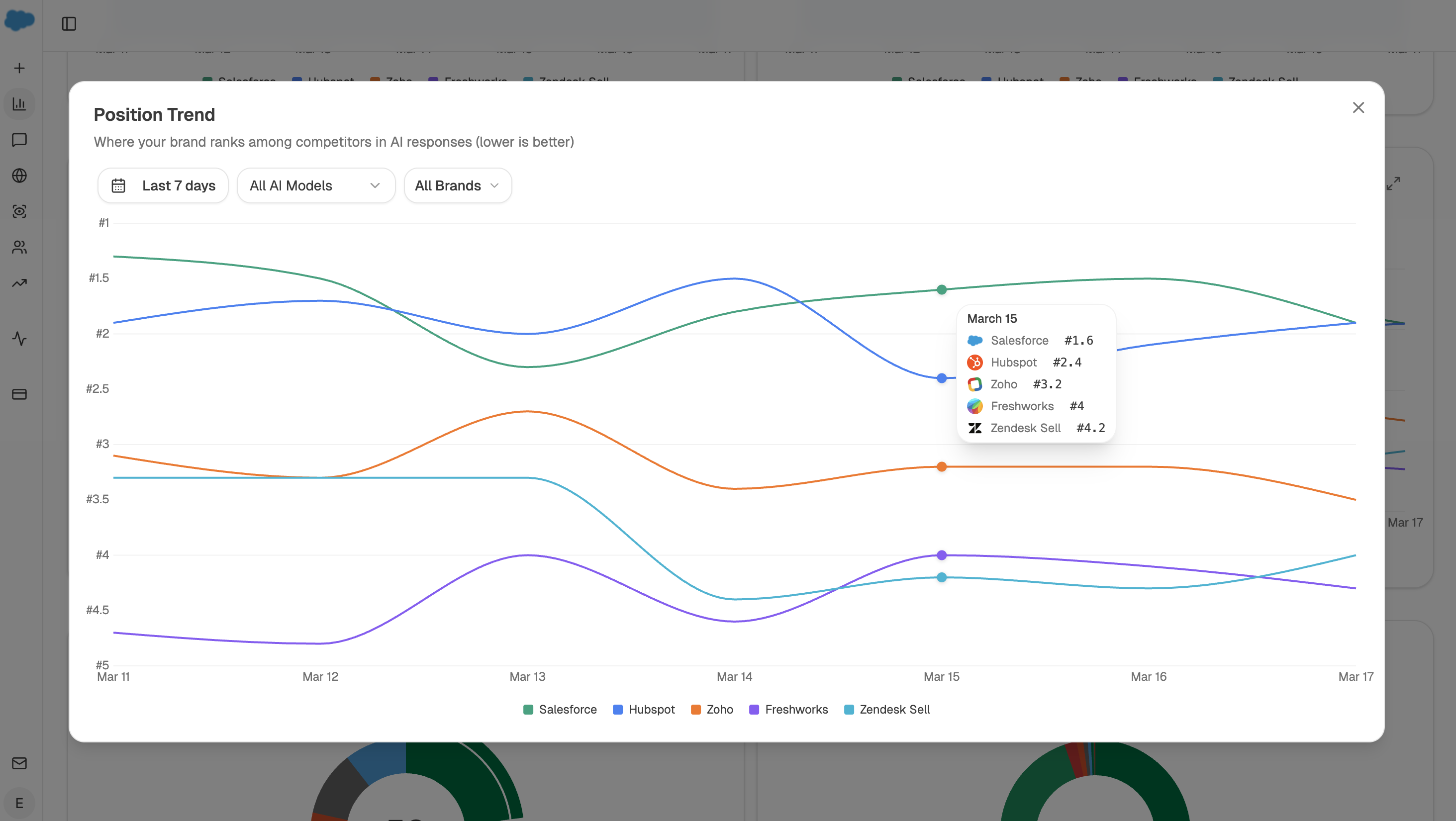 Position trend inside AI answers moves before session counts do, which is what makes it worth watching monthly.
Let citation decay be your early warning
This is the signal most teams do not have yet, and it is the one that buys you the most time.
Analyze AI's citation-decay-alert recipe is built for exactly this. It returns pages losing citations faster than they are losing traffic, which is the definition of a page being displaced as a source before the ranking follows. The uncited-pages recipe covers the other end, listing pages assistants never touch at all.
Why this leads matters. In our own state of AI search research, across 4,824 cached pages we checked, how strong a site was barely predicted whether its pages got cited. Selection follows whether the page is still the best answer, so it reacts to a better competitor faster than a ranking algorithm does.
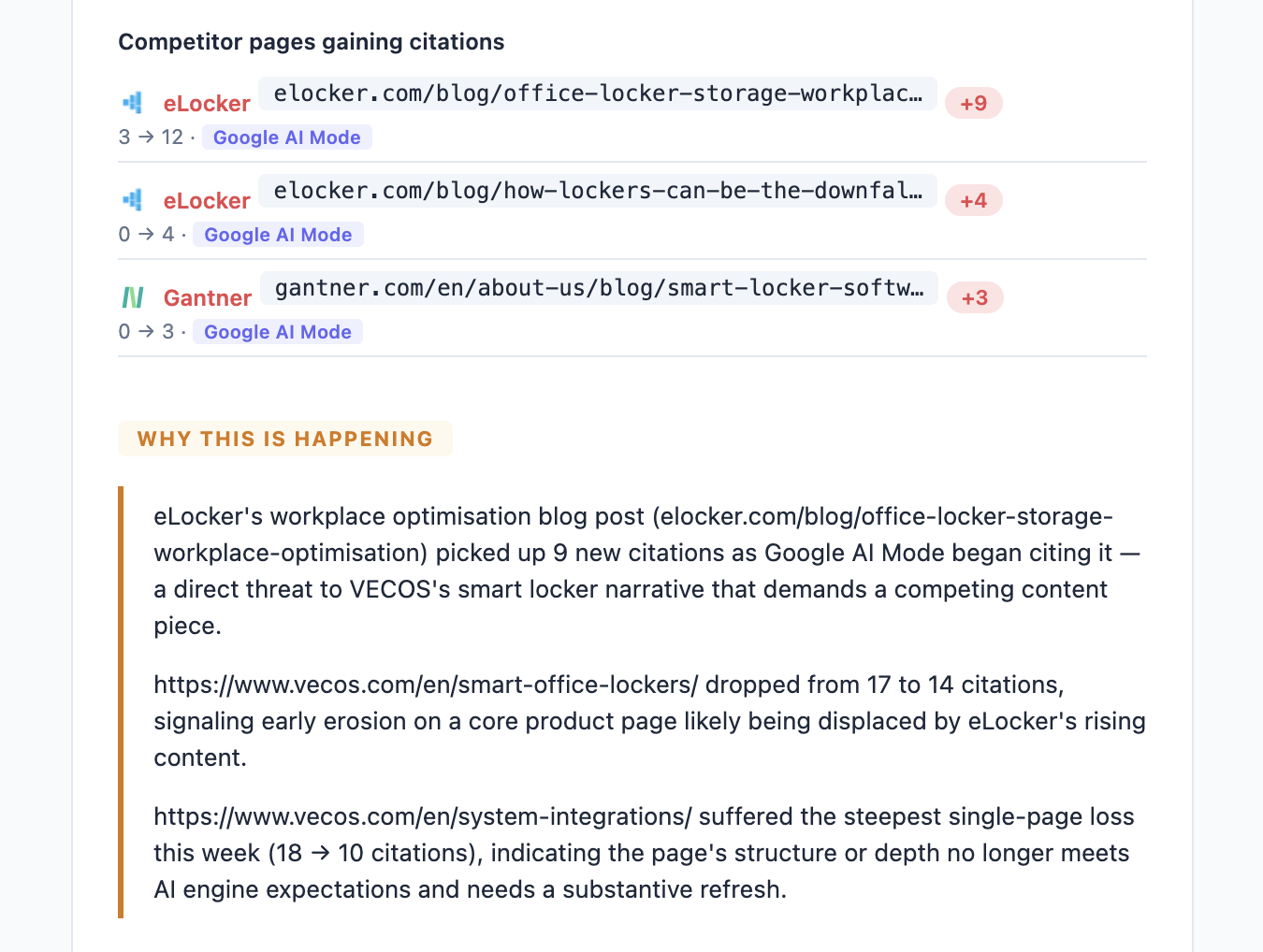 The digest surfaces pages losing citations alongside the competitor pages gaining them, which is usually the same story from both sides.
Separate decay from a one-off drop
Not every fall is decay, and the two need different responses.
Decay is gradual, affects a cohort of similar pages, and correlates with age. A cliff-edge drop that hits one page overnight is an incident: a technical change, a manual action, or a redirect gone wrong. If several pages fell on the same day, it is not decay.
Check the date shape before you brief anything. A slope means content. A step means something broke, and is this page underperforming because of content or because it isn't indexed is the right read.
Run the watch automatically
Doing this by hand across a few hundred pages is where the discipline dies.
Start (schedule, monthly) → citation-decay-alert recipe for pages losing citations faster than traffic → declining-pages recipe for pages losing sessions and engagement → GSC Top Pages for Site compared against the same month last quarter → Code node computing click-through rate at held position and flagging anything over your thresholds → workflow-memory recipe holding last month's flags → Send Notification with only the pages that newly crossed a line.
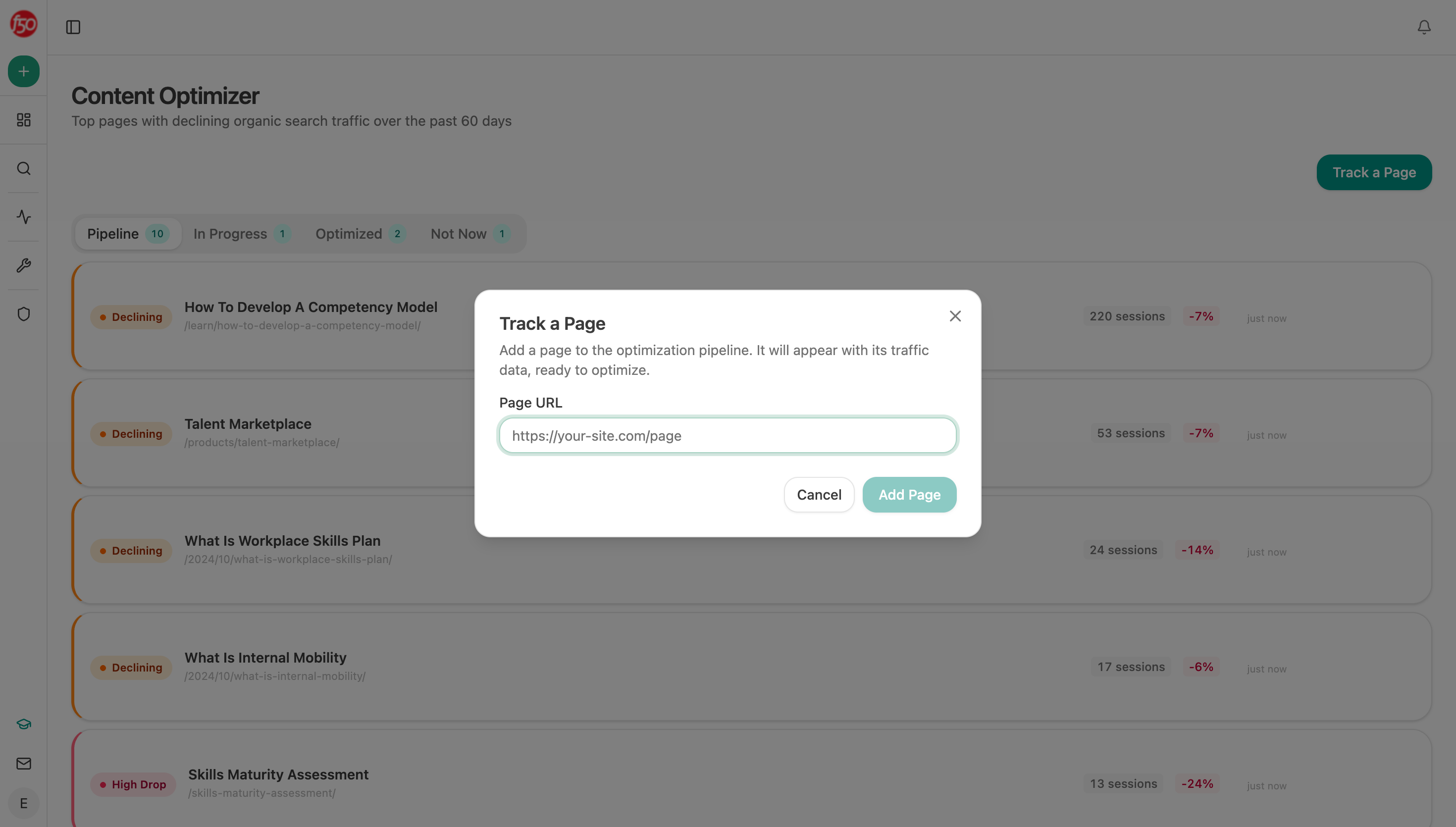 The optimizer pipeline already tracks declining pages with their session change, which is where flagged pages should land for triage.
Sending only newly crossed lines is the design choice that keeps this alive. A monthly list of every declining page is the same list every month, and people stop opening it by the third send. A short message naming three pages that just changed state gets read.
FAQ
Related answers
- Which of my old posts should I update first?
- How do I diagnose why a page declined before rewriting it?
- Why did my page lose its AI citations, and how do I win them back?
- How often should high-value pages be reviewed for freshness?
Catch decay while it is still cheap to fix
Analyze AI flags pages losing citations faster than traffic and tells you only about the ones that newly crossed a line.
Start your free trial