
How much top-of-funnel content does a company actually need?
Short answer
Most teams need far fewer posts than they publish. Count the people who have to say yes before you get paid, then count the things each of those people worries about. Multiply the two and you have your number. For most B2B companies it lands between 15 and 40 posts. After that your job is keeping them fresh, not adding more.
Count the people who have to say yes
"Four posts a month" came from somewhere, and it was almost never the buyer. It is a promise about output, made before anyone asked what needed to exist.
So start with the people instead. Take a payroll software company. An HR manager finds them and likes the product, but she cannot sign anything. Her director signs. IT checks where the data lives. Finance checks what it costs next year. That is four people, and all four have to be happy.
Most B2B sales look like this. Three to five people, one of them keen and the rest cautious.
List what each person worries about
Now write down what each person needs to feel sure about. Not your features. Their worries, in the words they would use.
| Who | What they worry about |
|---|---|
| HR manager | Will this take me weeks to set up? Does it work with the system we already have? |
| HR director | Will my team actually use it? What do I tell my boss when she asks why we bought it? |
| IT | Where does our data sit? Who can see it? What happens if we leave? |
| Finance | What does this cost next year when we are twice the size? Can we get out of the contract? |
Four people with four worries each gives you sixteen posts. That is your list, and it is finite. You can finish it.
If your list runs past forty, you have written features instead of worries. If it comes in under ten, you have probably forgotten IT or finance, which is the most common gap we see.
Check what you already cover
Most teams find they have covered one person very well and ignored the other three.
The fast way to check is the funnel-coverage recipe in Analyze AI, which counts your pages by stage and shows how each group performs. Then run the Content Optimizer on a handful of them. It reads the live page and tells you what that page is actually about, which is often not what you assumed when you briefed it.
Give it a week and the pattern usually shows up on its own. Thirty posts, all of them speaking to the practitioner, nothing at all for the person who signs.
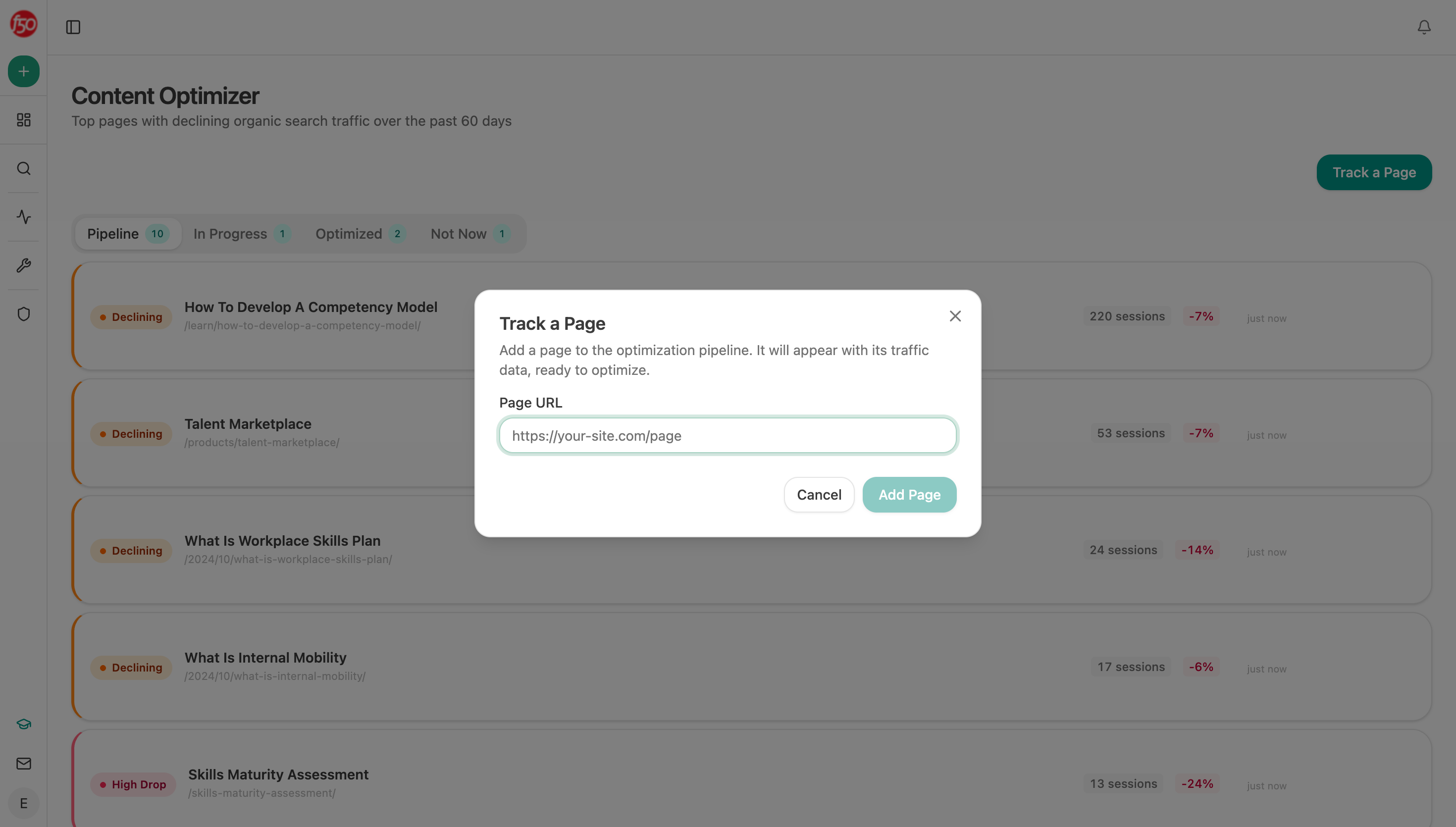 The optimizer reads the page as it stands today, so you learn what it actually covers rather than what the brief intended.
Work out how many you need to rewrite each year
Once the list is covered, the work changes. You stop adding and start keeping things true.
Here is how to size that. Look at your top 50 posts by clicks from eighteen months ago. Count how many are still in today's top 50. Say 34 are still there and 16 have gone. That is a third of your library slipping in a year and a half.
Apply that to a library of 30 posts and you need about six proper rewrites a year. Six rewrites plus two or three new posts is a realistic year, and it beats 48 new posts, because the old pages already have history behind them.
Analyze AI keeps that list for you. The stale-content recipe flags pages nobody has touched, and citation-decay-alert catches pages losing AI citations faster than they are losing traffic, which is usually the first sign a page has gone out of date. Republishing content covers how to do the rewrite, and how to prioritize refreshes covers which one to do first.
Do not borrow someone else's number here. Posts about tools and pricing go stale fast. Posts about how something works barely move.
Stock the buying pages first
None of this matters if the pages that close deals are missing.
Blog posts bring people in. Comparison pages, pricing pages, and integration pages are what turn them into customers. If those are half built, more blog posts just send more people to a shop with empty shelves. When is a bottom-of-funnel page worth more than another blog post shows you how to count that gap.
Check it first. A company with half its buying pages missing is asking the wrong question.
What are these posts worth if nobody clicks?
This is the part that has changed most, and it is worth being straight about it.
Educational posts are exactly what AI assistants answer in full. Pew Research found people clicked a source link in about 1% of visits when an AI summary was on the page. So the traffic argument for a big library is weaker than it used to be.
The other argument got stronger. In our own state of AI search research, educational pages made up 25.2% of the sources Perplexity used and 23.8% of the sources Google AI Mode used. Your posts are still doing the work. They are just doing it inside someone else's answer.
You can watch that happen in Analyze AI. The Citation Pages view shows which of your pages assistants pull from, and citation-magnets ranks the ones they keep coming back to. Fifteen posts that get cited beat sixty that get skimmed, and now you can tell which is which.
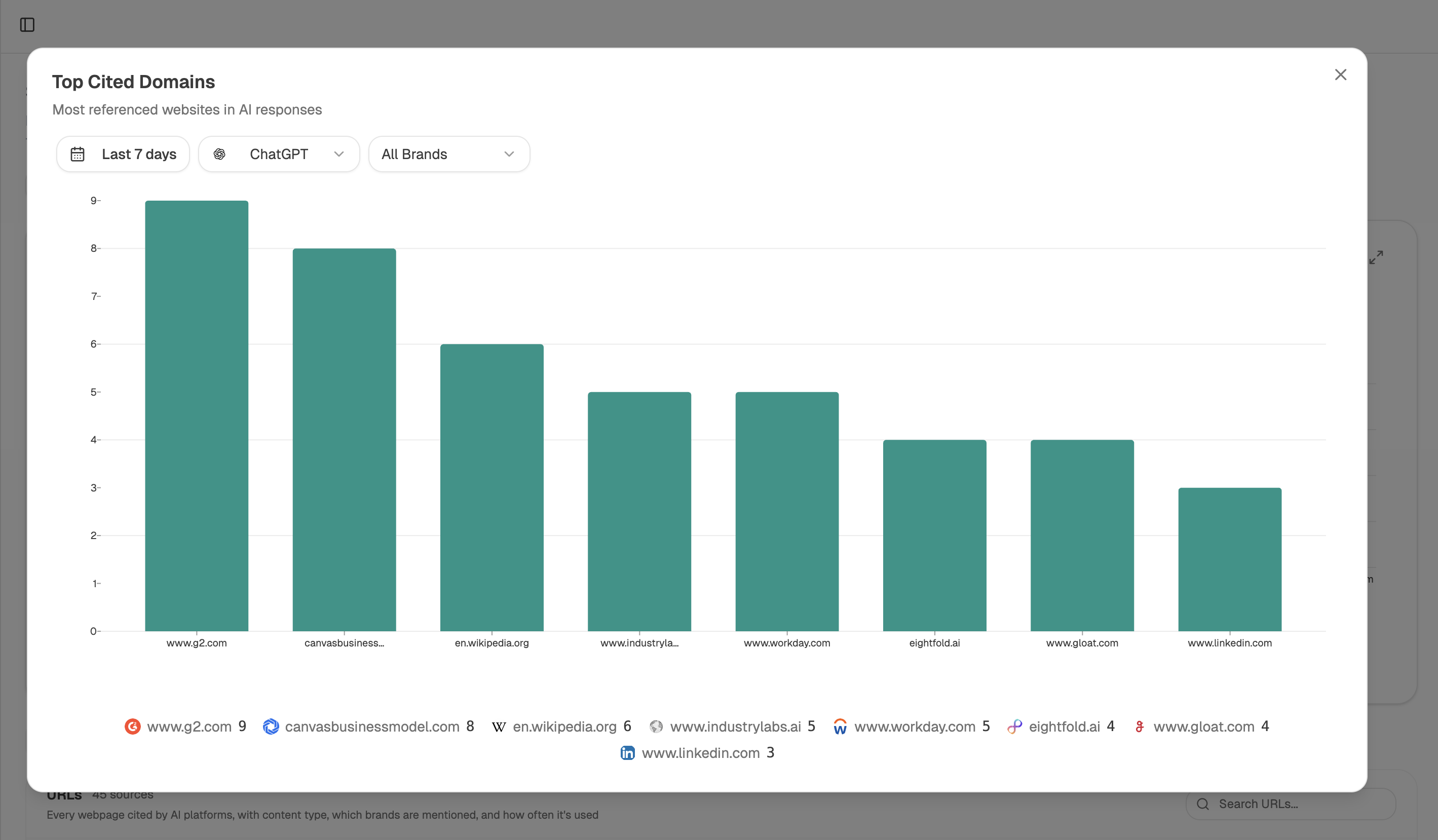 Sources names the pages assistants rely on, which is how a low-traffic post proves it is still doing work.
Build the whole check as an agent
Once a quarter is often enough, so set it up once and let it run.
Start (schedule, quarterly) → funnel-coverage recipe for page counts by stage → GSC Top Pages for Site, compared against the same export from eighteen months ago → stale-content recipe for anything nobody has touched → citation-magnets for the pages assistants rely on → Prompt LLM matching every page to a person and a worry from your table → Export Markdown as a short memo.
The matching step is the one that matters. A page count tells you that you have 34 posts. Matching them to people and worries tells you that all 34 talk to the HR manager and none talk to finance. That is a different problem, and it is the one most teams actually have. Which buying roles and objections are missing from our content library goes further on this.
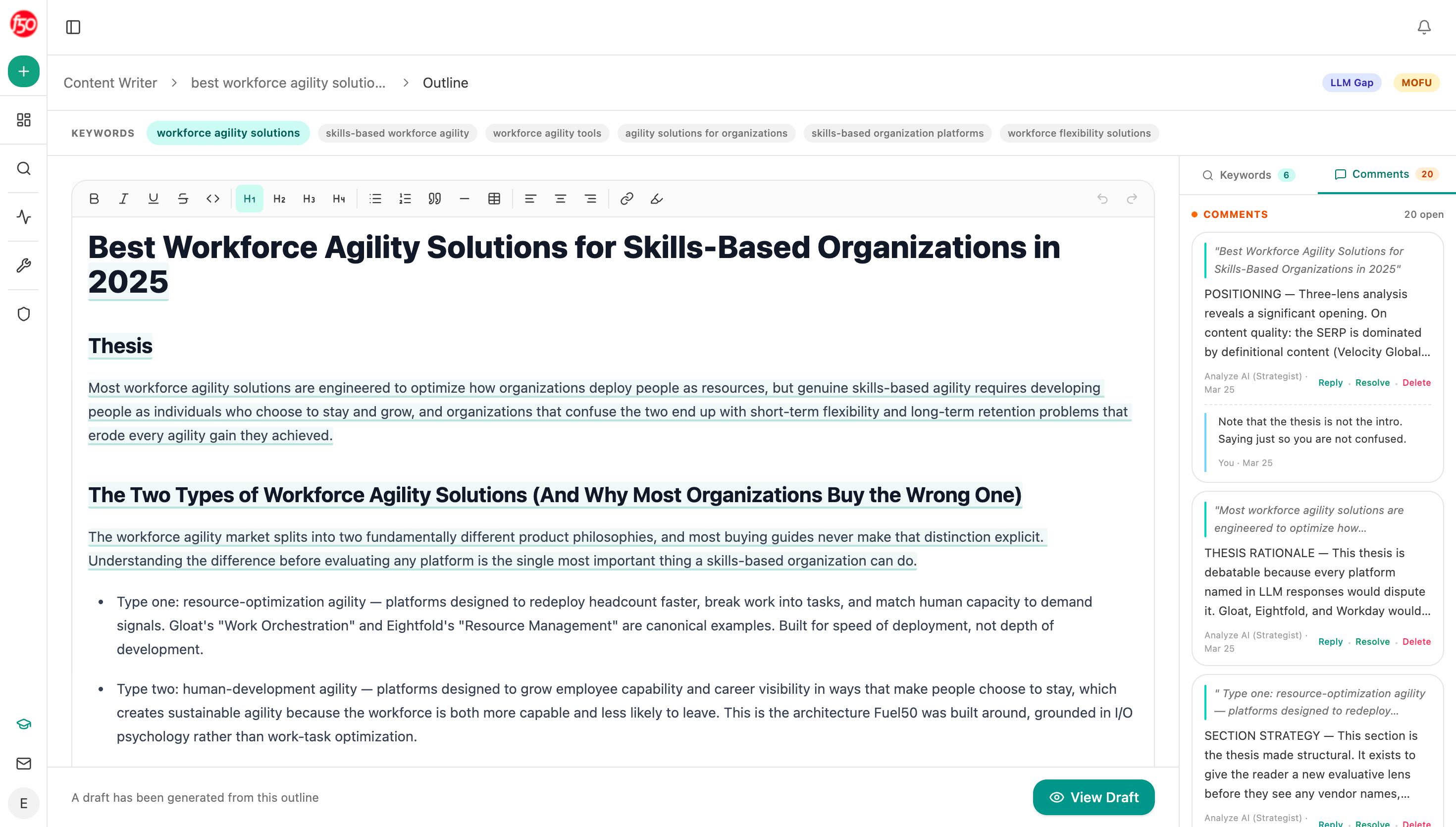 When a real gap is named, the outline starts from the worry behind it instead of from a keyword.
FAQ
Related answers
- When is a bottom-of-funnel page worth more than another blog post?
- Are we publishing content because it works or because output is easy to count?
- Should I prioritize a high-volume informational topic or a low-volume buying question?
- Which buying roles and objections are missing from our content library?
Find out what your library is missing
Analyze AI matches every page you have to the person and the worry it answers, then shows you the gaps and the posts going stale.
Start your free trial