
When does a buyer question deserve its own article instead of an answer on an existing page?
Short answer
Write the honest answer first, then count it. Under about 150 words and it belongs on the page that already covers the wider topic. Between 150 and 600 words with a decision or a short set of steps and it deserves its own page. Over 600 words with steps and evidence and it is an article. Then check the question has demand of its own.
Write the answer, then count it
Length measures the thing that actually matters, which is whether the answer fits inside another page without wrecking it.
A 90-word answer added to a 2,000-word guide makes the guide better. A 700-word answer with four steps and a table takes the guide over, pushes its point below the fold, and leaves you with a page that serves neither question.
So write it, count it, then decide. This flips the usual order, and it is why the decision stops being an argument.
| How long the honest answer runs | What it needs | Where it goes |
|---|---|---|
| Under 150 words | A paragraph | A section on the wider page |
| 150 to 600 words | A decision, short steps, or a table | Its own page |
| Over 600 words | Steps, evidence, screenshots | A full article |
| Over 600 words but nobody searches it | Steps | A longer section, with a jump link |
Take two real questions. "Does this work with our SSO provider?" has an honest answer of about 60 words: yes, through SAML, and here are the three providers we have tested. That is a section on your security page. "How do we move 4,000 pages without losing rankings?" has an honest answer of about 900 words with an order of operations, a way back, and a watching period. That is an article, and cramming it into a migration overview turns the overview into a page nobody finishes.
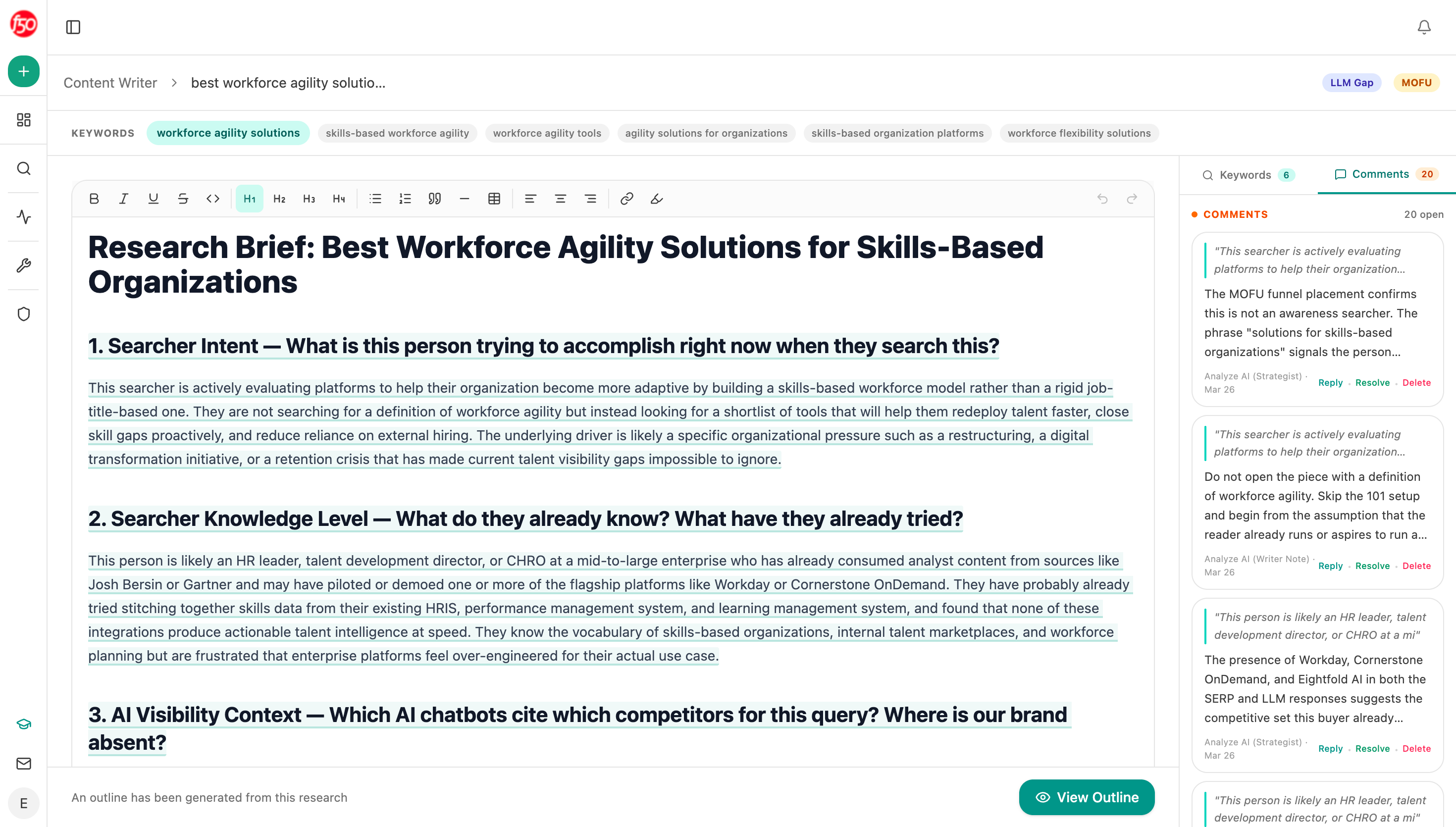 Drafting at the research stage is what makes the length test possible, since you cannot measure an answer you have not written.
Check the question has demand of its own
Length tells you whether the answer fits. Demand tells you whether anyone will find the page.
Run three checks and require two.
- Impressions in Search Console for the question's distinctive words, over 16 months.
- A real answer from assistants when you ask it as a question across all three.
- Three or more sales conversations where it came up, from transcripts or CRM notes.
A question that passes the length test but fails demand should become a longer section with a jump link, not a page. Publishing it alone creates an orphan nobody links to, which is a slow way to add maintenance work.
Analyze AI covers the second check with Ad Hoc Prompt Searches, which runs the question live across ChatGPT, Perplexity and Google AI Mode and shows whether the answer is real and who gets named.
Make sure the wider page is not already ranking for it
This is the step teams skip, and it is where the clash starts.
Open the top keywords report for the wider page and look for the question's wording. If it already picks up impressions for it at any position, you are proposing to compete with yourself. Either the answer stays there and gets better, or the new page gets narrowed until it targets something the old one does not. How to build a topic cluster without cannibalizing your own pages covers checking this across a whole group.
Ask whether a new page gets cited more than a section
Assistants want an answer they can lift, which is not quite the same as wanting a new page.
They pick passages, so a well-scoped answer inside a strong page can be quoted without needing its own address. In our own state of AI search research, how big and trusted a site was barely predicted whether its pages got cited, across the 4,824 pages we checked. A thin new page does not automatically beat a section on an established one.
One thing has changed on the Google side, and it removes a common excuse for burying long answers. Google's documentation confirms the FAQ rich result is no longer shown in search results, announced in May 2026. Adding FAQ markup to win a bigger listing is no longer a reason to keep a substantial answer hidden, so the decision now rests entirely on where it helps the reader most.
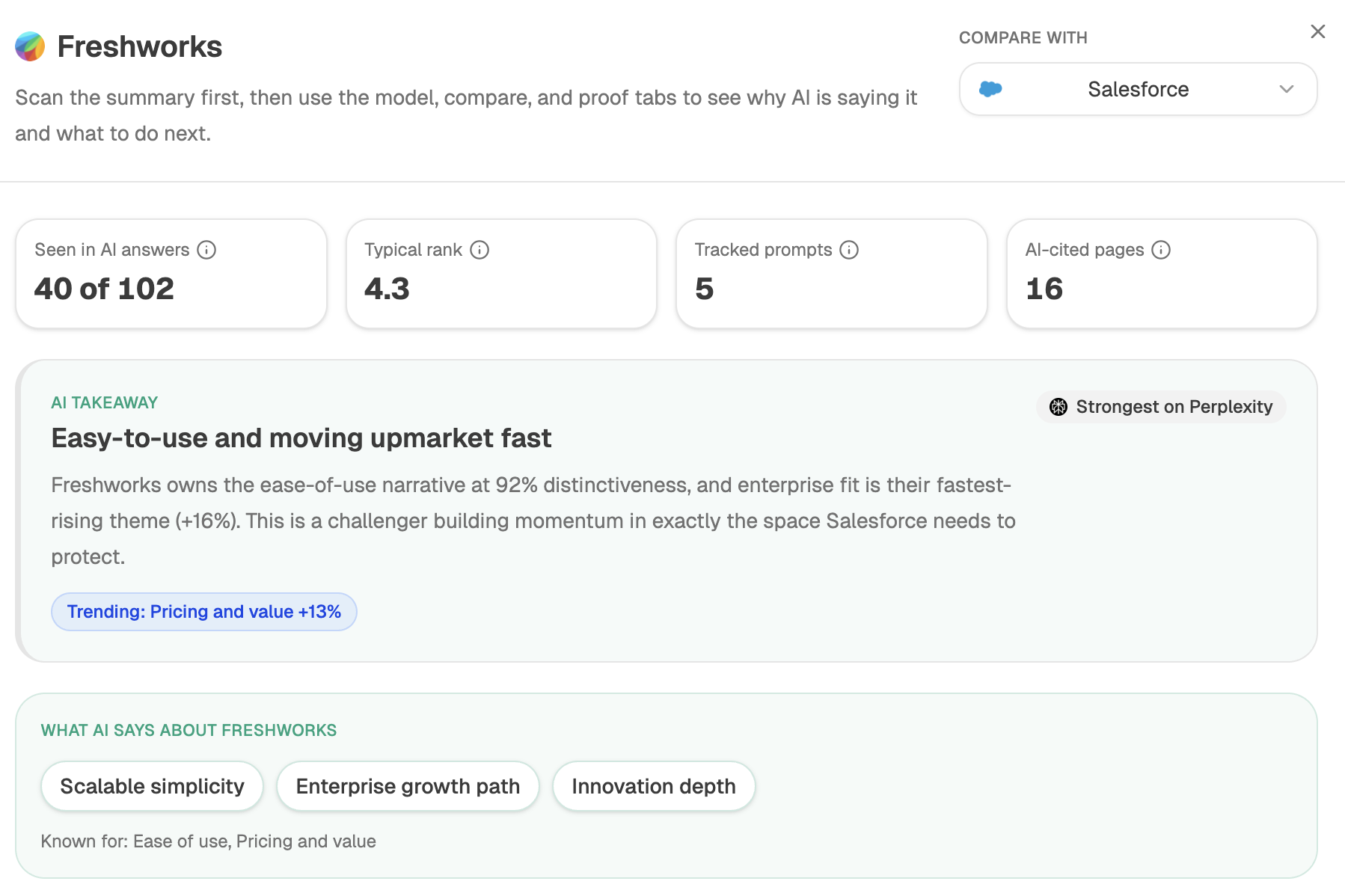 Perception shows whether assistants have already settled on an answer, which changes how much a new page can shift.
Let an agent make the call
Start (manual, the question typed in plus the page you might add it to) → Generate Research producing a first honest answer → Word Count measuring it → GSC Top Keywords for Page checking whether the wider page already ranks for it → Query Fanout Estimator sizing how many neighbouring questions a standalone page would pick up → AEO Content Scorecard on the wider page to see whether it can even hold another section → intent-mismatches recipe flagging pages already fighting their own purpose → Branch with three routes: section, answer page, or full article, each producing a differently shaped brief.
Running the AEO Content Scorecard on the wider page is the unusual step here. Most people treat that page as infinitely stretchy, and the scorecard tells you when it is not. A page already scoring badly does not need another section. It needs a rewrite, and adding to it makes both problems worse.
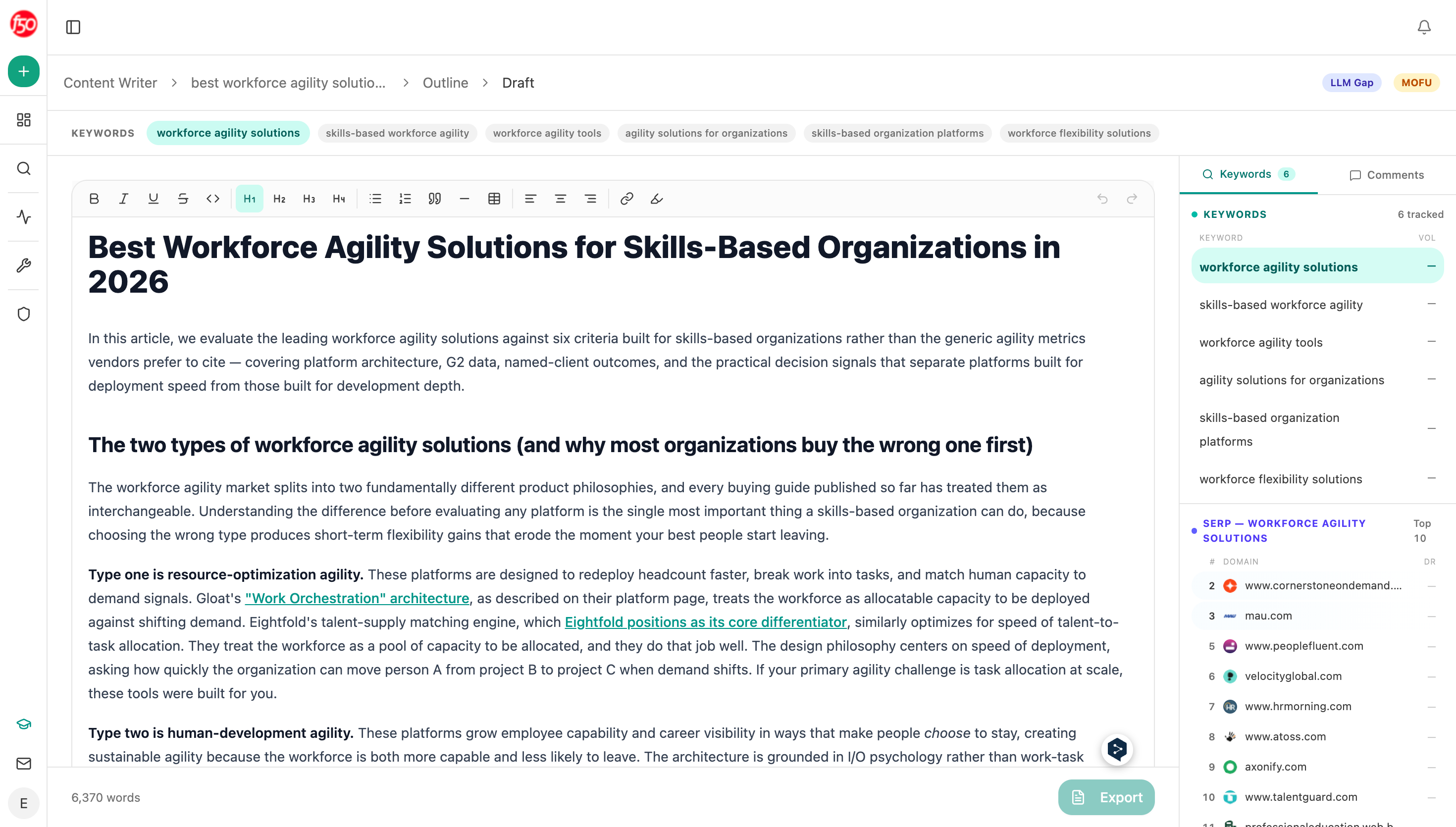 Because the draft already exists, the word count is measured rather than predicted.
FAQ
Related answers
- How do I build a topic cluster without cannibalizing my own pages?
- Should this be an article, comparison page, case study, tool, or service page?
- Are zero-search-volume topics worth writing about?
- How do I find the questions prospects ask during active vendor evaluation?
Decide it before you brief it
Analyze AI drafts the answer, measures it, checks what the wider page already ranks for, and returns the brief that fits.
Start your free trial