
Which buyer questions belong on our site, and which need third-party proof?
Short answer
Split them by whether the reader would believe you. Questions with a factual answer about your own product, such as how it works, what it integrates with, what it costs and where data lives, belong on your site and buyers expect them there. Questions that ask whether you are any good need somebody else's voice, because your answer carries no weight on those.
Apply the believability test
For each question, ask what a sceptical buyer would think if the answer came from you.
If the answer is a fact you are the authority on, your page is the right place and buyers are frustrated when it is missing. If the answer is a judgement in your own favour, your page is the wrong place no matter how well argued it is.
| Question | Who should answer it |
|---|---|
| "How does the setup work?" | You |
| "What does it integrate with?" | You |
| "Where does our data live?" | You |
| "What does it cost at our size?" | You |
| "What are the limits?" | You, and you gain from saying it |
| "Is it easy to use?" | Reviews and users |
| "Is it better than [rival]?" | You, partly, with a real concession |
| "Is this vendor reliable?" | Reviews, references, third parties |
| "Would you buy it again?" | Customers, in their own words |
The middle row is the interesting one. A head-to-head comparison can live on your site if it concedes something real, which is the mechanism in should a product comparison admit a competitor's strengths. Without a concession it belongs in the bottom group.
Own your side completely
The questions in the top group are where most companies underperform, and it is the cheaper half to fix.
Buyers assume vagueness is concealment. A missing pricing page, a security page behind a form, or an integrations list that says "and many more" all read as evasion rather than as information not yet written. The standing set of these is listed in what content do finance, security, and procurement need before approving a purchase.
Publish these without gates. A gated page cannot be forwarded to the security reviewer who needs it, and Google's AI features documentation explains that eligibility follows ordinary indexing, so a form also removes the page from any answer a buyer might get.
Earn the other side rather than writing it
For the bottom group, the work is not writing. It is arranging for other people to say things.
- Review profiles, claimed and actively fed. The volume matters as much as the rating, because a handful of reviews reads as curated.
- Named references a prospect can actually reach, matched by size and industry.
- Third-party coverage from publications and practitioners, earned with data rather than pitches.
- Community presence where a real person from your team answers questions without selling.
These take longer and they are what buyers actually weigh, which is the ranking in what kinds of evidence make a B2B buyer trust a vendor.
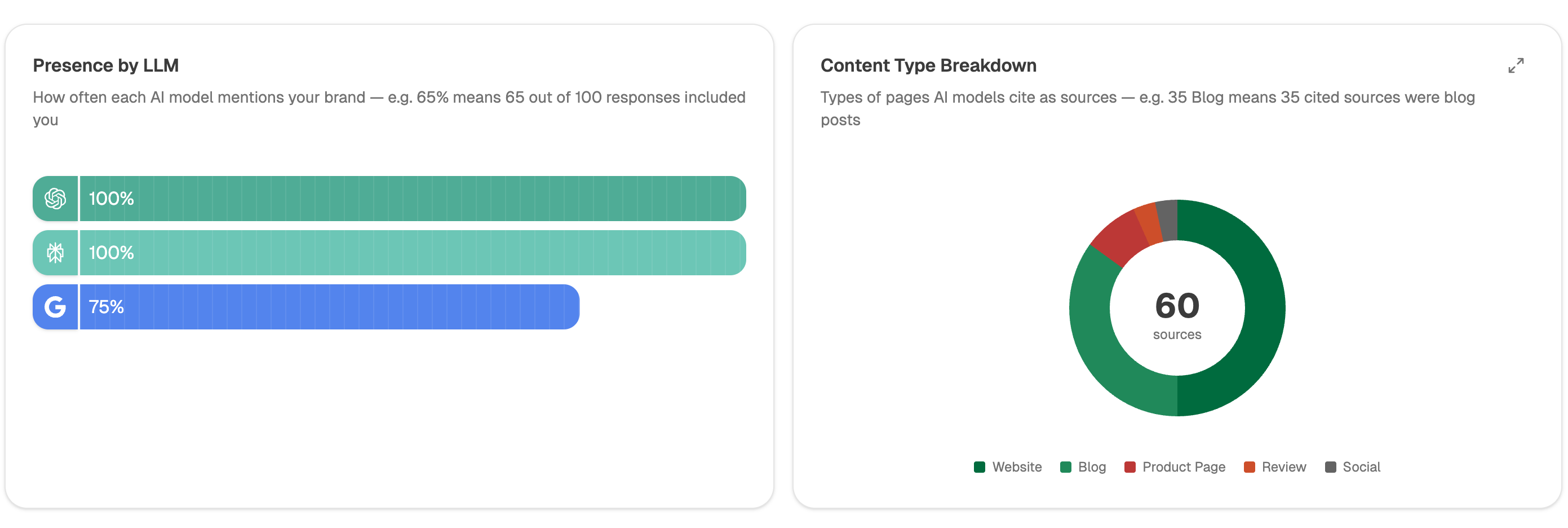 Tracked questions show which brands get named on each buying question, which reveals where your own page is not the thing being used.
Let the source mix tell you where each question is answered
There is a way to check this split rather than reasoning about it.
Run each question through Analyze AI and read what the answer was built from. In our own state of AI search research, lists, comparisons and reviews made up 34.4% of what Perplexity cited and 33.1% of Google AI Mode, against 13.9% on ChatGPT where company sites and product pages made up 68.8%.
Applied per question, that becomes a routing instruction. If assistants answer "is it easy to use" almost entirely from review sites, no page of yours will change that answer and your effort belongs on the review profile. If they answer "how does it integrate with X" from vendor documentation, your page is the lever.
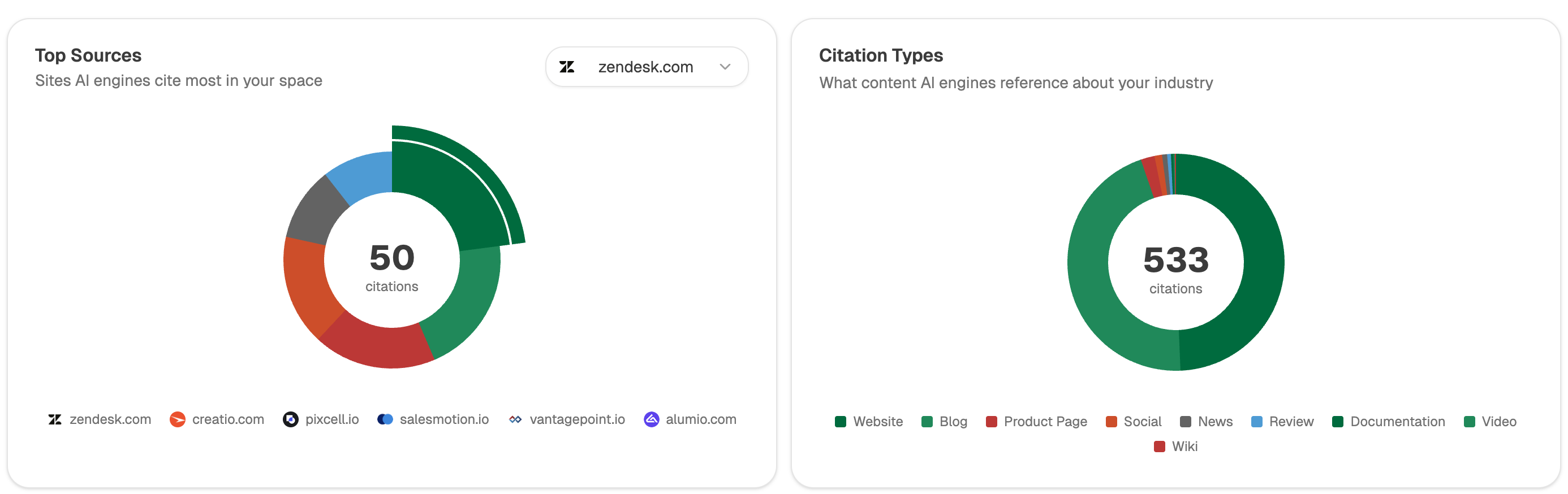 Top sources and citation types show which kinds of content answer which questions in your market.
Route the questions with an agent
Start (manual, your buyer questions as a query-set) → Prompt Responses running each one across providers → Citation Share classifying the cited pages by type and owner → Prompt LLM sorting each question into own, earn, or both → competitor-sources recipe listing third-party pages citing rivals and never you → Export CSV with a route per question.
Sorting by what the answer was actually built from is what keeps this from being an opinion. Teams argue about whether a comparison page is credible. The citation mix tells you whether anyone is using it.
FAQ
Related answers
- What kinds of evidence make a B2B buyer trust a vendor?
- How do I distribute content into the places buyers already learn?
- Should a product comparison admit a competitor's strengths?
- What content do finance, security, and procurement need before approving a purchase?
Find out which questions your page can actually answer
Analyze AI shows what each buying answer was built from, so you know when to publish and when to go and earn a mention.
Start your free trial