



Summarize this blog post with:


In this article, you’ll learn what a brand gap analysis is, why it matters more in 2026 than it did two years ago, and how to run one in seven steps. You’ll see how to find the topics, prompts, and conversations where your brand should be present but isn’t, across both Google search and AI engines like ChatGPT, Perplexity, Gemini, and Copilot. By the end, you’ll have a working playbook to close those gaps and a cadence to keep them closed.
Table of Contents
What is a brand gap analysis?
A brand gap analysis measures the distance between where your brand could appear and where it actually does. It looks at search results, AI answers, third-party mentions, and the topics buyers care about. Wherever a competitor is named instead of you, or a relevant question is answered without you, that is a gap.
A brand gap analysis is different from a content gap analysis, which only looks at missing keywords or pages. A brand gap analysis is wider. It includes how AI describes you, which sources AI trusts about your category, what topics your brand is associated with, and whether the right people are talking about you in the right places.
The reason this matters more in 2026 is simple. According to Similarweb’s 2026 AI Brand Visibility Index, AI Overviews now appear on roughly 48% of Google searches, up from 34.5% in December 2025. ChatGPT alone processes 2.5 billion prompts a day. If your brand isn’t being mentioned inside those answers, you don’t exist for a growing share of buyers, even when you rank.
The six dimensions of a brand gap
A useful brand gap analysis covers six dimensions. Each one points to a different fix.
|
Dimension |
What it measures |
Where to act |
|---|---|---|
|
Visibility gap |
How often your brand shows up in Google and AI answers vs competitors |
Content, on-page SEO, prompt coverage |
|
Narrative gap |
How AI and the press describe you vs how you want to be positioned |
Messaging, PR, owned content |
|
Topic gap |
Themes you should be associated with but aren’t |
New content, topical depth, internal linking |
|
Format gap |
Content types AI tends to cite (guides, listicles, reviews, videos) that you don’t have |
Content production, format diversification |
|
Source gap |
Third-party sites cited about your category that don’t mention you |
Digital PR, partnerships, guest content |
|
Demand gap |
Branded queries and prompts you haven’t captured yet |
Brand campaigns, on-page targeting |
These dimensions overlap, which is why most teams find gaps in three or four at once. The goal isn’t to score each one in isolation. It’s to use them as a checklist while you work through the steps below.
Why your brand is invisible in AI search (the part most analyses skip)
Before measuring anything, it helps to know why brands disappear from AI answers in the first place. Three forces are at work in 2026.
The first is how LLMs decide what to cite. According to ConvertMate’s 2026 study of 80 million citations, brand web mentions account for around 35% of the AI engine optimization score. Brand search volume has a 0.334 correlation with citations, while traditional domain authority shows weak or even negative correlation. AI engines reward how often the wider web talks about you, not how strong your backlink profile is.
The second is volatility. Superlines tracked weekly trends from January to February 2026 and saw brand visibility decline from 1.92% to 1.23% in five weeks, a 35.9% drop. AirOps found that AI Overview content changes for the same query about 70% of the time, and only 30% of brands stay visible in back-to-back responses.
The third is platform fragmentation. The same brand can see citation volumes differ by 615x between Grok and Claude. Sentiment can swing 14.8x between Perplexity and ChatGPT. There is no single AI search engine to optimize for. There are six, and each has its own preferences.
This is why the playbook below treats AI search as another organic channel, not a replacement for SEO. As the Analyze AI manifesto puts it, people are searching differently, but the reasons they choose you have not changed. Quality content still wins. The brands that show up in AI answers are the ones with clear, original, useful content that works for both Google and language models.
How to run a brand gap analysis in seven steps
Step 1: Define your brand entities and the topics they should own
Before measuring gaps, decide what your brand actually is in the eyes of search systems. Most companies have more than one entity to track.
Start by listing every name a buyer or AI engine might use for you. That includes your legal entity, your common name, abbreviations, sub-brands, product names, proprietary features, named methodologies, and the personal brands of people on your team. Each one has its own visibility profile.
|
Brand layer |
Example |
|---|---|
|
Main brand |
Analyze AI |
|
Product surfaces |
AI Visibility Tracking, Competitor Intelligence |
|
Free tools |
Bing Keyword Tool, SERP Checker |
|
Personal brands |
Founders, head of content, engineering leads |
|
Methodologies |
Prompt-level visibility scoring, perception map |
Once the entities are listed, attach topics to each one. Search engines and LLMs don’t understand brand names by themselves. They infer meaning from the words around your brand across the web. A plumbing company might want to own “24/7 emergency plumber.” An HR tech company might want to own “skills-based hiring.”
The fastest way to find these topics is to combine three inputs. Pull suggestions from Google Autocomplete and People Also Ask. Generate keyword sets with the Analyze AI keyword generator. And let Analyze AI suggest the prompts buyers are running in AI engines.
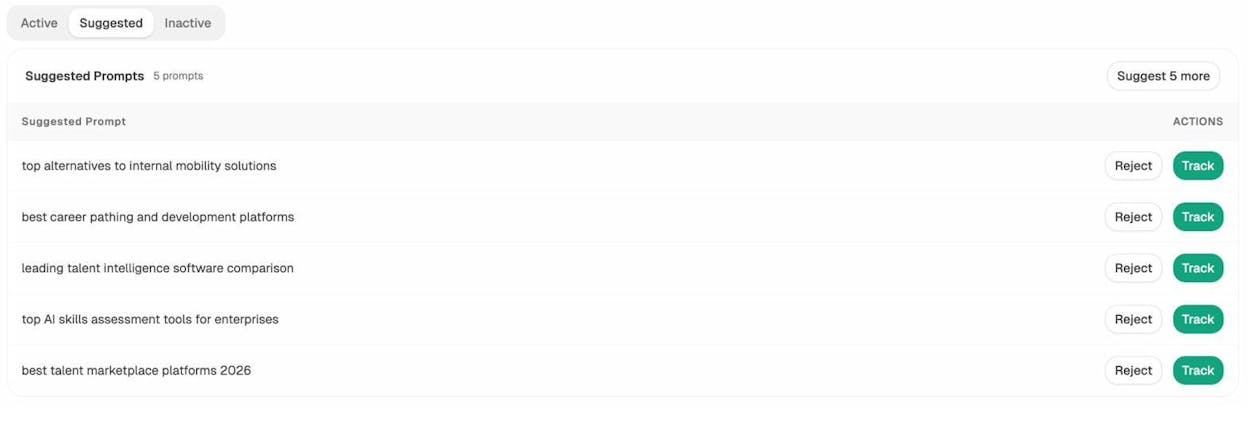
The output of step one is a single document. On the left, every entity you want to track. On the right, every topic that entity should be associated with. Everything that follows compares this list to reality.
Step 2: Benchmark your current visibility on Google and AI
You can’t close gaps you haven’t measured. Step two creates the baseline.
For Google, pull the standard SEO metrics for your domain and your top three competitors. Domain authority, organic keywords, organic traffic, and traffic value. Free tools like the Analyze AI website authority checker and website traffic checker give you the snapshot in two minutes.
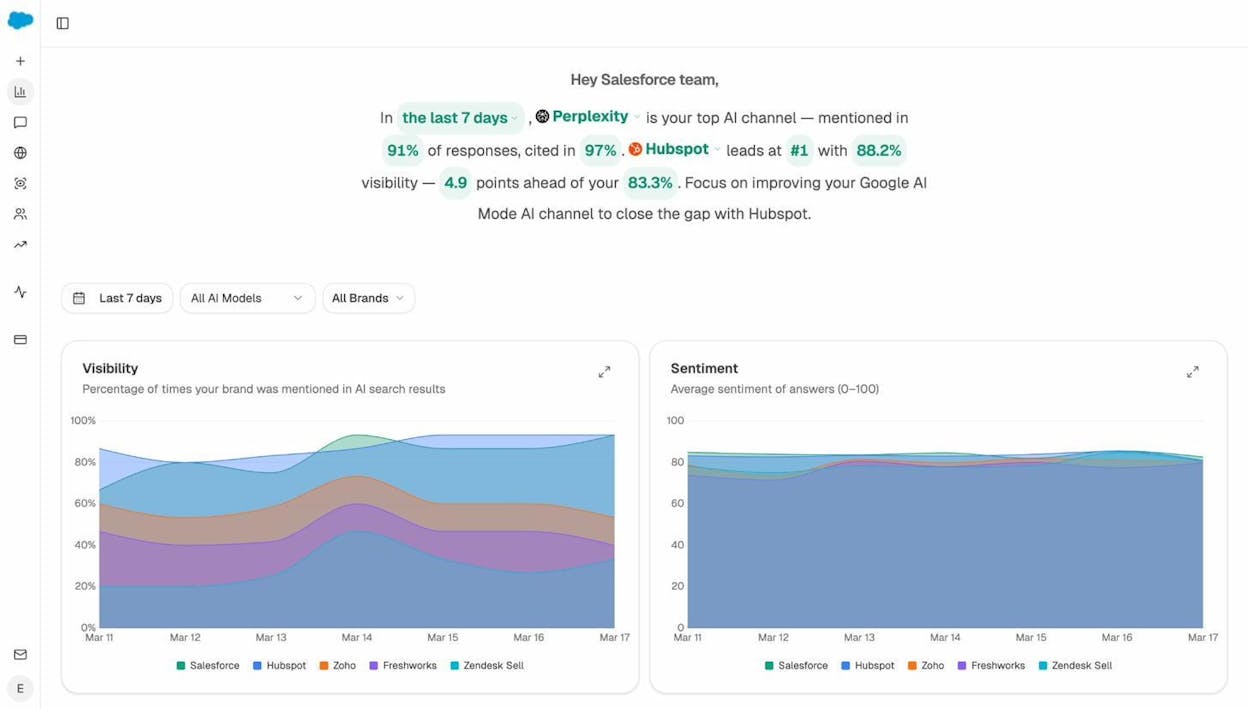
For AI search, the benchmark is different. You need four numbers per platform.
-
Visibility. The percentage of tracked prompts in which your brand is mentioned.
-
Average position. Where your brand sits in the answer when it does appear.
-
Sentiment. How positively or negatively the answer describes you.
-
Citations. How often your domain is linked as a source.
The Analyze AI Overview shows all four across ChatGPT, Perplexity, Google AI Overviews, AI Mode, Gemini, and Copilot in one place. It also tells you which channel is your strongest and which competitor is closing in.
Once the baseline is set, layer in AI traffic. About 20% of ChatGPT mentions include clickable citations, which means the rest are invisible to GA4. The Analyze AI AI Traffic Analytics view captures the visits you can attribute, which engine drives them, what they engage with, and which pages convert.
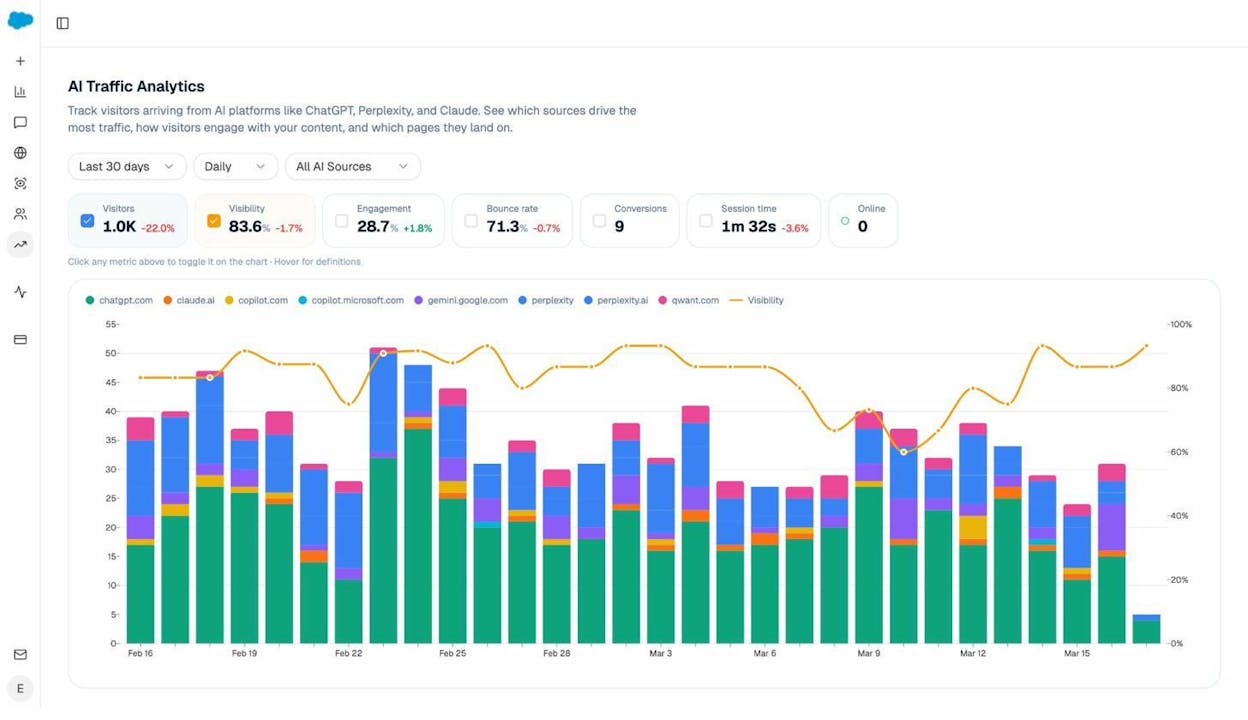
Save the baseline somewhere you can revisit it weekly. Given the 35% monthly visibility swings cited above, quarterly snapshots are too slow.
Step 3: Find your branded keyword and prompt gaps
A branded gap is a query that contains your brand name but doesn’t return your owned property at the top, or a prompt that mentions your category by name without naming you.
Start with branded keywords on Google. Pull every search containing your brand and your sub-brands using a keyword research tool. Filter for queries where you don’t rank in position one. For each one, ask three questions.
-
Is the page outranking you owned by a competitor or a third-party reviewer?
-
Is the query a “you vs competitor” comparison, and do they outrank you?
-
Is one of your owned profiles ranking instead of your main site, and is that acceptable?
![[Description of screenshot to use: Google search results page for the query “{your brand} review” showing your site in position 3 and a competitor comparison site in position 1, with the SERP features visible]](https://www.datocms-assets.com/164164/1778088117-blobid4.png?auto=format,compress&w=1248&fit=max)
The branded gaps worth fixing are the ones where another company sits between you and a buyer who already typed your name.
For AI search, the equivalent is branded prompts. Run prompts like “Is {your brand} better than {competitor}?” and “What does {your brand} do?” inside the Analyze AI prompt tracker. The dashboard shows visibility, sentiment, position, and which other brands appear alongside you.
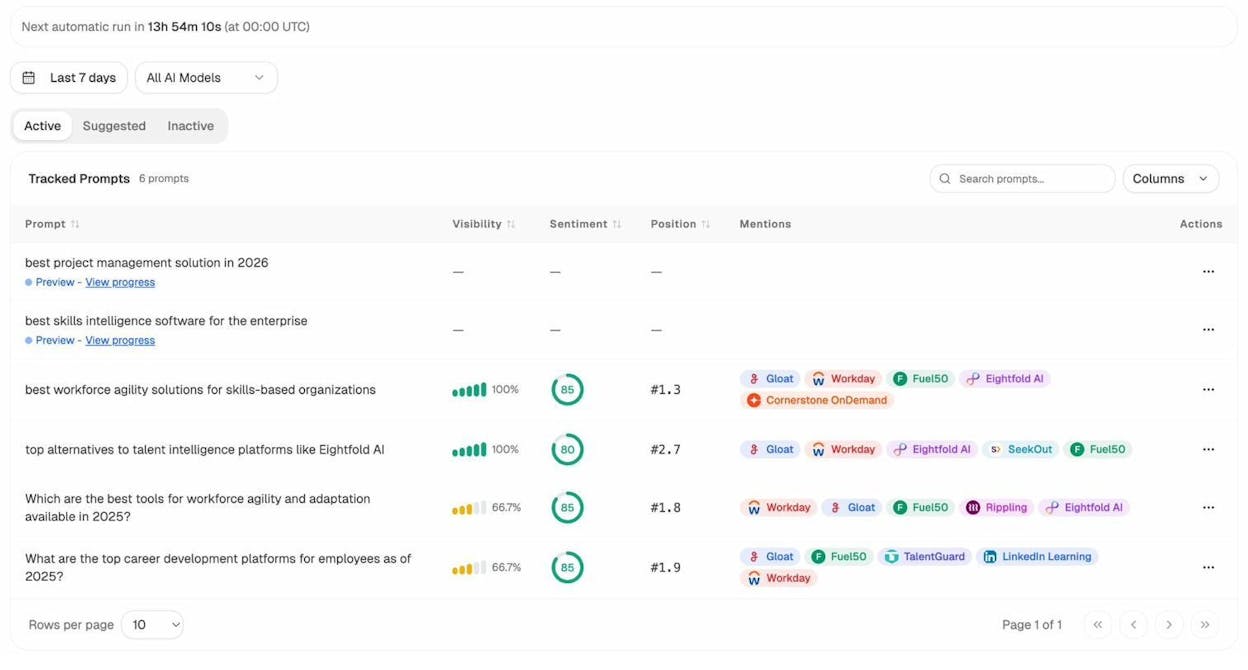
If you want to test ad hoc prompts before adding them to long-term tracking, the Ad Hoc Prompt Searches feature lets you run a query once across ChatGPT, Google AI Overviews, and Perplexity to see who shows up.
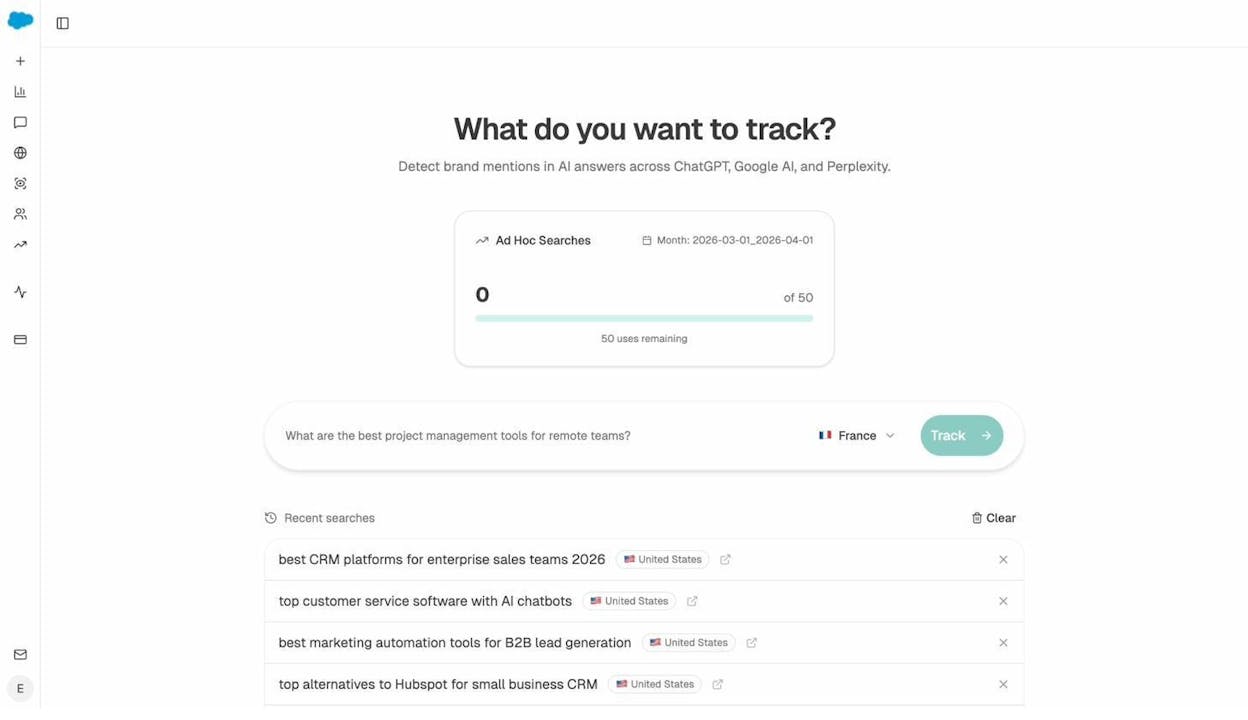
The branded gaps in AI search usually fall into four buckets. Your brand isn’t mentioned. Your brand is mentioned but a competitor is recommended. Your brand is described inaccurately. Your brand is mentioned but your domain isn’t cited as a source. Each bucket needs a different fix, and step seven covers the prioritization.
Step 4: Find your unbranded topic gaps in search and AI
Unbranded gaps are bigger than branded ones, and they are where most growth lives. These are queries about your category that don’t mention you yet.
For Google, take the topic list from step one and run each topic through a keyword tool. Add your domain to the target filter. Anything where you rank below position 10 is a candidate. Group candidates by topic cluster, not by individual keyword, since that’s how you’ll build content for them. The Ahrefs guide on building an SEO topical map is a useful external reference here.
For AI search, the same logic applies but with a twist. According to Semrush’s April 2026 data, between 65% and 85% of ChatGPT prompts have no matching keyword in traditional databases. A real chunk of buyer demand exists only as prompts, not as keywords.
This is where the Analyze AI suggested prompts feature does real work. It surfaces the prompts your buyers are actually asking AI engines, including ones with no Google equivalent. You can scan suggestions, accept the relevant ones, and start tracking how you appear for them.
For each topic, look for three patterns inside Analyze AI. Topics where you appear in some prompts but not others. Topics where you appear in answers but never as a citation. Topics where competitors dominate but you have no presence at all. The third pattern is usually the largest opportunity, and it’s often the cheapest to fix because no one is competing for that exact prompt yet.
A practical reference for closing these gaps is our guide on the 4 pillars of an effective SEO strategy for AI search.
Step 5: Audit your narrative, sentiment, and format gaps
Visibility is one half of the picture. The other half is what AI says about you when you do show up. This is where most brand gap analyses stop too early.
Start with sentiment. Pull the average sentiment score per prompt across each AI engine. Cross-platform variance matters here. Superlines found a 14.8x sentiment gap for the same brand between Perplexity and ChatGPT. If your sentiment is high on Perplexity and low on Gemini, the fix is platform-specific, not generic.
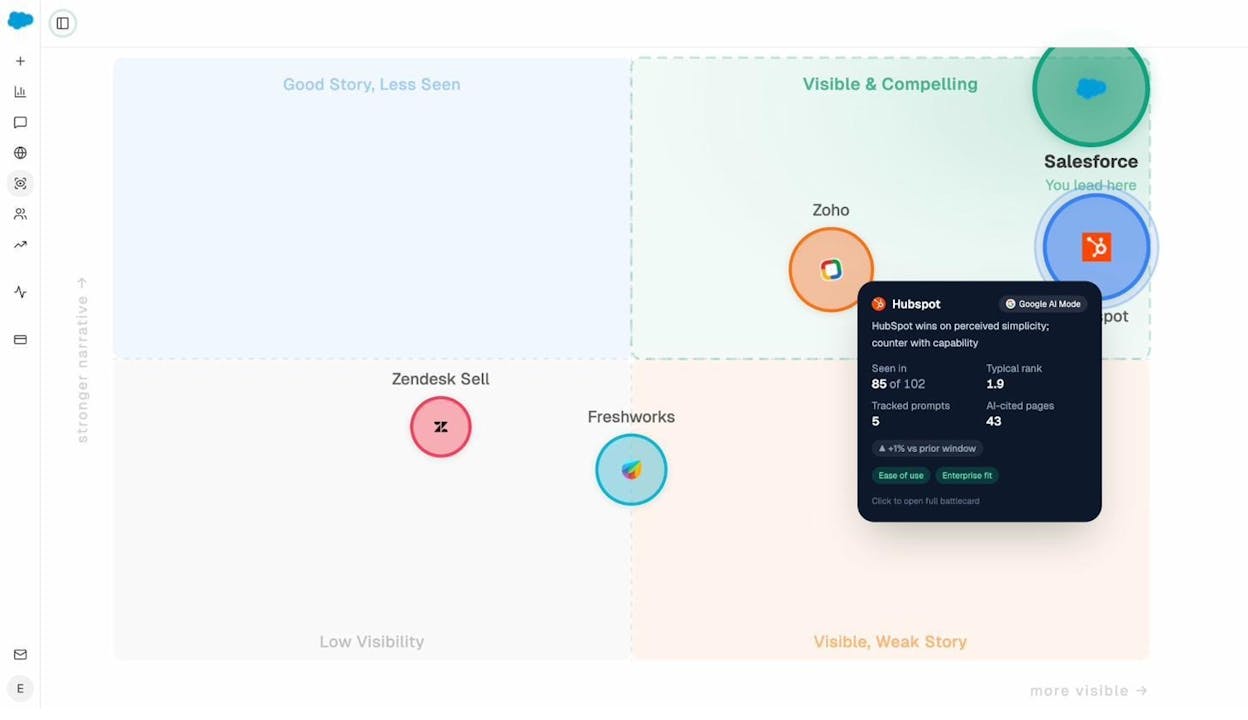
Next, audit the narrative itself. The Analyze AI perception map plots your brand against competitors on two axes. How visible you are, and how strong your positioning narrative is. The four quadrants tell you what to do. “Visible and compelling” is the goal. “Visible, weak story” means a messaging fix. “Good story, less seen” means more reach. “Low visibility” means both.
Then audit format. According to Wix’s March 2026 analysis, listicles account for 21.9% of all citations in AI Mode, ChatGPT, and Perplexity, articles for 16.7%, and product pages for 13.7%. Informational queries cite articles 45.48% of the time. Commercial queries cite listicles 40.86% of the time. If you only publish long-form articles in a category that buys with commercial intent, you have a format gap even when your topic coverage is strong.
The Analyze AI Sources view shows the content type breakdown for citations in your category. Use it to see what AI prefers in your space, then check whether you publish in those formats.
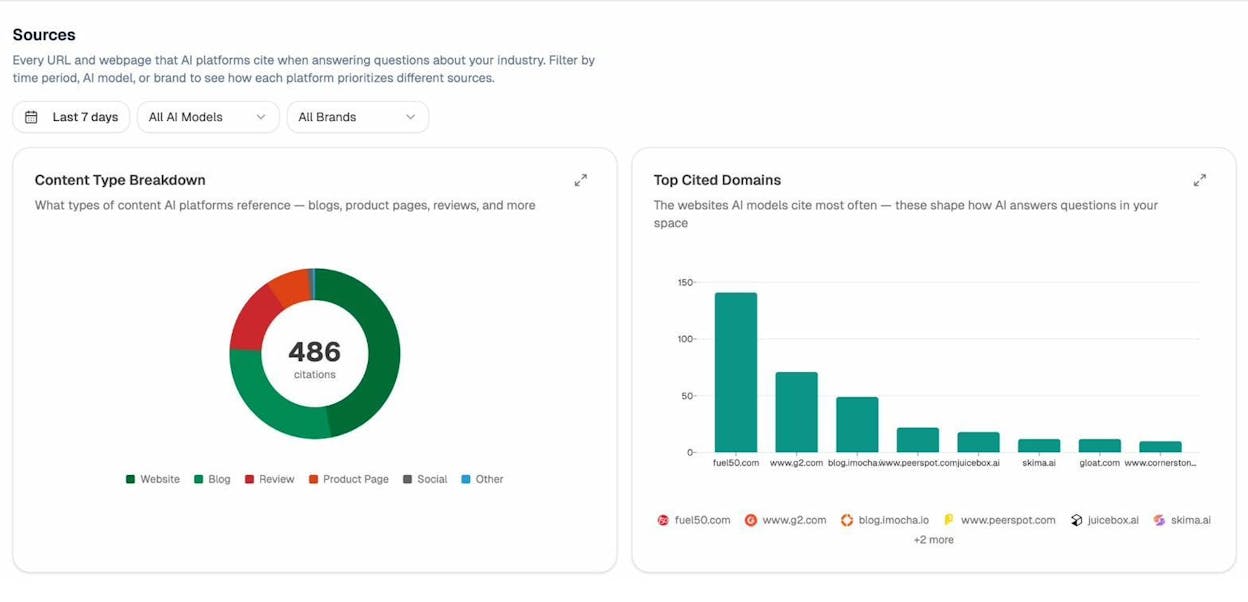
Together, sentiment, perception, and format make up your narrative gap. Closing it is rarely a content problem. It’s usually a positioning, PR, or production-mix problem.
Step 6: Reverse-engineer where competitors win
Once you know your own gaps, look at the brands beating you. The point isn’t to copy them. It’s to find what’s earning their citations.
The Analyze AI Competitors view surfaces brands that AI engines mention frequently in your category, including ones you might not have been tracking. The “suggested competitors” list often catches new entrants before they show up in your usual market reports.
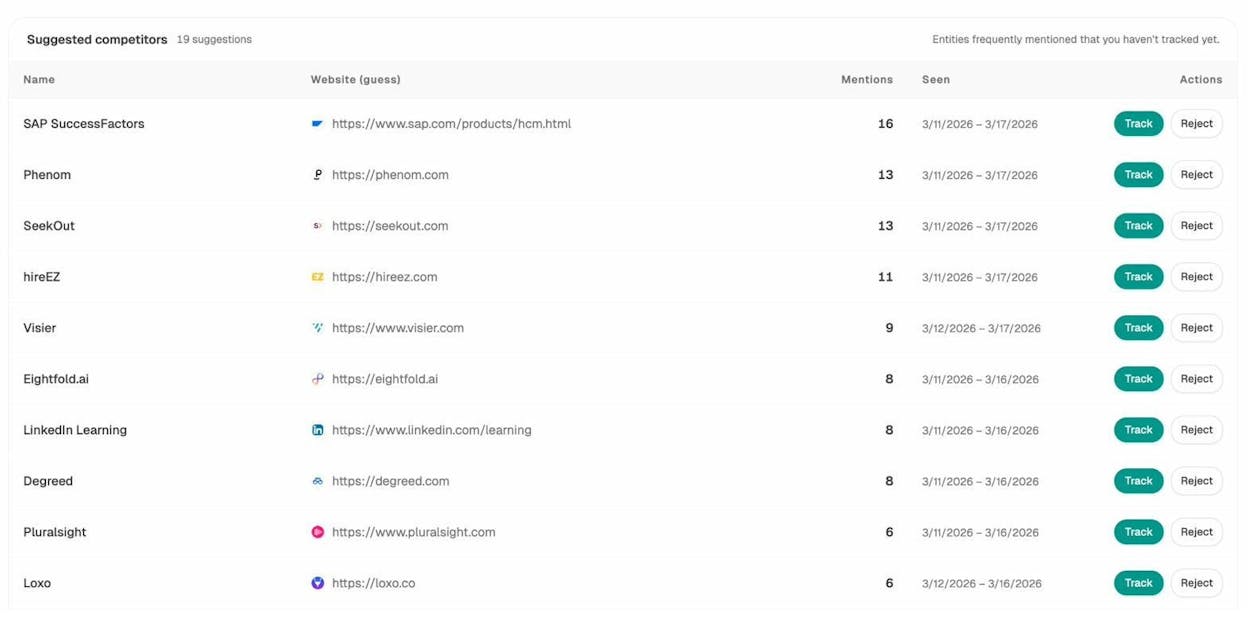
For each competitor on the list, run the same baseline you ran in step two. Then look at three things in particular.
The first is which third-party domains cite them. If five review sites cite Competitor A but none cite you, those sites are your outreach list. Our guide on SEO competitor analysis covers the outreach patterns that work for AI citations.
The second is which of their pages get cited. Run their domain through Analyze AI’s landing pages view to see which URLs AI engines pull from most often. These pages tell you the exact format, depth, and angle that earn citations in your category.
The third is which prompts they own that you don’t. Cross-reference the prompt list from step three with the brands appearing in each answer. Any prompt where a competitor appears and you don’t is a target for the next round of content.
A useful external reference for the underlying mechanics is Ahrefs’ research on LLM visibility, which explains why some brands accumulate citations faster than others.
Step 7: Prioritize and ship
The final step is turning the data into a plan. Without prioritization, a brand gap analysis becomes a wishlist no one acts on.
A simple way to score each gap is to multiply three numbers from one to five. Reach (how many people search or prompt for it). Intent (how close to a buying decision). Effort (how easy it is to fix, where one is hard and five is easy). Anything scoring above 60 ships first.
|
Each gap also has a category, which determines who owns the fix. |
Gap type |
Owner |
|---|---|---|
|
Branded query gap |
SEO + product marketing |
Update positioning page, fix on-page targeting |
|
Unbranded topic gap |
Content |
New article, listicle, or comparison page |
|
Narrative gap |
Brand + PR |
Messaging refresh, third-party coverage |
|
Format gap |
Content ops |
Build the missing format (video, listicle, guide) |
|
Source gap |
Digital PR |
Outreach to cited domains |
|
Citation gap |
SEO |
Schema, freshness, on-page citation signals |
Schedule the work in 30-day sprints. Use the Analyze AI weekly email digests to see whether visibility, sentiment, and citations are moving in the right direction. The digest summarizes the week’s wins, losses, and the single highest-leverage action.
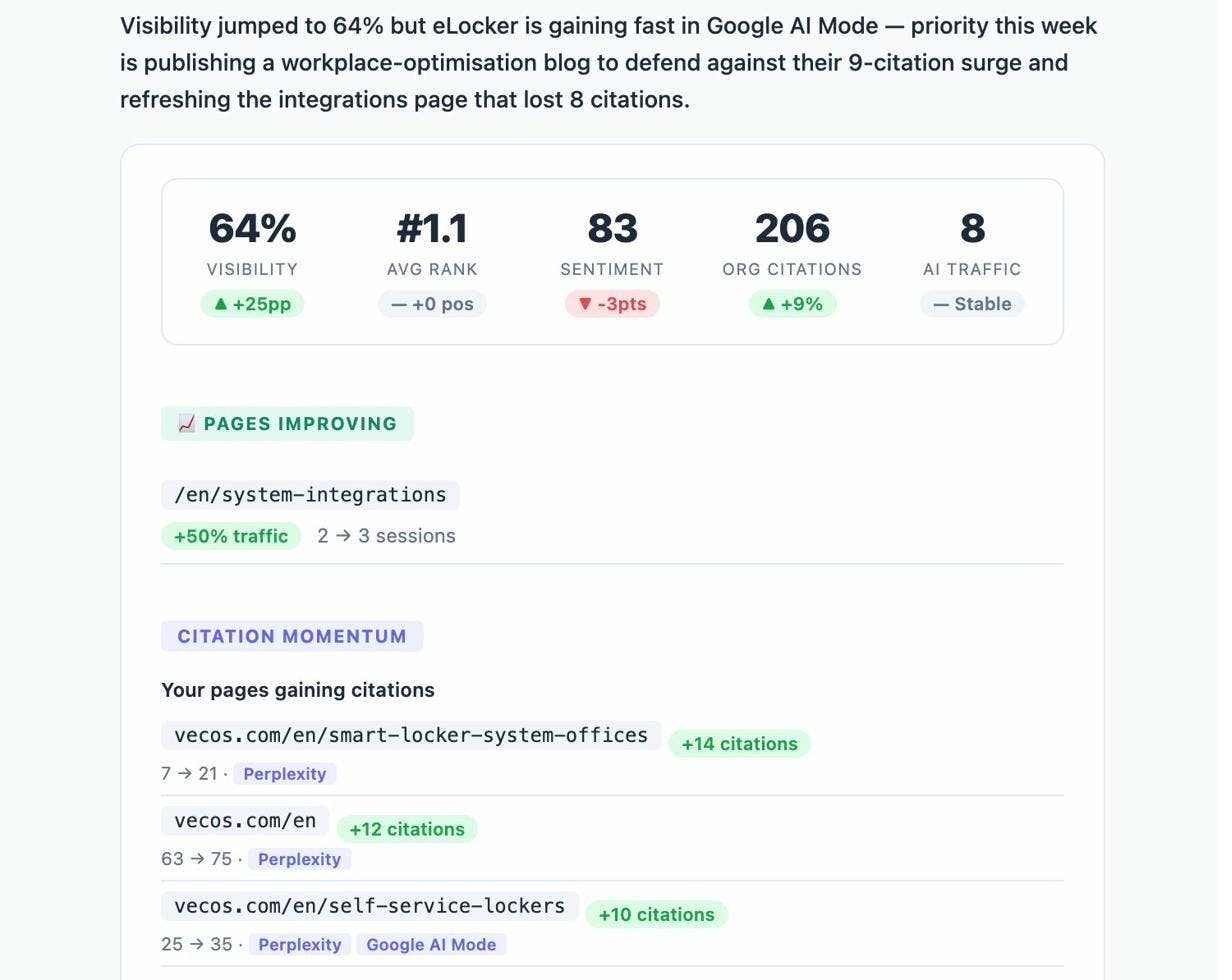
Pages improving show what’s working. Citation momentum shows where to double down. Anything stalling or declining gets pulled forward in the next sprint.
How often to run a brand gap analysis
The old answer was once a quarter. That cadence no longer fits how AI search behaves in 2026. The baseline now lives weekly, the deep audit runs monthly, and the strategy review runs quarterly.
The reason is the volatility cited earlier. With brand visibility shifting up to 35% in five weeks and AI Overview answers regenerating around 70% of the time, a quarterly snapshot misses three full cycles of change. The cadence below is what we recommend for most teams.
-
Weekly. Auto-tracked prompts, citation deltas, sentiment alerts. Five minutes inside the Overview view.
-
Monthly. Branded vs unbranded gap pull, narrative audit, source review. Roughly half a day.
-
Quarterly. Full re-baseline of all six dimensions, prioritization reset, stakeholder report.
This pace turns brand gap analysis from a one-off project into a system.
Final thoughts
A brand gap analysis is not a content gap analysis with extra steps. It is a structured way to ask one question. Where should our brand be part of the conversation, and where is it missing? The answer changes weekly in 2026, which is why the framework above is built to compound rather than to run once.
Start with the baseline. Find the branded gaps first, since those are the cheapest to close. Move to unbranded topics, then to narrative, then to formats, then to competitor reverse-engineering. Score, prioritize, ship, measure. Repeat at the cadence above.
The brands winning AI search this year are not doing anything mystical. They are running this loop more often than their competitors, and they are treating AI engines as a fifth organic channel that sits next to Google, not on top of it.

Ernest

Ibrahim


