
How do I find non-brand demand we can realistically win?
Short answer
You can win where you already have a foot in the door and the current winners are beatable. For each topic you are considering, check whether one of your pages already sits between 11th and 30th for something similar. Then look at what kind of pages hold the top ten. Topics where you have a foot in the door and the top ten is full of forum posts or thin listicles are the ones you can take.
Stop trusting the difficulty score on its own
A difficulty score describes the keyword. It knows nothing about you.
Two companies looking at the same keyword with the same score have completely different odds. One already has eleven related pages sitting on page two and an audience for the subject. The other has never written about it. Same score, very different outcome.
So check two things about your own situation instead. Both take minutes.
Check one: do you already have a foot in the door?
Positions 11 to 30 are the useful zone. A page sitting there has already convinced Google it is about the right thing. It is losing on depth, trust, or how well it matches what people want, and all three are fixable. A keyword where you appear nowhere is a cold start.
- In Search Console, set the range to the last three months and export your search terms with average position.
- Keep the ones between 11th and 30th with at least 100 impressions, ignoring anything with your brand name in it.
- Group them by the main thing they are about.
- Mark every topic you are considering that falls inside one of those groups.
As a rough rule, topics inside a group where you already sit on page two reach page one far more often than cold starts on the same budget. Use it to order your list, not as a promise.
Make sure the foot in the door is real
One trap catches people here. A page sitting 14th for your keyword may be there by accident, ranking for something else entirely.
Open the page and keyword breakdown for it in Search Console and read its top five terms. If your keyword is the only one from that group and the other four point somewhere else, the page is a passing visitor rather than a resident. Treat it as a cold start.
The opposite is much better news. If four of the five terms sit in the same group and you are still 14th, you are losing on depth or proof rather than relevance. That is the cheapest kind of gap to close.
Check two: who holds the top ten right now?
Pull up the top ten for each surviving topic and look at what kind of pages they are.
| What the top ten looks like | What it means | Verdict |
|---|---|---|
| Three or more forum or Q&A posts | Nobody has written a proper answer | Winnable |
| Mostly thin listicles from small sites | The result is unsettled | Winnable |
| One competitor plus a mix of magazines | Beatable with a sharper page | Winnable with effort |
| Help docs and official pages | People want reference, not an article | Skip |
| Five or more of the biggest names | Settled, and it is about trust | Skip unless you have a foot in the door |
Three or more forum results is the single best buy signal on this list, because it means people want the answer and nobody good has written it.
See whether AI answers are more open than the SERP
Often they are, and this is where a lot of teams find room.
In our own state of AI search research, the sources assistants use are spread widely rather than owned by a few big sites. Across 7,055 different sites, the top ten sites accounted for only 12.2% of what ChatGPT cited, 11.1% for Perplexity, and 13.1% for Google AI Mode.
More usefully, how big and trusted a site was barely predicted whether it got cited at all. Across 4,824 pages we checked, the link between site strength and citations was slightly negative. So a smaller site with a sharply focused page can get picked where it could not yet rank. Google's own AI features documentation points the same way, since being eligible follows ordinary indexing rather than a separate trust test.
A keyword can be out of reach on Google this quarter and open in assistants right now. Analyze AI shows you both in one place, using Visibility Score for how often you get named and the competitor-gaps recipe for the questions where rivals beat you today.
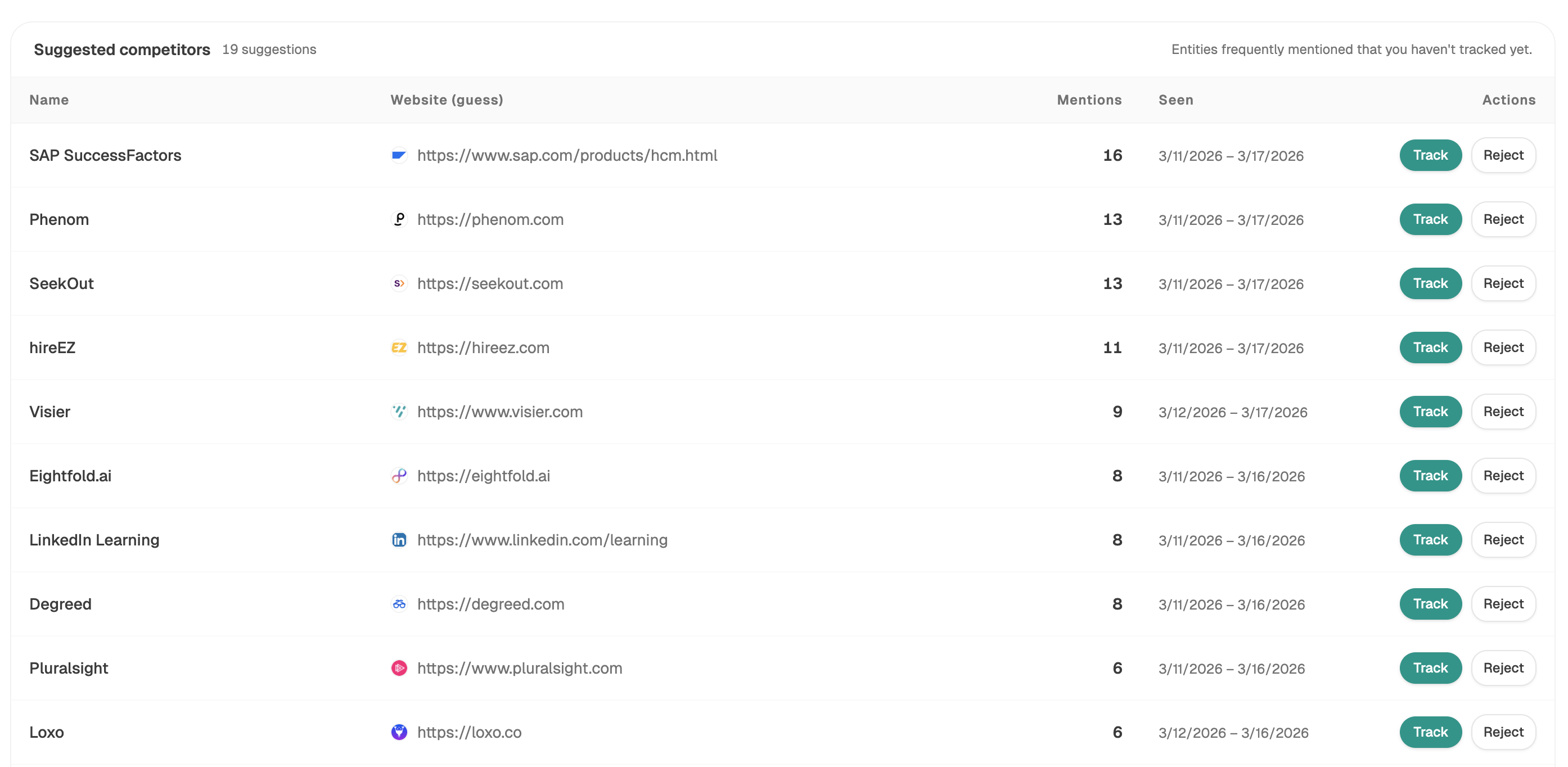 Competitor tracking shows how often each rival is named on the questions you care about, which is a different picture from the SERP.
Run the whole filter as an agent
Start (manual, your candidate keywords as a query-set) → GSC Top Keywords for Site filtered to positions 11 to 30 → DataForSEO SERP Competitors and Google Search to sort the top ten by page type → competitor-gaps recipe for the AI questions rivals already own → Visibility Score for the same group → Conditional keeping only keywords with a foot in the door or an unsettled result → Export CSV.
Notice that both checks run in one pass. Teams who split them end up with two lists and quietly abandon the second. One agent producing one list keeps both channels in the same decision, which is the point of treating AI search as another channel to work rather than a replacement for the one you have. How to build a keyword strategy covers the grouping step in more detail.
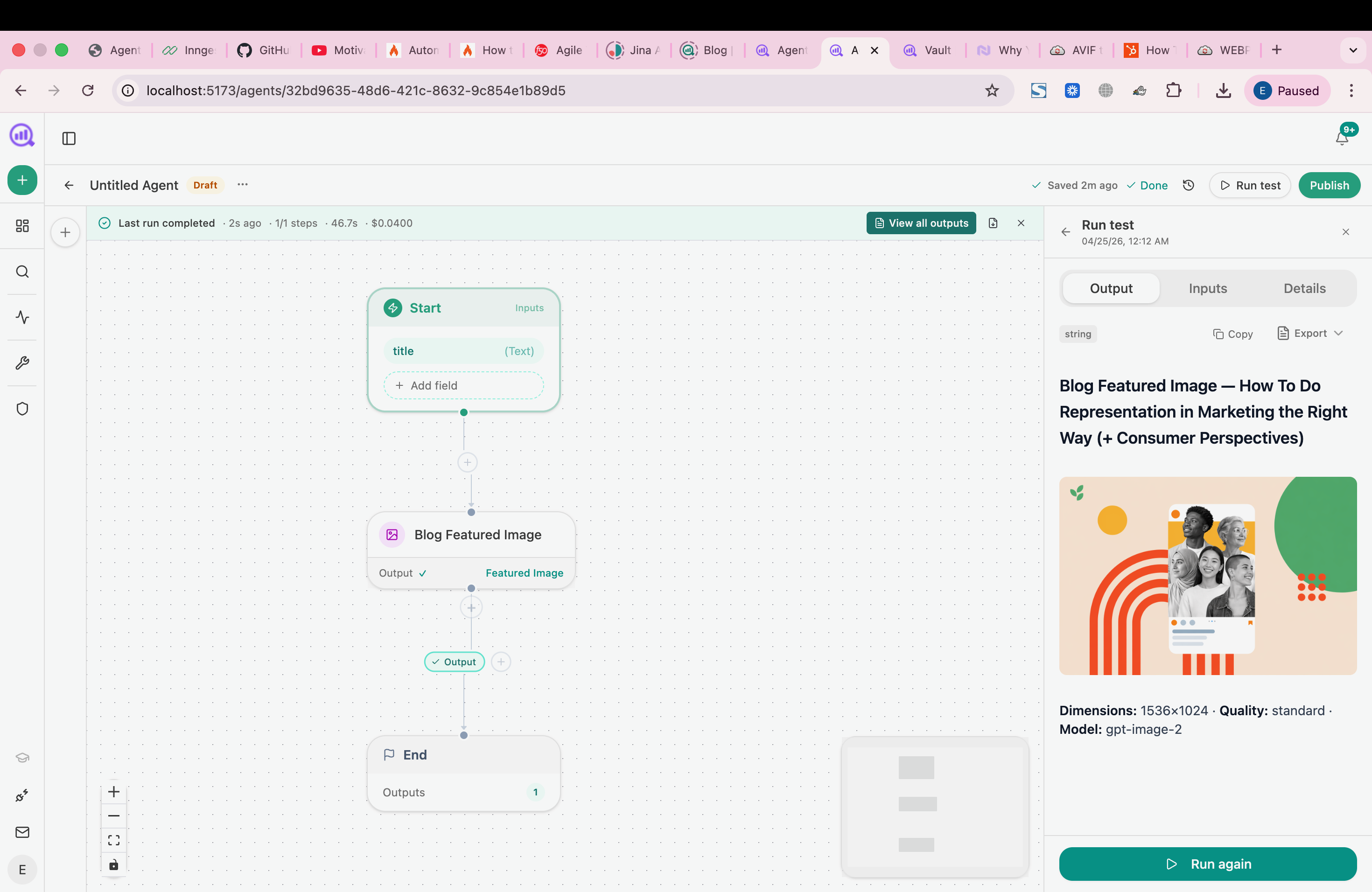 The two checks run as one workflow here, so the classic and AI reads land in a single list.
FAQ
Related answers
- Which competitor content gaps are real buying demand and which are just missing word count?
- Which low-volume keywords are most likely to drive revenue?
- How do I prioritize content ideas by expected revenue and effort?
- What should we publish when our brand recognition is weaker than competitors'?
Find the demand you can actually take
Analyze AI checks every keyword against the pages you already have, the sites holding the result, and how often assistants name you.
Start your free trial