
Does our offer match the audience our SEO attracts?
Short answer
Compare the people your search traffic brings in against the people you actually win. Match them on company size, job title and region. If the two profiles look different, your content is attracting one audience while your product is built for another, and no amount of conversion work will fix that.
Build the two profiles
You need one export from your CRM and one from your forms.
- Pull every lead from organic search in the last year with company size, job title and country.
- Pull every closed-won customer from the same period with the same three fields.
- Work out the share in each bucket for both groups.
- Put them side by side.
| Arrive from search | Actually buy | |
|---|---|---|
| Under 50 staff | 61% | 12% |
| 50 to 250 staff | 27% | 34% |
| Over 250 staff | 12% | 54% |
| Practitioner titles | 74% | 38% |
| Manager and above | 26% | 62% |
That table describes a real problem. Your content is bringing in small companies and hands-on practitioners. Your revenue comes from larger companies and people who manage them.
Everything downstream will look broken as a result. Your conversion rate is poor, your leads get rejected, and your sales team believes marketing is sending them the wrong people. They are, and the cause is upstream of every fix anyone has proposed.
Work out which side to change
Two honest options, and the answer depends on your price.
Change the content when your product genuinely needs larger customers to be worth selling. Your topics are attracting people who cannot buy, so write for the people who can. That means fewer how-to pieces aimed at the practitioner and more about the problems their manager owns: cost, risk, reporting, and what happens when it goes wrong.
Change the offer when the smaller audience is large and genuinely wants what you do. A self-serve tier priced for a ten-person team turns a mismatch into a second business line. This is worth taking seriously when the practitioner traffic is very large, because you have already done the expensive part.
What does not work is keeping both and hoping the funnel sorts it out. That is how you get a demo form that everybody visits and nobody completes.
Check whether the mismatch is one section of your site
Before you rewrite anything, find out where the mismatch comes from.
Split the arriving profile by landing page group. Usually one group is responsible. A popular free tool, a set of beginner guides, or a batch of how-to posts written for a different reader.
That is much easier to act on than a site-wide finding. You are not rewriting your content strategy, you are dealing with eleven pages that attract the wrong people. Analyze AI's Page-Keyword Breakdown node returns the searches behind each page, so you can see exactly which wordings bring the mismatched group.
Often the fix is not deletion. Those pages earn links and citations, and they are how practitioners recommend you to their managers. Keep them, and stop asking them to produce leads. Which pages produce qualified opportunities rather than just form fills covers judging them properly.
Ask who assistants think you are for
There is a second version of this check, and it catches something analytics cannot.
Ask an assistant who your product is for and read the answer. If it describes you as a tool for small teams while you sell to enterprises, that description is shaping shortlists before anyone reaches your site.
Our own state of AI search research found that these descriptions are sticky. After a brand had been mentioned in an answer, the next check mentioned it again about 83% of the time across all three assistants. After a miss, it recovered only 10% to 12% of the time. The framing you are given tends to persist, which is also why one check is not enough to act on. Researchers make the same argument, that visibility should be read as a spread rather than a single snapshot.
Analyze AI tracks this through the Perception view and Get Perception Quadrant, which show how you are characterised against rivals, and whether the audience assistants assign you matches the one you sell to.
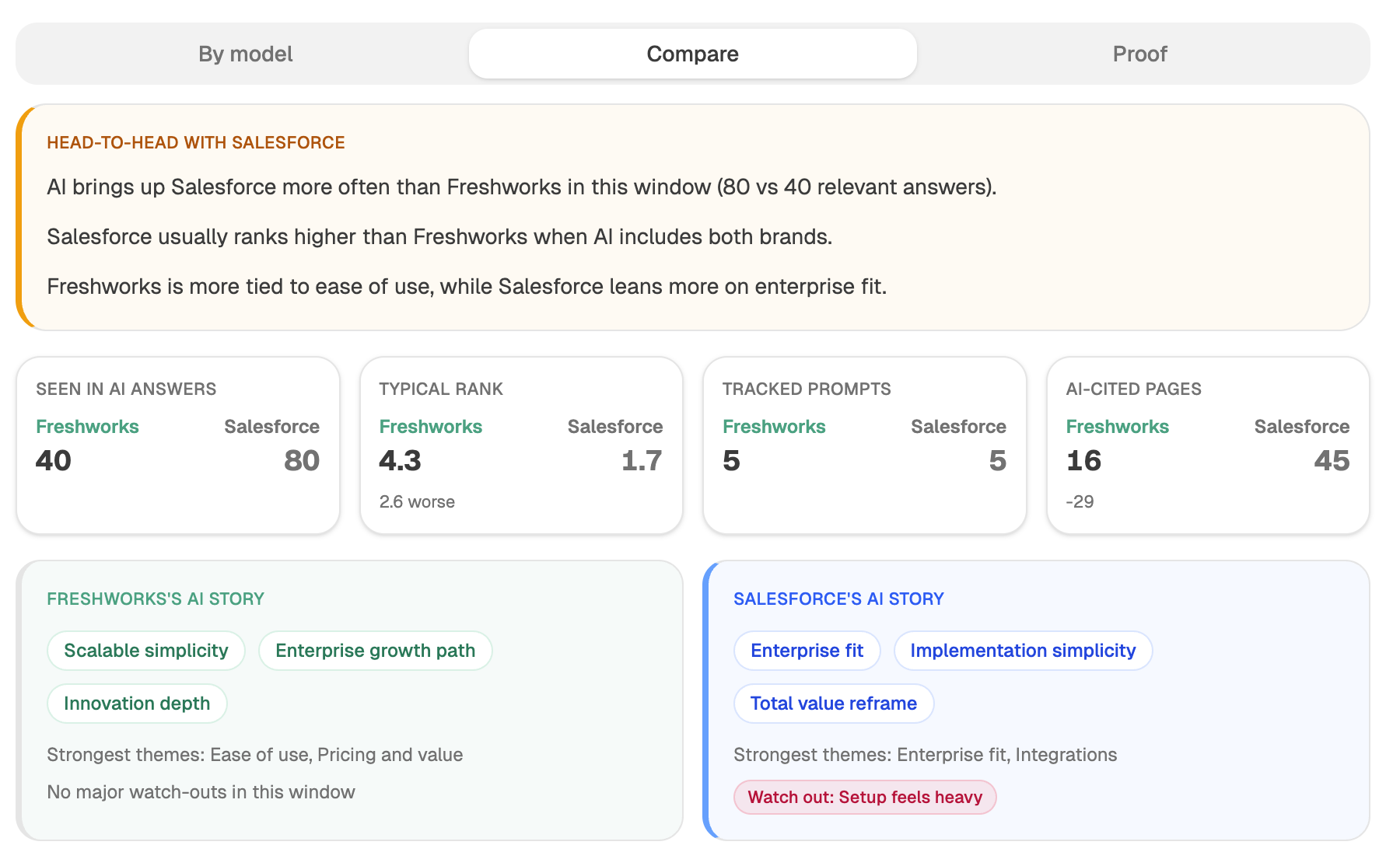 Perception shows which kind of buyer assistants associate you with, and that description is one you can change with content.
Recheck the profiles every two quarters
This drifts, and it drifts quietly. A batch of successful beginner content can shift your arriving profile over a couple of quarters while every individual page looks like a win.
Start (schedule, twice a year) → HubSpot Search Contacts for organic leads with company size, title and region → HubSpot Search Deals for closed-won customers with the same fields → GA4 Page Breakdown grouping leads by landing page type → Code node building both profiles and the gap per bucket → Prompt LLM naming which page groups drive the largest gaps → Export Excel.
Naming the page groups rather than reporting the gap is what makes this actionable. A gap tells you something is wrong. A list of eleven pages tells you what to do on Monday.
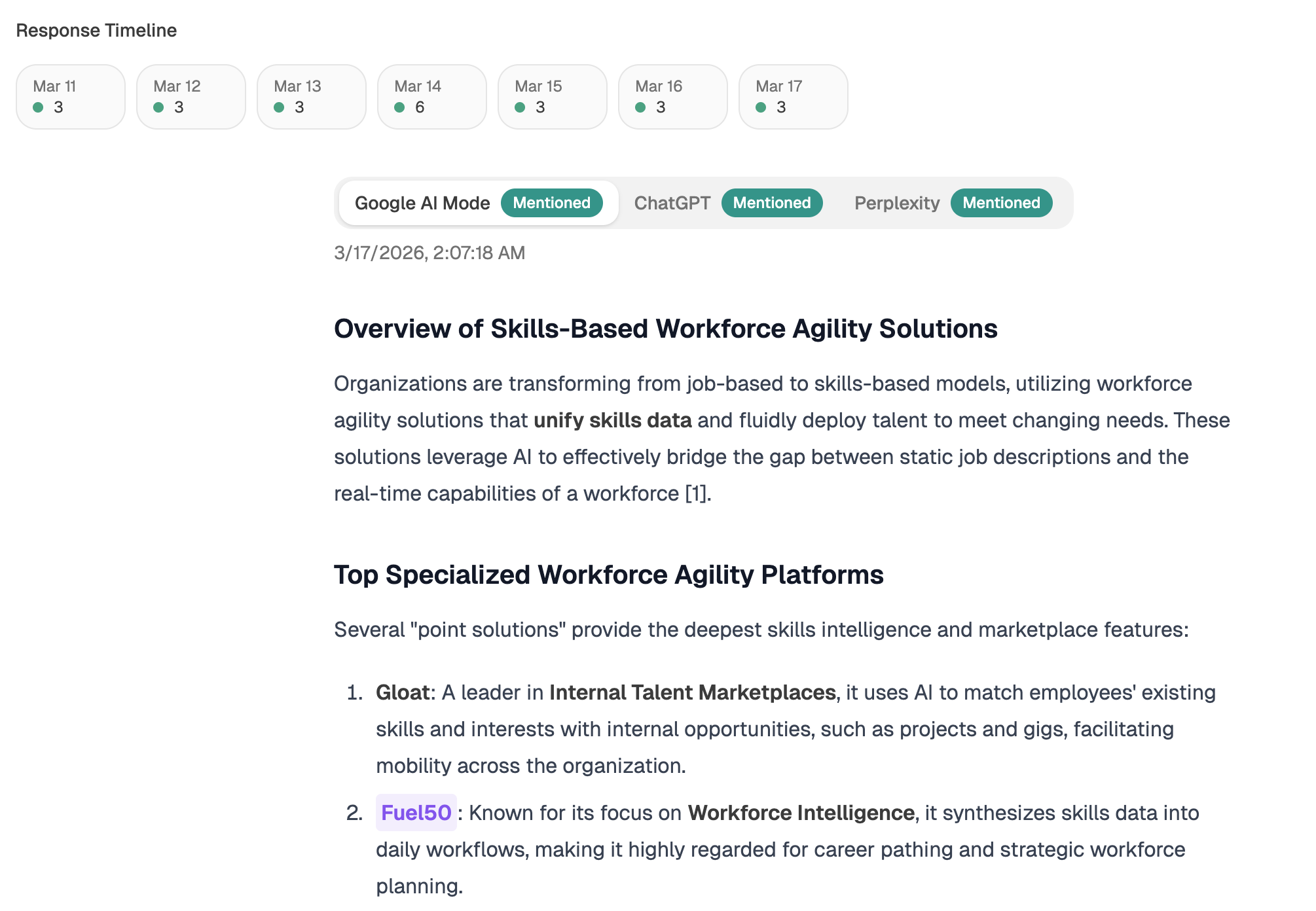 Tracking the questions each buyer type asks is how a mismatch gets traced back to the topics you chose.
FAQ
Related answers
- How do I find topics that attract buyers instead of students and researchers?
- How do I tell lead volume from lead quality?
- Is weak trial conversion an acquisition problem or an onboarding problem?
- Why does our organic traffic not produce demos, calls, or sales?
Find out who your content is really attracting
Analyze AI compares the buyers your search traffic brings against the ones you win, and names the pages causing the gap.
Start your free trial