
How do I tell whether our content actually helps a buyer decide?
Short answer
A page helps someone decide when it removes a specific uncertainty they had. So ask five recent customers which of your pages they read, and for each one, what it settled. If they can name the thing it settled, the page did its job. If they remember reading it but cannot say what changed, it informed them and moved them nowhere.
Ask five buyers what each page settled
This takes five conversations of fifteen minutes and it is worth more than any engagement metric.
- Pick five customers who closed in the last quarter.
- Ask which pages of yours they remember reading before they bought.
- For each page they name, ask what they were unsure about before, and what they knew after.
- Write the answer as a sentence in their words.
- Ask the same about a page they read and found useless.
You are listening for a specific change of state. "I did not know whether it would work with our setup, and after that page I knew it would" is a page doing its job. "It was a good overview of the space" is not.
Do the same with two lost deals if you can face it. Those are more useful still, because they tell you which uncertainty you left standing.
Sort every page by the uncertainty it removes
Now take what you heard and apply it to the library. Each page should be able to name one uncertainty it kills.
| Uncertainty a buyer has | The page that removes it |
|---|---|
| Is this even a real problem? | The teaching post with data |
| Is this the right kind of solution? | The category or approach comparison |
| Does it work for someone like me? | The use case or case study |
| Is it you or them? | The head-to-head comparison |
| Will it work with what we have? | The integration page |
| What happens if it goes wrong? | The implementation guide |
| Can we afford it, and can we leave? | Pricing and contract terms |
Any page that cannot claim a row is either a summary of things already known, or it is doing brand work rather than decision work. Both can be legitimate. Neither should be counted as help.
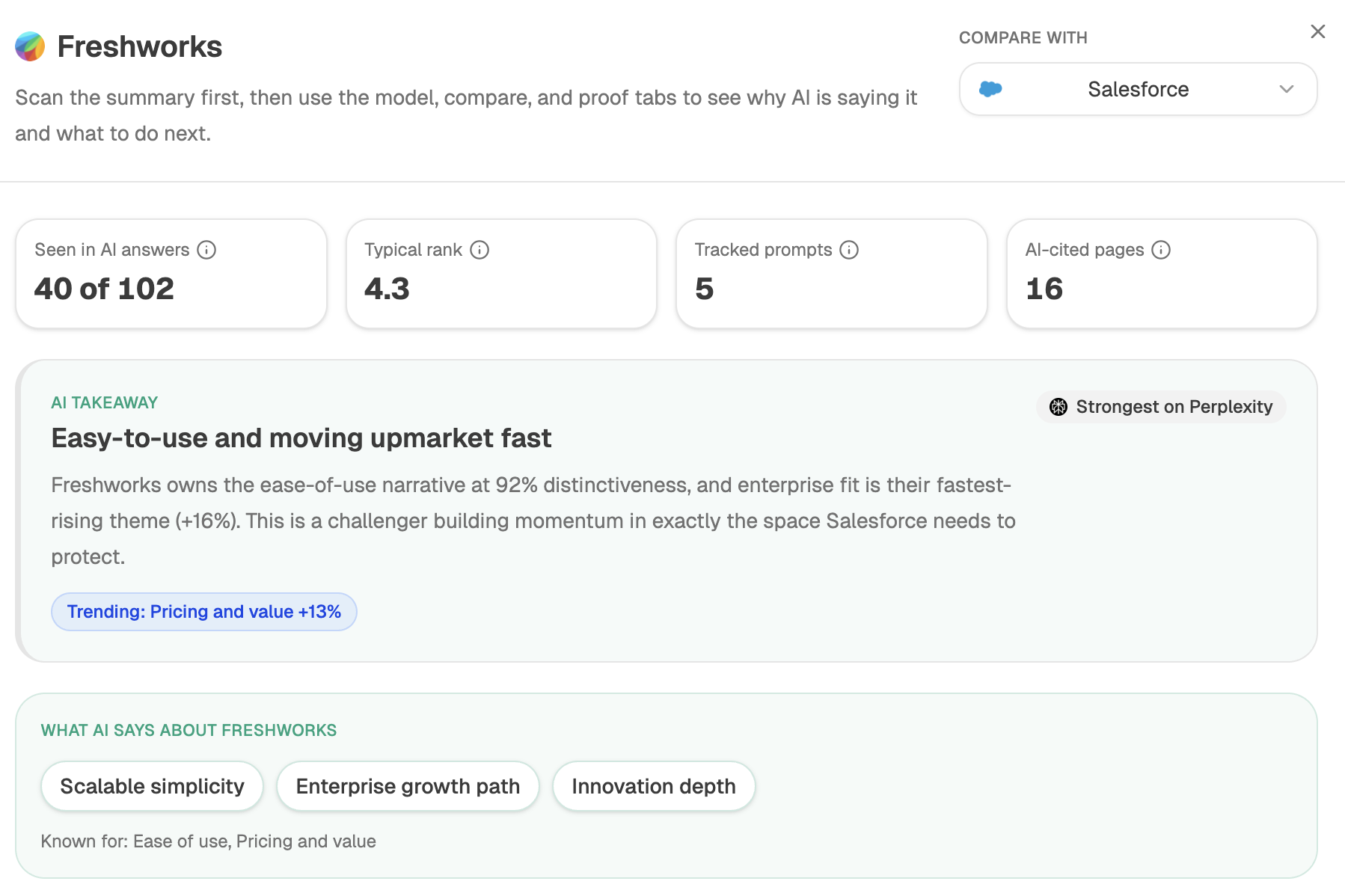 Perception shows what buyers are already being told about you, which is often the uncertainty your pages should be aimed at.
Check the same thing without interviews
Interviews are the strongest evidence and you cannot run them every month. Three proxies get you close.
The second page. People who are deciding move forward. Pull the next page opened after each of your main articles. A reader who goes from a concept post to a comparison page is deciding. A reader who goes to another concept post is browsing.
Repeat visits before a form. Someone who returns two or three times and then converts was working through something. Those return paths tell you which pages carry weight.
Sales paste behaviour. Ask your reps which links they send in deals. Reps are ruthless about this, and the pages they actually paste are the pages that settle things. How do I create content sales will actually use in deals goes further.
See which pages are used as evidence
There is a fourth signal that has nothing to do with your analytics. Assistants pick pages to build answers from, and they lean on the ones that settle things.
Analyze AI's Sources view lists the pages your answers were built from, and citation-magnets ranks the ones assistants keep returning to. In our own state of AI search research, across 115,843 citations, page authority barely predicted whether a page got used, so this is not simply a popularity list. It leans towards pages that answer something cleanly.
Put that list next to your interview notes. The overlap is usually strong, and the pages appearing on both are the ones to protect and update.
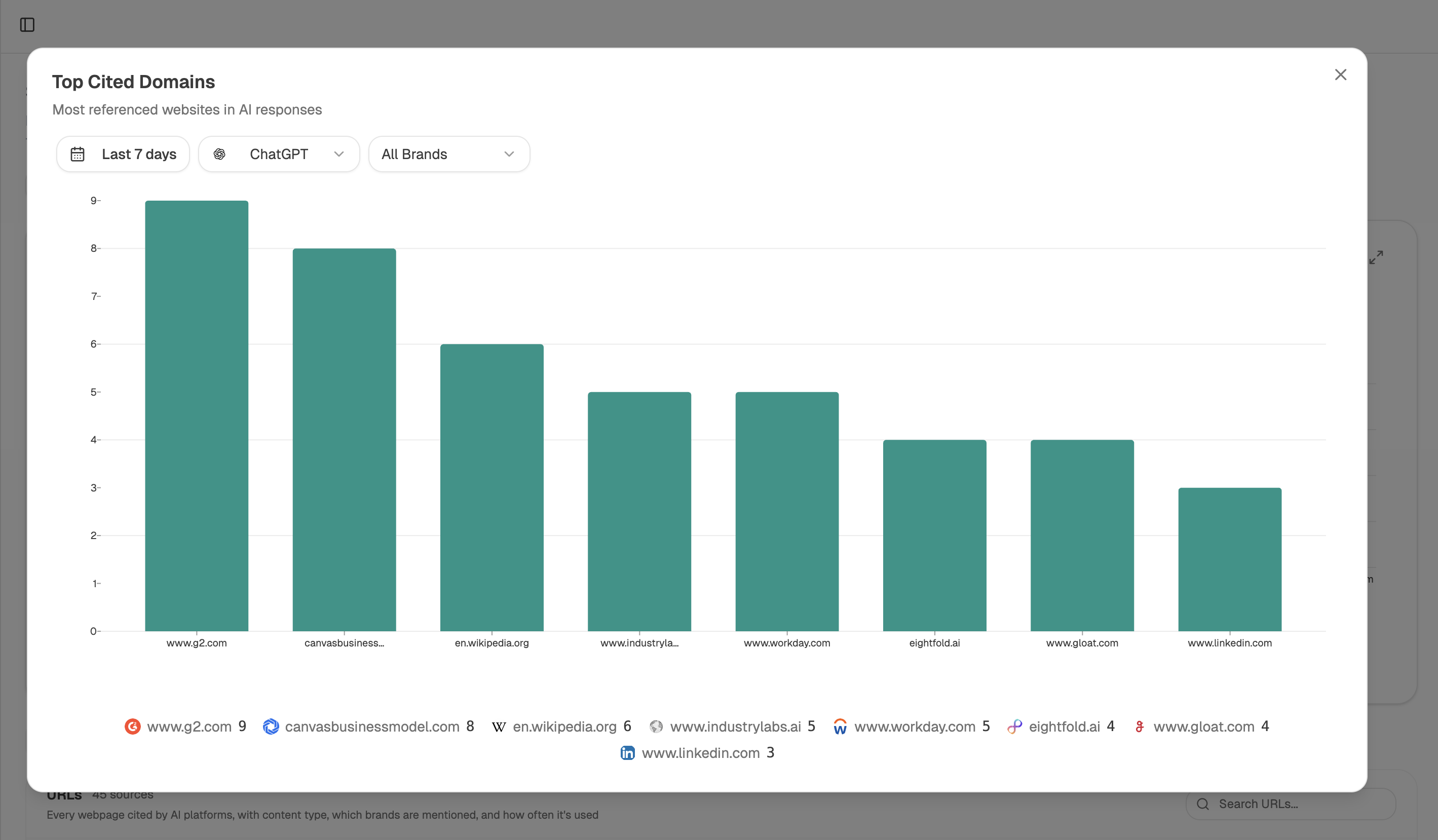 Sources names the exact pages assistants pulled from, which is a second read on which of your pages actually settle things.
Fix a page that informs but does not help
When a page fails this test, the problem is nearly always the same. It describes the landscape instead of resolving a choice.
Three edits fix most of them. Name the decision in the first two paragraphs, so the reader knows what they are here to settle. Give a verdict rather than a survey, including the case where the answer is no. And say what to do next given the verdict, which is the ending covered in why do people read our content but never take the next step.
Google's guidance on creating helpful content asks whether someone leaves feeling they have learned enough to achieve their goal, which is the same test written from the other side.
Keep the list current with an agent
Start (schedule, monthly) → Citation Pages and citation-magnets for the pages assistants use as sources → GA4 Page Breakdown with next-page paths from your main articles → HubSpot Search Deals with the notes logged against open deals → Prompt LLM matching each page to the uncertainty it claims to remove → Conditional flagging pages that match none → Export CSV.
Flagging the pages that match nothing is the useful half. A library grows a long tail of pieces that inform, and nobody removes them because none of them are wrong.
FAQ
Related answers
- Are we publishing content because it works or because output is easy to count?
- Which buying roles and objections are missing from our content library?
- What kinds of evidence make a B2B buyer trust a vendor?
- How do I create content sales will actually use in deals?
Find the pages that actually settle things
Analyze AI shows which of your pages assistants use as sources, so you can see which ones carry weight in a decision.
Start your free trial