
Why do people read our content but never take the next step?
Short answer
Because the page ends without giving them a reason to move. Three things cause it. The article finishes on a summary instead of a consequence, the next step asks for more than the page earned, or the next step is aimed at a different person than the one reading. Check which one you have before changing anything, because the fixes point in different directions.
Confirm they really are reading
First rule out the boring explanation. People who look engaged sometimes are not.
Check three numbers on the pages that worry you. What share scroll past three quarters, what the median time on page is against the reading time, and what share come back a second time. If scroll depth is under about half, you do not have this problem, you have a traffic problem and why does our organic traffic not produce demos, calls, or sales is the right read.
Also strip out bots before you believe any of it, since crawlers inflate views and never scroll. Is bot traffic masking a real conversion problem covers filtering.
If people genuinely read to the end and still do nothing, it is one of the three below.
Failure one: the page ends on a summary
Most articles end by restating what they just said. The reader finishes, feels informed, and closes the tab. Nothing has changed for them.
An article that moves someone ends on a consequence instead. It tells the reader what is now true about their situation, and that new fact is what makes a next step obvious.
Here is the difference. "So those are the four ways to measure content decay" leaves the reader complete. "Most libraries lose about a third of their top pages in eighteen months, which means yours is probably losing six pages a year you have not noticed" leaves the reader with a problem they did not have five minutes ago.
The test is one question. After the last sentence, does the reader have a new reason to do something today? If not, the ending is a summary.
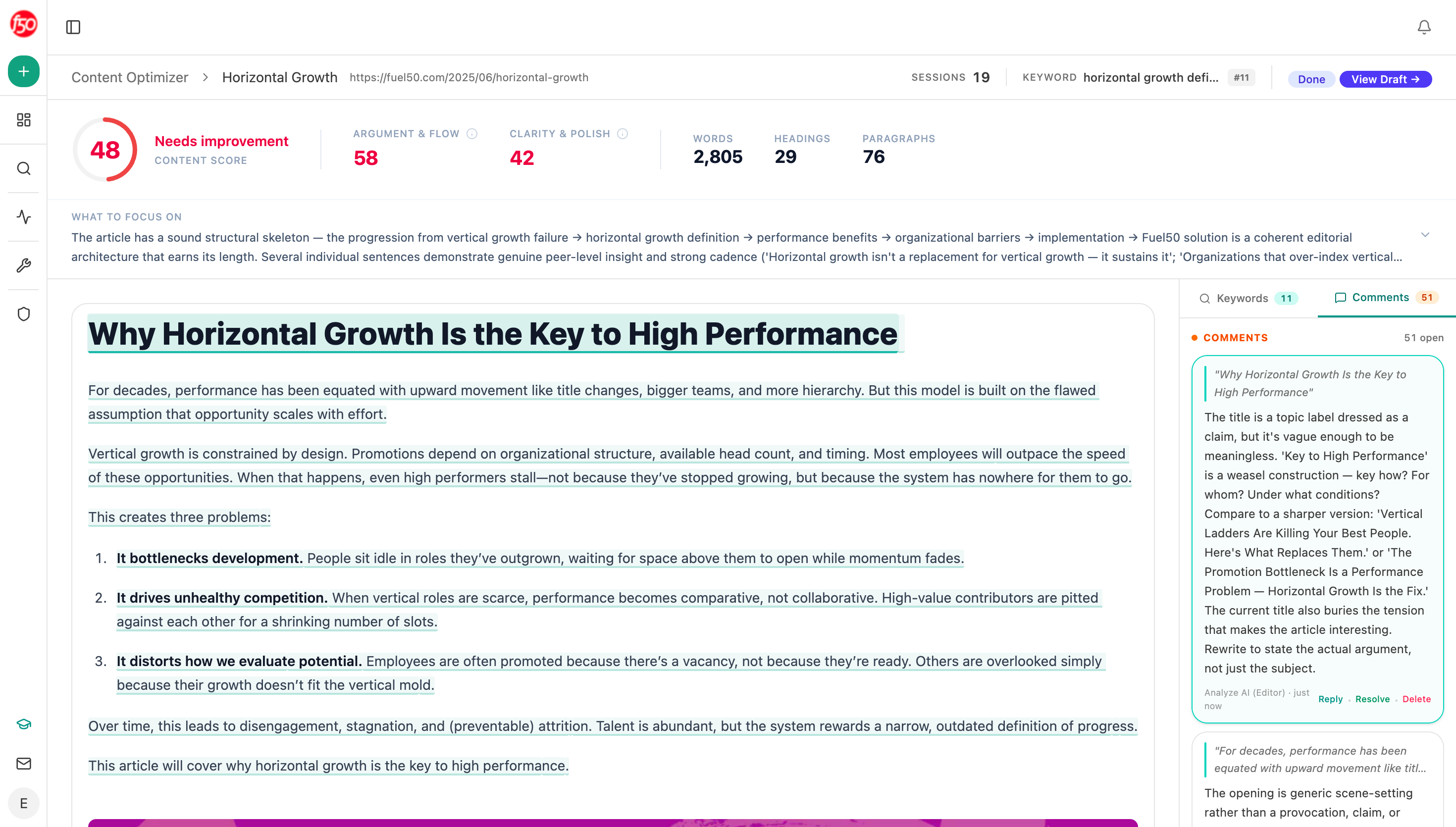 The optimizer reads the live page, so you can check how it actually ends rather than how you remember writing it.
Failure two: the step is bigger than the page earned
The second pattern shows up clearly in the numbers. People reach the button and almost nobody presses it.
This is a mismatch between what you gave and what you asked. Someone who spent four minutes learning what a term means is not ready to spend thirty minutes with a salesperson. The page earned a small step and asked for a large one.
The fix is to offer something smaller rather than to argue harder. What should the next step be for a visitor who isn't ready for a demo ranks the options by what they cost the visitor.
Failure three: the step is aimed at someone else
The third one is the easiest to miss because everything looks fine.
Your article is read by a practitioner who does the work. Your next step asks for a demo, which is a decision only their manager can book. The reader is not refusing, they simply cannot do what you asked.
You can spot this by looking at who your readers are. If job titles in your form fills skew senior while your content is written for people doing the hands-on work, the two are aimed at different people.
The fix is to give the reader something they can do alone, plus something they can forward. A one-page summary a practitioner can send upward converts better than a demo button on this kind of page. How do I reach decision-makers who never talk to sales covers the wider version.
Check what they already decided elsewhere
One cause sits outside your page. Some readers arrive having already made up their mind somewhere you cannot see.
In our own state of AI search research, we found brand mentions in AI answers are sticky. Once a brand had been mentioned, the next check mentioned it again about 83% of the time across all three assistants. After a miss, the next check mentioned it only 10% to 12% of the time.
This matters more now that fewer people click through at all. Pew Research found a source link was clicked in about 1% of visits when an AI summary appeared. So if assistants are not naming you when your buyers ask, that absence tends to persist, and readers arrive at your page with a shortlist you are not on. They will read your article happily and take their next step somewhere else. Analyze AI tracks this through Visibility Score and the unmentioned-prompts recipe, which lists the buying questions where you never appear.
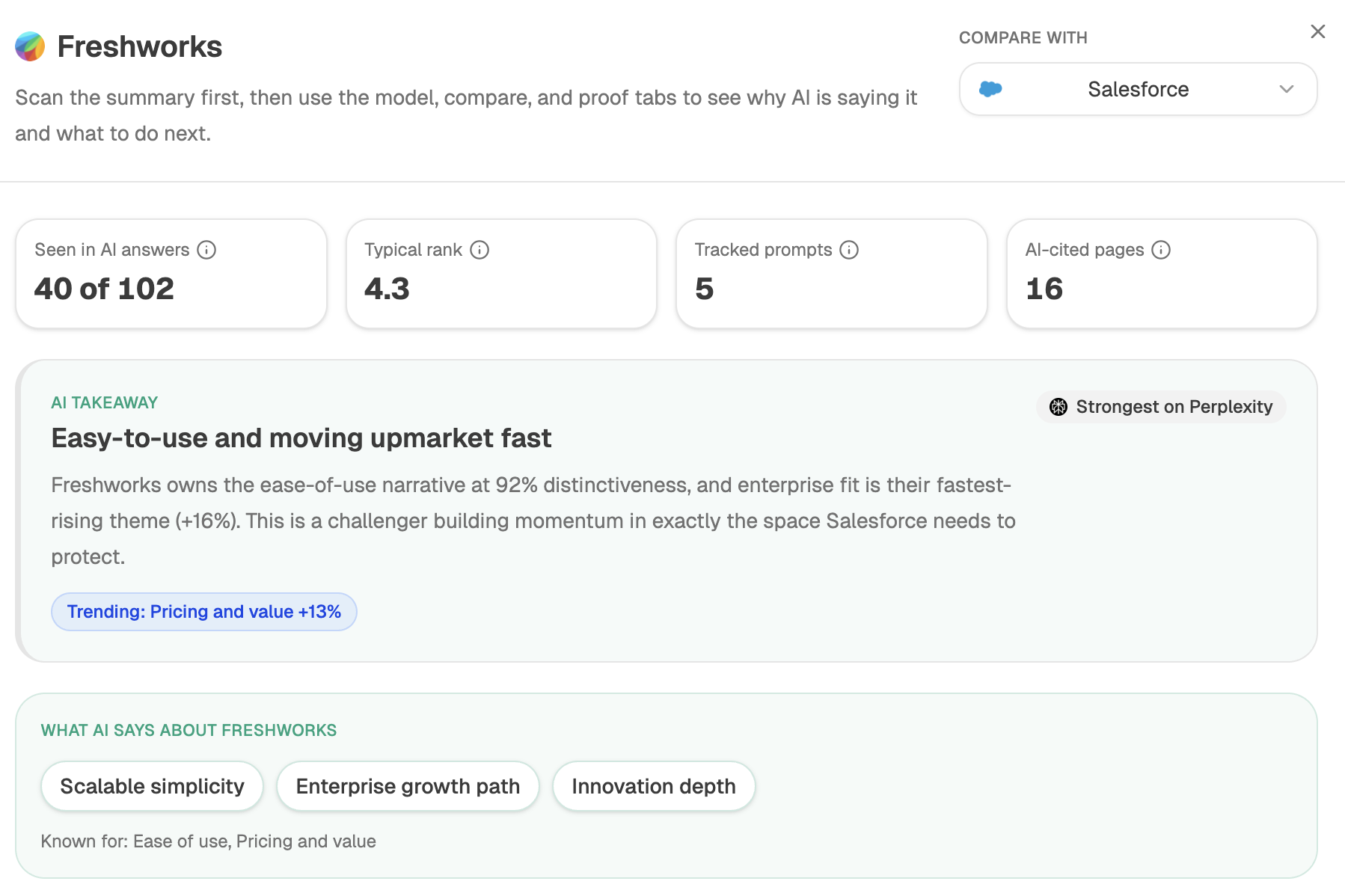 Perception shows whether readers arrive already knowing about you, or already knowing about a competitor.
Find the failing pages automatically
Start (schedule, monthly) → GA4 Page Breakdown for scroll depth, time and button events on your top 40 pages → Conditional keeping only pages with high engagement and a click rate under 1% → Content Optimizer reading each surviving page → Prompt LLM sorting each into one of the three failures → Export CSV grouped by failure so one fix covers many pages.
Grouping the output by failure rather than by page is what makes this fixable in an afternoon. Twelve pages ending on a summary is one writing session. Twelve pages listed individually is a backlog nobody starts.
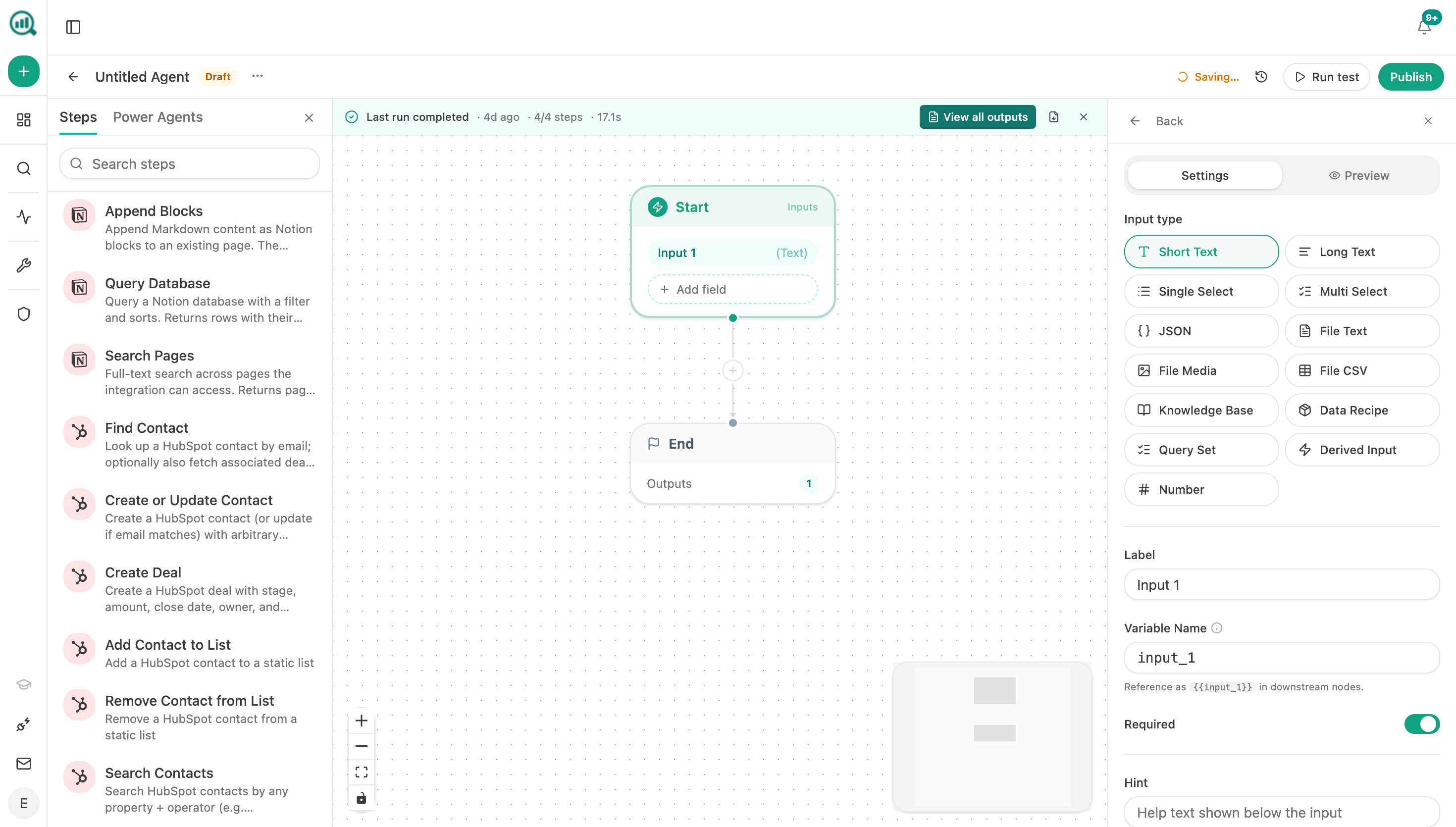 Running the check as a scheduled agent is what turns a one-off audit into something that keeps finding these pages.
FAQ
Related answers
- What should the next step be for a visitor who isn't ready for a demo?
- How do I move a reader from an educational article into product evaluation?
- Should different search intents get different CTAs?
- How do I tell whether our content actually helps a buyer decide?
Find the pages people finish and then abandon
Analyze AI finds your highly read, never clicked pages, reads how each one ends, and groups them by what is going wrong.
Start your free trial