
Should I update the old article or publish a new one?
Short answer
Update when the old page already ranks or holds links for the same intent you are targeting. Publish new when your angle answers a different question, even if the subject overlaps. The test is intent, not age. An eight-year-old page serving the same intent is worth updating, and a one-year-old page serving a different one should be left alone.
Run the two checks
Both take minutes and together they settle nearly every case.
Check one: does the old page have equity for this? Look at whether it ranks in the top thirty for your target query or something close, and whether it has referring domains pointing at it. Either counts as equity worth inheriting.
Check two: is it the same intent? Search your target query and search the query the old page currently ranks for. Compare the top ten. If four or more of the same URLs appear in both, the two queries want the same thing and one page should serve them.
| Equity on the old page | Same intent | Do this |
|---|---|---|
| Yes | Yes | Update the old page |
| Yes | No | New page, and link them |
| No | Yes | Update anyway, it is cheaper than starting over |
| No | No | New page |
The second row is where teams go wrong most often. A page with strong links on a related but different question is tempting to repurpose, and repurposing it usually loses the rankings it had without winning the new ones.
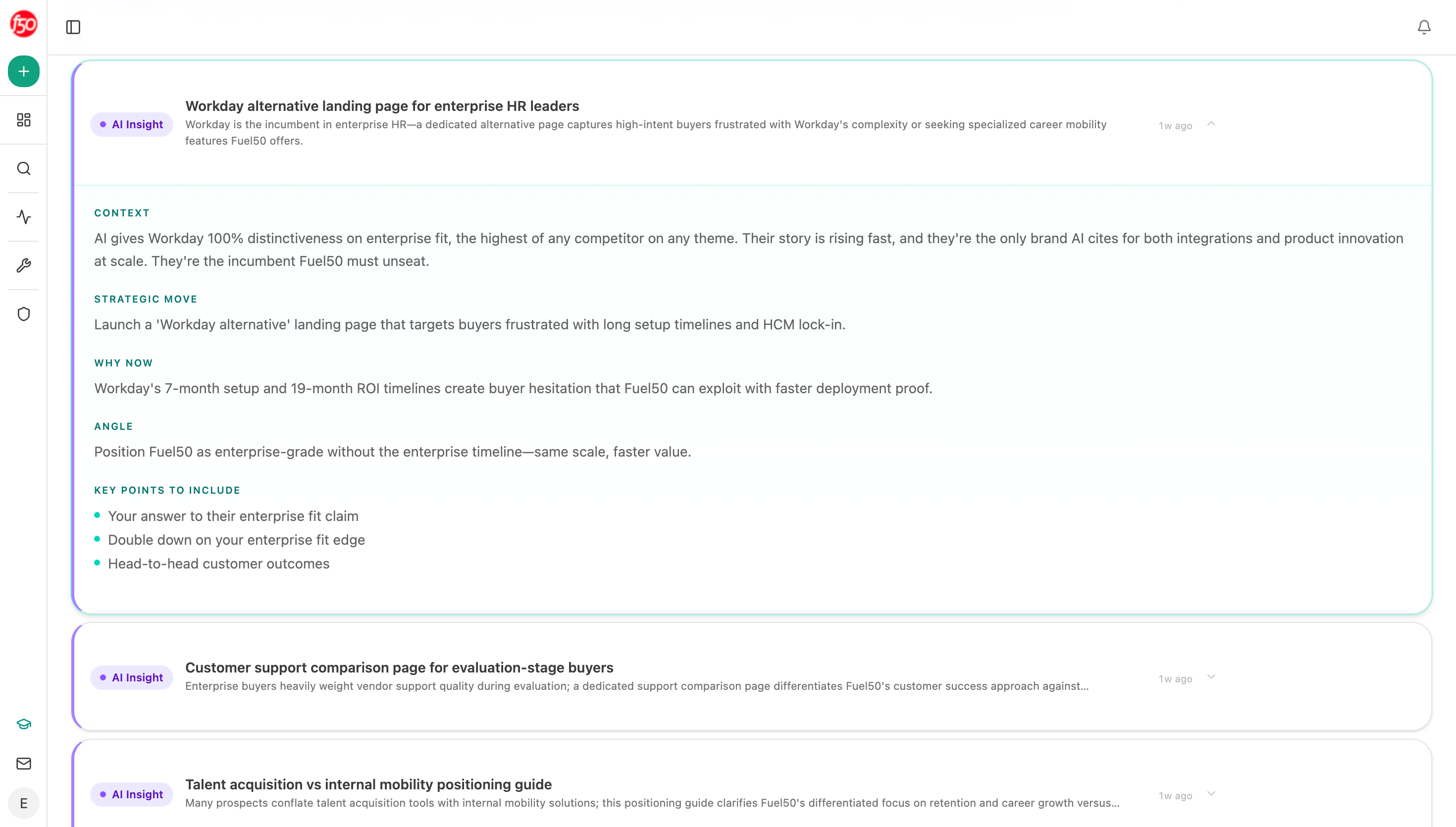 Keeping the evidence attached to an idea is what lets you check whether it is genuinely a new question or the old one restated.
Prefer updating, because history is expensive to rebuild
When both options are defensible, update. An existing URL carries age, links, internal links, and a crawl history that a new page has to earn from nothing.
That advantage is large and it is why refresh programmes usually outperform new publishing on the same effort, which is the comparison in how do I prove maintenance created more value than new content.
The exception is scale of change. If the update would replace more than about two thirds of the page and change what it is for, you are not updating, you are publishing a new page at an old address. That is fine, but plan it as a rewrite and expect it to move like new content for a quarter.
Watch the three traps
Splitting a topic you already own. Publishing a second page on a question you already rank for creates competition with yourself. Run the overlap check first, which is how do I build a topic cluster without cannibalizing my own pages.
Updating a page whose intent has moved. If the result page now shows tools and comparisons and your page is an explainer, updating the explainer will not recover it. That is a format problem, not a freshness one.
Changing the URL because the title changed. Keep the URL unless it is actively misleading. A new URL throws away the equity that made updating the right choice.
Check the AI side before deciding
There is a second read that often changes the answer.
Analyze AI's Citation Pages shows which of your pages assistants use as sources. A page with weak rankings that is still being cited has value your Search Console report cannot see, and replacing it with a new URL discards that quietly.
Our own state of AI search research found page authority barely predicted citation across the 4,824 pages we checked, so the pages assistants rely on are frequently not the ones you would guess. Google's AI features documentation confirms eligibility follows ordinary indexing, which means a retired URL simply stops being available as a source. Check before you retire anything.
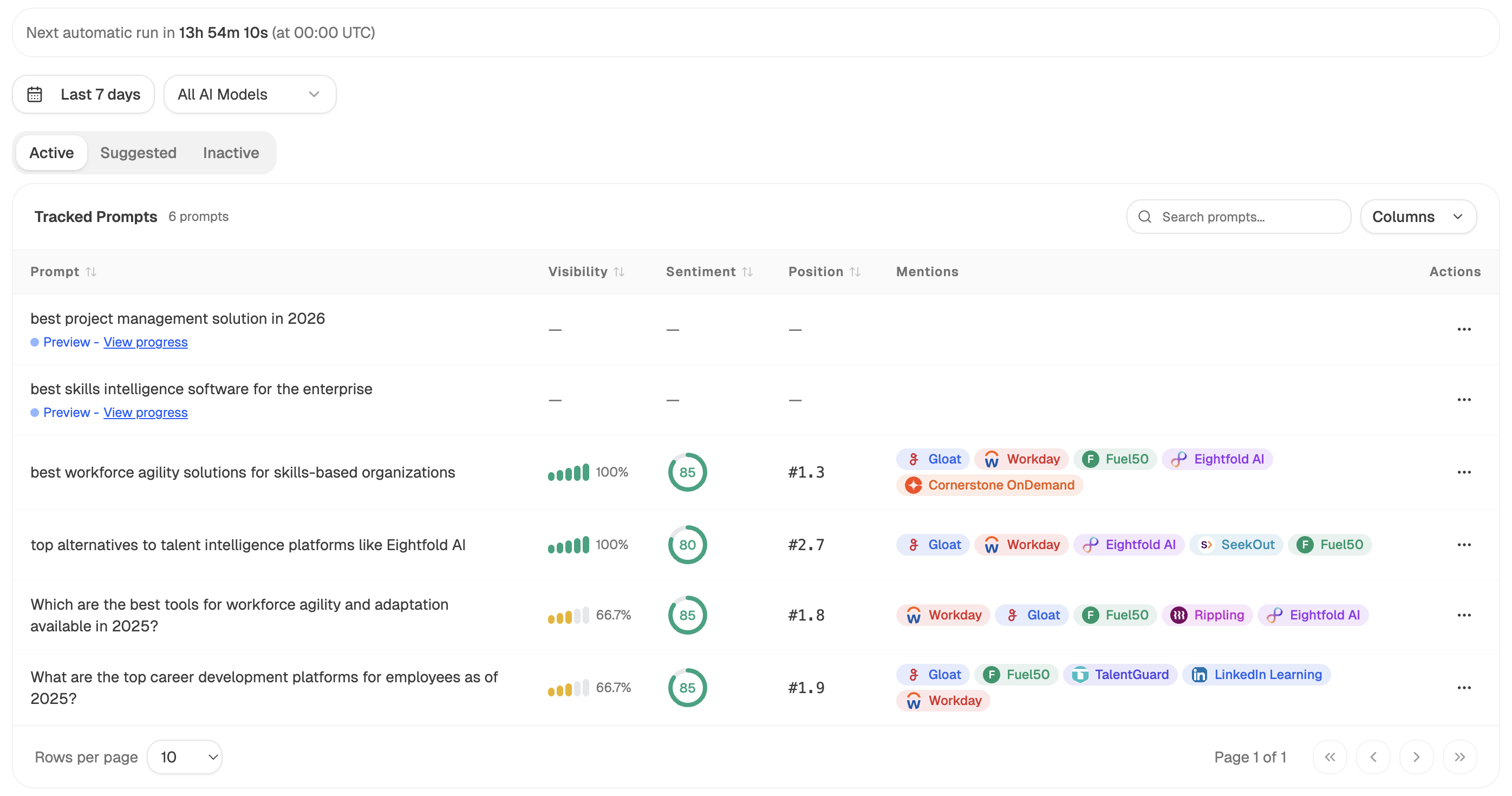 Tracking the question shows whether it is still being asked in the same form, which is the demand half of the decision.
Decide it with an agent
Start (manual, the old URL and the target query) → GSC Page-Keyword Breakdown for what the old page currently ranks for → Google Search returning the top ten for both the old and target queries → Code node counting URL overlap between the two result sets → Citation Pages checking whether the old page is used as a source → Branch with three routes: update, new page, or merge first.
Adding the merge route matters. A fair share of "update or new" questions turn out to be a third thing, which is that you already have two pages on this and neither is winning. Which of two overlapping pages should win is that decision.
FAQ
Related answers
- Which of two overlapping pages should win?
- When is deleting or redirecting old content better than updating it?
- How do I build a topic cluster without cannibalizing my own pages?
- Which of my old posts should I update first?
Know which URL should carry the work
Analyze AI compares what your old page ranks for against your target query and checks whether assistants still cite it.
Start your free trial