
What should an implementation guide include for a risk-conscious buyer?
Short answer
Build it around what goes wrong, not what to do. A cautious buyer already assumes setup is possible. What they do not know is what breaks, who fixes it, how long the bad version takes, and how to undo it. Give the realistic worst case next to the happy path and you answer the question they are actually asking.
Answer the four questions they will not ask out loud
A risk-conscious buyer rarely says "I am worried this will fail and it will be my name on it." They ask about timelines instead. These four are what sits underneath.
| What they ask | What they mean |
|---|---|
| "How long does setup take?" | How long when it goes badly? |
| "Who does the work?" | How much of this lands on my team? |
| "What do you need from us?" | What will I have to chase other departments for? |
| "Is it reversible?" | If this fails, can I get us back? |
An implementation guide that answers only the left column reads as a sales document. One that answers the right column is the thing that gets forwarded to the person who signs.
Give the realistic range, not the best case
The single most useful thing you can publish is an honest timeline with a bad version in it.
Say what a smooth implementation looks like, then say what the slow one looks like and what causes it. "Two weeks if your data is already in one system. Six to eight weeks if you are consolidating from three, and the delay is nearly always waiting on access rather than our side."
That does two things at once. It is more credible than a single optimistic number, and it tells the buyer what to go and prepare, which makes the fast version more likely.
The same applies to effort. Publish the hours you need from their team, by role, for each phase. Buyers discount vague answers here and assume the worst.
Name what breaks and how you handle it
This is the section almost nobody publishes and every cautious buyer wants.
List the three or four things that most commonly go wrong during implementation, what causes each one, how it gets spotted, and how it gets fixed. Not hypothetically. The real ones, from your own support queue.
Add a rollback path for each. Buyers commit far more easily to something they can reverse, and being explicit about how to undo it costs you almost nothing.
This material comes straight out of your support tickets and implementation calls, which is the extraction covered in what should I ask a subject-matter expert to get genuinely original content.
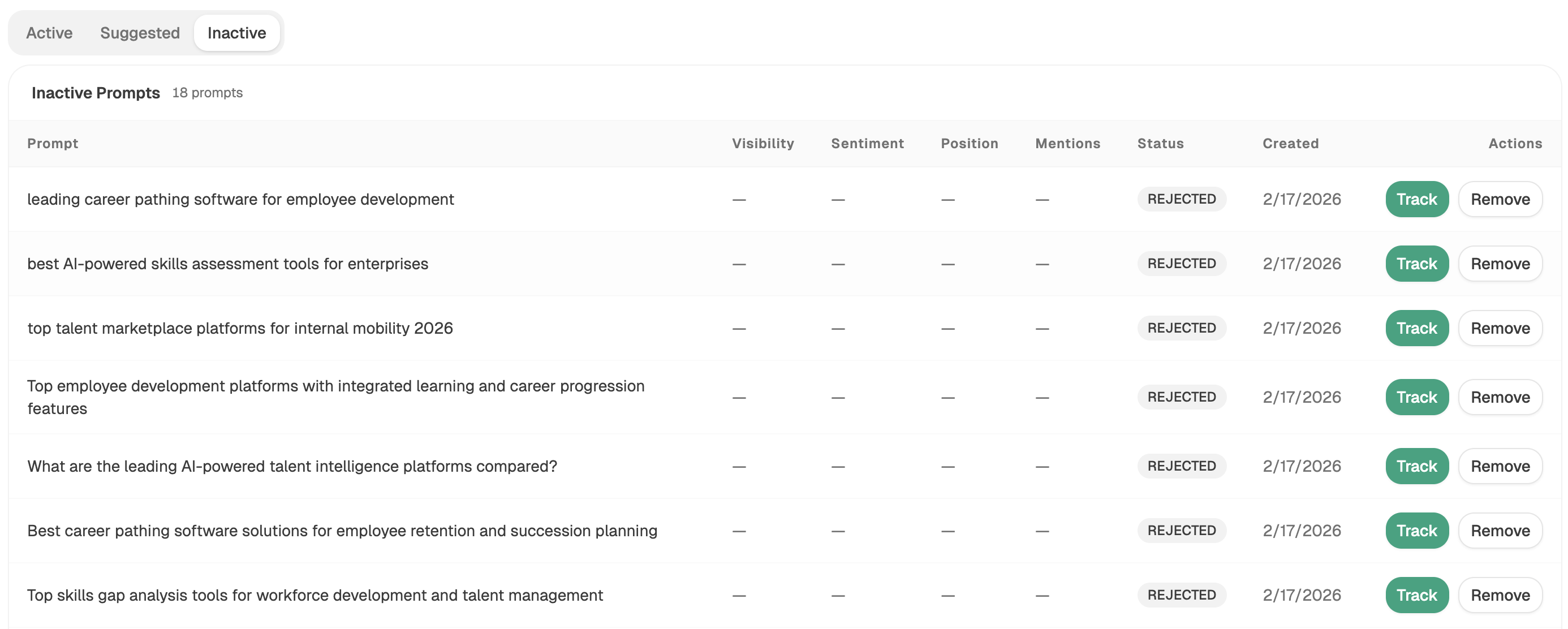 Tracking the setup and risk questions buyers ask shows whether your guide is the answer they are given.
Add the parts that get read by other departments
Implementation guides get forwarded to people who never spoke to you. Three additions make that forward work.
A responsibilities table. Who does what, on your side and theirs, phase by phase. IT reads this first.
Access and permissions required. Exactly what you need and why. Security teams stall on unexplained requests.
A named point of contact and escalation path. What happens when something is not working and who answers.
These sit alongside the wider set in what content do finance, security, and procurement need before approving a purchase, and they are the reason the guide should be public rather than gated.
Keep it public so it can be found and cited
Gating an implementation guide is a common mistake with a cost that is now larger than it used to be.
The reviewer who needs it is not your lead and will not fill in your form. And a gated page is not indexed, so it cannot be used as a source at all. Google's AI features documentation explains that eligibility follows ordinary indexing, which means a form is enough to remove the page from every answer a buyer might get.
Analyze AI's Sources view tells you whether your guide is being used, by listing the pages assistants actually pull from when someone asks how your kind of product gets set up.
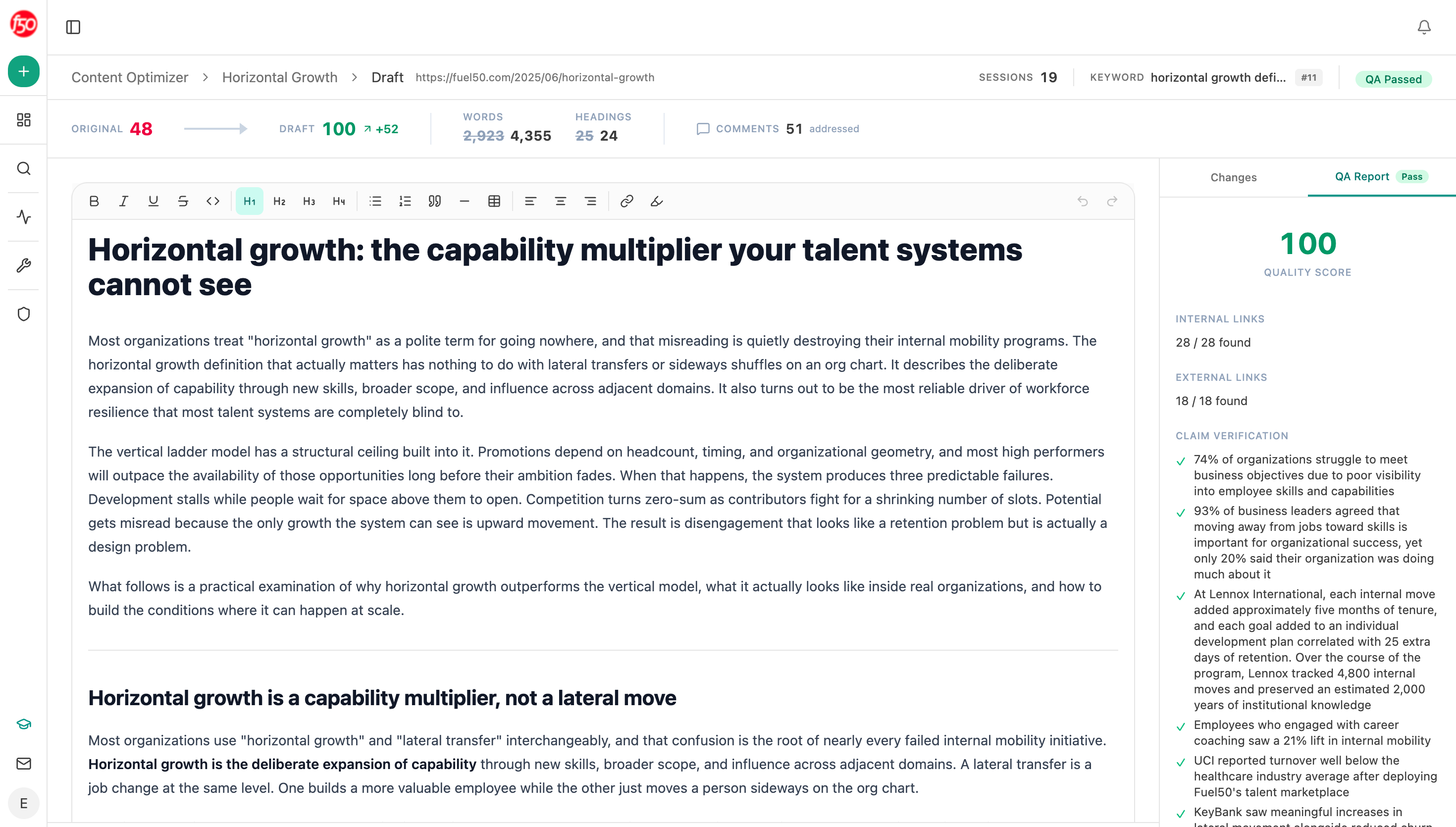 The optimizer returns the rewritten page, which is how a thin setup page becomes one that answers the failure questions too.
Keep the guide matched to real implementations
Start (webhook, fired when an implementation closes in your CRM) → HubSpot Get Deal with notes and engagements from the onboarding period → Transcribe Audio on any recorded setup calls → Prompt LLM extracting what went wrong, how long each phase took and what was requested → Code node comparing the real timeline against the one published in the guide → Conditional firing when the published range no longer matches the last ten implementations → Send Notification.
Comparing the published range against real implementations is what keeps this honest. Timelines drift as the product changes, and a guide promising two weeks while your last ten took five is worse for trust than no guide at all.
FAQ
Related answers
- What content do finance, security, and procurement need before approving a purchase?
- What kinds of evidence make a B2B buyer trust a vendor?
- How do I reach decision-makers who never talk to sales?
- How do I find the questions prospects ask during active vendor evaluation?
Answer the questions buyers will not ask out loud
Analyze AI tracks the setup and risk questions buyers put to assistants, and shows whether your guide is the page being used.
Start your free trial