
Why do our MQLs never become pipeline?
Short answer
Usually because the scoring rules were guessed rather than tested. Most models award points for things that feel like buying signals and never got checked against real outcomes. Take last year's MQLs, look at which attributes actually came before an opportunity, and delete every rule that did not. Teams normally find half their scoring model is noise.
Test the model against what happened
Your scoring rules were written in a meeting, probably years ago, by people making sensible guesses. Nobody has checked them since, and the leads kept arriving, so nobody had to.
Here is the check. It takes a morning and a spreadsheet.
- Export every MQL from last year with the attributes that scored them: pages viewed, content downloaded, job title, company size, email domain, webinar attendance, whatever you use.
- Add a column for whether each one became an opportunity.
- For each attribute, work out what share of leads with that attribute became opportunities, and what share of leads without it did.
- Keep the attributes where the gap is large. Delete the ones where it is small.
The output looks like this.
| What you score on | Became an opportunity | Without it | Gap |
|---|---|---|---|
| Visited the pricing page | 31% | 6% | Large, keep |
| Job title contains director or above | 24% | 9% | Large, keep |
| Company over 200 staff | 22% | 11% | Real, keep |
| Downloaded an ebook | 8% | 9% | None, drop |
| Attended a webinar | 11% | 9% | Tiny, drop |
| Opened three emails | 10% | 9% | None, drop |
The bottom three rows are where most scoring models spend their points, because they are easy to measure. They predict nothing, and they are why your MQL list is full of people who read a lot and buy nothing.
Score behaviour that costs the visitor something
There is a pattern in that table worth naming. The attributes that predicted an opportunity all cost the visitor something, in effort or in exposure.
Visiting a pricing page means admitting to yourself you might buy. Being a director means the person has budget. Downloading an ebook costs an email address someone made up.
So when you rebuild the model, favour actions that a casual reader would not bother taking. Visiting pricing twice, opening a comparison page, checking your security documentation, or starting a trial. All of these take deliberate effort in the direction of a purchase.
What kinds of evidence make a B2B buyer trust a vendor covers the pages these people visit on the way.
Watch for the two ways the model gets gamed
Once a model exists, the organisation bends towards it, usually without meaning to.
Campaigns chase the score. If ebook downloads award points, someone will run a campaign that produces ebook downloads, and your MQL count will rise while pipeline does not. That is the shape described in how do I tell lead volume from lead quality.
Thresholds get lowered quietly. When the MQL target is missed, the score needed to qualify comes down. Nobody announces it. Six months later the definition means something different and your trend line is meaningless.
Write the threshold down with a date, and treat any change as a change to the metric rather than a tweak.
Rerun the test every six months
The relationships in that table move as your market and product change. An attribute that predicted well two years ago can go flat, especially if a competitor started doing the same thing.
Six months is a reasonable interval. Any faster and you do not have enough closed deals to see the pattern.
You can automate the whole test. HubSpot Search Deals and Search Contacts in Analyze AI pull the leads and outcomes, and the Code node runs the comparison for every attribute at once, so the rerun is a scheduled job rather than a project someone has to volunteer for.
Check whether the buyer was ever countable
One group breaks this model entirely, and it is growing.
Buyers increasingly research inside AI assistants and arrive already decided, with no trail of downloads or webinars behind them. Pew Research found a source link was clicked in about 1% of visits when an AI summary appeared, so most of that research leaves you no record at all. They visit twice, go to pricing, and request a demo. Your model scores them low because they did none of the things it counts.
Our own state of AI search research measures whether brands get named and cited across 22,295 answers, and it deliberately makes no claim about clicks, so nobody can tell you what share of your pipeline this is. What you can do is stop treating a short, sparse history as a weak lead. In practice, a two-visit lead that went straight to pricing is a stronger signal than a twelve-visit lead that never left the blog.
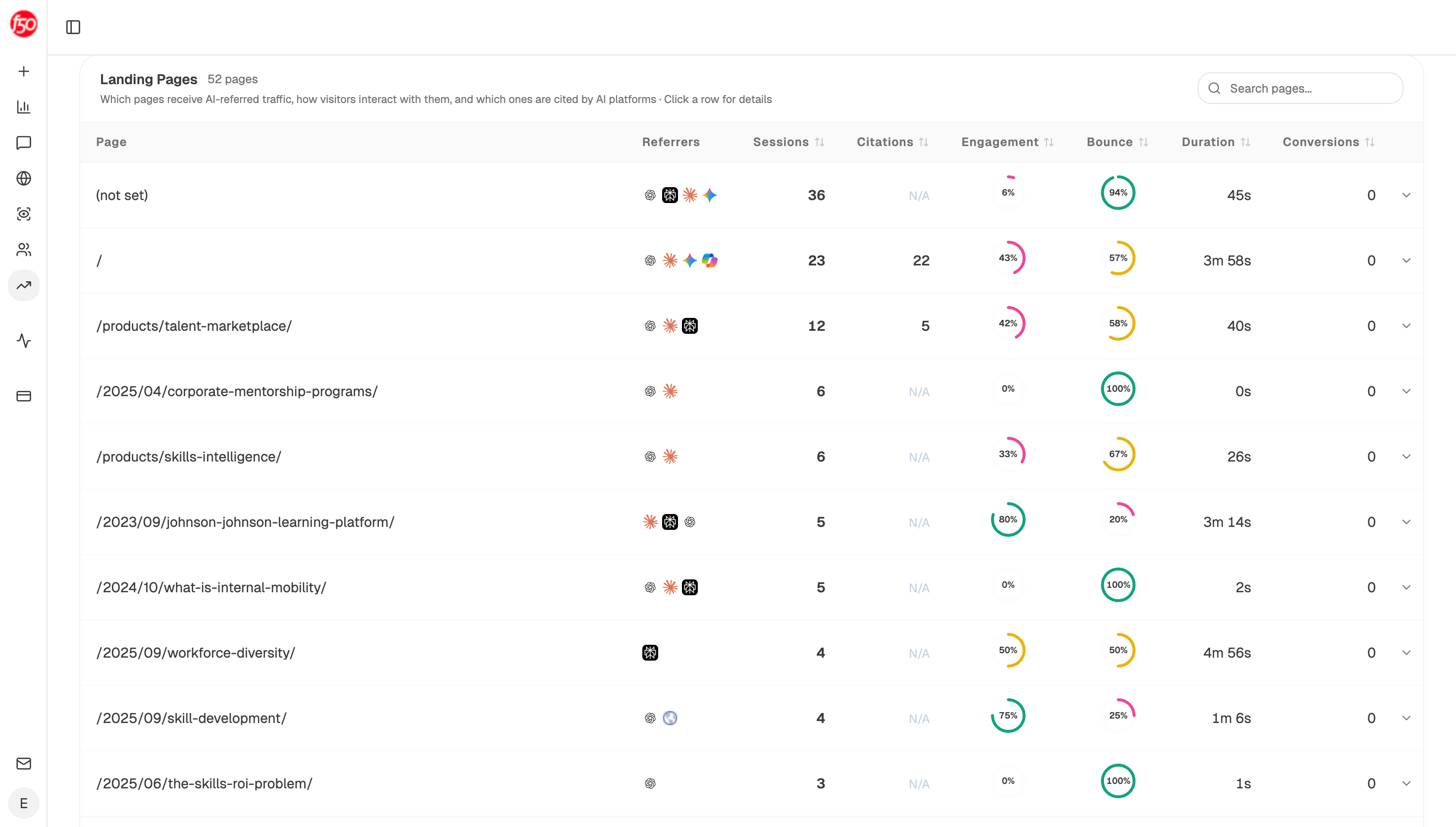 Assistant-referred sessions are visible as their own channel, which is the part of this buyer's journey your scoring model never sees.
Automate the retest
Start (schedule, every six months) → HubSpot Search Contacts for last year's MQLs with their scoring attributes → HubSpot Search Deals for which became opportunities → Code node comparing each attribute's rate with and without → Conditional flagging every rule with a gap under five points → Export Excel listing rules to delete → Send Notification to marketing operations.
Flagging rules for deletion rather than suggesting new ones is deliberate. Scoring models only ever grow, because adding a rule is easy and removing one feels like losing information. A list of rules that demonstrably predict nothing makes that conversation easy.
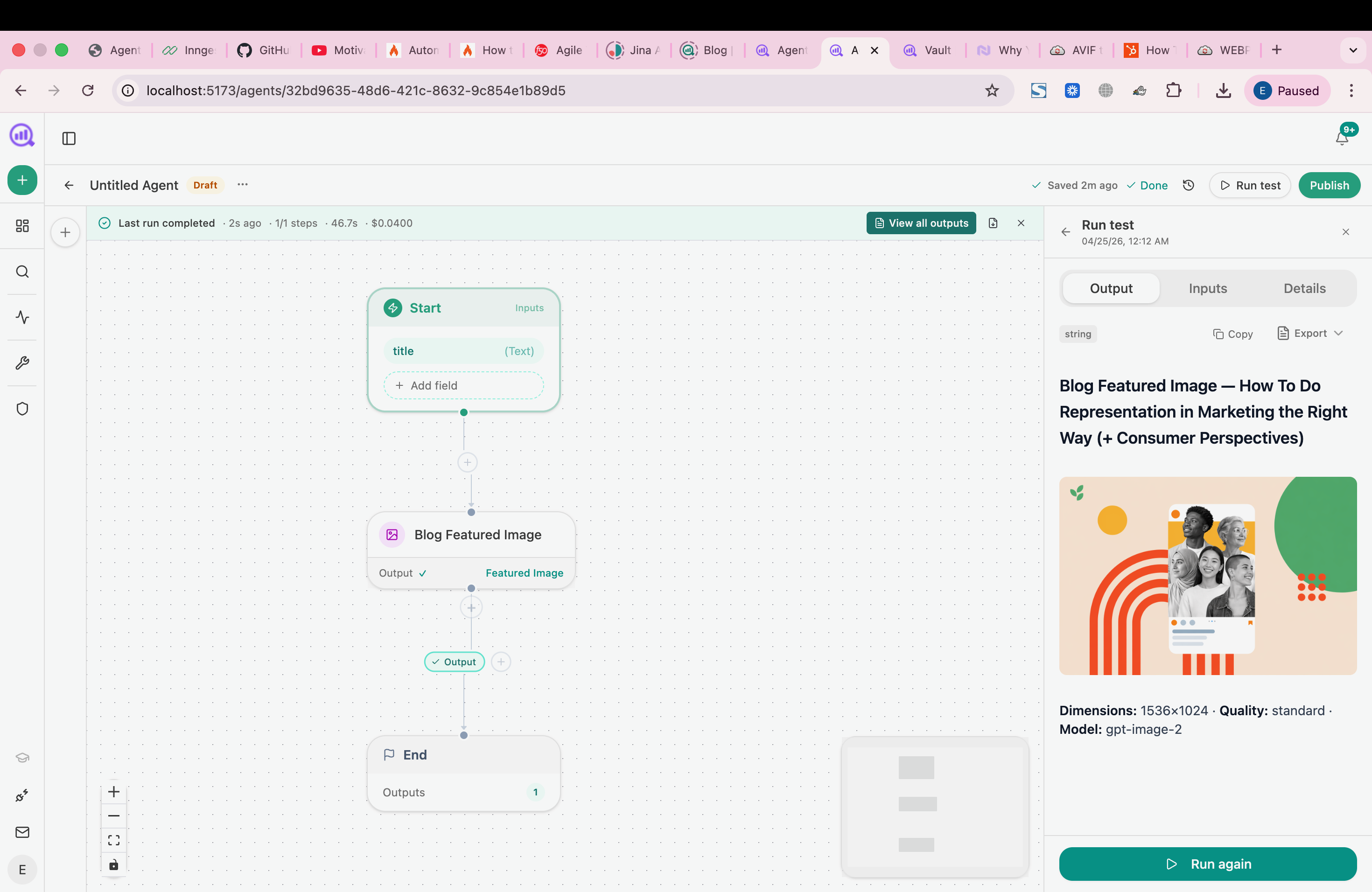 The retest is a workflow chaining your HubSpot nodes into a Code step, so it runs on a schedule rather than waiting for a volunteer.
FAQ
Related answers
- How do I tell lead volume from lead quality?
- Which pages produce qualified opportunities rather than just form fills?
- Are we buying more leads when the real problem is slow follow-up?
- How do I see which content an account consumed before a sales conversation?
Delete the scoring rules that predict nothing
Analyze AI tests every attribute in your model against what actually became pipeline, then lists the rules worth dropping.
Start your free trial