
What should the next step be for a visitor who isn't ready for a demo?
Short answer
Something they can use on their own, today, without talking to anyone. A demo asks for time, attention and the risk of being sold to. The right next step for an unready visitor gives them a result first and asks for very little back. Rank your options by what the visitor gives up against what they get, and offer the smallest step that still moves them forward.
Price every offer by what it costs the visitor
Every next step has a price, and it is not money. It is time, personal information, and the risk of ending up on a call with a salesperson.
Put your options in order of that price.
| Next step | What it costs them | What they get back | Best for |
|---|---|---|---|
| A calculator or checker | Two minutes, no details | An answer about their own situation | Anyone |
| A template or checklist | An email address | Something they can use on Monday | Early readers |
| A benchmark report | An email address | Where they stand against others | Managers |
| A self-serve trial | An account, no card | The product itself | Practitioners |
| A recorded product walkthrough | Ten minutes, an email | Sees the product, no salesperson | Middle of the process |
| A live demo | Half an hour, contact details, sales exposure | A tailored answer | Ready buyers only |
The bottom row is what most sites offer everyone. The top rows are what most unready visitors would actually accept.
Match the step to what the page just gave them
The rule is simple. Whatever the page just taught someone, the next step should be the natural thing to do with that knowledge.
A page explaining what a term means should offer a way to see it in their own numbers. A page comparing two approaches should offer a way to work out which one fits them. A page about a specific problem should offer the fix.
When the gap is too wide, people read the whole thing and refuse the button, which is the pattern described in how do I tell whether low conversion is caused by intent, trust, offer, UX, or pricing.
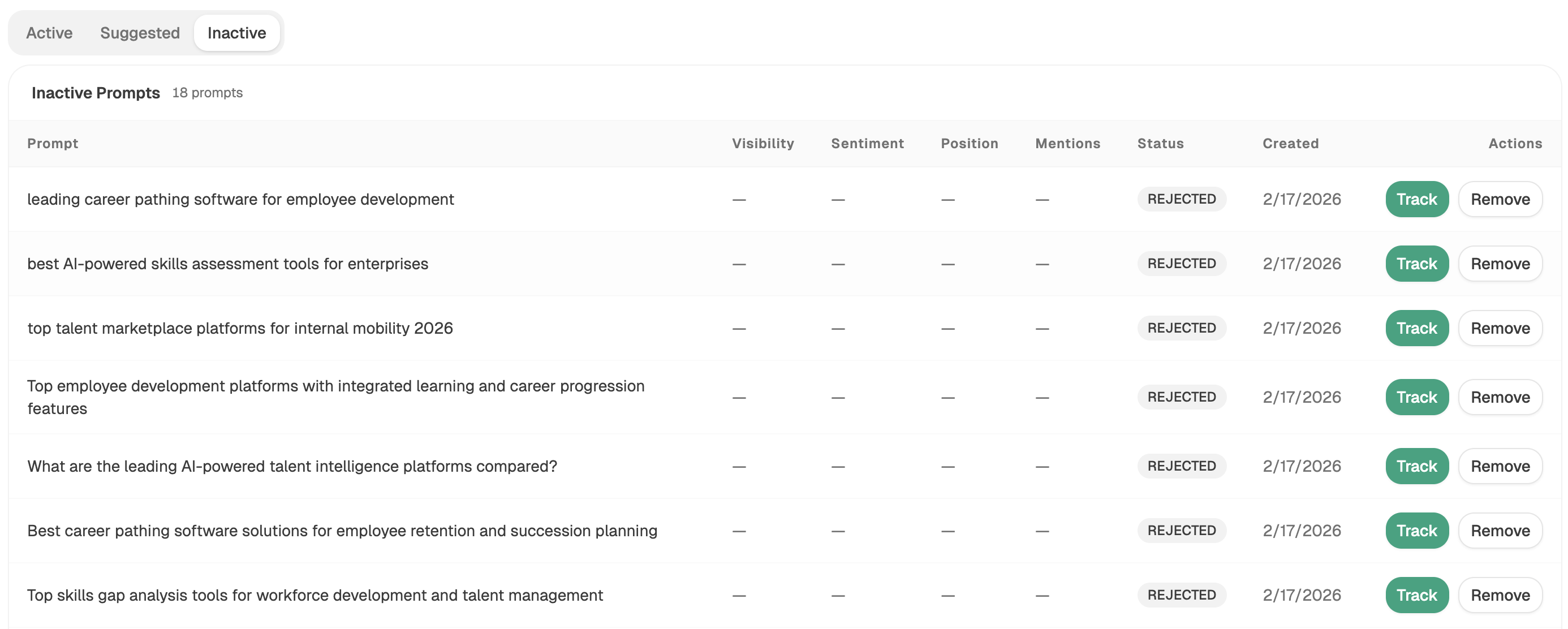 Tracking the question a page answers shows what the reader already knows by the time they arrive, which is what the next step has to match.
Build the free tool first if you can
Of everything on that list, a free tool that returns a real answer performs best, for one reason. It gives the visitor something before asking for anything.
It works because the visitor learns something about themselves rather than about you. A person who has just seen their own number is in a different state to a person who has just read your explanation.
It does not need to be complicated. A single calculation with three inputs beats an article explaining the same calculation. Our own free tools work this way, and they are the reason a lot of people meet us before they ever read a word of marketing.
Watch one thing though. Tools attract people who want the tool and nothing else, so check who they bring before you build more. That is the last-column problem in where is our organic funnel actually leaking.
Give ungated things a next step too
Not everything should ask for an email. Most of your pages should not.
For those, the next step is another page rather than a form. Send someone from a concept page to the use-case page for their situation, and from there to the comparison. Each step is small and none of them ask for anything. How do I move a reader from an educational article into product evaluation covers building that path properly.
This matters more than it used to. Buyers now do most of their research before they contact anyone, and increasingly they do it inside an AI assistant. Pew Research found people clicked a source link in about 1% of visits when an AI summary appeared, so many buyers arrive already informed and already shortlisted.
Analyze AI shows you what that shortlist looks like. Ad Hoc Prompt Searches runs your buying questions live, and the Perception view shows how assistants describe you against rivals. If you are being left out of the shortlist entirely, no next step on your site will fix it.
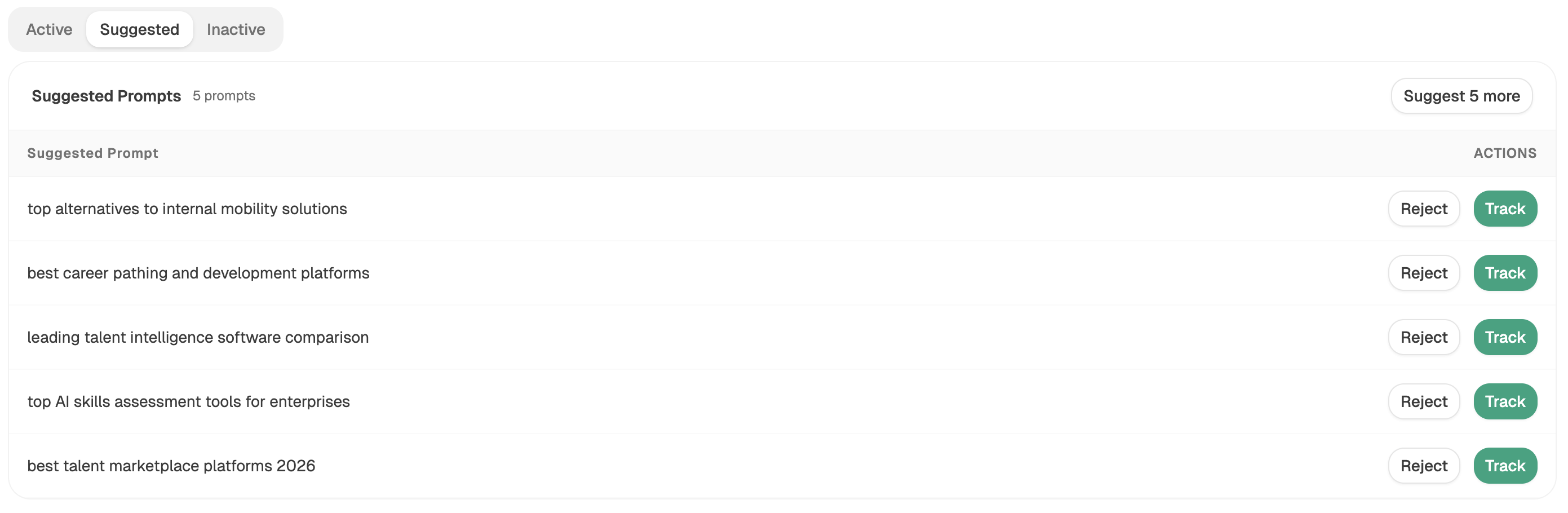 Tracked questions show what buyers are told before they reach you, which is what state they arrive in.
Test the step, not the button
One habit saves a lot of wasted design work. When a next step underperforms, change what you are offering before you change how it looks.
Button colour and wording move things by a few percent. Swapping a demo request for a calculator moves things by multiples. Teams spend months on the first because it is easier to schedule than the second.
Run it as a straight swap on one page for a month, keep everything else the same, and compare the click rate. If the new offer wins, roll it out by page type rather than site-wide, because different pages have earned different amounts of trust.
Keep the offers matched automatically
Start (manual, your top 50 landing pages as a file-csv) → GSC Top Keywords for Page returning the main question each page answers → GA4 Page Breakdown for engagement and button clicks → Prompt LLM matching each page's question to the right rung on the ladder → Conditional flagging pages where the offer is more than one rung above the page → Export CSV listing the mismatches.
The one-rung rule is the part worth keeping. Jumping two rungs is what produces a page full of engaged readers and an empty calendar.
FAQ
Related answers
- Should different search intents get different CTAs?
- How do I move a reader from an educational article into product evaluation?
- Why do people read our content but never take the next step?
- How do I reach decision-makers who never talk to sales?
Offer the step your reader would actually take
Analyze AI matches every page to the question it answers and flags the ones asking for far more than the page has earned.
Start your free trial