



Summarize this blog post with:


Content that stays current stays visible. Your publish date is now a competitive asset on Google and a hard requirement for AI search engines like ChatGPT, Perplexity, Gemini, and Copilot.
Fresh content simply means a page that has been recently published or updated. Search engines and AI assistants both read freshness as a signal that your information is current and reliable. Stale pages get pushed down in rankings and quietly drop out of AI citations.
In this article, you’ll learn why fresh content matters more than ever, which pages decay fastest on Google and on AI engines, how to find your weakest pages, how to refresh them properly, and how to measure whether the work paid off in both organic search and AI search.
Table of Contents
Why fresh content improves your visibility on Google and AI search
Search engines and AI assistants both reward recency. They do it for slightly different reasons, which matters for how you prioritize.
Google rewards freshness for time-sensitive queries
When Google detects that a topic needs current information, its Query Deserves Freshness (QDF) signal lifts recently updated pages. Some queries make the intent obvious through words like “new,” “latest,” or a year. For others, Google looks for a topic going hot.
The three signals that trigger QDF are simple. News sites are publishing about it. Blogs are covering it. Search volume is climbing. When all three line up, freshness gets weighted heavier than it normally would.
![[Screenshot description: Google SERP for “bitcoin” showing the Top Stories carousel and recent news articles dominating the page.]](https://www.datocms-assets.com/164164/1777647703-blobid1.png?auto=format,compress&w=1248&fit=max)
Google has also confirmed in its ranking systems guide that a SERP can gain or lose this freshness boost based on the topic at any time.
AI assistants prefer fresher content than Google does
AI search engines push the freshness preference further. An Ahrefs study of 17 million citations found that AI-cited content is 25.7% fresher than the average organic Google result.
The split between AI engines is sharper than most marketers realize.
|
AI engine |
Freshness preference (vs. Google organic) |
|---|---|
|
ChatGPT |
Cites pages 393 to 458 days newer |
|
Perplexity |
Strongly favors fresher content |
|
Gemini |
Favors fresher content |
|
Google AI Overviews |
Slightly older than ChatGPT, closer to organic |
|
Copilot |
Mixed, leans newer |
Two reasons drive this. AI engines have training cutoffs, so they lean on retrieval (live web data) for anything recent. And the prompts users send to ChatGPT or Perplexity are disproportionately about “right now” questions. So the model’s retrieval layer goes hunting for fresh sources every single time.
This is why a page that ranked well in Google a year ago can vanish from Perplexity citations even before its rankings drop. AI engines are the early warning system for content decay.
Stale content loses click-through rate
Search behavior is intuitive. A title like “Best CRM Tools 2023” gets fewer clicks than “Best CRM Tools 2026,” even at the same ranking position. Users assume older content has obsolete recommendations.
Research on Google’s Navboost system shows Google uses click-through rate as a re-ranking signal. So a stale title creates a downward spiral. Fewer clicks lead to lower rankings, which lead to even fewer clicks.
Stale content prevents you from earning new backlinks
Pages that get refreshed earn referring domains over time. Pages that go stale stop being shared. The longer a page sits without updates, the less reason anyone has to link to it.
This compounds. Fresh content earns links, which lift rankings, which earn more clicks, which feed AI citation discovery. Letting a page sit untouched for two years breaks every link in that chain.
Which content types need updating most often
Not every page ages at the same rate. Use this matrix to set your refresh cadence.
|
Content type |
Refresh cadence |
Why it matters for SEO |
Why it matters for AI search |
|---|---|---|---|
|
Breaking news |
Hours to days |
QDF heavily favors news sites |
Live retrieval picks the most recent angle |
|
Statistics roundups |
Annually, plus rolling updates |
“2026 statistics” intent shift |
AI cites recent data points first |
|
Product comparisons (“best X”) |
Annually or quarterly |
Year in title boosts CTR |
AI engines name specific tools, stale lists hurt you |
|
Seasonal content |
3 months before peak |
Captures early planners |
AI surfaces seasonal queries with fresh sources |
|
How-to guides on changing tech |
Twice a year |
Old screenshots hurt trust |
UI changes break AI’s example accuracy |
|
Regulations and tax content |
Whenever rules change |
QDF triggers around announcements |
AI cites the most current authoritative source |
|
Evergreen tutorials |
Every 12 to 18 months |
Light maintenance protects rankings |
Keeps AI from preferring competitors |
A worked example. Bankrate’s tax brackets page rises in traffic every February because they update it whenever the IRS changes rules. The pattern is so reliable you can predict the spike.
![[Screenshot description: Ahrefs traffic chart for Bankrate’s tax brackets page showing yearly February traffic spikes that align with seasonal demand.]](https://www.datocms-assets.com/164164/1777647710-blobid2.jpg?auto=format,compress&w=1248&fit=max)
For competitive product roundups, sites like TechRadar update their “best laptops” article multiple times a year. Each update captures a new wave of AI citations as ChatGPT and Perplexity re-crawl and prefer the version with current models.
How to find pages that need refreshing
The best refresh targets are pages that already have authority but are decaying. Here are three ways to find them, ordered from quickest to most thorough.
Method 1: Find pages losing organic traffic
Open Google Search Console, go to Performance, and compare the last 28 days against the previous 28 days. Sort by the largest click drop. These are your bleeding pages.
For deeper analysis, run your domain through Ahrefs or use the free Analyze AI Website Traffic Checker to spot pages that have lost organic traffic over the past 6 to 12 months.
![[Screenshot description: Google Search Console Performance report showing the comparison view with date range selector and a sortable table of pages with their click change.]](https://www.datocms-assets.com/164164/1777647712-blobid3.png?auto=format,compress&w=1248&fit=max)
Once you have a candidate list, filter further by referring domains. A page with 30 referring domains and falling traffic is a stronger refresh target than a page with 2 referring domains and falling traffic, because the authority is already there.
Method 2: Find pages losing AI citations
This is the part most freshness guides miss. A page can still rank on Google but get cited less often by ChatGPT, Perplexity, or Claude. AI citation decay shows up earlier than ranking decay.
Inside Analyze AI’s AI Traffic Analytics, you can see exactly which of your pages are receiving traffic from each AI engine over time. A page that was a top earner three months ago and is now flat is your refresh signal.
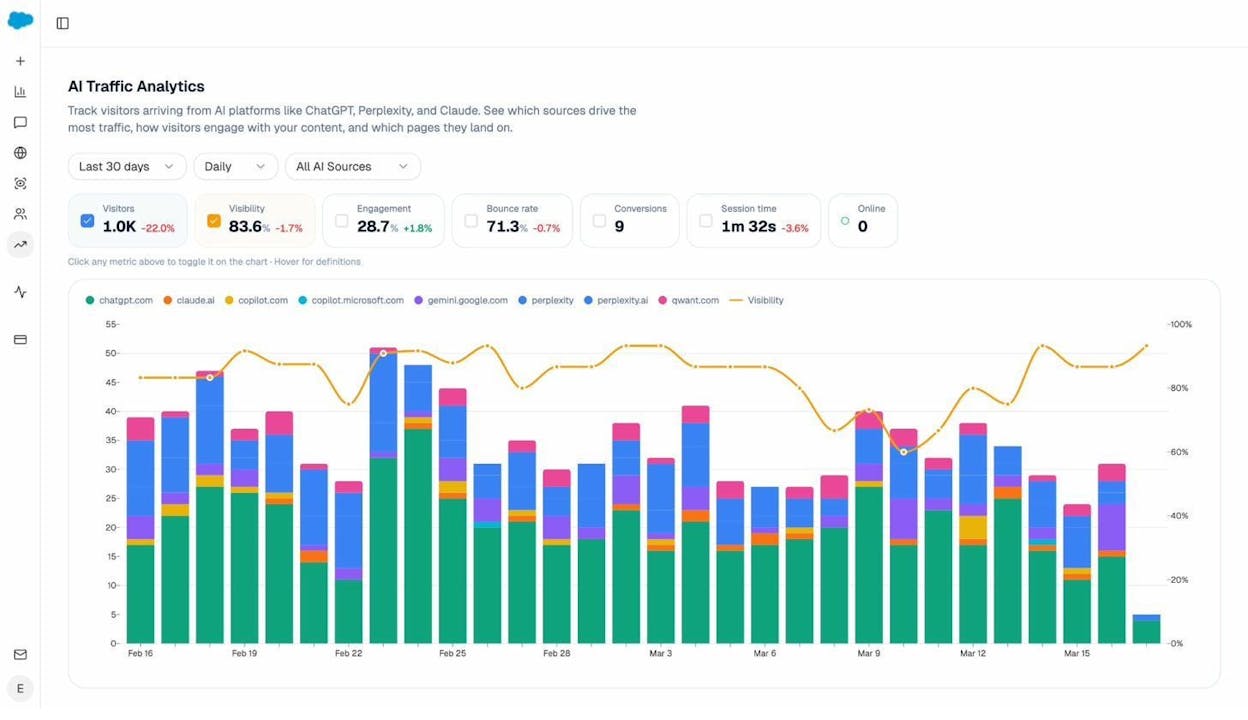
You can read more about this measurement approach in our guide to AI traffic analytics.
Method 3: Find prompts where competitors are cited and you are not
If your page targeted a buying-stage query and stopped getting cited, the question is not just “is the page stale” but “what fresher source is being preferred over it.” Open the Prompts view in Analyze AI to see the visibility split for any tracked query and which competitor is winning that prompt right now.
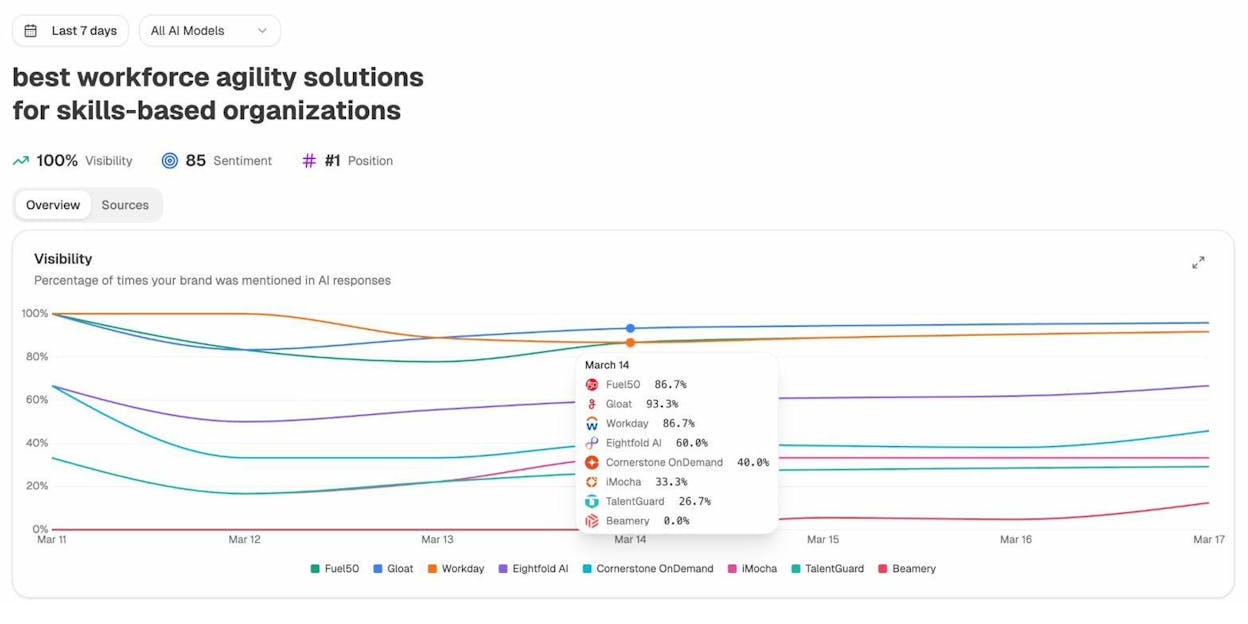
This turns refresh planning from a guessing game into a competitive workflow. You know which competitor is now being cited, you can open their page, and you can see exactly what content moved them ahead.
How to actually refresh a page (a 7-step process)
A real refresh is more than changing the publish date. Follow this sequence.
Step 1: Confirm the topic still has demand
Before you spend two hours on a refresh, run the keyword through Ahrefs Keywords Explorer or the free Analyze AI Keyword Generator. Search volume that is flat or growing means the refresh is worth it. Search volume that has fallen for two years means the topic is dying and you should consolidate the page elsewhere.
![[Screenshot description: Keywords Explorer overview showing search volume trend, growth percentage, and forecast for the target keyword.]](https://www.datocms-assets.com/164164/1777647725-blobid6.png?auto=format,compress&w=1248&fit=max)
You can also check whether intent has shifted. If the SERP for your target keyword now shows different content types than your page, the refresh is actually a rewrite.
Step 2: Identify the topical gaps
Open the top 5 ranking pages and list the H2s they cover that yours does not. Then check the People Also Ask box and the related searches at the bottom of the SERP. Anything that appears in two or more competitor pages and is missing from yours is a gap.
For an automated version, paste your URL into Analyze AI’s Content Optimizer. It fetches the live page, scores it on argument and flow, clarity and polish, and adds AI editorial comments alongside concrete keyword and gap suggestions.
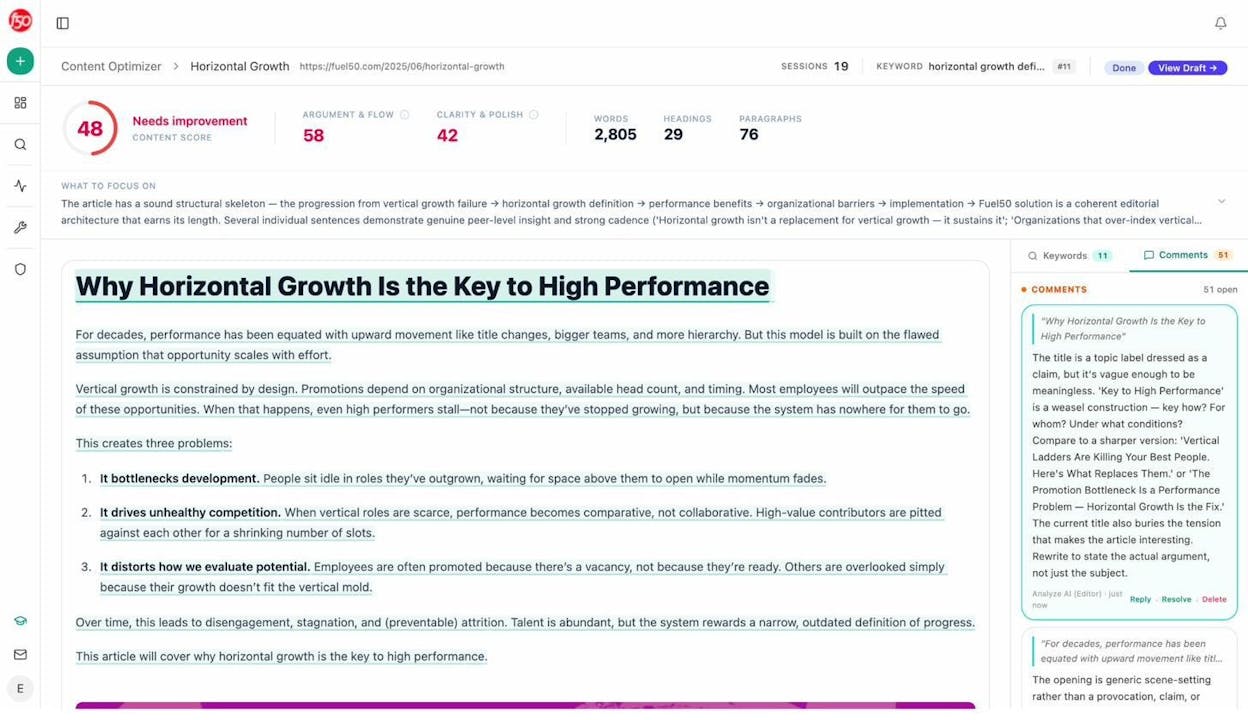
The Content Optimizer is built for this exact workflow. You can read more about it on the AI Content Optimizer feature page.
Step 3: Replace stale signals with current ones
Stale stats and old screenshots quietly tell readers (and AI models) that your page is outdated.
-
Replace every statistic older than 18 months with a current one. Cite the source.
-
Add “as of [Month Year]” next to volatile facts like pricing or feature lists.
-
Swap any product screenshot showing a UI that no longer exists.
-
Remove discontinued tools or services and replace them with active alternatives.
A small habit that pays off. When you cite a stat, link to the most recent authoritative version of that stat. AI models follow citation links and use them to score source freshness.
Step 4: Add the missing sections
This is where most refreshes fail. Adding a paragraph or two is not enough to move rankings. The pages that climb are the ones that close the topical gaps you found in Step 2.
If your competitors all cover three subtopics that you do not, write all three. Make each one substantive. A 200-word section on a real subtopic is worth more than 1,000 words of restating what you already said.
Step 5: Strengthen internal links
Refresh time is the cheapest internal-linking opportunity you will get all year. While you are inside the page anyway, add 3 to 5 links from this page out to your other relevant content, and find 5 to 10 other pages on your site that should now link in.
For a deeper walkthrough, see our internal linking guide.
Step 6: Update visible date and schema
Change the on-page “Last updated” line. Update dateModified in your schema markup. If the year is in your title, update it. Add a brief “What’s new in this update” line near the top so a returning reader sees the value immediately.
These visible changes do two things. They lift CTR in search results and they signal to AI engines (which parse schema) that the page is current.
Step 7: Promote the refresh and submit it
A refresh that nobody sees does not earn fresh links. Send it back through your newsletter. Share it on LinkedIn and X. If it warrants it, repurpose it into a webinar clip or a short video.
Then submit the URL through IndexNow (which Bing and a few other engines use) so it gets re-crawled within hours instead of weeks. Since ChatGPT relies heavily on Bing’s index, IndexNow accelerates AI re-citation specifically.
![[Screenshot description: IndexNow settings panel showing API key field and the auto-submit toggle for indexable pages.]](https://www.datocms-assets.com/164164/1777647731-blobid8.png?auto=format,compress&w=1248&fit=max)
For longer-form republishing tactics, the Ahrefs republishing guide is a useful companion read.
How to measure whether your refresh worked
Track these four metrics 2 to 6 weeks after publishing.
Rankings move on your target keyword
Open Search Console or use the free Analyze AI Keyword Rank Checker to see if your target keyword has climbed. Even a move from position 14 to position 7 can double your traffic for that page.
Organic traffic grows
Check the page in Search Console under Performance. Filter by URL. Compare clicks for the 28 days after publication against the 28 days before. A successful refresh shows a clean step-change, not just a noisy week.
![[Screenshot description: Google Search Console Performance report filtered by URL showing the click trend before and after the refresh date with a clear step-change.]](https://www.datocms-assets.com/164164/1777647734-blobid9.png?auto=format,compress&w=1248&fit=max)
Click-through rate improves
Same Performance report, but check CTR specifically. A refresh that updated the title or description should show a CTR lift even before rankings move.
AI citations increase
This is the metric most marketers ignore and the one that compounds fastest. Open Analyze AI’s Overview and watch your visibility on the prompts the page targets. If the page now shows up in 6 prompts where it used to appear in 2, the refresh is working at the AI search layer.
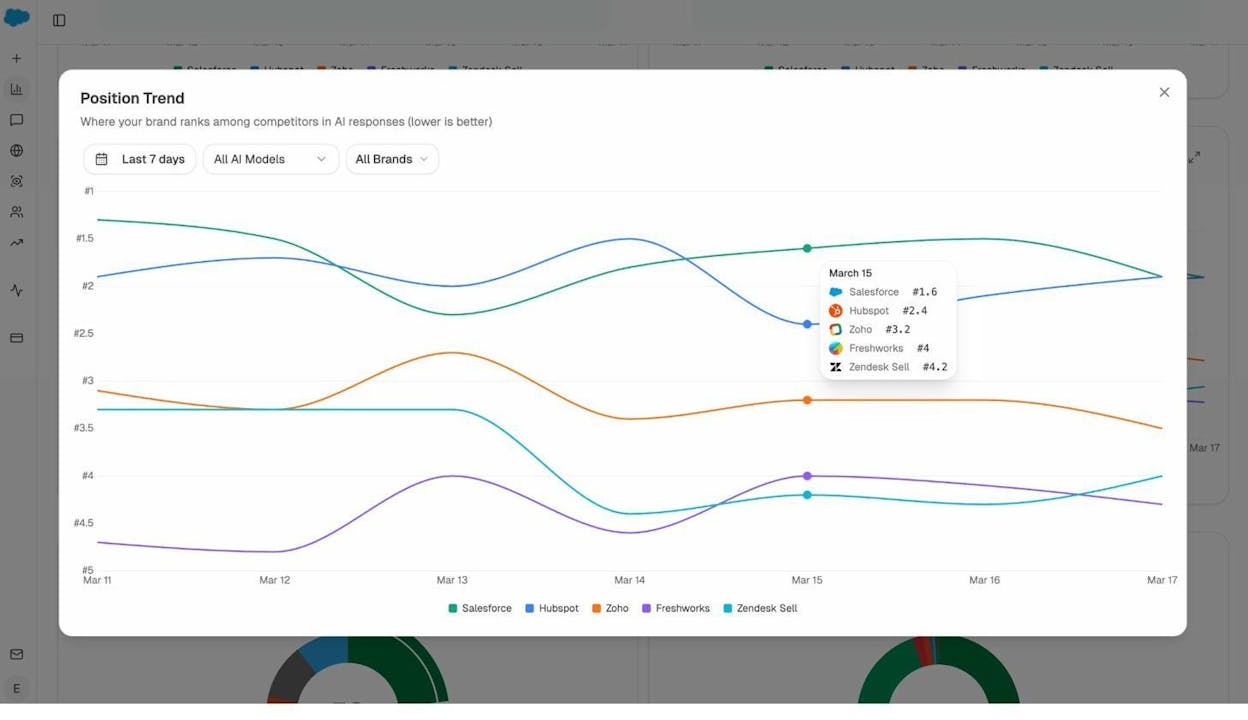
You can also see which AI engines are pulling your refreshed page into their answers using the Sources view, which breaks citations down by domain across ChatGPT, Perplexity, Gemini, and others.
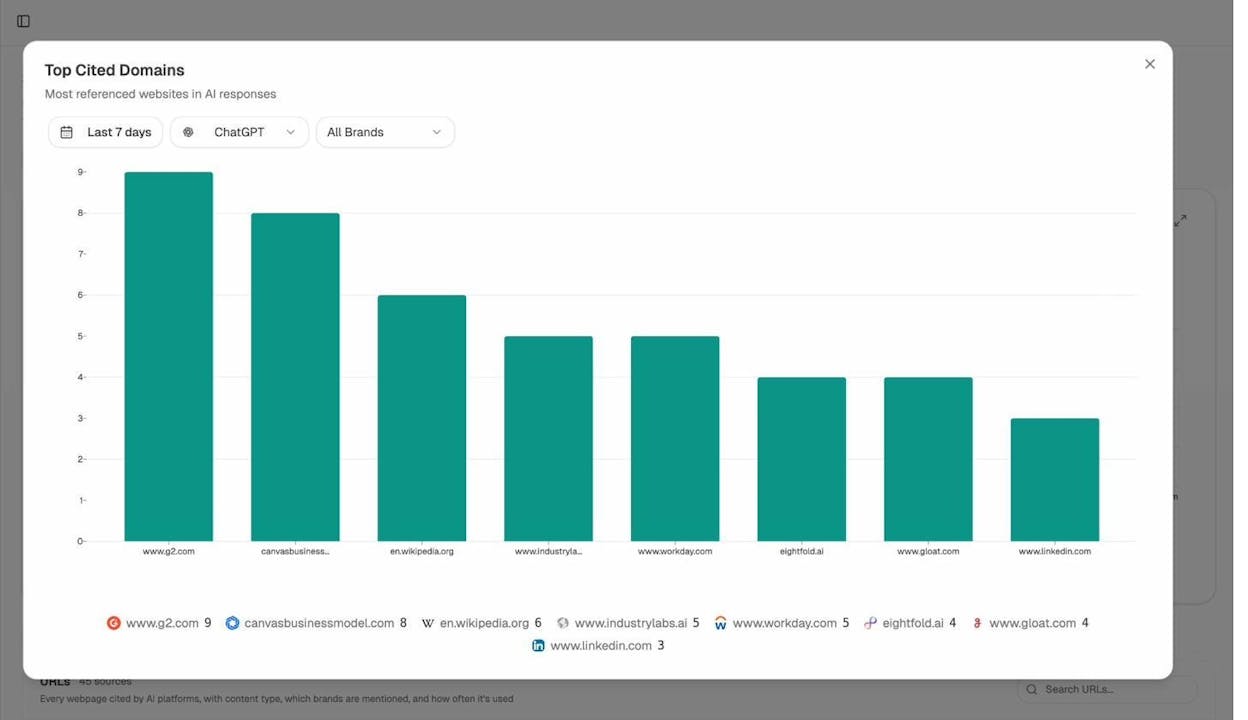
How to benchmark your refresh cadence against competitors
There are two angles. Most guides only cover the first.
SEO benchmark
Set up a Site Audit project for your blog and your top three competitors’ blogs. Use the page explorer with a regex filter on article:modified_time to count how many of their pre-2025 articles have been updated this year. Divide by the total to get a percentage.
Do the same for your own site. If competitor 1 has refreshed 60% of their old content and you have refreshed 25%, you have a clear capacity gap. Repeat quarterly.
AI search benchmark
The AI search version is more useful and most teams skip it. Open Competitors in Analyze AI and look at the position of each rival across your tracked prompts. Then look at the Perception view to see what each competitor is known for in AI answers.
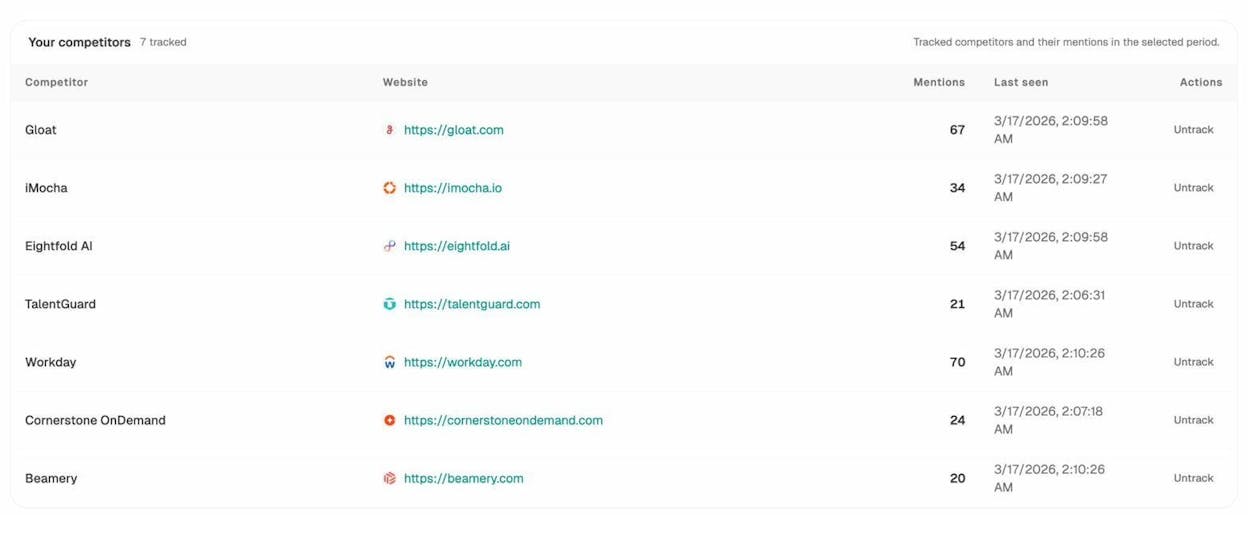
If a competitor is winning prompts you used to win, that is your refresh priority list, ranked by revenue impact rather than by traffic loss. The revenue framing matters because the buying-stage prompts are where AI search converts.
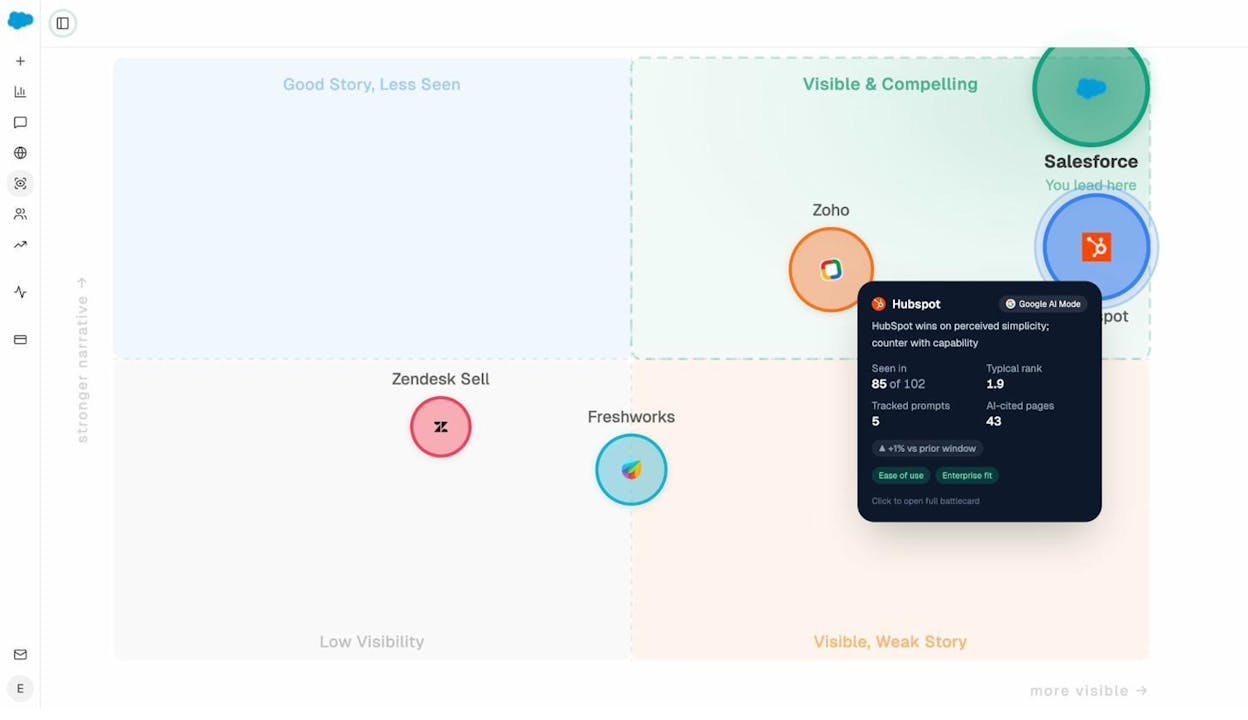
This two-channel benchmark gives you something the SEO-only version cannot. You can see whether you are losing to a competitor because they refresh more often, or because they have built a stronger AI presence on the prompts that matter most.
Five freshness mistakes to avoid
Even teams that understand freshness still waste effort on the wrong tactics.
1. Just changing the date
Updating dateModified without changing the content is the oldest trick in the book and Google detects it. AI engines that re-crawl will see no semantic change and will keep citing whoever else moved.
2. Refreshing everything at once
You cannot maintain 800 articles. Pick the top 20% by traffic and citations. Run them through a quarterly cycle. Leave the long tail alone unless a specific page has business value worth defending.
3. Refreshing without checking AI demand
Some topics rank on Google but never get cited by AI. Some get cited heavily on AI but have low Google volume. Check both before you decide a refresh is worth the hours. The Prompts view inside Analyze AI tells you whether anyone is actually asking AI engines about this topic.
4. Treating AI search and SEO as separate refresh queues
This is the one we feel strongly about. AI search is not replacing SEO. It is an additional organic channel that runs on the same content infrastructure. Every refresh you do should be designed to win on Google and AI engines at the same time. Doing them in two passes is twice the work for half the value.
5. Refreshing instead of replacing
If a page has fundamentally lost intent (the SERP shifted, the topic died, the product changed), refreshing it is throwing good time after bad. Replace it with a new page targeting the actual current intent. Sometimes the highest-ROI move is to retire content, not save it.
Final thoughts
Most teams treat content freshness like maintenance. Something to handle when there is time. The teams that win treat it like a release pipeline. They know exactly which pages are decaying, in which channel, against which competitor, and they ship updates on a regular cadence.
That shift is the whole point. Your publish date is no longer a metadata field. It is a leading indicator of whether your content will keep working for both Google and AI search next quarter, or quietly disappear from both. Pick the 20 pages that matter most, run them through the seven steps in this article, and measure both channels at the end. Then do it again next quarter.

Ernest

Ibrahim


