



Summarize this blog post with:


In this article, you’ll learn what high-ticket affiliate marketing is, how much money you can realistically make from it, and 17 programs you can join today. You’ll also get a step-by-step breakdown of how to build a profitable high-ticket affiliate business, from finding the right programs to creating content that actually converts. And because buyers are now discovering products through ChatGPT, Perplexity, and other AI search engines, you’ll learn how to position your affiliate content in those channels too.
Table of Contents
What Is High-Ticket Affiliate Marketing?
High-ticket affiliate marketing is the practice of promoting products or services that pay large commissions per sale. “High ticket” generally means payouts above $100, but some programs pay $500, $1,000, or even $5,000+ per conversion.
The core appeal is simple math. If you earn $5 per sale, you need 200 sales to hit $1,000. If you earn $500 per sale, you need two.
That does not mean high-ticket is easier. Conversion rates are lower because the products cost more and buyers take longer to decide. But it does mean you need far less traffic to earn meaningful revenue. For affiliate marketers who can build trust and target the right audience, the economics are significantly better.
High-ticket products and services typically fall into a few categories:
-
Software and SaaS (project management tools, CRMs, hosting platforms)
-
Online courses and memberships (business education, coaching programs)
-
Financial products (insurance, loans, investment platforms)
-
Luxury goods (jewelry, electronics, private travel)
-
Business services (web design, marketing agencies, consulting)
-
Heavy equipment and machinery (industrial tools, specialized hardware)
The common thread is that the product solves a meaningful problem or delivers enough value to justify a high price point. And that value is what makes the commission possible.
How Much Do High-Ticket Affiliate Marketers Make?
Most affiliate marketers do not make much. According to a study from Influencer Marketing Hub, roughly 57% of affiliate marketers earn less than $10,000 per year.
But the top end tells a different story. About 3.78% earn over $150,000 per year, and another 7.94% earn between $100,000 and $150,000 annually.
![[Screenshot: Bar chart showing affiliate marketing income distribution from Influencer Marketing Hub study]](https://www.datocms-assets.com/164164/1777646898-blobid1.png?auto=format,compress&w=1248&fit=max)
Those numbers cover all affiliate marketing, not just high-ticket. But the affiliates reaching six figures are disproportionately promoting high-ticket products. The reason is leverage. You can reach $150,000 per year with 300 sales at a $500 commission. Reaching that same number with $5 commissions would require 30,000 sales and an enormous amount of traffic.
Here is a quick comparison to put it in perspective:
|
Commission Per Sale |
Sales Needed for $10,000/month |
Monthly Traffic Needed (at 2% conversion) |
|---|---|---|
|
$5 |
2,000 |
100,000 |
|
$50 |
200 |
10,000 |
|
$200 |
50 |
2,500 |
|
$500 |
20 |
1,000 |
|
$1,000 |
10 |
500 |
That table reveals the real advantage. At $500 per sale, you only need 1,000 monthly visitors converting at 2% to earn $10,000 per month. That kind of traffic is achievable for a single well-written blog post ranking for the right keyword.
17 Examples of High-Ticket Affiliate Marketing Programs
Ready to start earning big commissions? Here are 17 high-ticket affiliate programs across different niches, with real numbers on what they pay.
1. Authority Hacker
![[Screenshot: Authority Hacker affiliate program landing page]](https://www.datocms-assets.com/164164/1777646904-blobid2.jpg?auto=format,compress&w=1248&fit=max)
Authority Hacker is well known in SEO circles for their online marketing courses. What is less well known is their affiliate program. It pays up to $1,979 per sale and offers lifetime commissions on future purchases. Affiliates track their performance through a ThriveChart dashboard.
Commission: Up to $1,979 per sale | Cookie duration: 60 days | Payment: PayPal via ThriveChart
2. Kinsta
![[Screenshot: Kinsta affiliate program landing page]](https://www.datocms-assets.com/164164/1777646904-blobid3.png?auto=format,compress&w=1248&fit=max)
Kinsta provides managed WordPress hosting with a referral program that pays up to $500 per referral plus 10% of the monthly plan fee for as long as the customer stays. That recurring component adds up quickly. A single Pro plan referral generates roughly $135 per month in ongoing commissions.
Commission: 5-10% plus up to $500 per referral | Cookie duration: 60 days | Recurring: Yes, 10% monthly
3. Shopify
![[Screenshot: Shopify affiliate program landing page]](https://www.datocms-assets.com/164164/1777646910-blobid4.png?auto=format,compress&w=1248&fit=max)
Shopify targets educators, influencers, and content creators who reach business and entrepreneurship audiences. The platform supports affiliates with creative assets, educational materials, and performance tracking.
Commission: ~$150 per new merchant referral (varies by location) | Cookie duration: 30 days
4. Thinkific
![[Screenshot: Thinkific affiliate program page]](https://www.datocms-assets.com/164164/1777646911-blobid5.png?auto=format,compress&w=1248&fit=max)
Thinkific lets people build and sell online courses, memberships, and digital products. The affiliate program pays 30% lifetime recurring commissions on all plans, which can add up to $1,700 per referral per year.
Commission: 30% lifetime recurring | Cookie duration: 90 days
5. Empire Flippers
![[Screenshot: Empire Flippers referral program landing page]](https://www.datocms-assets.com/164164/1777646916-blobid6.png?auto=format,compress&w=1248&fit=max)
Empire Flippers is a marketplace for buying and selling established online businesses, with over $500 million in facilitated sales since 2011. They focus on businesses valued between $100,000 and $1 million. The affiliate program has no commission ceiling and a two-year cookie, which is one of the longest in the industry.
Commission: 20% of transaction fees (no ceiling) | Cookie duration: 2 years
6. Flippa
![[Screenshot: Flippa referral program landing page]](https://www.datocms-assets.com/164164/1777646917-blobid7.png?auto=format,compress&w=1248&fit=max)
Flippa is another marketplace for buying and selling websites, eCommerce stores, SaaS products, and blogs. They have facilitated the sale of over 450,000 businesses. The program lets you earn commissions for both generic referrals and referrals to specific listed assets.
Commission: 20% of Flippa’s fees | Cookie duration: 120 days
7. Bluehost
![[Screenshot: Bluehost affiliate program landing page]](https://www.datocms-assets.com/164164/1777646922-blobid8.png?auto=format,compress&w=1248&fit=max)
Bluehost powers over two million websites globally and is officially recommended by WordPress. Their affiliate program is one of the most popular in the hosting space, paying at least 70% commission per qualified sale.
Commission: 70%+ per sale, capping at $100 | Cookie duration: 90 days
8. Villiers Jets
![[Screenshot: Villiers Jets affiliate program landing page]](https://www.datocms-assets.com/164164/1777646923-blobid9.png?auto=format,compress&w=1248&fit=max)
Villiers Jets is a private jet charter company. The commissions here can be enormous because the product price is enormous. Affiliates earn a 30% profit share on each booked flight. If you can reach the right audience, this is one of the highest-paying programs available.
Commission: 30% profit share per booked flight | Cookie duration: 365 days
9. WP Engine
![[Screenshot: WP Engine affiliate program landing page]](https://www.datocms-assets.com/164164/1777646928-blobid10.png?auto=format,compress&w=1248&fit=max)
WP Engine is a premium managed WordPress hosting provider that powers over 1.5 million websites. They partner with AWS and Google Cloud for scalable infrastructure. The affiliate program pays up to $200 per referral or 100% of the customer’s first monthly payment, whichever is higher.
Commission: Up to $200 or 100% of first month | Cookie duration: 180 days
10. Teachable
![[Screenshot: Teachable partner program landing page]](https://www.datocms-assets.com/164164/1777646932-blobid11.png?auto=format,compress&w=1248&fit=max)
Teachable is a platform for creating and selling online courses, digital downloads, and coaching products. The affiliate program pays up to 30% recurring commission for the first year of each referral.
Commission: Up to 30% recurring (first year) | Cookie duration: 30 days
11. Monday.com
![[Screenshot: Monday.com affiliate program landing page]](https://www.datocms-assets.com/164164/1777646935-blobid12.png?auto=format,compress&w=1248&fit=max)
Monday.com is one of the most widely used project management platforms, and their affiliate program is equally generous. Affiliates earn up to 100% commission on the first year of sales from each referred customer. The tiered structure rewards volume.
Commission: Up to 100% of first year’s sales | Cookie duration: 90 days
12. HubSpot
![[Screenshot: HubSpot affiliate program landing page]](https://www.datocms-assets.com/164164/1777646940-blobid13.png?auto=format,compress&w=1248&fit=max)
HubSpot is a cloud-based platform covering inbound marketing, sales, customer service, and business operations. The affiliate program pays 30% recurring commissions for a full year. Given HubSpot’s pricing (plans range from $20 to $3,600+ per month), the annual earnings per referral can be substantial.
Commission: 30% recurring for 12 months | Cookie duration: 180 days
13. WPX Hosting
![[Screenshot: WPX Hosting homepage]](https://www.datocms-assets.com/164164/1777646943-blobid14.png?auto=format,compress&w=1248&fit=max)
WPX Hosting was founded in 2013 and focuses on high-performance WordPress hosting. Their affiliate program caps monthly earnings at $20,000, which tells you something about how seriously they take the channel.
Commission: Up to $20,000/month potential | Cookie duration: 60 days
14. FreshBooks
![[Screenshot: FreshBooks affiliate program landing page]](https://www.datocms-assets.com/164164/1777646946-blobid15.png?auto=format,compress&w=1248&fit=max)
FreshBooks is cloud-based accounting software for small businesses and freelancers. The program runs through ShareASale and pays up to $200 per paid subscriber. Accounting software has strong retention rates, making this a reliable niche.
Commission: Up to $200 per paid subscriber | Cookie duration: 120 days
15. Superside
![[Screenshot: Superside homepage]](https://www.datocms-assets.com/164164/1777646949-blobid16.png?auto=format,compress&w=1248&fit=max)
Superside is a subscription-based design service for enterprises. Technically a referral program, it pays $200 for a completed demo and $5,000 for a closed annual deal. That $5,000 figure puts it among the highest single-conversion payouts in this list.
Commission: $200 per demo, $5,000 per closed annual deal
16. Analyze AI
Analyze AI is a platform that tracks how brands appear across AI search engines like ChatGPT, Perplexity, Claude, Gemini, and Copilot. It connects AI search visibility to actual sessions, conversions, and revenue. As AI search grows into a major discovery channel, the demand for this kind of tool is growing fast.
The Analyze AI affiliate program pays a 20% recurring commission on every referred customer. That means you earn every month for as long as the customer stays on the platform. For content creators covering SEO, AI visibility, or digital marketing tools, this is a natural fit.
Commission: 20% recurring | Niche fit: SEO and AEO professionals, marketers, content creators, agencies
17. ClickFunnels
![[Screenshot: ClickFunnels affiliate program landing page]](https://www.datocms-assets.com/164164/1777646953-blobid17.png?auto=format,compress&w=1248&fit=max)
ClickFunnels is a sales funnel builder that has become a staple in the online marketing world. Their affiliate program offers 30% recurring commissions plus bonuses for hitting referral milestones. ClickFunnels is famous for their “Dream Car” incentive, where top affiliates receive a monthly payment toward a car of their choice.
Commission: 30% recurring + milestone bonuses | Cookie duration: 45 days
How to Find High-Ticket Affiliate Programs
The programs listed above are a good starting point. But the best affiliate marketers do not stop at published lists. They actively hunt for programs that match their audience and niche.
Here are three ways to find them.
Search affiliate networks
Affiliate networks aggregate thousands of programs in one place. Start with these:
-
AvantLink is strong for outdoor, tech, and lifestyle brands
-
Impact Radius hosts programs from major brands like Shopify, Canva, and Uber
-
ShareASale covers a wide range of niches
-
CJ Affiliate (formerly Commission Junction) has enterprise-level programs
-
PartnerStack specializes in SaaS affiliate programs
![[Screenshot: Impact Radius marketplace showing high-ticket affiliate programs filtered by commission rate]](https://www.datocms-assets.com/164164/1777646958-blobid18.png?auto=format,compress&w=1248&fit=max)
On each network, filter by commission rate or average order value to surface high-ticket opportunities. Many networks let you sort by EPC (earnings per click), which gives you a rough sense of how well a program converts.
Use Google search to find program pages
Many high-ticket programs are not listed on networks. They run their own affiliate portals. You can find them with targeted searches.
Try queries like:
-
"affiliate program" + [your niche] + "$500"
-
"partner program" + [your niche] + "commission"
-
"referral program" + [product type]
![[Screenshot: Google search results page for “affiliate program web hosting commission” showing various program landing pages]](https://www.datocms-assets.com/164164/1777646961-blobid19.png?auto=format,compress&w=1248&fit=max)
You can also use tools like the Analyze AI keyword generator to brainstorm related terms in your niche, then search for affiliate programs around those terms.
Pitch brands directly
The highest-paying deals often come from direct partnerships that are not publicly advertised. If you know a high-ticket product you genuinely use and recommend, reach out to the company and propose a partnership.
This works especially well when you already have an audience in the right niche. A company selling $2,000 software packages has strong economic incentive to pay you $400+ per referral if you can deliver qualified buyers.
Write a short email that covers who you are, what audience you reach, and why a partnership benefits them. Include your traffic numbers, social following, or email list size. Specific data makes these pitches far more effective than vague introductions.
Use AI search to discover emerging programs
Here is a tactic most affiliate marketers are overlooking. AI search engines like ChatGPT and Perplexity are constantly recommending products when people ask buying-intent questions. The products that show up frequently in AI answers are often the ones with affiliate programs worth investigating.
You can use Analyze AI’s Ad Hoc Prompt Searches to type in prompts like “best project management software for small teams” or “best WordPress hosting” and see which brands AI models recommend. If a brand is consistently cited across multiple AI engines, that tells you demand exists and buyers are being directed toward that product.
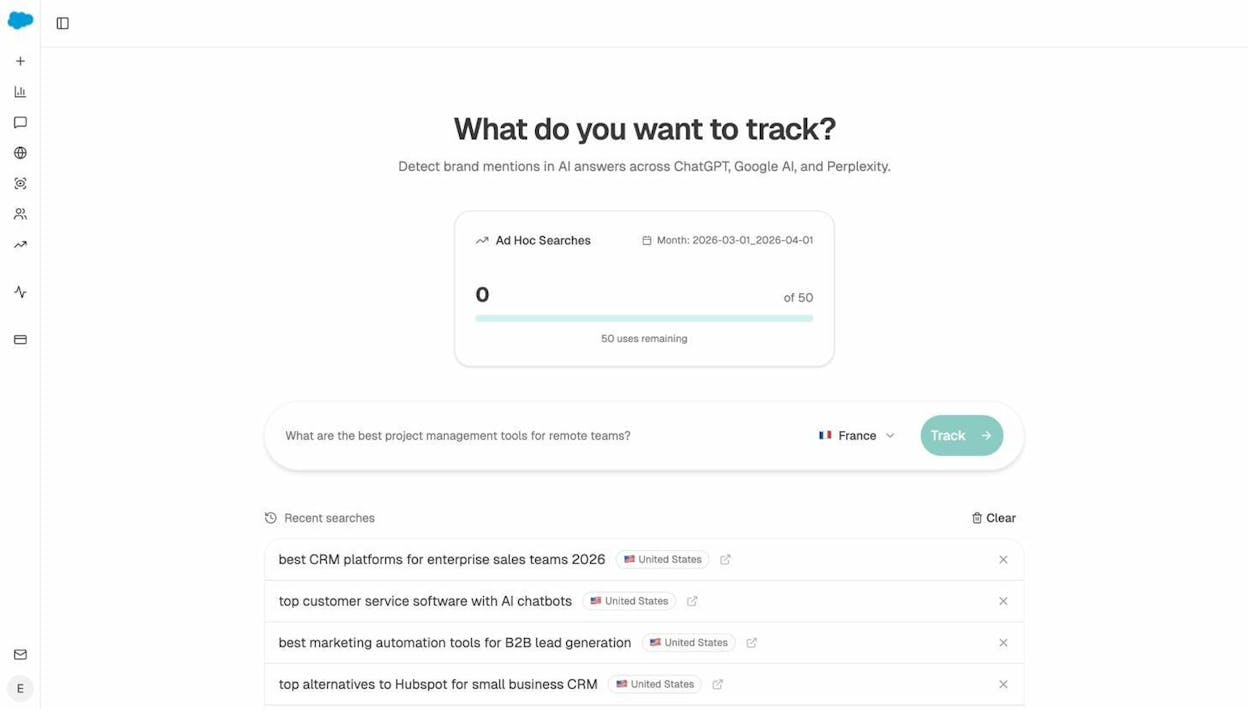
From there, check if those brands have affiliate programs. Many of the brands that AI models recommend most frequently do.
How to Start High-Ticket Affiliate Marketing (9 Tips)
Finding a program is just the beginning. Making consistent high-ticket commissions requires a real strategy. Here are nine steps to build one.
1. Pick a niche where high-ticket products solve real problems
The single biggest mistake new high-ticket affiliates make is picking a niche based purely on commission size. A $5,000 commission means nothing if you cannot reach or convince the people who buy that product.
Strong high-ticket niches share a few traits:
-
The buyer has a specific, urgent problem. Someone shopping for health insurance is not browsing casually. They need coverage.
-
The product price is justified by the outcome. A $2,000 online course makes sense if it teaches a skill that can earn $50,000+ per year.
-
The buyer does extensive research before purchasing. This creates more opportunities for your content to influence the decision.
Some proven high-ticket niches include SaaS tools, business education, financial services, luxury travel, B2B services, and health and wellness. Pick a niche where you have genuine interest or experience. That matters more in high-ticket than low-ticket because the content quality bar is higher.
2. Build trust and authority before you sell anything
Nobody buys a $1,000 product from a website they do not trust. With low-ticket items, an impulse click is enough. With high-ticket items, buyers need to feel confident in your recommendation.
Trust is built in several specific ways.
Be transparent about affiliate relationships. You are legally required to disclose affiliate relationships. But go beyond the bare minimum. Put your disclosure near the top of your content, not buried in the footer. Readers respect honesty, and it actually increases conversions because it signals credibility.
Show your face and credentials. Create a thorough About page that explains who you are, why you are qualified to review or recommend these products, and what experience you have. If you have used the product yourself, say so. Show photos. Record a video introduction. Let people know there is a real person behind the recommendations.
![[Screenshot: Example of a strong affiliate site About page showing the author’s face, credentials, and a video introduction]](https://www.datocms-assets.com/164164/1777646966-blobid21.png?auto=format,compress&w=1248&fit=max)
Be honest when a product falls short. If you only say positive things, readers will not believe any of it. Point out genuine weaknesses, limitations, and situations where a product is not the right fit. Counterintuitively, this increases your conversions on the products you do recommend because readers trust your judgment.
This trust-building work also feeds directly into Google’s E-E-A-T framework (Experience, Expertise, Authoritativeness, and Trustworthiness). Google’s ranking algorithms reward content from creators who demonstrate genuine expertise and experience. The same signals that make human readers trust you also help you rank higher. For a full overview of how E-E-A-T connects to your content strategy, see our guide on the 4 pillars of an effective SEO strategy.
3. Build quality backlinks to rank higher
Most successful affiliate marketers depend on search engines for traffic. And backlinks remain one of the most important ranking factors in Google’s algorithm. The more authoritative and relevant sites link to your content, the better you rank for competitive keywords.
This is especially critical for high-ticket niches. Commercial keywords like “best CRM software” or “best managed WordPress hosting” are extremely competitive. Without strong backlinks, you will not crack the first page.
Some effective link building strategies for affiliate sites:
-
Guest posting on industry blogs. Write genuinely useful content for other websites in your niche and include a natural link back to your site.
-
Creating original research or data. Studies, surveys, and original data attract links naturally because other writers want to reference them.
-
Resource page link building. Many websites maintain curated lists of useful tools and resources. Reach out to relevant ones and suggest your content.
-
Digital PR and expert quotes. Services like HARO connect journalists with expert sources. Providing quotes in published articles earns you backlinks from major publications.
![[Screenshot: A backlink profile analysis showing links from high-authority domains pointing to a high-ticket affiliate review page]](https://www.datocms-assets.com/164164/1777646970-blobid22.png?auto=format,compress&w=1248&fit=max)
For a deeper look at off-page SEO strategies that work for affiliate sites in competitive niches, we have a full guide covering 11 tactics. You can also use the website authority checker to benchmark your domain authority against competing affiliate sites in your niche.
4. Invest in video to build deeper trust
Video builds trust faster than text. When people can see your face, watch you use a product, and hear your honest reaction, they form a stronger connection with your recommendation.
This is true across platforms. You can use video on YouTube, embed product walkthroughs in blog posts, create short-form clips for social media, and record comparison videos that help buyers decide.
Take Hobotech as an example. He reviews electrical components like solar power stations and batteries. His videos are not fancy. They run 30+ minutes. But he tests every product thoroughly on camera, explains things in plain language, and is completely honest about what works and what does not. One of his review videos promoting a $1,600 product with a 10% commission rate has earned nearly half a million views.
![[Screenshot: Hobotech YouTube channel showing long-form product review videos with high view counts]](https://www.datocms-assets.com/164164/1777646973-blobid23.png?auto=format,compress&w=1248&fit=max)
His approach works because it checks every trust box. Transparency about the product’s strengths and weaknesses. Hands-on demonstration. Expert analysis in language that non-experts can understand.
There is also an SEO benefit. Video content can rank separately in Google’s video results, giving you a second chance to appear on the same SERP. Some affiliate marketers rank twice on page one for the same keyword, with a blog post in the organic results and a YouTube video in the video carousel.
If you want to research which keywords have video results in the SERPs, the SERP checker lets you see the full search results layout for any query, including whether video carousels appear.
5. Capture people at every stage of the funnel
Affiliate marketers tend to focus on bottom-of-funnel keywords like “best health insurance” or “Kinsta vs WP Engine.” These are high-intent, but they are also brutally competitive. For high-ticket keywords, the difficulty is even worse.
![[Screenshot: Keyword difficulty score of 80+ for “best health insurance” in a keyword research tool, showing it requires many backlinks to rank]](https://www.datocms-assets.com/164164/1777646980-blobid24.png?auto=format,compress&w=1248&fit=max)
The smarter approach is to create content across the entire buyer’s journey.
Top of funnel (awareness). These are informational queries from people who are just starting to learn about a topic. Someone researching kayaks might search “how to choose a kayak for beginners.” They are not ready to buy yet, but you are introducing your brand early.
Middle of funnel (consideration). These are comparison and evaluation queries. “Inflatable vs hardshell kayak” or “best kayaks under $1,000.” The buyer is narrowing their options.
Bottom of funnel (decision). These are purchase-intent queries. “Eddyline Skylark review” or “where to buy Perception Pescador.” The buyer is ready to act.
By covering all three stages, you capture people before they reach the buying stage. You build familiarity. And you skip much of the competition because fewer affiliate sites bother with informational content.
Research from Digilant suggests it takes between 28 and 62 touchpoints before someone purchases a product. For expensive items, the number is even higher. The more of those touchpoints you provide, the more likely you are to be the final nudge that earns the commission.
To make this work, pair your content strategy with an email list. When a top-of-funnel visitor reads your beginner’s guide, capture their email. Then nurture them with a sequence that moves them toward a purchase decision. This turns cold readers into warm leads over days or weeks, which matches the timeline high-ticket buyers actually operate on.
For a complete framework on building a content strategy that covers all funnel stages, check out our SEO content strategy guide. And use the keyword difficulty checker to find lower-competition top-of-funnel keywords where you can rank faster while building domain authority for those harder bottom-of-funnel terms.
6. Optimize your affiliate content for AI search
This is the step most affiliate marketers are ignoring right now. And it represents a significant opportunity.
Millions of people are now asking buying-intent questions to ChatGPT, Perplexity, Claude, and Gemini. Queries like “what is the best WordPress hosting for a small business?” or “which CRM should I use for a 10-person sales team?” are being answered by AI models that include specific product recommendations with links to sources.
If your affiliate content gets cited in those AI answers, you gain a new stream of qualified traffic from people already in a buying mindset.
SEO is not dead. AI search is an additional organic channel alongside traditional SEO, not a replacement. The brands and publishers that show up in AI answers are the same ones producing clear, original, and well-structured content. The difference is that your content now needs to work for AI models too, not just Google.
Here is how to approach it.
Structure your content so AI models can extract clear answers. AI models pull from content that directly and concisely answers specific questions. Use descriptive headings. Lead each section with the key takeaway. Organize comparisons in a way that makes differences obvious.
Build topical authority. AI models tend to cite sources that cover a topic comprehensively. If you have one review post on Kinsta, that is fine. But if you have 20 articles covering WordPress hosting from every angle, AI models are more likely to recognize your site as a trusted source.
Track your AI visibility. This is where most marketers get stuck. Google Search Console shows you how you perform in traditional search. But there is no native equivalent for AI search. Tools like Analyze AI let you track how often your brand or content appears in responses from ChatGPT, Perplexity, Claude, Gemini, and Copilot.
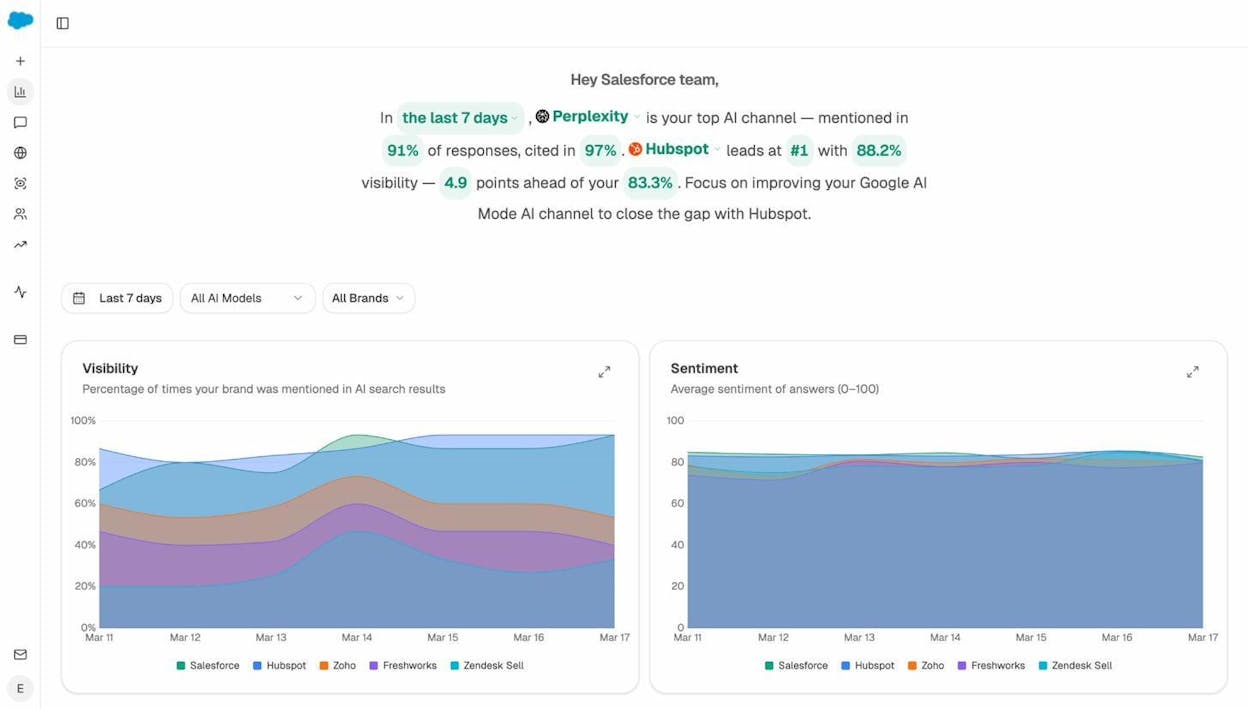
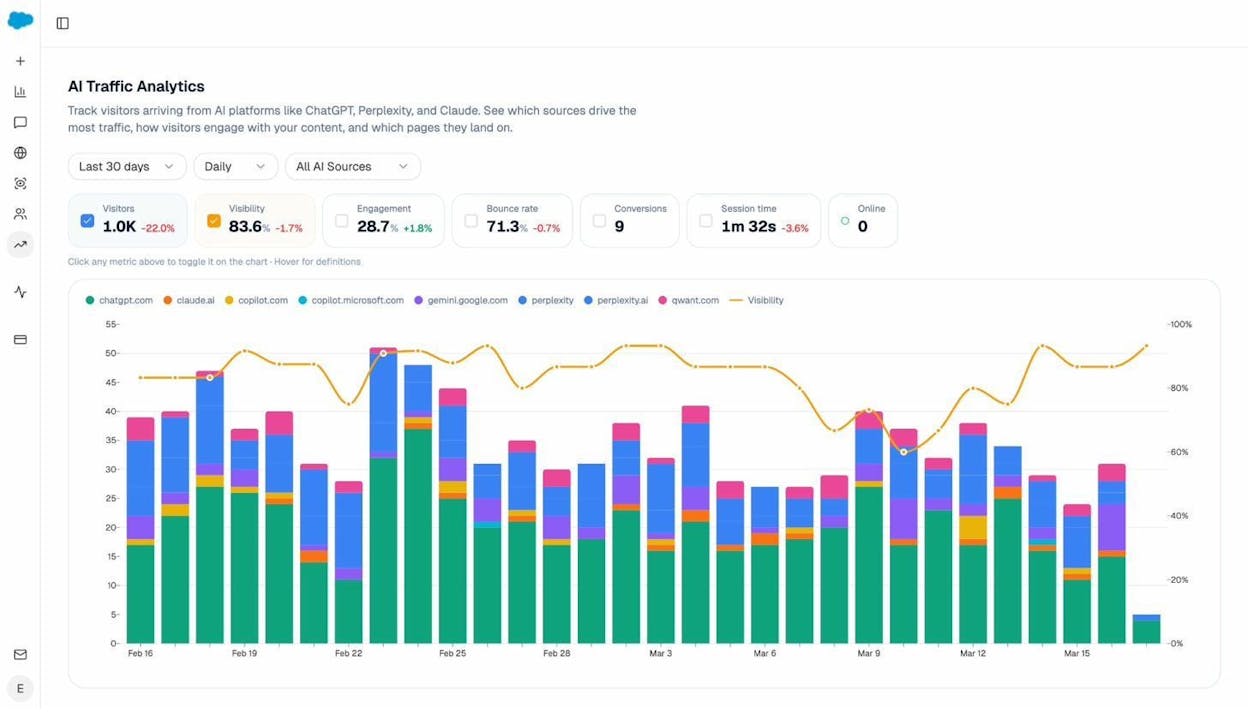
You can monitor your AI traffic analytics to see exactly how many visitors arrive from AI platforms, which pages they land on, and whether they convert. This data helps you understand which content types and topics earn AI citations, so you can double down on what works.
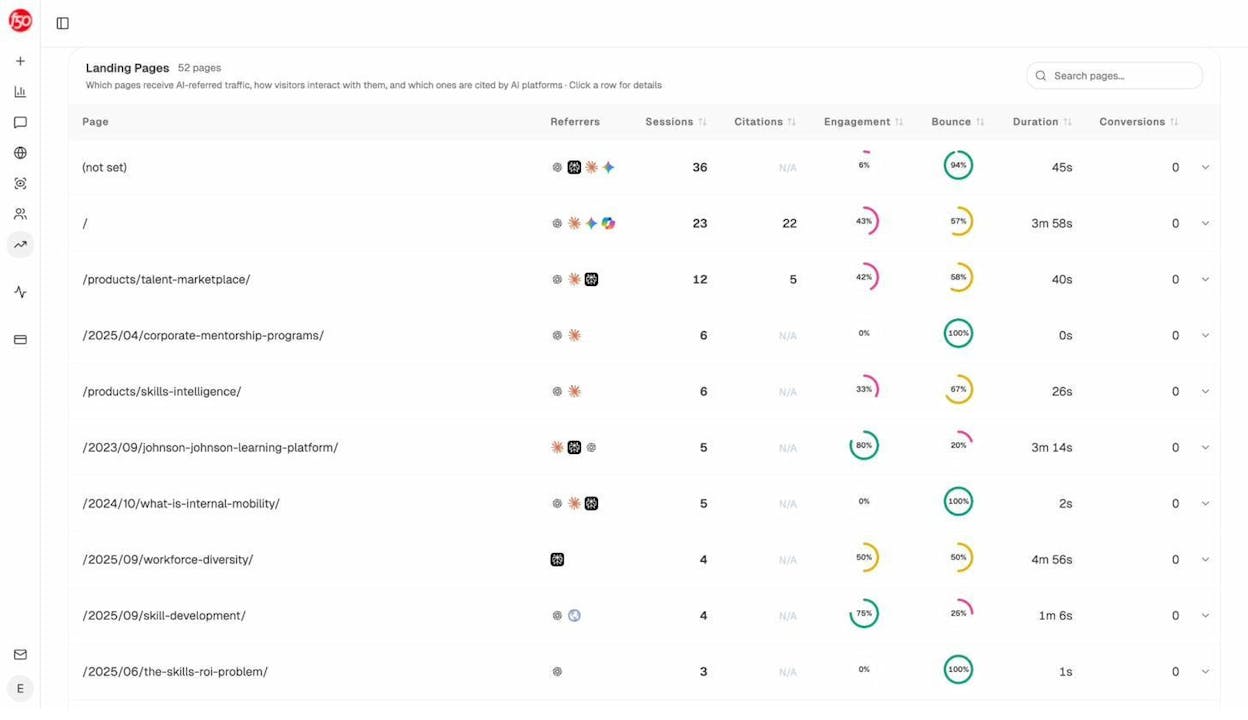
The Landing Pages report is especially useful for affiliate marketers. It shows which specific pages receive AI-referred traffic, engagement metrics for each page, and conversion data. If certain product review pages are getting cited by AI engines, you want to know that so you can create more content in the same format.
You can also use Analyze AI’s competitor intelligence to see which competing affiliate sites are being cited in AI answers for prompts in your niche. This reveals gaps you can fill.
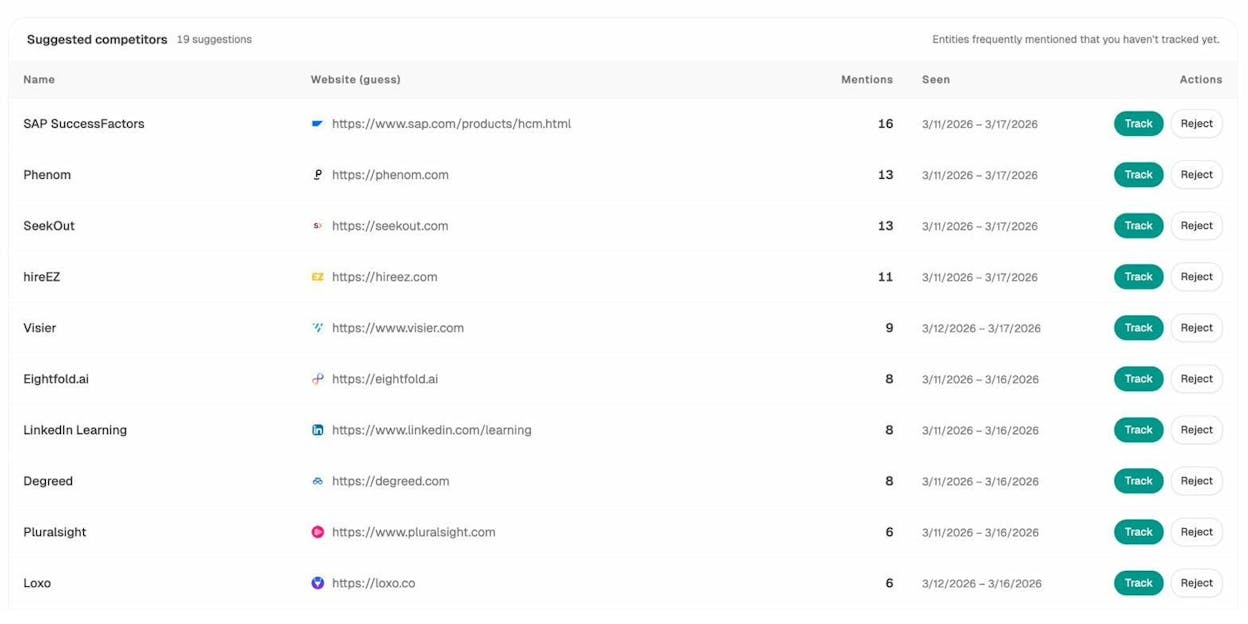
For a deeper dive on optimizing for AI engines, read our guides on how to rank on ChatGPT and how to get mentioned in AI search. Both are based on analysis of 65,000+ AI citations.
7. Create the most useful content in your niche
High-ticket affiliate marketing rewards depth. Buyers spending $500 or $1,000 on a product are doing serious research. They read multiple reviews, compare alternatives, and look for content that answers their specific questions.
Your content needs to be the best resource available for those queries. Not the longest. The most useful.
Here is what that looks like in practice.
For product reviews: Go beyond listing features. Show the product in action. Record your screen using it. Point out specific workflows or use cases that matter to your audience. Address the most common objections. Compare it to the top alternatives in a way that helps people decide.
![[Screenshot: Example of a detailed product review article with embedded screen recordings, comparison tables, and clear pro/con breakdowns]](https://www.datocms-assets.com/164164/1777646997-blobid29.png?auto=format,compress&w=1248&fit=max)
For comparison posts: Do not just create a list of 10 tools with surface-level summaries. Pick the 3-4 most relevant options and go deep. Show side-by-side screenshots. Compare pricing at different tiers. Explain which tool is best for which type of buyer.
For how-to guides: Make the instructions so clear that someone could follow them with zero prior knowledge. Use numbered steps. Add screenshots at every point where the reader might get confused. Include tips and warnings where mistakes commonly happen.
The goal is that anyone who reads your content feels fully equipped to make a decision or take action. That is what separates content that earns commissions from content that earns nothing.
If you are producing affiliate content at scale, tools like Analyze AI’s Content Writer can accelerate the research and outlining process. It generates content briefs based on SERP analysis, identifies keyword gaps your competitors cover that you do not, and produces outlines grounded in what actually ranks.
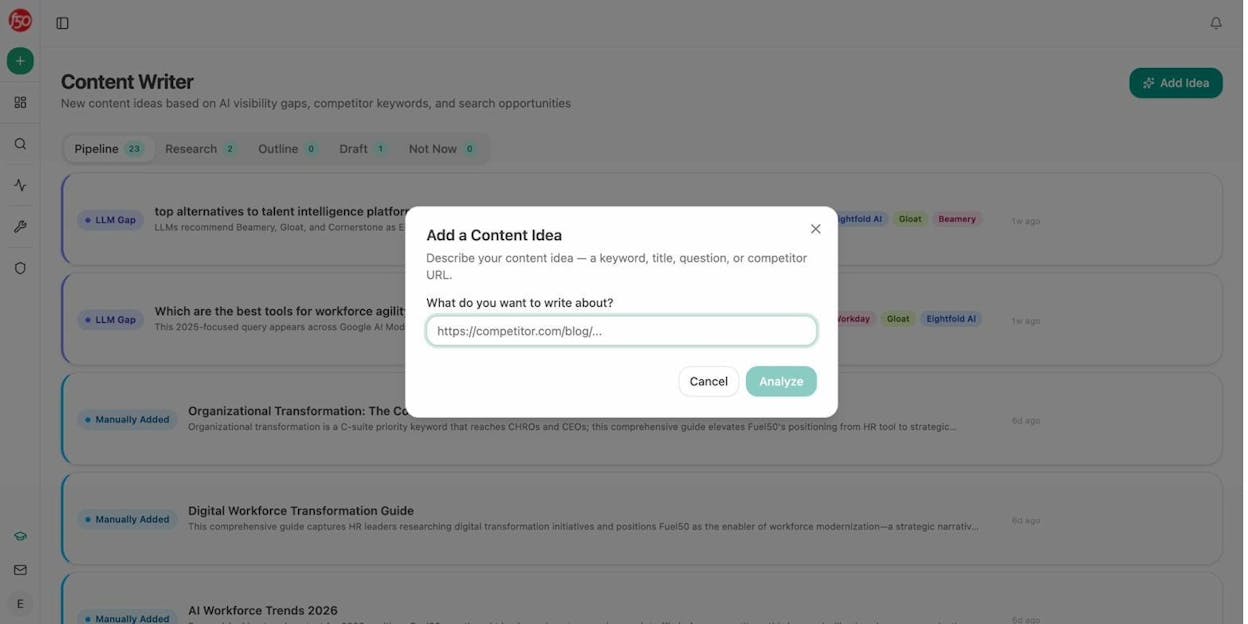
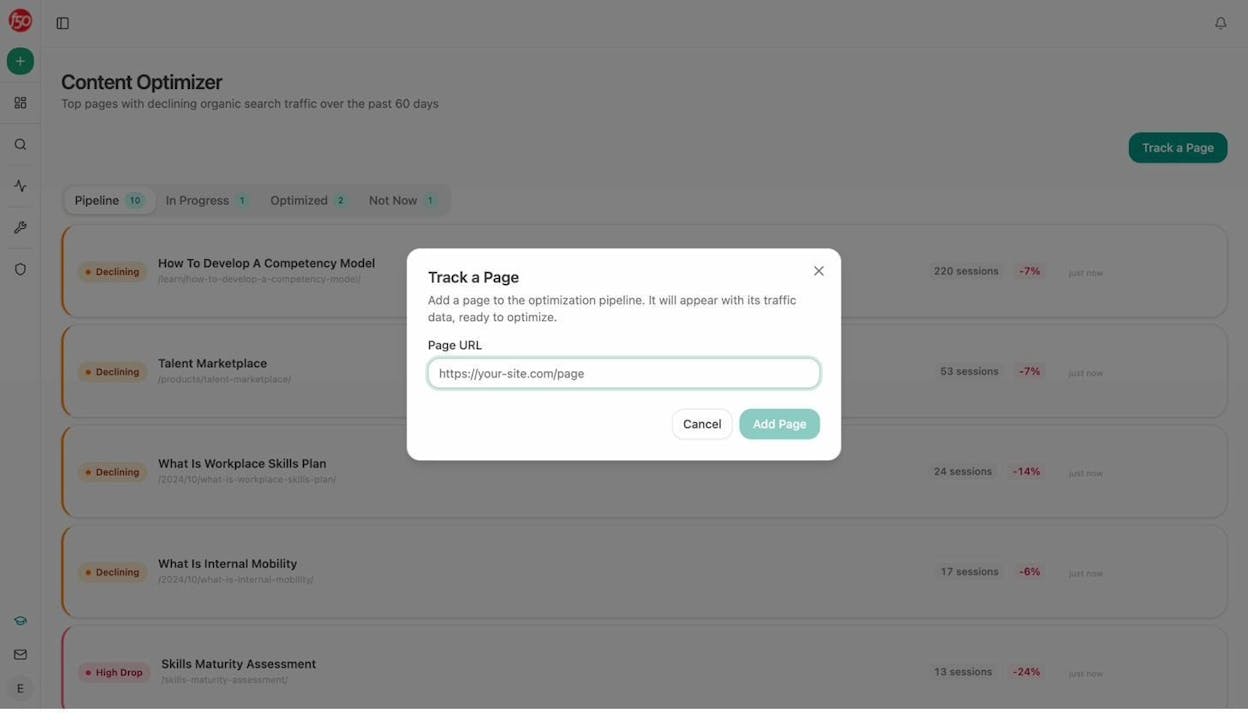
For existing content that needs improvement, the Content Optimizer fetches your published page, scores it on argument strength, flow, clarity, and polish, then suggests specific edits.
8. Only promote products you would actually recommend
This one is straightforward but critical. Do not promote expensive products that you would not recommend to a friend.
High-ticket affiliate marketing depends entirely on trust. Every recommendation is a reputation bet. If you send someone to a $2,000 course that turns out to be low quality, you have lost that reader permanently. They will never trust your recommendations again. And they will tell others.
Before promoting any high-ticket product, ask yourself:
-
Have you used it yourself or seen reliable evidence that it delivers?
-
Does it provide enough value to justify the price?
-
Would you recommend it to someone you know personally?
If the answer to any of those is no, skip it. There are plenty of genuinely good products with generous affiliate programs. You do not need to compromise.
The best affiliate marketers act as curators. They test products, evaluate them honestly, and only recommend the ones that genuinely help their audience. This approach is slower to start but compounds over time because trust grows with every honest recommendation.
9. Tell people when they should not buy
Your product is not for everyone. And the fastest way to build credibility is to say so openly.
If someone lands on your review of a $1,500 online course and they are a complete beginner who should start with a free YouTube tutorial first, tell them that. If a $200-per-month software tool is overkill for a one-person business, say it clearly.
This might seem counterproductive. You are turning away potential commissions. But the people who do buy based on your recommendation convert at a higher rate because they trust your judgment. And the people you turned away will remember your honesty and come back when they are ready.
Hobotech does this consistently in his product reviews. He tells viewers exactly who should and should not buy the product he is reviewing. That honesty is a big part of why his audience trusts him enough to purchase $1,600 products on his recommendation.
How AI Search Is Changing Affiliate Marketing Discovery
We have covered how to optimize your affiliate content for AI search. But it is worth stepping back to understand the bigger picture of why this matters.
More buyers are starting their product research in AI search engines rather than Google. When someone asks ChatGPT “what is the best CRM for a startup?”, the model returns a structured answer with specific product recommendations and cited sources.
This is a new distribution channel for affiliate content. If your review of HubSpot or Monday.com is cited in that AI answer, you receive traffic from a buyer who is already deep in the consideration phase. That is extremely valuable traffic.
The key insight is that the same content quality signals that help you rank in Google also help you get cited by AI models. Clear structure, genuine expertise, comprehensive coverage, and trustworthy sourcing all contribute to AI citation likelihood. A study of 83,670 AI citations found that AI models overwhelmingly cite authoritative, well-structured content from established domains.
You can track which sources AI engines cite in your niche using the Sources feature in Analyze AI. It shows every URL that AI platforms reference when answering questions about your industry, broken down by content type and domain.
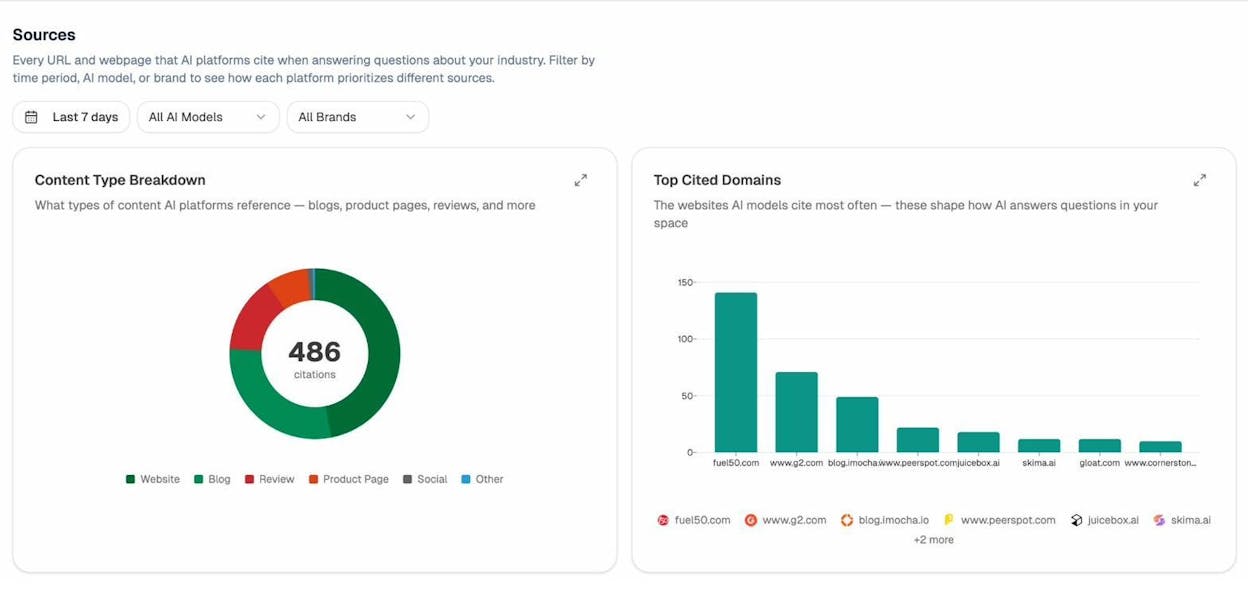
This data tells you exactly what kind of content AI models reference when people ask buying-intent questions in your niche. If AI engines are predominantly citing comparison blog posts, invest more in comparison content. If they cite product pages, adjust your approach accordingly.
You can also use the Perception Map to understand how AI engines position brands relative to each other in your niche. This visual shows which brands AI considers “visible and compelling” versus “visible but weak story.” If you are promoting products in a competitive space, this data helps you understand which products AI engines favor and why.
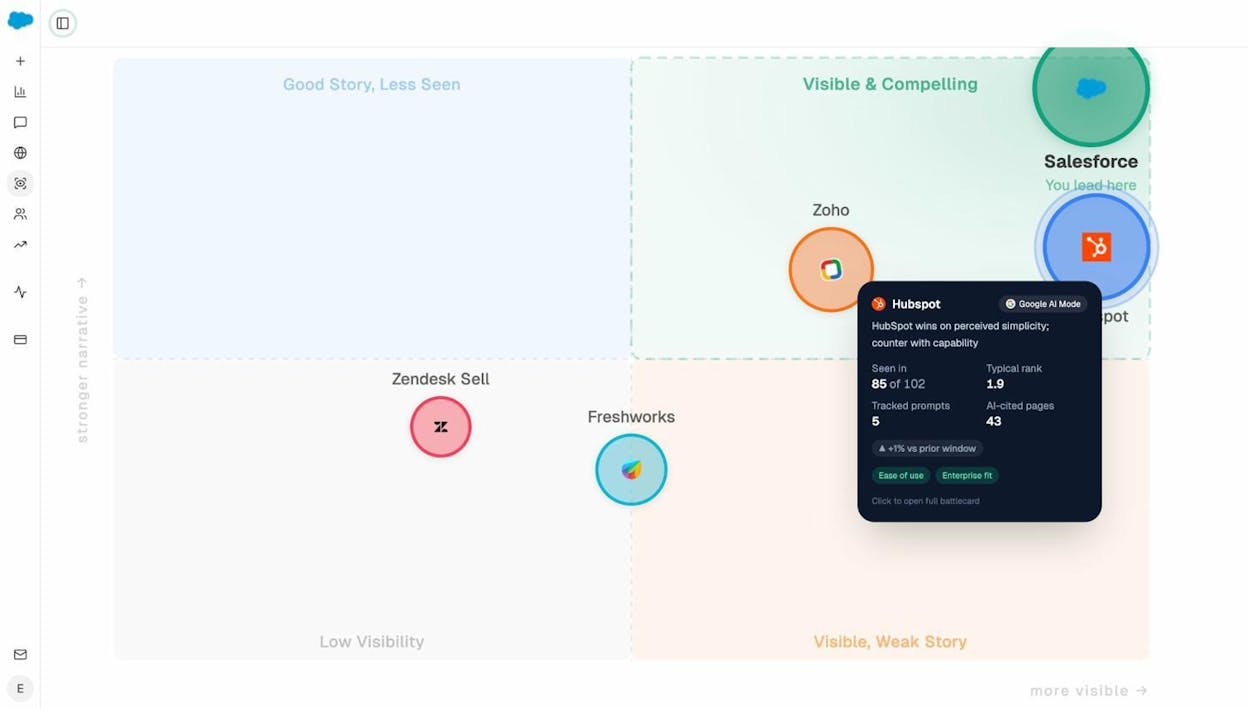
For a full breakdown of the differences and overlaps between traditional SEO and AI search optimization, read our guide on GEO vs SEO. And for specific tactics on answer engine optimization, we have a step-by-step guide with 8 proven strategies.
Tracking Your High-Ticket Affiliate Performance
As your affiliate business grows, you need systems to track what is working. Most affiliate programs provide a basic dashboard with clicks and conversions. But for a data-driven approach, you need more.
Track your SEO performance. Monitor your keyword rankings and organic traffic for the pages that drive affiliate revenue. Know which keywords bring buyers, not just visitors. The keyword rank checker lets you check your positions for free.
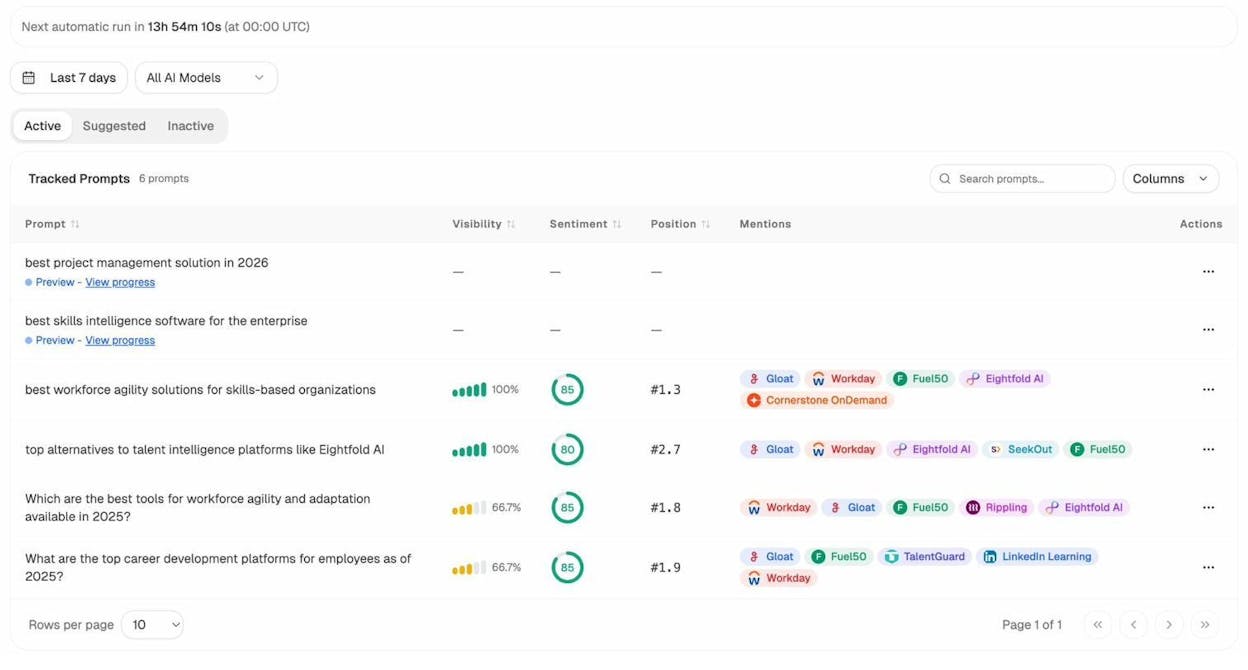
Track your AI search performance. Set up prompt tracking to monitor whether your content appears in AI answers for buying-intent queries. If you track “best WordPress hosting” in Google, you should also track it as a prompt across ChatGPT, Perplexity, and other AI engines.
Compare AI traffic against organic traffic. Use Analyze AI’s AI Traffic Analytics to see engagement rate, session duration, and conversion rate by AI source. This helps you understand which channel delivers your highest-quality affiliate traffic.
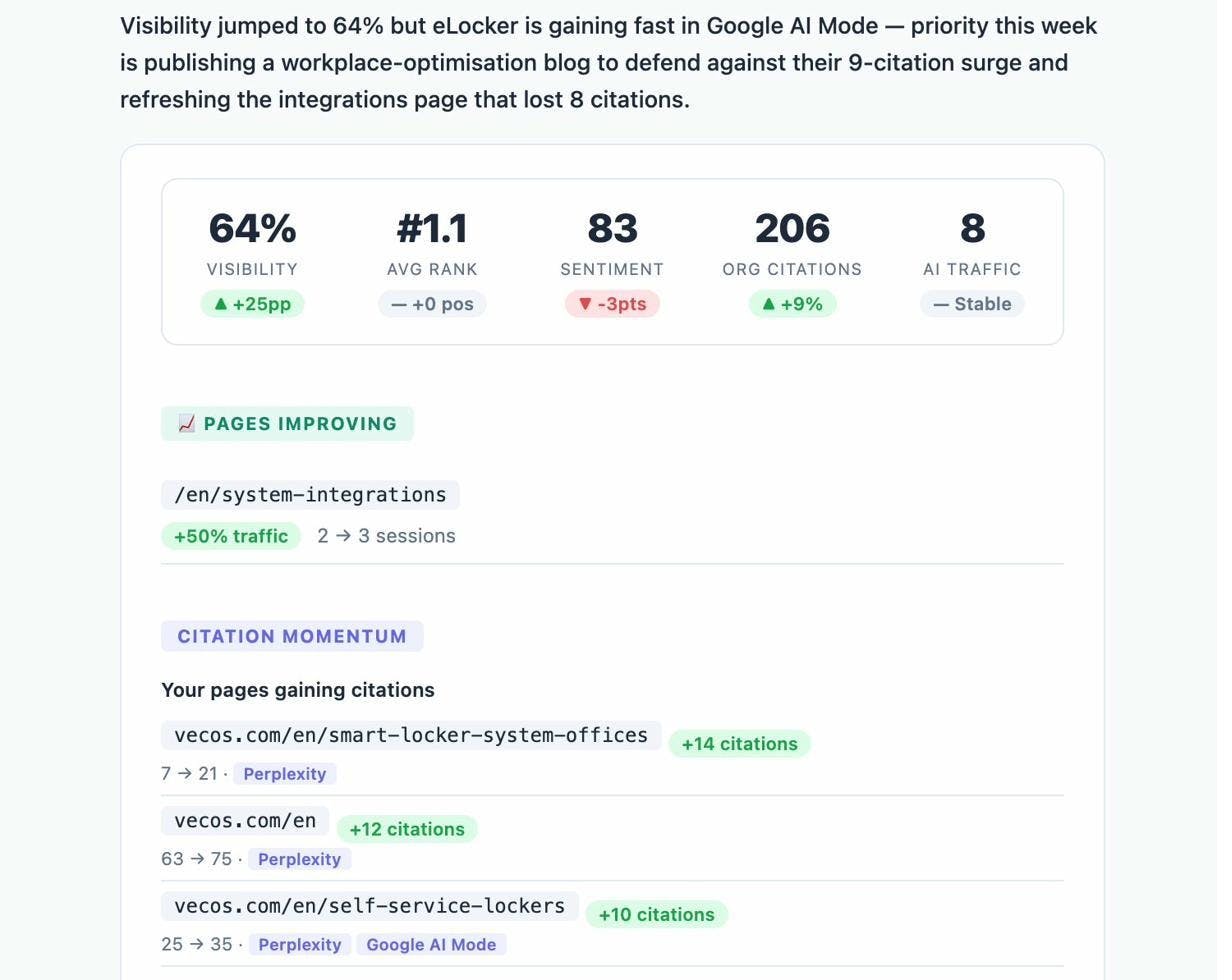
Set up weekly monitoring. Rather than checking dashboards daily, use weekly email digests to get a summary of your AI visibility changes, competitor movements, and traffic trends delivered to your inbox.
Common Mistakes in High-Ticket Affiliate Marketing
Before you get started, learn from the mistakes that trip up most beginners.
Promoting too many products. Focus on 3-5 high-ticket products that you know well and can genuinely recommend. Promoting 30 products with surface-level content does not work in high-ticket because buyers can tell when you have not done your homework.
Ignoring the buyer’s timeline. High-ticket buyers do not convert on the first visit. They might read your review, leave, come back three weeks later, compare against another source, and then finally buy. Make sure your affiliate links use cookies with long durations (30+ days), and build touchpoints across email, social media, and multiple content pieces.
Copying the competition’s content. If your “best CRM software” post reads the same as every other one, you have no competitive advantage. Bring original angles. Add personal experience. Include data or screenshots that other articles do not have. Content that looks like everything else will not earn links, trust, or rankings.
Neglecting content updates. High-ticket products change their pricing, features, and affiliate terms regularly. A review with outdated pricing destroys your credibility. Schedule quarterly reviews of your top-performing content to keep it current.
Ignoring AI search entirely. If you are only optimizing for Google and ignoring ChatGPT, Perplexity, and other AI search engines, you are leaving traffic on the table. AI search is an additional organic channel that is growing rapidly. The affiliate marketers who optimize for it now will have a compounding advantage over those who wait.
Final Thoughts
High-ticket affiliate marketing is not about quick wins. It is about building a platform of trust, creating genuinely useful content, and earning commissions that reflect the real value you deliver to buyers.
The fundamentals have not changed. Pick products you believe in. Create content that helps people make better decisions. Build authority through honest, detailed, and original work.
What has changed is where buyers discover products. Google search remains critical, and SEO should stay at the center of your traffic strategy. But AI search engines are now a meaningful and growing source of buying-intent traffic. The affiliate marketers who treat AI search as an additional organic channel will capture revenue that their competitors miss.
Start with one strong niche, one or two high-ticket programs, and a content plan that covers the full buyer journey. Be honest in your reviews, transparent in your disclosures, and relentless about making your content the best resource available. That is how you build a high-ticket affiliate business that compounds over time.

Ernest

Ibrahim


