



Summarize this blog post with:


In this article, you’ll see the 100 most-searched terms on Bing in the US and worldwide as of August 2026, with current monthly search volumes pulled from DataForSEO. You’ll also find six observations about how the list has shifted in the AI era, a note on why Bing matters more than its market-share number suggests, and a workflow you can use to research Bing keywords (and the AI prompts beside them) for your own brand.
The data was pulled from DataForSEO on May 7, 2026, and reflects the most recent complete month (April 2026). Worldwide volumes combine US, UK, Canada, Australia, and India, the five largest English-speaking Bing markets.
Table of Contents
Top 100 Bing searches in the US
|
# |
Keyword |
Search Volume |
|---|---|---|
|
1 |
youtube |
63,271,390 |
|
2 |
|
44,243,370 |
|
3 |
gmail |
32,904,350 |
|
4 |
|
24,833,590 |
|
5 |
amazon |
22,547,870 |
|
6 |
chat gpt |
18,670,410 |
|
7 |
chatgpt |
11,938,870 |
|
8 |
google maps |
11,451,770 |
|
9 |
yahoo mail |
11,432,420 |
|
10 |
google docs |
7,643,530 |
|
11 |
fox news |
7,155,850 |
|
12 |
yahoo |
6,416,570 |
|
13 |
walmart |
6,220,640 |
|
14 |
gmail login |
6,018,660 |
|
15 |
home depot |
5,746,300 |
|
16 |
ebay |
5,702,490 |
|
17 |
amazon prime |
5,200,380 |
|
18 |
how to get help in windows 11 |
5,036,960 |
|
19 |
|
4,724,520 |
|
20 |
outlook |
4,476,440 |
|
21 |
zillow |
4,200,950 |
|
22 |
netflix |
4,066,440 |
|
23 |
wordle |
3,848,060 |
|
24 |
roblox |
3,816,090 |
|
25 |
|
3,631,920 |
|
26 |
google.com |
3,444,470 |
|
27 |
espn |
3,253,820 |
|
28 |
you tube |
3,205,830 |
|
29 |
google translate |
3,161,340 |
|
30 |
google drive |
3,157,730 |
|
31 |
youtube music |
3,144,360 |
|
32 |
msn |
3,134,310 |
|
33 |
lowes |
3,112,430 |
|
34 |
spotify |
3,084,930 |
|
35 |
indeed |
3,077,320 |
|
36 |
facebook login |
3,051,320 |
|
37 |
tiktok |
3,029,240 |
|
38 |
calculator |
2,953,920 |
|
39 |
aol mail |
2,882,040 |
|
40 |
translate |
2,818,380 |
|
41 |
|
2,708,700 |
|
42 |
google chrome |
2,705,320 |
|
43 |
copilot |
2,653,250 |
|
44 |
|
2,602,990 |
|
45 |
cnn |
2,494,300 |
|
46 |
outlook login |
2,301,020 |
|
47 |
weather |
2,297,120 |
|
48 |
yahoo mail login |
2,168,340 |
|
49 |
bank of america |
2,145,850 |
|
50 |
gemini |
2,124,610 |
|
51 |
etsy |
2,092,450 |
|
52 |
costco |
2,034,150 |
|
53 |
aol mail login |
1,990,960 |
|
54 |
discord |
1,988,890 |
|
55 |
capital one |
1,987,120 |
|
56 |
facebook marketplace |
1,982,110 |
|
57 |
bing |
1,976,700 |
|
58 |
wells fargo |
1,921,210 |
|
59 |
target |
1,869,020 |
|
60 |
news |
1,800,280 |
|
61 |
temu |
1,688,920 |
|
62 |
expedia |
1,653,630 |
|
63 |
google flights |
1,652,830 |
|
64 |
airbnb |
1,634,190 |
|
65 |
yahoo finance |
1,614,550 |
|
66 |
aol |
1,582,480 |
|
67 |
amazon.com |
1,567,560 |
|
68 |
amazon com |
1,567,560 |
|
69 |
ups tracking |
1,563,890 |
|
70 |
best buy |
1,508,130 |
|
71 |
fedex tracking |
1,495,230 |
|
72 |
chase |
1,462,940 |
|
73 |
shein |
1,451,750 |
|
74 |
chrome |
1,440,480 |
|
75 |
teams |
1,429,100 |
|
76 |
bing homepage quiz |
1,403,480 |
|
77 |
zoom |
1,389,850 |
|
78 |
facebook log in |
1,376,210 |
|
79 |
google search |
1,375,200 |
|
80 |
hulu |
1,368,170 |
|
81 |
usps tracking |
1,320,180 |
|
82 |
x |
1,242,850 |
|
83 |
claude ai |
1,177,580 |
|
84 |
claude.ai |
1,177,580 |
|
85 |
paypal |
1,152,040 |
|
86 |
daily mail |
1,135,190 |
|
87 |
|
1,123,050 |
|
88 |
disney+ |
1,112,090 |
|
89 |
hotmail |
1,106,000 |
|
90 |
|
1,094,990 |
|
91 |
wayfair |
1,081,650 |
|
92 |
hbo max |
1,074,660 |
|
93 |
kohls |
1,060,710 |
|
94 |
gmail.com |
1,059,090 |
|
95 |
youtube.com |
1,044,690 |
|
96 |
craigslist |
1,034,520 |
|
97 |
yahoo.com |
1,011,330 |
|
98 |
solitaire |
1,001,110 |
|
99 |
youtube tv |
968,870 |
|
100 |
amazon prime video |
929,720 |
Top 100 Bing searches worldwide
|
# |
Keyword |
Search Volume |
|---|---|---|
|
1 |
youtube |
88,955,860 |
|
2 |
|
66,794,690 |
|
3 |
gmail |
46,058,320 |
|
4 |
|
33,891,410 |
|
5 |
chat gpt |
27,518,240 |
|
6 |
amazon |
26,156,790 |
|
7 |
chatgpt |
21,158,290 |
|
8 |
google maps |
18,381,800 |
|
9 |
yahoo mail |
13,614,640 |
|
10 |
google docs |
9,041,300 |
|
11 |
gmail login |
8,692,010 |
|
12 |
fox news |
7,401,290 |
|
13 |
outlook |
7,295,280 |
|
14 |
yahoo |
7,250,340 |
|
15 |
ebay |
7,248,070 |
|
16 |
walmart |
6,379,690 |
|
17 |
netflix |
6,322,220 |
|
18 |
|
6,304,020 |
|
19 |
home depot |
6,095,290 |
|
20 |
bbc news |
6,049,970 |
|
21 |
how to get help in windows 11 |
5,998,230 |
|
22 |
amazon prime |
5,842,800 |
|
23 |
|
5,324,700 |
|
24 |
roblox |
5,311,810 |
|
25 |
wordle |
5,187,270 |
|
26 |
facebook login |
4,895,890 |
|
27 |
google translate |
4,831,800 |
|
28 |
you tube |
4,758,940 |
|
29 |
spotify |
4,493,940 |
|
30 |
copilot |
4,391,940 |
|
31 |
tiktok |
4,278,580 |
|
32 |
zillow |
4,222,270 |
|
33 |
google drive |
4,178,900 |
|
34 |
indeed |
4,172,520 |
|
35 |
google chrome |
3,973,090 |
|
36 |
translate |
3,917,230 |
|
37 |
google.com |
3,880,680 |
|
38 |
youtube music |
3,798,580 |
|
39 |
|
3,641,600 |
|
40 |
msn |
3,609,920 |
|
41 |
calculator |
3,491,480 |
|
42 |
|
3,407,960 |
|
43 |
espn |
3,352,650 |
|
44 |
gemini |
3,246,080 |
|
45 |
daily mail |
3,206,490 |
|
46 |
aol mail |
3,149,690 |
|
47 |
lowes |
3,125,110 |
|
48 |
cnn |
3,072,700 |
|
49 |
bing homepage quiz |
2,844,040 |
|
50 |
yahoo mail login |
2,800,950 |
|
51 |
discord |
2,749,380 |
|
52 |
weather |
2,736,680 |
|
53 |
outlook login |
2,676,160 |
|
54 |
hotmail |
2,673,550 |
|
55 |
|
2,659,610 |
|
56 |
news |
2,564,990 |
|
57 |
temu |
2,417,470 |
|
58 |
etsy |
2,407,300 |
|
59 |
bing |
2,371,290 |
|
60 |
costco |
2,294,340 |
|
61 |
facebook marketplace |
2,282,520 |
|
62 |
airbnb |
2,258,840 |
|
63 |
bank of america |
2,157,670 |
|
64 |
aol mail login |
2,141,690 |
|
65 |
chrome |
2,110,260 |
|
66 |
claude ai |
2,091,530 |
|
67 |
claude.ai |
2,091,530 |
|
68 |
capital one |
2,020,920 |
|
69 |
target |
1,950,340 |
|
70 |
shein |
1,950,250 |
|
71 |
wells fargo |
1,927,230 |
|
72 |
teams |
1,920,470 |
|
73 |
google flights |
1,854,030 |
|
74 |
expedia |
1,850,090 |
|
75 |
google search |
1,804,700 |
|
76 |
yahoo finance |
1,793,320 |
|
77 |
aol |
1,777,320 |
|
78 |
ups tracking |
1,689,940 |
|
79 |
facebook log in |
1,663,160 |
|
80 |
bbc |
1,635,440 |
|
81 |
best buy |
1,627,230 |
|
82 |
fedex tracking |
1,612,900 |
|
83 |
amazon.com |
1,595,740 |
|
84 |
amazon com |
1,595,740 |
|
85 |
zoom |
1,585,910 |
|
86 |
x |
1,546,110 |
|
87 |
|
1,544,850 |
|
88 |
snapchat |
1,533,260 |
|
89 |
chase |
1,471,550 |
|
90 |
paypal |
1,385,120 |
|
91 |
hulu |
1,381,620 |
|
92 |
disney+ |
1,373,560 |
|
93 |
claude |
1,338,970 |
|
94 |
usps tracking |
1,331,350 |
|
95 |
solitaire |
1,299,960 |
|
96 |
hbo max |
1,279,650 |
|
97 |
gmail.com |
1,242,870 |
|
98 |
amazon prime video |
1,173,980 |
|
99 |
wayfair |
1,163,530 |
|
100 |
nba |
1,157,690 |
Six things this list tells us about how people actually use Bing in 2026
The top 100 captures around 467 million US searches and 636 million worldwide searches per month. That’s a lot of behavior in one snapshot. Here is what jumps out.
1. YouTube has overtaken Facebook as the #1 query
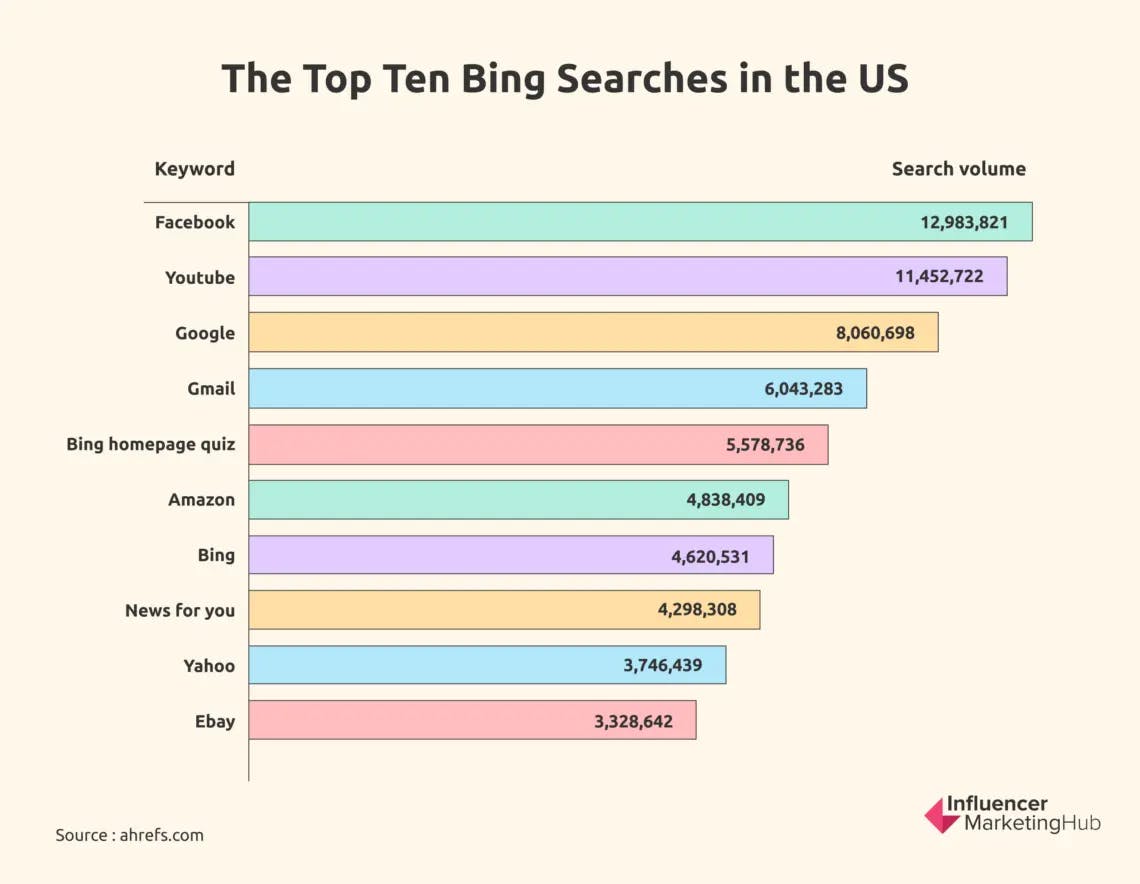
In the last public snapshot of this data (Ahrefs, January 2021), Facebook was #1 in the US with 12.9M monthly searches and YouTube was #2 with 11.5M. Five years on, YouTube sits at 63.3M and Facebook at 24.8M. Both grew, because Bing usage grew, but YouTube grew almost 6x while Facebook roughly doubled.
The takeaway is not about Facebook losing relevance. It is about how default behavior on Microsoft devices has changed. YouTube is the default search bar for “play me something,” and Bing is the address bar that gets you there.
2. AI tools now eat almost a tenth of the top 100
Add up “chat gpt” (#6, 18.7M), “chatgpt” (#7, 11.9M), “copilot” (#43, 2.65M), “gemini” (#50, 2.12M), “claude ai” (#83, 1.18M), “claude.ai” (#84, 1.18M), and you get about 38 million monthly Bing searches for AI tools in the US alone. That is roughly 8% of the top 100 going to a category that did not exist in 2021.
Two things are remarkable here. First, the #1 way people land on ChatGPT from Bing is not via Bing’s own AI integration, it is by typing the brand name into the search bar. Second, Microsoft Copilot, which is built on top of Bing and ships by default in Windows 11 and Edge, still gets 2.65M searches a month, meaning a meaningful chunk of users do not know they can already invoke it.
For SEO, this matters because each of those brand searches is a moment where a competitor (or your brand) can show up next to the result. AI-tool comparison content is one of the highest-intent topics on Bing right now.
3. People still use Bing to find Google. A lot more than before.
“Google” gets 44.2 million Bing searches in the US per month. Add “google.com” (3.4M), “google search” (1.4M), and “chrome” plus “google chrome” (4.1M combined), and you arrive at roughly 53 million people every month using Microsoft’s search engine to find Google’s. In 2021 the figure was around 8 million. The total has grown more than 6x.
The simple reading is that more people are on Edge by default and more people are typing “google” instead of using a bookmark. The deeper reading is that the search bar in Edge (and the Windows taskbar) is now the primary muscle memory for a lot of users, and the destination they want to reach is still Google. SEO that ranks in the US for “google” alternatives, comparisons, or migration content has a captive Bing audience.
4. Branded and navigational queries dominate the list
Looking through the 100, fewer than ten queries are pure information (“weather,” “calculator,” “news,” “translate,” “wordle”). The rest are brands or login pages. The pattern is the same as in 2021, only larger in absolute terms.
This is a reminder of where Bing fits in a buyer’s day. It is rarely the first stop for research. It is the address bar for the things people already know they want to open. If you are publishing on Bing, optimizing brand-name queries and comparison terms (“X vs Y,” “X alternatives,” “X login issues”) will outperform top-of-funnel education by a wide margin.
5. The Windows quirk now belongs to Windows 11
The 2021 list had two oddly specific Windows 10 queries near the top, both produced by accidental F1 presses. They are gone. In their place sits a single new entry, “how to get help in windows 11” (#18, 5.0M). The mechanism is the same, the operating system is current, and the fact that it sits ahead of Instagram and Netflix should remind you that a small fraction of “search volume” is genuine intent.
If you produce help content for Microsoft software, this is still useful traffic. Just calibrate your conversion expectations down, because most of these searchers were trying to do something else when they tripped the function key.
6. Browser games have become a Bing usage category
Wordle (#23, 3.85M), Roblox (#24, 3.82M), Solitaire (#98, 1M), and Connections (just outside the top 100 at 845K) are all browser-based games or game launchers. Together they are larger than any single news outlet on the list. People open Edge, type the game name, and play. Bing is the launchpad.
This is the kind of behavior that is invisible in industry SEO conversations and obvious in the data. If your audience uses desktop computers at work, the games sitting beside their Bing search bar are part of their daily browsing.
Why Bing matters more than its market share suggests
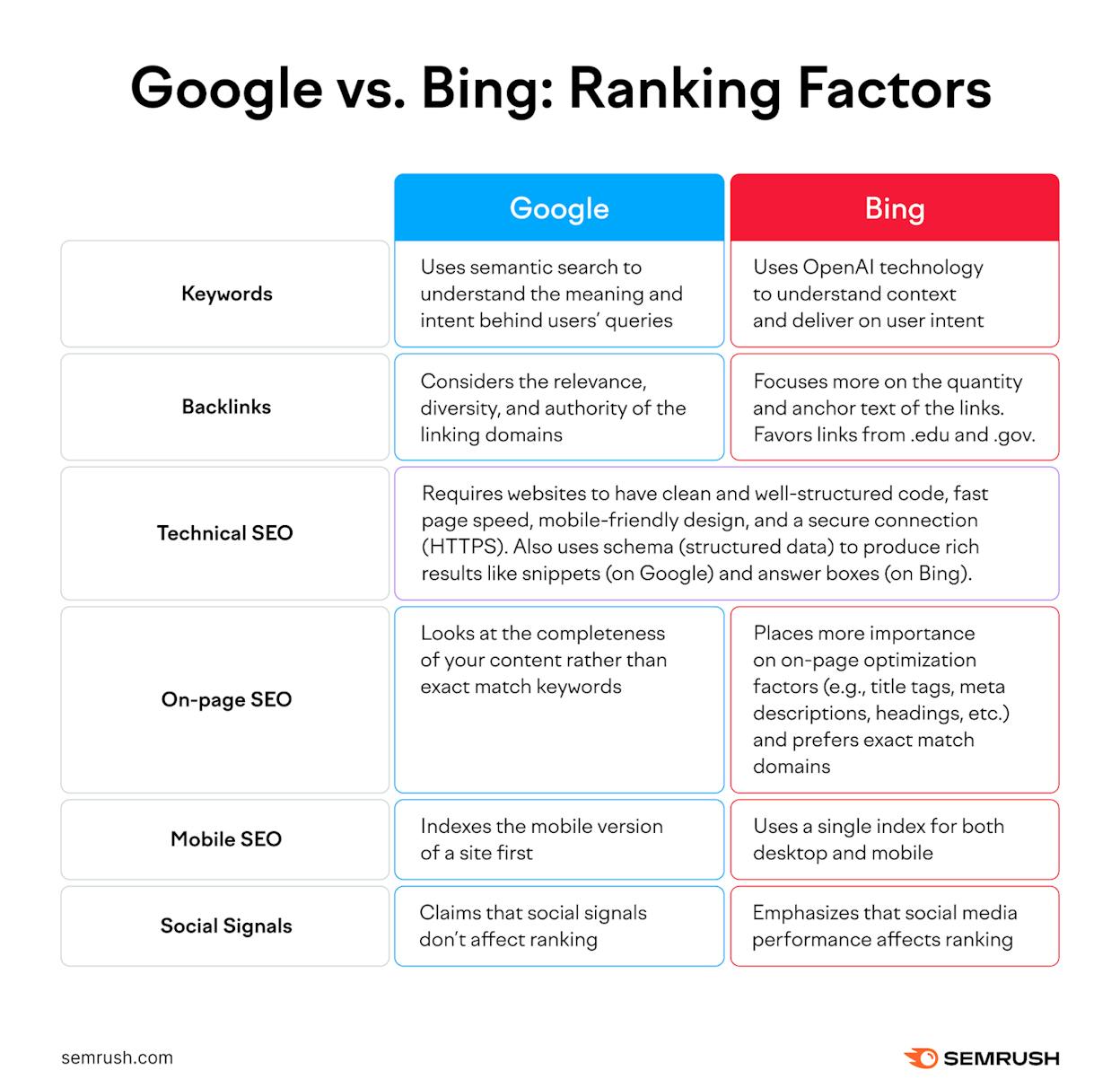
Bing’s overall US share is around 10.5% across all devices, the highest it has ever been according to StatCounter data covering desktop, mobile, and tablet. On desktop alone in the US, Bing now sits closer to 17.6% per Statista’s tracking. Worldwide, Bing’s share is roughly 4.4%.
Three structural shifts explain why those numbers understate the opportunity.
First, Microsoft Copilot is the default in Windows 11 and Edge, which means Bing benefits from every Copilot search query. The same source estimates Bing’s ad revenue grew 18% YoY in 2025 thanks to that integration.
Second, Yahoo Search runs on Bing’s index. Together they account for around 14-16% of US desktop search referrals. If you rank on Bing, you also rank in Yahoo results.
Third, around 34% of Bing users do not know they are using Bing because they search via the Windows taskbar or the Edge address bar. That audience is real, it converts, and it is invisible if you are only watching Google Search Console.
For most teams the question is not “should I optimize for Bing instead of Google.” It is “given that I already optimize for Google, what is the marginal effort to capture the audience hiding in the other 10 to 17% of US desktop searches, plus the AI traffic now flowing through Copilot.” That is usually a small lift on existing pages.
How to research Bing keywords for a piece you are writing
Bing-specific keyword data used to be scarce. The free Bing Keyword Tool from Analyze AI returns volume and competition for any seed keyword, scoped to Bing rather than Google. Use it the same way you would any keyword tool, with three small adjustments.
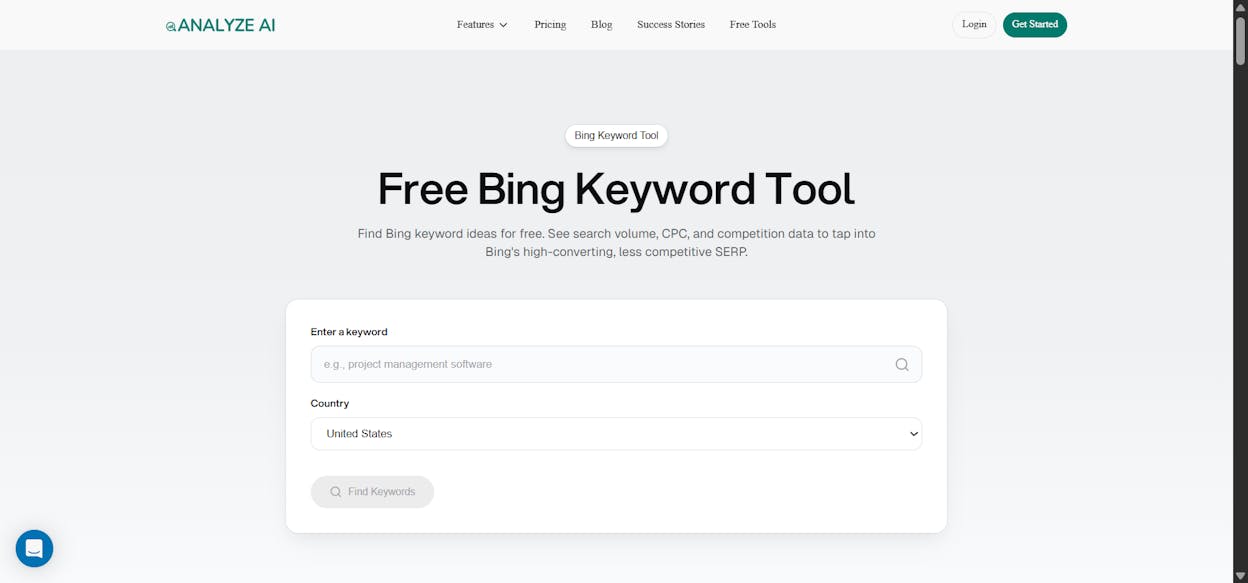
1. Seed with brands and modifiers, not topics. As the top 100 shows, Bing intent skews navigational and branded. If you are writing about CRM software, start with “Salesforce alternatives,” “HubSpot login issues,” “Pipedrive vs Salesforce,” not “how to choose a CRM.” You will surface real Bing demand instead of replicating your Google list.
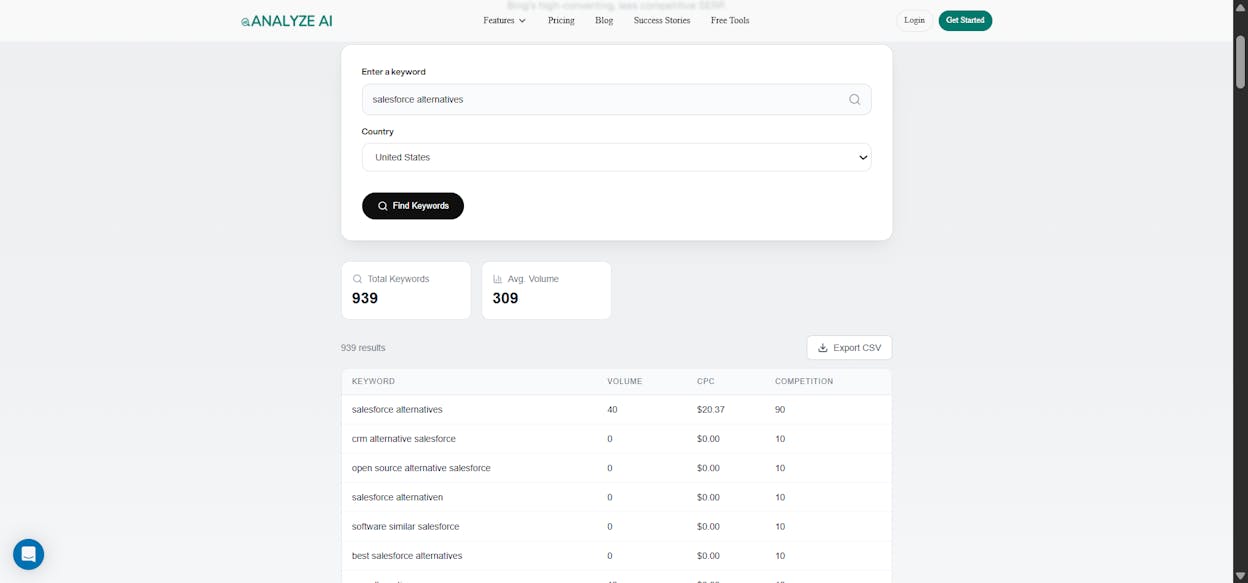
2. Cross-check the SERP before you commit. Bing’s results often surface different pages than Google for the same query. Run the keyword through Analyze AI’s free SERP Checker and pick the engine that matches your target. If the top three results on Bing are forum threads or login pages, the query is navigational and a blog post will not rank.
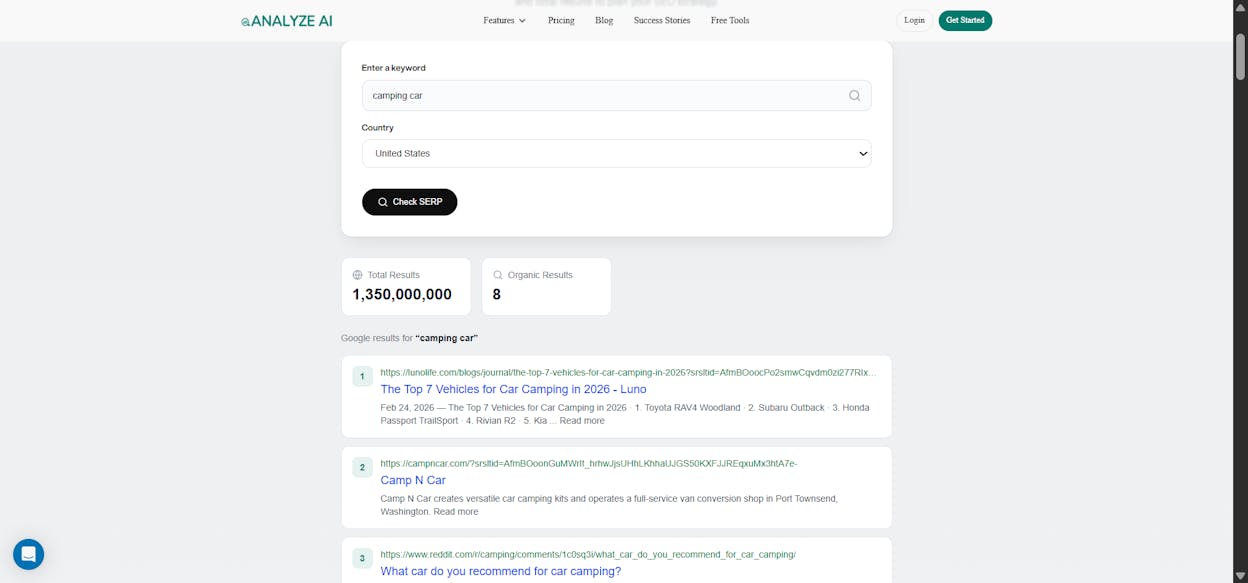
3. Track your rank on the keyword you target. Once published, monitor it with the Keyword Rank Checker on a Bing scope, not just Google. Bing pages tend to climb faster than Google pages on lower-competition queries because the index is smaller and update cycles are tighter (6 to 24 hours for newly submitted pages).
For the broader keyword research workflow, see our guides on how to find new keywords and SEO keywords.
How to research what people ask AI engines (the layer above Bing)
A list of top Bing queries tells you what people type into a search bar. It does not tell you what those same people type into Copilot, ChatGPT, Perplexity, Claude, or Gemini once they have arrived. The queries are different, longer, and increasingly the place where buyers shortlist vendors.
This is where Analyze AI’s Prompt Discovery comes in. You give it a topic or your domain, and it surfaces the prompts your target audience is actually asking AI models, with the brands that show up in each answer.
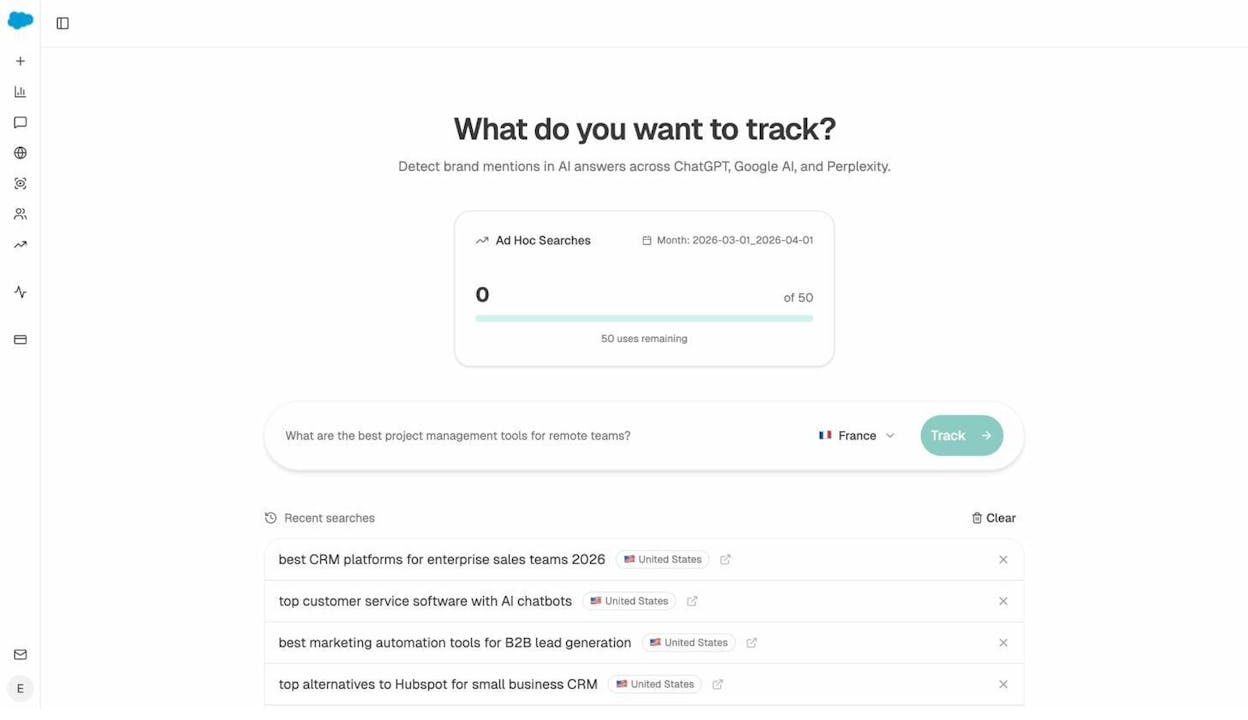
Once you have a set of prompts worth tracking, move them into Prompt Tracking. Analyze AI will run those prompts on a recurring schedule across ChatGPT, Google AI, Perplexity, Copilot, and Gemini, and report your visibility, sentiment, and average position in each answer.
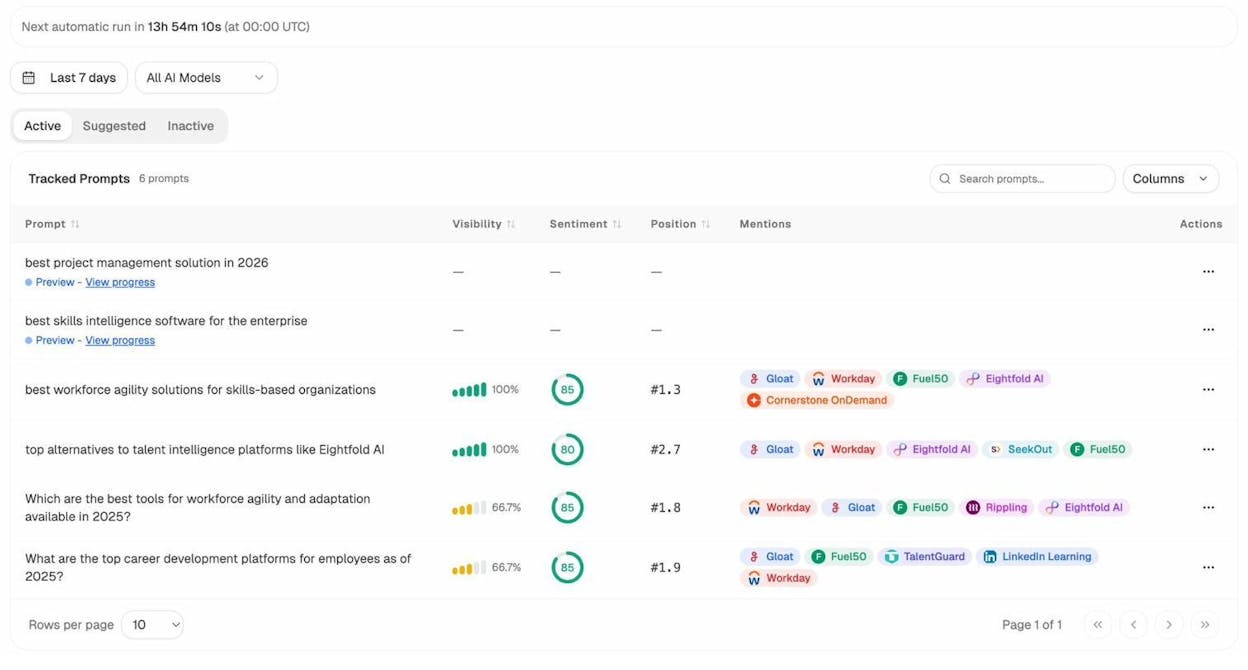
What this gives you that a Bing keyword list cannot is the demand-side picture for AI search. You see, for example, that “best workforce agility solutions for skills-based organizations” returns five competitors in the answer and your brand is missing, with a 100% visibility score for those five. That is a gap you can close with content, the same way you would close a Google ranking gap.
The next layer is traffic. AI engines now drive measurable referral traffic to most sites. The AI Traffic Analytics view in Analyze AI breaks visitors down by source (chatgpt.com, claude.ai, copilot.microsoft.com, gemini.google.com, perplexity.ai, and so on), with engagement, bounce rate, and conversions per source.
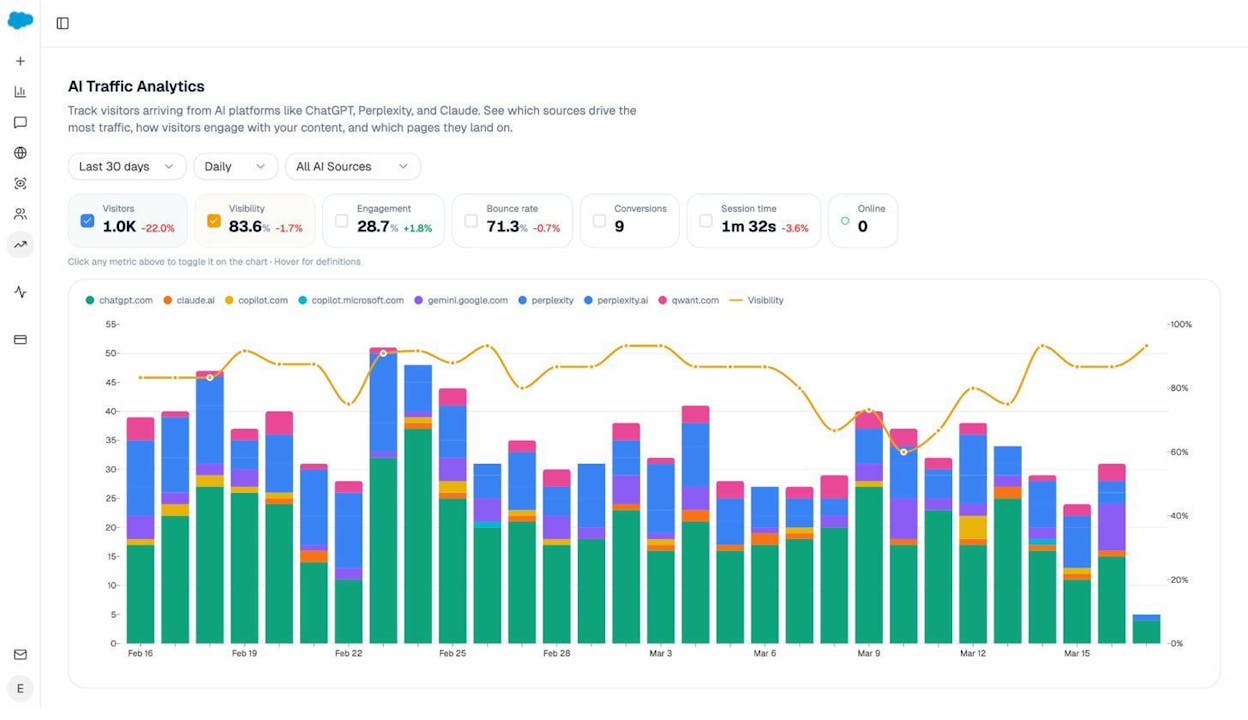
Notice the copilot.microsoft.com source in the chart above. That is Bing’s AI surface in disguise. A page that ranks well on Bing for a relevant query has a meaningfully higher chance of being cited by Copilot when a user asks a related question, which is part of why Bing optimization compounds with AI search optimization.
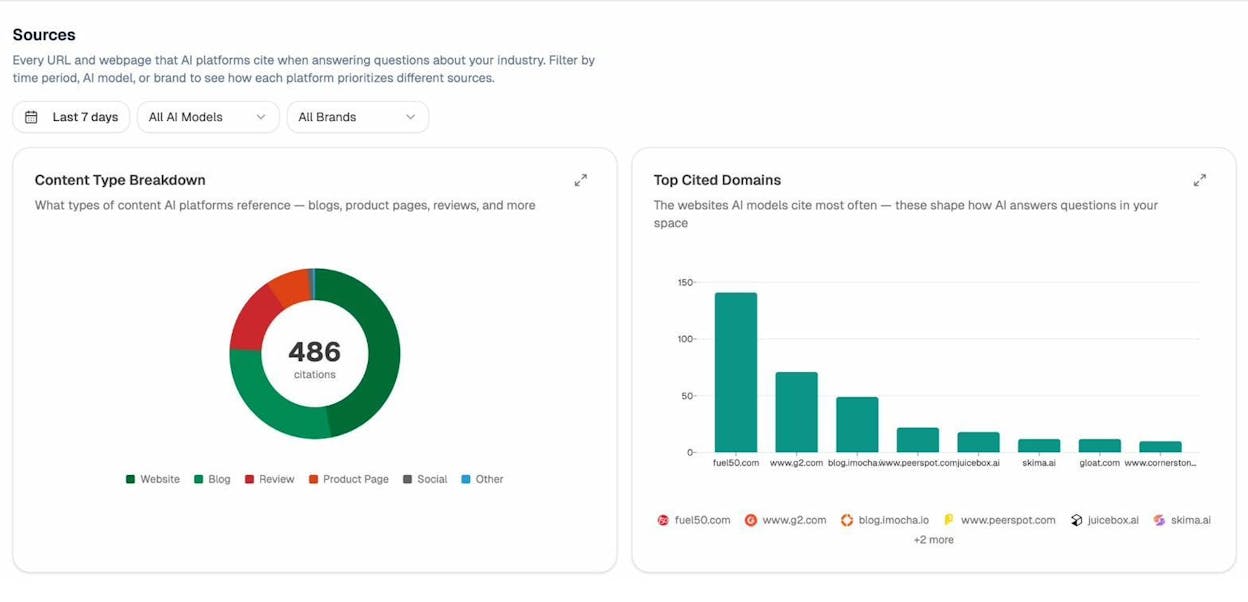
To complete the loop, the Sources view shows you the URLs AI models cite when answering prompts in your category. If your competitor is being cited by ChatGPT for a query you care about, you now know the exact page to outrank, both on Bing and inside the AI answer.
The workflow that ties it all together is straightforward.
-
Run keyword research for Bing with the Bing Keyword Tool and traditional SEO tools.
-
Run prompt research for AI engines with Analyze AI’s Prompt Discovery.
-
Publish content that satisfies both, with clear answers in the first 200 words for AI engines and depth in the rest for Bing rankings.
-
Track Bing rank on the keyword and AI visibility on the matching prompts.
-
When AI Traffic Analytics shows a page is pulling visitors from Copilot, double down on that page format for the next round.
For the wider strategy on how SEO and AI search work together, see GEO vs SEO, the 4 pillars of an effective SEO strategy for AI search, and our piece on how to get mentioned in AI search based on 65,000 citation data points.
A note on the data
The volumes above come from DataForSEO’s Bing search-volume endpoint, queried on May 7, 2026, using April 2026 monthly data. Worldwide volumes are the sum of Bing search volumes across the US, UK, Canada, Australia, and India, which together account for the large majority of English Bing searches. They are not a true global figure and they do not include Bing’s significant non-English markets (notably China, where Bing holds an unusually large share for a Western engine).
The candidate keyword list was seeded with the top 250 most-searched terms from the public Bing data of the past five years, plus modern entrants (AI tool brands, current product names, recent platforms). If a query is missing from the top 100, it most likely did not make the candidate set. Send a note to [email protected] if you spot a gap and we will add it to the next refresh.
What to do with this list
The honest answer is that for most B2B brands, Bing is a marginal channel and AI engines are the larger emerging opportunity. The two compound. A page that ranks on Bing has a higher chance of being cited by Copilot, and pages that get cited by AI engines tend to also rank well on Bing because both reward the same things (clear topical authority, structured answers, fresh content).
The play is not to chase Bing for its own sake. It is to add Bing to your existing SEO checklist, watch how it correlates with the citations you start earning in AI answers, and let the two channels reinforce each other. The data above gives you a starting map of what people are actually doing inside Bing today. The Analyze AI workflow gives you the matching map for AI engines.
If you want to keep this view current for your own brand, set up a free account and start tracking the prompts and Bing keywords that matter for your category. That is what your competitors who care about AI search are already doing.

Ernest

Ibrahim


