



Summarize this blog post with:


In this article, you’ll learn what actually makes AI engines cite one brand over another, backed by data from 83,670 citations we tracked across ChatGPT, Claude, and Perplexity. You’ll get the specific content formats, page structures, and brand signals that earn mentions. And you’ll walk away with a repeatable process for tracking and improving your AI visibility over time.
Here’s what the data reveals.
Table of Contents
AI Engines Don’t Agree on Which Brands to Recommend
The first thing you need to understand is that ChatGPT, Claude, and Perplexity are not interchangeable. Each engine pulls from different sources, favors different content types, and produces different sentiment about the same brand.
Our analysis of 83,670 citations found major differences:
|
Signal |
ChatGPT |
Claude |
Perplexity |
|---|---|---|---|
|
Wikipedia citation rate |
12.1% |
0.1% |
0.0% |
|
LinkedIn citation rate |
4.1% |
0.0% |
0.0% |
|
Blog content share |
16.7% |
43.8% |
36.8% |
|
Product page share |
60.1% |
10.5% |
54.3% |
|
First-party citation rate |
13.5% |
22.2% |
17.0% |
|
Citations per brand mention |
0.98 |
1.05 |
1.26 |
The same brand can receive a sentiment score 79 points apart depending on which engine you ask. One engine might rate your brand at 79 out of 100 while another rates it at zero.
This means a single strategy won’t work across all engines. You need to understand which engines your audience uses and tailor your approach to each one.
External research backs this up. AirOps’ 2026 State of AI Search report found that only 30% of brands stay visible across back-to-back answers. And brands that earn both a mention and a citation are 40% more likely to reappear in consecutive runs.
So how do you make sure your brand is the one that gets picked?
Build Structured Pages That AI Models Can Parse and Cite
Out of 7,950 citations we analyzed in our earlier study, 130 of the top 150 most-cited URLs were structured list-style pages. Not blog posts. Not thought leadership essays. Comparison guides, product rankings, and vendor roundups.
CNET’s product comparison page received 99 citations. Zapier’s tool roundup earned 91. Thinkific’s “best platforms” article received 92.
AI engines favor these formats because they mirror how models generate answers. When someone asks “What are the best CRM tools?”, the model looks for content that already organizes the answer the way it wants to present it. That means a ranked list, short summaries per item, and clear brand names.
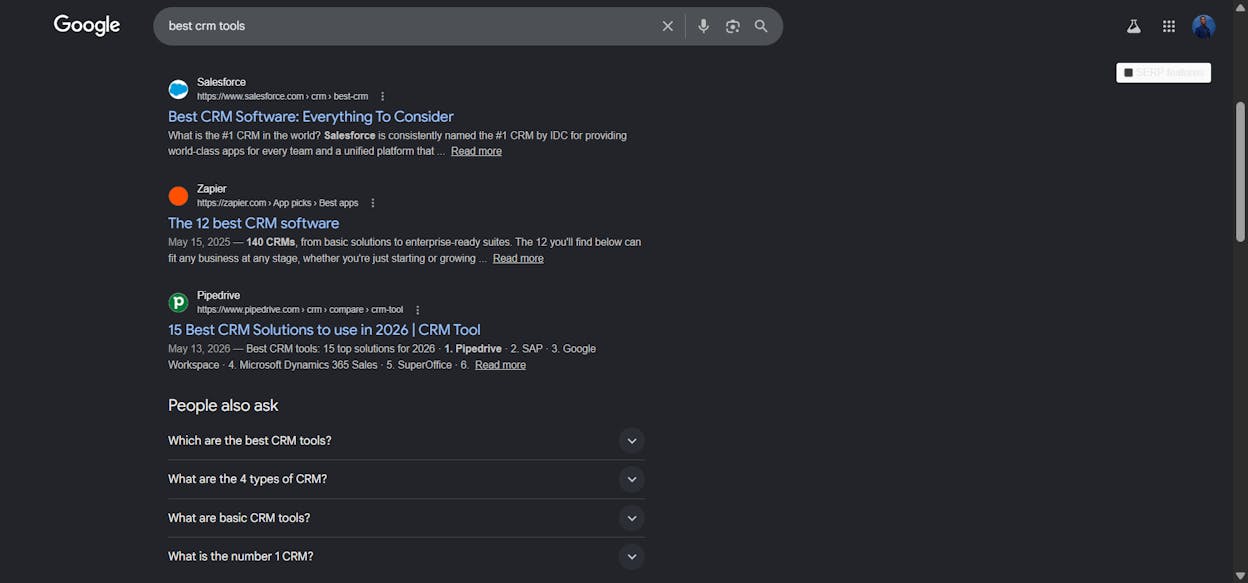
What to do:
Write pages titled with specific decision queries like “Best X for Y.” Use headings that segment each tool. Include tables or bullets that break down features. Mention brand names by name, every time. Don’t bury the comparison in a narrative paragraph. Treat every section as a standalone unit that could be quoted directly.
This also applies to your own product pages. According to the same data, product pages earn 15.4 citations per row on average, while standard blogs earn just 4.3. Product pages structured for decision-making outperform editorial content by nearly 4x in generative engine optimization.
Cover Your Entire Category to Earn More Citations
The domains with the broadest topic coverage in our dataset also ranked highest in total citations. Reddit appeared under 41 different search terms. Wikipedia appeared under 38. LinkedIn under 36. YouTube under 33.
This isn’t about publishing volume. It’s about semantic surface area. AI engines learn which domains reliably cover a topic across many angles. A single strong article on “best project management software” won’t cut it. You need ten articles covering project management for enterprise, startups, healthcare, compliance, integrations, and pricing.
This breadth compounds. Wikipedia, Forbes, and Reddit ranked in the top five for both search term breadth and total citation volume. Their advantage wasn’t just quality. It was coverage.
What to do:
Build content hubs around your primary queries and expand outward. Write supporting content by buyer type, use case, geography, and industry vertical. Add “vs” pages and alternative listicles. Make sure your internal linking reflects semantic proximity, not funnel stage.
How to Find Coverage Gaps With AI Search Data
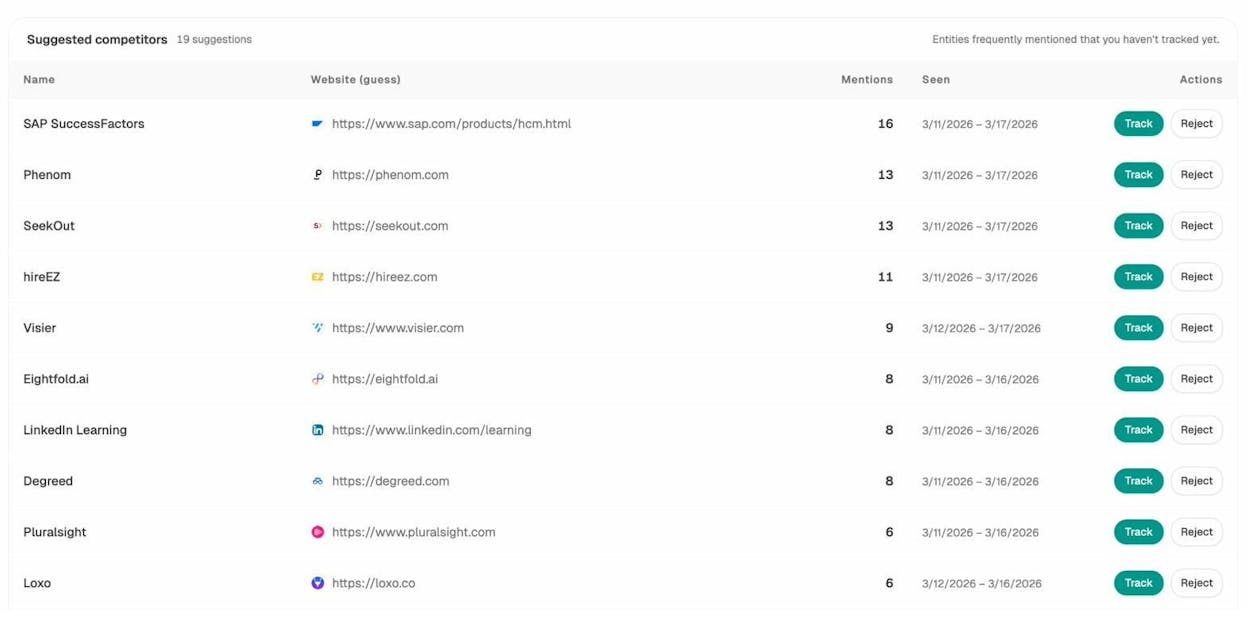
Traditional SEO tools show you which keywords you rank for in Google. They don’t show you which prompts AI engines use to surface your competitors but not you.
In Analyze AI, the Competitor Intelligence dashboard shows you exactly where competitors get mentioned and your brand does not. You can filter by AI engine, time range, and prompt category to find the specific gaps in your coverage.
The Prompt Discovery feature takes this further by surfacing the actual prompts users ask that relate to your category. These aren’t keyword suggestions. They’re real prompts from real AI search sessions where your brand could appear but doesn’t.
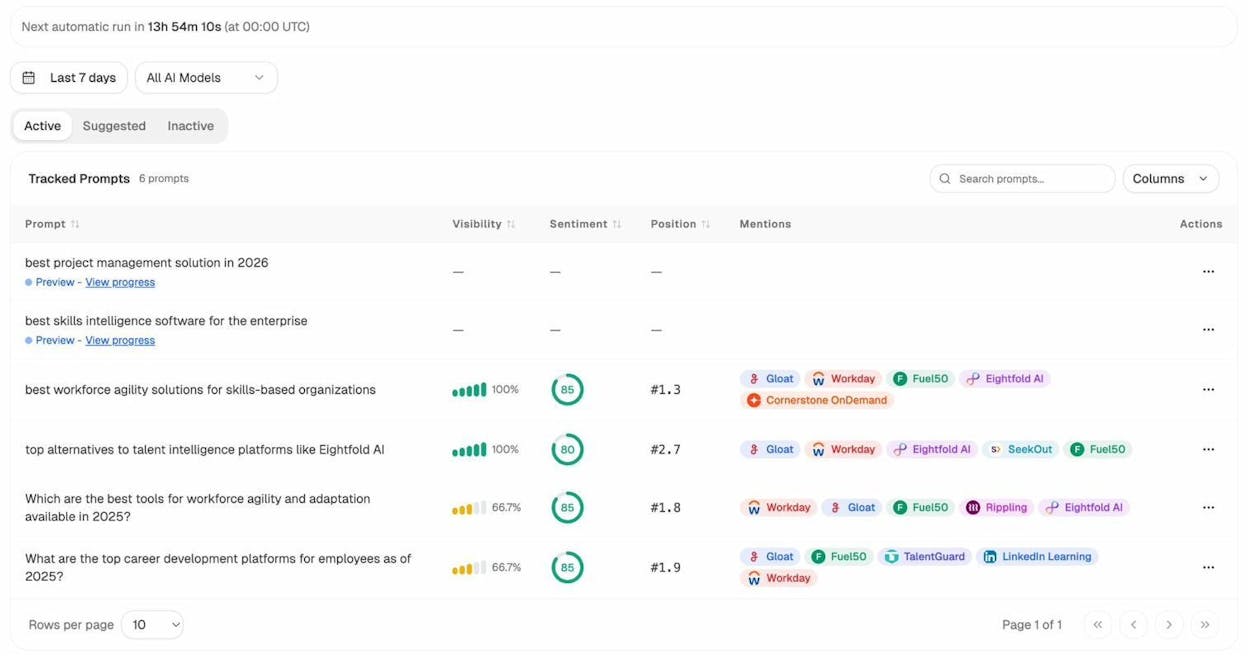
Use these two tools together to build a content calendar that fills the exact gaps AI engines are already serving to your audience.
Target a Top 3 Position or Accept That You Won’t Be Seen
In AI search, visibility drops sharply after position three. Our data shows that first-ranked content has an average visibility score of 88.0. Second place drops to 79.1. By fifth position, it falls to 53.6.
Most AI engines generate answers from just two or three sources. Anything below that threshold rarely appears, especially in zero-click experiences where users never scroll through citations. There is no long tail in AI search.
Research from Superlines’ 2026 analysis of 60+ AI search statistics confirms this concentration. The top 10 domains capture 46% of all ChatGPT citations in a given topic. If you’re not in that top cluster, you’re competing for scraps.
What to do:
Audit high-intent keywords where existing content is thin, outdated, or poorly structured. Prioritize formats with a clear answer shape. Include real data, examples, and visual structure that LLMs can process. Benchmark your pages against the current top three for structural quality and topical coverage.
Track Your Ranking Position Across AI Engines
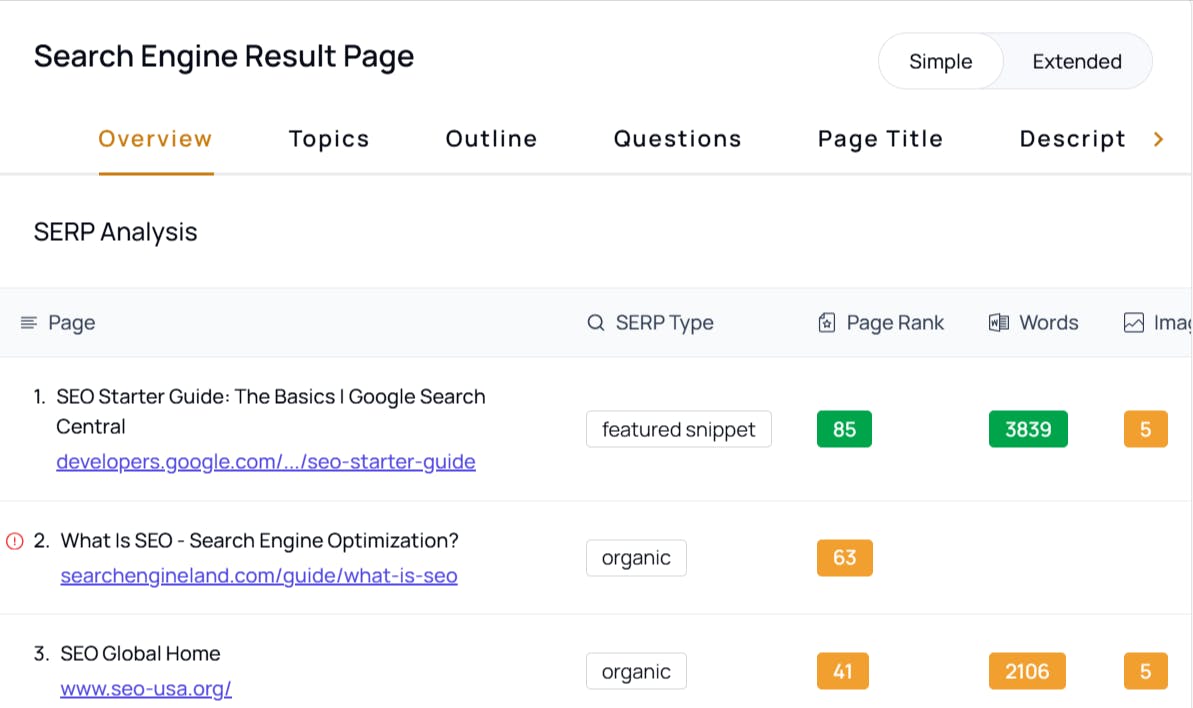
In traditional SEO, you can check your Google rank in seconds. In AI search, your “rank” changes with every prompt run. You need continuous tracking.
Analyze AI’s Prompt Tracking monitors your brand’s position across ChatGPT, Claude, Perplexity, Gemini, and Copilot over time. You can see exactly which prompts mention your brand, where you rank within each response, and how that position shifts week over week.
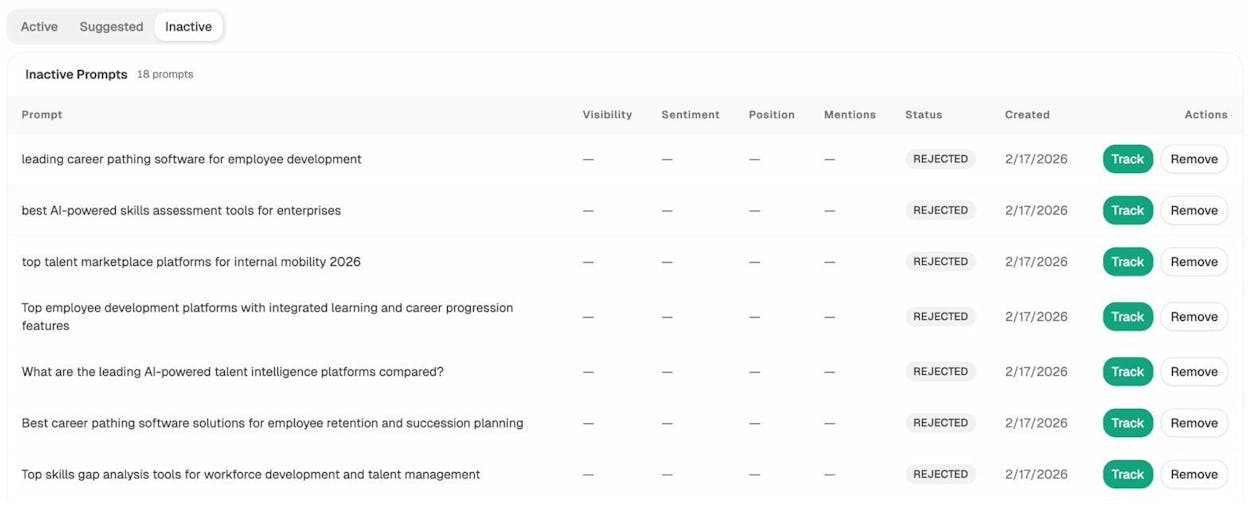
This replaces the manual process of typing prompts into ChatGPT one by one and hoping the answer stays the same next week. It doesn’t. Our data shows brand visibility can decline 35.9% in just five weeks.
Make Your Brand Name Explicit for Retrieval
One of the more subtle patterns in our data is that content with explicit brand mentions consistently outranks content with generic references. Citations that included specific brand names in Rank 1 position averaged visibility scores above 60, while vague references fell below that threshold.
LLMs are trained on text patterns and statistical associations. When you write “this platform” instead of your brand name, you add friction to the model’s retrieval process. The clearer and more repeatable your brand reference, the easier it is for the model to remember, retrieve, and reuse that information.
What to do:
Use your brand name consistently in list items, headers, tables, and product callouts. Don’t substitute pronouns after the first mention. Repeat the name where clarity matters. When referencing customers, use specific names and roles, not abstractions.
This matters for content about your competitors too. When writing comparison content, always use specific brand names on both sides. “Analyze AI vs HubSpot AI Search Grader” is much more retrievable than “our platform vs a competitor.”
Out-Expert Wikipedia on Commercial Queries
Wikipedia was the second most frequently appearing domain in our dataset, cited in over 1,300 rows across 38 unique search terms. But when we isolated commercial queries, Wikipedia got outranked by expert sources like CNET, Zapier, and Investopedia.
For informational queries like “What is CRM?”, Wikipedia often appears by default. But when a prompt requires a recommendation, a comparison, or an opinion, AI engines replace Wikipedia with sources that demonstrate category expertise.
This lines up with what E-E-A-T principles have always rewarded. You don’t need to out-neutral Wikipedia. You need to out-expert it.
What to do:
Lead with credentials. Use customer data, benchmarks, or third-party validation. Compare alternatives with commentary, not just feature lists. Start with specificity and build into depth. An opinion backed by evidence is what models want to cite for commercial queries.
Design Every Page for Machine Readability
Among the highest-performing cited content in our dataset, we observed consistent use of clear heading hierarchies, bullet lists and tables, consistent brand references, and minimal visual clutter.
LLMs work by recognizing structure. When your page presents information with reliable schema markup, semantic HTML, and consistent formatting, models can confidently parse, quote, and summarize it. Pages that bury key points in dense paragraphs, use tabs or accordions, or render content with JavaScript fail to surface, not because the content is bad, but because the model can’t navigate it.
What to implement:
Use semantic HTML to mark up headers, lists, and tables. Place product names and key takeaways in predictable locations. Add schema.org markup for articles, reviews, and FAQs. Avoid dynamic content that requires JavaScript to reveal key information.
Recent data supports the importance of structure. Analysis from Cyrus Shepard’s 2026 study of AI citation ranking factors found that URL accessibility, query-answer match, and intent-format match showed the strongest correlation with being cited.
Also worth noting is that 44.2% of all LLM citations come from the first 30% of a page’s text. Front-load your key claims and brand positioning in the introduction, not at the end.
Earn Authority Off-Site (83% of Citations Come From Third Parties)
Our data found that 82.9% of all AI citations come from third-party sources. Only 17.1% come from the brand’s own website. This is nearly identical to Muck Rack’s December 2025 finding that 82% of AI citations come from earned media.
AirOps’ 2026 report went further, finding that 85% of brand mentions in AI discovery come from external domains and that 48% of citations come from community platforms like Reddit and YouTube.
This means you can’t just optimize your own site. You need other reputable sources talking about your brand, consistently and accurately.
What to do:
Get featured in industry publications and review sites that AI engines cite. Build presence on Reddit, LinkedIn (for ChatGPT), and community forums where your audience asks questions. Monitor what third parties say about you and correct inaccuracies. Focus on digital PR that earns contextual brand mentions, not just backlinks.
Track Your Citations and Their Sources
Knowing that 83% of your AI citations come from third parties is useful. Knowing which specific third-party pages cite you, and which ones cite your competitors instead, is actionable.
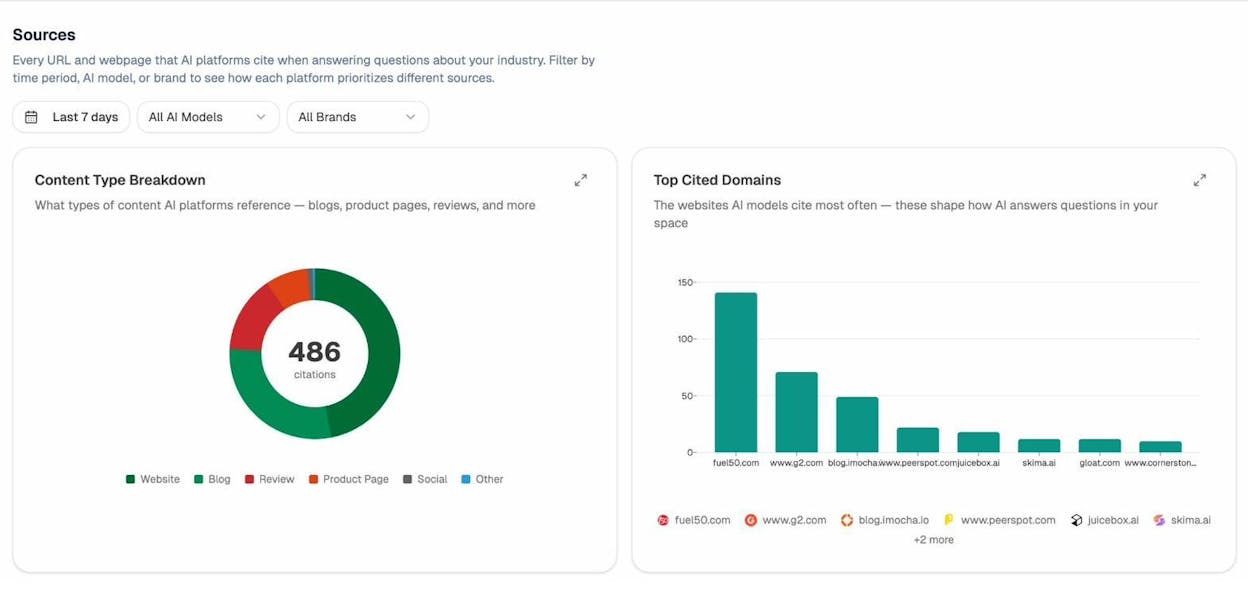
Analyze AI’s Citation Analytics shows you every URL that AI engines cite when mentioning your brand, broken down by engine and time period. You can see which sources drive the most citations and which sources cite your competitors but not you.
The AI Traffic Analytics feature connects the other side of the equation. It shows you which of your pages receive traffic from AI engines, how visitors from AI search behave compared to organic visitors, and which landing pages convert.
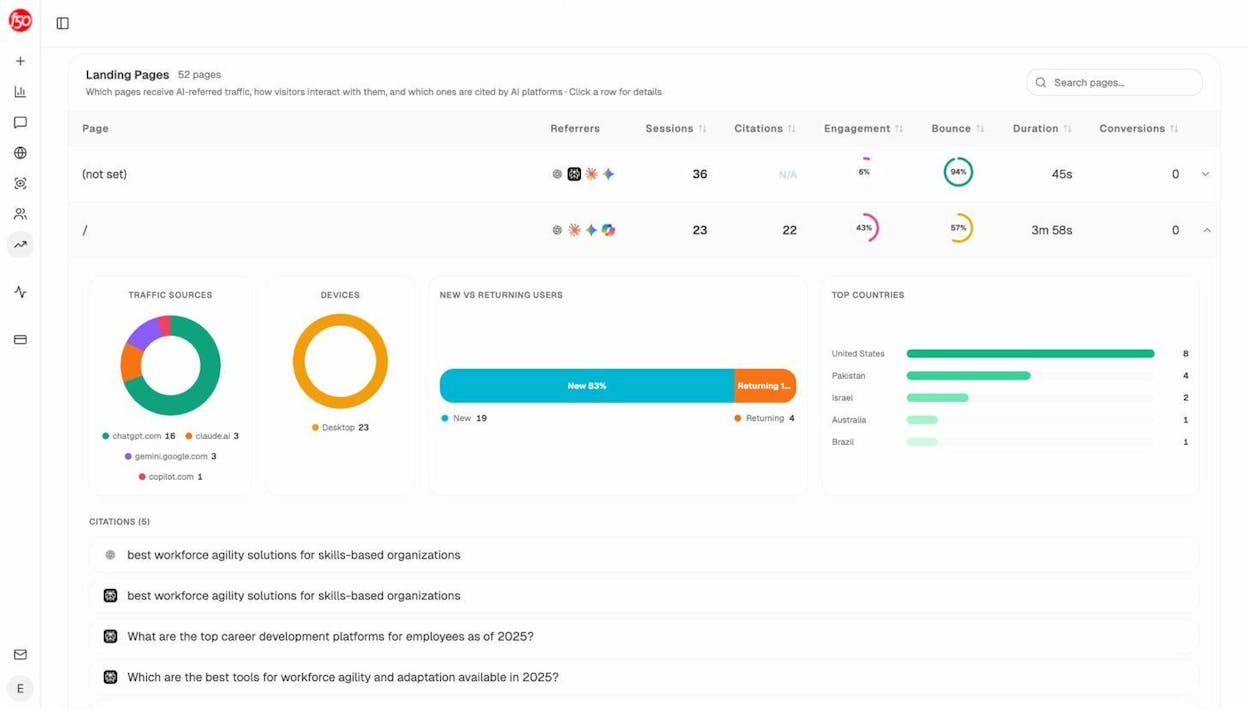
This closes the loop between visibility and revenue. You can see which citations drive traffic, which traffic converts, and where to invest next.
Measure, Monitor, and Automate Your AI Visibility
Everything in this article is actionable. But the real question is whether you can track if it’s working.
Manual checking doesn’t work. AI answers change with every prompt run. You can’t type 50 prompts into ChatGPT each Monday and call it monitoring.
You need a system that tracks your AI visibility continuously across every engine, alerts you when competitors overtake you, and gives you the data to decide what content to create next.
What to Track
|
Metric |
What it tells you |
Where to check |
|---|---|---|
|
Mention rate |
How often AI names your brand |
|
|
Citation rate |
How often AI links to your pages |
|
|
Sentiment score |
How positively AI describes you |
|
|
Competitor share of voice |
Your visibility vs. competitors |
|
|
AI referral traffic |
Sessions from AI engines |
|
|
Engine breakdown |
Performance by ChatGPT, Claude, etc. |
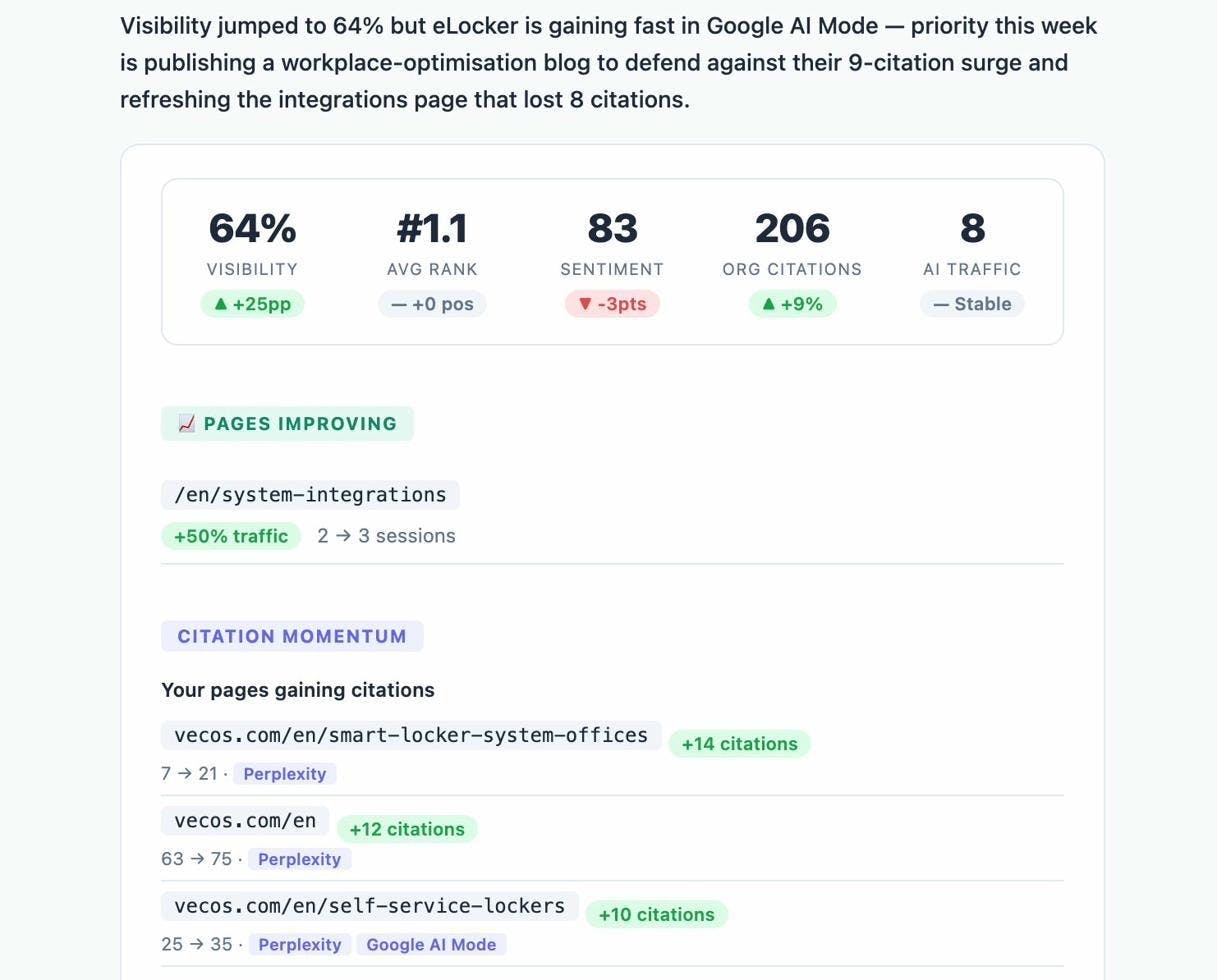
Analyze AI’s weekly email digests deliver this data automatically. Every week, your team gets a summary of visibility shifts, new competitor threats, and citation changes, without anyone logging in to check.
Automate the Entire Workflow With Agents
Tracking is step one. Acting on the data is step two. Most teams drop off here because the gap between “we lost 3 citation positions” and “here’s what content to publish” requires too many manual steps.
This is where the Analyze AI Agent Builder changes the math. It’s not just an automation layer. It’s a programmable substrate with 180+ nodes, 34 pre-built data recipes, and direct integrations with GA4, Google Search Console, DataForSEO, Semrush, HubSpot, Notion, WordPress, Slack, and every major LLM.
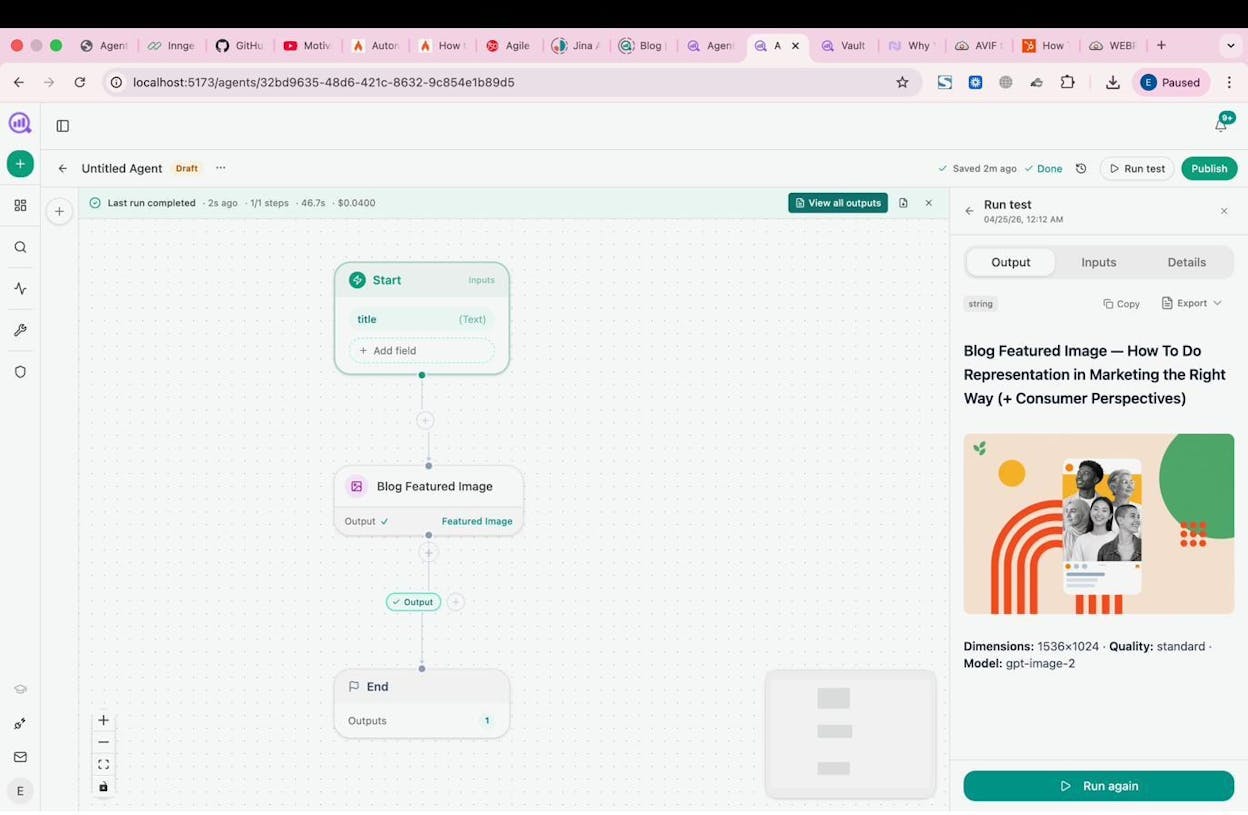
Here are three agent workflows that directly support the strategies in this article:
Daily visibility regression alert. A scheduled agent runs every morning, checks for prompts where your visibility dropped, and posts the results to Slack with a draft content brief for each gap. Your team wakes up to the problem and the solution.
AEO opportunity finder. A weekly agent pulls the URLs that cite your competitors but not you, crosses them with your keyword opportunities, and generates a prioritized list of content to create. The research that takes an analyst 4 hours happens automatically.
Brief-to-publish pipeline. When a content brief moves to “approved” in Notion, a webhook-triggered agent generates research, builds an outline, writes a full draft with brand voice injected from your Knowledge Base, scores it against AEO criteria, and if it passes, publishes directly to WordPress. If the score is too low, it sends the gaps to Slack for the writer to fix.
These aren’t hypothetical. They’re built from the same data recipes that power Analyze AI’s Content Writer and Content Optimizer, which means every piece of content produced aligns with the citation patterns we’ve identified in our research.
AI Search Is a New Organic Channel, Not a Replacement
One final point. This article is about getting mentioned in AI search, but that doesn’t mean traditional SEO is dead. At Analyze AI, we believe the opposite.
Benji Hyam of Grow and Convert analyzed 400+ high-intent keywords where their clients ranked on page one and found they were mentioned 67% of the time in ChatGPT and 77% in Perplexity. There’s a strong correlation between ranking high in Google and being cited by AI engines.
AI search is an additional organic channel alongside traditional SEO. The brands that win are the ones that optimize for both, track both, and use the data from each to improve the other.
You can run an AI visibility audit right now using Analyze AI to see where you stand, or check out our complete SEO and AI visibility checklist for a full action plan.

Ernest

Ibrahim


![50 GEO Statistics From Tracking 83,670 AI Citations [2026 Data]](/_next/image?url=https%3A%2F%2Fwww.datocms-assets.com%2F164164%2F1779314907-blobid0.png&w=3840&q=75)


