



Summarize this blog post with:


Healthcare is one of the hardest places to rank. The keywords are owned by international brands with decades of link equity, your content is held to a higher editorial standard than almost any other industry, and your business is often tied to a specific city. AI assistants now sit between your patients and your homepage, summarizing answers before anyone clicks.
In this article, you’ll learn how to grow a healthcare website with search, even when you’re competing against the Mayo Clinic, the NHS, and WebMD. You’ll also see how to extend that work into AI search, where patients now ask ChatGPT, Perplexity, Claude, and Google AI Mode the same questions they used to type into Google.
Table of Contents
The unique challenges of healthcare SEO
Most SEO advice still applies. You need useful content, clean technical foundations, and links from sites people trust. Healthcare adds a layer of constraints most industries don’t face.
|
Challenge |
What it means in practice |
|---|---|
|
Dominant national brands |
A handful of sites (Healthline, WebMD, Cleveland Clinic, NHS, Mayo Clinic) own most of the top three positions |
|
Local-only service area |
A clinic in Manchester does not benefit from ranking for searches in Manhattan |
|
YMYL content rules |
Google holds medical content to a higher quality bar under its Your Money or Your Life guidelines |
|
Regulation around marketing |
HIPAA, GDPR, MHRA, FDA, and country-specific bodies restrict how you talk about treatments and reviews |
|
Multiple audiences in one funnel |
Patients, referring clinicians, payers, and partners all search for different things |
Each of the strategies below works around one or more of these constraints.
1. Get your content medically reviewed and make EEAT visible on the page
Most medical topics fall under YMYL, where Google explicitly looks for experience, expertise, authoritativeness, and trust (EEAT). The same signals carry over to AI search. When ChatGPT and Perplexity decide which page to cite, they lean on the same author and publisher signals Google does.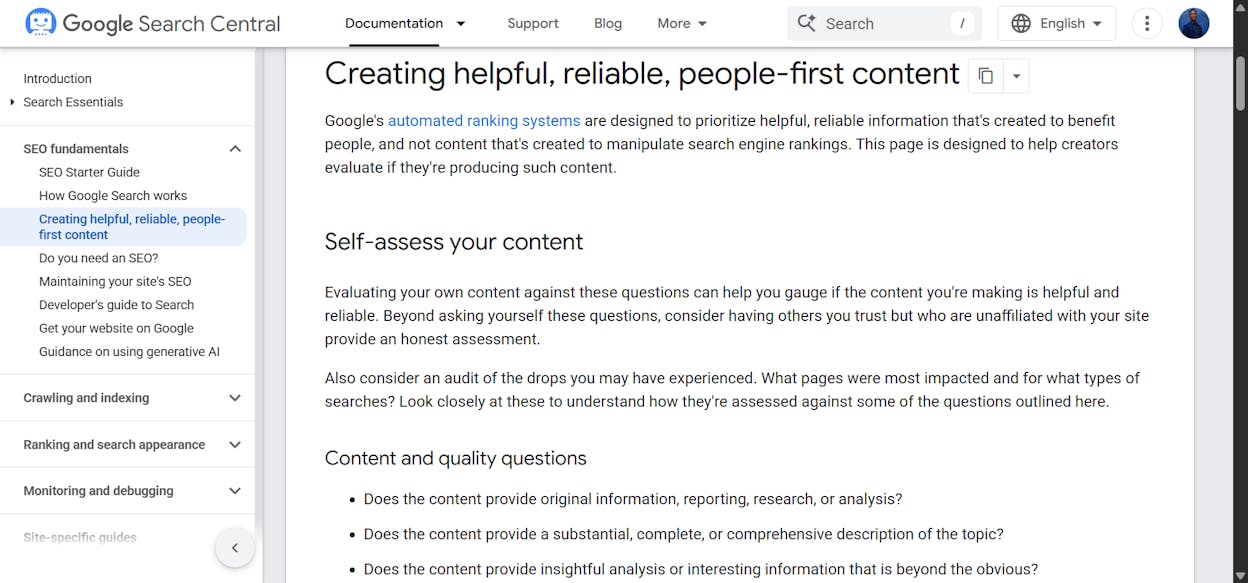
Look at any treatment SERP and the pattern is clear. Healthline, Cleveland Clinic, WebMD, and Mayo Clinic all show the writer plus a medical reviewer at the top of the article, often with a “medically reviewed” badge linking to editorial standards.
![[Screenshot of a Healthline article header showing “Medically reviewed by Dr. X, MD” with date]](https://www.datocms-assets.com/164164/1778179231-blobid2.png?auto=format,compress&w=1248&fit=max)
You don’t need a doctor to write every article. You need a doctor (or registered nurse, pharmacist, dietitian, or physical therapist depending on the topic) to review it.
-
Common-knowledge topics like what is a tension headache or how much water should I drink can be drafted by a trained writer using cited medical sources, then reviewed.
-
Cutting-edge topics like GLP-1s for PCOS or new treatments for triple-negative breast cancer should be drafted by a specialist medical writer or clinician, then reviewed by a second expert.
For sourcing reviewers, hire in-house if your business already employs clinicians, or use freelancers from Upwork, MedWriters, or Doximity. Always confirm a freelance reviewer’s indemnity insurance covers content review, because in most countries a byline puts a clinician’s license on the line.
Once an article is reviewed, make it obvious:
-
Show the reviewer’s photo, full name, qualifications, and area of speciality on every article
-
Link to a dedicated reviewer profile page with their full credentials
-
Add Person and MedicalWebPage schema so Google can read the credentials in code
![[Screenshot of an article showing a clear “Reviewed by Dr. Jane Smith, MD - Cardiologist” block with photo and link to bio]](https://www.datocms-assets.com/164164/1778179234-blobid3.png?auto=format,compress&w=1248&fit=max)
How EEAT shows up in AI search
AI assistants don’t show medical reviewer badges, but they prefer pages that look authoritative. Pages with clear authorship, medical review, and outbound citations to peer-reviewed sources get cited more often.
Analyze AI’s Sources dashboard shows which pages and domains AI engines cite for the questions your patients ask.
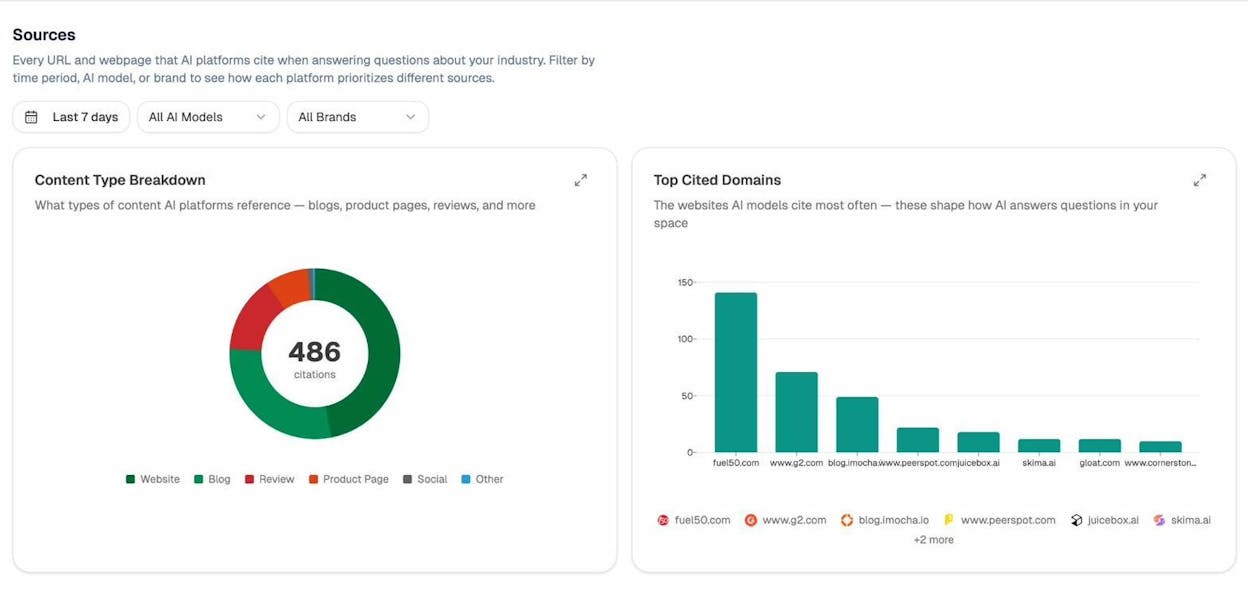
The breakdown above shows what kinds of pages get cited and which domains AI models trust most. For a clinic, this tells you whether your reviewed articles are getting picked up, or whether competitors are pulling all the citations.
2. Target low-competition keywords before challenging the giants
Every healthcare SEO runs into the same wall. The head terms (headache, back pain, anxiety) are owned by a handful of DR 90+ sites with decades of link equity. You will not outrank Healthline for what is a migraine. You can outrank them for the long-tail variants Healthline never bothered to cover well.
Start with a seed term and expand it.
Step 1. Run your seed term through the Analyze AI Keyword Difficulty Checker to confirm whether the head term is realistic.
![[Screenshot of keyword difficulty result for a head term like “back pain” showing high difficulty]](https://www.datocms-assets.com/164164/1778179255-blobid5.png?auto=format,compress&w=1248&fit=max)
Step 2. Generate variations. Plug the same seed into the Keyword Generator Tool and Google Autocomplete. Look for the modifiers patients add naturally (home remedies for, symptoms of, how long does, can I, is it safe to, cost of, near me).
![[Screenshot of Google Autocomplete for “lower back pain” showing dropdown variants]](https://www.datocms-assets.com/164164/1778179258-blobid6.png?auto=format,compress&w=1248&fit=max)
Step 3. Filter for intent and difficulty. Set difficulty under 30 and volume above 50. You’re looking for the unsexy, specific questions that 200 patients a month type into Google.
Step 4. Validate with the SERP. Use the SERP Checker to see who currently ranks. If positions one through three are forums, low-DR independent blogs, or thin content, that’s your opening.
![[Screenshot of SERP results for a long-tail term like “how long does sciatica last after physiotherapy” showing forum and small-site results]](https://www.datocms-assets.com/164164/1778179263-blobid7.png?auto=format,compress&w=1248&fit=max)
Step 5. Group keywords into clusters. How long does sciatica last, when should I see a doctor for sciatica, and can sciatica heal on its own can sit inside one well-structured page rather than three thin ones.
For a deeper walkthrough, our guide on SEO keywords covers the process in detail.
Finding the AI search version of those long-tail keywords
Patients don’t only type into Google anymore. Many type the full question into ChatGPT or Perplexity. The phrasing tends to be longer and more conversational than a Google query.
Analyze AI’s Prompt Discovery surfaces the exact prompts patients are running about your speciality, then tracks whether your content gets cited when those prompts are answered.
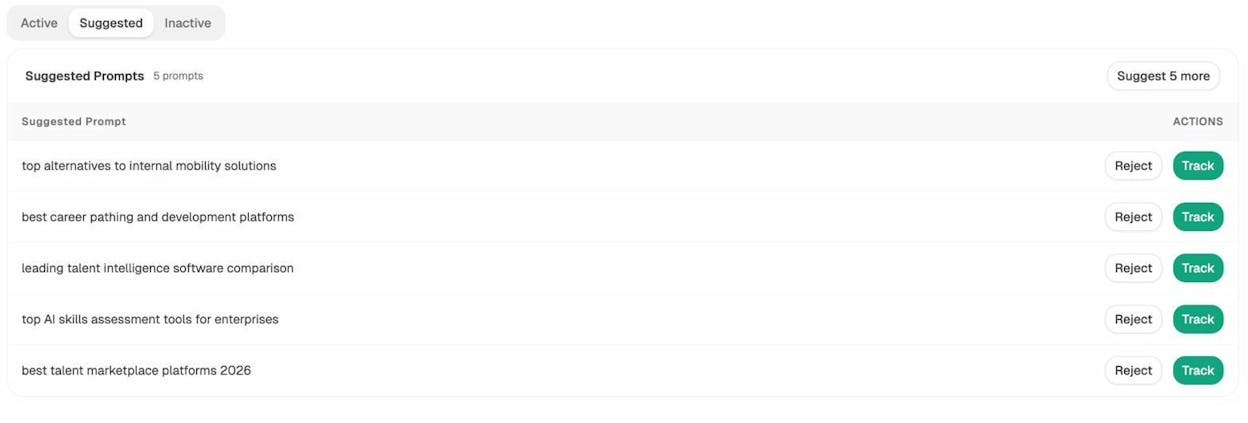
The prompts above are suggested based on category data. For a hip surgery practice, you would see things like best surgeons for hip replacement in [city], recovery timeline after hip replacement, and alternatives to hip replacement surgery. Each one is a candidate for both an article and a tracked prompt.
3. Build topic clusters around the patient journey
|
Healthcare is unusually well suited to topic clusters. Every condition follows roughly the same patient journey, which produces a predictable set of questions you can answer with a hub-and-spoke set of articles. |
Stage |
What patients are searching for |
|---|---|---|
|
Awareness |
What is wrong with me |
symptoms of hip arthritis, why does my hip hurt at night |
|
Diagnosis |
Should I see a doctor |
do I need a hip replacement, hip arthritis tests |
|
Decision |
Which option, which provider |
types of hip replacement, best hip surgeon in [city] |
|
Preparation |
What happens during |
how long is hip replacement surgery, anesthesia for hip surgery |
|
Recovery |
What to expect after |
6 weeks after hip replacement, when can I drive after hip replacement |
|
Long-term |
Living with the outcome |
how long does a hip replacement last, exercise after hip replacement |
For each condition, build one pillar page (the procedure overview) and a cluster of supporting articles, one per stage. Internal-link every spoke back to the pillar and across to relevant siblings. Our guide on SEO internal linking covers the link patterns that matter most.
Run the condition through a keyword tool, pull every related question, and sort the questions into the six stages. You’ll typically end up with 30 to 80 article ideas per condition, which is enough to dominate a niche if you publish consistently.
How clusters work in AI search
AI engines reward depth on a topic. When ChatGPT or Perplexity decides whether to cite your site, it favours domains that have answered many related questions, not just one. The cluster you built for SEO doubles as your AI search foothold.
Pull the same six-stage list into Analyze AI’s Prompt Tracking and watch which stages your content already wins and which it loses. Most clinics rank well for awareness queries and lose every decision-stage prompt to a directory or a competitor. That gap is exactly where to publish next.
4. Build links by showcasing research, community work, and clinician credentials
Off-page SEO in healthcare is rarely the cold-outreach grind it is in other industries. Most healthcare organizations sit on a stack of natural link assets they’ve never used.
Five sources that work for almost every healthcare business:
-
Conference talks. If your clinicians present at industry events, ask the organizers for a link from the speaker page. Conference sites often carry .org or .edu authority.
-
Government directories. Many countries maintain official directories of registered providers (myagedcare.gov.au, NHS service directories, state medical board listings). Make sure you’re listed.
-
Charity and patient advocacy partnerships. Volunteering, sponsoring, or running screening days usually earns a mention and a link from the partner site.
-
Research publications. If your team co-authors papers, link the publication back to the author’s profile on your site.
-
University and teaching hospital collaborations. These tend to produce .edu links that are hard to earn any other way.
Run a quick audit using the Website Authority Checker on your domain and three to five competitors. The links your competitors have that you don’t are usually the easiest to replicate, because the link target is already proven to give links to companies like yours.
The Broken Link Checker finds dead links pointing at competitors or outdated resources. Offer your equivalent page as a replacement, which works particularly well on charity and association sites that haven’t been audited in years.
5. Optimize for local SEO with Google Business Profile, NAP citations, and location pages
Most healthcare businesses are local. A clinic, surgery, or hospital pulls patients from a defined catchment, and SEO needs to reflect that. Three pieces of work matter most.
Optimize your Google Business Profile
Claim and complete your Google Business Profile (formerly Google My Business). The map pack at the top of local SERPs uses this data heavily, and it is the single biggest local SEO lever for most clinics.
![[Screenshot of a Google Business Profile setup screen for a medical practice with all fields filled in]](https://www.datocms-assets.com/164164/1778179272-blobid9.png?auto=format,compress&w=1248&fit=max)
Be specific with your category (orthopedic surgeon outperforms surgeon outperforms doctor). Add photos of the building, waiting room, team, and equipment. Set accurate hours including holiday closures. Upload your services using Google’s structured services field.
Reviews matter more than almost any other local ranking factor, but healthcare has rules. In the US, HIPAA prevents you from confirming or denying that someone was a patient in a public reply. In the UK, the GMC and CQC have their own guidance. The safe pattern is to ask all patients in writing at point of discharge, never tie the request to a specific service, and respond to negative reviews with a generic offer to discuss offline.
Build NAP citations and submit to healthcare directories
NAP stands for Name, Address, Phone. Citations are mentions of your NAP on third-party sites that confirm your business exists at the address you claim.
Start with the data aggregators that feed most directory sites (Data Axle, Localeze, Foursquare). Then add the major consumer directories (Yelp, Bing Places, Apple Maps, Facebook). Finally, claim your listing on every healthcare-specific directory in your country:
-
US: Healthgrades, Vitals, Zocdoc, RateMDs, US News Doctors
-
UK: Doctify, Top Doctors, IWantGreatCare, Care Quality Commission
-
Australia: HealthEngine, Healthshare
-
Canada: RateMDs, College of Physicians directories
Keep the NAP identical across every listing. A single typo in the suite number on one directory can cost you ranking in the local pack.
Build dedicated location and service pages
If you serve more than one location, build one page per location and one page per major service. Generic contact us pages are not enough. The structure that works:
-
URL like yoursite.com/services/[service]/[location]
-
Title tag like [Service] in [Location] | [Brand]
-
H1 matching the title
-
Above the fold address, phone, hours, booking CTA, photo of the actual location
-
Body services offered at that site, the clinicians based there, parking and transit details
-
Bottom social proof, structured data, internal links to related services and other locations
Embed a map and link to the matching profile.
6. Implement medical schema markup
Schema markup is structured data that helps search engines (and increasingly AI engines) understand what your page is about. Healthcare has its own vocabulary on Schema.org, and using it well unlocks rich results that generic schema can’t.
The schema types worth using:
|
Schema type |
Use it for |
|---|---|
|
Physician |
Individual doctor profile pages |
|
Hospital |
Hospital and clinic location pages |
|
MedicalClinic |
Outpatient clinics and specialist practices |
|
MedicalCondition |
Pages explaining a specific condition |
|
MedicalWebPage |
Any educational article on a medical topic |
|
Drug |
Pages about specific medications |
|
MedicalProcedure |
Pages about treatments and surgeries |
![[Screenshot of Google’s Rich Results Test showing a MedicalWebPage schema validating cleanly on a treatment article]](https://www.datocms-assets.com/164164/1778179272-blobid10.png?auto=format,compress&w=1248&fit=max)
Mark up author and reviewer with Person schema and link them to the MedicalWebPage using the reviewedBy and author properties. This is one of the few places where the difference between saying an article was reviewed and proving it in code matters for ranking. Test every implementation in Google’s Rich Results Test before pushing live, because broken schema can suppress rich-result eligibility across the whole site.
7. Track and improve your visibility in AI search
Most healthcare queries now trigger an AI Overview, an AI Mode answer, or are typed directly into ChatGPT and Perplexity. Patients researching symptoms, treatments, and providers often never reach the blue links anymore. If your only measurement layer is Google Search Console, you’re flying half-blind.
The work splits into three jobs.
Track which prompts your category gets asked. Pull the long-tail keywords you built for SEO into a prompt-tracking system. Run them daily against ChatGPT, Claude, Perplexity, Gemini, and Google AI Mode. Track visibility, position, and sentiment.
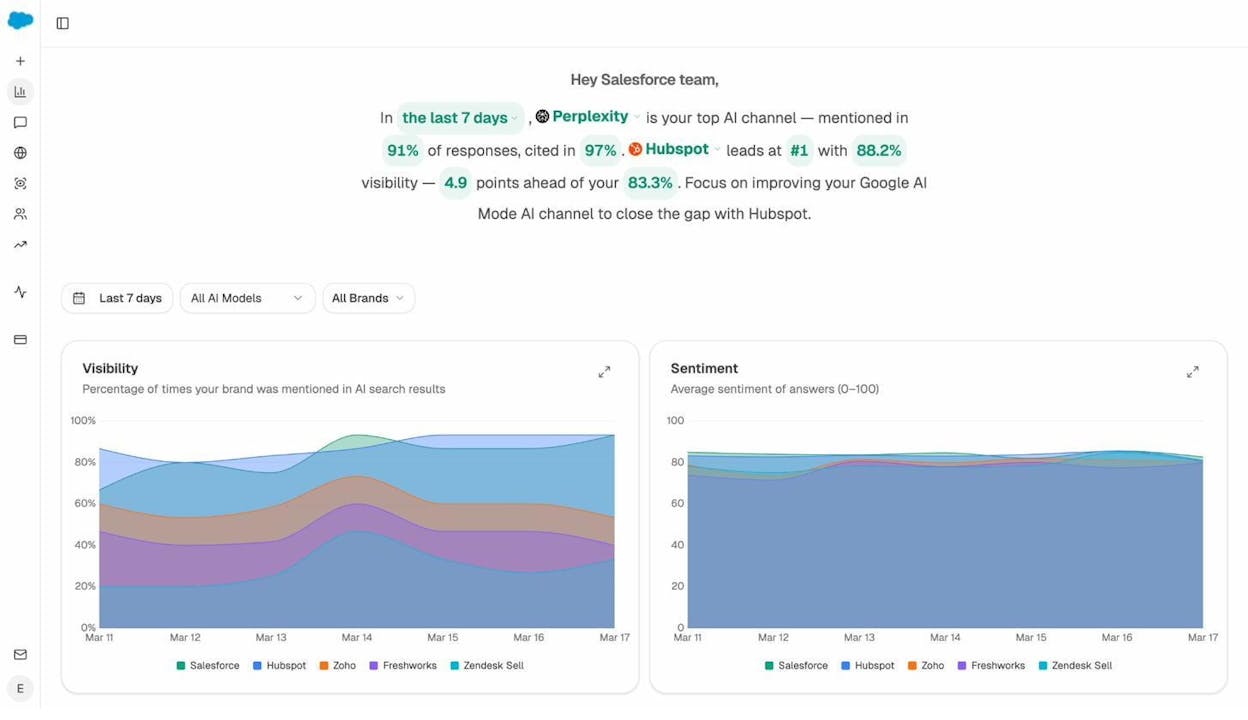
The summary above tells you which AI channel is your strongest, where competitors are pulling ahead, and which engines need attention this week.
Understand how AI describes you versus competitors. A clinic can be highly visible and still lose patients if the model describes its competitors as more specialised, more affordable, or more trusted. The Perception Map plots brands by visibility against narrative strength.
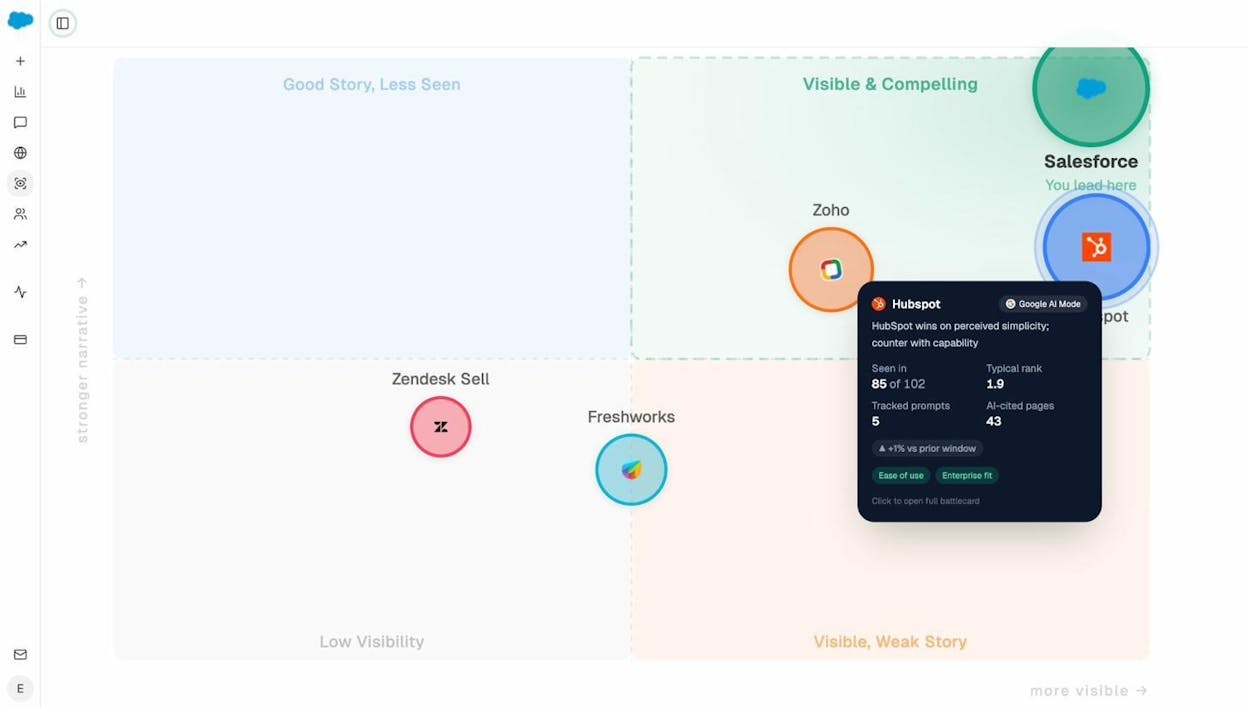
If you land in Visible, Weak Story, the work is editorial. If you land in Good Story, Less Seen, the work is distribution and links.
Measure the AI traffic that reaches your site. Some AI users do click through, and those visitors land deeper in the funnel and convert at higher rates because they’ve already had part of their question answered.
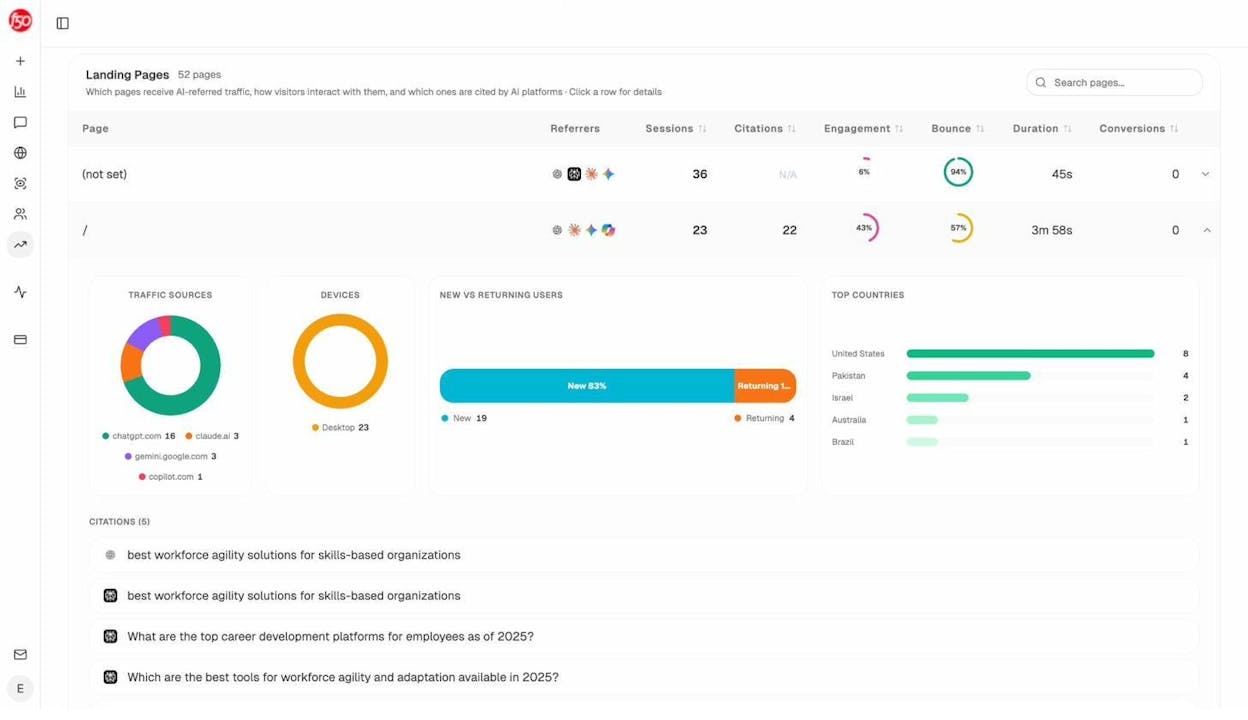
Looking at which landing pages pull AI traffic tells you which content patterns work. Two or three pages usually do most of the work, and the lesson is to publish more like them.
For the on-page work that follows, see our guides on how to rank on ChatGPT, how to rank on Perplexity, and answer engine optimization.
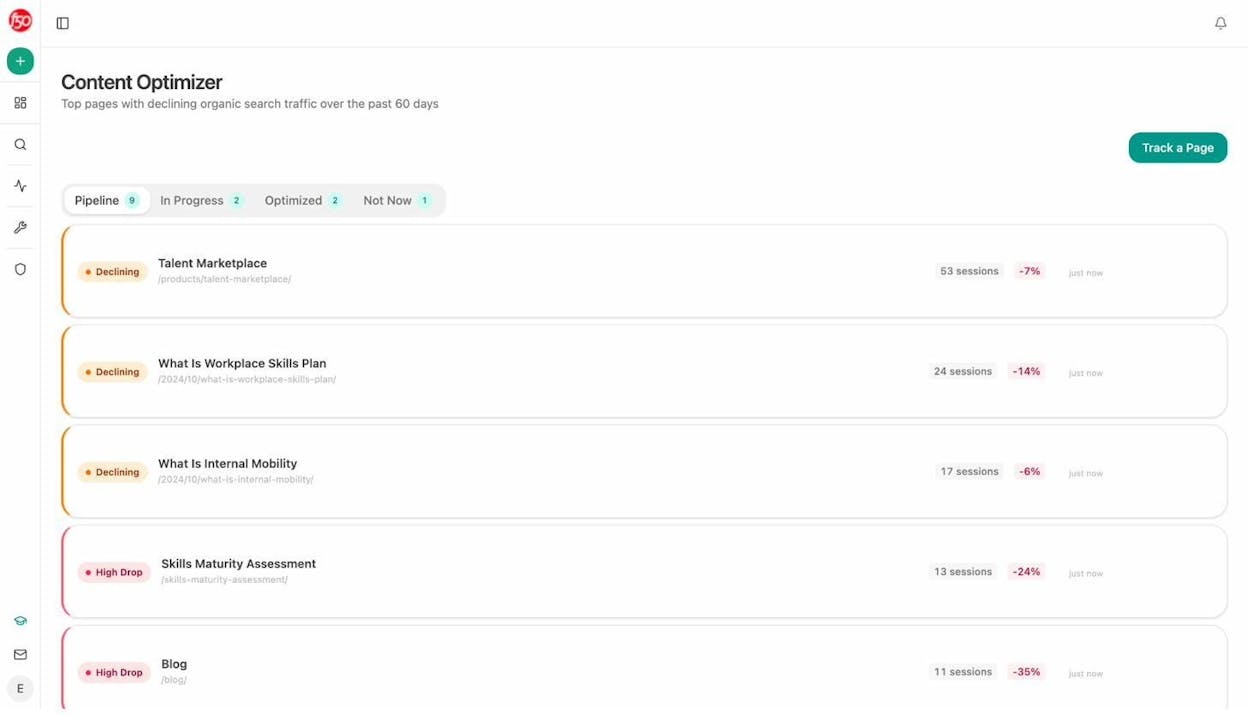
The Content Optimizer compares your existing pages against the ones AI engines actually cite for your target prompts and gives you a gap list to work through.
A note on certification and trust signals
Two extra trust signals are worth chasing if you publish a lot of medical content. The first is PIF TICK certification from the Patient Information Forum, the only independently assessed mark for both print and digital health information. The second is YouTube’s health source verification, which surfaces your video content in YouTube’s Health shelf and adds a verified banner. The criteria mirror Google’s EEAT signals. Neither is required. Both compound with the rest of the playbook.
Final thoughts
Healthcare SEO rewards organizations that take the editorial side seriously. The clinics and hospitals that win pair real medical review with disciplined keyword work, link building, and local SEO. The new layer is AI search. The same content that ranks in Google is what AI engines cite, and the same authors who build trust with patients build trust with the models reading those pages.
The fastest route in is to pick one condition you treat, build the patient-journey cluster for it, get every article reviewed and properly attributed, list yourself on every relevant directory, and start tracking the AI prompts patients are running about your speciality. Do that for one condition, and the playbook copies cleanly across your full service line.
If you want to start with the AI search piece, our 4 pillars of an effective SEO strategy for AI search covers how to layer this on top of your existing work.

Ernest

Ibrahim


