



Summarize this blog post with:


In this article, you’ll learn exactly how to become an affiliate marketer from scratch. You’ll learn how affiliate marketers make money, where to find programs worth joining, how to pick a profitable niche without drowning in competition, and which traffic channels give you the best shot at building recurring income. You’ll also learn something most affiliate guides skip entirely: how to use AI search engines like ChatGPT, Perplexity, and Gemini as a new traffic channel for your affiliate content.
Table of Contents
How Do Affiliate Marketers Make Money?
Affiliate marketing works like this: you promote someone else’s product using a unique tracking link. When a person clicks that link and buys the product, the company pays you a commission.
The commission amount depends on the program. Amazon Associates pays between 1% and 10% depending on the product category. Software companies often pay 20% to 50% recurring commissions because their margins are higher. Some programs pay flat fees per sale, like $100 for every customer you refer.
Most affiliate marketers promote their links through content. They write blog posts comparing products, film YouTube videos reviewing gear, or share recommendations on social media. The key word there is “content.” You are not cold-calling people or running a sales floor. You are creating helpful content that naturally leads to a purchase.
Here is a simple example. Someone searches Google for “best running shoes for flat feet.” They find your blog post that reviews five shoes, explains what to look for, and links to each shoe with your affiliate link. They click through, buy a pair, and you earn a commission.
![[Screenshot of a YouTube video with affiliate links in the description, showing a product review with purchase links below]](https://www.datocms-assets.com/164164/1777316398-blobid1.jpg?auto=format,compress&w=1248&fit=max)
The payment process is straightforward. Most affiliate programs pay monthly, after a short holding period to account for returns and fraud. The money goes directly to your bank account or PayPal.
But affiliate marketing is not limited to product reviews. You can place affiliate links in almost any content you create. A blog post about remote work tips can link to a VPN service. A video about starting a business can recommend accounting software. A podcast about fitness can mention supplement brands. The format does not matter as much as the relevance of the recommendation to your audience.
How affiliate commissions actually work
There are three main commission structures you will encounter:
Pay-per-sale is the most common. You earn a percentage or flat fee every time someone buys through your link. This is what Amazon Associates, most SaaS affiliate programs, and physical product programs use.
Pay-per-lead pays you when someone completes an action that is not a purchase. Think filling out a form, signing up for a free trial, or requesting a quote. Insurance and finance affiliate programs often use this model because their sales cycles are longer.
Pay-per-click is rare but still exists in some ad networks. You earn money simply for sending traffic to the advertiser’s site, regardless of whether the visitor buys anything.
|
Commission Model |
How You Get Paid |
Typical Payout |
Best For |
|---|---|---|---|
|
Pay-per-sale |
Visitor buys a product |
5%–50% of sale price |
Product reviews, comparisons |
|
Pay-per-lead |
Visitor fills out a form or signs up |
$1–$100 per lead |
Finance, insurance, B2B software |
|
Pay-per-click |
Visitor clicks your link |
$0.10–$3 per click |
High-traffic content sites |
|
Recurring commission |
Visitor stays subscribed |
20%–40% monthly |
SaaS and subscription products |
Recurring commissions deserve special attention. When you refer someone to a SaaS product that charges monthly, some programs pay you a commission every month the customer stays subscribed. Refer 100 customers paying $50/month with a 30% commission, and you earn $1,500 every month without doing additional work. That is how affiliate marketing becomes a source of passive income.
Where to Find Affiliate Programs
There are three main ways to find affiliate programs to join.
1. Browse affiliate networks
Affiliate networks are platforms that connect merchants (the companies selling products) with affiliates (you). They handle tracking, reporting, and payments so you do not have to manage relationships with each company individually.
Some of the most popular affiliate networks include:
-
ShareASale has thousands of merchants across every category, from fashion to software. You can browse by category, commission rate, and cookie duration.
![[Screenshot of ShareASale’s merchant category browser showing available programs]](https://www.datocms-assets.com/164164/1777316416-blobid2.png?auto=format,compress&w=1248&fit=max)
-
Commission Junction (CJ Affiliate) tends to attract bigger brands and offers detailed reporting.
-
Impact Radius is popular with SaaS companies and tech brands.
-
AvantLink is strong in outdoor, fitness, and lifestyle niches.
-
Awin is one of the largest global networks, especially in Europe.
To get started, create an account on one or two networks and browse their merchant directories. Most networks let you filter by category, average commission, and cookie duration. Cookie duration matters because it determines how long after someone clicks your link you still earn credit for the sale. A 30-day cookie means if someone clicks your link today and buys within 30 days, you get the commission.
2. Search Google directly
Not every company lists on an affiliate network. Many run their own programs. To find them, search Google for [company name] affiliate program.
![[Screenshot of Google search results for “Notion affiliate program” showing the company’s affiliate page]](https://www.datocms-assets.com/164164/1777316423-blobid3.png?auto=format,compress&w=1248&fit=max)
For example, if you write about productivity tools and want to promote Notion, just search “Notion affiliate program.” You will usually find a dedicated page on the company’s website with commission details and a signup link.
3. Reach out to companies directly
Some companies do not advertise their affiliate programs at all. Others do not have one yet but would be open to starting one.
If you already use a product you love and want to promote it, email the company. Explain that you create content in their niche, describe your audience, and ask if they have an affiliate or referral program. If they do not, propose one. The pitch is simple: you send them customers, and they pay you a small commission on each sale. They get sales with zero upfront marketing cost.
This approach works especially well with smaller companies and startups that may not have the resources to manage a network listing but are eager for new customers.
How to Create and Track Affiliate Links
Every affiliate program gives you a unique tracking link that ties sales back to your account. Understanding how these links work is important because proper tracking is the difference between knowing which content makes money and guessing.
The anatomy of an affiliate link
A typical affiliate link looks something like this:
https://example.com/product?ref=yourID
The ref=yourID part is what tells the company you sent the customer. Your affiliate ID might be a username you chose, a random string of numbers, or an account number. The format varies by program, but the purpose is always the same.
Adding source tracking
Basic affiliate links tell you how much money you earned, but they do not tell you where the sale came from. Did the customer find you through a blog post, a YouTube video, or a social media link?
To answer that question, most affiliate programs let you add source tracking parameters. For example:
https://example.com/product?ref=yourID&source=best-running-shoes-blog
Now when a sale comes through, you can see it came from your “best running shoes” blog post. This is useful because it helps you understand which content and which products generate the most revenue. Over time, you double down on what works and stop wasting time on what does not.
Tracking tools to know
For beginners, the built-in reporting dashboard of your affiliate program or network is enough. As you grow, consider these tools:
-
Google Analytics tracks traffic to your site and shows which pages drive the most clicks on your affiliate links.
-
ThirstyAffiliates or Pretty Links are WordPress plugins that let you cloak, organize, and track your affiliate links in one place.
-
Google Tag Manager lets you set up event tracking to see exactly which links people click without editing your site’s code.
The important thing is to start tracking from day one. Affiliates who track their performance make better decisions about what content to create next.
Is Affiliate Marketing Worth It?
The numbers say yes. The affiliate marketing industry was valued at over $17 billion in 2023, according to Influencer Marketing Hub. It continues to grow as more companies shift marketing budgets toward performance-based channels where they only pay for results.
But the real question is whether affiliate marketing is worth it for you. Here is what makes it attractive compared to other online business models:
You do not need to create a product. No inventory, no manufacturing, no shipping, no customer support. You focus entirely on creating content and driving traffic.
The startup costs are low. A domain name costs about $10 per year. Hosting costs $5 to $30 per month. You can start a YouTube channel or social media account for free.
It can generate passive income. A blog post you write today can earn affiliate commissions for years if it ranks on Google or gets cited in AI search results. Unlike freelancing or consulting, your income is not directly tied to your time.
The learning curve is real, though. You need to learn content creation, SEO, traffic generation, and enough about your niche to create content people actually trust. Most affiliate marketers do not see meaningful income for 6 to 12 months. Some take longer.
If you are comfortable with delayed gratification and enjoy creating content, affiliate marketing is one of the best business models available. If you need money next week, it is not the right path.
How to Become an Affiliate Marketer in Five Steps
Here is the step-by-step process for starting your affiliate marketing business from zero.
Step 1: Choose a niche
Your niche is the topic area you will build your affiliate business around. It determines what products you promote, what content you create, and who your audience is.
A good affiliate niche has three qualities:
1. You have genuine interest or expertise in the topic. You will need to create content about this topic for months, probably years. If you pick something purely because it is profitable but you have no interest in it, you will burn out before you see results.
2. People in this niche buy things. Not every hobby or interest has strong commercial intent. Your niche needs products or services that people actively spend money on. Hiking is a niche with lots of products (gear, shoes, apparel). Stargazing is interesting but has a much smaller product market.
3. There are affiliate programs available. Before committing to a niche, verify that the products you would want to promote actually have affiliate programs. Search for the top 5 to 10 products in your niche on affiliate networks or Google to confirm.
To brainstorm niches, start with what you already know. What topics do your friends ask you about? What do you spend money on? What could you write about for a year without getting bored?
Some examples of profitable affiliate niches include personal finance, technology and software, health and fitness, outdoor recreation, home improvement, pet care, cooking and kitchen equipment, and travel.
A word of caution about “high-paying niches.” You will see lists online claiming that finance, insurance, and VPN niches pay the highest commissions. This is true. But they are also the most competitive. A brand-new site in the personal finance space will struggle to rank against NerdWallet, Bankrate, and Forbes. Pick a niche where you can realistically compete, which brings us to the next step.
Step 2: Analyze the competition
Before you commit to a niche, spend 30 minutes looking at what you are up against. The goal is not to find a niche with zero competition (that does not exist for anything profitable) but to find one where you can realistically earn traffic.
Check Google search results for your main keywords. Go to Google and search for the types of queries you would want to rank for. If your niche is mountain biking, search “best mountain bike under $1000” or “mountain bike gear guide.”
![[Screenshot of Google search results for “best mountain bike gear” showing the top-ranking sites]](https://www.datocms-assets.com/164164/1777316432-blobid4.png?auto=format,compress&w=1248&fit=max)
Look at who is ranking on the first page. Are they massive brands like Amazon, REI, or Wirecutter? Or are they smaller niche sites and personal blogs? If every result is a major publication, ranking will be harder. If you see some smaller sites in the mix, that is a good sign.
Use a keyword difficulty tool. Analyze AI’s free keyword difficulty checker gives you a score from 0 to 100 for any keyword. Lower scores mean less competition. For a new affiliate site, focus on keywords with a difficulty score under 20 when possible.
![[Screenshot of Analyze AI’s keyword difficulty checker showing KD score for an affiliate niche keyword]](https://www.datocms-assets.com/164164/1777316441-blobid5.png?auto=format,compress&w=1248&fit=max)
Check keyword search volume. You also want to make sure enough people are searching for your target keywords. Use Analyze AI’s keyword generator to find related keywords and their estimated search volumes.
![[Screenshot of Analyze AI’s keyword generator tool showing related keywords with search volume data]](https://www.datocms-assets.com/164164/1777316445-blobid6.png?auto=format,compress&w=1248&fit=max)
Do not just check Google. Check AI search too. This is the part most affiliate guides miss entirely. Millions of people now use ChatGPT, Perplexity, and Gemini to research products and get recommendations. If you only analyze competition on Google, you are only seeing half the picture.
Use Analyze AI’s AI Search Explorer to run a prompt like “best mountain bike gear for beginners” across multiple AI engines. You will see which brands and websites are being recommended.
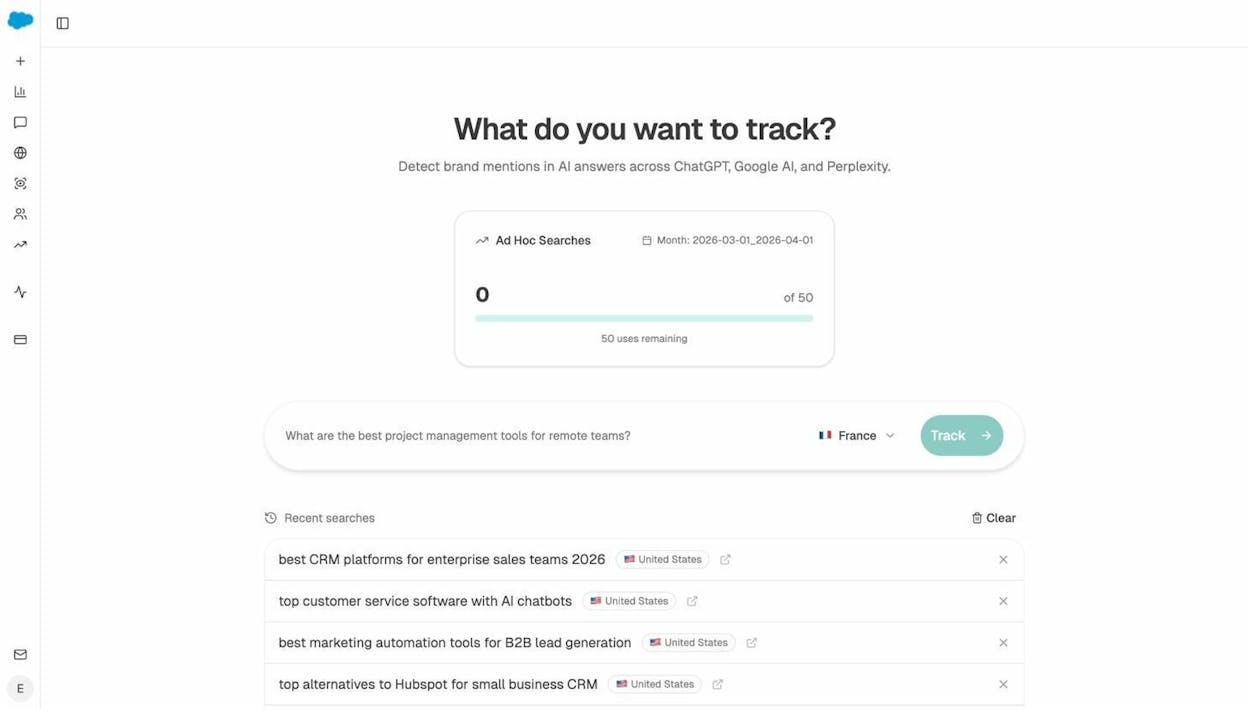
If you see that AI engines are recommending the same few large brands and no smaller sites, you know the AI search landscape is competitive. But if you see opportunities where smaller or niche sites are getting cited, that is a signal you can earn visibility there too.
The reason this matters for affiliates is simple. When someone asks ChatGPT “what is the best VPN for streaming,” and ChatGPT recommends an article on your site, that visitor is already deep in the buying process. They are more likely to click your affiliate link and convert than someone casually browsing Google results.
For a deeper walkthrough of analyzing SEO competitors, read our 6-step SEO competitor analysis guide.
Step 3: Pick your traffic channels
Once you have a niche, you need a way to get your content in front of people. These are the main traffic channels affiliate marketers use, along with their strengths and trade-offs.
Build a website and do SEO
This is the most popular affiliate marketing method, and for good reason. A website gives you full control over your content, your links, and your brand. SEO (search engine optimization) drives free, recurring traffic from Google. An article you publish and rank today can bring in visitors and commissions for years.
The downsides are that SEO takes time (typically 3 to 6 months before you see meaningful traffic) and requires learning skills like keyword research, on-page optimization, and link building.
Successful examples to study: Wirecutter (acquired by The New York Times), The Points Guy (personal finance travel), and NerdWallet (financial product comparisons) all built massive businesses on affiliate content and SEO. Smaller niche sites like OutdoorGearLab and RunRepeat show you do not need a massive team to succeed.
Getting started: Buy a domain, set up WordPress hosting, and start creating content. Focus on product comparison posts, “best of” roundups, and buyer’s guide content. These formats have the highest commercial intent and are most likely to convert.
Start a YouTube channel
YouTube is the second-largest search engine in the world. Product reviews and unboxing videos are some of the most-watched content on the platform. You place your affiliate links in the video description, and viewers click through to buy.
The advantage of YouTube is that video builds trust faster than text. People can see you use the product, hear your opinion, and feel more confident in the recommendation. YouTube videos also appear in Google search results, giving you additional traffic.
The downside is that video production has a steeper learning curve. You need decent equipment, editing skills, and the willingness to be on camera (or at least do voiceovers).
Getting started: You do not need expensive equipment. A smartphone with decent video quality, natural lighting, and a free editing tool like DaVinci Resolve are enough to start. Focus on product reviews in your niche and “best of” roundup videos.
Grow a social media following
Platforms like Instagram, TikTok, and Pinterest can drive affiliate traffic, but they work differently from SEO. Social media requires constant content creation because posts have a short lifespan. A blog post can rank for years. A TikTok video might get views for a few days.
That said, social media can be a fast way to build an audience if your niche is visual (fashion, food, home decor, fitness) and you enjoy creating short-form content.
Getting started: Pick one platform and go deep. Do not try to be everywhere at once. Create content consistently and use your bio link or stories to drive traffic to your affiliate links or website.
Build an email newsletter
Email is an underrated affiliate channel. Unlike social media, you own your email list. No algorithm changes can take your audience away. And email subscribers tend to be more engaged and more likely to buy than casual social media followers.
You can build a newsletter around your niche, share valuable content, and include affiliate recommendations naturally. Some affiliate marketers build their entire business around email.
Getting started: Use a free tool like Mailchimp or ConvertKit’s free tier. Offer something valuable (a free guide, checklist, or resource) in exchange for email signups. Then send regular emails with helpful content and relevant product recommendations.
Start a podcast
Podcasts are growing fast, and affiliate marketing fits naturally into the format. You can mention products during episodes, include affiliate links in show notes, and build deep trust with listeners who hear your voice regularly.
The downside is that podcasts are harder to monetize early on because discovery is more difficult than with SEO or YouTube. Most successful podcast affiliates combine their show with a website or YouTube channel to drive additional traffic.
Getting started: You need a decent microphone ($50 to $100), a free hosting platform like Anchor, and a topic that lends itself to conversation. Interview-format shows are often easier to produce than solo episodes when you are just starting.
The AI search channel most affiliates ignore
Here is a traffic channel that barely any affiliate marketing guide mentions: AI search engines.
Millions of people now ask ChatGPT, Perplexity, Gemini, and Copilot for product recommendations. When someone types “what is the best protein powder for muscle gain” into Perplexity, it generates an answer and cites the sources it pulled from. If your website is one of those cited sources, you get traffic from a buyer who is actively looking to purchase.
This is not a hypothetical scenario. Analyze AI’s AI Traffic Analytics shows brands already getting thousands of monthly visitors from AI search engines. The landing pages report shows you exactly which pages receive AI-referred traffic, which AI engines sent the visitors, and how those visitors behave on your site.
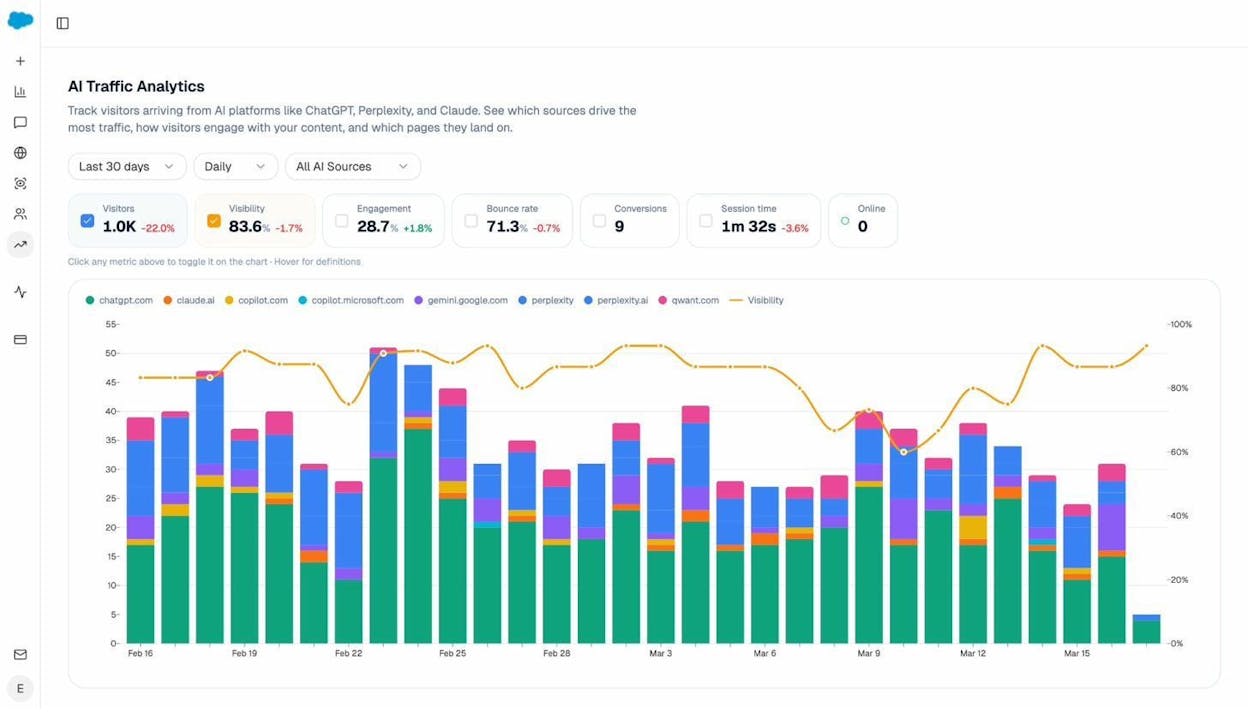
Analyze AI’s AI Traffic Analytics dashboard showing visitors from ChatGPT, Claude, Gemini, Copilot, and Perplexity with engagement metrics.
For affiliate marketers, AI search is valuable because the visitors tend to have high purchase intent. They asked a buying question and got a direct recommendation. This is not someone casually browsing. This is someone ready to act.
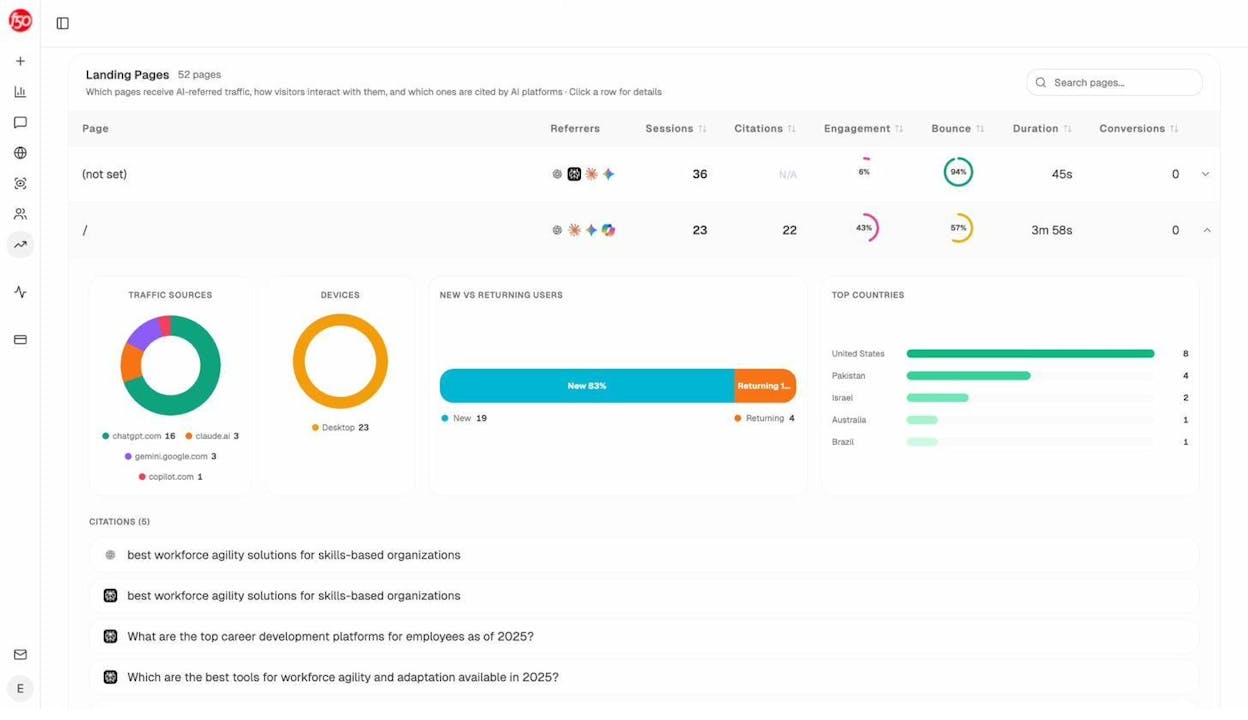
The Landing Pages view in Analyze AI shows which pages receive AI-referred traffic, broken down by AI engine, engagement rate, and citations.
You do not need to change your content strategy to benefit from AI search. The same high-quality, well-structured, product-focused content that ranks on Google also tends to get cited by AI engines. But you should track your AI search visibility and traffic so you can double down on what works.
We cover how to do that in Step 5.
|
Traffic Channel |
Time to First Traffic |
Ongoing Effort |
Passive Income Potential |
Best For |
|---|---|---|---|---|
|
Website + SEO |
3–6 months |
Medium (publish regularly) |
High (content ranks for years) |
Product reviews, comparisons |
|
YouTube |
1–3 months |
High (video production) |
High (videos rank long-term) |
Visual product reviews |
|
Social media |
Weeks |
Very high (constant posting) |
Low (short content lifespan) |
Visual niches, trending products |
|
Email newsletter |
1–2 months |
Medium (weekly sends) |
Medium (depends on list size) |
Niche recommendations |
|
Podcasts |
3–6 months |
Medium (episode production) |
Medium (builds loyal audience) |
Interview, story-driven niches |
|
AI search |
Varies |
Low (optimize existing content) |
High (citations drive traffic passively) |
Product recommendations, comparisons |
Step 4: Create content that converts
This is where most affiliate marketers succeed or fail. Your content is the bridge between the reader’s problem and the product that solves it. If that bridge is weak, nobody crosses it.
Here is what separates affiliate content that makes money from content that just takes up space on the internet.
Write for the buyer, not the browser
The highest-converting affiliate content targets people who are close to making a purchase. These people do not need to be convinced that they need a product. They need help choosing which one to buy.
This is why product comparisons, “best of” roundups, and alternative pages convert so much better than general educational content. Someone searching “best wireless earbuds under $100” is ready to buy. Someone searching “how do wireless earbuds work” is just curious.
Focus your content calendar on keywords that signal purchase intent. These include:
-
“Best [product] for [use case]” (e.g., “best laptop for video editing”)
-
“[Product A] vs [Product B]” (e.g., “AirPods Pro vs Sony WF-1000XM5”)
-
“[Product] review” (e.g., “Dyson V15 review”)
-
“[Product] alternatives” (e.g., “Notion alternatives”)
-
“Best [product] [year]” (e.g., “best running shoes 2026”)
For more on targeting high-intent keywords, read about the differences between keyword types and how they align with the buyer’s journey.
Structure your content for both readers and AI
Whether you are writing a blog post or filming a video, your content needs clear structure. Here is why: both Google and AI search engines use structure to understand what your content covers and how to present it in search results.
For written content, follow this format:
1. Start with a clear answer. If someone searches “best protein powder for muscle gain,” your first paragraph should name your top pick and briefly explain why. Do not bury the answer under 500 words of introduction.
2. Use descriptive headings. Each product or section should have its own H2 or H3 heading. This helps readers scan and helps search engines understand your page structure.
3. Include specific details. Price, pros, cons, who each product is best for, and where to buy. Vague recommendations like “this is a great product” do not convince anyone. Specific details like “this protein powder has 25g of protein per scoop, dissolves easily in water, and costs $0.89 per serving” do.
4. Add original images or screenshots. If you are reviewing a product, include photos you took yourself. ![[Screenshot of a product review blog post with original product photos and a comparison table]](https://www.datocms-assets.com/164164/1777316461-blobid10.png?auto=format,compress&w=1248&fit=max)
If you are reviewing software, include screenshots of the interface. Original visuals signal to both readers and search engines that you have first-hand experience with the product.
5. Be honest about downsides. Every product has weaknesses. Mentioning them makes your review more trustworthy and helps readers make better decisions. Affiliates who only say positive things lose credibility fast.
Use your content to build AI search visibility
When you create detailed, well-structured product content, you are not just ranking on Google. You are building the kind of content that AI search engines cite when users ask buying questions.
Analyze AI’s Citation Analytics shows exactly which content types and domains AI engines cite most in your niche. This data helps you understand what kind of content you need to create to earn AI citations.
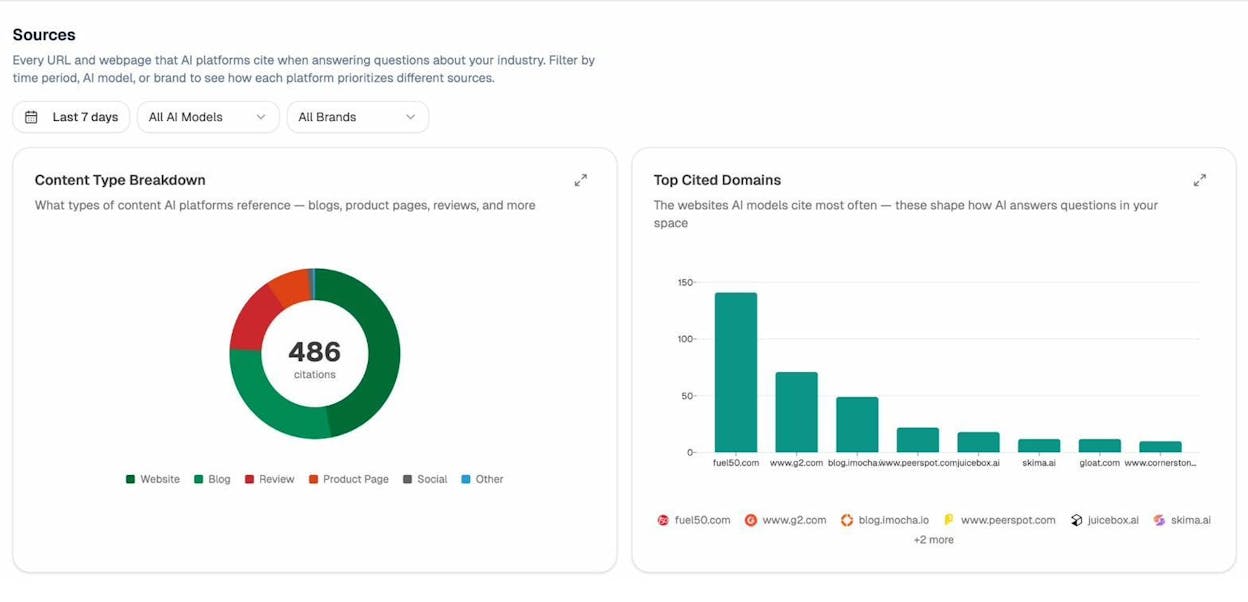
For example, you might discover that AI engines in your niche heavily cite product pages and review articles from specific domains. That is a signal to create similar content, with more depth, better structure, and more original information.
You can also use Analyze AI’s Content Writer to research content ideas that have AI visibility gaps. The tool shows you keywords where competitors are visible in AI search and your site is not, giving you a clear list of content opportunities.
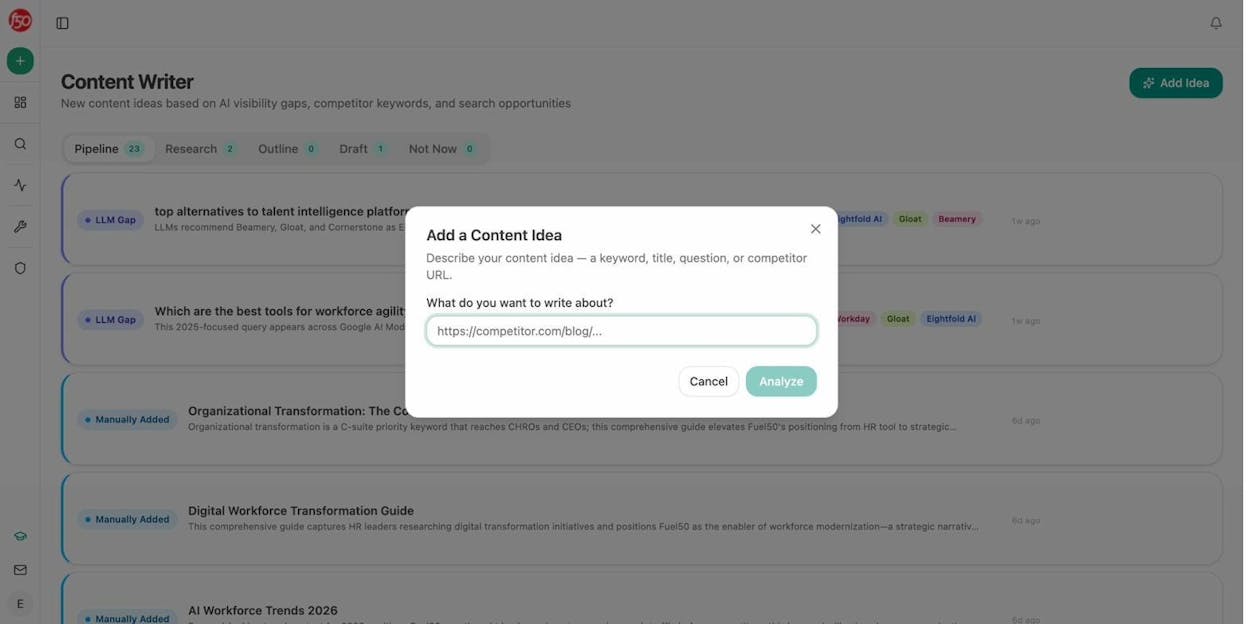
If you already have content published, the Content Optimizer can fetch your existing pages, score them for argument strength and clarity, and generate specific suggestions to improve their chances of ranking in both Google and AI search results.
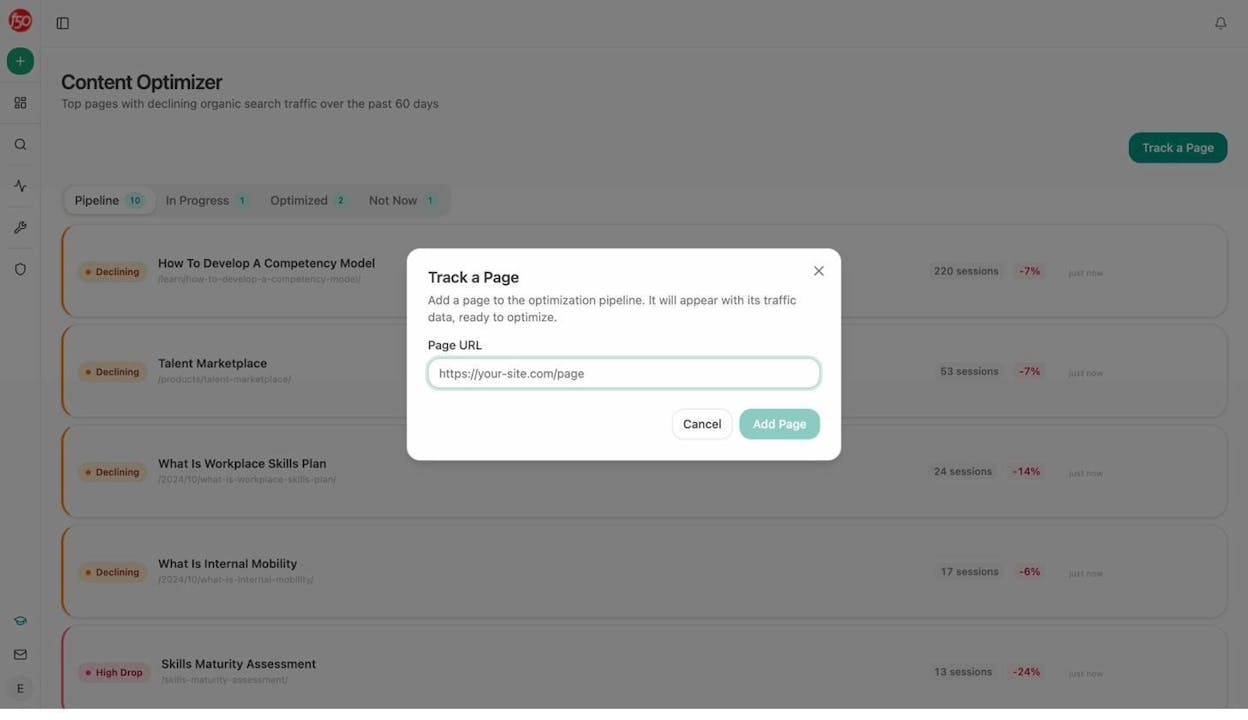
This dual approach, creating content that performs in both traditional search and AI search, is what separates affiliates who will grow their traffic in 2026 and beyond from those who will see it plateau.
Disclose your affiliate relationships
This is not optional. The U.S. Federal Trade Commission (FTC) requires that you clearly disclose when you use affiliate links. Similar rules exist in the UK, EU, Canada, and most other markets.
Your disclosure should be clear, conspicuous, and placed near the affiliate links, not buried in a footer that nobody reads. A simple statement like “This post contains affiliate links. If you buy through these links, I may earn a commission at no extra cost to you” is sufficient.
Failing to disclose can result in legal trouble and destroys reader trust if people feel misled. Always disclose. It is not difficult, and it is the right thing to do.
Step 5: Grow, track, and reinvest
The first four steps get your affiliate business off the ground. This step is about turning it into something that compounds over time.
Track your performance across every channel
You cannot improve what you do not measure. At a minimum, track these metrics monthly:
-
Traffic by source: How many visitors come from Google, social media, email, YouTube, and AI search engines?
-
Click-through rate on affiliate links: What percentage of your visitors actually click your affiliate links?
-
Conversion rate by product: Which products convert best? Which ones get clicks but no sales?
-
Revenue by content piece: Which blog posts, videos, or emails generate the most affiliate income?
Google Analytics handles traffic tracking. Your affiliate program dashboards handle conversion and revenue tracking. For AI search traffic specifically, Analyze AI’s AI Traffic Analytics breaks down your visitors by AI engine and landing page so you can see which content earns AI-referred visits.
Monitor your visibility in AI search
As AI search grows, smart affiliate marketers will treat it like they treat Google: as a channel worth monitoring and optimizing for.
With Analyze AI’s Prompt Tracking, you can monitor how your brand or site appears across AI engines for specific buying prompts. You set up prompts like “best running shoes for flat feet” or “top VPN services for streaming,” and Analyze AI tracks your visibility, position, and sentiment over time.
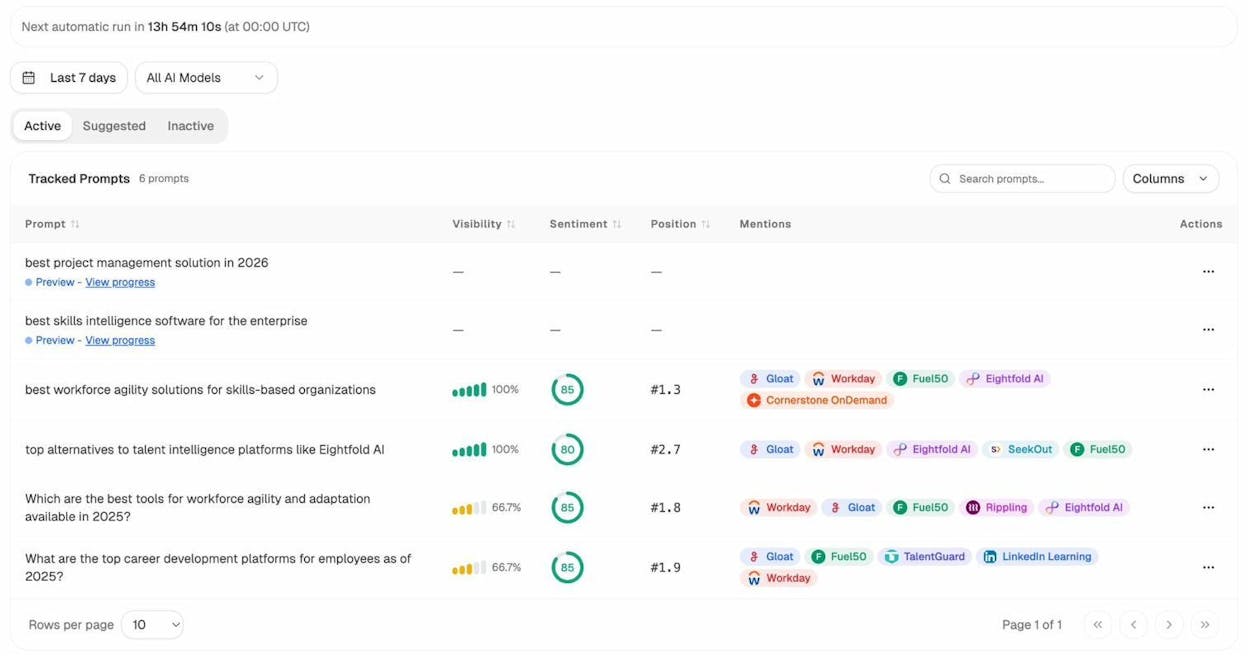
This tells you exactly where you are winning in AI search and where competitors are beating you. When you spot a prompt where a competitor is getting recommended but you are not, you know exactly what content to create or improve next.
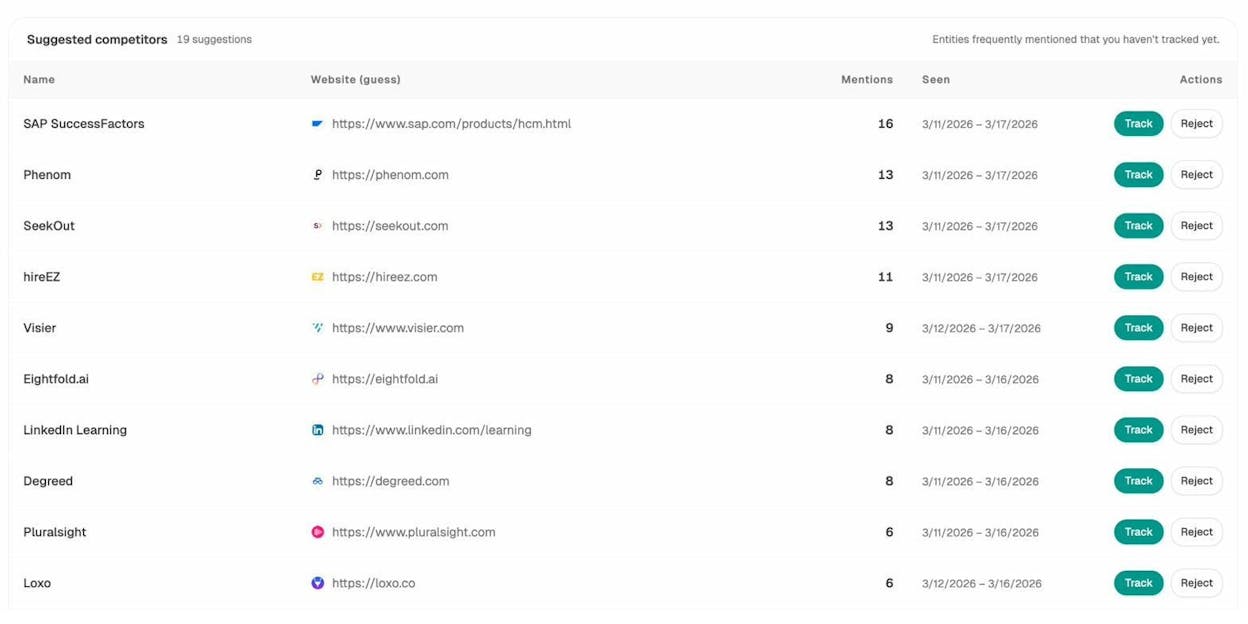
You can also use Analyze AI’s Competitor Intelligence to see which competitor domains are most frequently mentioned by AI engines in your niche. This reveals who you are competing against for AI search visibility, which may be different from your Google competitors.
Reinvest your earnings
Once your affiliate links start generating income, resist the temptation to pocket everything. Reinvesting a portion of your earnings is how you turn a side hustle into a real business.
Here is where to reinvest first:
-
Content production. Hire a writer, video editor, or virtual assistant to help you produce more content. More content means more traffic, more affiliate link clicks, and more revenue.
-
Better tools. Invest in tools that help you create better content and track performance. This includes SEO tools, AI search analytics, and content optimization software.
-
Link building. Quality backlinks improve your Google rankings, which drives more traffic to your affiliate content. Our guide to link building tools covers how to get started.
-
Email list growth. If you are not building an email list from day one, start now. Paid traffic to a lead magnet can build your list faster, and email subscribers convert at higher rates than organic visitors.
Keep creating, keep optimizing
Affiliate marketing rewards consistency. The marketers who publish regularly, update old content, and adapt to changes (like the growth of AI search) are the ones who build lasting income.
Set a publishing schedule you can maintain. One high-quality blog post per week is better than five mediocre posts. Track what works, do more of it, and cut what does not.
And pay attention to how AI search is changing the way people discover products. Use a tool like Analyze AI to keep a pulse on your AI search presence alongside your traditional SEO efforts. The affiliates who treat AI search as another organic channel, not a replacement for SEO but an addition to it, will have a significant advantage over those who ignore it.
Final Thoughts
Becoming an affiliate marketer is one of the most accessible ways to build an online business. The barriers to entry are low, the income potential is real, and you get to work on topics you care about.
But it is not easy money. It takes time to learn content creation, SEO, and audience building. Most people will not see significant income for months. That is normal.
The five steps are simple. Pick a niche. Check the competition. Choose your traffic channels. Create helpful, honest content. Then track, optimize, and reinvest.
What makes this moment different from five years ago is that you now have more channels to reach buyers. Google is still the largest. But AI search engines like ChatGPT, Perplexity, and Gemini are growing fast, and the affiliates who build visibility across both channels will earn more traffic, more clicks, and more commissions.
Start today. Create your first piece of content this week. The affiliate marketers earning six figures right now all started the same way you are about to: with one post, one video, or one recommendation. Join Analyze AI’s affiliate program here.

Ernest

Ibrahim


