



Summarize this blog post with:


In this article, you’ll learn a clear, step-by-step path to becoming an SEO expert. You’ll learn where to start, what skills to build first, which tools to master, how to get hands-on experience, and how to specialize so you stand out. You’ll also learn why the best SEO experts in 2026 are adding AI search to their skillset, and how to do the same..
Table of Contents
1. Learn the fundamentals of SEO
Before you touch a single tool or write a single blog post, you need to understand how search engines actually work. Everything in SEO connects back to three core processes: crawling, indexing, and ranking.
Crawling is how search engines discover new pages. Google uses bots (called “spiders” or “crawlers”) that follow links from one page to another. If a page has no links pointing to it, crawlers may never find it.
Indexing is what happens after a page is crawled. The search engine stores the page’s content, analyzes it, and adds it to its database. Not every crawled page gets indexed. Thin content, duplicate content, or pages blocked by robots.txt can get skipped.
Ranking is the part most people care about. When someone types a query into Google, the search engine pulls relevant pages from its index and orders them by relevance. Google uses hundreds of ranking factors to decide that order, including content quality, backlinks, user experience, and topical authority.
Understanding these three processes is the foundation of everything else you’ll learn. Every SEO tactic, from keyword research to link building to technical audits, connects back to improving how your pages are crawled, indexed, or ranked.
Where to learn the basics
The fastest way to build a foundation is through a structured course, not by bouncing between random blog posts and YouTube videos. Here’s why: when you’re a beginner, you don’t know what you don’t know. A course gives you a logical sequence. Blog posts don’t.
Here are the best free options:
Google’s SEO Starter Guide. This is the official documentation from Google on how to make your site search-engine-friendly. It’s not flashy, but it’s the source of truth. Start here. ![[Screenshot of Google’s SEO Starter Guide page]](https://www.datocms-assets.com/164164/1777313488-blobid1.png?auto=format,compress&w=1248&fit=max)
HubSpot’s SEO Training Course. A free video course that covers keyword research, on-page optimization, link building, and technical SEO. You get a certification at the end, which is useful for your resume.
Moz’s Beginner’s Guide to SEO. One of the most comprehensive written guides available. It covers everything from how search engines work to measuring SEO success. Bookmark it. You’ll come back to it.
Google Analytics Academy. SEO without analytics is guessing. Learn how to set up Google Analytics, track organic traffic, measure conversions, and build reports. You’ll need these skills at every stage of your career.
The four pillars of SEO you need to understand
Once you finish a beginner course, make sure you have at least a working understanding of the four pillars of SEO:
On-page SEO is everything you do on the page itself. Title tags, meta descriptions, header tags, keyword placement, internal linking, image alt text, and content quality. This is the pillar you’ll practice the most as a beginner.
Off-page SEO is everything that happens outside your website, primarily link building. When other websites link to yours, search engines see that as a vote of confidence. The more high-quality links you earn, the higher your pages tend to rank.
Technical SEO covers the backend. Site speed, mobile responsiveness, crawlability, site architecture, structured data, and XML sitemaps. You don’t need to become a developer, but you need to understand what these things are and how to audit them.
Content strategy ties everything together. It’s how you decide what keywords to target, what topics to cover, and how to organize your content so search engines (and readers) can navigate it. Keyword clustering and content strategy are important concepts to learn early.
Why you should learn AI search fundamentals too
Here’s the thing most SEO courses won’t tell you: Google is no longer the only search engine that matters.
In 2026, millions of people get their answers from ChatGPT, Perplexity, Google’s AI Overviews, Gemini, and Copilot. These AI-powered search engines don’t just return a list of links. They synthesize answers from multiple sources and cite the websites they pulled from.
This matters for SEO experts because your content now needs to work in two places. It needs to rank on Google, and it needs to get cited by AI models. The brands that show up in AI answers are the ones with clear, original, and well-structured content. The same things that make content rank well on Google also tend to make it get cited by AI.
SEO is not dead. It’s evolving. AI search is an additional organic channel, not a replacement for traditional SEO. The best SEO experts understand both.
If you want a head start, learn these AI search concepts early:
-
Answer engine optimization (AEO): The practice of structuring content so AI search engines can easily extract and cite it. Read our full guide on what AEO is and how to do it.
-
AI visibility: Whether your brand appears when someone asks an AI engine a question related to your industry. Tools like Analyze AI track this automatically.
-
Citations: When an AI engine cites your URL as a source in its answer. Understanding how LLMs cite sources gives you an edge over SEOs who only think about Google.
You don’t need to master AI search right now. But understanding that it exists, and that it’s growing fast, will shape how you approach every other step on this list.
2. Build a website and practice ranking it
Reading about SEO will teach you the concepts. Doing SEO will teach you the skill. There’s no substitute for building a real website, publishing real content, and trying to rank it.
If you already have a website, great. Use it. If you don’t, create one. It doesn’t need to be perfect. It just needs to exist so you can practice on it.
Pick a platform and get set up
WordPress, Webflow, Squarespace, or even a free platform like WordPress.com will work fine. The important thing is that you can control the basics: title tags, meta descriptions, headings, URL structure, and content.
A simple blog about a topic you already know works best. Food, fitness, travel, a hobby, a professional interest. Pick something you can write about consistently without running out of ideas.
Here’s what your setup checklist looks like:
-
Choose a domain name and hosting (or use a free platform to start)
-
Install or activate an SEO plugin (Yoast or Rank Math for WordPress)
-
Set up Google Search Console and verify your site
-
Set up Google Analytics (GA4)
-
Create a basic site structure with clear navigation
The whole process takes less than an hour. Don’t overthink it. The goal is to have a live site you can learn on.
Do keyword research (step by step)
Keyword research is the single most important skill you’ll develop as an SEO. It determines what content you create, who finds it, and whether it drives traffic.
Here’s how to do it as a beginner:
Step 1: Start with seed keywords. Think about your topic and write down 5 to 10 broad terms people might search for. If your blog is about home coffee brewing, your seeds might be “pour over coffee,” “French press,” “coffee grinder,” and “cold brew.”
Step 2: Expand your list with a keyword tool. Plug your seed keywords into a keyword generator tool to find related terms, questions, and long-tail variations. ![[Screenshot of Analyze AI’s free keyword generator tool showing keyword suggestions for a seed term]](https://www.datocms-assets.com/164164/1777313499-blobid2.png?auto=format,compress&w=1248&fit=max)
You’ll see dozens or hundreds of related keywords. Focus on the ones that are specific enough to write a focused article about.
Step 3: Check search volume and difficulty. Not every keyword is worth targeting. Use a keyword difficulty checker to see how competitive each keyword is, and whether a new website has a realistic chance of ranking for it.![[Screenshot of Analyze AI’s keyword difficulty checker showing volume, difficulty, and CPC for a keyword]](https://www.datocms-assets.com/164164/1777313503-blobid3.png?auto=format,compress&w=1248&fit=max)
As a beginner, target keywords with these characteristics:
|
What to look for |
Why it matters |
|---|---|
|
Low to medium difficulty (KD under 30) |
New websites can’t compete for high-difficulty keywords yet |
|
Search volume above 100/month |
Enough traffic potential to be worth writing about |
|
Clear search intent |
You can tell exactly what the searcher wants |
|
Long-tail keywords (3+ words) |
Less competition, more specific, higher conversion potential |
Step 4: Analyze the SERP. Before you commit to a keyword, search for it on Google. Look at what’s ranking. If the top 10 results are all from massive brands like Wikipedia, Amazon, or Forbes, move on. If you see smaller blogs or niche sites ranking, that’s a good sign.
Use a SERP checker to analyze the top-ranking pages for any keyword without leaving your browser. ![[Screenshot of Analyze AI’s SERP checker tool showing top results for a keyword]](https://www.datocms-assets.com/164164/1777313511-blobid4.png?auto=format,compress&w=1248&fit=max)
Step 5: Pick your winners. Choose 10 to 15 keywords to start with. Group them by topic so you can plan a content calendar. Keyword clustering helps you organize related keywords into groups, so you know when to write one comprehensive article versus multiple separate pieces.
Write and optimize content
Once you have your target keywords, it’s time to create content. Here’s the basic process:
Match the search intent. Look at what’s already ranking. If the top results are how-to guides, write a how-to guide. If they’re listicles, write a listicle. Don’t try to rank a product page for a keyword where Google is showing informational content.
Structure your content clearly. Use your primary keyword in the title tag (H1), in the first paragraph, and in at least one or two subheadings (H2s). Use related keywords (secondary keywords and LSI keywords) naturally throughout the article.
Write for humans first. This sounds obvious, but it’s the mistake most beginners make. They stuff keywords into every sentence and produce unreadable content. Write naturally. Answer the reader’s question thoroughly. Add details, examples, and data that no other article includes. That’s what Google calls “helpful content.”
Optimize the technical elements. Write a compelling meta description (under 155 characters). Use descriptive alt text on all images. Add internal links to your other relevant pages. Make sure your URL is clean and includes your keyword.
Make it the best result on the page. Don’t just match what’s already ranking. Beat it. Go deeper. Add original examples. Include data. Use better visuals. This is the information gain that separates pages that rank from pages that don’t.
Build your first backlinks
Backlinks are still one of the strongest ranking factors. As a beginner, you won’t have hundreds of sites linking to you. That’s fine. Start small.
Here are three approaches that work for new sites:
Guest posting. Find blogs in your niche that accept guest posts. Write a genuinely helpful article for them and include a link back to your site in your author bio. This builds both links and relationships.
Resource page link building. Find pages that curate resources on your topic (search for “your topic + resources” or “your topic + useful links”). If your content is good enough, email the site owner and ask them to include it.
Original data or research. If you can produce original data, surveys, or research, other sites will link to it naturally. Even small-scale research (“I tested 20 cold brew recipes and here’s what happened”) can earn links because it’s unique.
For a deeper dive into link building tactics, check out the best backlink building tools.
Track your rankings and traffic
You can’t improve what you don’t measure. Set up tracking from day one.
Google Search Console shows which queries your site appears for, your average position, click-through rate, and any technical issues. Check it weekly.
Google Analytics shows how much traffic you’re getting, where it comes from, which pages perform best, and how visitors behave on your site.
Use a keyword rank checker to track your target keywords over time. Seeing your rankings improve week over week is motivating and tells you what’s working.
Check your visibility in AI search
Here’s where most beginner SEO guides stop. But in 2026, tracking your Google rankings alone gives you an incomplete picture.
People are also searching in ChatGPT, Perplexity, and Gemini. If your content is good enough to rank on Google, it might also be getting cited by AI engines. The only way to know is to check.
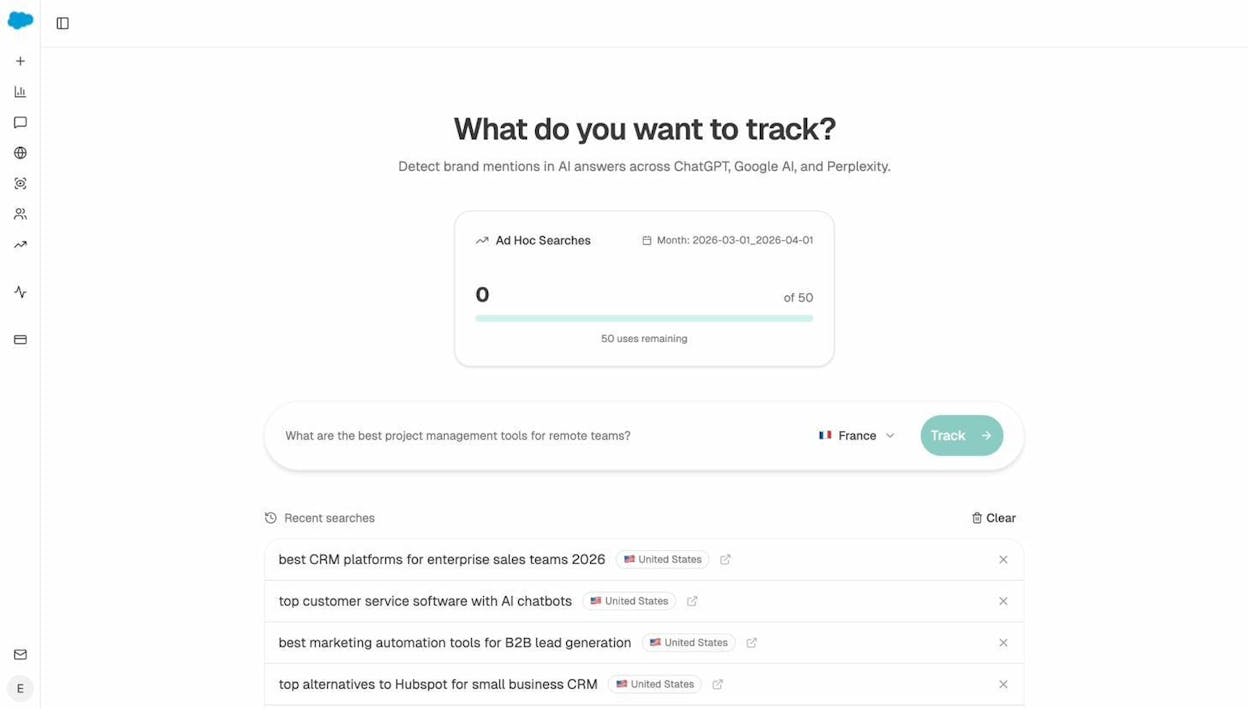
Analyze AI’s AI Search Explorer lets you type in any prompt and see how AI engines answer it, who they mention, and which sources they cite. Try it with prompts related to your blog topic. You might be surprised to find your content already appearing in AI answers, or you might discover opportunities where no one in your niche is showing up yet.
If you want to track AI visibility over time, Analyze AI’s prompt tracking monitors your brand mentions across all major AI engines daily. It shows your visibility percentage, sentiment score, position, and which competitors appear alongside you.
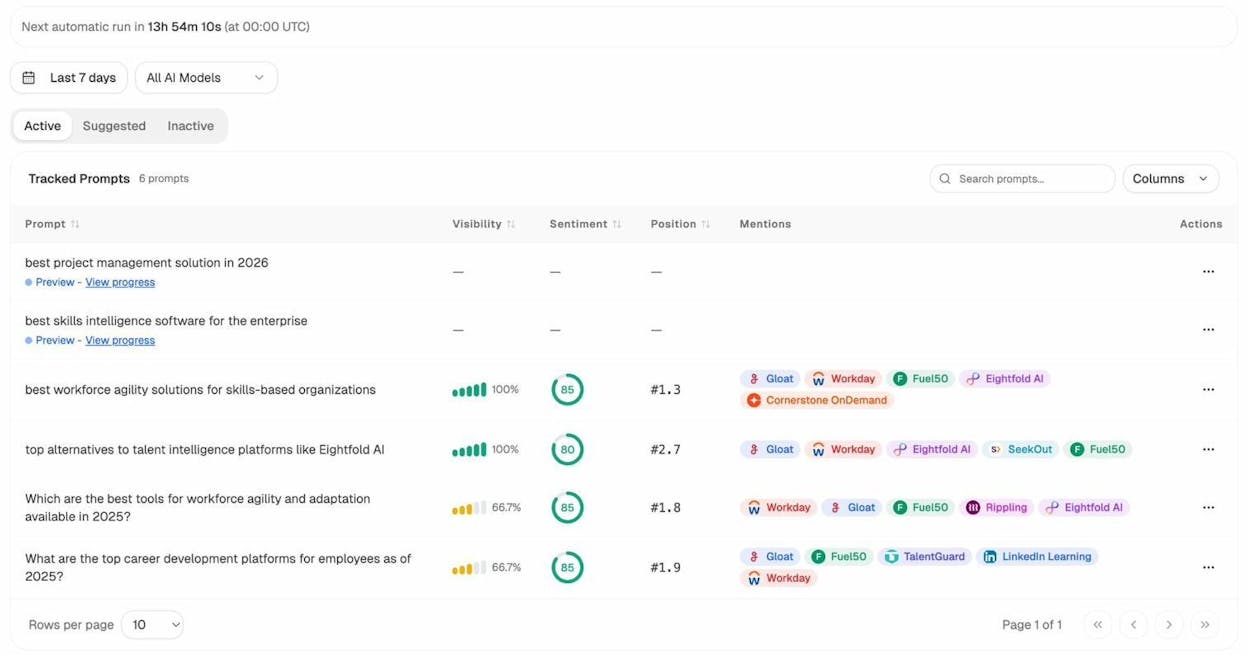
This is data that Google Search Console will never show you. And as AI search grows, it becomes increasingly valuable.
3. Learn the essential SEO tools
SEO without tools is like carpentry without power tools. You can do it, but it takes ten times longer and you’ll miss things. Here are the tools you need to know, organized by category.
Free tools every SEO should use
Google Search Console. Free. Shows your search performance, indexing status, mobile usability issues, and Core Web Vitals. Every SEO uses this daily. ![[Screenshot of Google Search Console Performance dashboard showing clicks, impressions, CTR, and position]](https://www.datocms-assets.com/164164/1777313535-blobid7.png?auto=format,compress&w=1248&fit=max)
Google Analytics (GA4). Free. Tracks all your website traffic, user behavior, conversions, and traffic sources. Essential for proving the ROI of your SEO work.
Google PageSpeed Insights. Free. Tests your page speed and Core Web Vitals scores. Site speed is a ranking factor, and this tool tells you exactly what to fix.
Chrome DevTools. Free. Built into Chrome. Lets you inspect elements, test mobile views, analyze page load performance, and debug rendering issues. Learn the basics.
Analyze AI’s free tools. A full suite of free SEO tools including a keyword generator, keyword difficulty checker, SERP checker, keyword rank checker, website authority checker, website traffic checker, and broken link checker. Use these for keyword research, competitive analysis, and site audits.
Paid SEO tools worth learning
You don’t need paid tools on day one. But once you start working professionally, you’ll need to be comfortable with at least one major SEO platform.
Ahrefs. Strong for link analysis, keyword research, and competitive research. Most SEO agencies use it. Learn how it works. Read our in-depth Ahrefs review.
Semrush. An all-in-one platform with keyword research, site audit, rank tracking, and content tools. Widely used in enterprise SEO.
Google Looker Studio (formerly Data Studio). Free, but powerful. Connects to Search Console and Analytics to create custom dashboards. Agencies love this for client SEO reporting.
Screaming Frog. A desktop crawler that audits your entire site for technical issues. The free version crawls up to 500 URLs. Every technical SEO uses it. ![[Screenshot of Screaming Frog crawler showing crawl results and technical issues]](https://www.datocms-assets.com/164164/1777313545-blobid8.png?auto=format,compress&w=1248&fit=max)
AI search analytics tools
This is the category most SEOs are still missing, and it’s the biggest opportunity to differentiate yourself.
Traditional SEO tools only show you Google data. They can’t tell you whether AI engines are mentioning your brand, citing your content, or recommending your competitors instead of you.
Analyze AI is an AI search analytics platform that fills that gap. It tracks your brand’s visibility, sentiment, and citations across ChatGPT, Perplexity, Gemini, Copilot, and other AI search engines.
Here’s what the overview dashboard looks like:
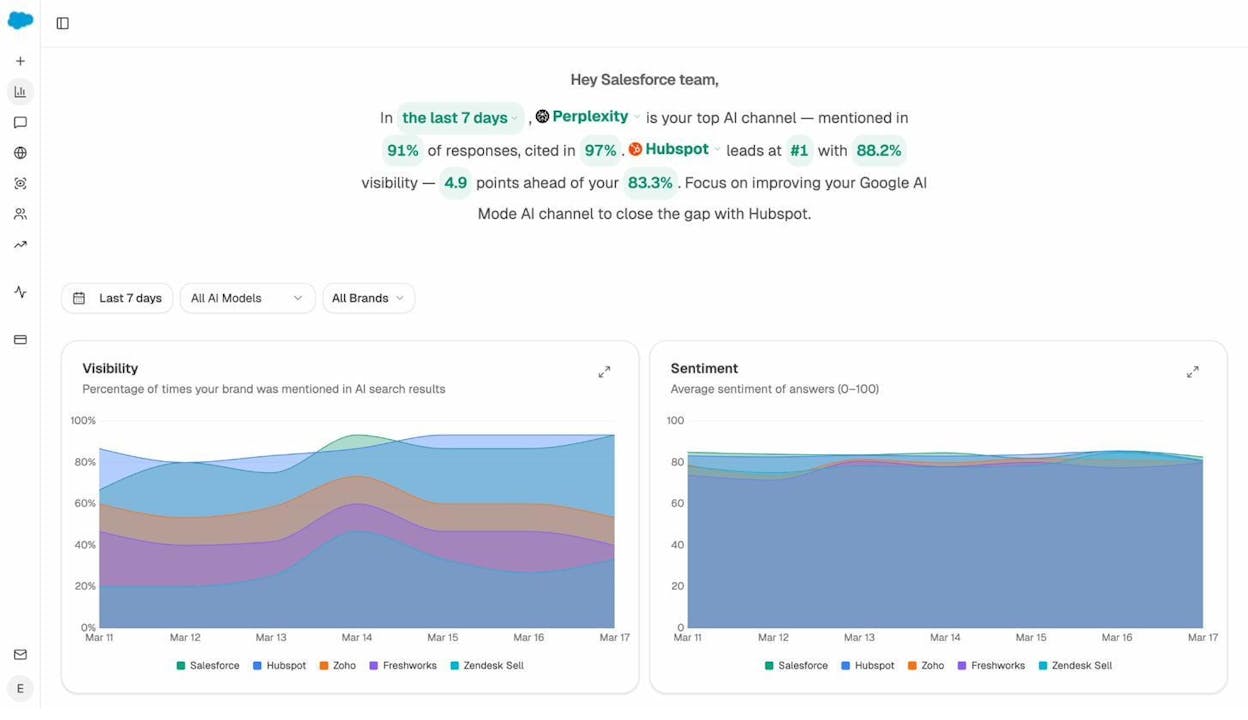
The dashboard gives you a bird’s-eye view of your AI visibility and how it compares to competitors. It shows which AI engine is your strongest channel, your overall visibility percentage, and whether competitors are pulling ahead.
For content-focused SEOs, the citation analytics feature shows which URLs and domains AI engines cite most in your industry. This tells you what kind of content AI models trust, so you can create more of it.
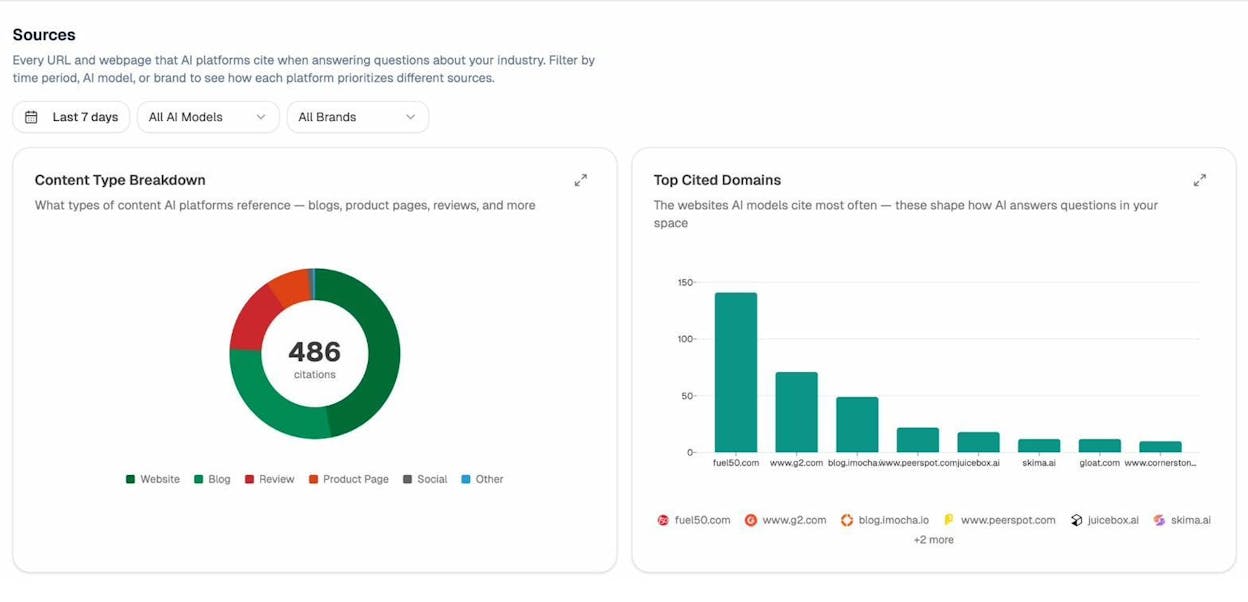
If you learn to use these tools early, you’ll have a skill most SEOs don’t have yet. That’s a career advantage.
Content optimization tools
Analyze AI’s Content Writer takes you from idea to research to outline to draft, with AI visibility gaps, competitor keywords, and editorial comments built into every step. You can paste a competitor URL and get a full content brief.
![[Screenshot of Analyze AI’s Content Writer showing the content pipeline and add idea modal]](https://www.datocms-assets.com/164164/1777313564-blobid11.jpg?auto=format,compress&w=1248&fit=max)
Analyze AI Content Writer showing the content pipeline with stages from Pipeline to Draft
Analyze AI’s Content Optimizer fetches any existing page, scores it on argument structure and clarity, generates editorial comments, and produces an optimized draft. Use it to audit and improve content you’ve already published.
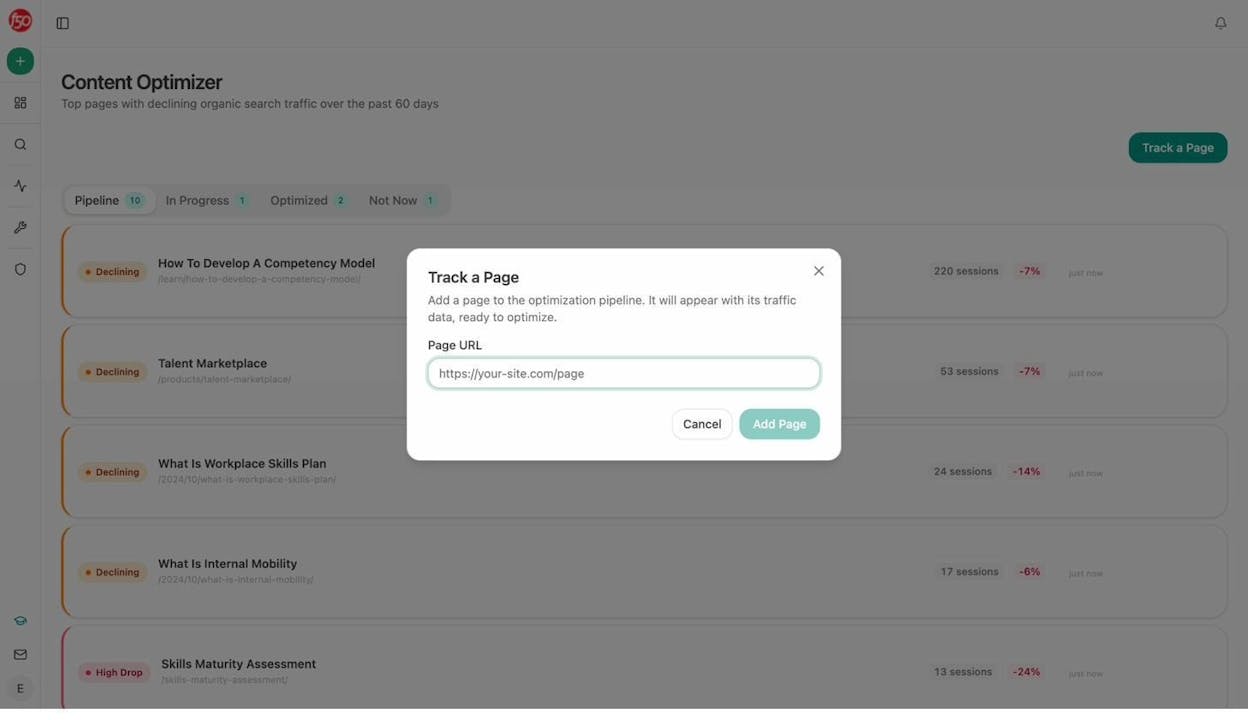
These tools combine traditional SEO best practices with AI search optimization in one place, which saves time and ensures your content works in both channels.
4. Get real-world experience
Your hobby blog proves you can do SEO. Now you need to prove you can do it for someone else. There are three paths: agency work, in-house roles, and freelancing. Each has tradeoffs.
Option 1: Join an SEO agency
Agencies are the most common entry point for new SEOs, and for good reason:
You learn fast. Agencies work with multiple clients across different industries. In your first year, you might optimize e-commerce sites, local businesses, B2B SaaS companies, and media publications. That breadth of experience is hard to get anywhere else.
You get mentorship. Good agencies pair junior SEOs with senior team members who review your work, teach you their processes, and help you develop specializations.
You build a portfolio quickly. After a year at an agency, you’ll have case studies across multiple industries. That’s gold for your resume.
The downsides? Agency work can be fast-paced and stressful. You’ll often juggle multiple clients at once, and some agencies prioritize billable hours over deep work. But the learning experience is worth it, especially in your first two to three years.
How to find entry-level SEO jobs
Start with specialized job boards and newsletters:
SEO Jobs (seojobs.com). A dedicated job board for SEO and digital marketing roles. Filter by experience level, location, and job type.
SEOFOMO newsletter. Weekly emails from Aleyda Solis featuring remote SEO job opportunities alongside industry news. ![[Screenshot of SEOFOMO newsletter showing job listings]](https://www.datocms-assets.com/164164/1777313573-blobid13.png?auto=format,compress&w=1248&fit=max)
LinkedIn. Search for “junior SEO,” “SEO coordinator,” or “SEO analyst.” Set up job alerts so you get notified when new positions are posted. ![[Screenshot of LinkedIn search results for “junior SEO” jobs]](https://www.datocms-assets.com/164164/1777313579-blobid14.png?auto=format,compress&w=1248&fit=max)
Company careers pages directly. Make a list of SEO agencies in your area (or remote-friendly agencies) and check their careers pages. Many agencies don’t post on job boards at all.
What to put on your resume
You don’t need years of professional experience to get your first SEO job. You need proof that you can do the work. Here’s what to highlight:
-
Your blog or website, with specific metrics (rankings, traffic, growth over time)
-
Any certifications (Google Analytics, HubSpot, Semrush Academy)
-
Specific skills: keyword research, on-page optimization, Google Search Console, technical audits
-
If you’ve helped anyone else with SEO (even a friend’s small business), mention it
A cold outreach email that works
Many agencies don’t have junior positions listed because they haven’t created them yet. A good cold email can create an opportunity that didn’t exist before.
Here’s a template:
Subject: Junior SEO role at [Agency Name]?
Hi team,
I’m looking for my first SEO role and [Agency Name] is at the top of my list. I’ve been learning SEO for [X] months and built my own blog about [topic], which ranks for [X] keywords and gets [X] monthly organic visits according to Google Search Console.
![[Insert Google Search Console screenshot showing traffic growth]](https://www.datocms-assets.com/164164/1777313592-blobid15.png?auto=format,compress&w=1248&fit=max)
I didn’t see any junior positions on your careers page, but I wanted to reach out in case you’re considering adding to your team. I’m hard-working, eager to learn, and ready to contribute from day one.
Happy to share more about my background or jump on a quick call.
Thanks, [Name]
Keep it short. Lead with proof. Make it easy for them to say yes.
Option 2: Go in-house
In-house SEO roles give you deeper focus on a single brand’s search performance. You’ll own the full SEO strategy, work closely with developers and content teams, and see the long-term impact of your work.
The tradeoff is less variety. You’ll become an expert on one website rather than many. That’s fine if you prefer depth over breadth, but it can limit your exposure to different types of SEO challenges.
In-house roles are more common at mid-market and enterprise companies. Job titles include SEO specialist, SEO analyst, SEO manager, and growth marketer.
Option 3: Freelance
Freelancing is viable once you have some experience, usually after at least a year of agency or in-house work. The advantages are obvious: you set your own rates, choose your clients, and control your schedule.
The challenge is that freelancing requires more than SEO skills. You need to sell, manage client relationships, handle invoicing, and keep your pipeline full. It’s a business, not just a job.
If you go this route, start by offering services to local businesses in your area. They’re easier to win than enterprise clients, and the results are easier to demonstrate. As your portfolio grows, you can move upmarket.
According to industry data, freelance SEO consultants often earn 20 to 40 percent more per hour than their full-time counterparts. That premium reflects the value of specialized expertise and flexible engagement models.
5. Specialize and keep learning
SEO is a broad field. Trying to be an expert at every aspect of it is a recipe for being mediocre at all of them. The most successful SEOs develop what’s called a “T-shaped” skill set: broad knowledge across all areas of SEO, but deep expertise in one.
What a T-shaped SEO looks like
The horizontal bar of the T represents your general SEO knowledge. You understand keyword research, on-page optimization, link building, technical SEO, content strategy, and analytics at a working level.
The vertical bar represents your specialization. This is the area where you go deep, where you can solve problems that generalists can’t, and where you build your professional reputation.
Here are the most common SEO specializations and what each one involves:
|
Specialization |
What you do |
Who hires for this |
|---|---|---|
|
Technical SEO |
Site architecture, crawl optimization, Core Web Vitals, structured data, JavaScript rendering, log file analysis |
Enterprise companies, large publishers |
|
Content SEO / Content Strategy |
Keyword strategy, content production, editorial planning, content audits, topical authority |
SaaS companies, media companies, agencies |
|
Link building |
Outreach, digital PR, link prospecting, relationship building, broken link building |
Agencies, e-commerce, competitive niches |
|
Local SEO |
Google Business Profile optimization, local citations, map pack ranking, review management |
Local businesses, multi-location brands |
|
E-commerce SEO |
Product page optimization, faceted navigation, category structure, schema markup for products |
Retailers, DTC brands, marketplaces |
|
AI search optimization |
AEO strategy, AI visibility tracking, citation earning, content structuring for LLMs |
Forward-thinking brands, agencies adding AI services |
The last row is worth paying attention to. AI search optimization is the newest specialization in SEO, and demand is growing fast. A Semrush report found that 74 percent of enterprise companies plan to hire SEO specialists with AI expertise. The supply of qualified practitioners is still small, which means early movers have a significant advantage.
How to build deep expertise
Once you’ve chosen your specialization, here’s how to go deeper:
Practice on real projects. Theory without application doesn’t build expertise. Take on client work, personal projects, or side projects that let you practice your specialty. If you specialize in technical SEO, audit 50 websites. If you specialize in content strategy, build 10 content calendars.
Study the best practitioners. Every specialization has a handful of recognized experts who share their knowledge publicly. Follow them, study their work, and learn their frameworks. A few worth following:
-
Patrick Stox for technical SEO
-
Kevin Indig for content strategy and growth
-
Lily Ray for E-E-A-T and Google algorithm updates
-
Marie Haynes for Google penalty recovery
-
Aleyda Solis for international SEO and SEO processes
Join communities. The best learning happens in conversations with other practitioners. Here are the communities worth joining:
-
SEO Twitter (X). Still the fastest way to get real-time insights on algorithm updates and industry trends. Follow the people listed above and engage in conversations.
-
R/SEO and R/bigseo on Reddit. Active communities where SEOs share tactics, ask questions, and debate strategies.
-
Traffic Think Tank. A paid community of experienced SEOs. Worth it once you’re past the beginner stage.
-
Women in Tech SEO. An inclusive community focused on supporting women in technical SEO.
Subscribe to newsletters. Stay current without drowning in noise:
-
SEOFOMO by Aleyda Solis (weekly roundup of SEO news and jobs)
-
Search Engine Roundtable by Barry Schwartz (daily coverage of Google search changes)
-
The SEO MBA by Tom Critchlow (strategy and leadership for SEO professionals)
Attend conferences. BrightonSEO, MozCon, SearchLove, and Pubcon are the major ones. They’re worth the investment for the speakers, the networking, and the energy you’ll get from being around other SEOs who care about the craft.
Add AI search optimization to your skillset
No matter what specialization you choose, learning AI search optimization will make you more valuable. Here’s how to get started:
Learn how AI engines work. AI search engines like ChatGPT, Perplexity, and Gemini pull information from their training data and from real-time web searches. They cite sources differently than Google does. Understanding how LLMs cite sources gives you a foundation for optimizing content for AI.
Audit your brand’s AI visibility. Use Analyze AI to see how AI engines currently represent your brand. Are they mentioning you? Are they recommending competitors instead? Is the sentiment positive or negative?
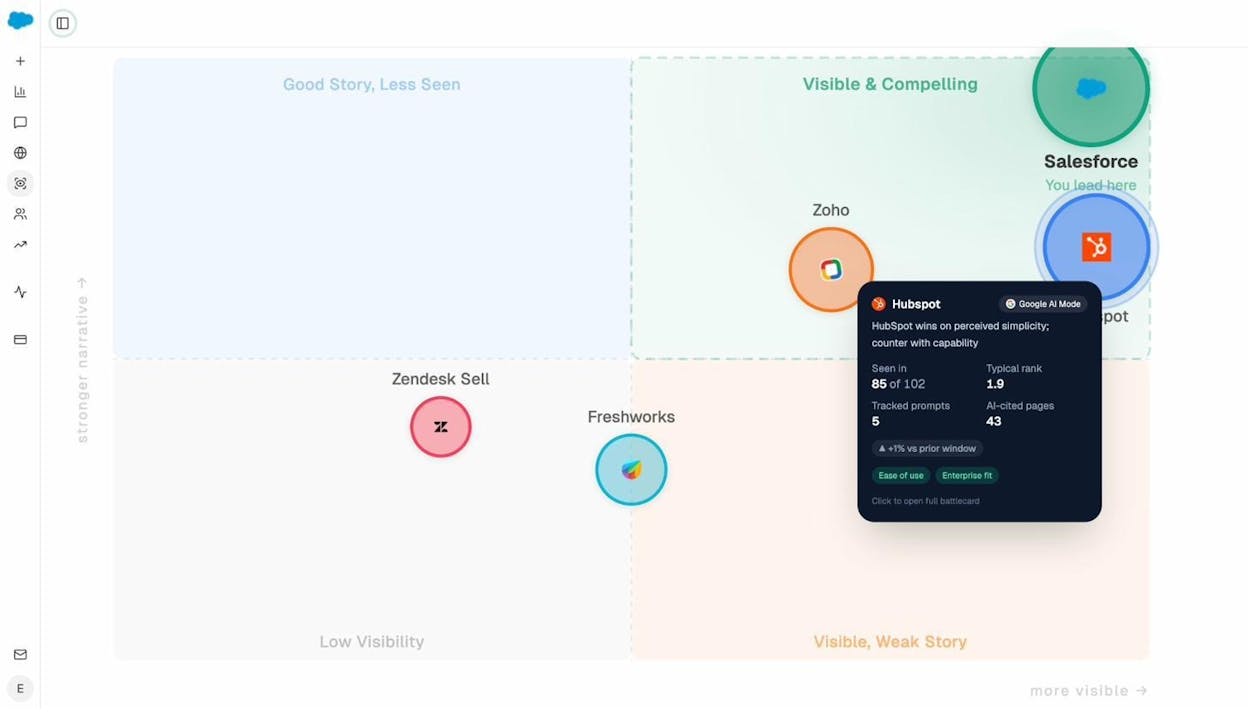
The Perception Map gives you a visual of where your brand sits relative to competitors across two dimensions: visibility and narrative strength. Brands in the top-right quadrant are both visible and compelling. Brands in the bottom-left are invisible. This tells you exactly where to focus.
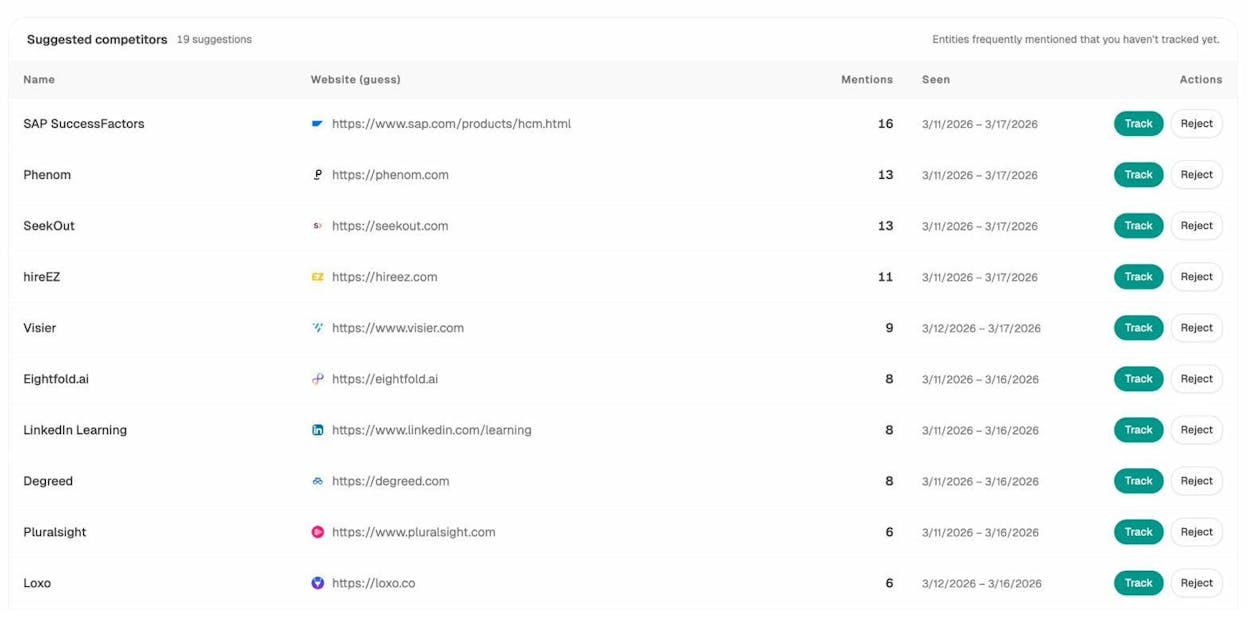
Find the prompts where competitors win and you don’t. Competitor Intelligence in Analyze AI shows which competitors appear alongside you in AI answers, and how often they’re mentioned instead of you. Look for the prompts where competitors show up and your brand doesn’t. Those are your opportunities.
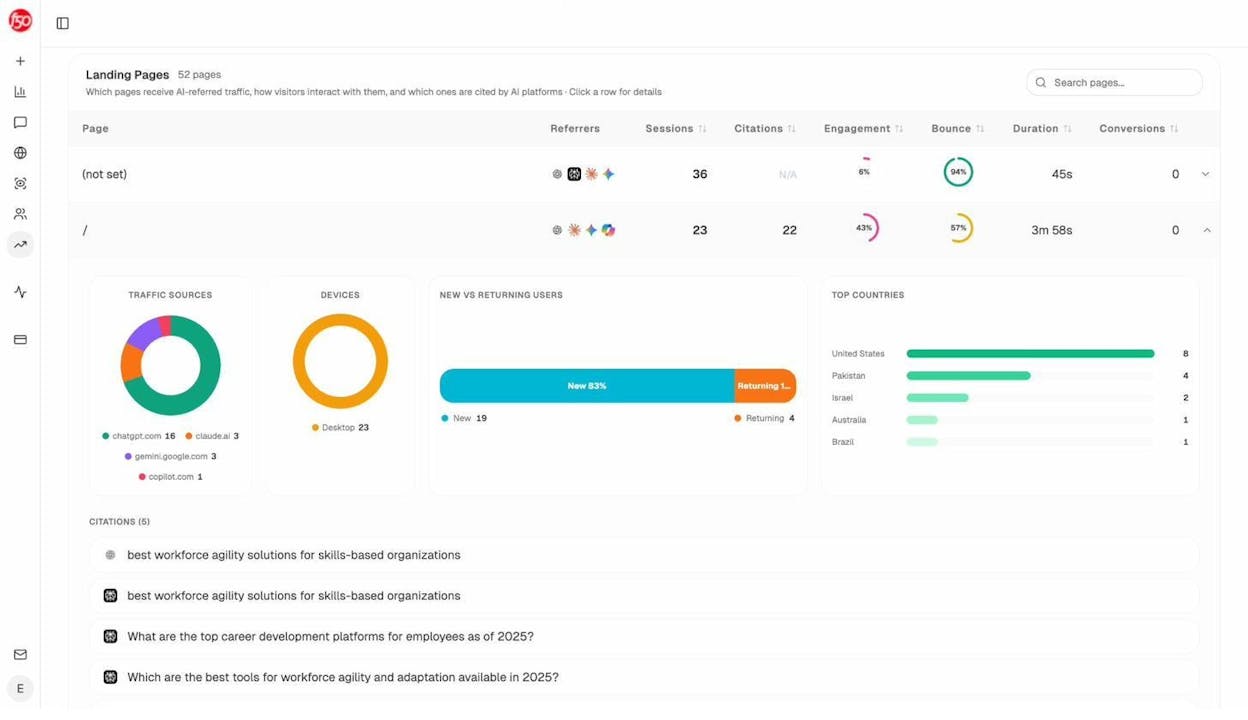
Track which pages receive AI traffic. AI Traffic Analytics shows how many visitors come from ChatGPT, Perplexity, Gemini, and other AI sources. It breaks down traffic by landing page, referrer, device, country, and engagement metrics. If certain pages are already getting AI traffic, study them. Find the patterns of what works and double down.
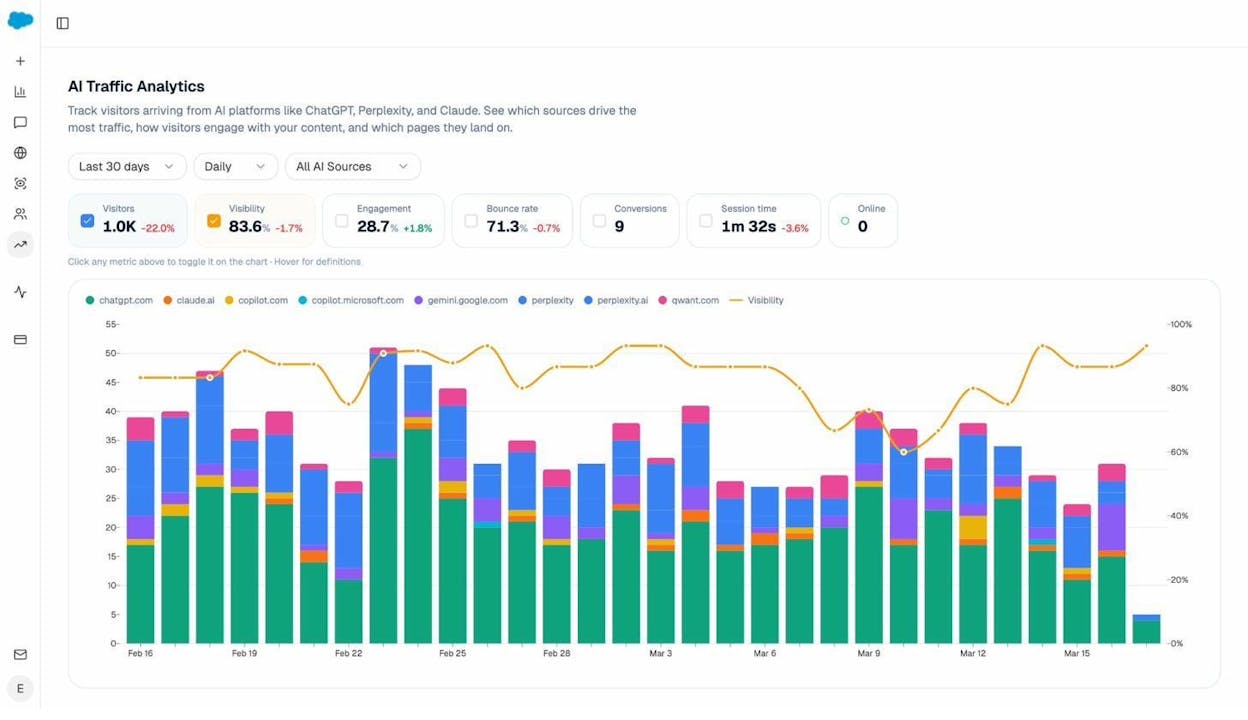
You can expand any landing page to see which specific AI prompts cited it, where the traffic comes from, and how those visitors behave compared to organic search visitors.
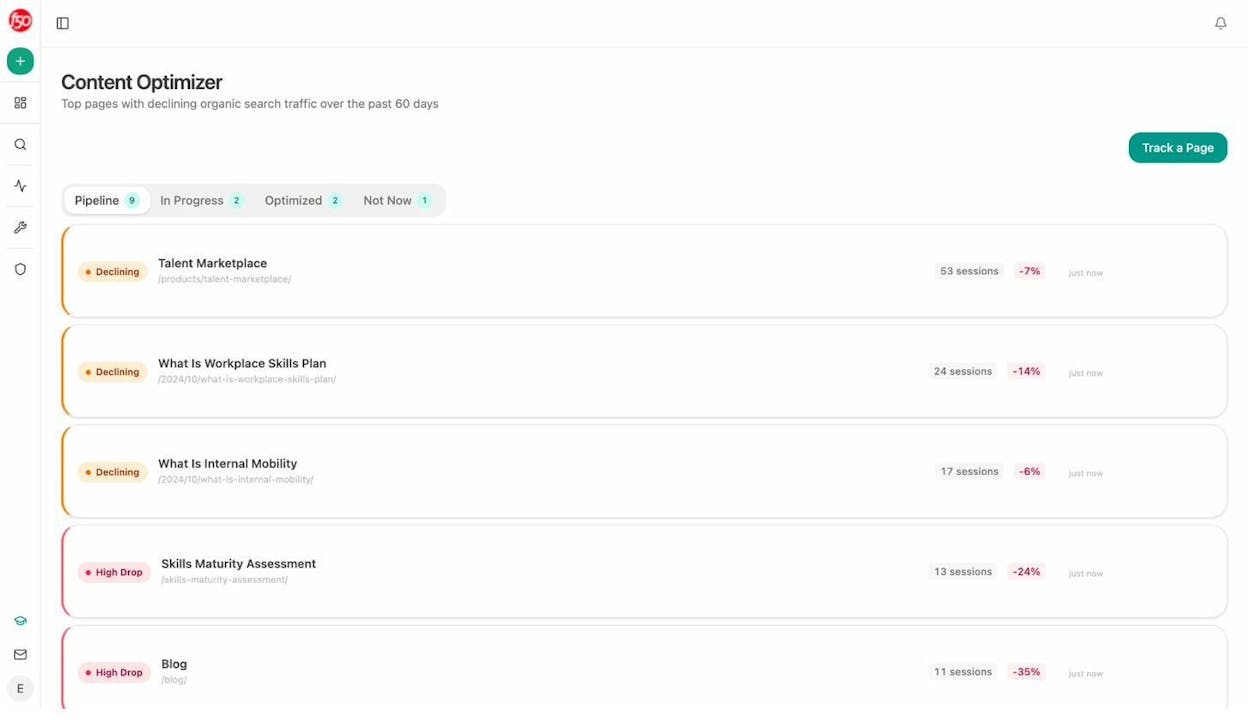
Optimize existing content for AI citation. Use the Content Optimizer to audit any URL for both search and AI performance. It scores your content on argument structure and clarity, identifies gaps where AI engines are citing competitors instead of you, and generates specific suggestions to improve citation likelihood.
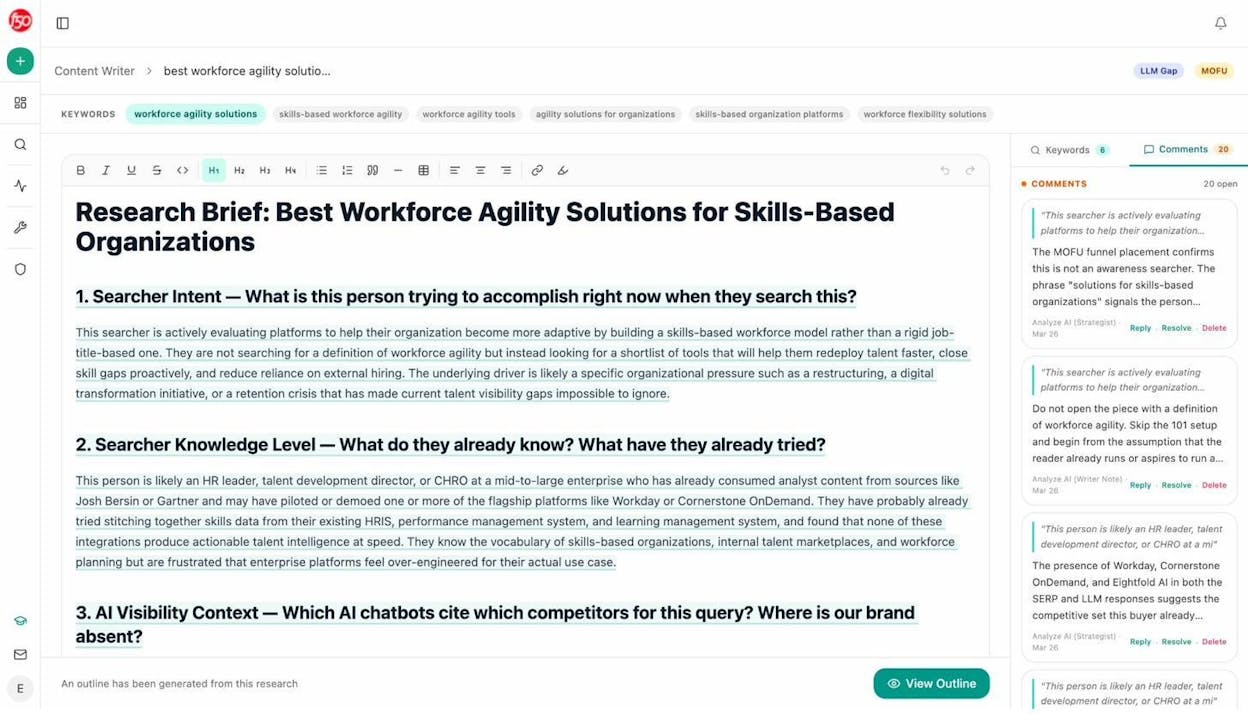
Create new content designed to get cited. The Content Writer takes you from idea to research to outline to draft, with AI visibility gaps and competitor analysis baked into every step. It shows which keywords LLMs associate with your topic and where your content strategy has blind spots.
Stay informed without logging in. Weekly Email Digests deliver prioritized actions, citation changes, and competitor shifts to your inbox every Monday. You see what moved without having to check the dashboard.
This is not an extra job. It’s an extension of the SEO work you’re already doing. The same content strategy, the same keyword research, the same link building. You’re just expanding your view to include a channel that’s growing fast and that most of your competitors are still ignoring.
What SEO experts actually earn
SEO is one of the few marketing disciplines where you can earn a strong income without a traditional degree. Here’s what the salary landscape looks like in 2026, based on data from ZipRecruiter, Glassdoor, Indeed, and industry surveys:
|
Experience level |
Average annual salary (US) |
Typical range |
|---|---|---|
|
Entry-level (0 to 2 years) |
$45,000 to $55,000 |
$35,000 to $65,000 |
|
Mid-level (3 to 5 years) |
$65,000 to $85,000 |
$53,000 to $100,000 |
|
Senior (5+ years) |
$85,000 to $115,000 |
$75,000 to $150,000+ |
|
Freelance / Consultant |
Varies widely |
$75 to $200+/hour |
A few things to keep in mind:
Location matters, but less than it used to. Remote work has narrowed the salary gap between major cities and smaller markets. A senior SEO in Denver can now command a salary close to what they’d earn in San Francisco, especially if they work for a distributed company.
Specialization pays. Technical SEOs and SEO managers earn significantly more than generalists. SEO managers earn roughly 40 percent more than specialists without leadership responsibilities.
AI expertise is the fastest-growing salary driver. SEO specialists who understand AI search, LLM optimization, and programmatic content strategies are seeing the fastest salary growth in 2026. Companies are willing to pay a premium for this skill because so few people have it.
Freelancers earn more per hour but carry more risk. According to industry surveys, freelance SEO consultants earn 20 to 40 percent more per hour than their full-time counterparts. But they also handle their own sales, admin, and dry spells between clients.
Final thoughts
Becoming an SEO expert is not an overnight process. It takes months of learning, practice, and real-world experience. But the path is clear: learn the fundamentals, build something, get hands-on experience, and specialize.
What’s different in 2026 is that the definition of “SEO expert” is expanding. It’s no longer enough to understand how Google ranks pages. The best SEO experts also understand how AI engines discover, evaluate, and cite content. They track their brand’s visibility across ChatGPT, Perplexity, and Gemini. They optimize their content to work in both traditional search and AI search.
This doesn’t mean SEO is dead. It means SEO is evolving, and the experts who evolve with it will be the ones who build the most successful careers.
Start with step one. Take a course. Build a site. Publish your first article and try to rank it. The rest follows from there.

Ernest

Ibrahim


