



Summarize this blog post with:


In this article, you’ll learn the exact tactics that took a service-based business from a goal of 800 event registrations to over 1,200 in a single week. You’ll also see how teams like Ahrefs sell out 500-person conferences, the email power words that pull people off the fence, and how to use AI search to find buyers who are already looking for events like yours.
Table of Contents
1. Plan a 7-step email sequence with urgency baked in
Email is still the highest-converting channel for events. According to Eventbrite, 45% of ticket sales can be attributed to email. When I ran a 7-step email sequence for a service-based client, they hit 1,200 registrations in 7 days against a target of 800. The list had even been purchased, which is the worst possible starting position for engagement.
The sequence had three jobs. First, build awareness without sounding desperate. Second, handle objections before they form. Third, drive a fast click with urgency.
Here is the sequence template you can copy:
|
|
Timing |
Job |
Subject line pattern |
|---|---|---|---|
|
1. Announcement |
4 to 6 weeks out |
Frame the value, not the date |
“30 days of $10K training, free” |
|
2. Speaker reveal |
3 weeks out |
Add proof and pull intent |
“Look who’s speaking at {event name}” |
|
3. Quick reminder |
2 weeks out |
Re-prompt the undecided |
“Quick Reminder {First Name}…” |
|
4. Objection handler |
10 days out |
Address “I’m too busy” |
“Why one hour will save you a quarter” |
|
5. Countdown |
5 days out |
Trigger fast action |
“Countdown: 5 days to {event}” |
|
6. Last call |
24 hours out |
Scarcity and FOMO |
“Final hours. Don’t regret this.” |
|
7. Post-event recap |
2 days after |
Build relationship for next time |
“Thank you, here’s the recording” |
Notice the words doing the heavy lifting. Countdown. Fast. Reminder. Free. Regret. These are power words that trigger a quick decision. Pair them with a value anchor like “the equivalent of a $9997 course” and you compress the perceived cost of clicking.
Two technical points matter more than most teams realize. Keep your HTML email under 100KB so Gmail does not clip it and your message stays out of the spam folder. Add a small CSS reset so iOS does not turn all your links default blue and break your brand. These are details, but they are the difference between a delivered email and a wasted send.
For the post-event email, do not stack three separate sends. Combine the thank-you, the recap, and a short feedback ask into one email. You stay top of mind without burning trust.
![[Screenshot: example plain-text event announcement email with subject line “30 days of $10K training, free” and clear CTA above the fold]](https://www.datocms-assets.com/164164/1777808317-blobid1.png?auto=format,compress&w=1248&fit=max)
2. Build an event landing page that ranks in Google and AI search
Your event page is the place every other tactic points to. It is also one of the few SEO assets that benefits from being live early, even when most of the details are still missing. Publish a placeholder version the week you confirm the date. Mark unconfirmed sections as “TBD” and update gradually. This gives Google and AI engines time to index the page before your push begins.
The page itself should include the event description, value proposition, full agenda, speaker lineup with bios, ticket tiers, FAQs, venue details with photos, and a section on why this event is worth flying for. Add the ticket purchase CTA above the fold and repeat it after every major section.
Here is where AI search changes the playbook. When buyers ask ChatGPT or Perplexity “what conferences should I attend in 2026,” the engines pull from event landing pages, conference roundup posts, and event aggregators. If your page is not structured for citation, you are invisible.
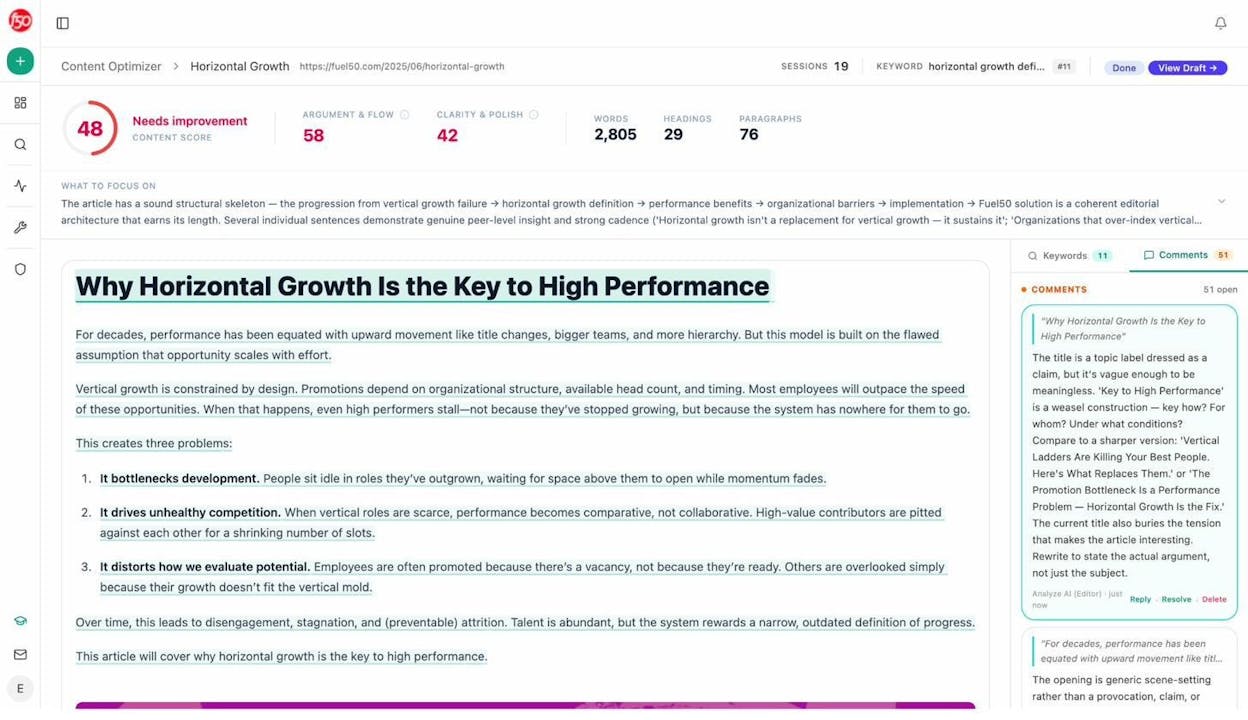
Two things move the needle. First, run your event page through the AI Content Optimizer to score it on argument structure and clarity, then apply the editorial suggestions before launch.
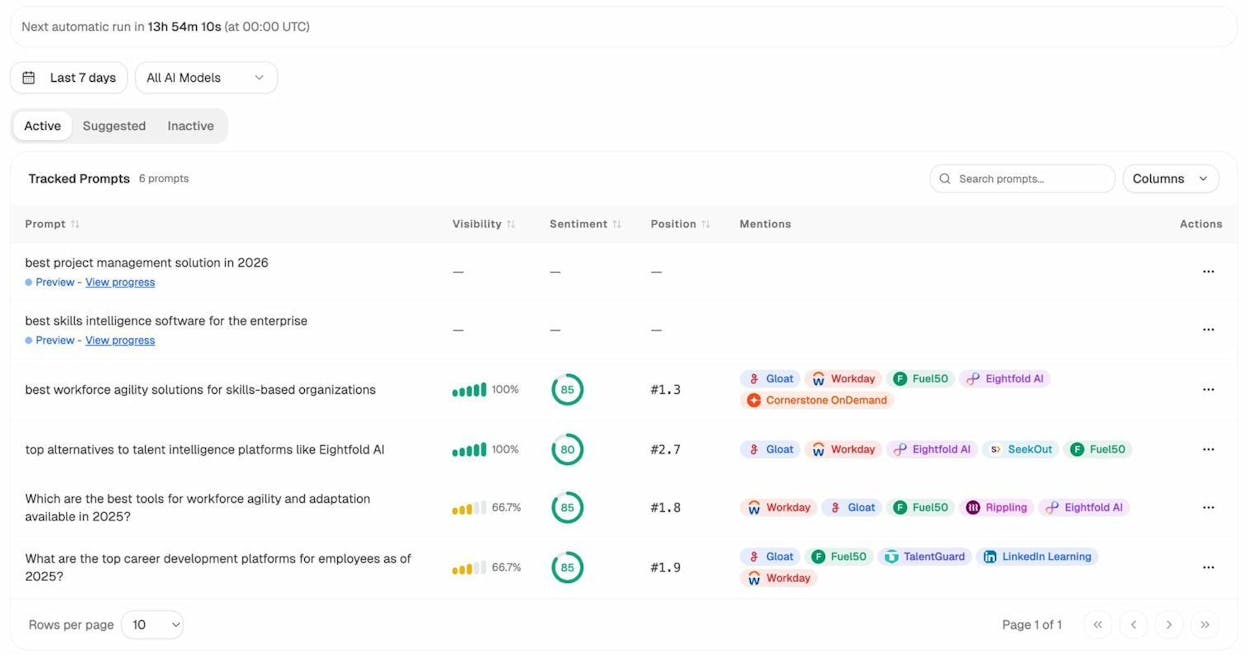
Second, set up AI Visibility Tracking for prompts your buyer is likely to ask. Examples include “best SEO conferences 2026,” “marketing events in Singapore,” or “conferences for B2B founders.” Track them weekly so you can see whether your page is being cited as the engines update.
3. Price strategically with early bird, group, and speaker codes
Event buyers are last-minute by default. Discount tiers exist to break that pattern. Use three layers, each doing a different job.
The early bird discount sets a clear deadline that gives undecided buyers a reason to commit now. A typical structure is 15 to 25 percent off until a date 6 to 8 weeks before the event. The group discount targets agencies and teams that send multiple people. Offer 15 to 20 percent off bulk buys of three or more tickets. The speaker discount code lives in the speaker’s hands. It rewards their followers and makes them feel they got special access.
A simple structure looks like this:
|
Tier |
Discount |
Audience |
Window |
|---|---|---|---|
|
Early bird |
20% |
Self-buyers ready to commit |
Until 8 weeks out |
|
Group (3+) |
15% |
Agency and corporate teams |
Open through close |
|
Speaker code |
10% to 15% |
Speaker followers |
Open through close |
|
VIP |
Premium tier, no discount |
Last-minute high-intent |
Open through close |
Do not offer the same discount everywhere. Discounts work because they are framed as rewards for a behavior. When everyone gets the same price, the urgency disappears.
4. Activate your owned channels without spamming
You already have a list, an in-app, a blog, and a team with social accounts. Most events under-use all four. The trick is variety, not frequency.
Send three to four emails to your full list across the campaign, each with a different angle. The first announces the event. The second teases a marquee speaker. The third highlights a niche topic for a segment. The last is the urgency push.
Run an in-app message inside your product that targets active users. This was Ahrefs’ move for Ahrefs Evolve, and it converts well because the audience is already engaged with your brand.
Place display banners on your highest-traffic blog pages. If you publish on a topic relevant to your event, a banner there gives every reader a quiet nudge.
Brief your team to post on LinkedIn and X. Give them three or four pre-written hooks they can adapt. Personal accounts outperform brand accounts for ticket clicks because the audience trusts a person more than a logo.
Vary the message every time. Speaker teaser, venue reveal, agenda drop, behind-the-scenes photo, attendee shout-out. Repeating “buy tickets” is the fastest way to get muted.
![[Screenshot: LinkedIn post from a team member promoting the event with a behind-the-scenes photo and clear ticket link]](https://www.datocms-assets.com/164164/1777808388-blobid4.png?auto=format,compress&w=1248&fit=max)
5. Tap your speakers’ audience with assets that make sharing easy
Speakers bring their followers, but only if you make sharing effortless. Most speakers want to promote, then forget because nobody sent them anything to use.
Send each speaker a kit that contains a 30-second promo video featuring their face and session topic, two static images sized for LinkedIn and X, three pre-written captions they can copy, and a unique discount code with their name in it. The discount code does two things. It tracks their referrals so you can prove ROI to next year’s speakers, and it makes their followers feel they got something exclusive.
Then ask for one specific commitment. “Can you post one of these in the next week?” gets a yes far more often than “promote whenever you can.” For your tier-1 speakers, also ask if they will mention the event in their newsletter. A single mention from someone like Aleyda Solis in SEOFOMO or Lia Smith in Lenny’s Newsletter can move 50 to 100 tickets on its own.
![[Screenshot: speaker promo card with the speaker’s photo, session title, event date, and unique discount code “ALEYDA15”]](https://www.datocms-assets.com/164164/1777808388-blobid5.png?auto=format,compress&w=1248&fit=max)
6. Build supporting content that catches event-intent searches
Your event landing page is one ranking opportunity. There are dozens of others. Buyers searching “best content marketing conferences” or “SEO events 2026” should find content you wrote, with your event mentioned naturally inside it.
Here is the keyword research workflow.
Open Ahrefs Keywords Explorer and enter a seed keyword for your industry. Go to the Matching Terms report. Filter for words like “conferences,” “events,” “summit,” “meetup,” and your industry terms.
![[Screenshot: Ahrefs Keywords Explorer Matching Terms report filtered for “conferences” with volume and KD columns visible]](https://www.datocms-assets.com/164164/1777808410-blobid6.png?auto=format,compress&w=1248&fit=max)
Pick the keywords with reasonable volume and a manageable difficulty. Write roundup posts that genuinely help the reader pick an event, then include yours where it fits naturally. The Ahrefs piece on SEO conferences ranks well every year because they refresh it before every event season.
Free alternatives work too. The Analyze AI Keyword Generator and SERP Checker cover the same workflow without a paid subscription. For deeper keyword research workflows, this guide walks through 9 tools.
Now layer in the AI search side. Buyers no longer just Google “best conferences.” They ask ChatGPT, Perplexity, and Gemini. The prompts they use are specific. “What marketing conferences should a B2B SaaS founder attend?” “Where do enterprise SEO leaders network?” “Best events for SEO agencies in Q1 2026?”
To find which prompts your buyer actually uses, open Prompt Discovery inside Analyze AI. The Suggested Prompts tab surfaces queries your audience is sending to AI engines that you are not yet tracking.
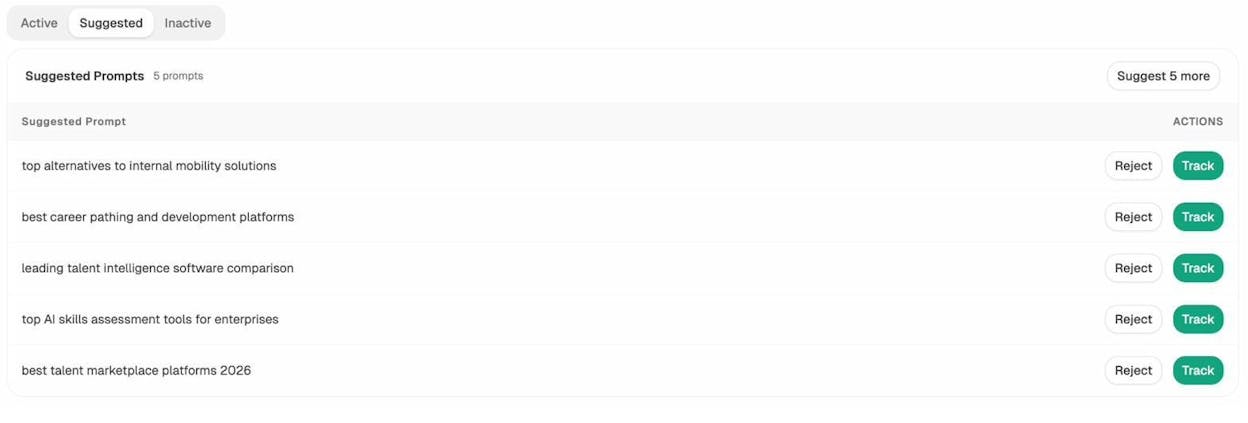
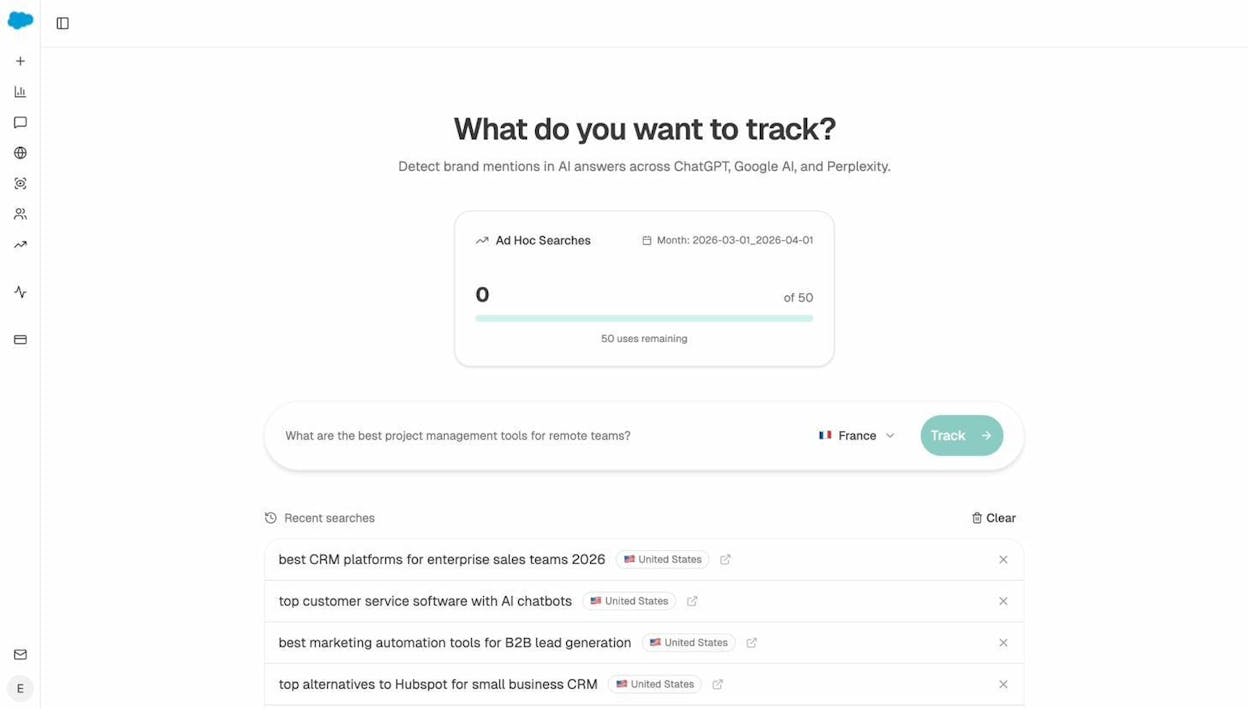
Track the ones that match your event and topic. Then use AI Search Explorer to see live what each engine returns for those prompts. You will discover which conference roundups, speaker interviews, and event pages get cited. Those are the publications worth pitching.
For pure measurement, AI Traffic Analytics shows which of your pages are pulling traffic from ChatGPT, Claude, Perplexity, and Copilot, and which prompts are sending it. Patterns emerge fast. Pages that get cited tend to share three traits. Clear original data, a strong opinion, and a specific structure that LLMs like to extract.
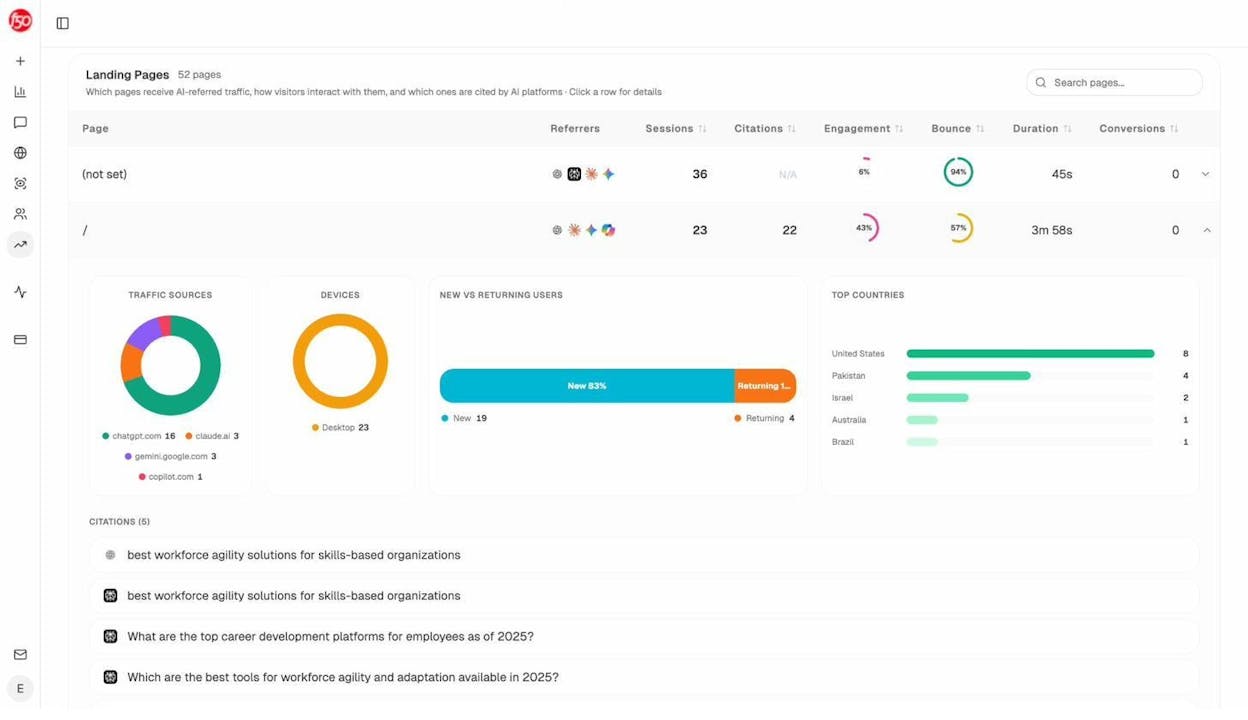
The other content asset most teams forget is the “convince your boss” post. Ahrefs wrote one for Evolve that included an email template attendees could send to their manager. It removes the last objection between an interested buyer and a confirmed seat.
7. Cross-promote at adjacent events and on podcasts
Anyone attending an industry event is the warmest possible audience for another industry event. The trick is to be where they already are.
Three patterns work. First, sponsor or speak at smaller events in your space. A roll-up banner with a QR code linking to your ticket page sits at the back of the room for two days. The emcee mentions you. The attendee gets the QR code in their photo roll. Second, get on three to five podcasts in the 90 days before your event. A natural mention near the end of an episode beats any pre-roll ad. Third, run your own webinars and end every one with a 30-second pitch for your conference plus a discount code for attendees.
If you publish content yourself, weave the event into existing high-traffic posts. A two-sentence callout at the top of a relevant article sends compounding traffic for months.
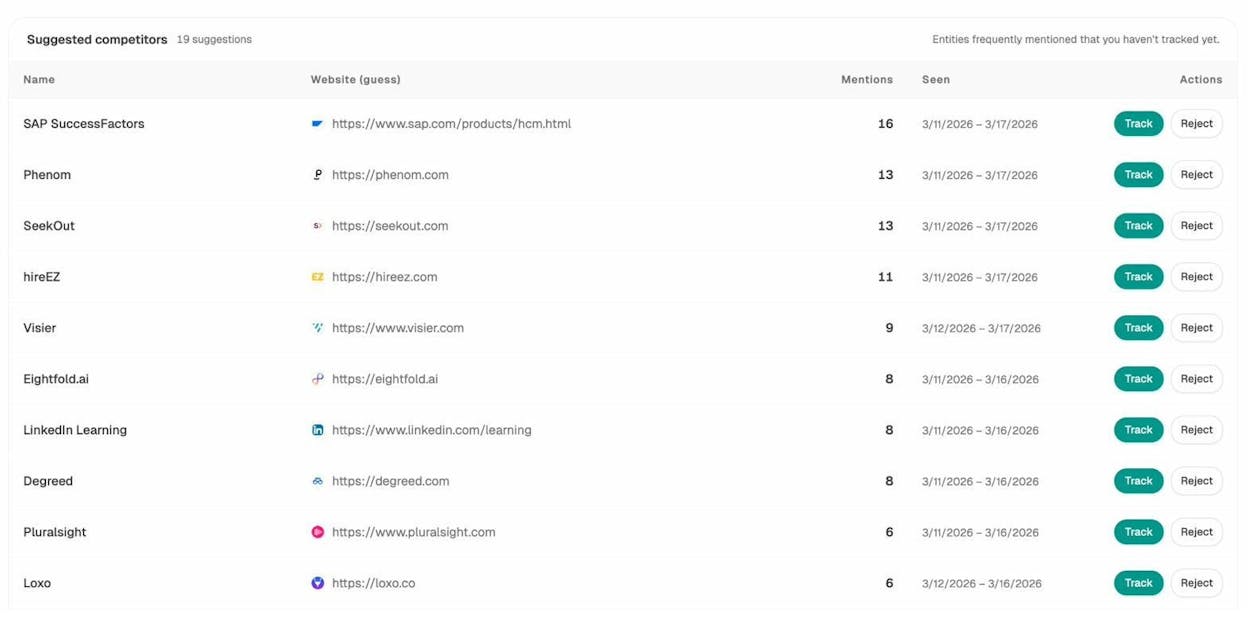
To find the right adjacent events to sponsor or speak at, use Competitor Intelligence inside Analyze AI to see which conferences and publications your competitors are getting cited at. Their playbook is your shortlist.
8. Build FOMO with social proof signals
FOMO is the most reliable behavioral trigger in event marketing. People want to be where their peers are, not where they should be.
Five signals work consistently.
A “tickets selling fast” post when 60 percent of inventory is gone. A “VIP sold out” post the moment the highest tier closes. A graphic showing where attendees are flying in from. This makes the event feel global. Pre-built social media cards attendees can post to say “I’ll be at {event}.” This turns every confirmed attendee into a promoter. A giveaway of one or two tickets in the final two weeks. This generates a wave of new follows and shares.
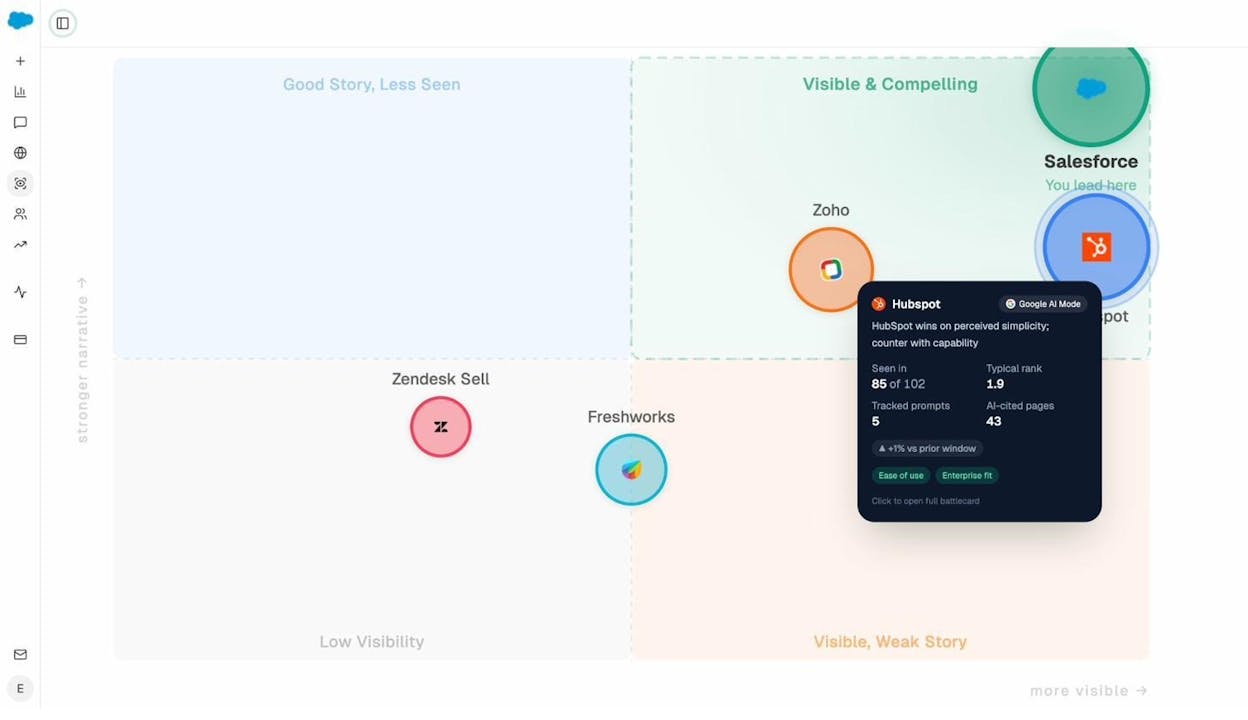
The signal that matters most is the one nobody fakes. When buyers are deciding whether to attend, they search what other people are saying. Use AI Sentiment Monitoring and the Perception Map to see how your event and brand are framed across AI engines. If the sentiment is positive and your event sits in the “Visible & Compelling” quadrant, double down on social proof. If you are seen but the narrative is weak, the FOMO push needs a different angle.
9. Run a marketing stunt worth talking about
Most event promotion looks the same. Same speaker cards, same launch posts, same countdown graphics. A stunt is what breaks the pattern and gives people a reason to share.
Ahrefs flew a giant branded helium balloon over Singapore for Evolve and turned the photos into ad creative. Deliveroo Singapore had staff walk the central business district in kangaroo onesies. Both worked because they were unmissable in their context.
The stunt does not need to be expensive. The cheapest version is a contrarian opinion. Publish a post that takes a strong, defensible position your industry usually avoids. Tag it to your event and watch the engagement compound. Another low-cost option is a public bet. “If we don’t sell out by date X, the next ticket is free.” This forces commentary.
Whatever stunt you run, measure its effect. Tag the campaign in your analytics. Track the spike in landing page traffic and ticket sales in the 48 hours after the stunt drops. If the stunt does not move the line, kill it next time.
10. Run paid ads with retargeting layered on
Paid is the lever you pull when organic is not enough. The tactic everyone runs is “run ads to your event landing page.” That alone wastes budget. Layer in retargeting and your CPA drops by half.
Here is the structure.
Run a top-of-funnel campaign on LinkedIn or Meta with a strong hook video and a CTA to the event page. For B2B events, LinkedIn outperforms Meta on lead quality even at a higher CPM. Use job title and industry targeting tight enough to hit your buyer.
Pixel everyone who visits the landing page but does not buy. This is your retargeting audience and it is the highest-intent group you can reach. Run a second campaign just to them with a different angle. A speaker testimonial, a discount code, or a “tickets selling fast” message all work.
Build a lookalike audience from confirmed ticket buyers. Run prospecting against that lookalike in the final three weeks. These are people who pattern-match to your existing buyers but have not heard of you yet.
Ahrefs spent around $8,000 on Meta ads for Evolve and used it to reinforce the rest of the campaign, not to do the heavy lifting. That is the right framing. Paid ads close the loop. They do not open it.
Final thoughts
Selling out an event is not a single big tactic. It is ten small ones that compound.
Email gets people on the page. The page converts them. Discounts give them a reason to act now. Owned channels, speakers, and supporting content widen the funnel. AI search puts you in front of buyers who never even hit Google. FOMO and stunts move the undecided. Paid ads close the gap.
What people miss is that none of this is replaced by AI search. SEO is not dead. Email is not dead. Events are not dead. The way buyers discover events is splitting across new channels, and the brands that fill rooms are the ones that show up in all of them. As we wrote in the Analyze AI manifesto, AI search is another organic channel to add to the stack, not a replacement for what already works.
If you stack these ten tactics with discipline, you will not just promote an event. You will sell it out.

Ernest

Ibrahim


