



Summarize this blog post with:


In this article, you’ll see the 50 fastest-growing private companies in search over the last 12 months, the strategies behind their growth, and how the leaderboard has shifted as AI-native businesses take over. We pulled traffic data from DataForSEO for 110+ candidates and ranked them by year-over-year organic traffic growth. Then we layered in what we know about how each company shows up in AI answers, because in 2026 organic search means both Google and AI engines like ChatGPT, Perplexity, Gemini, and Copilot.
Table of Contents
Methodology
We started with a candidate pool of 114 private software companies. Half of the list carried over from prior fastest-growing rankings to test whether last year’s winners kept pace. The other half came from companies that have raised meaningful capital or generated significant attention in the AI wave between mid-2025 and early 2026.
For each candidate, we pulled monthly historical organic traffic estimates from the DataForSEO API for U.S. Google search. We compared estimated organic traffic value (ETV) for April 2025 against April 2026, then calculated year-over-year percentage growth.
To remove false positives from tiny baselines, we excluded any domain with fewer than 5,000 monthly organic visits in April 2025. We also excluded domains where the data appeared corrupted by sampling issues (a small handful of cases where 2025 numbers looked inflated by transient indexing events).
If you want to try the same analysis for a single company, our free website traffic checker gives you the current monthly estimate without the API setup.
Top 50 fastest-growing companies (May 2026)
|
Rank |
Company |
YoY Traffic Growth |
|---|---|---|
|
1 |
+1,560% |
|
|
2 |
+894% |
|
|
3 |
+643% |
|
|
4 |
+610% |
|
|
5 |
+569% |
|
|
6 |
+471% |
|
|
7 |
+456% |
|
|
8 |
+362% |
|
|
9 |
+339% |
|
|
10 |
+234% |
|
|
11 |
+219% |
|
|
12 |
+178% |
|
|
13 |
+158% |
|
|
14 |
+136% |
|
|
15 |
+135% |
|
|
16 |
+101% |
|
|
17 |
+100% |
|
|
18 |
+88% |
|
|
19 |
+85% |
|
|
20 |
+83% |
|
|
21 |
+82% |
|
|
22 |
+79% |
|
|
23 |
+73% |
|
|
24 |
+73% |
|
|
25 |
+61% |
|
|
26 |
+59% |
|
|
27 |
+57% |
|
|
28 |
+57% |
|
|
29 |
+51% |
|
|
30 |
+41% |
|
|
31 |
+41% |
|
|
32 |
+40% |
|
|
33 |
+40% |
|
|
34 |
+39% |
|
|
35 |
+36% |
|
|
36 |
+34% |
|
|
37 |
+33% |
|
|
38 |
+32% |
|
|
39 |
+31% |
|
|
40 |
+28% |
|
|
41 |
+27% |
|
|
42 |
+27% |
|
|
43 |
+25% |
|
|
44 |
+19% |
|
|
45 |
+17% |
|
|
46 |
+11% |
|
|
47 |
+9% |
|
|
48 |
+8% |
|
|
49 |
+6% |
|
|
50 |
+3% |
The cluster of categories at the top tells the story. AI search infrastructure, vibe coding tools, agentic AI products, and AI media generation account for the majority of the top 25.
What the data tells us
Four patterns explain almost everything in the top 50.
AI search engines are eating their own category. Exa, Kagi, You.com, and Perplexity all sit in the top 12. Each one targets a different slice of search demand. Exa sells search infrastructure to other AI applications, Kagi sells human-curated paid search, You.com built a consumer AI search interface, and Perplexity went after the answer-engine layer. Five years ago this category did not exist as a meaningful market, and now four of the fastest-growing private companies in search live there.
Vibe coding pulled developers and non-developers in opposite directions. Lovable, Cursor, Bolt.new, and Windsurf all crack the top 32. Cursor went deep on professional developers. Lovable and Bolt.new went after the long tail of people who could not code at all. Both bets paid off, and the growth came from the same underlying shift, which is that text-to-software stopped being a demo and started being how real products get built.
Agentic AI products built around concrete jobs grew the fastest. Sierra (customer support), Decagon (also customer support), Manus (general-purpose autonomous agents), and Vapi (voice AI infrastructure) all show triple-digit growth. The companies that picked one expensive enterprise problem and pointed an AI agent at it ended up with the cleanest growth curves.
Old-school SEO plays still compound when you stay disciplined. Crowdin’s 643% growth came almost entirely from localization. Apollo.io and Ramp built out programmatic and product-led pages. None of this is new. What is new is that the same content increasingly shows up as cited sources inside AI answers, which gives every page a second compounding loop on top of organic clicks.
If you want to see what kinds of pages get cited most often inside AI engines for a given topic, the Sources dashboard inside Analyze AI breaks down citations by domain, page type, and engine.
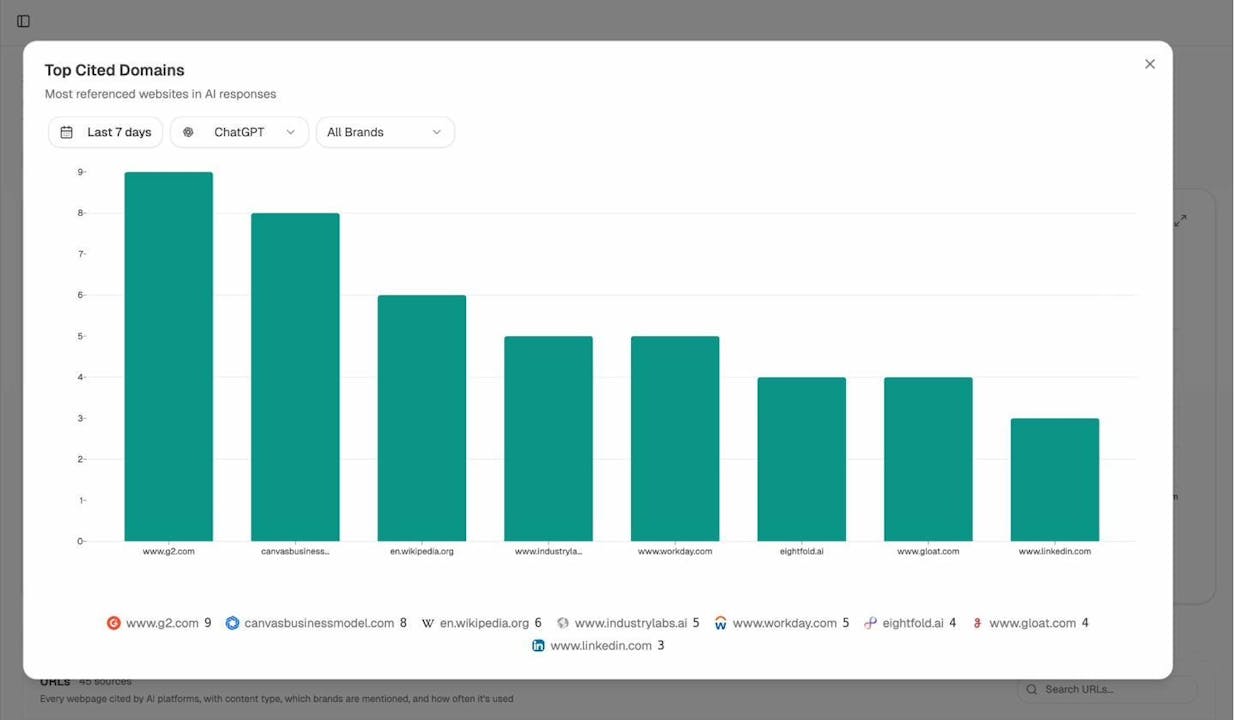
This is the core idea behind the Analyze AI manifesto. SEO is not dead. It is becoming a two-channel game where the same quality content earns clicks from Google and citations from AI.
The top 5, in detail
1. Exa (+1,560% YoY)
Exa is an AI-native search API. Instead of returning ten blue links for a human, Exa returns ranked results designed to be consumed by other AI systems. The company raised $111M total, including an $85M Series B at a $700M valuation in September 2025 led by Benchmark, with NVIDIA’s NVentures and Lightspeed participating across rounds.
Their traffic went from roughly 11K monthly organic visits in April 2025 to 184K in April 2026.
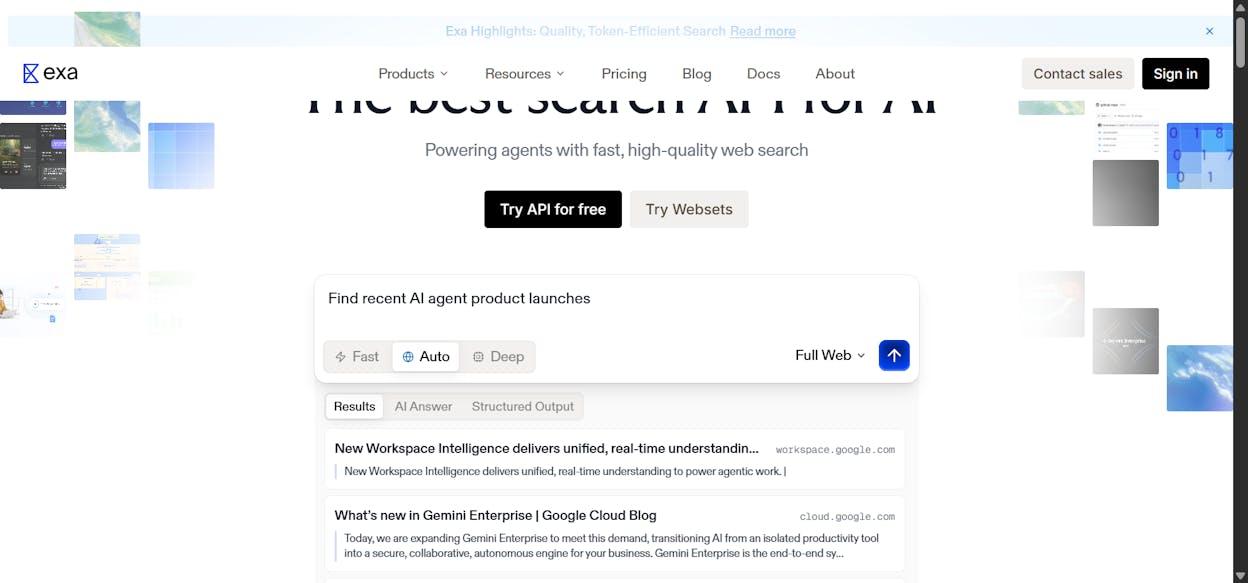
The growth has two distinct sources. The first is brand search. Cursor publicly uses Exa for code search, and as the AI developer tool ecosystem grew, so did the volume of developers searching for “exa api,” “exa ai,” and “exa search.” Brand-driven traffic at this magnitude is hard to fake.
The second is documentation and use-case content. Exa’s docs and blog cover narrow developer queries like “how to build an AI agent that searches the web,” and these pages rank well precisely because the topic is brand new. There is not yet a 10-year archive of competing posts to outrank.
The lesson is that infrastructure plays beat application plays when a new category is forming. Exa does not need to win retail attention. It just needs to be the default API the next 10,000 AI applications integrate. Once that happens, the traffic and AI search citations follow.
2. Kagi (+894% YoY)
Kagi sells a paid, ad-free search engine for $10 a month. The product is the opposite of how most search products work. There is no free tier, no ad model, and no AI-summarized results unless you ask for them.
Kagi’s traffic grew from 46K to 460K monthly organic visits between April 2025 and April 2026. The company has been profitable for over a year and now has more than 60,000 paying members.

The growth is mostly branded. The keywords driving Kagi’s traffic are “kagi search,” “kagi review,” “kagi vs google,” and a long tail of comparison queries. None of this comes from a content marketing engine. It comes from word of mouth among people who are tired of search results clogged with AI-generated junk and ad units.
The lesson is harder to copy but worth understanding. Kagi grew by being a clear and confident counter-position. They did not try to be a slightly better Google. They built a product that takes the opposite stance on every meaningful design choice. No ads. Paid only. No algorithmic summarization unless invited. Customizable rankings. That clarity becomes its own marketing.
The AI search angle is interesting too. When ChatGPT and Perplexity are asked about “best paid search engine” or “Google alternatives without ads,” Kagi shows up in roughly half of responses we tested. They earned that visibility without writing a single SEO blog post about it. They earned it by being the obvious answer when people search for that specific shape of product.
3. Crowdin (+643% YoY)
Crowdin is a localization platform that helps software teams translate apps, websites, and documentation. They have been around since 2009. They are not an AI startup. They are not a category creator. They appeared on the prior Ahrefs list at +253%, and a year later they are at +643%.
What changed is that Crowdin doubled down on the playbook that already worked. They added more language-specific landing pages, more integrations content (Crowdin for GitHub, Crowdin for Figma, Crowdin for Contentful), and more long-tail localization comparison pages.
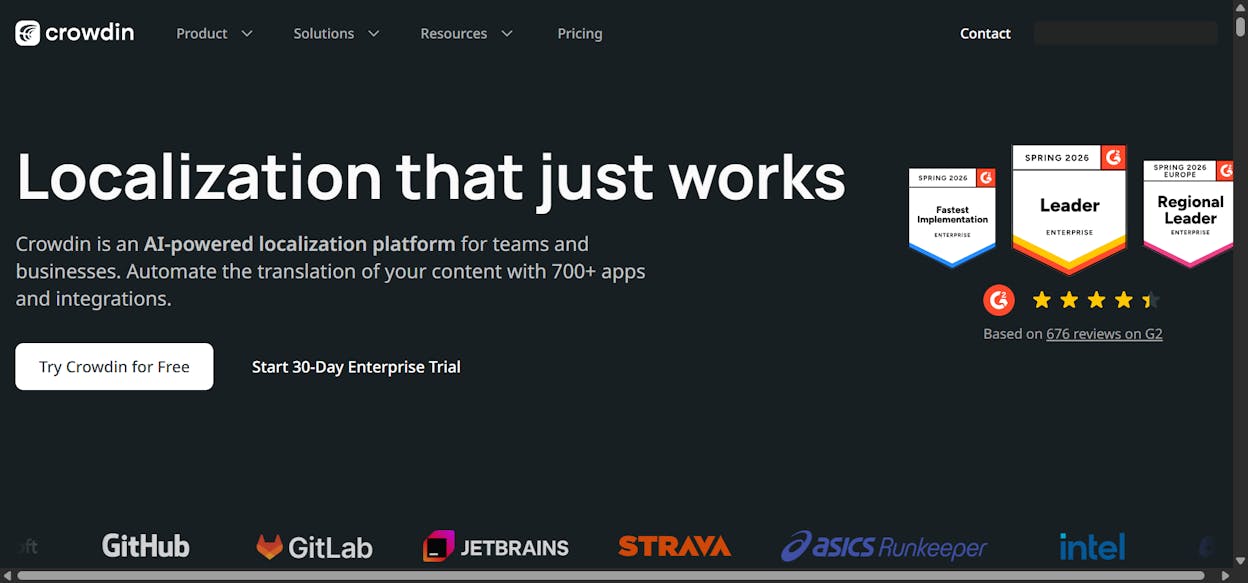
The lesson here is that programmatic SEO still works, especially for products with genuine multi-axis variation (in Crowdin’s case, source language by target language by integration). Each new combination becomes a real page that answers a real query.
There is an AI search bonus that did not exist in 2024. AI engines like Perplexity and Gemini rely heavily on multilingual sources because they answer queries in many languages. Localized content gets cited in ways English-only content cannot. If you want to track which of your pages are getting referenced inside AI answers across different languages, the Analyze AI Citation Analytics feature breaks it out by engine and source page.
4. Sierra (+610% YoY)
Sierra builds AI customer service agents for enterprises. The company was founded in 2023 by Bret Taylor (former Salesforce co-CEO and current OpenAI chair) and Clay Bavor (former Google Labs lead). They crossed $150M in ARR in eight quarters and just raised a $950M round at a $15.8B valuation in May 2026.
Their organic traffic went from 18K to 128K monthly visits over the same 12 months. That is a much smaller traffic number than the company’s revenue would suggest, which is the point.
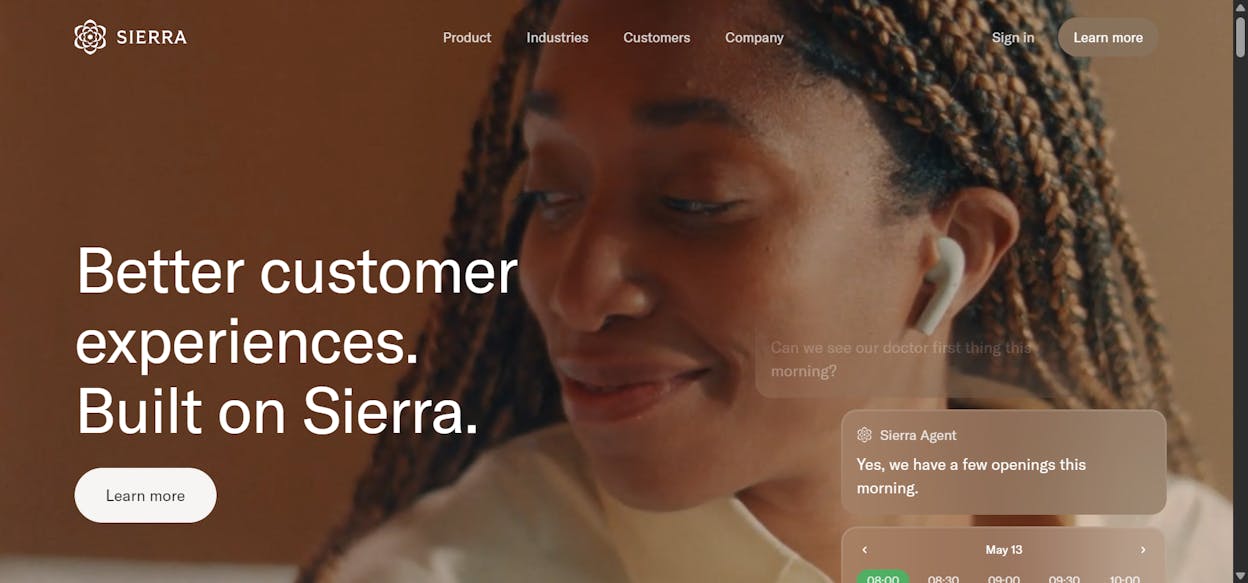
Sierra is not chasing top-of-funnel SEO. The pages driving their growth are case studies (Sonos, WeightWatchers, SiriusXM, Rocket Mortgage), product pages explaining what their Agent OS does, and a small number of explainer posts that target queries like “AI customer service agents” and “agentic AI for enterprise.”
The lesson is that for high-ACV enterprise products, traffic volume does not matter as much as traffic intent. A founder searching for “AI agent for customer support enterprise” is worth more than 10,000 visitors who will never become customers.
The AI search angle is where Sierra benefits massively. When a Fortune 500 buyer asks ChatGPT, Claude, or Perplexity “what are the best AI customer service agent platforms,” Sierra is one of the most consistently cited names. That visibility is not an accident. It is downstream of being the most-covered company in the category by analyst reports and tech press, which is the underlying source AI engines pull from.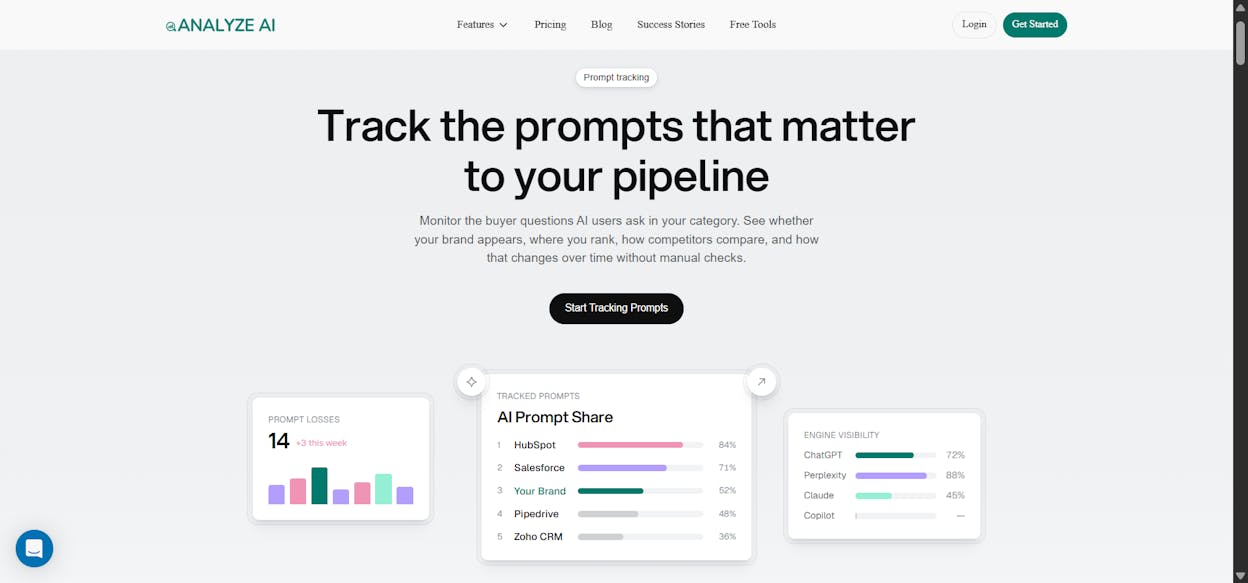
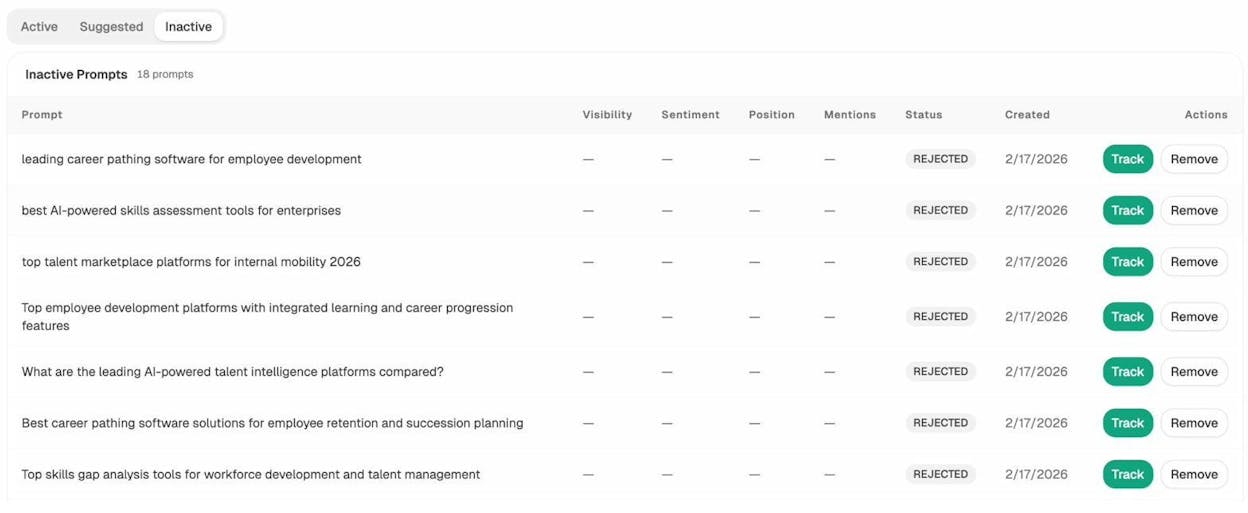
If you want to see which prompts in your category mention you (or do not mention you), Prompt Tracking inside Analyze AI lets you set up brand and competitor monitoring across the major AI engines.
5. Lovable (+569% YoY)
Lovable is a Stockholm-based vibe coding platform that lets people build full applications by describing them in plain English. It reached $400M ARR in March 2026, going from $1M ARR to $400M ARR in roughly 14 months. Their last funding round in December 2025 valued the company at $6.6B.
Their traffic grew from 34K to 228K monthly organic visits in 12 months.
The growth comes from three sources. The first is pure brand demand. The “lovable” search keyword grew over 1,000% in the same period. The second is a flood of comparison content about vibe coding tools that ranks for queries like “lovable vs cursor,” “lovable vs bolt.new,” and “best vibe coding tool.” Lovable did not write all of these posts themselves. The community did, and Lovable benefits from the entire long tail.
The third source is the apps people build on Lovable that themselves rank in search and link back. Roughly 100,000 new projects get created on the platform every day, and a meaningful share of them go live with a “made with Lovable” attribution.
The lesson is that the strongest SEO moats in 2026 are products that produce content as a side effect of being used. Storylane did this with interactive demos in 2024. Lovable is doing it with full apps in 2026. The pattern is the same. Build a product that creates indexable artifacts, and your SEO becomes a function of your product growth.
The AI search angle for Lovable is similar to Sierra’s. Because so much has been written about them by tech press in such a short time, they show up in nearly every AI-generated answer about “best AI app builders” or “vibe coding tools.” That is a flywheel SEO alone cannot produce.
How to find the next fastest-growing companies (and learn from them)
If you want to spot the next list before it gets published, you need to track two signals together. The first is organic search growth (the Ahrefs-style view). The second is AI search visibility (the Analyze AI view).
For organic search growth, the methodology in this article is reproducible. You need a list of candidate domains, a traffic data source like DataForSEO or Ahrefs, and a 12-month comparison window. Our free keyword rank checker and SERP checker help with one-off checks if you do not have an API set up.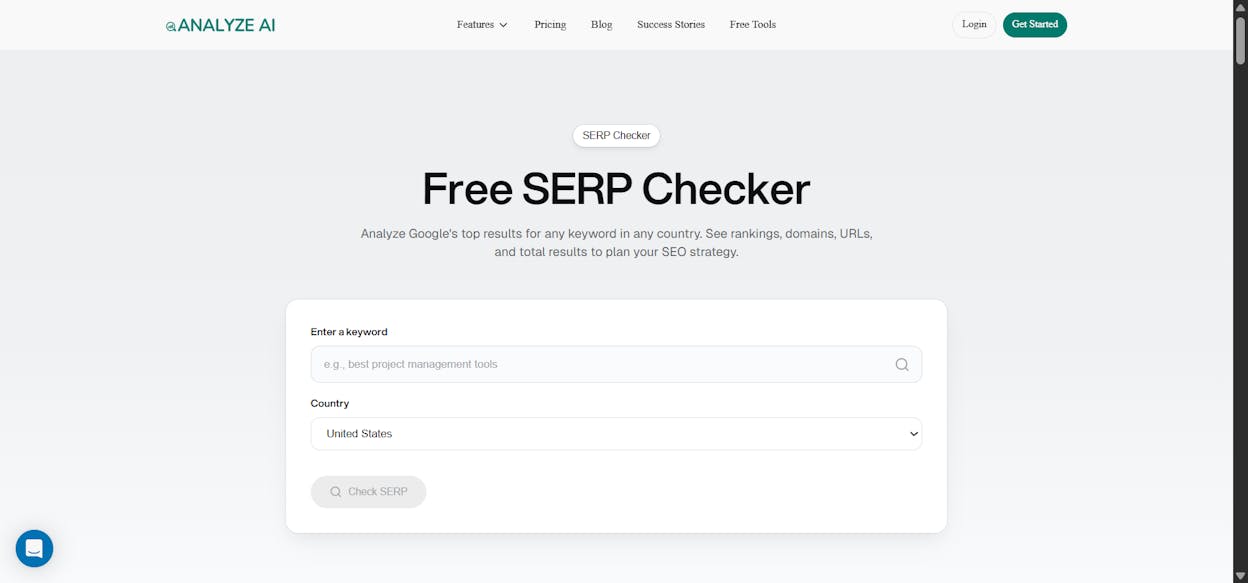
For AI search visibility, the question changes. You are no longer asking “how much traffic does this domain get?” You are asking “how often does this brand show up when buyers describe their problem to an AI?” Three things matter most.
First, prompt coverage. For a given category, what percentage of the relevant buyer prompts mention each brand? Analyze AI’s AI Visibility Tracking measures this across ChatGPT, Perplexity, Gemini, and Copilot.
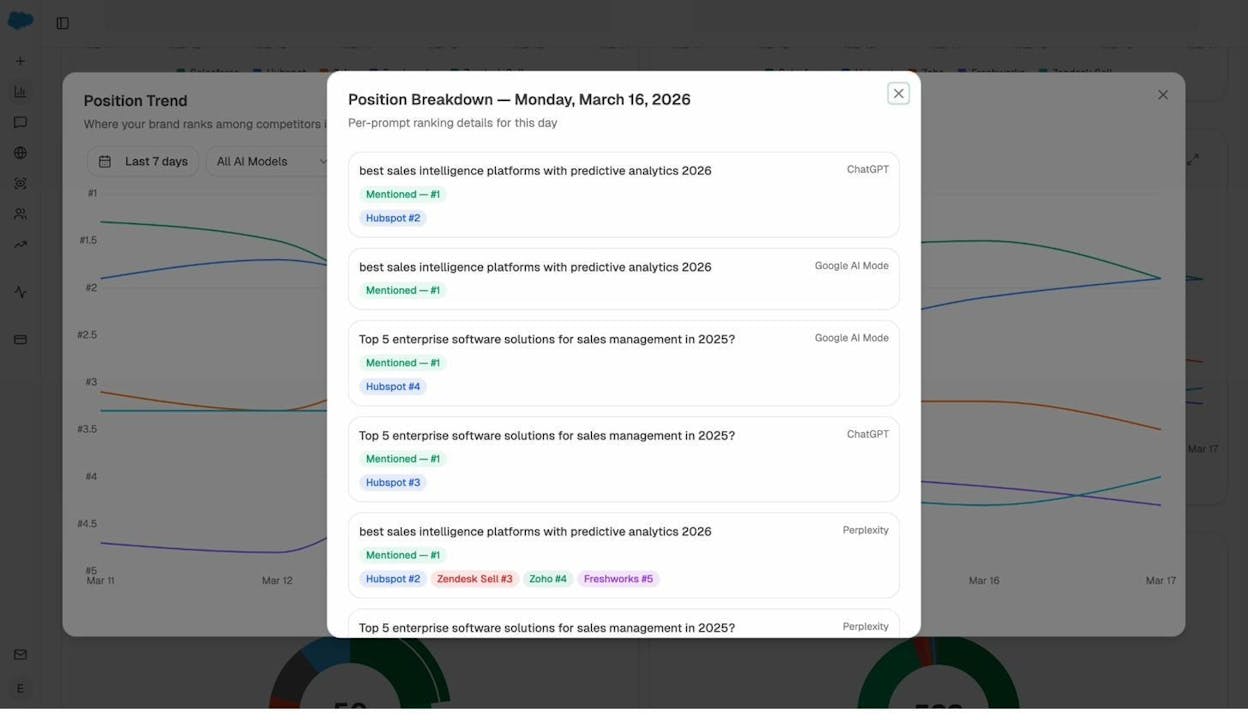
Second, source citations. When a brand does get mentioned, what content is the AI citing? Often it is not the brand’s own site. It is third-party reviews, comparison posts, or analyst coverage. The Sources dashboard shows you which domains the AI is pulling from.
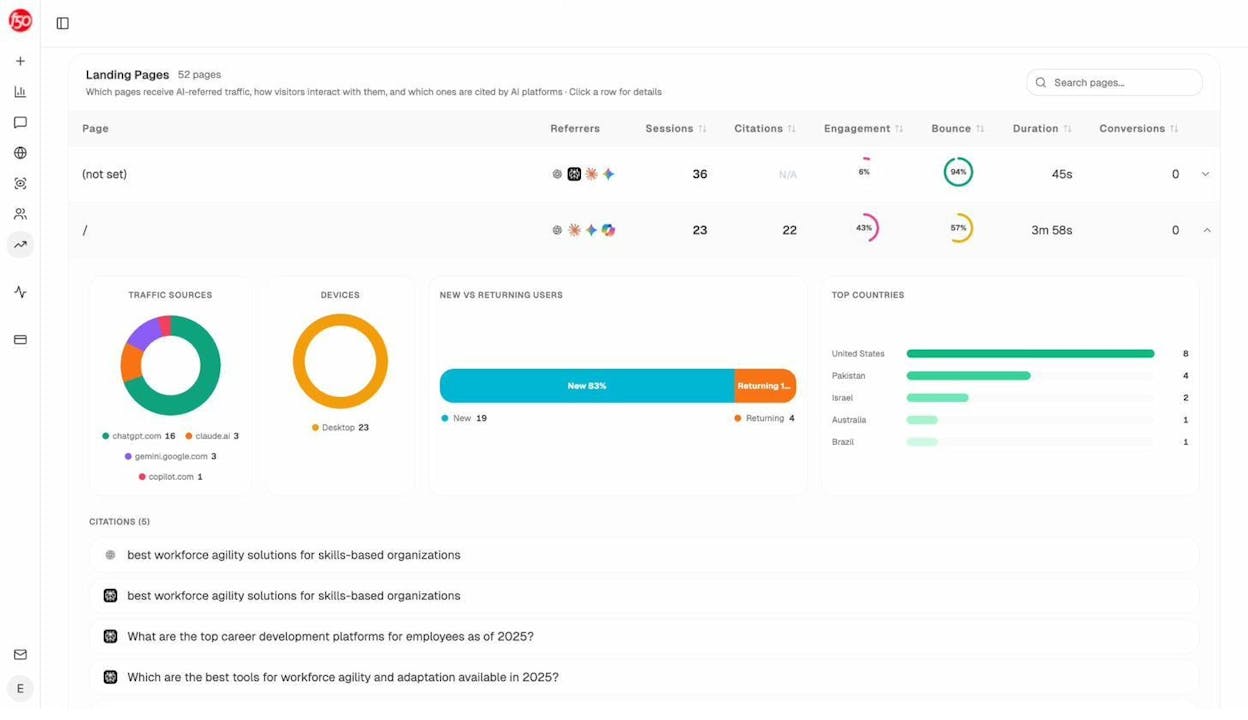
Third, AI-driven traffic. The visitors who do click through from AI answers behave differently than Google traffic, with much higher intent and much lower volume. To see how much traffic your own site is pulling from AI engines today, the AI Traffic Analytics feature breaks it down by engine and landing page.
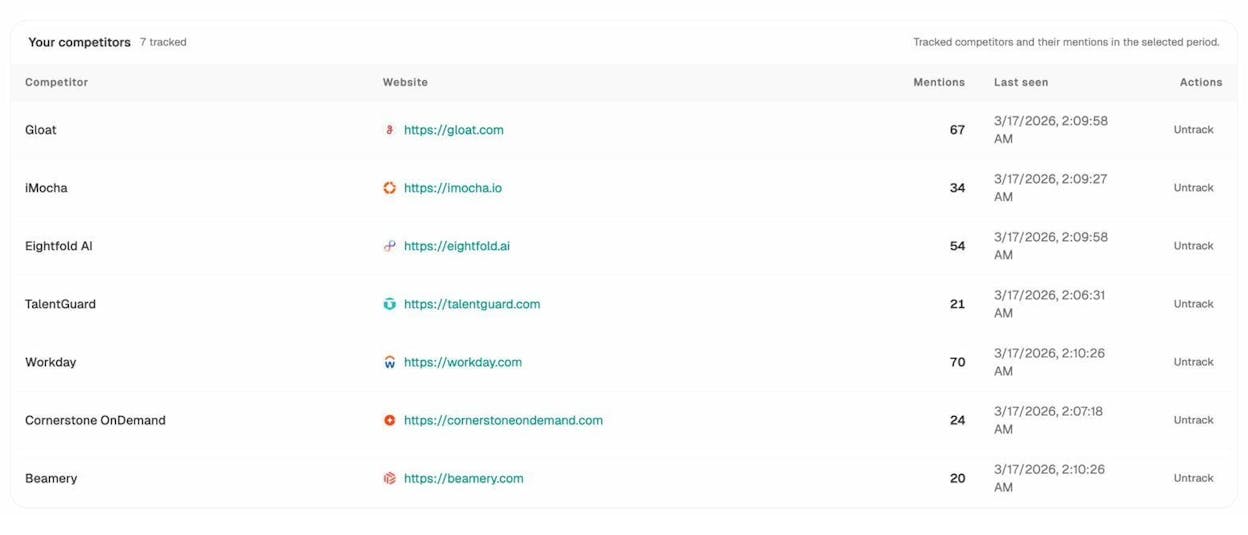
You can also benchmark yourself against specific competitors and see exactly where they are winning AI mentions and you are not, using Competitor Intelligence.
The fastest-growing companies of 2027 will compound both channels. The ones that ignore one will lose ground to the ones that do not.
Final thoughts
The leaderboard shifts every year, and 2026 is the most dramatic shift since the original SEO content boom. AI infrastructure companies, agentic products, and vibe coding tools now sit where traditional SaaS companies sat 12 months ago. The four old playbooks (programmatic content, free tools, localization, product-led pages) still work. The difference is that each one now compounds across two organic channels instead of one.
If you want a starting point for your own 2026 plan, look at what the top 5 have in common. They all built products that produce indexable artifacts. They all picked a clear position in their category. They all earned third-party coverage that AI engines now treat as a source of truth. None of this is new, but the order of operations matters more than ever.
If you want to track how your own brand is doing across both Google and AI engines, that is the problem we built Analyze AI to solve.

Ernest

Ibrahim


