



Summarize this blog post with:


In this article, you’ll learn what content syndication is, how it differs from guest posting and repurposing, how it affects both SEO and AI search visibility, and a five-step playbook for syndicating your own content. We’ll also cover how to pick the right pieces, find publications that will actually publish you, write a pitch that gets answered, and track whether the effort is paying off.
Table of Contents
What is content syndication?
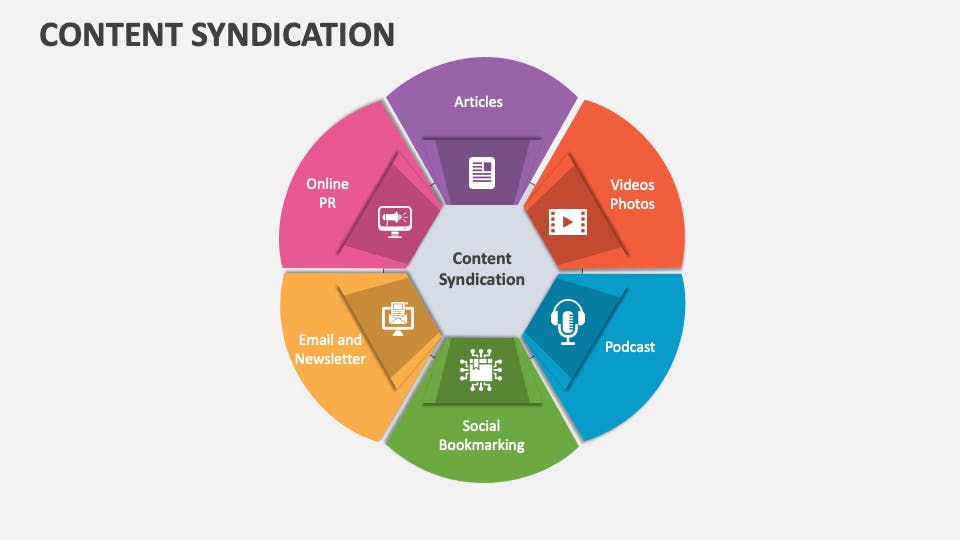
Content syndication is when a third-party website republishes a piece of content that originally appeared elsewhere, usually word for word and with attribution back to the original.
The classic example is James Clear. He published a post about deliberate practice on his personal blog. Lifehacker later republished the same article, with a line at the top crediting James as the original author and linking back to his site. Same article, two homes, one source of record.
The publication gets free, proven content. The original author gets a new audience. Both sides win when the deal is structured well.
The benefits of content syndication
There are five concrete benefits. Each one compounds when you do it consistently.
1. Referral traffic
Most publications credit the source and link back to it. Readers who enjoy the syndicated piece often click through to read more from the original author. James Clear used this exact channel to drive a large portion of his early audience.
2. Email subscribers and leads
A bio link or a soft CTA inside the syndicated piece can pull qualified readers straight onto your list. Sarah Peterson reportedly added more than 1,000 subscribers from a single syndicated article on EliteDaily by negotiating a link back to her course in the author bio.
3. Brand authority
Seeing your byline on Inc., Reuters, or Entrepreneur creates a halo effect. Readers transfer the credibility of the publication onto you. Repeat exposure across several outlets makes your brand feel familiar and trustworthy.
4. Backlinks (when negotiated)
A canonical-tagged syndication doesn’t pass link equity in the same way as a regular backlink. But plenty of publications use a standard followed link to the original. That counts as a real link from a high-authority domain, which still feeds into off-page SEO signals.
5. AI search citations
This is the benefit most syndication articles miss. Large language models like ChatGPT, Perplexity, and Google’s AI Mode pull from a small pool of trusted publications when generating answers. If your content lives on G2, Forbes, or a top trade publication, the LLM is more likely to cite that version than your original. The mention still travels with your name attached, which means more visibility in AI answers even when the click goes to the publication.
This is why we treat syndication as both an SEO play and an AI search play.
Content syndication vs. repurposing vs. guest blogging
Three terms get confused often. Here is the cleanest way to keep them straight.
|
Tactic |
What it is |
Original or new content |
Where it lives |
|---|---|---|---|
|
Syndication |
Republishing the same piece on another site |
Original |
Your site + the partner site |
|
Repurposing |
Turning an article into a different format |
Same content, new form |
Wherever the new format fits |
|
Guest blogging |
Writing a brand new piece for another publication |
New |
Only the publication |
Repurposing changes the medium (a post becomes a video, podcast episode, carousel, or infographic). Guest blogging is a fresh piece written for one publication only. Syndication is the same article living in two or more homes. That is what makes it scalable. You write once and distribute many times.
How content syndication affects SEO
The first concern most marketers have is duplicate content. The fear is reasonable. Google’s documentation does flag content duplicated across domains as a potential ranking manipulation tactic.
But Google has been clear there is no duplicate content penalty for legitimate syndication. The system clusters duplicates, identifies the original, and ranks that one for the relevant queries.
The real risk is different. When Google’s algorithm gets confused about which version is the original, the syndicated copy can outrank your own. This happens most often when a small site syndicates to a much larger one, because authority signals push the bigger version forward.
Two technical safeguards prevent this.
-
Canonical link tags. The syndicated version includes rel="canonical" pointing to your original URL. This tells search engines that yours is the source.
-
Noindex on the syndicated copy. Google’s current preference is for the publication to noindex the syndicated piece entirely. Cleaner, but harder to negotiate, since publications usually want their republished pages indexed.
If you can get noindex, take it. If you cannot, push for canonical. If neither is possible, walk away or accept the tradeoff with eyes open.
How content syndication affects AI search
AI search behaves differently from Google, and this is where most syndication advice falls behind.
When an LLM cites a piece of content, it usually cites the version it has crawled most often or the one on a domain it trusts most. That is rarely the small site. It is usually the publication.
Two implications follow.
First, syndication can lift your AI search visibility even when it appears to cannibalize your direct traffic. The mention still carries your name and brand, and that shapes how AI answers describe you.
Second, you need to track which version of the content gets cited, because looking only at your own analytics will undercount syndication’s contribution.
Analyze AI’s citation analytics shows every URL across the web that AI platforms cite when answering questions about your industry, broken down by content type and top cited domains.
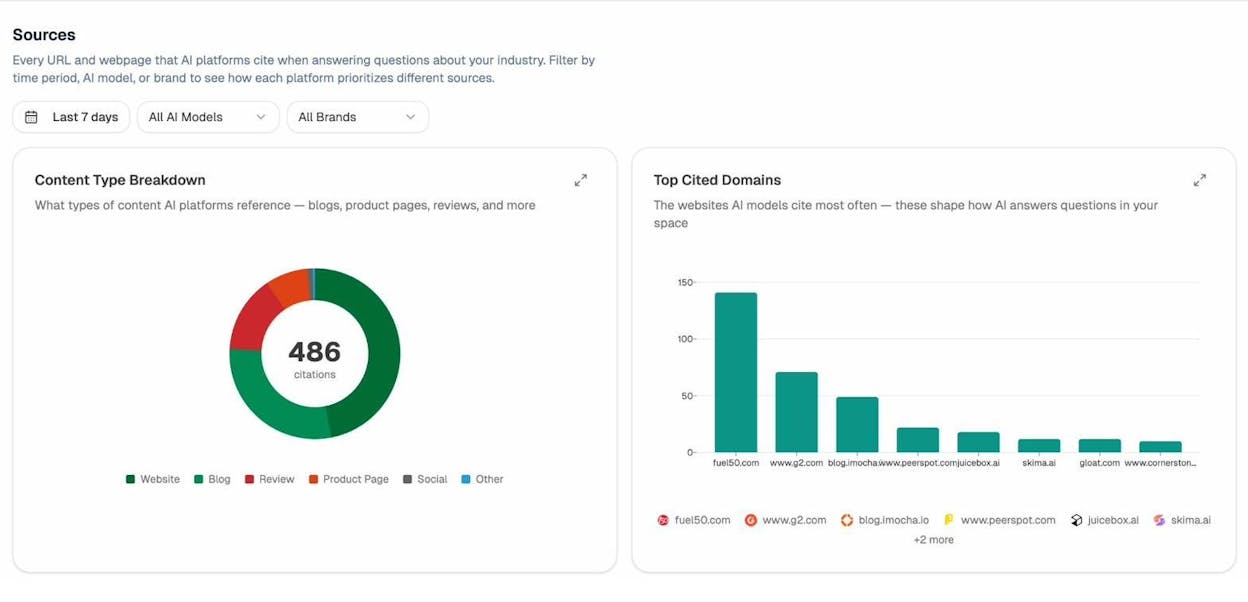
The publications at the top of that chart are the ones already trusted by AI engines. Those are the ones worth pitching for syndication. More on this in Step 2 below.
How to get started with content syndication
Five steps. Skip none.
Step 1: Pick the right content to syndicate
Not every piece is worth syndicating. The candidates that earn placements share three traits.
-
Evergreen. The information stays useful for years.
-
Already proven. It has earned traffic, links, or AI citations on its own.
-
Standalone. A reader can finish it without needing five other pieces of context.
To find these on your own site, look at three signals.
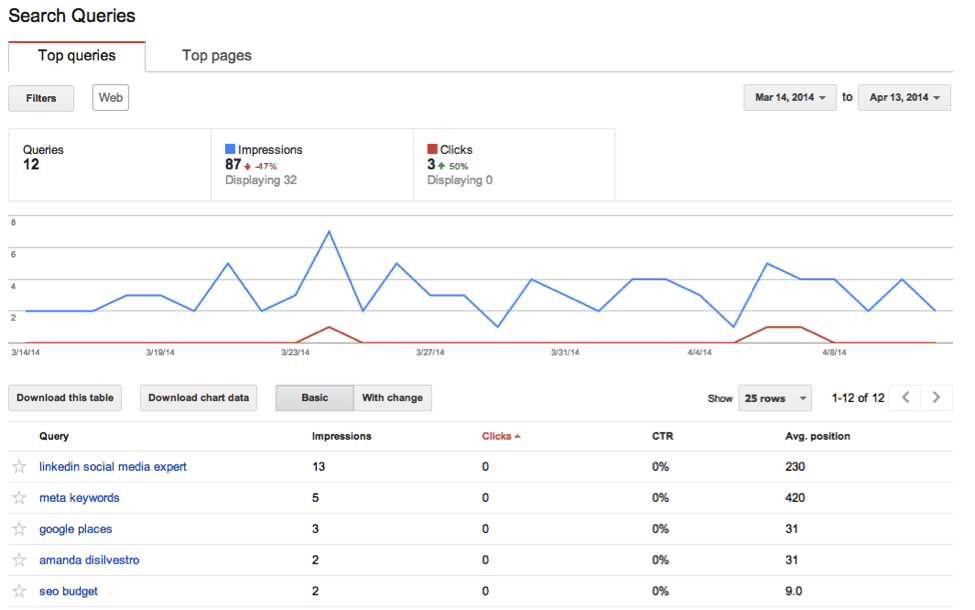
The first is search traffic. Pull up Google Analytics 4 or Google Search Console and sort blog posts by organic sessions over the last 12 months. Anything in your top 20 is a syndication candidate.
The second is your backlink profile. A piece that has already attracted links is one publications will want to feature. Use the website authority checker to gauge the strength of pages already linking to it.
The third is AI traffic and citations. If a page is already getting cited by LLMs or pulling traffic from AI engines, it has the structure and authority that AI search rewards. The AI Traffic Analytics feature in Analyze AI shows you exactly which of your pages receive AI-referred traffic, how visitors interact with them, and which are cited by AI platforms.
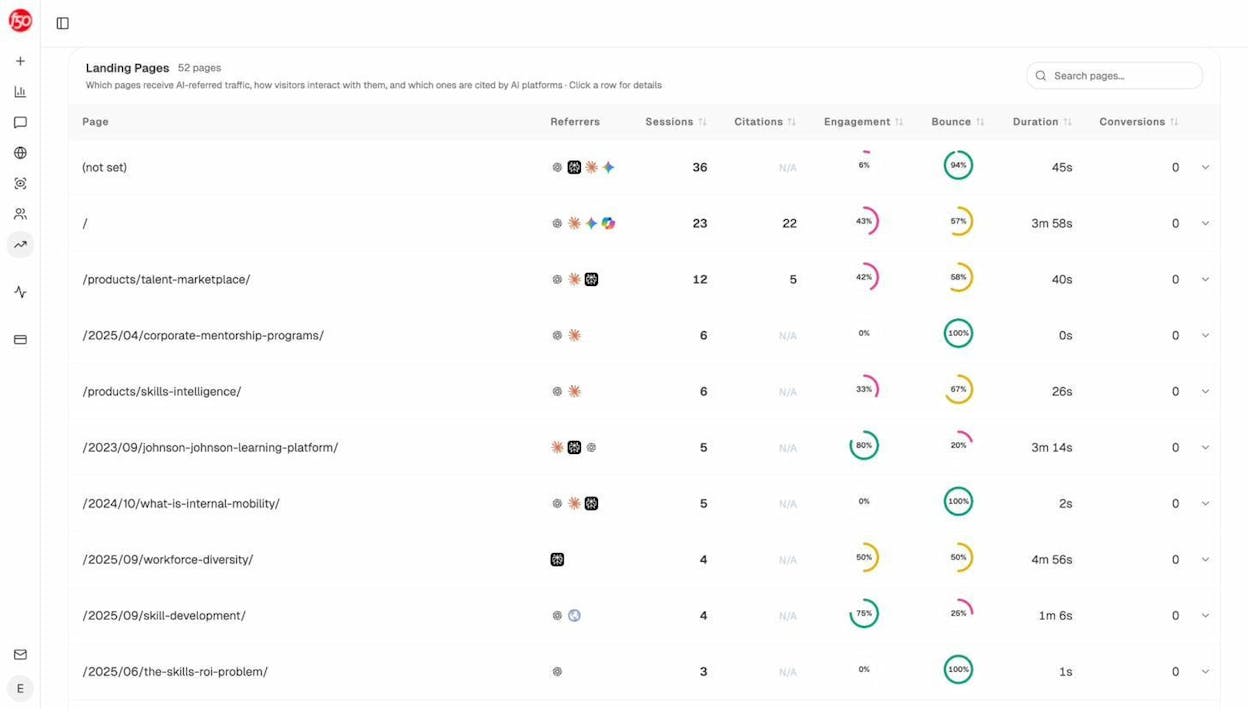
Sort by Citations or Sessions to find your syndication candidates. The pages with the highest citation counts are already proving they have the structure LLMs trust. Those are the ones to take to publications next.
Step 2: Find publications worth pitching
There are three reliable methods for finding publications that accept syndicated content.
Method 1. Use Google search operators
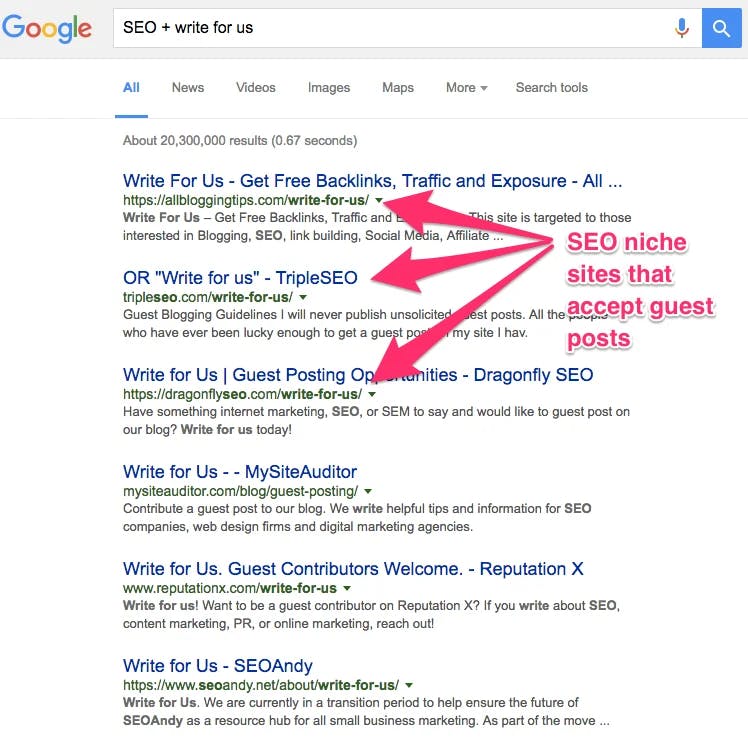
Most publications that publish syndicated work include a phrase like “originally appeared on” or “republished with permission” near the top or bottom of the article. You can find these with a simple search.
Try queries like:
-
"originally appeared on" + [your topic]
-
"republished with permission" + [your topic]
-
"this article originally appeared on" site:[domain you have in mind]
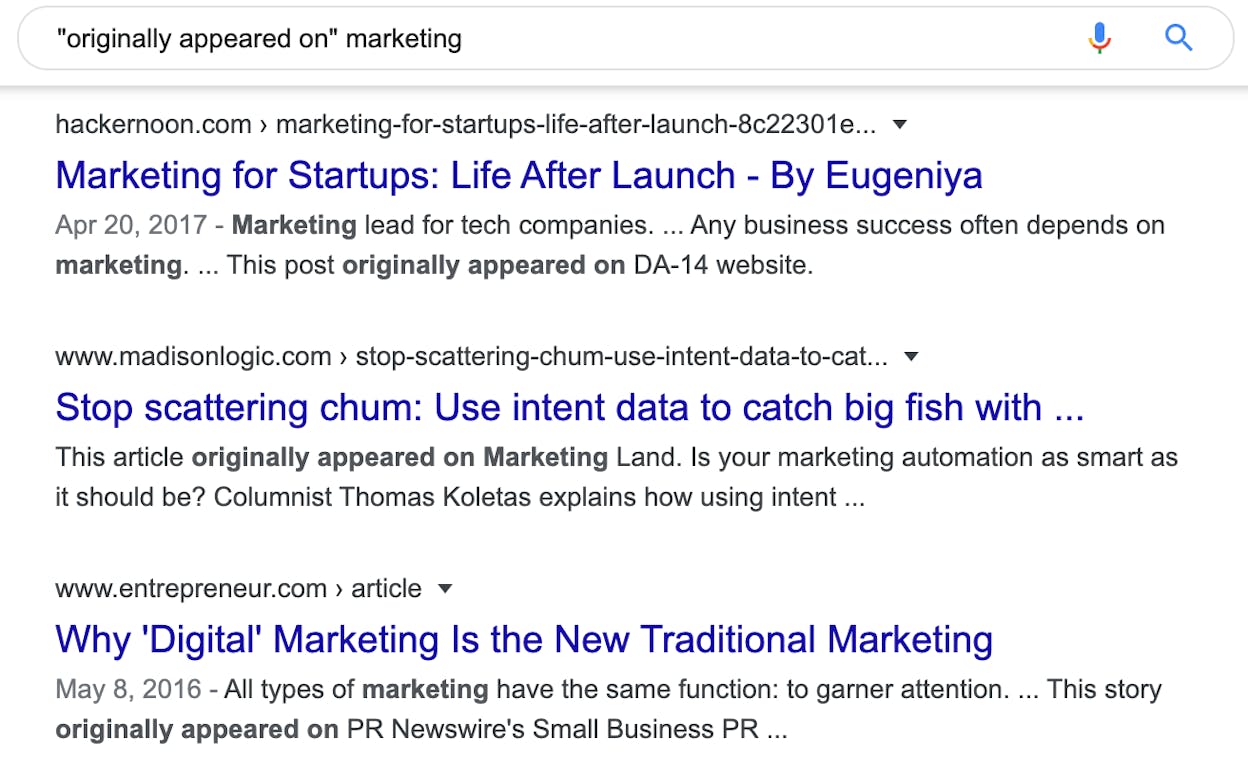
If a publication shows up in these results once, they syndicate. If they show up dozens of times, they syndicate often.
Method 2. Use an SEO toolbar to score the SERP
Browser SEO toolbars overlay each Google result with a domain authority score and traffic estimate. You can scan a single SERP and immediately see which of the publications that syndicate also have the authority worth pitching.

Method 3. Use AI citation analysis to find LLM-trusted publications
This is where Analyze AI changes the playbook. Most syndication targeting still relies on SEO authority alone. In 2026, the better signal is which publications LLMs already trust as sources.
Open the Sources dashboard and filter by your industry. Look at the URLs that show up most often in AI answers.
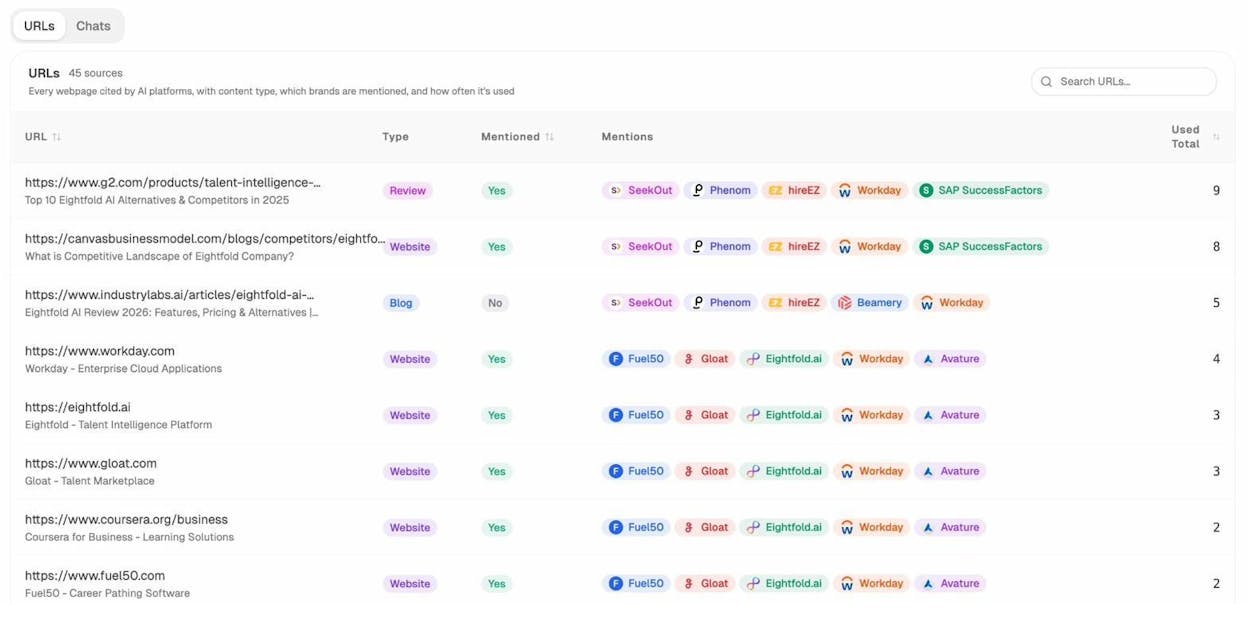
These are the URLs that ChatGPT, Perplexity, Gemini, and Google AI Mode reference when answering questions about your category. A syndication placement on any of these has compounding value. You get the SEO benefit, the referral traffic, and a high probability of being cited inside AI answers.
You can do the same exercise for your competitors. Analyze AI’s competitor intelligence view shows which third-party domains drive mentions for the brands you track.
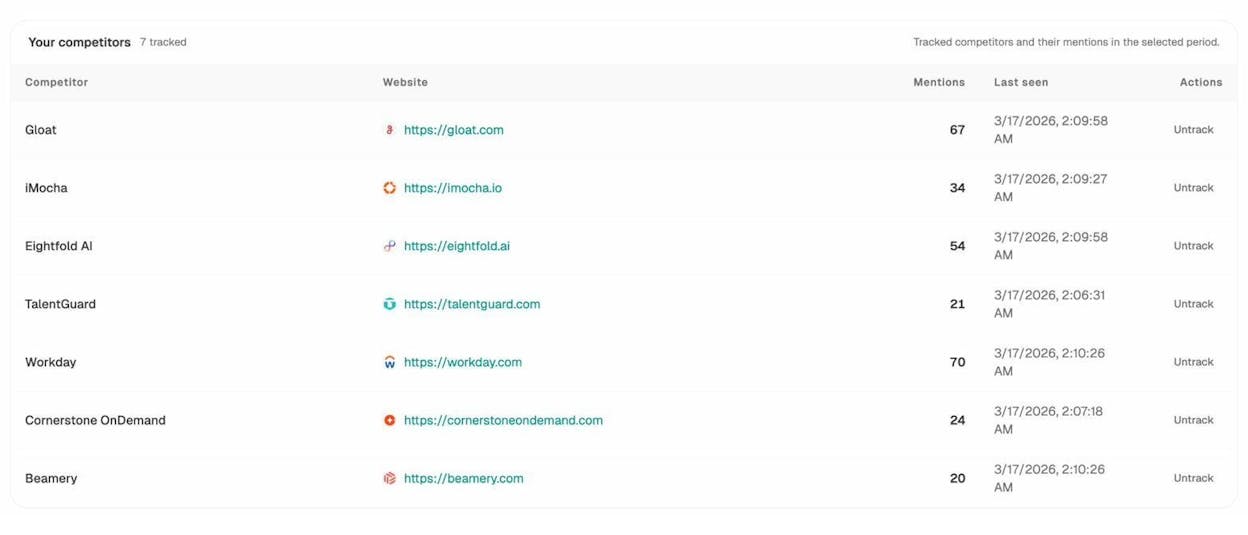
If a competitor of yours is consistently being cited from a particular publication, that publication is worth a pitch. Their editorial team has already proven they cover your category, and AI engines have already indexed their content.
For deeper research on where competitors are winning, our guide on SEO competitor analysis walks through the full workflow.
Step 3: Evaluate fit before you pitch
Not every publication is a good home for your work. Use this checklist before reaching out.
|
Criteria |
Looks like a yes |
Looks like a no |
|---|---|---|
|
Domain authority |
DR 50 and above |
DR under 30 |
|
Audience overlap |
Your target buyer reads this |
Their audience would not buy from you |
|
Editorial standards |
Clear contributor guidelines |
No author bios, no editorial process |
|
Outbound linking |
Links to credible sources |
Links to spammy or low-quality sites |
|
Syndication policy |
Adds canonical or noindex |
Strips attribution links |
|
AI citation activity |
Cited in your industry’s prompts |
Not visible in AI answers |
Walk away from anything that lands in the right column. A bad placement can drag your brand down faster than a good one builds it up.
Step 4: Reach out with a real pitch
Most syndication requests fail at this step because the pitch is generic. Editors get dozens of cold pitches a week. Yours needs to be specific and easy to say yes to.
Here is a template that works.
Subject line. Syndication offer, [your article title]
Hi [Editor name],
I read your recent piece on [specific recent article they published] and noticed your readers care a lot about [topic angle].
I published a piece called [your title] on [date]. It has [traffic stat] organic visits per month and [N] backlinks from sites like [examples]. The full article lives at [URL].
I’d be happy to let you republish it on [publication]. I’m flexible on canonical or noindex setup, and I can write a fresh intro tailored to your audience if that helps.
Let me know if it’s a fit.
[Your name]
A few things make this work. You reference a specific article they wrote, which proves you actually read the publication. You give them stats so they know the piece has performed. You take the friction out of the technical setup.
Send three to five pitches a week. Follow up once after seven days if you haven’t heard back. Stop after the second follow-up.
Step 5: Negotiate canonical, attribution, and link policy
Once a publication says yes, your job is not done. The deal terms decide whether the syndication helps or hurts you.
Push for these in order of preference.
-
Canonical tag pointing to your original URL.
-
Noindex on the syndicated version (Google’s preferred option).
-
Attribution line at the top of the article with a followed link to your original.
-
A short author bio with one followed link to a key page on your site.
If you cannot get at least the attribution line and the followed link, the deal is not worth doing. You are giving away your content for nothing in return.
Paid and self-syndication
Cold outreach is not the only path. Two other models cover most of what is left.
Paid syndication
Platforms like Outbrain and Taboola place links to your content at the bottom of articles on large publishers. Setup looks similar to a Facebook ad campaign. You define a budget, target an audience, and pay per click. Paid syndication scales fast but the traffic is colder, and conversion rates trend lower than organic syndication. Use it for top-of-funnel content, not high-intent product pages.
Self-syndication
Self-syndication is where you republish on platforms that anyone can post to.
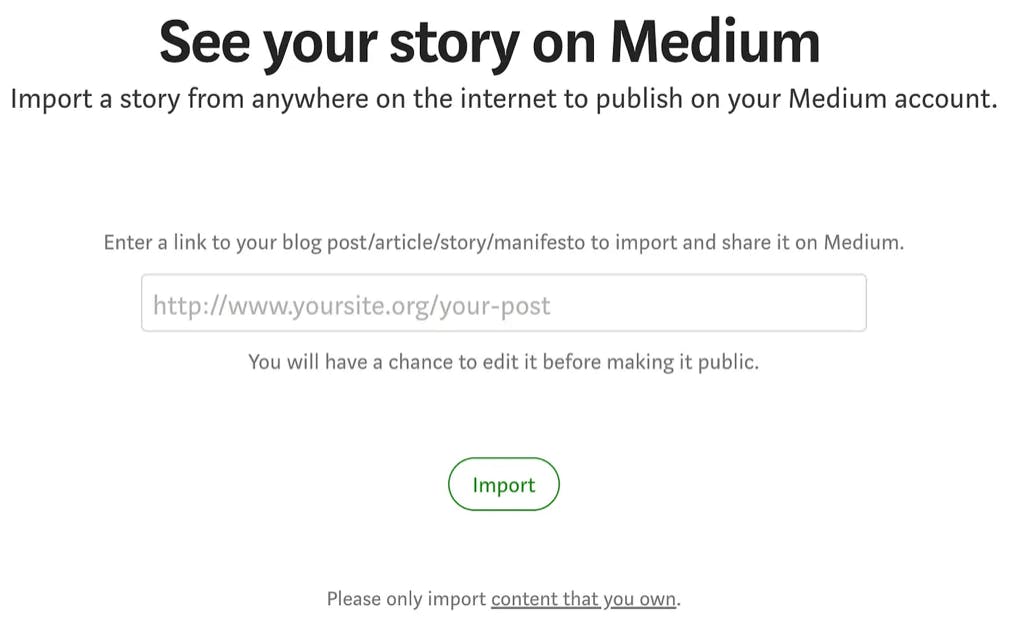
Medium. The platform has a built-in import tool that automatically adds a canonical link back to your original. Click your profile, go to Stories, then Import a Story, and paste your URL. The import handles formatting and images in one pass.
LinkedIn Articles. Click “Write an article” and paste your content. LinkedIn does not add a canonical, so the SEO benefit is limited. The visibility benefit inside the LinkedIn feed and the credibility benefit on your profile are real.
Reddit. Post the full article in a relevant subreddit and link to your original at the end. Self-promotion gets banned, so always lead with the value and let the link sit at the bottom. Read each subreddit’s rules before posting.
Substack Notes and Hacker News. Useful for distribution to specific niche audiences. Both punish overly promotional posting, so the content has to stand on its own.
How to track whether syndication is working
If you cannot measure it, you cannot improve it. Track four things.
Referral traffic. Set up a UTM parameter on the link you give the publication, then check the Referral source report in GA4 to see how many visitors come from each syndication partner.
Backlinks. Use the website authority checker on the publication and the broken link checker on your own pages to confirm the links are still live and pointing where they should.
AI mentions and citations. This is the part most teams skip. Analyze AI’s AI visibility tracking shows whether your brand mentions in LLM answers go up after a syndication placement, broken down by AI engine.
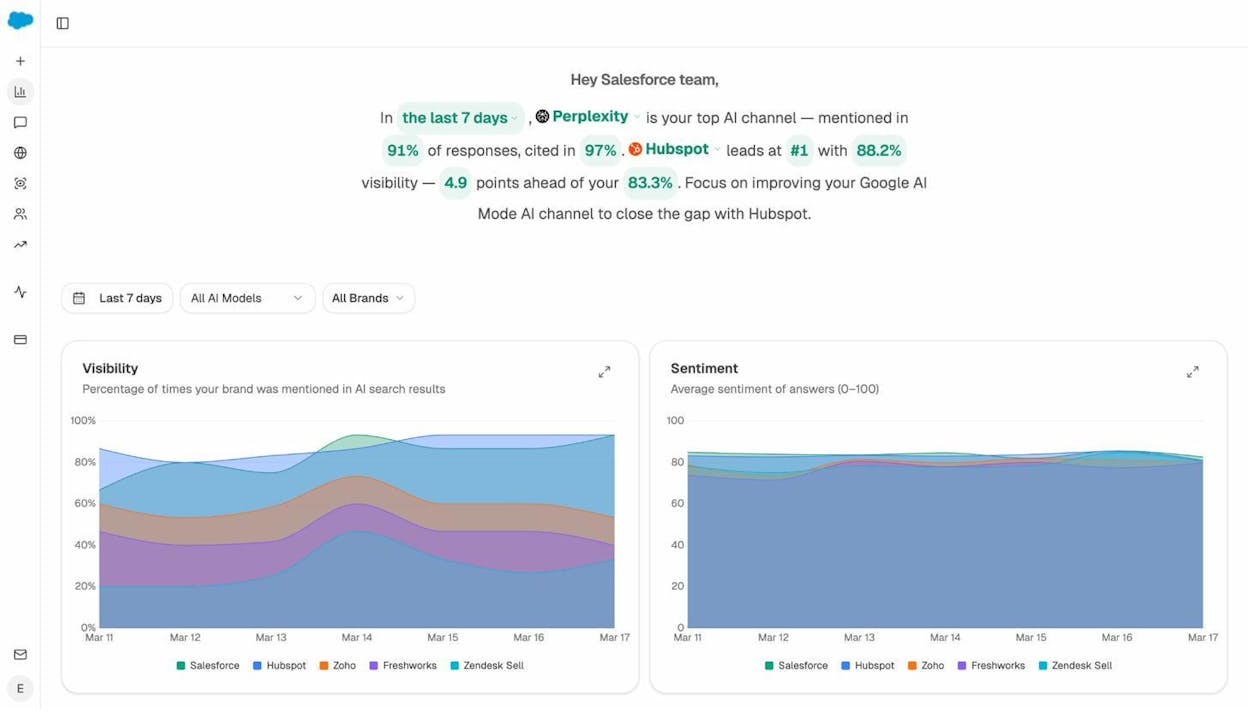
The visibility chart should show a measurable lift after a placement on a high-authority publication. If it does not, that publication may not be feeding into the LLMs you care about. Drop it from your target list and reallocate to a better one.
Reporting cadence. Manual checking falls apart after the third week. Analyze AI’s weekly email digests summarize visibility, citations, sentiment, and pages improving in one place.
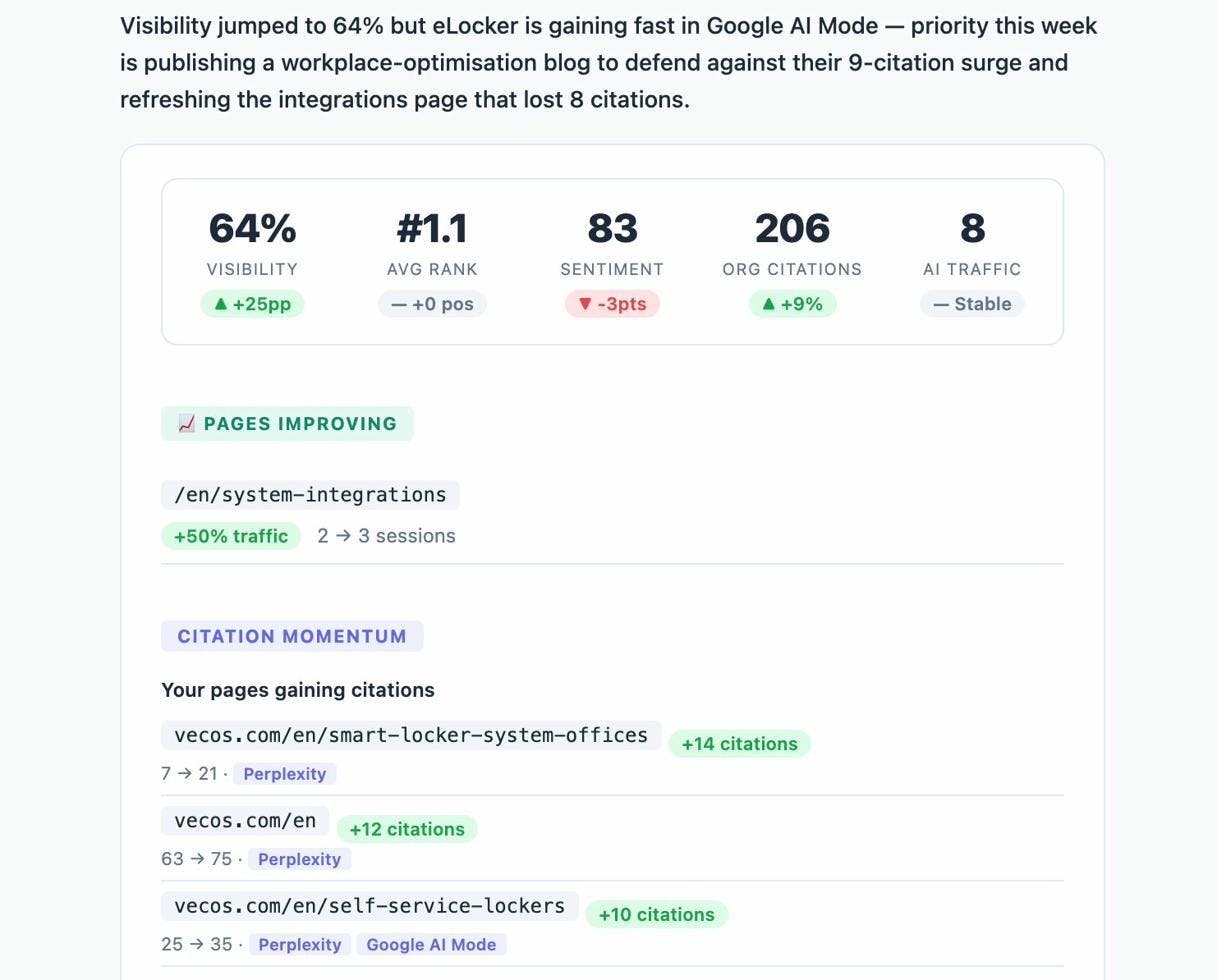
The digest highlights pages gaining citations, which is exactly what you want to see after a syndication placement lands. If a syndicated piece is driving citation momentum on the publication’s URL, that is your proof of impact. If you want to track shifts in how AI engines describe your brand over time, the perception map gives you that signal too.
Common mistakes to avoid
Five mistakes kill most syndication programs.
-
Letting publications outrank you. Always negotiate canonical or noindex before agreeing to anything. Without one of the two, you are betting that Google guesses correctly.
-
Pitching the wrong content. A short opinion post will not earn placement on Inc. Save high-effort, well-researched pieces for outreach.
-
Ignoring AI search. SEO is not dead. But skipping the AI layer leaves visibility on the table. Make sure the publications you target are also cited by LLMs.
-
Treating it as a one-off. Syndication compounds when you build relationships with five to ten publications over time, not when you fire off one pitch and move on.
-
No tracking. Without measurement, you cannot prove ROI to your team or to yourself, and you cannot decide which partners deserve more of your attention.
Beyond syndication
Once you have a syndication engine running, layer in three more tactics to extract more value from each piece you publish.
Reformatting
Turn the article into a video for YouTube, an audio version for podcast distribution, a LinkedIn carousel, or a Twitter thread. Each format unlocks a new audience and a new syndication opportunity.
Splintering
Pull the strongest stat, quote, or framework from the article and turn it into a standalone social post. We see this work for short-form video, image quotes, and pinned tweets. Each splinter can also be expanded later into a guest post for a different publication.
Adapting for AI prompts
Use prompt tracking to see which specific questions people ask AI engines about your topic.
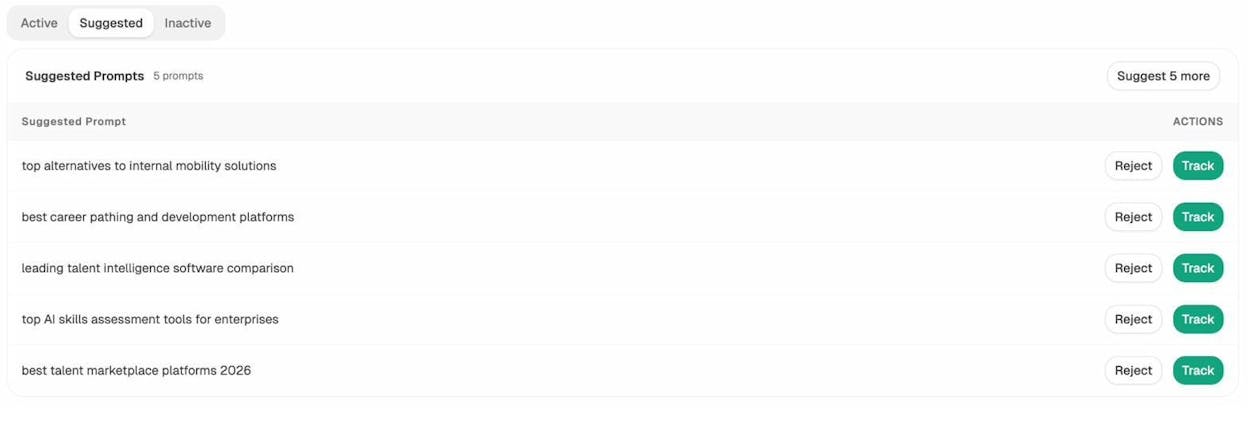
Each tracked prompt is a question your audience is asking right now. Update the article with explicit FAQ-style answers to those prompts, then re-pitch the updated version to publications that already cover the topic. Articles that directly answer the questions LLMs ingest tend to get cited more often.
For more on this, our breakdowns of how to rank on ChatGPT and how to get mentioned in AI search cover the underlying citation patterns in detail.
Final thoughts
Content syndication is one of the few distribution tactics that compounds. Every placement adds to your authority, your referral traffic, and your AI search visibility. The work sits in finding the right publications and structuring deals that send value back to you.
Start with one piece this week. Pull your top-performing post, run it through the five-step playbook above, and pitch three publications. Most will say no. One might say yes. That one yes can change the trajectory of the article.
If you want a head start on which publications LLMs already trust in your space, the Sources view inside Analyze AI gives you the list in one click.

Ernest

Ibrahim


