



Summarize this blog post with:


In this article, you’ll get a breakdown of seven generative engine optimization tools, what each one actually does well, where each one falls short, and how much they cost. You’ll also learn what criteria to use when picking a platform, and how the best GEO tools connect AI visibility tracking to real business outcomes like traffic, citations, and pipeline.
Table of Contents
TL;DR
|
Tool |
Best For |
AI Engines Covered |
Content Creation |
GA4 Attribution |
Agent/Automation Layer |
Starting Price |
|---|---|---|---|---|---|---|
|
Analyze AI |
Teams that need visibility + execution + automation |
8+ (ChatGPT, Gemini, Perplexity, Copilot, Claude, Grok, Meta AI, DeepSeek) |
Yes (Writer + Optimizer) |
Yes |
Yes (180+ nodes, 34 data recipes) |
$99/mo |
|
Profound |
Enterprise brands with dedicated GEO budgets |
4+ (ChatGPT, Perplexity, Gemini, AI Overviews) |
Limited (Workflows) |
No |
Limited |
$399/mo |
|
Semrush AI Toolkit |
Teams already paying for Semrush |
3-4 (ChatGPT, Gemini, AI Overviews) |
Via ContentShake AI (separate) |
No (uses Semrush analytics) |
No |
~$99/mo add-on |
|
Otterly.ai |
Budget-conscious teams testing GEO |
4 core + 2 paid add-ons |
No (GEO Audit only) |
No |
No |
$29/mo |
|
Gauge |
Marketing teams focused on benchmarking |
4+ (ChatGPT, Claude, Perplexity, Gemini) |
No |
No |
No |
~$99/mo |
|
AthenaHQ |
On-page GEO automation |
Multiple |
Limited (schema/entity tagging) |
No |
No |
$49/mo |
|
Peec AI |
Teams wanting action recommendations |
4+ |
No |
No |
No |
~$89/mo |
What to Look for in a GEO Tool
Before spending money on any platform, you need to understand what problem you are actually solving. Generative engine optimization is not one task. It is a loop with four stages, and most tools only cover one or two.
Discover: Can the tool show you which prompts mention your brand and which ones don’t? Does it suggest new prompts worth tracking based on competitor activity and search trends?
Monitor: Does it track visibility, sentiment, citations, and rankings across multiple AI engines over time? Can you filter by engine, competitor, and time period?
Improve: Does the tool help you fix what it finds? Can it create content that earns AI citations, optimize existing pages for both search and AI, or build workflows that automate the process?
Govern: Does it alert you when AI models misrepresent your brand, surface risk terms, or shift sentiment negatively?
If a tool only monitors, you still need separate tools to act on the data. If it only creates content, you are flying blind on what content to create. The best GEO tools cover the full loop.
1. Analyze AI
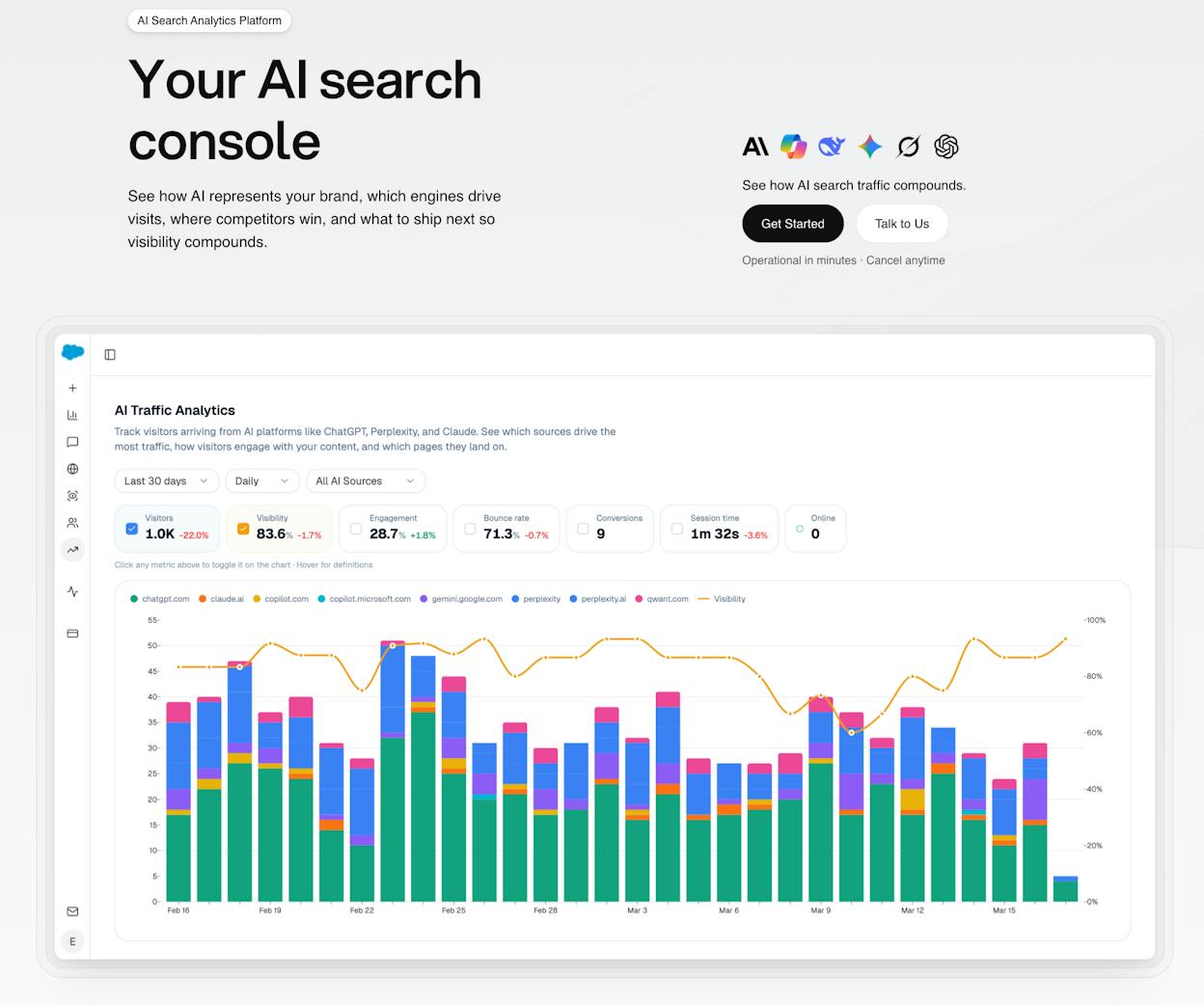
Best for: Marketing teams, agencies, and content ops that need visibility tracking, content execution, and cross-platform automation in one place.
Analyze AI is the only platform on this list that covers every stage of the GEO loop. It tracks your brand across 8+ AI engines, shows which competitors outrank you on specific prompts, writes and optimizes content for both search and AI, and lets you build automated workflows that wire into GA4, Google Search Console, Semrush, HubSpot, Notion, WordPress, Slack, and more.
That last part is important. Most tools in this category position themselves as dashboards. Analyze AI is an agentic platform for SEO, AEO, content, and GTM operations. The dashboard is one surface. The Agent Builder is the engine underneath.
Visibility and Competitive Intelligence
The overview dashboard gives you a natural-language summary of your AI search performance for the past 7, 14, 30, or 90 days. It tells you which AI engine is your strongest channel, who your top competitor is, what your visibility percentage looks like, and where to focus next.
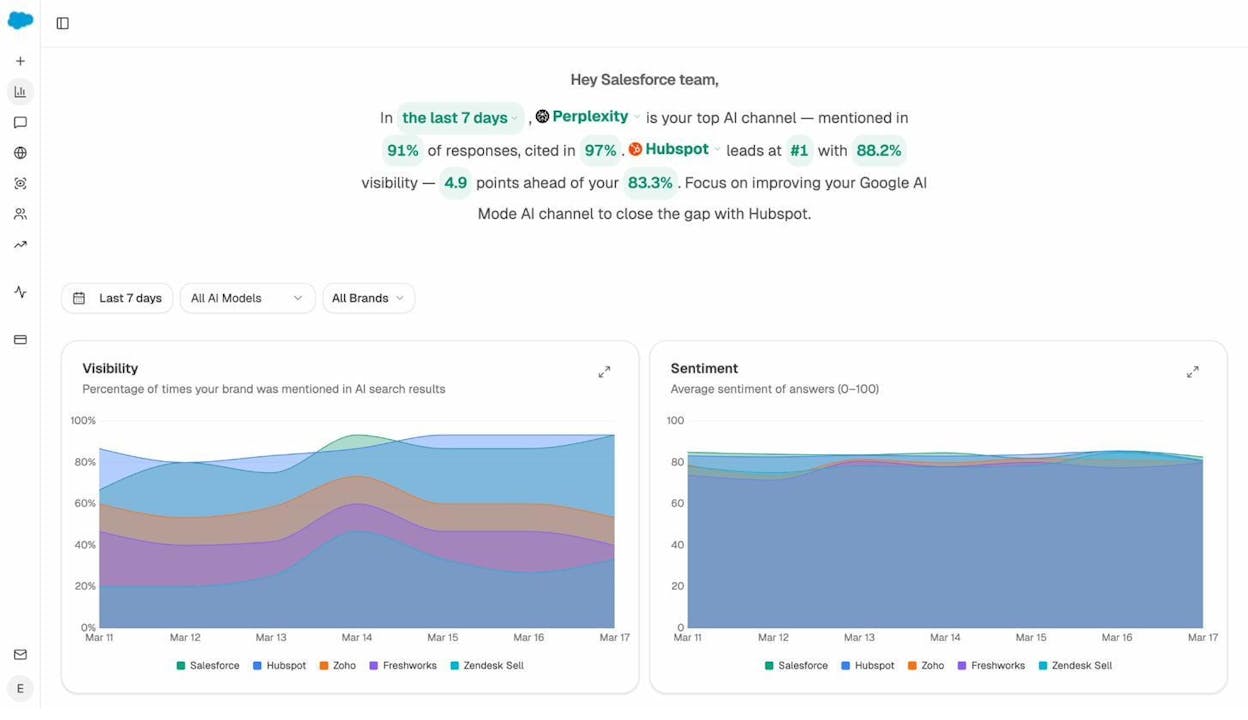
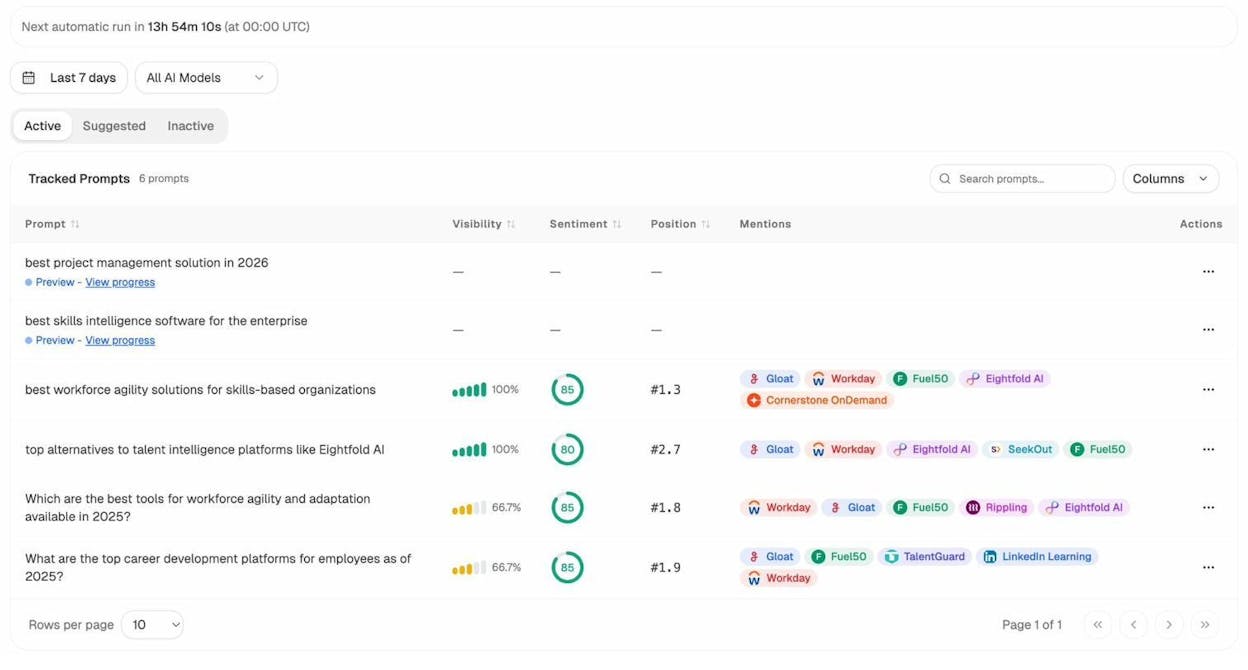
You can track prompts across ChatGPT, Gemini, Perplexity, Copilot, Claude, Grok, Meta AI, and DeepSeek. Each prompt gets daily updates with ranking position, sentiment scoring, citation sources, and a full answer snapshot.
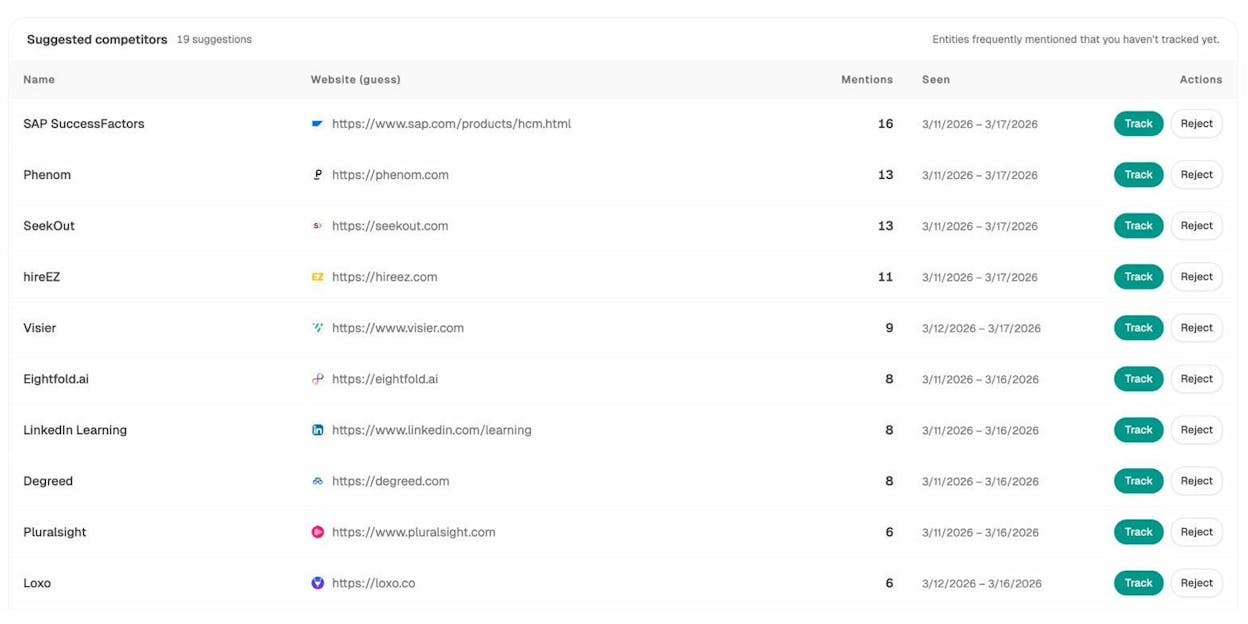
The Competitor Intelligence feature automatically suggests competitors you should be tracking based on how frequently they appear alongside your brand in AI answers. You don’t have to guess who your competitors are in AI search. The platform surfaces them for you.
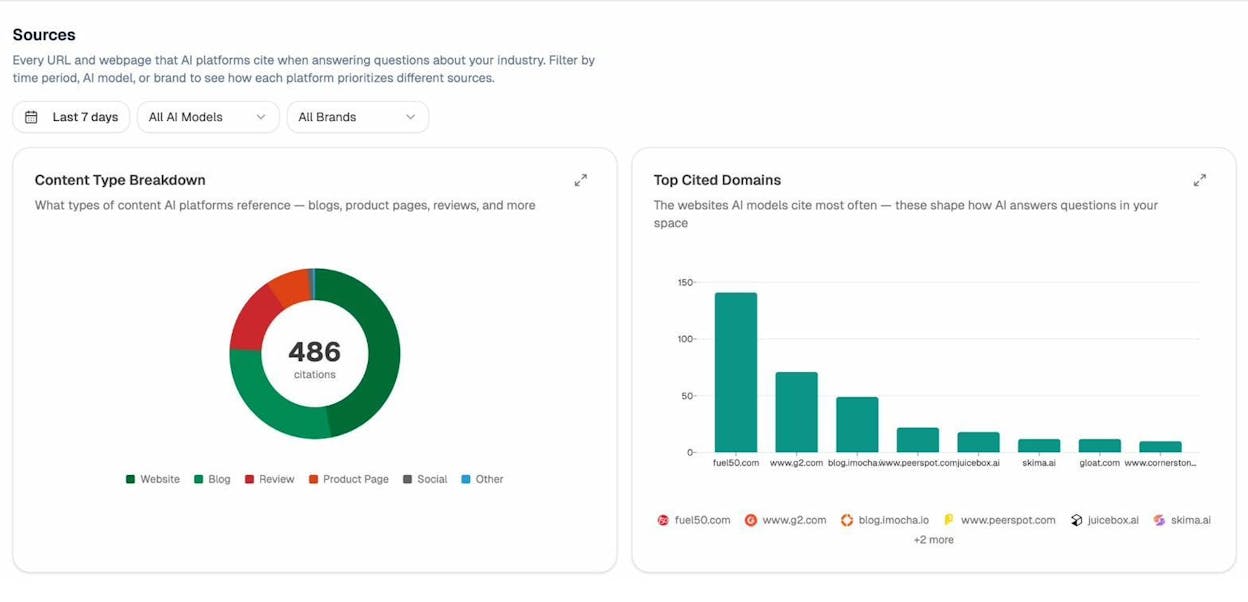
The Citation Analytics panel shows exactly which domains and URLs AI engines cite in your category. You can see where competitors earn citations that you don’t, then target those sources with your own content and outreach.
Content Writer and Content Optimizer
Knowing where you are invisible is the first step. Fixing it is where most tools stop.
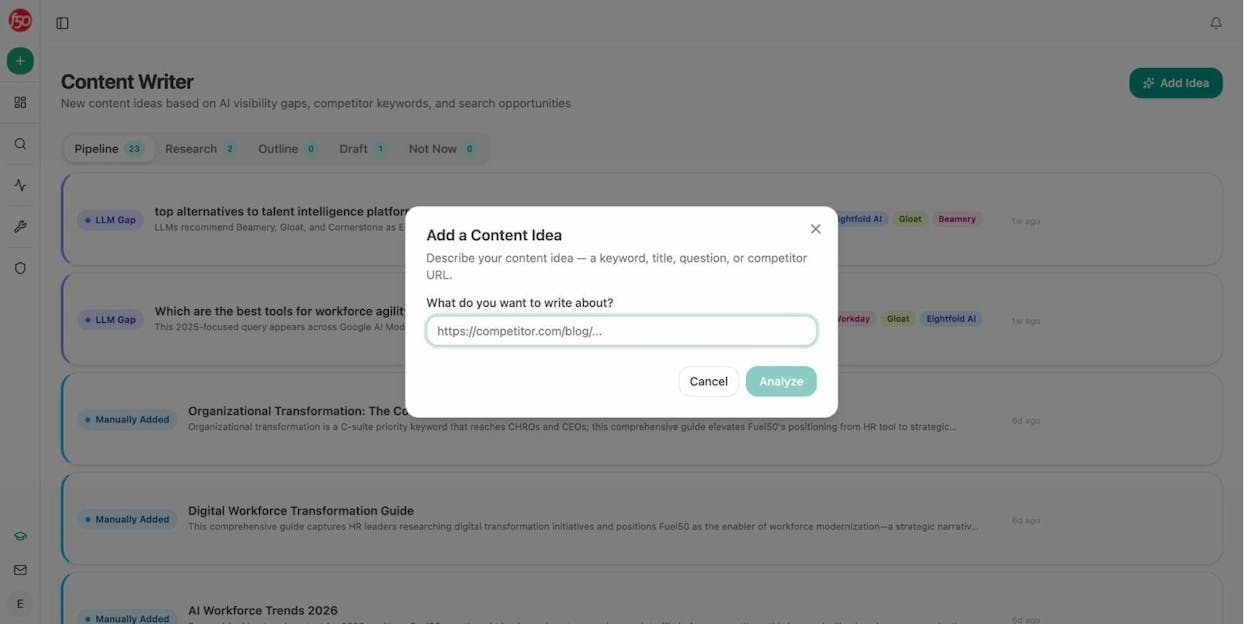
The AI Content Writer takes a topic or competitor URL and walks through a structured pipeline. Research (with editorial comments), outline, and full draft. Every step is editable, and your brand voice is injected automatically through the Knowledge Base.
The AI Content Optimizer works the other side. It fetches an existing page, scores its content, identifies argument gaps and missing proof points, and produces an optimized version with side-by-side comparison. The editor adds inline comments explaining why each change matters for AI visibility and search performance.
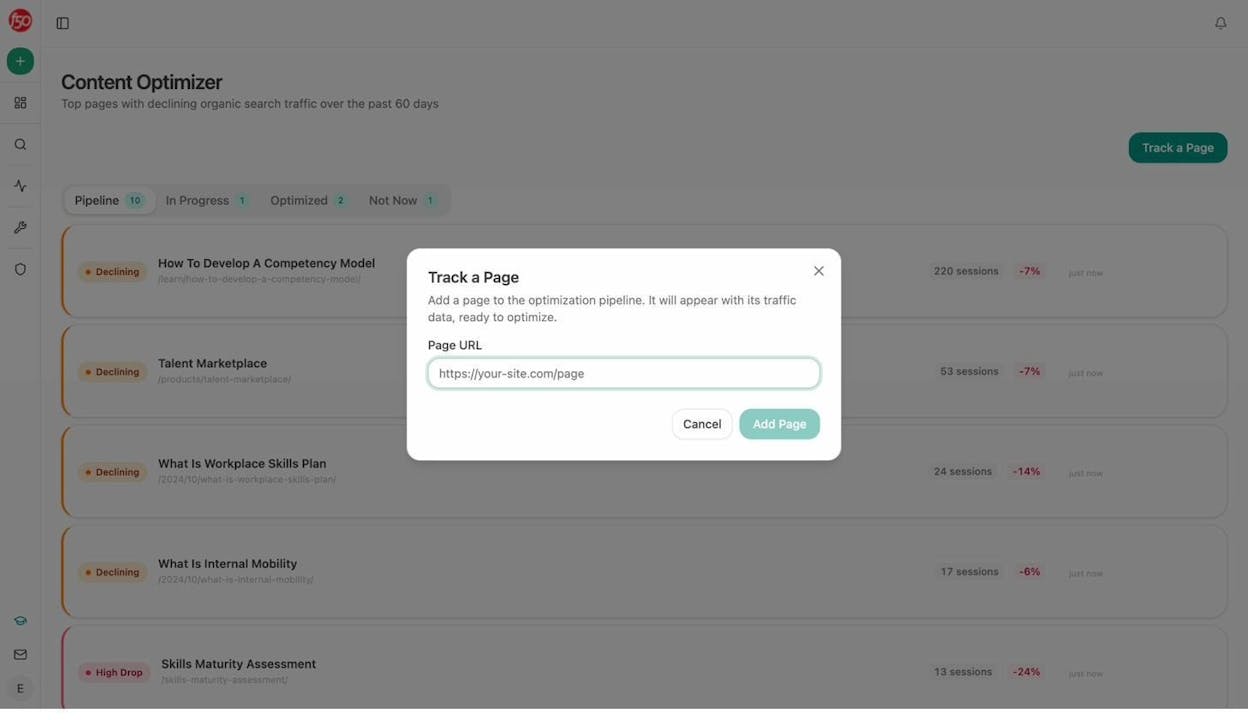
Both tools produce content designed for search engines and AI engines at the same time. That matters because the structures that earn AI citations (clear claims, sourced evidence, scannable formatting, semantic depth) are the same structures that perform well in traditional search.
Agent Builder: The Real Differentiator
This is where Analyze AI separates from every other tool on this list.
The Agent Builder gives you 180+ nodes, 34 pre-built data recipes, 13 input primitives, and three trigger modes (manual, scheduled, webhook). It connects directly to GA4, Google Search Console, DataForSEO, Semrush, HubSpot, Notion, WordPress, Mailchimp, and every major LLM.
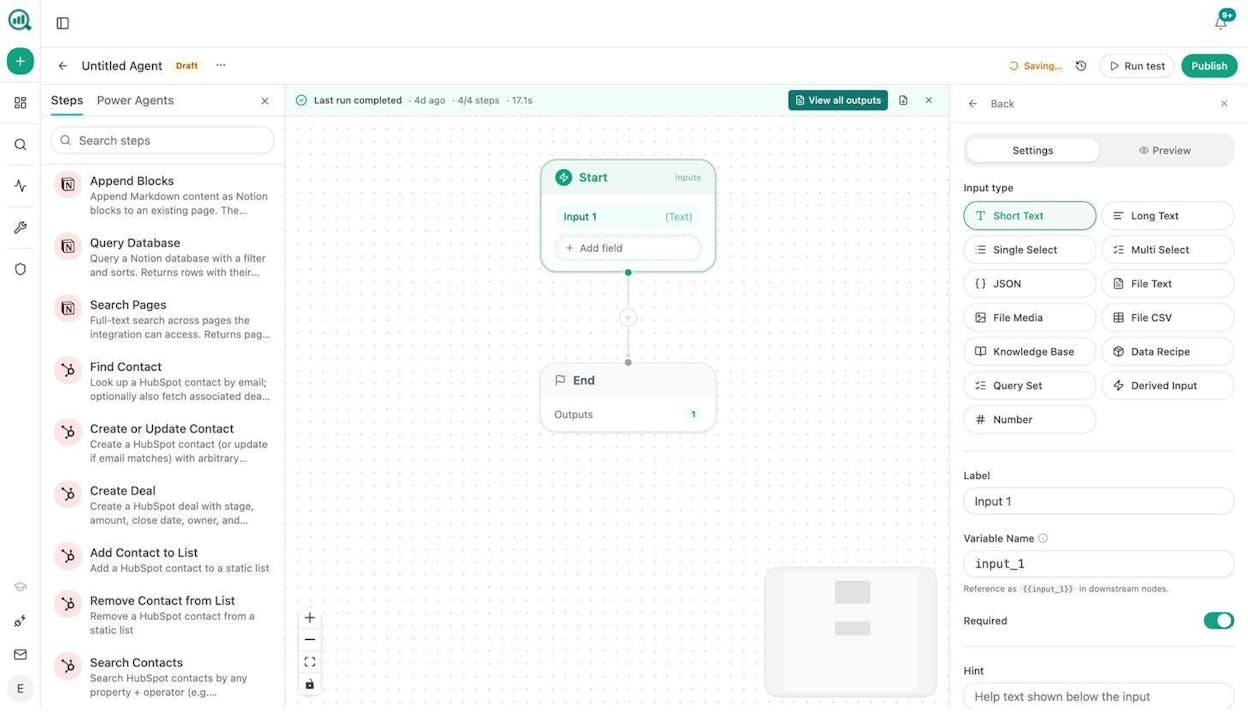
This is not just an automation layer. It is a programmable substrate for your entire marketing operation. Here are concrete examples of what teams build with it:
For CMOs: A scheduled agent that runs every Monday at 7am, pulls your AI visibility data, share-of-voice metrics, GA4 traffic, and new HubSpot deals, generates an executive summary in your brand voice, exports it as a DOCX, and emails it to leadership. No analyst chase. No manual report building.
For content teams: A webhook-triggered agent that fires when a content brief moves to “approved” in Notion, runs research, generates an outline, drafts the full article with brand voice injected, scores it against AEO criteria, and publishes to WordPress if it passes the quality gate. If the score is too low, it sends the writer the gaps via Slack.
For agencies: One agent that loops over your entire client list, pulls each client’s visibility data, competitor movements, GSC rankings, and backlink changes, assembles individual reports with the agency’s letterhead, and emails each account team. Reporting day stops existing.
For PR teams: A scheduled agent that runs every 15 minutes, checks for brand mentions in news coverage, filters by sentiment and reach, and Slacks your crisis team with a draft response before your CEO even hears about it.
The Agent Builder is why Analyze AI is not a dashboard with a content writer bolted on. It is the operating system for your SEO, AEO, and content operations.
AI Traffic Attribution
AI Traffic Analytics connects to GA4 and shows exactly how many sessions come from AI search engines, which pages they land on, and whether that traffic converts. This closes the loop between “we’re visible in ChatGPT” and “that visibility is driving pipeline.”
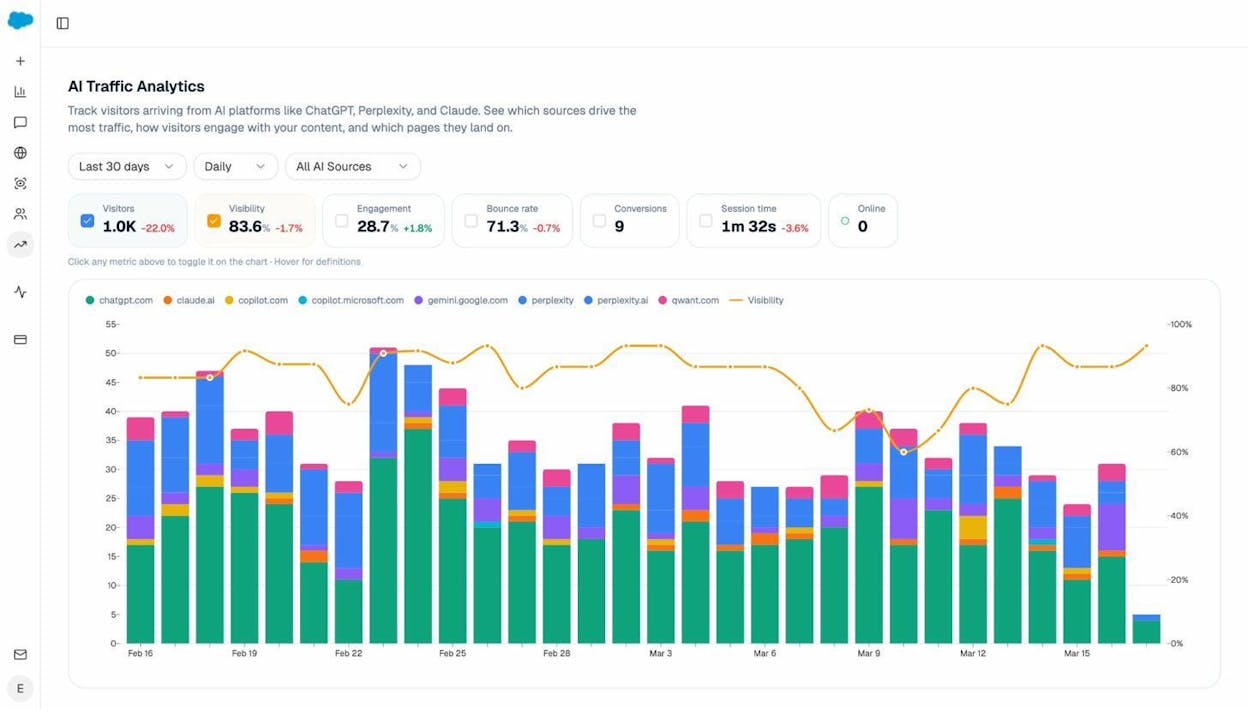
No other GEO tool on this list connects AI visibility to GA4 traffic attribution in a single platform.
Governance
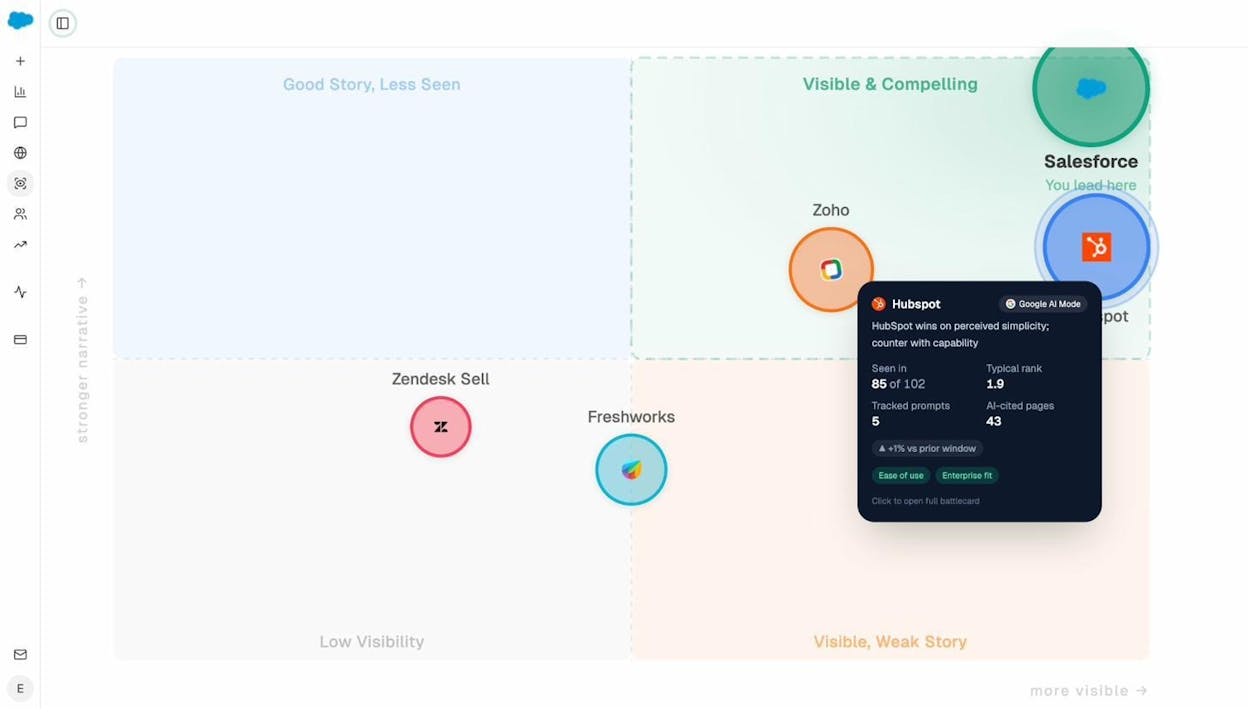
The Perception Map positions all tracked brands on a 2D quadrant (presence vs. narrative strength) so you can see exactly where your brand sits relative to competitors across AI engines. Weekly Email Digests deliver prioritized actions, citation changes, and competitor movements to your inbox every Monday without logging in.
Pricing: Starts at $99/month. Flat pricing with no per-prompt add-ons or gated engine coverage. All AI engines are included on every plan.
Pros:
-
Covers the full GEO loop (discover, monitor, improve, govern)
-
Agent Builder with 180+ nodes replaces multiple point solutions
-
Content Writer and Optimizer produce output for both search and AI
-
GA4 attribution ties visibility to revenue
-
Flat pricing with no engine-specific add-ons
Cons:
-
Prompt tracking caps may limit large enterprises tracking hundreds of prompts
-
Agent Builder has a learning curve for teams new to workflow automation
2. Profound
Best for: Fortune 500 brands with dedicated GEO budgets and analyst resources.
Profound is the most funded platform in the GEO space, with $96 million raised at a $1 billion valuation. It tracks AI visibility across ChatGPT, Perplexity, Gemini, and Google AI Overviews, and its competitive benchmarking is strong. The Prompt Volumes feature, which shows real user query data from an opt-in panel, is a genuine differentiator that no other platform ships.
That said, the $99 Starter plan is limited to ChatGPT-only with snapshot reports. Real ongoing tracking starts at $399/month on the Growth plan, and full coverage requires a custom Enterprise contract. Profound also lacks native GA4 integration, which means you cannot see actual AI-referred sessions, conversions, or revenue inside the platform. You will need to build that attribution layer separately.
Profound recently launched Agents, but early testing shows narrower functionality than Analyze AI’s Agent Builder. Bridging into Semrush or routing results back into HubSpot requires manual steps that the Analyze AI agent substrate handles natively.
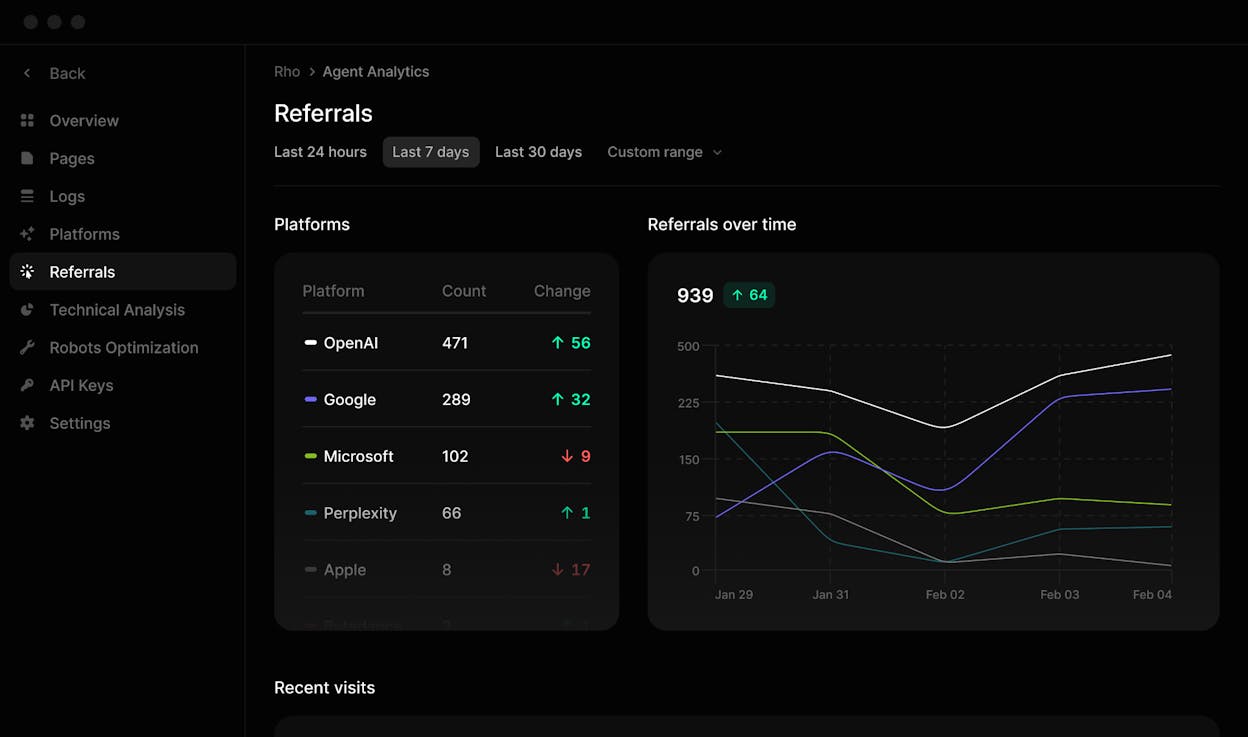
Pricing: $99/mo (Starter, ChatGPT only). $399/mo (Growth, 3 engines, 100 prompts). Custom (Enterprise).
Pros: Deep visibility data. Prompt Volume feature is unique. SOC 2 compliance for enterprise procurement. Strong competitive benchmarking.
Cons: Expensive relative to coverage. No native GA4 attribution. Agent capabilities are limited compared to Analyze AI. Steep learning curve.
3. Semrush AI Toolkit
Best for: Teams already invested in the Semrush ecosystem who want AI visibility without switching platforms.
Semrush added AI visibility tracking to its existing SEO suite, covering ChatGPT, Gemini, and Google AI Overviews. If your team already runs keyword research, rank tracking, and backlink analysis through Semrush, the AI Toolkit extends that workflow into AI search monitoring without a separate login.
The toolkit tracks share of voice, prompt-level visibility, and sentiment. It provides recommendations for adjusting content and messaging based on how AI engines represent your brand. The familiarity of the Semrush interface lowers the learning curve significantly.
The limitation is scope. Semrush’s AI coverage still favors Google AI Overviews more than other platforms. The AI Toolkit is an add-on to existing Semrush plans, and the pricing escalates quickly at higher tiers. Semrush does not offer content creation specifically for GEO, and there is no automation or agent layer.
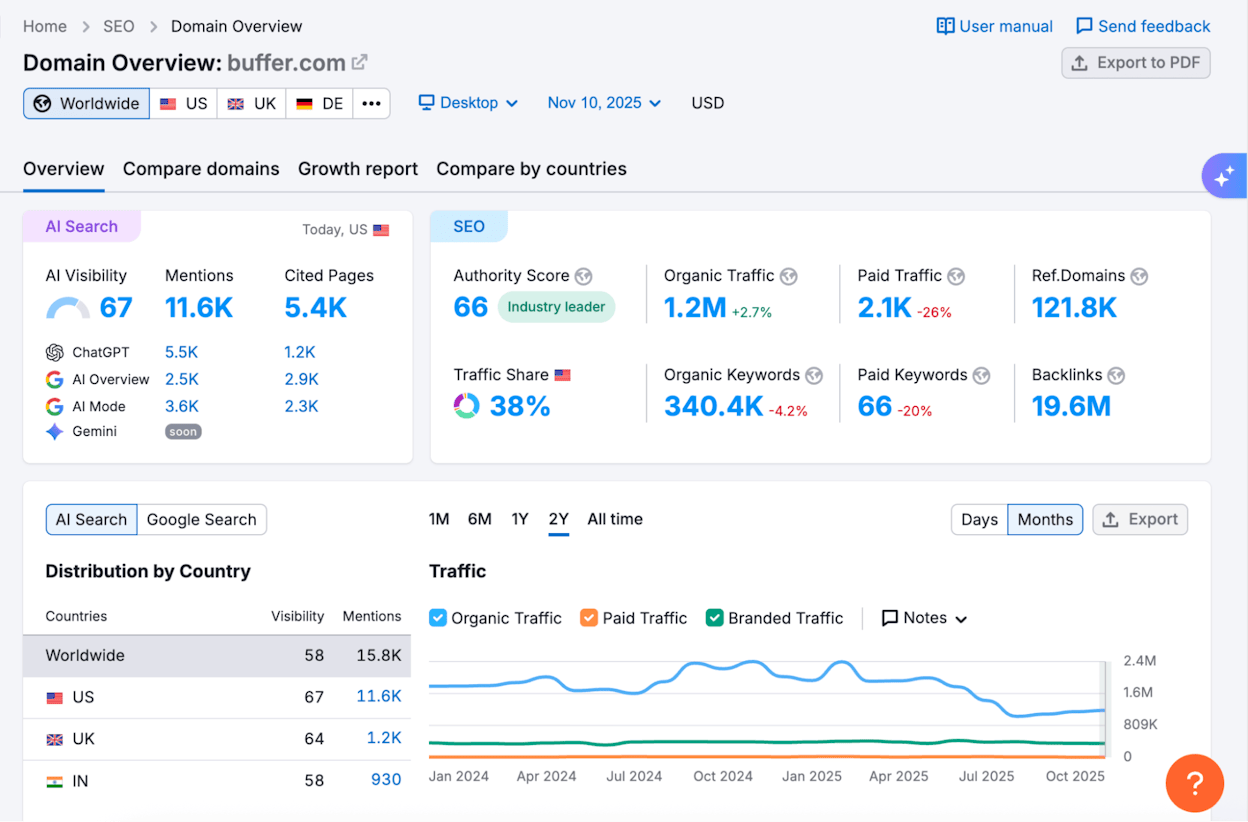
Pricing: ~$99/mo add-on for AI SEO Toolkit. ~$499/mo for Business tier with broader GEO coverage. Enterprise is custom.
Pros: Familiar interface for Semrush users. Reduces tool sprawl. Actionable recommendations. Scales from small teams to enterprise.
Cons: AI engine coverage favors Google AI Overviews. Pricing escalates at higher tiers. No content creation for GEO. No automation layer. See how it compares to Analyze AI.
4. Otterly.ai
Best for: Budget-conscious teams testing whether GEO monitoring is worth investing in.
Otterly.ai offers the lowest entry price in the category at $29/month on its Lite plan. The platform tracks brand visibility across ChatGPT, Google AI Overviews, Perplexity, and Microsoft Copilot, with Gemini and Google AI Mode available as paid add-ons.
The standout feature is the GEO Audit, available from the Standard plan ($189/month), which analyzes 25+ on-page factors that affect how AI models interpret and cite your pages. This bridges the gap between monitoring and taking action, though it stops short of creating or optimizing content for you.
The prompt-based pricing model is transparent but gets expensive at scale. Each engine-prompt combination counts as a separate capture, so tracking 100 prompts across 4 engines means 400 data runs per refresh cycle. Overages cost $99 per 100 additional prompts. Data refreshes weekly on the base plans, which is slower than competitors that offer daily updates.
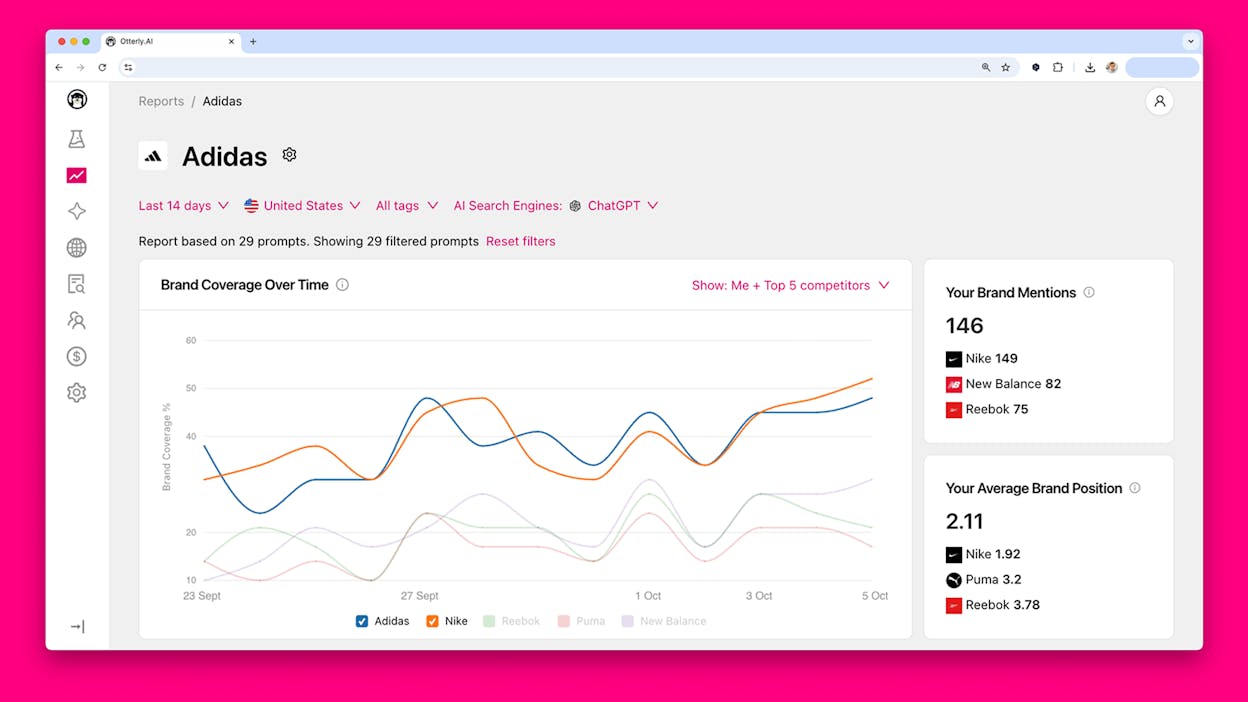
Pricing: $29/mo (Lite, 15 prompts). $189/mo (Standard, 100 prompts). $489/mo (Premium, 400 prompts). Add-ons for Gemini ($59-$149/mo) and Google AI Mode ($29-$489/mo).
Pros: Lowest entry price. GEO Audit is genuinely useful. Semrush integration. Clean interface. Free trial available.
Cons: Weekly data refresh on base plans. Gemini and AI Mode cost extra. No content creation. No GA4 attribution. Prompt costs compound quickly at scale.
5. Gauge
Best for: Marketing and communications teams focused on competitive benchmarking across AI platforms.
Gauge was built for generative engine optimization from day one rather than retrofitted from an SEO tool. It tracks brand visibility across ChatGPT, Claude, Perplexity, and Gemini, and its competitive benchmarking dashboards show share-of-voice shifts over time.
The platform is particularly useful for teams that need to report on AI visibility to leadership. The dashboards are clean and focused, and the historical reporting lets you show trends rather than snapshots. Where Gauge falls short is on the action side. There is no content writer, no optimizer, no GA4 integration, and no automation layer. You will need complementary tools for everything past monitoring.
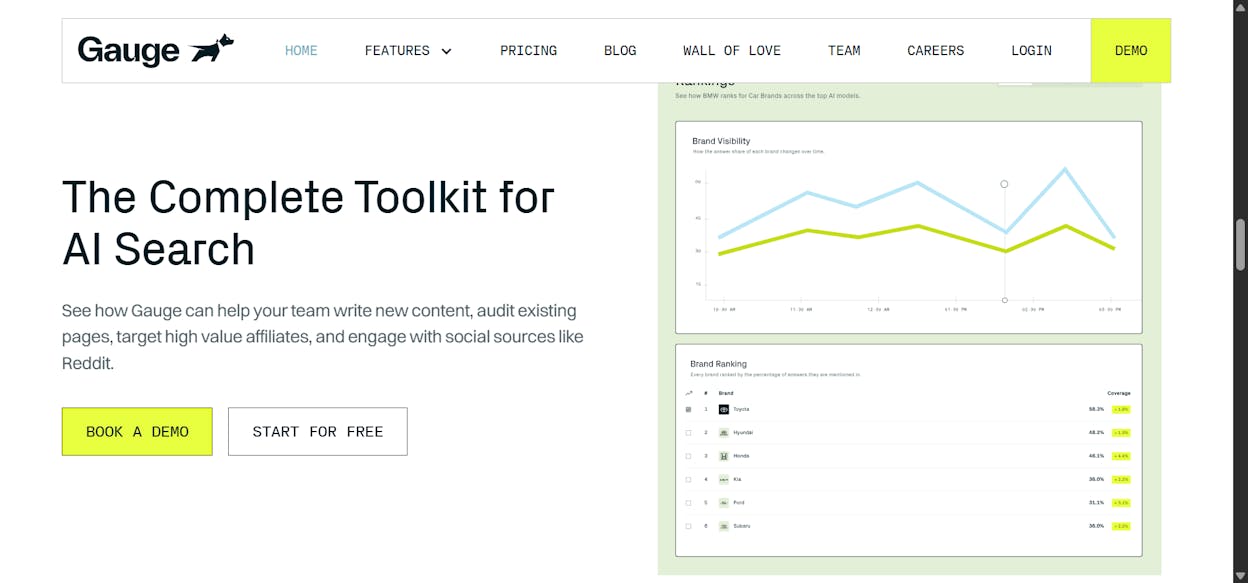
Pricing: ~$99/mo (entry tier with basic monitoring). $300-$600/mo (higher tiers with competitor benchmarking and historical data). Custom (Enterprise).
Pros: Built for GEO from scratch. Strong competitive benchmarking. Clean dashboards. Affordable entry tier.
Cons: No content creation tools. No GA4 attribution. No automation. Still an emerging platform with evolving coverage.
6. AthenaHQ
Best for: Content-heavy brands looking for automated on-page GEO at scale.
AthenaHQ focuses on the technical side of generative engine optimization. It applies schema markup, entity tagging, and structured data to improve how AI models read and cite your content. The platform layers cross-AI model ranking insights with editorial recommendations.
The automation approach works well for large content libraries where manually optimizing each page is not feasible. You set the rules, and AthenaHQ applies them across your pages. The trade-off is that AthenaHQ does not offer the monitoring depth or competitive intelligence of dedicated visibility platforms. It also lacks GA4 integration and full content creation capabilities.
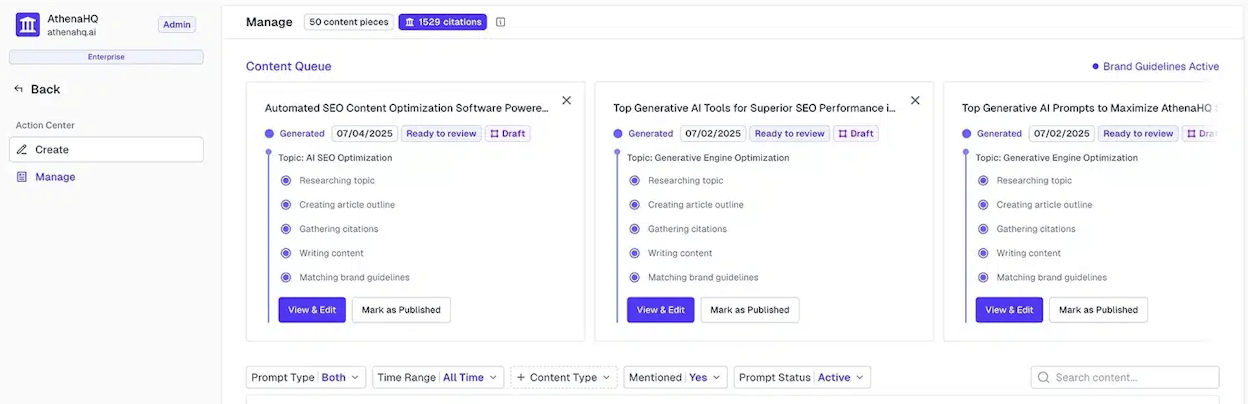
Pricing: Starting at $49/mo for basic plans. $400-$600/mo for advanced tiers with competitor benchmarking and workflow automation. Custom for larger organizations. See the full comparison.
Pros: Scalable on-page optimization. Schema and entity tagging automation. Affordable entry point. Good for large content libraries.
Cons: Limited monitoring depth. No GA4 attribution. No full content creation pipeline. Advanced features gated to higher tiers.
7. Peec AI
Best for: Teams that want actionable improvement recommendations alongside monitoring.
Peec AI positions itself between pure monitoring tools and full execution platforms. It tracks brand visibility across AI engines and pairs the data with specific recommendations for improving your AI presence. The action guidance is more prescriptive than what you get from Gauge or Otterly.ai, though it still stops short of creating or optimizing content for you.
The platform covers ChatGPT, Perplexity, Gemini, and Copilot. Reports are clean enough for stakeholder presentations, and the recommendation engine gives content teams specific next steps rather than generic advice.
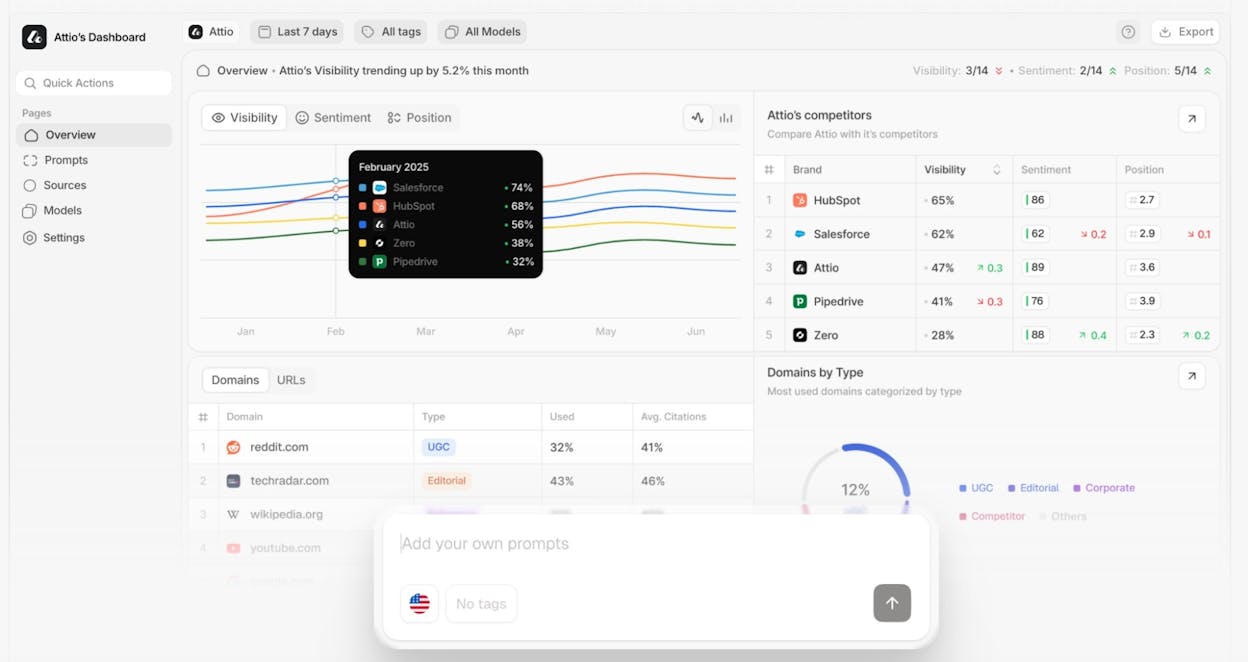
Pricing: Starting around $89/mo for comparable monitoring to other tools in this range. Higher tiers add deeper competitive analysis. See how it stacks up against Profound and AthenaHQ.
Pros: Stronger action recommendations than pure monitoring tools. Clean reporting. Covers major AI engines. Reasonable entry pricing.
Cons: No content creation. No GA4 attribution. No automation or agent layer. Less established than larger platforms. See the detailed comparison.
How AI Search Changes the GEO Equation
Every tool on this list focuses on how your brand appears in AI-generated answers. But here is something most GEO articles skip: SEO is not dead. AI search is an additional organic channel, not a replacement for traditional search.
The brands winning in AI search are the ones with strong content fundamentals. Clear claims, sourced evidence, semantic depth, and proper structure are what earn AI citations. Those same qualities also rank in Google. The difference now is that your content needs to work for AI models too.
That is why the best GEO tool is not a monitoring dashboard bolted onto your existing stack. It is a platform that connects AI visibility data to content creation, optimization, and workflow automation so your team can act on what it finds without duct-taping five separate tools together.
If you are evaluating GEO tools today, start with three questions. Can this tool show me where I am invisible in AI search? Can it help me fix what it finds? And can it prove that the fix drove real business results? If the answer to all three is yes, you have found the right platform.
You can run a free AI visibility check on your domain right now to see where you stand, or explore Analyze AI’s full feature set to see how the platform covers the complete GEO loop.

Ernest

Ibrahim


![50 GEO Statistics From Tracking 83,670 AI Citations [2026 Data]](/_next/image?url=https%3A%2F%2Fwww.datocms-assets.com%2F164164%2F1779314907-blobid0.png&w=3840&q=75)

