



Summarize this blog post with:


In this article, you’ll learn the specific, data-backed tactics that actually increase your brand’s visibility in ChatGPT responses. We’ll walk through each factor based on what we found after analyzing 83,670 citations across ChatGPT, Claude, and Perplexity, and show you how to put each one into practice right now.
Table of Contents
1. Optimize Your YouTube Presence
YouTube mentions showed the strongest single correlation with ChatGPT visibility across every study we reviewed.
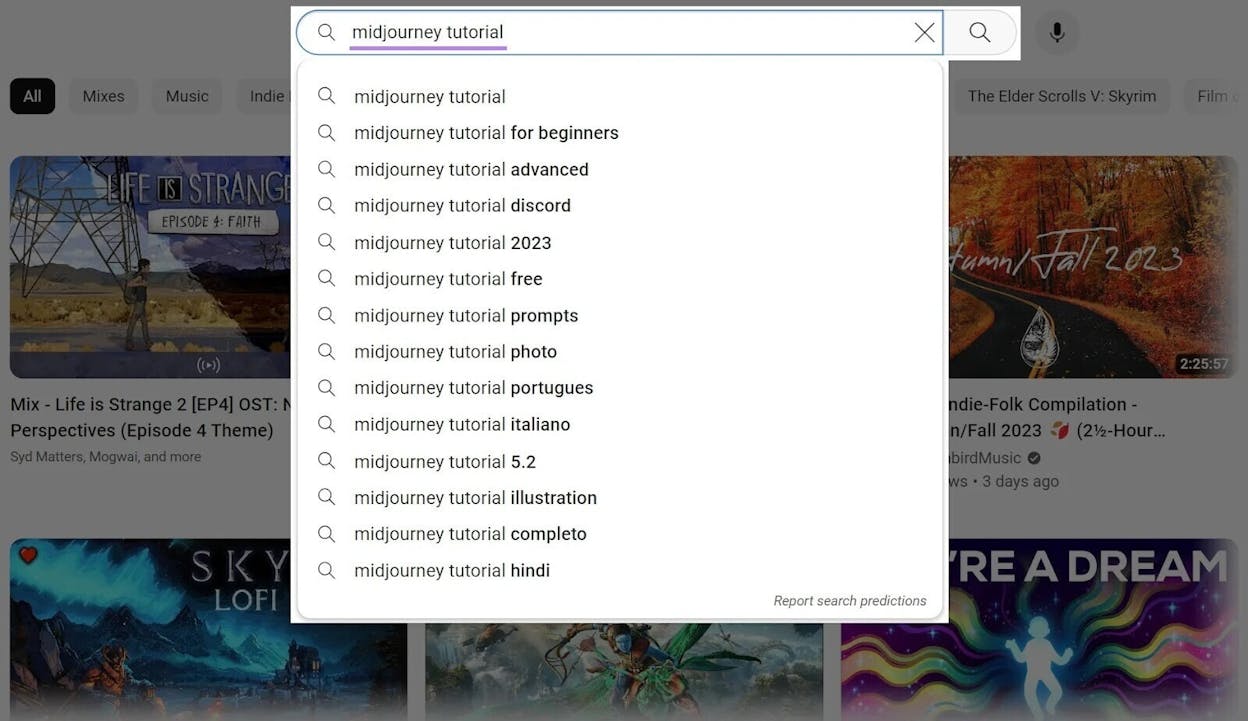
Why? Two reasons. First, OpenAI trained GPT-4 on over a million hours of YouTube transcriptions. When your brand gets mentioned in a video’s title, description, or transcript, that mention becomes part of the corpus ChatGPT learns from. Second, LLMs cannot produce video content on their own. When a prompt calls for it, they pull from YouTube.
A YouTube mention is any time your brand name appears in a channel name, video title, description, transcript, or link. That includes videos you publish on your own channel and videos other creators publish that mention you.
How to act on this:
Start publishing videos on your YouTube channel that cover the topics your brand should own. A YouTube SEO strategy focused on your core topics puts your brand into training data for every model that ingests YouTube.
Then, work to get other YouTube creators to mention you. You can do this by sponsoring relevant creators, offering product access for reviews, or appearing as a guest on YouTube podcasts. The key is finding creators whose audience overlaps with yours and whose content ChatGPT already draws from.
How to track this in AI search:
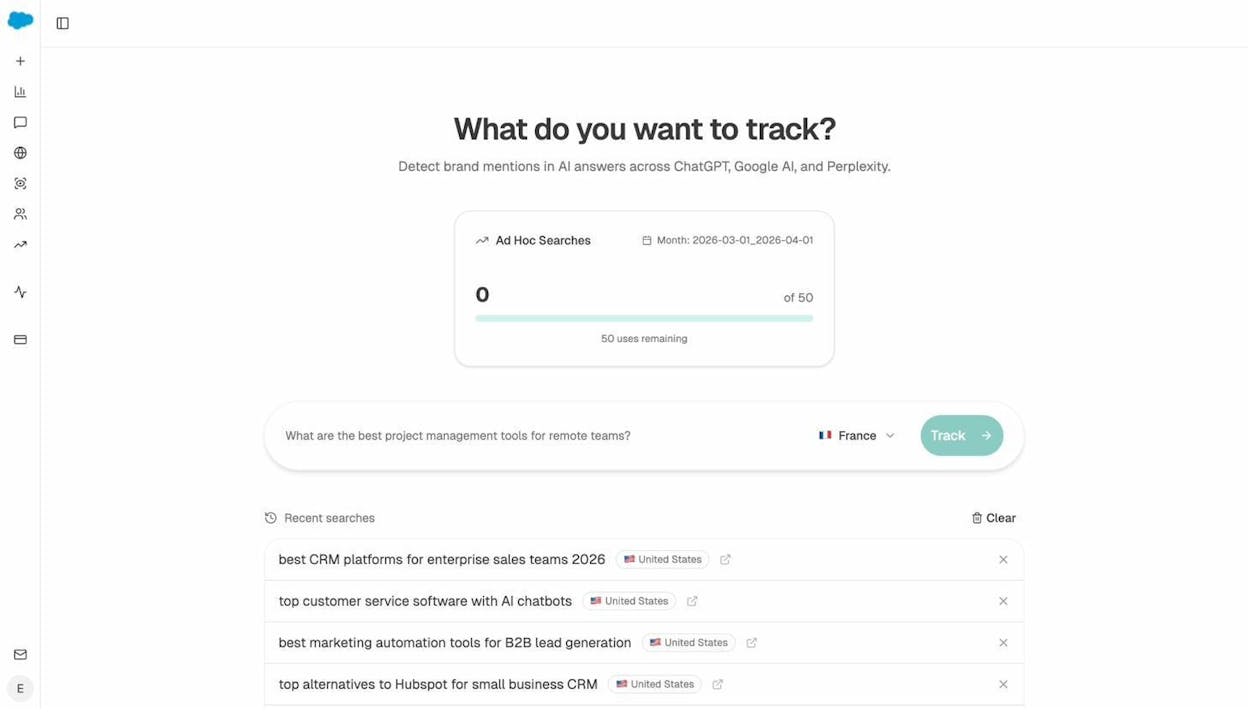
Traditional YouTube analytics show your channel’s performance. But they don’t tell you whether those mentions are translating into AI visibility. In Analyze AI, you can run any prompt through the AI Search Explorer and see exactly which sources ChatGPT, Claude, Gemini, and Perplexity cite in their responses, side by side. If YouTube videos mentioning your brand are showing up in those citations, you know the strategy is working.
2. Build Brand Mentions Across the Web
After YouTube, branded web mentions showed the next strongest correlation with ChatGPT visibility.
This is different from backlinks. We’re talking about mentions, meaning instances where your brand name appears across the web, with or without a link. The logic is straightforward. LLMs look for consensus. When multiple authoritative sources describe a brand as a strong solution for a given problem, the model reflects that consensus in its responses.
Our citation analysis confirmed this. About 83% of all AI citations come from third-party sources like review sites, news articles, analyst reports, and industry blogs. Only 17% come from the brand’s own website. You can’t win this game by publishing on your own site alone.
|
Source Type |
Share of Citations |
|---|---|
|
Third-party (review sites, news, blogs) |
82.9% |
|
First-party (brand’s own site) |
17.1% |
How to act on this:
Get on the sites ChatGPT actually cites. Not all mentions are equal. A mention on a site ChatGPT frequently cites is worth far more than one on a site it ignores. According to 5WPR’s AI Platform Citation Source Index 2026, the top 15 domains capture 68% of all consolidated AI citation share, a concentration far more extreme than Google PageRank ever produced. Reddit is the number one source across every major AI engine. Wikipedia dominates ChatGPT specifically. Focus your efforts on these high-citation domains first.
Target “best of” lists strategically. Research shows that “best of” blog lists account for nearly half of ChatGPT citations for recommendation-style queries. Instead of begging to be added to existing listicles, find authoritative sites in your space that haven’t published a “best of” post yet. Pitch them the content opportunity backed by keyword data, not a mention request. You can also run a listicle outreach campaign to earn backlinks and AI citations at the same time.
Find where you’re missing mentions. The fastest path to more visibility is closing gaps. Find pages that mention competitors but not you, and getting added to them.
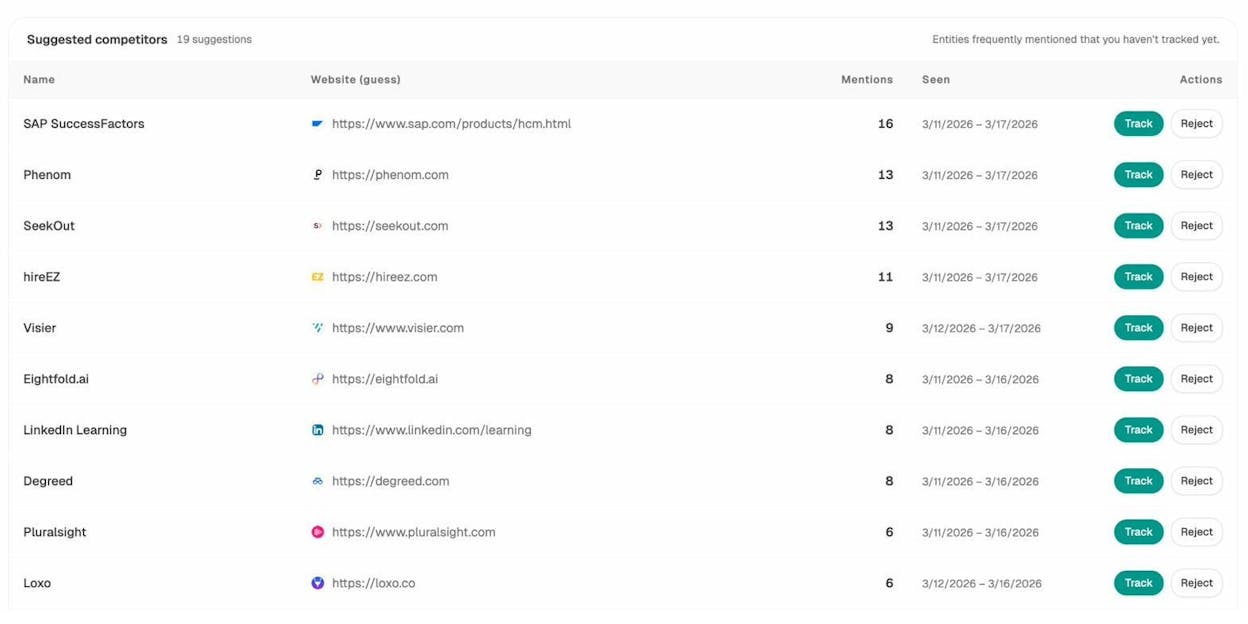
In Analyze AI, the Competitor Intelligence dashboard shows you exactly where competitors are winning and your brand is absent. You can see share of voice, average rank, citation share, and which specific prompts your competitors dominate. This turns “we’re not showing up” into a specific list of pages and prompts to target.
3. Engage Authentically on Reddit
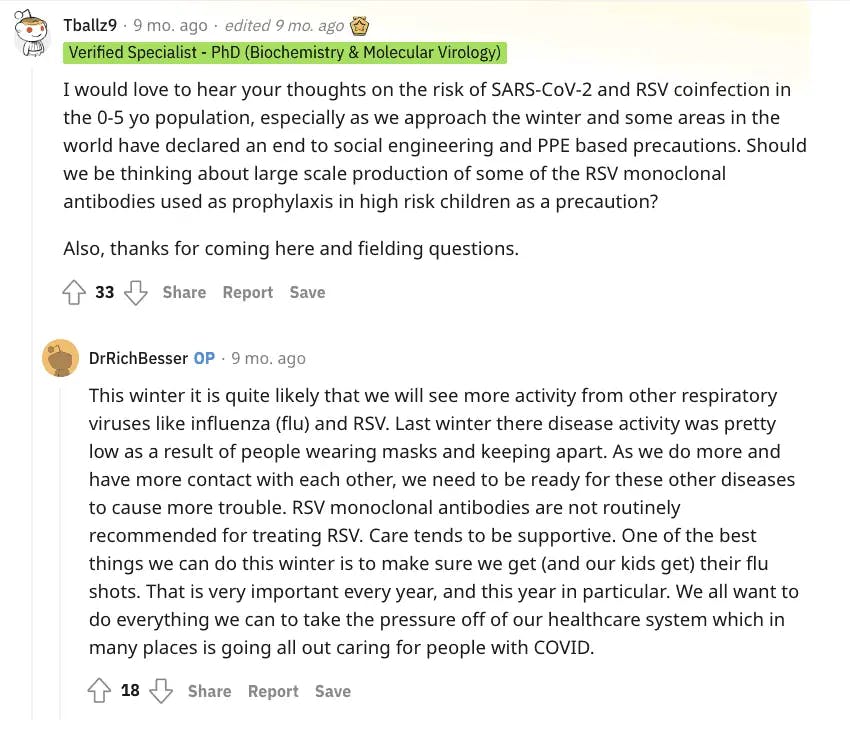
Reddit is ChatGPT’s most-cited domain. Our data showed this clearly, and every major third-party study confirms it.
This makes sense. Reddit discussions contain authentic user opinions, real product recommendations, and the kind of conversational context LLMs are built to understand. But Reddit is also allergic to marketing. Overt promotion will backfire.
How to act on this:
Find the Reddit threads that AI engines already cite. You can do this by searching your brand mentions across AI responses and filtering for Reddit sources. Then contribute authentically to those discussions and related subreddits.
The approach that works is to answer questions in your expertise area without mentioning your product. Provide genuinely useful information. Only bring up your product when it’s directly relevant and naturally helpful. Think like a PR person. What angle could make your expertise valuable to subreddits you wouldn’t normally consider?
This is a long game. Meaningful Reddit presence takes months. But because Reddit sits at the top of the citation hierarchy across every AI engine, the compounding effect is significant.
4. Structure Content for LLM Extraction
ChatGPT doesn’t read your content like a human does. It extracts relevant passages to assemble answers.
Research from Kevin Indig’s analysis of 1.2 million ChatGPT citations found a steep distribution: 44.2% of all citations come from the first 30% of content. The middle section accounts for 31.1%, and the final third just 24.7%. If your key insight is buried in paragraph twelve, ChatGPT is far less likely to cite it.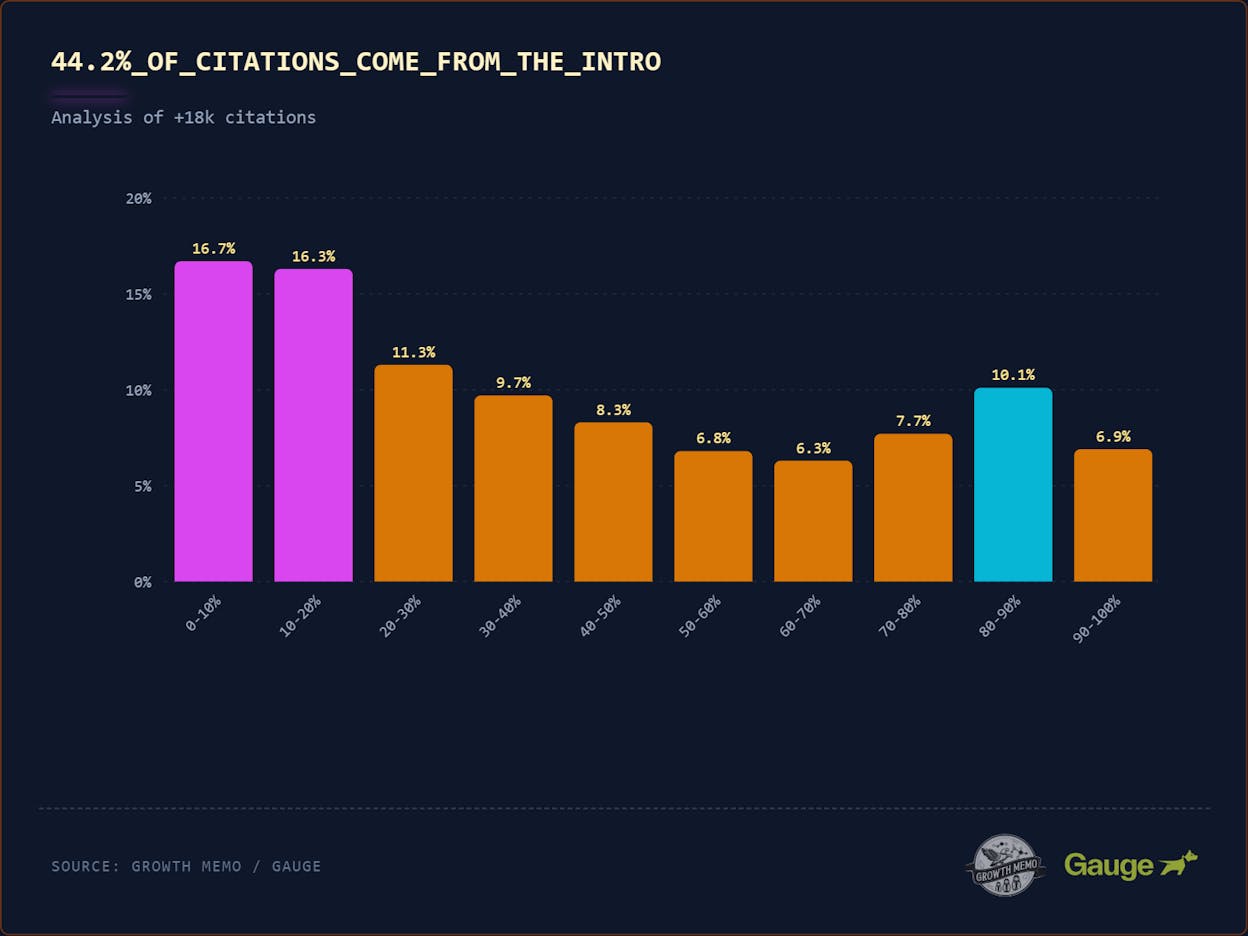
How to act on this:
Lead with the answer. Use BLUF (Bottom Line Up Front) format. Don’t bury the answer after three paragraphs of context. State it, then explain.
Use question-based headings. Content with question marks in headings gets cited at roughly double the rate of content without them. ChatGPT treats your H2 as the user’s query and the following paragraph as the answer.
Write atomic paragraphs. Each paragraph should stand alone as a complete answer if extracted out of context. This is the single most important structural change you can make.
Name names, including competitors. Cited text has an “entity density” roughly 3 to 4 times higher than normal English writing. Entities are proper nouns like brands, tools, people, and specific products. The more specific your content, the more extractable it is.
Add schema markup. Pages with structured data had significantly higher Top-3 rates in our dataset. Use FAQ, HowTo, or ItemList schema depending on the content format. It helps both Google and ChatGPT parse your content.
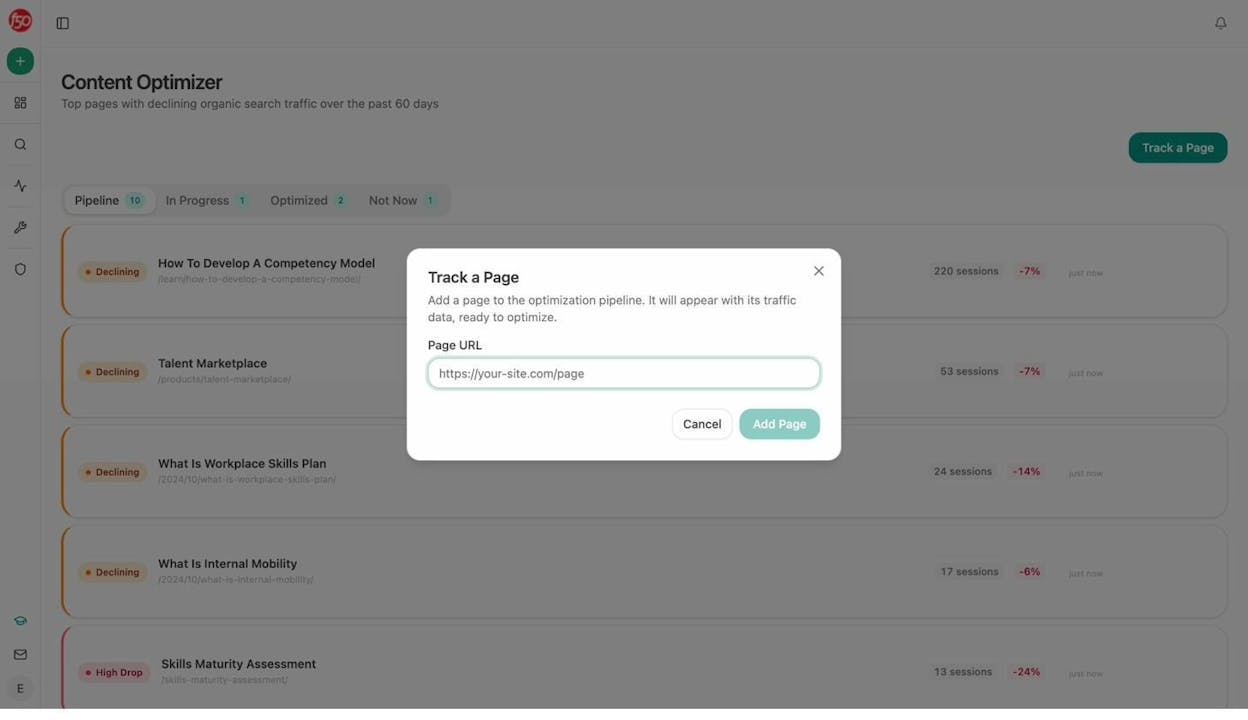
You can use the AI Content Optimizer in Analyze AI to score your existing pages against these factors. It fetches your live content, runs it through an editorial analysis, and gives you a content score along with specific comments on what to fix, from argument flow to heading structure to missing entities.
5. Keep Content Fresh
In a study of 17 million citations across 7 AI search platforms, AI assistants preferred content that was roughly 25% fresher than what ranks in traditional Google results. ChatGPT showed the strongest preference, citing URLs that were 393 to 458 days newer than comparable organic Google results.
Separately, ConvertMate’s analysis found that over 76% of ChatGPT citations come from content updated within the last 30 days.
But don’t take this as permission to just change your publish date. Actually make substantive updates. Replace outdated statistics with current ones. Update screenshots if the UI has changed. Revise recommendations if the competitive landscape has shifted. Add new sections addressing questions that have emerged since the original publish date.
How to act on this:
Pick your top 20 pages by traffic and citation potential. Set a 60 to 90 day refresh cadence. Treat the “Last Updated” line as a load-bearing element of the page, not a stylistic afterthought.
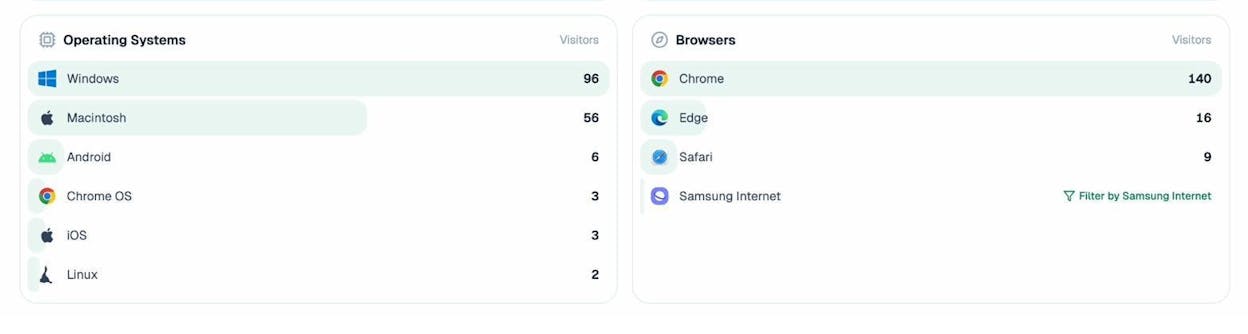
In Analyze AI, the AI Traffic Analytics Landing Pages report shows which of your URLs are currently receiving sessions from ChatGPT, Perplexity, Claude, and other AI referrers. Prioritize refreshing pages that are already getting AI traffic, since these are the ones the models already trust. Doubling down on what works is almost always the highest-ROI move.
6. Don’t Chase Content Quantity
The number of pages on your website has an extremely low correlation with ChatGPT visibility. This surprised no one who has been paying attention. Publishing more content with AI writing tools doesn’t mean ChatGPT will cite you more. The “content at scale” playbook that worked for traditional SEO does not transfer.
What matters is whether your content gets talked about by others and whether it’s structured for LLM extraction.
How to act on this:
Instead of publishing more, make what you have better. Create original research that ChatGPT can cite. Publish proprietary data. Run surveys. Analyze your industry’s numbers. ChatGPT loves citing specific, quantified claims because they’re the easiest kind of statement to ground an answer in.
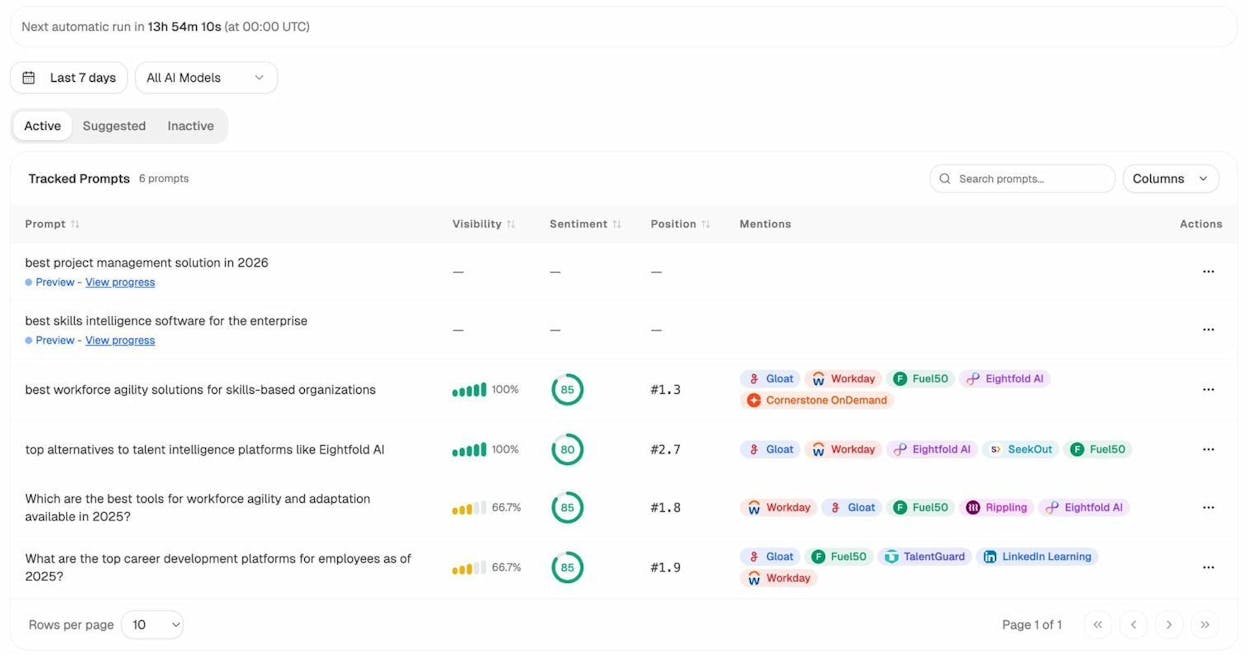
Also, publish content designed for a cluster of related prompts, not a one-off win. Our data showed that brands with citations across a cluster of adjacent prompts had higher visibility than brands with a single strong page. The Prompt Discovery feature in Analyze AI surfaces adjacent prompts with rising visibility potential. Accept the ones that map to your product strengths, and build a cluster of content that answers them.
7. Ensure ChatGPT Can Actually Access Your Content
If ChatGPT can’t crawl your site, nothing else matters. This is the foundation everything else builds on.
Check your robots.txt. Go to yoursite.com/robots.txt and search for GPTBot (OpenAI’s training crawler) and OAI-SearchBot (OpenAI’s search indexer). If you see Disallow: / under either of these, your content is blocked. Unless you have a specific legal reason to opt out, remove these blocks. You can learn more in our robots.txt guide.
Check your Cloudflare settings. If you use Cloudflare, check whether the “Block AI training bots” feature is enabled. It’s on by default for many accounts and it automatically blocks AI crawlers from accessing your site. When AI models can’t learn from your site directly, they learn about your brand from third-party sources instead. You lose control of your narrative.
Consider an llms.txt file. An llms.txt file tells AI crawlers what your site is about in a structured, machine-readable format. Think of it as a cover letter for AI crawlers. You can generate one instantly using Analyze AI’s free LLM.txt Generator.
How to Track All of This in One Place
Each of the seven tactics above generates a signal you need to track. That means monitoring your AI visibility across multiple engines, tracking which prompts mention you and which don’t, watching competitor movements, and tying it all back to actual traffic and conversions.
You can do this manually by running prompts in ChatGPT every day and logging the results in a spreadsheet. Some people do that. It doesn’t scale.
Analyze AI centralizes all of this. You track prompts across ChatGPT, Claude, Gemini, Perplexity, and Copilot. You see your visibility score trending over time. You see which sources each engine cites. You see competitor gaps. And you see AI traffic flowing to your landing pages, tied to sessions, engagement, bounce rate, and conversions.
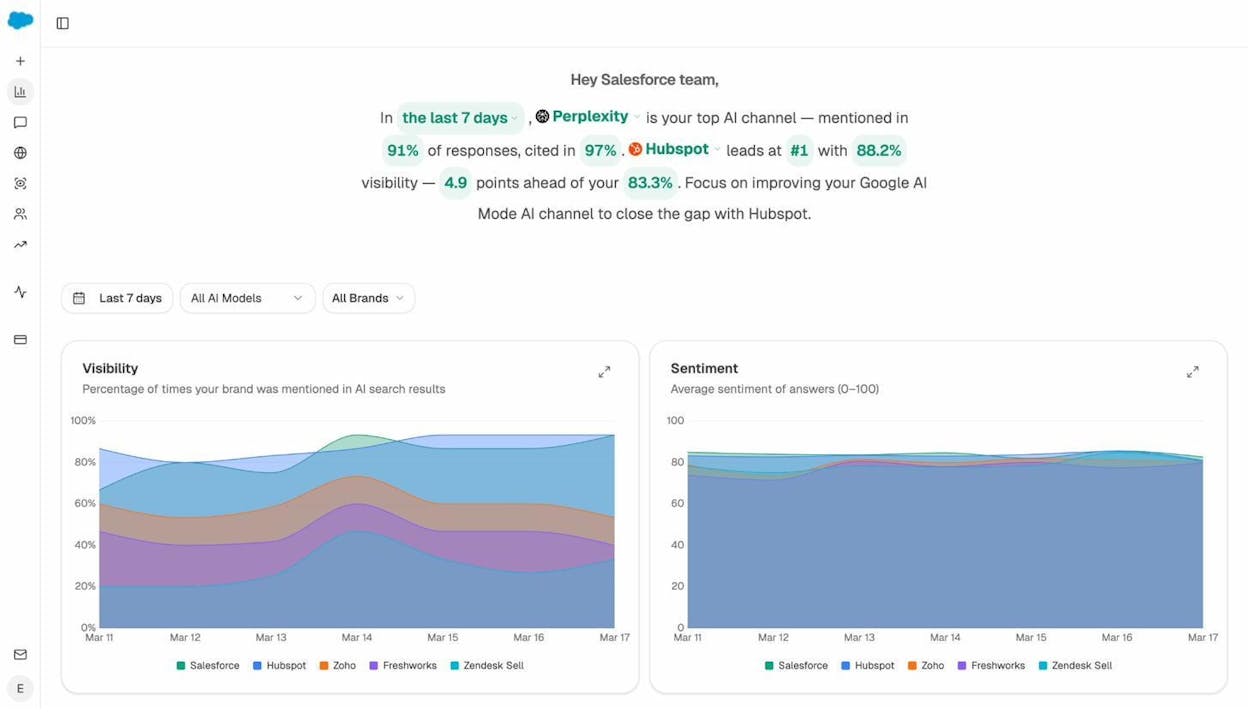
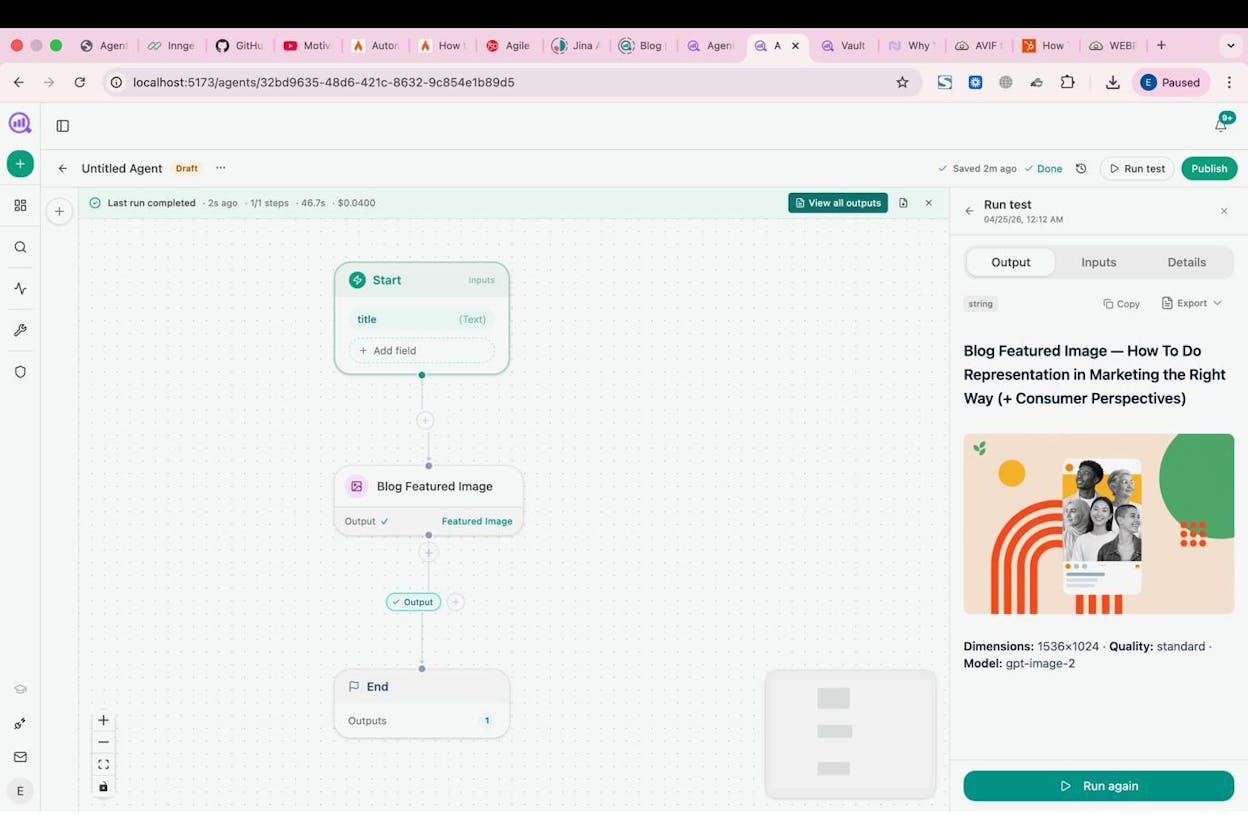
Beyond monitoring, the platform has an AI Content Writer and AI Content Optimizer built to create and optimize content specifically for AI citability. And the Agent Builder lets you automate the entire cycle. With 180+ nodes, 34 pre-built data recipes, and direct integrations with GA4, GSC, Semrush, DataForSEO, HubSpot, Notion, WordPress, Slack, and major LLMs, you can build agents that automatically generate competitive briefs, flag citation decay, refresh stale content, run weekly visibility reports, and push them to Slack or email on a schedule. It’s not just an automation layer. It’s an operating system for your entire SEO and AI search program.
Final Thoughts
ChatGPT visibility isn’t random. And it isn’t just about being a big brand. The brands appearing in AI responses are the ones being talked about on YouTube, across review sites, in Reddit discussions, and in industry coverage. They have fresh content with specific, citable claims. They’ve structured that content so LLMs can extract it cleanly. And they’ve made sure AI crawlers can actually reach their pages.
None of this means SEO is dead. The brands with the highest AI visibility are overwhelmingly the same brands that already do well in traditional search. Our manifesto at Analyze AI is clear on this: AI search is an additional organic channel, not a replacement. The brands that will win are the ones who treat it that way and build for both.
The question isn’t whether you can afford to do this work. It’s whether you can afford not to, while your competitors build the visibility you’re missing.

Ernest

Ibrahim


![50 GEO Statistics From Tracking 83,670 AI Citations [2026 Data]](/_next/image?url=https%3A%2F%2Fwww.datocms-assets.com%2F164164%2F1779314907-blobid0.png&w=3840&q=75)


