



Summarize this blog post with:


In this article, you’ll see how Profound, Peec AI, and AthenaHQ actually compare once you strip out the marketing. You’ll get verified pricing, the hidden caps each plan hides, the trade-offs between data depth and execution, and a side-by-side view of what each tool ships in 2026. You’ll also see how teams that need to actually fix what visibility tracking reveals are pairing or replacing them with Analyze AI, an agentic SEO and content platform that runs on your AI search data, your GA4 sessions, your GSC queries, and the workflows that ship the work.
You’ll finish equipped to pick the tool that fits how your team operates, not the one with the loudest pitch.
Table of Contents
TL;DR
Profound is the heavy enterprise platform for Fortune 500 teams with analyst headcount.
Peec AI is the clean monitor for prompt-level tracking on a budget.
AthenaHQ is the credit-based action layer for Shopify and e-commerce teams chasing attribution.
Analyze AI is the agentic platform for teams who want to track AI visibility, prove pipeline impact, and run the SEO and content workflows that follow, without buying five tools.
|
Category |
Profound |
Peec AI |
AthenaHQ |
Analyze AI |
|---|---|---|---|---|
|
Best for |
Fortune 500 with analyst capacity |
Solo and mid-market SEO teams |
Shopify and e-commerce teams |
Teams that need visibility plus execution plus attribution |
|
Engine coverage |
10+ on Enterprise, 3 on $399 Growth |
3 base, add-ons €30 to €140 each |
6+ engines on Self-Serve |
ChatGPT, Perplexity, Claude, Gemini, Copilot included |
|
Prompt tracking |
100 prompts on Growth |
50 to 500 by tier |
Credit-based, every answer burns 1 credit |
Tracked, suggested, and ad hoc on every plan |
|
Content execution |
Capped at 3 articles per month on Growth |
None |
AI agents, credit-burn dependent |
Content Writer plus Content Optimizer plus 180+ agent nodes |
|
Real attribution |
Citation data only |
None |
Shopify SKU and GA4 |
GA4 sessions per engine, page, and conversion |
|
Pricing |
$99 to $399, Enterprise custom |
€85 to €425, Enterprise custom |
$295 to $2,000+ |
One flat plan with everything in |
Profound: the heavy enterprise GEO platform
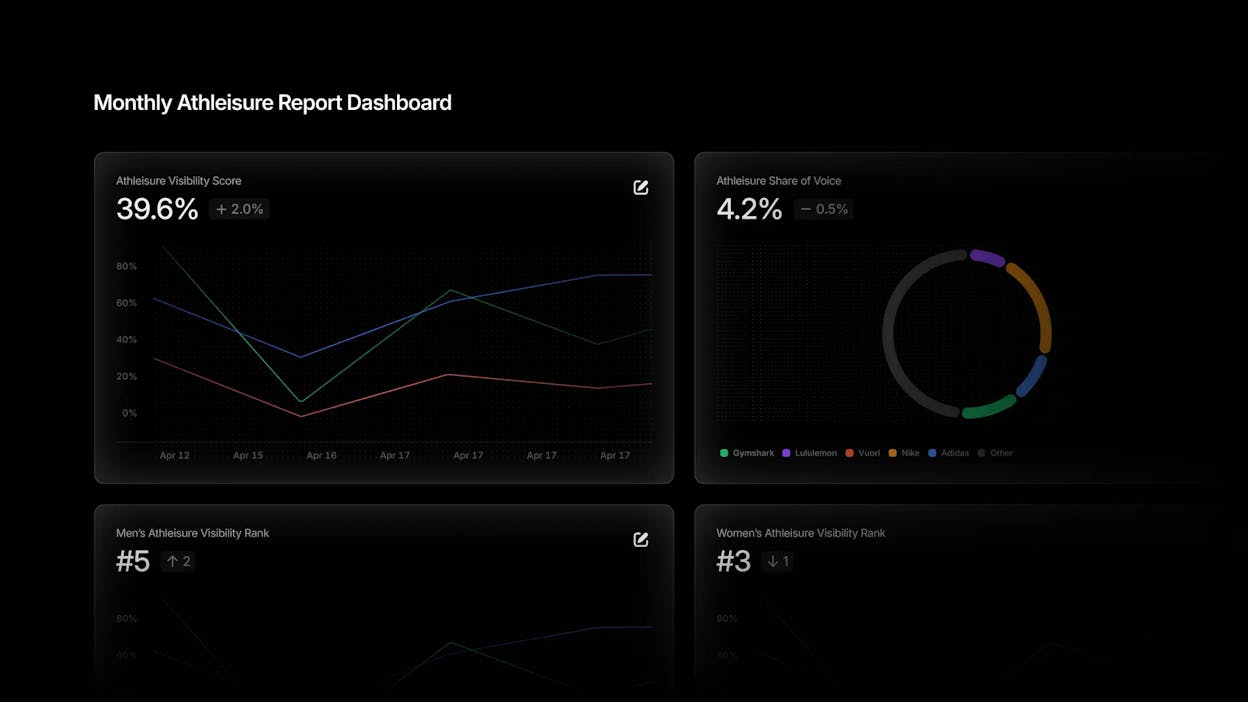
Profound is the most-funded platform in the category. $58.5M raised, customers including Ramp, US Bank, and Airbyte, SOC 2 Type II compliance, SSO, and a dedicated GEO strategist on Enterprise. It tracks how your brand appears in AI answers across ChatGPT, Perplexity, Gemini, Claude, Copilot, and Google AI Overviews, then ties those answers back to citations, technical signals, and prompt fanouts.
What Profound does well
You get a rich picture of how AI systems read your brand. The Conversation Explorer reveals AI search volume data that was previously invisible, and the platform processes 5M+ citations a day at the top tier. For an enterprise team with an analyst on staff, this is real depth.
Competitive benchmarking is strong. You see which competitors hold the prompts you want, how that share moves month over month, and the technical reasons one site keeps getting pulled into answers.
Where Profound falls short
The Growth plan at $399 a month tracks only three platforms (ChatGPT, Perplexity, Google AI Overviews) and caps you at 100 prompts. To access the full 10+ engine suite, you need a custom Enterprise contract. Independent reviewers put that mid-tier price at roughly $3.99 per prompt.
Profound leans hard into analytics, not action. It shows you which prompt sends buyers to a rival, then hands you the data. The Growth tier ships a content workflow capped at three articles a month, nowhere near enough to fix what the dashboard surfaces.
The dashboard is dense. G2 reviewers flag a steep learning curve, inconsistent dashboards, and onboarding that demands a strategist on the call. Without analyst capacity, the data sits unused.
Profound pricing
|
Plan |
Price |
Engines |
Prompts |
Content |
|---|---|---|---|---|
|
Starter |
$99 / mo |
1 (ChatGPT) |
Capped |
None |
|
Growth |
$399 / mo |
3 |
100 |
3 articles / mo |
|
Enterprise |
Custom |
All 10+ |
Custom |
Custom |
Best for enterprise teams with dedicated analyst headcount, SOC 2 requirements, and budget that can absorb a four-figure monthly bill on one GEO tool.
Peec AI: the clean, accessible visibility monitor
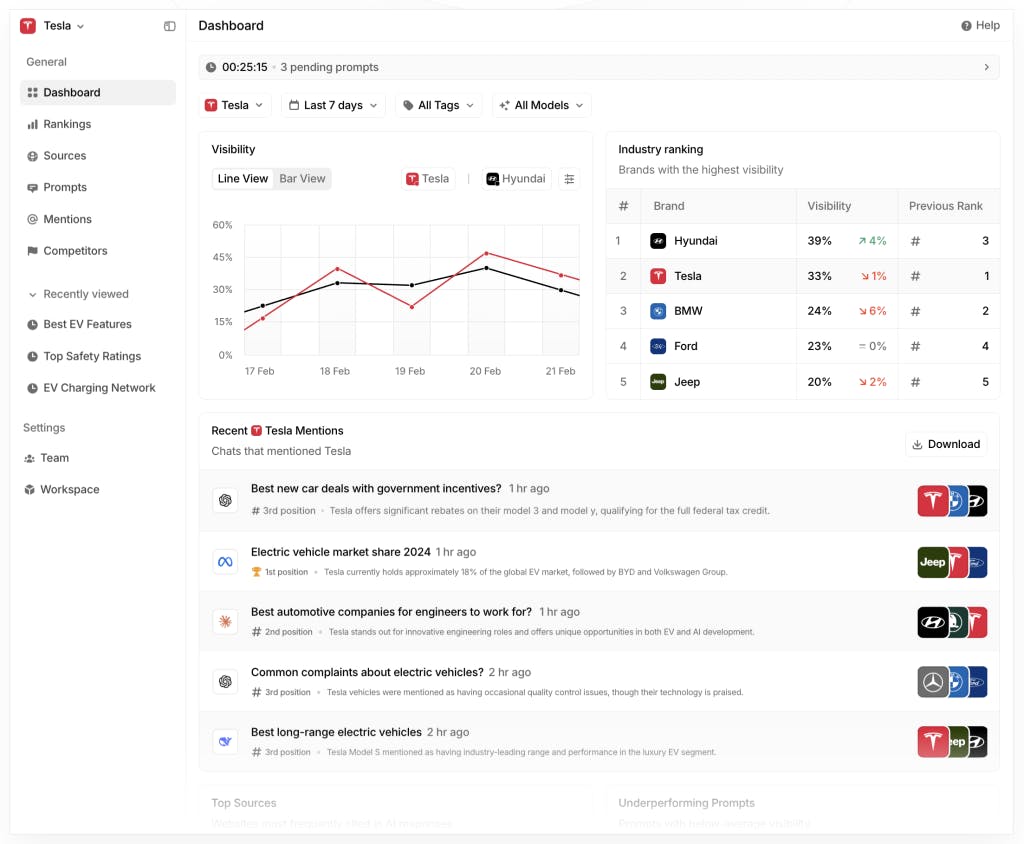
Peec AI sits on the opposite end of the market. Built for SEO managers, content leads, and solo operators who want to see how prompts move without paying for an enterprise stack. Founded in Berlin in early 2025, Peec hit €650K ARR within four months and raised $29M across seed and Series A.
What Peec AI does well
The product is anchored to prompt-level clarity. You set the prompts your buyers ask, and Peec shows which engines mention you, which URLs they cite, who appears next to you, and whether tone trends positive or negative. Daily refreshes, suggested prompts, and unlimited seats keep onboarding under an hour.
Two real differentiators show up in every review. Direct Slack access to the founders is unusual at this scale. UI scraping (not API simulation) means the answers you see match what your buyers actually see in ChatGPT and Perplexity.
Where Peec AI falls short
Starter, Pro, and Advanced plans include three AI models of your choice. Every additional model costs €30 a month on Starter, €70 on Pro, and €140 on Advanced. If you need ChatGPT, Perplexity, Gemini, Claude, AI Overviews, and Copilot, the published price doubles or triples in practice.
Peec tells you which prompts you lose. It does not write the content, generate the briefs, or run the workflows that close those gaps. Teams using Peec layer a separate tool on top to act.
Peec measures mentions, not money. No native GA4 integration, no traffic estimation, no conversion tracking. You know you were cited. You do not know whether the citation drove a session, let alone a deal. API access is Enterprise-only and remains in beta.
Peec AI pricing
|
Plan |
Price |
Prompts |
Models |
Projects |
|---|---|---|---|---|
|
Starter |
€85 / mo |
50 |
3 + add-ons |
1 |
|
Pro |
€205 / mo |
150 |
3 + add-ons |
2 |
|
Advanced |
€425 / mo |
500 |
3 + add-ons |
Multi-country |
|
Enterprise |
Custom |
Unlimited |
All |
Unlimited |
All plans include unlimited user seats and daily tracking. Agency tiers run €205 to €675 a month with pitch workspaces.
Best for small in-house SEO teams tracking 50 to 150 prompts who do not need built-in content execution and can absorb model add-ons.
AthenaHQ: the action-first GEO tool with revenue attribution
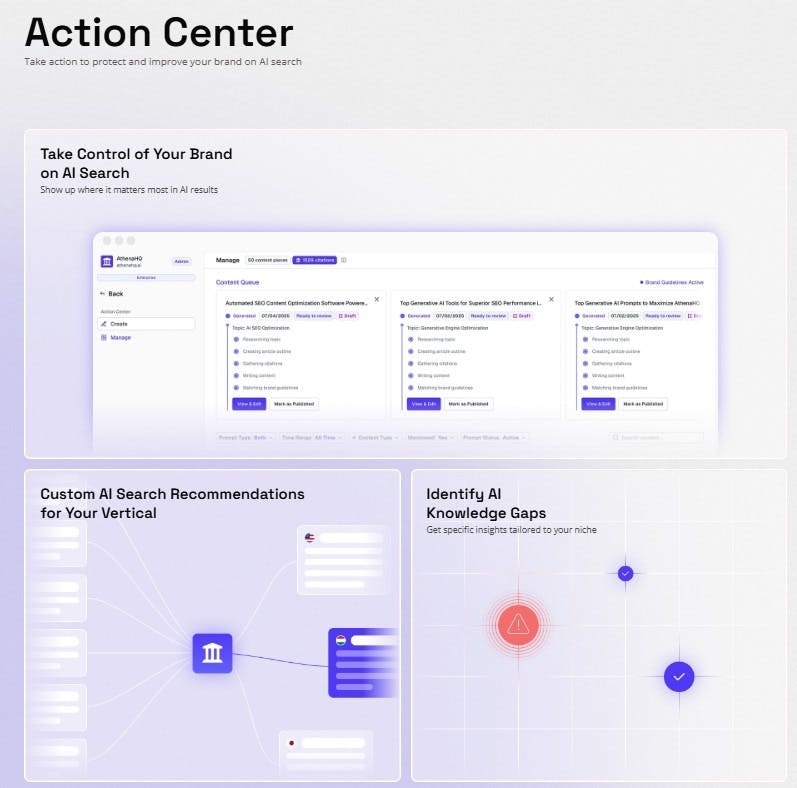
AthenaHQ takes a third angle. Founded by ex-Google Search and DeepMind engineers, backed by Y Combinator and $2.2M in seed, it turns visibility data into shipped fixes. The Olympus Dashboard rolls citation count, sentiment, traffic impact, and query type into a unified GEO score, then routes everything through an Action Center that suggests specific content moves.
What AthenaHQ does well
The execution loop is the differentiator. Where Profound stops at analysis and Peec stops at monitoring, AthenaHQ adds AI agents that draft GEO-optimized content inside the platform. For Shopify teams, the integration correlates AI citation activity with actual sales data at the SKU level. GA4 covers non-e-commerce attribution. The result is the closest thing in the category to a closed loop between visibility and revenue.
The agency layer is the most developed of the three. Pitch Workspaces generate prospect-ready reports in five minutes. The Lead Routing Program sends qualified inbound leads to certified partners. Multi-region tracking spans 60+ countries on Enterprise.
Where AthenaHQ falls short
The model is credit-based. Every AI response burns one credit. Self-Serve at $295 a month includes a fixed pool, and once you exhaust it, $100 buys you 1,250 more. For teams running large content audits, credit burn is unpredictable. G2 reviewers flag this as the top frustration.
Persona targeting, the ACE optimization engine, and other advanced features sit behind the Enterprise paywall. Self-Serve gives you the surface. The strategic depth lives at $545 (Growth) and $2,000+ (Enterprise).
Like every AI-generation content layer, the agent output has a quality ceiling. Without strong prompt design and brand context, drafts read generic. A human still cleans what it ships.
AthenaHQ pricing
|
Plan |
Price |
Engines |
Credits |
|---|---|---|---|
|
Lite (annual) |
$270 / mo |
6+ |
Small pool |
|
Self-Serve |
$295 / mo ($95 first month) |
6+ |
Fixed pool |
|
Growth |
$545 / mo |
6+ |
Expanded |
|
Enterprise |
$2,000+ / mo |
6+ |
Custom |
Additional credits: $100 per 1,250.
Best for Shopify and e-commerce brands that need revenue attribution, plus agencies that lean on Pitch Workspaces to win accounts.
Feature-by-feature: how the three actually compare
Choosing a GEO tool comes down to four jobs. Track prompts. Audit citations. See competitive movement. Ship the work.
|
Capability |
Profound |
Peec AI |
AthenaHQ |
|---|---|---|---|
|
Cross-engine coverage |
Deepest, full coverage gated to Enterprise |
3 base, add-ons €30 to €140 per extra |
6+ engines on every plan |
|
Citation clarity |
Most granular, links separated from mentions |
Clear source view per prompt |
Citation intelligence in Action Center |
|
Prompt tracking |
100-prompt cap on Growth |
Core of the product |
Every answer burns a credit |
|
Sentiment |
Deep tone and entity signals |
Simple positive / neutral / negative |
Tied to competitor benchmarks |
|
Competitive benchmarking |
Multi-layer competitor modeling |
Per-prompt competitor positions |
Agency-friendly snapshots |
|
Actionability |
Insights only |
None |
Action Center, capped by credits |
|
Content execution |
3 articles / month on Growth |
Not supported |
Credit-based AI agents |
|
Real revenue attribution |
Citation-level only |
None |
Shopify SKU and GA4 |
Analyze AI: the agentic SEO and content platform that turns visibility into shipped work
Most GEO tools tell you whether your brand appeared in a ChatGPT answer, then hand you the data and walk away. You see a visibility score, maybe a sentiment score, and you are on your own to write the brief, fix the page, audit the source, file the ticket, or update the brand vault.
Analyze AI is built for what comes after the dashboard. You get the visibility tracking, the citation audit, the competitor view, and the prompt monitor every tool above ships. You also get a Content Writer, a Content Optimizer, AI Traffic Analytics tied to GA4 sessions and conversions, and an agent builder with 180+ nodes wired to GSC, Semrush, DataForSEO, HubSpot, WordPress, Notion, and the rest of the stack you already pay for. One flat price. Everything in.
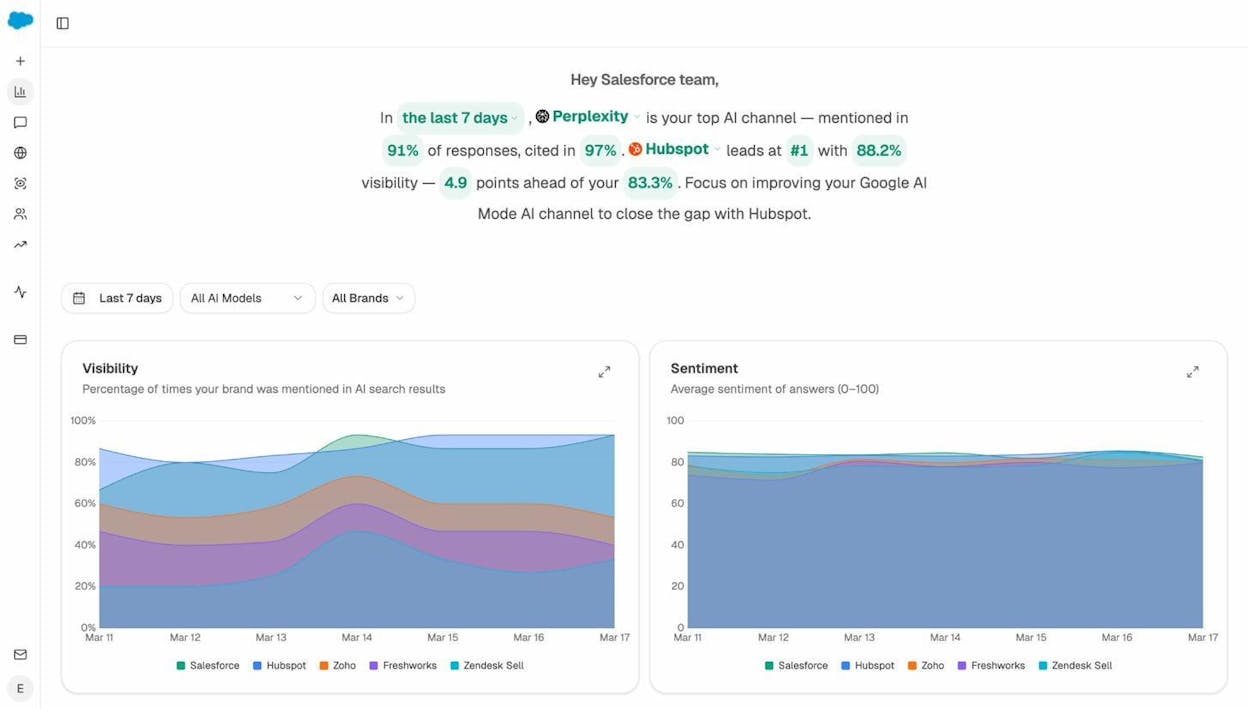
The friction in AI search work is rarely the tracking. It is everything that follows. Pulling the GSC data for the page. Opening the brief. Writing the section. Scoring the draft. Publishing it. Watching whether the citation moves. Analyze AI ships those steps.
The GEO layer every competitor ships
You get prompt-level visibility across ChatGPT, Perplexity, Claude, Gemini, and Copilot. For each prompt, you see your share, the competitors next to you, the engines where you win or lose, and the sentiment trend over time.
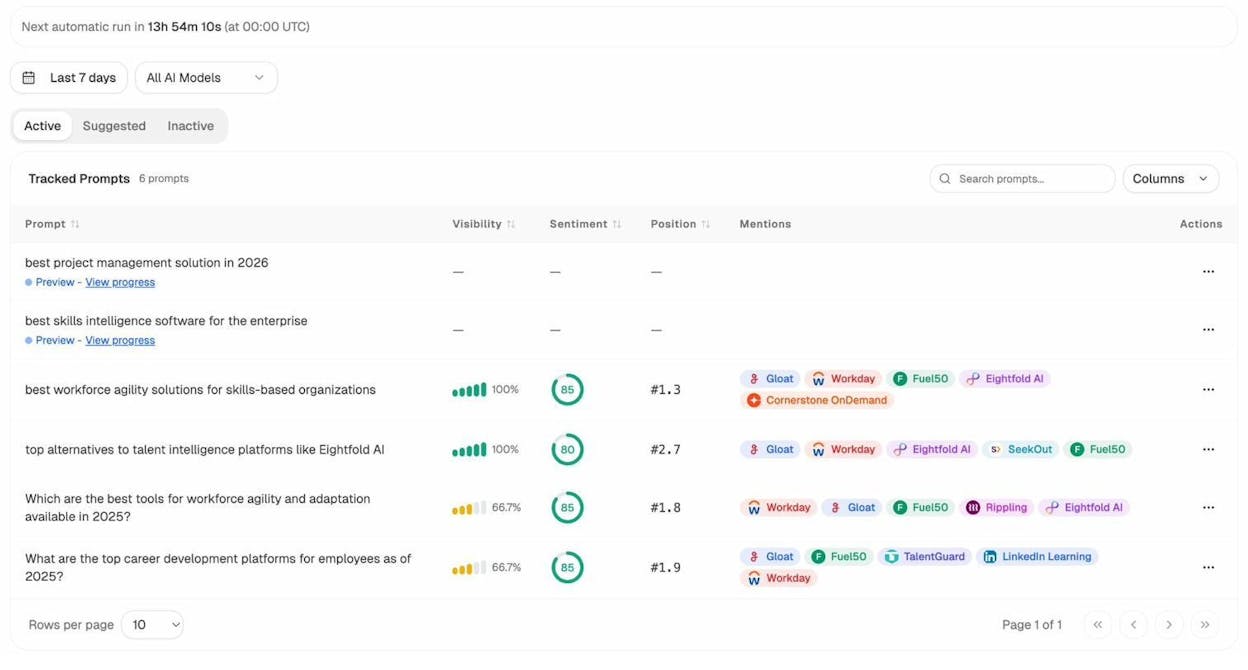
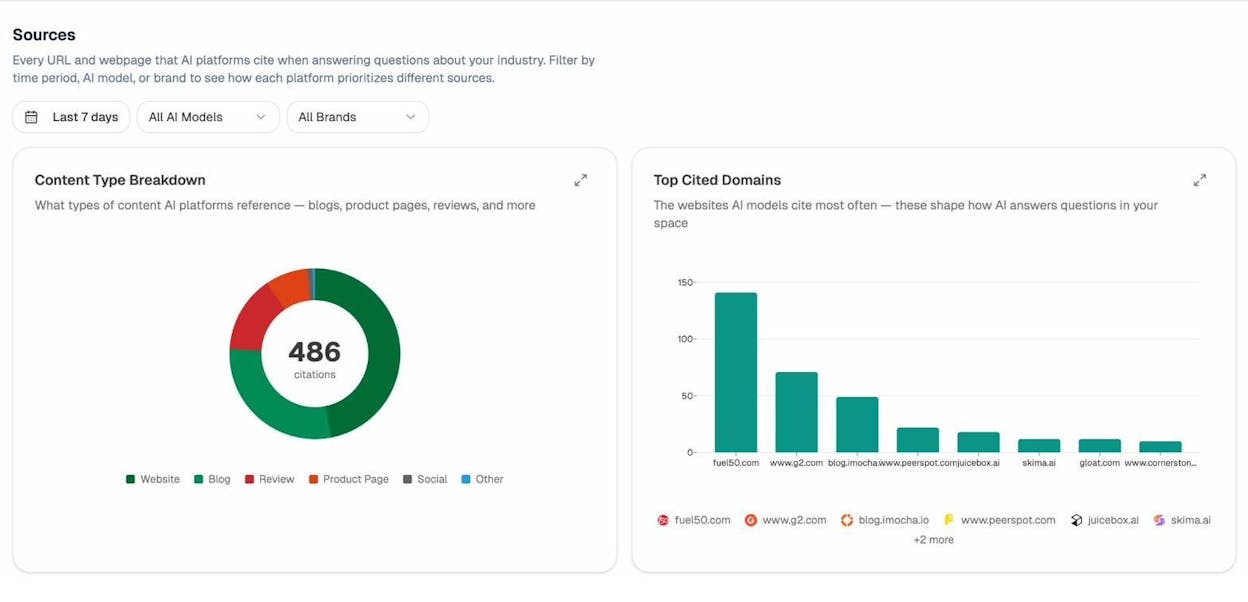
You can also add ad hoc prompts to validate ideas before committing them to tracking. The Sources view shows which domains models actually trust in your category, how often each source is cited, which engines reference it, and when the citation first appeared.
What Analyze AI ships that the others do not
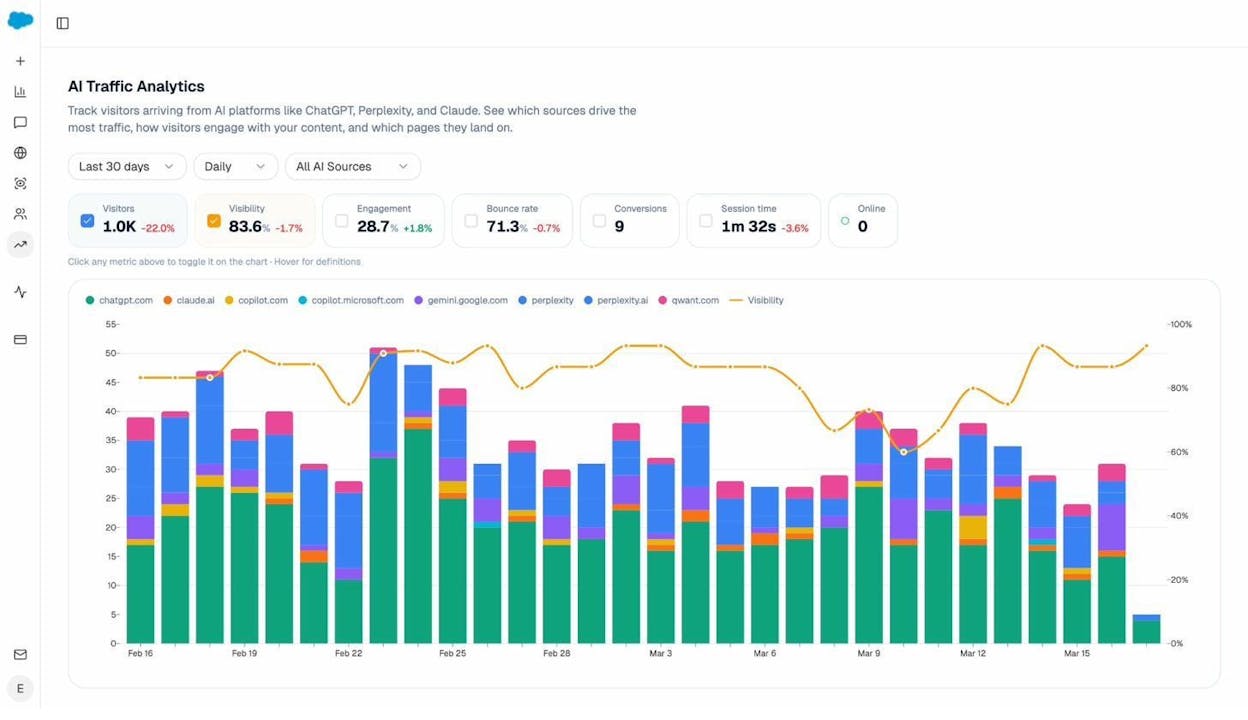
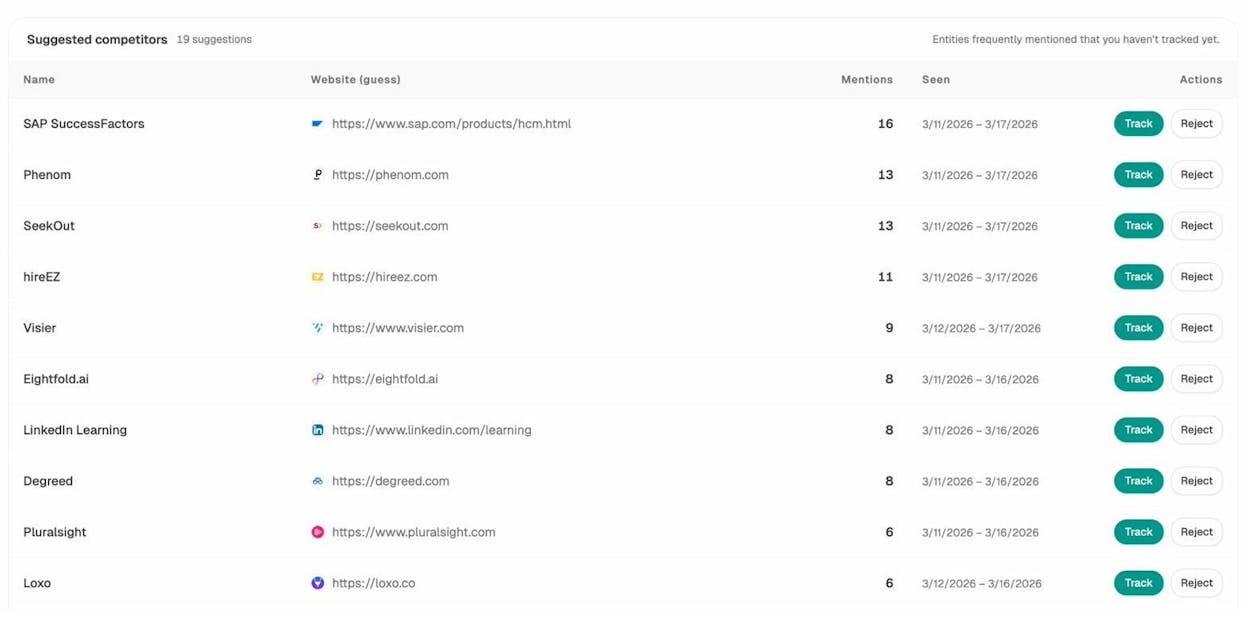
Real AI traffic, not just mentions. Analyze AI attributes every session from an answer engine to its specific source. ChatGPT, Perplexity, Claude, Copilot, Gemini sessions, with six-month trend lines and the percentage of total traffic coming from AI referrers.
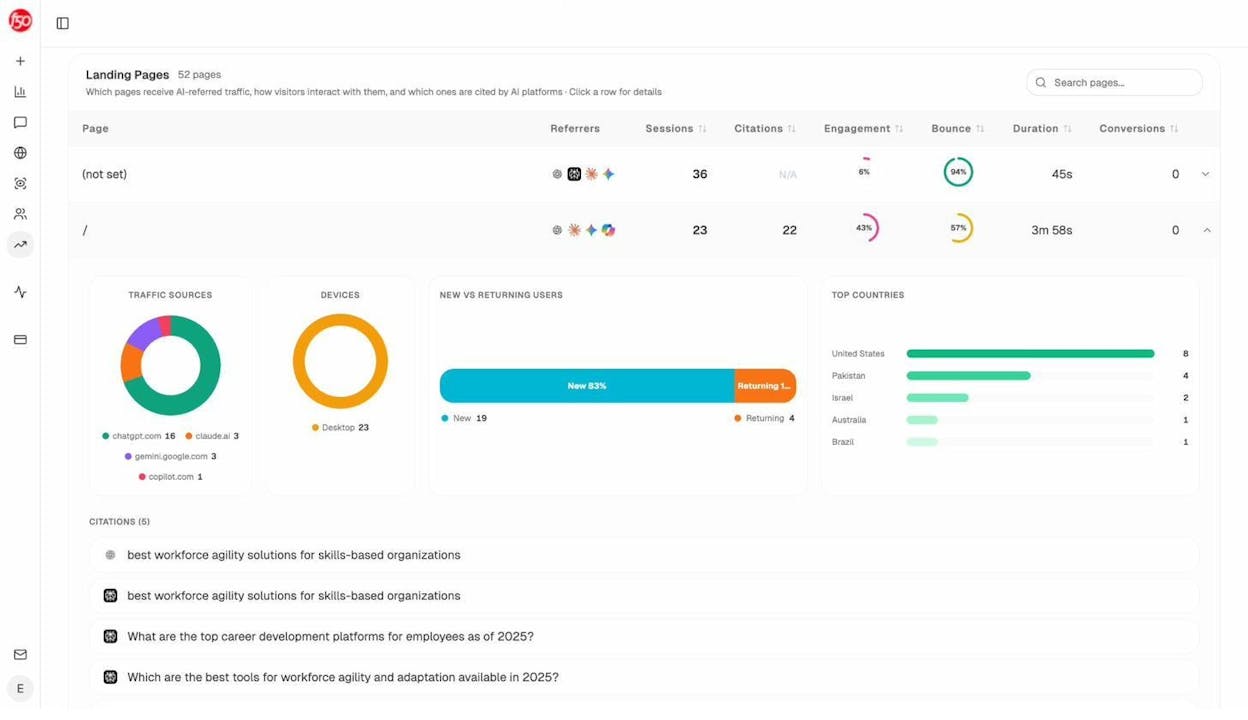
Which pages convert that traffic. The Landing Pages report shows the URLs that receive AI sessions, the engine that sent each session, and the conversion events those visits trigger. When your comparison page converts at 12% from Perplexity while a blog post converts zero from ChatGPT, you know exactly which page to double down on.
Where competitors win. The Competitors view rolls visibility, citations, and movement into a single scoreboard, so the team running stand-up has a one-screen answer to “where did we lose ground and to whom.”
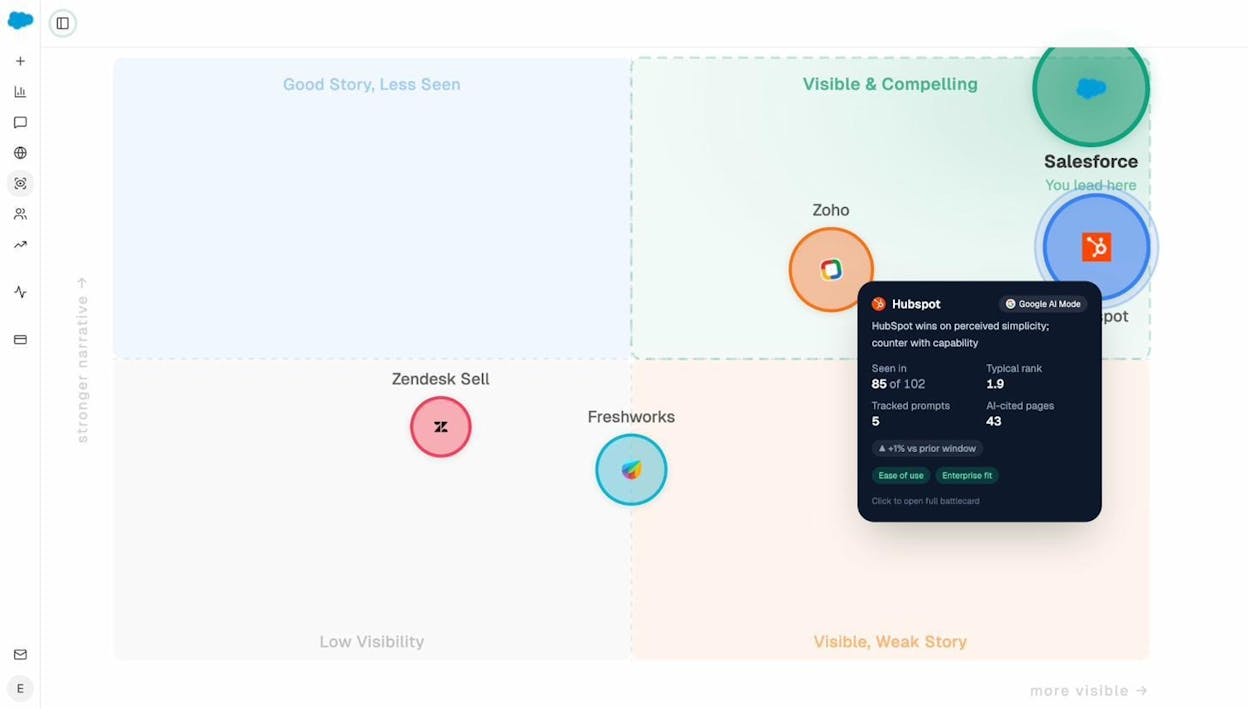
The narrative. The Perception Map plots your brand against competitors on presence and narrative strength, so the comms team knows how the market is being framed.
Where the agent builder changes the math
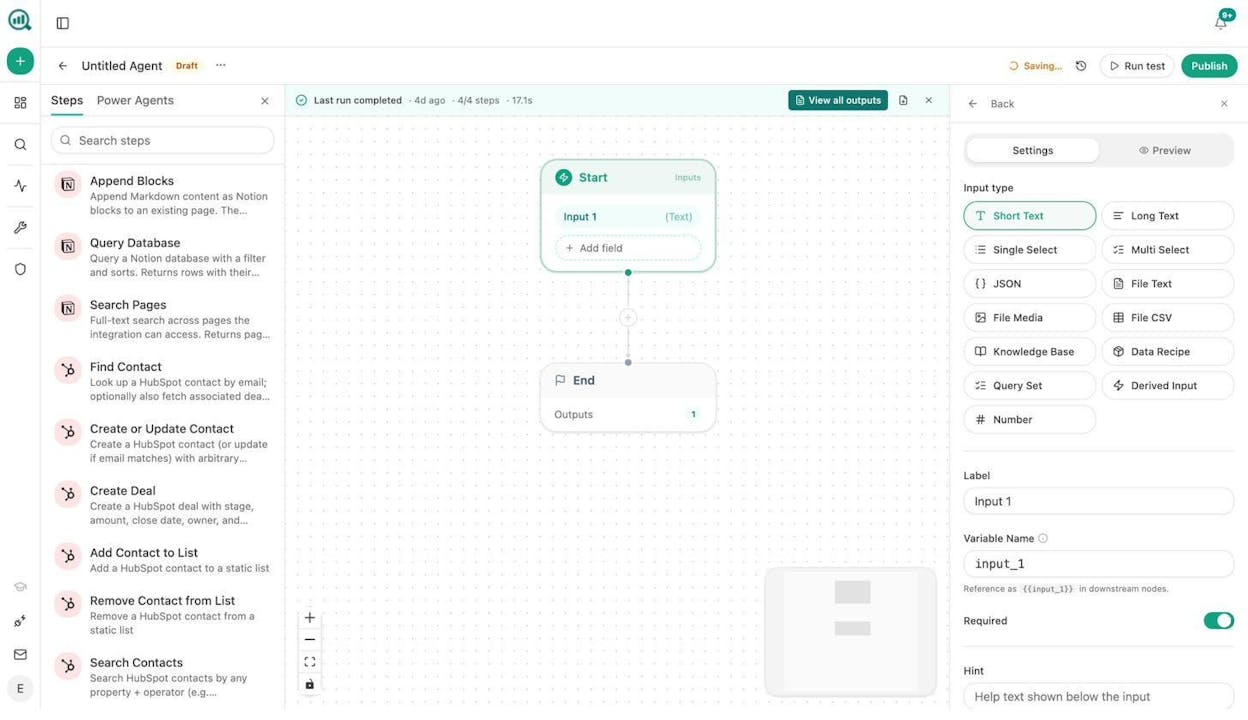
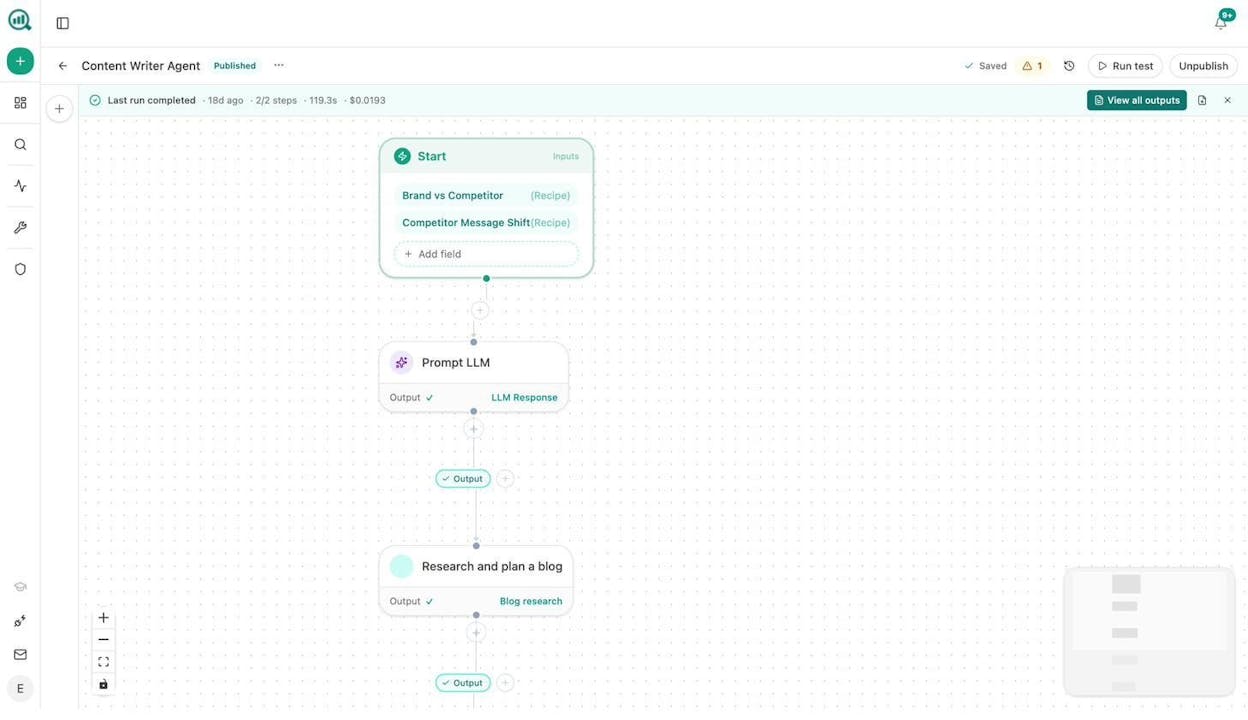
Every tool above ends with a dashboard. Analyze AI ends with a workflow. The agent builder ships with 180+ production nodes across AI, web research, SEO data, GSC, GA4, content generation, content optimization, B2B enrichment, CRM, logic, and exports.
The combinations are not theoretical. Teams are running them today.
A CMO schedules a Monday 7am agent that pulls share-of-voice, GA4 AI traffic, new HubSpot deals, and competitor movement, writes an executive summary in brand voice, and emails a DOCX to leadership. The Monday board prep that used to chew four analyst hours runs while everyone is asleep.
An agency builds a per-client agent that loops through accounts on Mondays, assembles a client-branded report with the agency’s letterhead, and emails it to the right account team. Reporting day stops existing.
A content team builds a brief-to-publish pipeline. A Notion approval triggers research, an outline, a full draft injected with the brand vault, an AEO scorecard check, and (if the score passes 80) auto-publishes to WordPress with a featured image. If the score fails, the agent Slacks the writer with the gaps.
A PR team runs a 15-minute crisis watch that filters brand mentions by sentiment and reach, then Slacks the team with drafted response options before the CEO sees the article. A sales team triggers a webhook from a Typeform that enriches the lead with Hunter, Tomba, DataForSEO, and news research, updates HubSpot, and Slacks the AE.
Each of these used to live across Zapier, Make, n8n, and a dozen scripts. They live inside Analyze AI because the AI search data, the GA4 attribution, the GSC queries, the Semrush data, the HubSpot deals, and the brand vault are already in the same surface.
The Content Writer and Content Optimizer
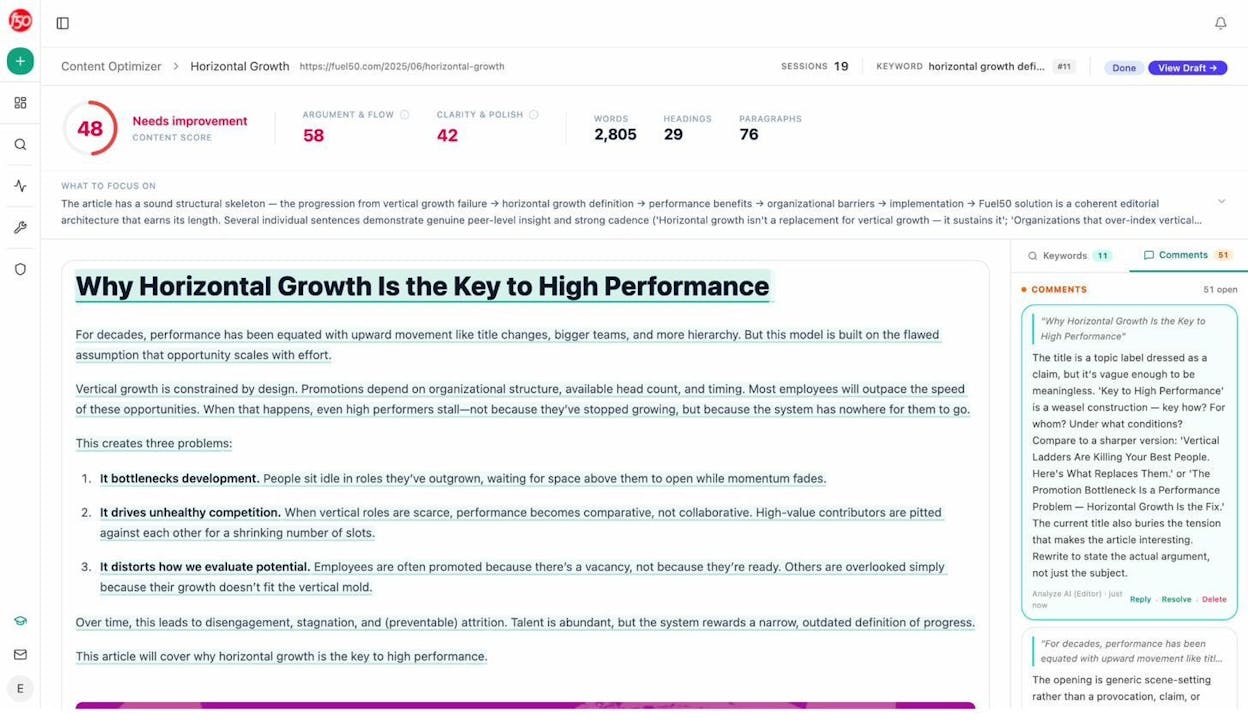
This is where the comparison gets sharp. Profound caps content at three articles a month. Peec ships none. AthenaHQ drains credits and trends generic. Analyze AI runs a four-stage pipeline (research, outline, draft, score) with editor comments on every step, brand voice injected from the vault, and AEO scoring before publish.
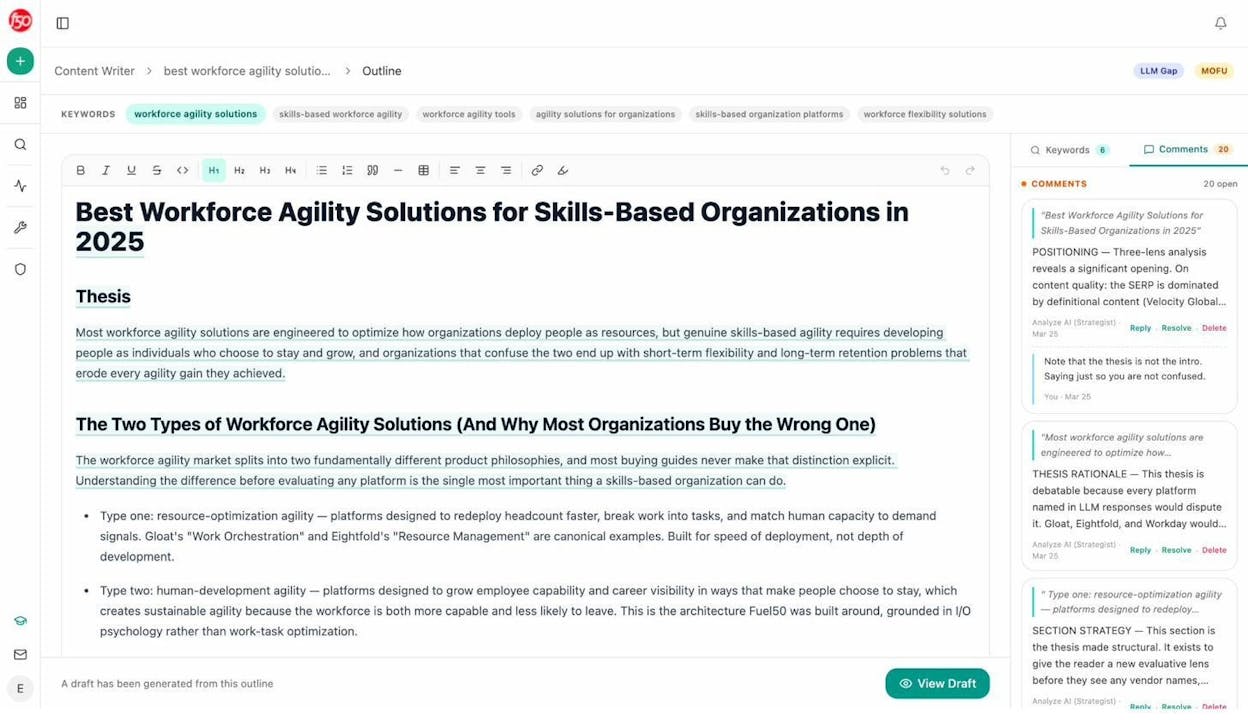
The Optimizer audits any existing URL, scores it on argument flow and clarity, surfaces gaps versus top-ranking pages, and ships line-by-line suggestions. The editor comments explain why a section needs rework, not just that it does.
Pricing
One flat plan. Every feature included. No model add-ons. No credit overages. No content caps.
How to choose
If you are a Fortune 500 team with a dedicated analyst, SOC 2 mandates, and the budget for a custom Enterprise contract, Profound is the safe pick on data depth. Plan to add a separate content tool.
If you are a solo operator or small in-house team running 50 to 150 prompts who only needs the monitor, Peec AI is the cleanest entry. Watch for model add-on creep.
If you run a Shopify or e-commerce brand that lives or dies on attribution, and you have budget for credit overages, AthenaHQ closes the visibility-to-revenue loop the rest cannot.
If you want the visibility tracking, the GA4 attribution, the content writer, the optimizer, and the agent layer that runs your digests, board prep, and brief-to-publish pipelines, that is what we built Analyze AI for. Visibility is the entry point. The workflows that run on top are the reason teams stay.
You will not chase credits, watch model add-ons inflate your invoice, or hand the data to a separate writer. You will see what AI sees, prove what it sends, and ship what comes next.
The other three sell the dashboard. Analyze AI ships the work.

Ernest

Ibrahim


