



Summarize this blog post with:


There are hundreds of SEO newsletters. I know because I subscribed to more than 70 of them over the past year.
Most are forgettable. Some are just repackaged blog posts. Others stopped publishing months ago and never told anyone.
But a handful are genuinely useful. These are the ones that made me rethink a strategy, catch an algorithm update before it hit my traffic, or learn a tactic I implemented the same day.
Every newsletter on this list meets four criteria. It focuses specifically on SEO or organic growth. It delivers valuable free content. It publishes on a regular schedule. And it does something that no other newsletter does as well.
The 15 newsletters below cover every corner of search. Weekly roundups. Daily breaking news. Deep strategy. Actionable tactics. Local SEO. AI search. And yes, even job boards.
I grouped them into five categories based on what you’re trying to accomplish. Start with the category that matches your biggest need right now and expand from there.
Table of Contents
Quick comparison
Here is a side-by-side look at all 15 newsletters so you can decide where to start.
|
Newsletter |
Best for |
Author |
Frequency |
Subscribers |
|---|---|---|---|---|
|
#SEOFOMO |
All-in-one weekly roundup |
Aleyda Solis |
Weekly (Sunday) |
39,000+ |
|
Ahrefs’ Digest |
Data-backed tutorials |
Si Quan Ong |
Weekly |
284,000+ |
|
Search Engine Journal |
Breaking news daily |
SEJ editorial team |
Daily |
200,000+ |
|
Search Engine Roundtable |
Google update play-by-play |
Barry Schwartz |
Daily |
50,000+ |
|
Growth Memo |
SEO meets business strategy |
Kevin Indig |
Weekly |
20,000+ |
|
The SEO MBA |
SEO soft skills and leadership |
Tom Critchlow |
Monthly |
10,000+ |
|
SEO Notebook |
Quick, actionable tactics |
Steve Toth |
Weekly |
16,000+ |
|
Backlinko Newsletter |
Step-by-step SEO guides |
Brian Dean & team |
Weekly |
200,000+ |
|
Detailed.com |
Original research on big publishers |
Glen Allsopp |
3–5x per year |
35,000+ |
|
WTF is SEO? |
SEO for publishers and newsrooms |
Jessie Willms, Shelby Blackley |
Weekly (Monday) |
7,750+ |
|
Marie Haynes’ Search News |
Algorithm updates and E-E-A-T |
Marie Haynes |
On major updates |
10,000+ |
|
Women in Tech SEO (#WTS) |
Inclusive community and resources |
Areej AbuAli |
Monthly |
4,000+ |
|
Niche Pursuits |
Affiliate and niche site SEO |
Spencer Haws |
Weekly |
67,000+ |
|
Local Visibility System |
Local SEO deep dives |
Phil Rozek |
Monthly |
10,200+ |
|
SEO Jobs |
SEO-specific job listings |
Nick LeRoy |
Weekly (Monday) |
2,000+ |
Now let’s go deeper on each one.
Weekly roundups and curated news
These newsletters save you time. Instead of checking ten blogs every morning, you get one email with the stories that matter.
#SEOFOMO
Best for: Getting a comprehensive weekly summary of everything happening in SEO and AI search
Author: Aleyda Solis Subscribers: 39,000+ Frequency: Weekly on Sunday Sponsorships: Yes Subscribe: seofomo.co
If you subscribe to one SEO newsletter, this should probably be it.
Every Sunday, Aleyda Solis sends a handpicked selection of SEO news, guides, tools, open jobs, and upcoming events. She filters hundreds of articles down to the ones that matter. The newsletter has grown from a side project into one of the most widely read resources in the industry, and the reason is simple. Aleyda’s curation is sharp. She works as an SEO consultant across enterprise clients, so the picks reflect what practitioners actually need, not what gets the most clicks on social media.
What makes SEOFOMO stand out from other roundups is its coverage of AI search. In 2025, Aleyda launched a companion newsletter called AI Marketers, focused entirely on AI Overviews, ChatGPT, generative search, and AI tools. If you’re tracking both traditional SEO and AI search, subscribing to both gives you a complete picture every week.
![[Screenshot of the SEOFOMO newsletter inbox showing the curated links, jobs section, and tools section]](https://www.datocms-assets.com/164164/1777496849-blobid1.png?auto=format,compress&w=1248&fit=max)
Ahrefs’ Digest
Best for: Learning SEO through data-driven guides and tutorials
Author: Si Quan Ong Subscribers: 284,000+ Frequency: Weekly Sponsorships: No Subscribe: ahrefs.com/newsletter
The Ahrefs’ Digest shares a weekly selection of reads from across the web, including content from the Ahrefs blog. What makes the Ahrefs blog special is its approach. Almost every article includes original data, step-by-step walkthroughs, or case studies backed by their own toolset. When they write about keyword research, they show you exactly how to do it inside a tool with real numbers. When they analyze a trend, they pull from their database of billions of pages.
The newsletter is a good entry point into that content library. You don’t have to check the blog manually. The best pieces land in your inbox each week alongside interesting reads from other sources.
At 284,000 subscribers, it’s the largest SEO newsletter on this list by a wide margin. That audience size reflects something important. Ahrefs has built trust with practitioners over years by publishing genuinely useful content that people reference, share, and come back to.
![[Screenshot of the Ahrefs’ Digest email showing the curated article list with descriptions]](https://www.datocms-assets.com/164164/1777496860-blobid2.png?auto=format,compress&w=1248&fit=max)
Search Engine Journal (SEJ Today)
Best for: Daily coverage of breaking news and emerging trends
Author: SEJ editorial team Subscribers: 200,000+ Frequency: Daily Sponsorships: Yes Subscribe: searchenginejournal.com/newsletter-sign-up
There are a lot of daily SEO news sources. Search Engine Land. Search Engine Roundtable. Search Engine Watch. (The naming conventions in this industry are not very creative.)
Search Engine Journal stands out because its coverage extends beyond just Google updates. The daily email includes SEO, paid search, content marketing, social media, and generative AI. That range is valuable if you work in a role where you touch more than just organic search.
The content leans toward news and trends rather than deep tutorials. Think of it as your morning briefing. You scan the headlines, click into anything that affects your work, and move on. It’s the newsletter equivalent of checking the weather before you leave the house.
![[Screenshot of the Search Engine Journal daily newsletter email]](https://www.datocms-assets.com/164164/1777496869-blobid3.png?auto=format,compress&w=1248&fit=max)
Search Engine Roundtable
Best for: Detailed, real-time tracking of Google algorithm changes
Author: Barry Schwartz Subscribers: 50,000+ Frequency: Daily Sponsorships: Yes Subscribe: seroundtable.com
Barry Schwartz has been covering Google updates longer than most SEOs have been in the industry. His daily newsletter breaks down what Google confirmed, what the SEO community noticed, and what it all might mean for your rankings.
Where Search Engine Journal gives you the broad picture, Search Engine Roundtable zooms in on the details. When a core update rolls out, Barry often publishes multiple times in a single day, tracking volatility, community reaction, and official Google statements. If your business depends on organic traffic and you need to know about changes as they happen, this is the newsletter for early warnings.
Barry also covers Bing, Yahoo, and other search engines. In a world where AI search engines like ChatGPT and Perplexity are gaining ground, the multi-engine perspective is increasingly useful.
![[Screenshot of the Search Engine Roundtable daily email format showing the different sections]](https://www.datocms-assets.com/164164/1777496870-blobid4.png?auto=format,compress&w=1248&fit=max)
Deep strategy and business thinking
These newsletters go beyond tactics. They connect SEO to business growth, career development, and strategic decision-making.
Growth Memo
Best for: Connecting SEO to product-led growth and business metrics
Author: Kevin Indig Subscribers: 20,000+ Frequency: Weekly Sponsorships: Yes Subscribe: kevinIndig.com
Kevin Indig has led growth at Shopify and advised companies like Ramp, Reddit, and Snapchat. His newsletter takes a single SEO or growth topic each week and goes deep on it.
Growth Memo doesn’t list links. It doesn’t aggregate news. Each edition is a standalone essay that explores one idea with the depth of a blog post and the directness of a memo. Kevin connects SEO to product strategy, market analysis, and business outcomes in ways that most SEO newsletters don’t.
This is the newsletter to read if you’re tired of tactical tips and want to think about SEO as a growth lever rather than a checklist. Kevin regularly covers AI search developments too, making it relevant for marketers who need to understand how generative engine optimization fits into their broader growth strategy.
![[Screenshot of a Growth Memo newsletter edition showing the essay format]](https://www.datocms-assets.com/164164/1777496879-blobid5.png?auto=format,compress&w=1248&fit=max)
The SEO MBA
Best for: The “soft skills” of SEO, like communication, leadership, and selling ideas internally
Author: Tom Critchlow Subscribers: 10,000+ Frequency: Monthly (approximately) Sponsorships: Not currently Subscribe: newsletter.seomba.com
You probably know how to do keyword research. You probably know how to build links. But do you know how to pitch an SEO initiative to a skeptical VP of Marketing? Or how to write a monthly report that your CEO will actually read?
The SEO MBA fills a gap that no other newsletter touches. Tom Critchlow focuses on the business side of SEO. How to communicate wins. How to scope projects. How to interview for leadership roles. How to translate technical SEO work into language that executives understand.
Tom publishes less frequently than most newsletters on this list, but every edition is substantial. These aren’t tips you implement in five minutes. They’re frameworks you carry with you for the rest of your career. If you’re an SEO practitioner who wants to move into management or leadership, this newsletter is essential reading.
![[Screenshot of The SEO MBA newsletter showing the leadership-focused content]](https://www.datocms-assets.com/164164/1777496886-blobid6.png?auto=format,compress&w=1248&fit=max)
Actionable tactics and tutorials
These newsletters skip the theory and go straight to the moves you can make today.
SEO Notebook
Best for: Quick, practical tactics you can implement the same day
Author: Steve Toth Subscribers: 16,000+ Frequency: Weekly Sponsorships: Yes Subscribe: seonotebook.com
Steve Toth rips pages straight from his working notebook and shares them with you. No long essays. No polarizing opinion pieces. Just specific, actionable recommendations for better rankings.
Recent editions have covered topics like finding zero-volume keywords that actually generate traffic, using regex in Google Search Console to uncover hidden opportunities, and building links through creative outreach. Each tip comes from real client work, which means it’s been tested before it hits your inbox.
Steve also runs AI Notebook, a companion newsletter that covers strategies for LLM optimization. If you want tactics for both traditional search and AI search, subscribing to both gives you practical moves on each front.
![[Screenshot of the SEO Notebook email showing the tactical format with specific tips]](https://www.datocms-assets.com/164164/1777496887-blobid7.png?auto=format,compress&w=1248&fit=max)
Backlinko Newsletter
Best for: Step-by-step SEO guides written for practitioners
Author: Brian Dean & team Subscribers: 200,000+ Frequency: Weekly Sponsorships: No Subscribe: backlinko.com
Brian Dean built Backlinko into one of the most recognized SEO education brands by doing one thing exceptionally well. He writes detailed, step-by-step guides with real examples and clear visuals. The newsletter delivers that same style directly to your inbox.
What sets Backlinko apart from other tutorial-focused newsletters is the production quality. Every guide is designed to be followed from start to finish. Screenshots, examples, templates. You don’t just read about a strategy. You learn how to execute it.
If you’re relatively new to SEO or you want to revisit fundamentals with fresh examples, this newsletter is a strong starting point. It also covers content strategy topics like content promotion and link building, which are foundational skills regardless of whether your traffic comes from Google or from AI search engines.
![[Screenshot of the Backlinko newsletter showing the visual, step-by-step style]](https://www.datocms-assets.com/164164/1777496893-blobid8.png?auto=format,compress&w=1248&fit=max)
Research and specialized coverage
These newsletters serve specific niches or deliver original research that you won’t find anywhere else.
Detailed.com
Best for: Original research into how the biggest websites dominate search
Author: Glen Allsopp Subscribers: 35,000+ Frequency: 3–5 emails per year Sponsorships: No Subscribe: detailed.com
Glen Allsopp tracks the search performance of nearly 3,000 companies and shares his findings every few months. When he publishes, the SEO community pays attention because the data is always original, thorough, and surprising.
From Glen’s research, I learned that 562 of the biggest media brands are owned by just 16 companies, and together they generate almost 4 billion clicks per month. That kind of macro-level insight changes how you think about competing in organic search.
Detailed sends far fewer emails than any other newsletter on this list. But each one delivers more information gain per email than almost anything else in your inbox. If quality per edition matters more to you than frequency, this is the newsletter to subscribe to first.
![[Screenshot of the Detailed.com newsletter showing original data and research format]](https://www.datocms-assets.com/164164/1777496904-blobid9.png?auto=format,compress&w=1248&fit=max)
WTF is SEO?
Best for: Understanding SEO from the perspective of publishers and news outlets
Authors: Jessie Willms, Shelby Blackley Subscribers: 7,750+ Frequency: Weekly on Monday Sponsorships: Yes Subscribe: seoforjournalism.com
Most SEO newsletters are written for marketers at SaaS companies or e-commerce brands. WTF is SEO? is different. It covers SEO from the perspective of journalists and media companies.
Authors Jessie Willms and Shelby Blackley both work as in-house SEOs at large news publishers. They write from personal experience about challenges most SEOs never encounter. Using keyword research for breaking news stories. Auditing massive tag page structures. Working within the constraints of paywalled content.
Even if you don’t work in media, this newsletter is worth reading because it stretches your thinking about how SEO works in different contexts. The problems are unique, but the problem-solving approaches are transferable.
![[Screenshot of the WTF is SEO? newsletter showing publisher-specific content]](https://www.datocms-assets.com/164164/1777496905-blobid10.png?auto=format,compress&w=1248&fit=max)
Marie Haynes’ Search News You Can Use
Best for: Deep analysis of Google algorithm updates and E-E-A-T
Author: Marie Haynes Subscribers: 10,000+ Frequency: On major Google updates (free tier) or weekly (paid tier at $18/month) Sponsorships: Not currently Subscribe: Via Marie Haynes’ LinkedIn
Marie Haynes has been analyzing Google algorithm updates longer than most people have been doing SEO. When a core update drops and everyone is speculating on social media, Marie’s analysis is the one that experienced SEOs wait for.
Her free newsletter arrives when there’s a major update, and it breaks down what changed, who was affected, and what recovery looks like. The paid tier ($18/month) gives you weekly access to “Marie’s Notes,” a running Google Doc where she collects her observations about SEO and AI developments as they happen.
What makes Marie’s perspective valuable is her focus on E-E-A-T (Experience, Expertise, Authoritativeness, and Trustworthiness). She connects the dots between Google’s quality guidelines and real ranking changes. If you’ve ever been hit by an algorithm update and couldn’t figure out why, her newsletter is the first place to look.
Marie is also heavily invested in understanding AI’s impact on search, which makes her newsletter relevant for anyone tracking the intersection of traditional SEO and AI visibility.
![[Screenshot of Marie Haynes’ newsletter showing algorithm update analysis]](https://www.datocms-assets.com/164164/1777496911-blobid11.png?auto=format,compress&w=1248&fit=max)
Community, niche, and career
These newsletters serve specific communities within SEO, from local businesses to affiliate marketers to job seekers.
Women in Tech SEO (#WTS)
Best for: Highlighting the work of women in the SEO industry
Author: Areej AbuAli Subscribers: 4,000+ Frequency: Monthly Sponsorships: Yes Subscribe: womenintechseo.com/newsletter
The Women in Tech SEO newsletter exists to highlight the work of women in an industry that remains heavily male-dominated.
Every month, Areej AbuAli shares a selection of projects, talks, articles, and resources created by women in the search community. But #WTS is far more than a newsletter. It’s a global community with active community groups, conferences in multiple countries, and a podcast.
The content quality is consistently high. Past editions have featured deep dives into causal impact analysis, ChatGPT use cases for SEO, and career pivots from content marketing to search. Subscribing supports the community and expands your reading beyond the same voices you see everywhere else.
![[Screenshot of the Women in Tech SEO newsletter]](https://www.datocms-assets.com/164164/1777496912-blobid12.png?auto=format,compress&w=1248&fit=max)
Niche Pursuits
Best for: Learning how people build income through niche sites, affiliate marketing, and SEO
Author: Spencer Haws Subscribers: 67,000+ Frequency: Weekly Sponsorships: Podcast only Subscribe: nichepursuits.com/join-newsletter
Niche Pursuits covers a side of SEO that many industry newsletters ignore entirely. It’s about using SEO to build online businesses, primarily through niche websites, affiliate marketing, and content monetization.
Spencer Haws and his team share regular case studies and success stories. A Japanese travel blog earning $5,000 per month. A D&D and miniatures site pulling in $8,000 per month. These aren’t hypothetical examples. They’re real businesses built primarily on organic traffic.
The newsletter is especially valuable for solo operators, side-project builders, and anyone curious about the economics of content-driven businesses. It’s less useful for in-house SEOs at large companies, but the entrepreneurial lens provides a different way of thinking about ROI from organic search.
![[Screenshot of the Niche Pursuits newsletter showing a case study]](https://www.datocms-assets.com/164164/1777496921-blobid13.png?auto=format,compress&w=1248&fit=max)
Local Visibility System
Best for: Going deep on local SEO strategy
Author: Phil Rozek Subscribers: 10,200+ Frequency: Monthly Sponsorships: Not currently Subscribe: localvisibilitysystem.com
Phil Rozek writes an intensely detailed newsletter about the challenges and quirks of local SEO.
Local SEO is its own discipline. The ranking factors are different. The tools are different. The competition dynamics are different. Phil covers it all with a depth that general SEO newsletters can’t match.
One of his recent editions explored how optimizing your business hours can boost visibility in Google Maps and even help you rank for more keywords. That’s the level of specificity you get here. Not broad advice about citations and Google Business Profile. Specific, tested strategies that local businesses can implement immediately.
If you manage local SEO for one or more businesses, this newsletter belongs in your rotation alongside BrightLocal’s newsletter, which also covers local search with research-backed insights.
![[Screenshot of the Local Visibility System newsletter]](https://www.datocms-assets.com/164164/1777496925-blobid14.png?auto=format,compress&w=1248&fit=max)
SEO Jobs
Best for: Finding SEO-specific job opportunities
Author: Nick LeRoy Subscribers: 2,000+ Frequency: Weekly on Monday Sponsorships: Yes Subscribe: seojobs.com
SEO Jobs does exactly what the name says. Every Monday, Nick LeRoy sends a curated collection of new SEO-specific job listings across in-house and agency roles, remote and in-office, from entry level to leadership.
Nick also runs the SEO For Lunch newsletter, where he shares his take on the week’s biggest SEO news alongside his pick of the best new articles. Between the two newsletters, you get industry knowledge and career opportunities in a combined reading time of about 15 minutes per week.
![[Screenshot of the SEO Jobs newsletter showing job listings]](https://www.datocms-assets.com/164164/1777496935-blobid15.png?auto=format,compress&w=1248&fit=max)
How to build a newsletter reading system that works
Subscribing is the easy part. The hard part is actually reading them without letting your inbox spiral out of control.
Here’s the system I use, and I recommend it to anyone managing more than three newsletter subscriptions.
Start with three, not fifteen. Pick one roundup (like SEOFOMO), one tactics newsletter (like SEO Notebook), and one strategy newsletter (like Growth Memo). That covers news awareness, execution ideas, and big-picture thinking. You can always add more later.
Create a separate folder or label. Route all SEO newsletters to a dedicated folder in your email client. This keeps your main inbox clean and gives you a single place to catch up during a dedicated reading session. Most email providers let you set up filters automatically based on sender address.
Schedule a reading window. I read newsletters every Tuesday morning with coffee. Having a fixed slot prevents the “I’ll read it later” trap that turns newsletters into unread noise. If you subscribe to a daily newsletter like Search Engine Journal, skim headlines during the day but save deep reads for your scheduled window.
Turn insight into action. The biggest mistake with newsletters is treating them as passive entertainment. When something sparks an idea, do something with it. Add a task to your project management tool. Test the tactic on a page. Share the insight with your team.
This is where a tool like Analyze AI’s weekly email digests becomes a useful complement to your newsletter stack. While newsletters tell you what’s happening in the industry, Analyze AI’s digests tell you what’s happening to your specific brand. Every week, you get a summary of your AI visibility score, ranking changes, citation momentum, and competitor movements. It’s the difference between reading about trends and seeing how those trends are affecting your traffic.
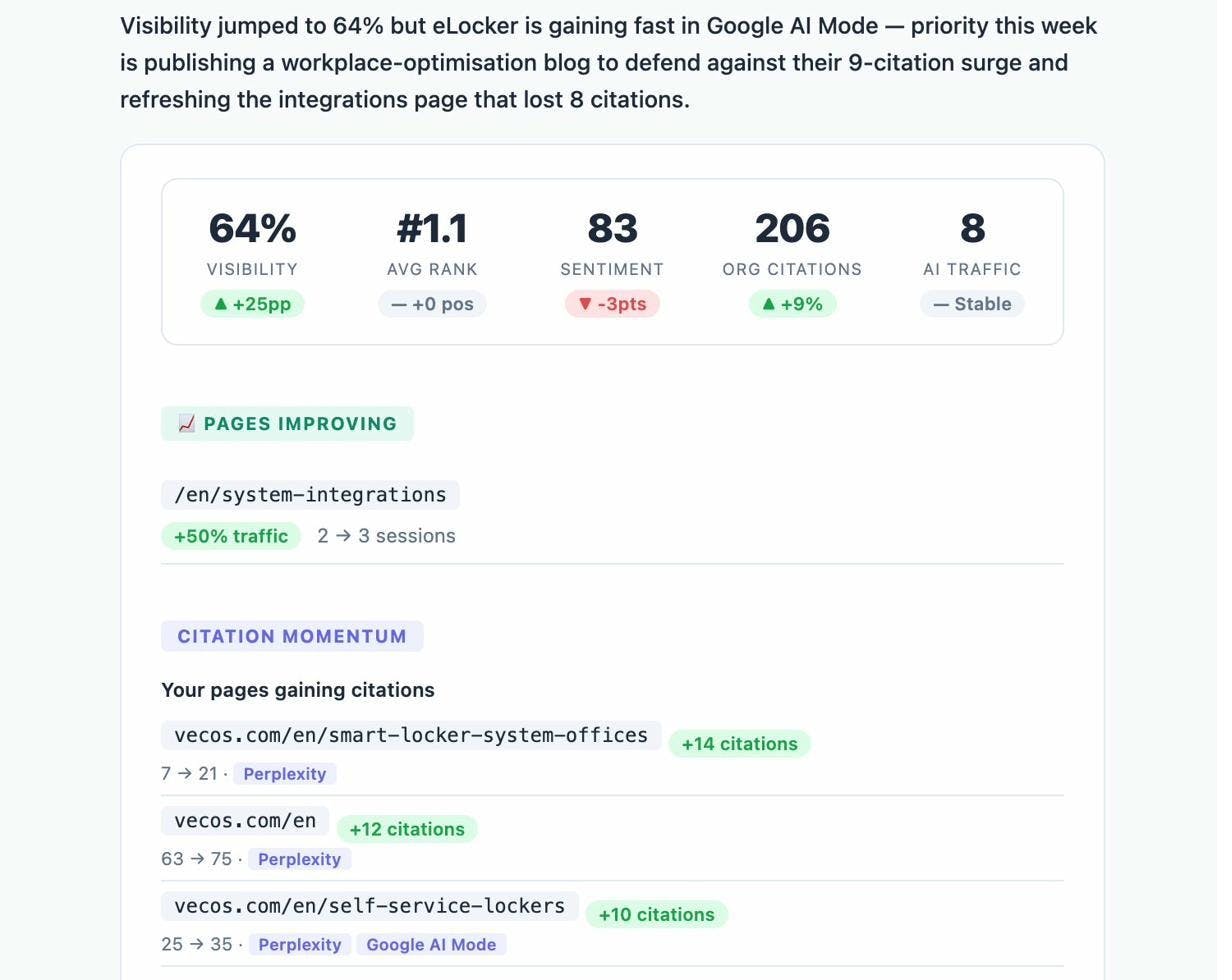
The weekly digest shows exactly which of your pages gained or lost AI citations, which competitors are gaining ground, and why. It even includes an AI-generated analysis explaining what’s driving the changes and what to prioritize next.
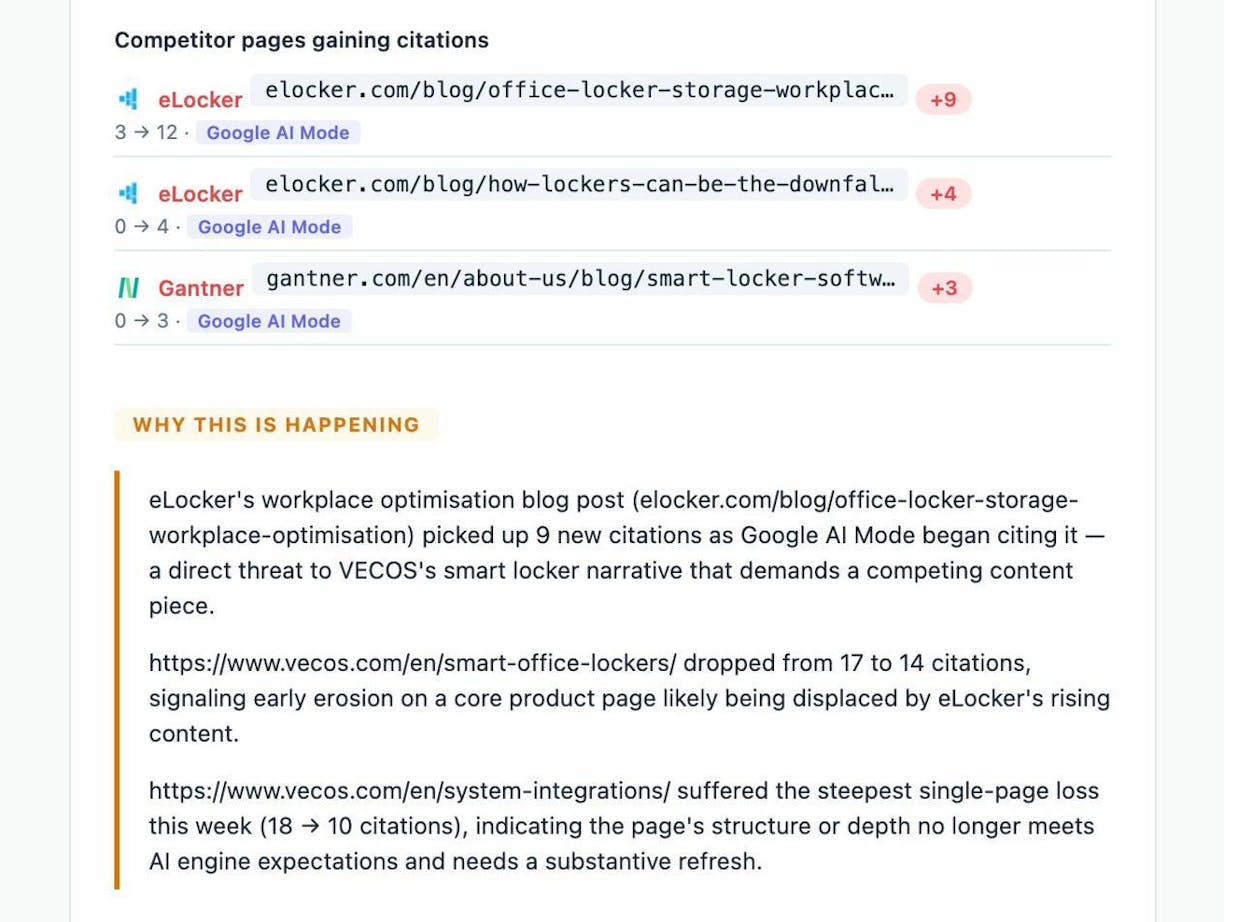
Think of it this way. Your SEO newsletters keep you informed about the industry. Your Analyze AI digest keeps you informed about your brand. Together, they give you both the macro and micro view of search.
Beyond newsletters: tracking your brand in AI search
Newsletters are great for staying informed. But the search landscape in 2026 involves more than just Google.
People are asking ChatGPT, Perplexity, Gemini, and Copilot for product recommendations, comparisons, and advice. When someone asks an AI engine “what’s the best CRM for small teams,” the AI generates a response that mentions specific brands. If your brand isn’t in those responses, you’re invisible in a growing channel.
This is the part that newsletters can’t help you with. No newsletter will tell you whether ChatGPT mentioned your brand yesterday, or which competitor just gained 14 citations in Perplexity, or which of your landing pages are driving AI referral traffic.
That’s the problem Analyze AI was built to solve.
Analyze AI tracks your brand’s visibility across ChatGPT, Perplexity, Gemini, Google AI Mode, and Copilot. You can see your overall visibility score, track how it changes over time, and compare your position against competitors in real time.
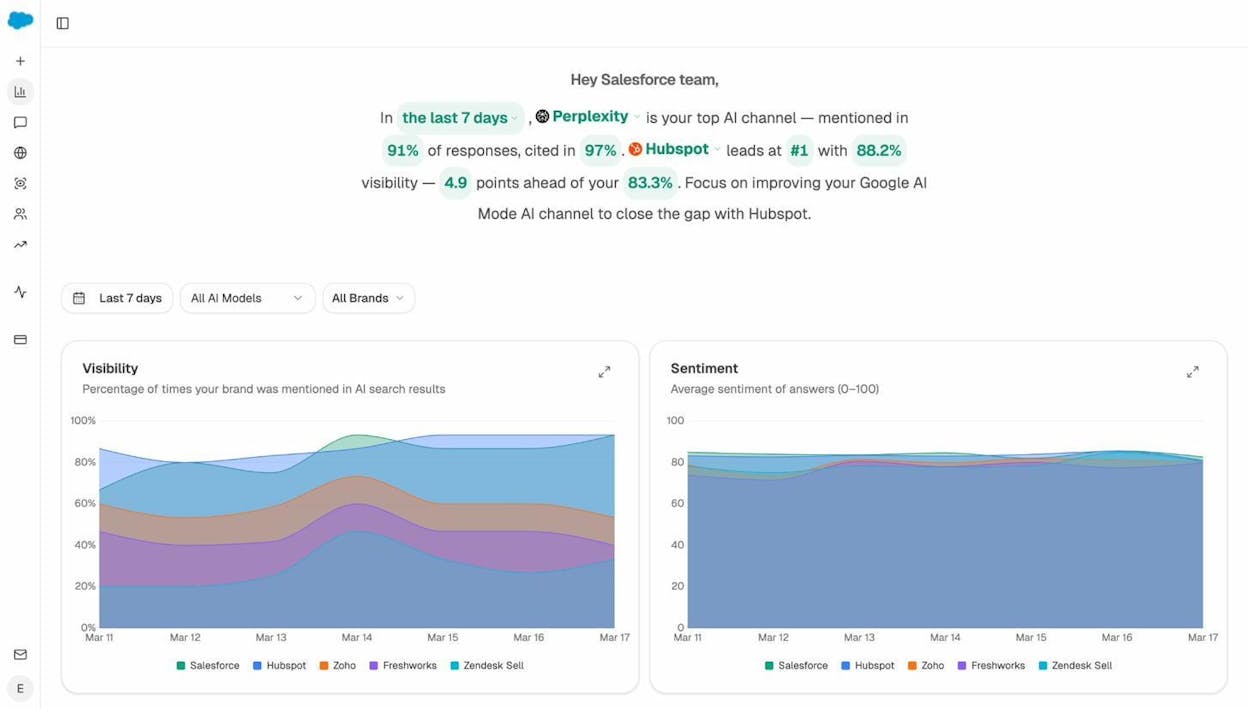
Here are three specific ways to use Analyze AI alongside your newsletter reading habit.
Track the prompts that matter to your business. Analyze AI lets you track specific prompts across AI engines and monitor whether your brand appears in the responses. If a newsletter mentions that AI Overviews now cover 48% of queries, you can go into Analyze AI and check which prompts in your industry trigger AI responses that mention your competitors but not you.
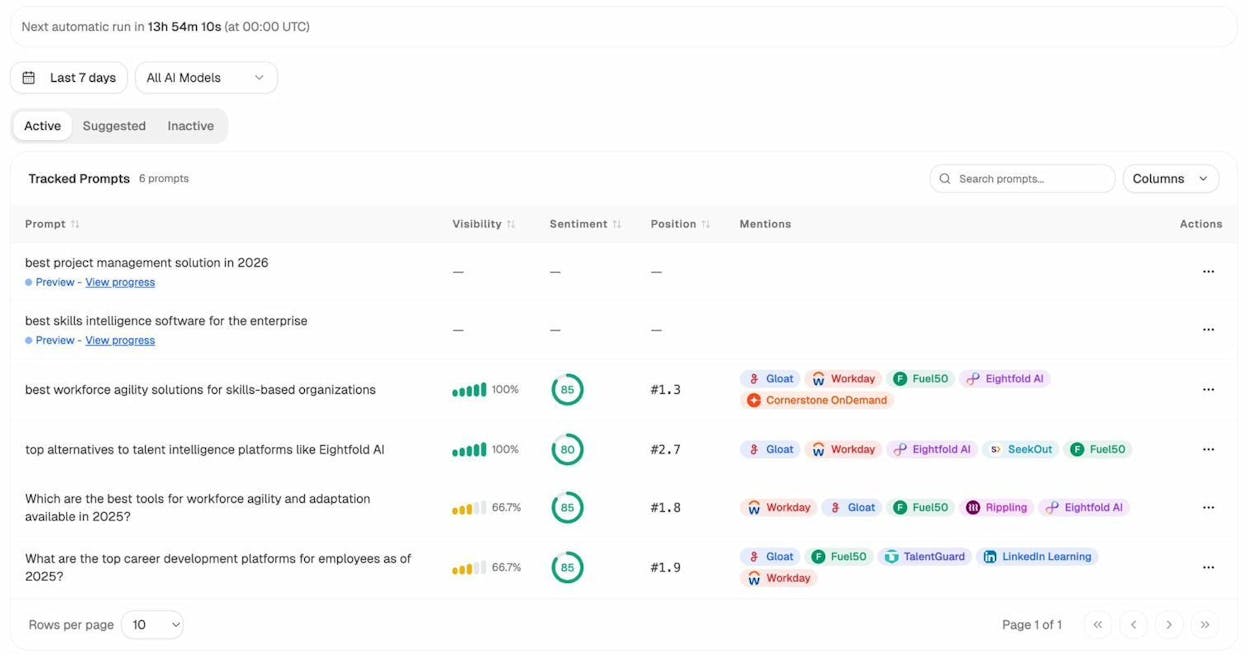
Find opportunities through competitor intelligence. When SEOFOMO reports a shift in how Google handles product reviews, you can check Analyze AI’s competitor intelligence to see if any competitors are gaining ground on the AI search front. The platform shows you exactly which competitor pages are earning citations and from which engines.
Connect AI visibility to real traffic. The most actionable feature for newsletter readers is AI traffic analytics. When Growth Memo publishes an analysis of how AI search is cannibalizing organic clicks, you can open Analyze AI and see exactly how much traffic your site receives from AI search engines. You can identify which pages earn the most AI referrals and then double down on what’s working.
This is where the Analyze AI manifesto comes in. We don’t believe SEO is dead. We believe AI search is an additional organic channel that smart teams should track alongside traditional SEO. Newsletters help you stay sharp on the SEO fundamentals. AI visibility tracking helps you extend that knowledge into the channel that’s growing fastest.
How to choose the right newsletters for you
If you’re overwhelmed by the options above, here’s a simple starting framework based on your role and experience level.
If you’re new to SEO: Start with SEOFOMO for weekly news and Backlinko for tutorials. Those two will build your foundational knowledge without overwhelming you.
If you’re a mid-level practitioner: Add SEO Notebook for tactics and Growth Memo for strategy. You already know the basics. Now you need execution ideas and bigger-picture thinking.
If you’re a team lead or manager: The SEO MBA is essential reading. Pair it with SEOFOMO for industry awareness. And set up Analyze AI’s weekly digests to track how your brand shows up across AI search, so you can report on a channel most of your competitors aren’t measuring yet.
If you manage local SEO: Local Visibility System and BrightLocal’s newsletter should be your core subscriptions. Add SEOFOMO for general industry news.
If you’re focused on AI search: Subscribe to AI Marketers by Aleyda Solis and Marie Haynes’ newsletter for expert analysis. Then use Analyze AI to turn that knowledge into measurable actions by tracking your brand across ChatGPT, Perplexity, and other AI engines.
If you’re job hunting: SEO Jobs by Nick LeRoy plus SEO For Lunch gives you both listings and industry knowledge to prepare for interviews.
Final thoughts
The best SEO newsletters don’t just inform you. They change how you work.
But as I stare at the aftermath of subscribing to 70+ newsletters, I can tell you with certainty. You do not need all of them. You need three to five good ones that match where you are in your career and what you’re trying to accomplish right now.
Pick your starting three. Set up a reading system. And pair what you learn with real data about your brand’s performance in both traditional and AI search.
That combination, industry knowledge plus brand-specific data, is what turns newsletter reading from a passive habit into a competitive advantage.

Ernest

Ibrahim


