



Summarize this blog post with:


In this article, you’ll learn what a search intent shift is, why it happens, and how it can tank your rankings overnight through no fault of your own. You’ll see nine real examples of search intent shifts that displaced established websites from page one. And you’ll get a step-by-step process for identifying intent shifts early, both in traditional search and across AI search engines like ChatGPT, Perplexity, and Gemini, so you can respond before the damage is done.
Table of Contents
What Is a Search Intent Shift?
A search intent shift happens when the dominant reason people search for a keyword changes over time, and Google updates its search results to match.
Every keyword has a search intent. When someone types “best CRM” into Google, the intent is commercial. They want to compare options. Google knows this, so it ranks comparison articles and review roundups.
But that intent is not fixed forever.
External events, new product launches, cultural shifts, and even viral trends can change what most people mean when they type a keyword. When that happens, Google reshuffles its results to match the new dominant intent. The websites that matched the old intent get pushed down or off page one entirely.
The key insight here is that you did nothing wrong. Your content did not get worse. Your backlinks did not disappear. The meaning of the keyword simply changed underneath you.
This matters because most SEOs only monitor ranking positions. They see a drop and assume it is a technical issue, an algorithm update, or a competitor who published better content. They rarely consider that the keyword itself now means something different.
Why Search Intent Shifts Happen
Words are not static. Their meanings evolve based on what is happening in the world. Google’s job is to reflect reality, and when reality changes, the search results change with it.
There are a few common triggers.
Major news events create sudden, dramatic shifts. When a news story dominates headlines, Google floods the results with news coverage. Any existing results that matched the old intent get temporarily or permanently displaced.
New products and brands can hijack existing keywords. When a company names its product after a common word (think Apple, or the reMarkable tablet), the search results eventually shift to favor the product over the original meaning.
Cultural and technological shifts change what people associate with certain terms. The acronym “LLM” meant “Master of Laws” for decades. After ChatGPT launched, it shifted to “large language model” practically overnight.
Evolving user needs cause more subtle shifts. A keyword like “high-ticket affiliate marketing” used to trigger guides explaining what it is. Over time, as the concept became more widely understood, searchers shifted to looking for lists of high-ticket affiliate programs instead.
Seasonal or cyclical patterns can cause temporary intent shifts. Some keywords have different dominant intents depending on the time of year, though these usually revert.
The speed of a shift varies. Some happen in days (news events). Others take months or years (cultural shifts). The most dangerous ones are the slow shifts because you do not notice the change until your traffic has already declined.
9 Examples of Search Intent Shift
The following examples span different types of intent shifts. Some were triggered by a single event. Others were gradual. Each one shows how a keyword’s dominant meaning changed and what happened to the websites that ranked for the old meaning.
1. “Oasis” - Fashion brand to ’90s band reunion
“Oasis” is a word with many meanings. It could refer to a fertile desert spot, a drink brand, a fashion retailer called Oasis, or the Britpop band from the 1990s. For years, these meanings coexisted peacefully in Google’s results.
That changed on August 27, 2024, when Oasis (the band) announced a surprise reunion tour.
![[Screenshot of Google SERP for “oasis” before and after the reunion announcement showing the shift from fashion results to band results]](https://www.datocms-assets.com/164164/1777323358-blobid1.png?auto=format,compress&w=1248&fit=max)
What happened?
Before the announcement, the dominant search intent for “oasis” was 93% women’s fashion and accessories. Oasis Fashion held top positions comfortably.
After the announcement, the intent flipped to approximately 93% about the band. Oasis Fashion dropped off page one entirely. The brand lost rankings for its own name, not because of anything it did, but because the world suddenly cared more about a band reunion.
Is recovery possible?
Yes, but it depends on the longevity of the news cycle. Reunion tours generate massive press, and the Oasis reunion was one of the biggest music stories in the UK in years. Once the hype fades and the tour concludes, Oasis Fashion will likely reclaim some of its positions. But during the peak coverage period, there is very little the brand could do.
Key takeaway: When your brand name overlaps with a culturally significant entity, a single event can override your rankings overnight. This is one of the strongest arguments for building brand recognition beyond a single keyword.
2. “King Charles” - Dog breed to newly crowned king
When Queen Elizabeth II died on September 8, 2022, several search intent shifts rippled through the royal family’s keyword space as titles changed.
The keyword “King Charles” is one of the most dramatic examples. Before the Queen’s death, the top results were dominated by King Charles Spaniel dog breed information (about 89% of intent), alongside some results for King Charles I, a band, and a school.
![[Screenshot of SERP comparison for “King Charles” showing dog breed results on one date vs. royal coverage on a later date]](https://www.datocms-assets.com/164164/1777323367-blobid2.png?auto=format,compress&w=1248&fit=max)
What happened?
Within days of Queen Elizabeth’s passing, the entire first page of Google transformed. Approximately 81% of results shifted to current news about King Charles III, and another 10% to biographical information about the new King. The dog breed, historical figures, and other meanings were pushed to page two and beyond.
Is recovery possible?
Almost certainly not. King Charles III generates constant media coverage that will likely continue for the rest of his reign. Even after he is no longer King, the historical significance of the name will persist. We can see this pattern with “the queen.” Two years after Queen Elizabeth II’s death, she still dominates that keyword over the current Queen Consort.
Key takeaway: When a person of global significance takes on a keyword, the shift is usually permanent. The websites that ranked for the old meaning need to adapt their keyword strategy entirely. Dog breed sites, for example, should now target “King Charles Spaniel” or “Cavalier King Charles” rather than the head term.
3. “LLM” - Master of Laws to large language model
If you mention “LLM” in a meeting today, everyone assumes you mean large language models like GPT-4, Claude, or Gemini. But rewind to August 2022, and the dominant meaning was completely different. It referred to a Master of Laws degree.
![[Screenshot of search results for “LLM” from August 2022 showing law school results vs. September 2024 showing AI and machine learning results]](https://www.datocms-assets.com/164164/1777323376-blobid3.png?auto=format,compress&w=1248&fit=max)
What happened?
In 2022, about 49% of searchers for “LLM” wanted to understand the legal degree, while 35% were looking for universities offering LLM programs. By late 2024, roughly 89% of results were about understanding large language models, how they work, and their applications.
The search volume for “LLM” also spiked dramatically. The increase coincided almost exactly with the release of ChatGPT on November 30, 2022.
Is recovery possible?
No. This is one of the rare cases where an acronym’s dominant meaning has been permanently replaced. The new meaning generates significantly more search volume than the old one. Law schools that relied on ranking for “LLM” now need to target longer-tail keywords like “LLM degree,” “Master of Laws programs,” or “LLM vs JD.”
Key takeaway: Acronyms are particularly vulnerable to intent shifts because they can be claimed by entirely different fields. When a new meaning explodes in popularity, the old meaning rarely recovers. The entire category of websites (in this case, law schools) gets displaced, not just one site.
4. “X” - Music to social media platform
When Elon Musk rebranded Twitter to “X” in July 2023, it created one of the most unusual search intent shifts in recent memory. Before the rebrand, “X” was an incredibly fragmented keyword. About 59% of searchers in late 2021 were looking for music and entertainment content related to bands or artists named X.
![[Screenshot of SERP for “X” comparing late 2021 (music results) vs. late 2024 (social media platform results)]](https://www.datocms-assets.com/164164/1777323376-blobid4.png?auto=format,compress&w=1248&fit=max)
What happened?
By September 2024, approximately 93% of search results for “X” were about the social media platform. Only about 4% still pointed to music-related content.
Is recovery possible?
No. A major social media platform with hundreds of millions of users will dominate the single-letter keyword indefinitely. As X (the platform) creates more content and generates more backlinks, its presence in the results will only strengthen.
Key takeaway: When a massive brand adopts a generic keyword as its name, the sheer volume of searches related to that brand will overwhelm any previous meanings. This is similar to what happened with “Apple” decades ago. The fruit still exists, but the technology company dominates online searches.
5. “High-ticket affiliate marketing” - Guide to program list
Not all search intent shifts are triggered by external events. Some happen gradually as user understanding of a topic matures.
“High-ticket affiliate marketing” is a keyword that originally attracted people who wanted to understand the concept. The top results were beginner’s guides explaining what high-ticket affiliate marketing is and how it works.
![[Screenshot showing SERP for “high-ticket affiliate marketing” comparing guide-style results from an earlier period vs. program list results from a more recent period]](https://www.datocms-assets.com/164164/1777323384-blobid5.png?auto=format,compress&w=1248&fit=max)
What happened?
The dominant intent shifted from 59% “understanding high-ticket affiliate marketing” to 79% “list of high-ticket affiliate marketing programs.” As more people became familiar with the concept, they no longer needed the 101 explainer. They wanted actionable lists of programs to join.
This is a critical type of shift because it is subtle. The keyword looks the same. The search volume may not change dramatically. But the content format Google rewards flips entirely, from educational guides to curated lists.
Is recovery possible?
Yes. This type of intent shift is the most recoverable because you can adapt your content to match the new intent. If you have an existing guide, you can add a substantial section covering the top high-ticket affiliate programs. Or you can rewrite the article as a program list with enough educational context to also capture the remaining informational intent.
Key takeaway: As topics mature and audiences become more sophisticated, the search intent often shifts from informational to commercial or transactional. Monitor your established content for this pattern. If your “what is” guide starts losing traffic, check whether the SERP now favors “best” or “top” lists instead.
6. “Remarkable” - Dictionary definition to e-ink tablet
“Remarkable” was a straightforward keyword for years. About 75% of searchers wanted a dictionary definition, and 22% were looking for synonyms and antonyms.
Then the reMarkable company launched its e-ink tablet and steadily built brand awareness through advertising and word of mouth.
![[Screenshot of SERP for “remarkable” showing dictionary definition results from an earlier date vs. product results from 2024]](https://www.datocms-assets.com/164164/1777323388-blobid6.png?auto=format,compress&w=1248&fit=max)
What happened?
By 2024, approximately 75% of searchers were looking for product information about the reMarkable tablet, 25% wanted the latest news about the product, and less than 1% still wanted the dictionary definition. Dictionary websites like Merriam-Webster and Dictionary.com were pushed off page one entirely.
Is recovery possible?
Probably not. The reMarkable is an established brand with growing market presence. Even if the company were acquired, the buyer would likely keep the brand name. Dictionary sites need to accept that this head term is lost and focus on related queries like “remarkable meaning” or “remarkable definition.”
Key takeaway: A successful product launch can permanently shift a common word’s search intent. This is the “Apple effect.” When a brand builds enough search demand around a common word, Google has no choice but to prioritize the brand. Another example is “Amazon.” The river still exists, but the retailer dominates the search results.
7. “Corona” - Beer to virus and back
Few keywords have experienced as dramatic a search intent shift as “corona.” Before 2020, it was primarily a beer brand. About 62% of searchers were looking for Corona beer information.
![[Screenshot of SERP for “corona” from early 2020 showing beer results vs. mid-2020 showing virus-related results]](https://www.datocms-assets.com/164164/1777323396-blobid7.png?auto=format,compress&w=1248&fit=max)
What happened?
When the COVID-19 pandemic hit, the keyword “corona” was completely overtaken by virus-related content. By August 2020, about 45% of searchers wanted COVID-19 news, 24% were looking for information about the city of Corona, and only 7% still wanted information about Corona beer.
Is recovery possible?
It already happened. This is one of the rare cases where a search intent shift fully reverted. By 2024, approximately 73% of searchers were once again looking for Corona beer brand information. The virus-related content faded as the pandemic moved out of the news cycle.
Key takeaway: News-driven intent shifts are often temporary. If your brand keyword gets hijacked by a news event, the best strategy is patience combined with continued brand building. Do not abandon the keyword. Keep your brand content strong and updated so it is ready to reclaim its position when the news fades.
8. “Threads” - Sewing to social network
When Meta launched Threads in July 2023, the keyword experienced an immediate and dramatic shift. Before the launch, “threads” returned results about sewing, fashion, and the concept of conversation threads in forums.
![[Screenshot of SERP for “threads” showing sewing/fashion results from before July 2023 vs. Meta Threads social network results from after July 2023]](https://www.datocms-assets.com/164164/1777323396-blobid8.png?auto=format,compress&w=1248&fit=max)
What happened?
Within days of launch, Meta’s Threads dominated the search results. The social network’s explosive growth (100 million signups in the first five days) created massive search demand that overwhelmed every previous meaning. Sewing supply stores, fashion brands, and forum-related results were pushed to page two and beyond.
Is recovery possible?
No. Meta’s Threads is backed by one of the largest technology companies in the world with billions of users across its platforms. Even if Threads the social network lost popularity, Meta’s domain authority and brand presence would keep it at the top of results. Businesses that previously ranked for “threads” need to shift to more specific long-tail keywords like “sewing threads,” “embroidery thread,” or “thread count.”
Key takeaway: When a tech giant commandeers a common word, the shift happens almost instantly because of the enormous search demand generated by news coverage, user curiosity, and app downloads. Smaller brands cannot compete at the head-term level and should immediately pivot to modified keywords.
9. “Perplexity” - Vocabulary word to AI search engine
Here is a more recent and less discussed example. “Perplexity” was once a vocabulary and definition keyword. People searching for it wanted to understand the word’s meaning, find synonyms, or use it in a sentence.
![[Screenshot of SERP for “perplexity” showing definition results from 2022 vs. Perplexity AI results from 2024-2025]](https://www.datocms-assets.com/164164/1777323405-blobid9.png?auto=format,compress&w=1248&fit=max)
What happened?
As Perplexity AI grew in popularity as an AI search engine, the dominant search intent shifted from vocabulary/definition content to information about the AI product. Dictionary sites that once ranked on page one for “perplexity” were gradually displaced by the company’s website, product reviews, news articles, and comparison pages.
This shift mirrors the “remarkable” example but happened faster because of the intense media coverage and venture capital funding that AI companies receive.
Is recovery possible?
No. Perplexity AI is a well-funded, growing company in one of the hottest technology sectors. The volume of searches related to the AI product will continue to dwarf searches for the vocabulary definition. Dictionary sites should target “perplexity meaning” or “perplexity definition” instead.
Key takeaway: The AI industry is creating a new wave of search intent shifts as AI companies adopt common English words as brand names. If your website ranks for a generic word, you should be monitoring whether an AI startup or tech company has adopted it. By the time you notice the traffic drop, the shift may already be complete.
Common Patterns Behind Search Intent Shifts
After looking at these nine examples, some clear patterns emerge.
|
Trigger |
Speed of Shift |
Recovery Likelihood |
Examples |
|---|---|---|---|
|
Major news events |
Days |
High (once news fades) |
Corona, London Bridge, election keywords |
|
Celebrity/public figure changes |
Days to weeks |
Low to none |
King Charles, “the queen” |
|
New product/brand launches |
Weeks to months |
Low to none |
reMarkable, Threads, Perplexity |
|
Tech company rebrand |
Days |
None |
X (Twitter) |
|
Acronym redefinition |
Months |
None |
LLM |
|
User sophistication shift |
Months to years |
High (adapt content) |
High-ticket affiliate marketing |
|
Seasonal/cyclical |
Predictable |
Self-correcting |
Holiday-related keywords |
The most important distinction is between shifts that are recoverable and those that are not. If the shift is driven by evolving user needs (like the affiliate marketing example), you can update your content to match the new intent. If the shift is driven by a new brand or a major event, you usually need to abandon the head term and target modified long-tail keywords instead.
How to Identify Search Intent Shifts
The Ahrefs article that inspired this piece promises to show you how to identify intent shifts but buries the method in a sidenote. Here is the step-by-step process in full.
Step 1: Monitor your keyword rankings for sudden drops
The first sign of a search intent shift is usually a sudden, unexplained ranking drop. Open your rank tracking tool and look for keywords where your position dropped significantly but nothing else changed. You did not update the page, your backlinks are intact, and there was no obvious algorithm update.
![[Screenshot of a rank tracker showing a keyword with a sudden position drop from top 3 to beyond page one]](https://www.datocms-assets.com/164164/1777323411-blobid10.jpg?auto=format,compress&w=1248&fit=max)
If the drop coincides with a news event, product launch, or cultural moment related to the keyword, you are likely dealing with an intent shift.
Step 2: Compare the SERP across two time points
Pull up the Google search results for your target keyword and compare what ranks now versus what ranked before the drop.
You can do this manually by checking Google and comparing against your memory or cached screenshots of the SERP. You can also use tools that archive SERP snapshots over time.
Look for these signals:
New content types appearing. If the SERP used to show blog posts and now shows product pages, the intent has shifted from informational to transactional.
New topics dominating. If the results used to be about one meaning of the keyword and now cover a completely different meaning, the keyword has been taken over.
Different content formats. If “how-to” guides used to rank and now listicles dominate, the intent has shifted from educational to comparative.
Step 3: Analyze the intent breakdown
Some keyword research tools now offer intent identification features that classify each result in the SERP by its underlying intent. This gives you a percentage breakdown of how the intent is distributed.
For example, you might see that a keyword went from 70% informational and 30% commercial to 20% informational and 80% commercial. That numerical shift tells you exactly how the landscape has changed.
![[Screenshot of a keyword tool showing intent classification percentages for a keyword, comparing two different time periods]](https://www.datocms-assets.com/164164/1777323411-blobid11.png?auto=format,compress&w=1248&fit=max)
Step 4: Check search volume trends
A search intent shift often comes with a change in search volume. Use Google Trends or a keyword generator tool to see if the volume has changed around the time of the shift.
A sudden spike in search volume combined with a ranking drop is a strong signal that new searchers with a different intent have entered the keyword. This is exactly what happened with “LLM” after ChatGPT launched.
![[Screenshot of Google Trends showing a keyword with a dramatic volume increase at a specific date]](https://www.datocms-assets.com/164164/1777323416-blobid12.jpg?auto=format,compress&w=1248&fit=max)
Step 5: Review your click-through rate in Google Search Console
Even if your rankings have not dropped dramatically, a declining click-through rate (CTR) can signal an early intent shift. If your page still ranks but fewer people click on it, it may be because your title and meta description no longer match what most searchers want.
Open Google Search Console, navigate to Performance, and filter for the specific keyword. Compare CTR over time. A steady decline without a corresponding drop in impressions means your result is visible but no longer relevant to the majority of searchers.
![[Screenshot of Google Search Console Performance report showing a keyword with stable impressions but declining CTR over several months]](https://www.datocms-assets.com/164164/1777323417-blobid13.png?auto=format,compress&w=1248&fit=max)
How to Monitor Intent Shifts in AI Search
Here is what most articles about search intent shifts miss entirely.
Intent shifts are not limited to Google. They are happening across AI search engines too, and the dynamics are different. When someone asks ChatGPT, Perplexity, or Gemini a question, the AI model decides which brands and sources to mention in its response. If the way people phrase their queries shifts, or if the AI models update their training data, you can experience an intent shift in AI search that is invisible in your traditional SEO tools.
For example, the prompt “best project management tools” might have consistently surfaced your brand in ChatGPT responses last month. But if a competitor launches a major feature update and gets covered widely, the AI model might start favoring that competitor instead. The query stayed the same, but the AI’s “intent” around which brands to recommend shifted.
This is where AI search monitoring becomes important. Traditional rank trackers only watch Google. They tell you nothing about how ChatGPT, Perplexity, Gemini, or Copilot answer questions in your space.
Track your visibility across AI engines
Analyze AI lets you track how AI search engines respond to prompts related to your brand and industry. You can set up tracked prompts and monitor your visibility, sentiment, and position across multiple AI platforms over time.
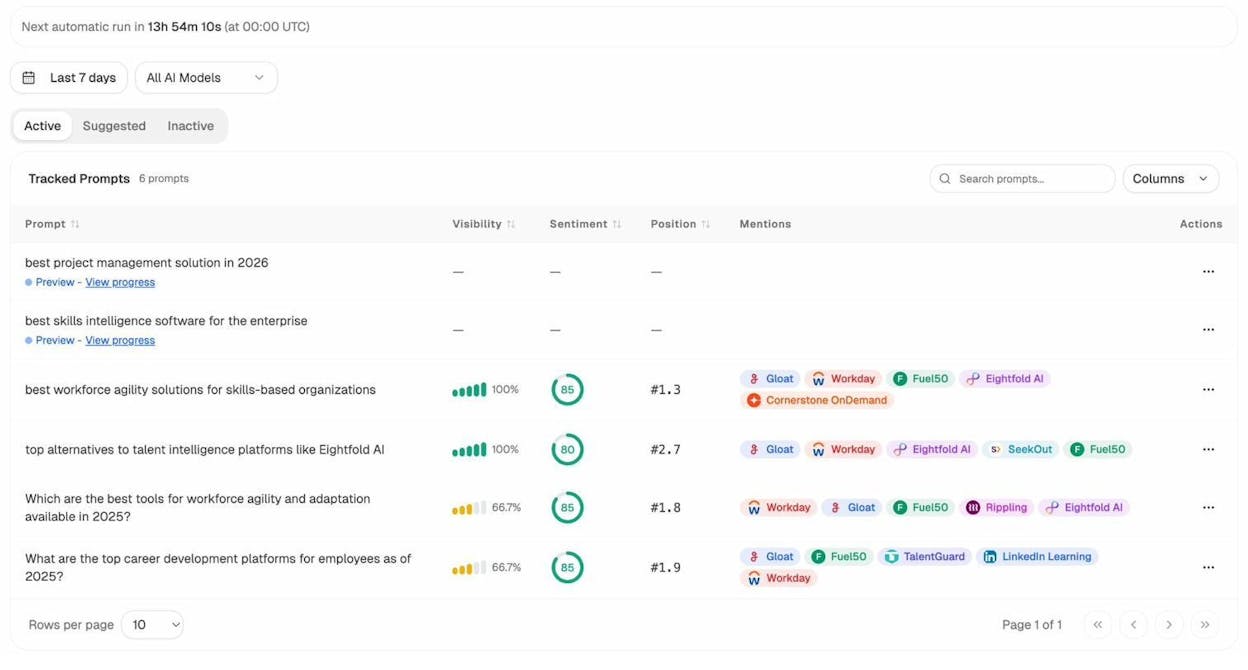
The dashboard shows you which brands get mentioned for each prompt, your average position, and how your visibility score changes week over week. If your visibility starts declining on a prompt where you previously performed well, that is an AI-level intent shift happening in real time.
Discover how competitors are gaining ground
When an intent shift happens in AI search, a competitor usually benefits. Analyze AI’s competitor intelligence shows you which competitors are being mentioned most frequently and on which prompts.
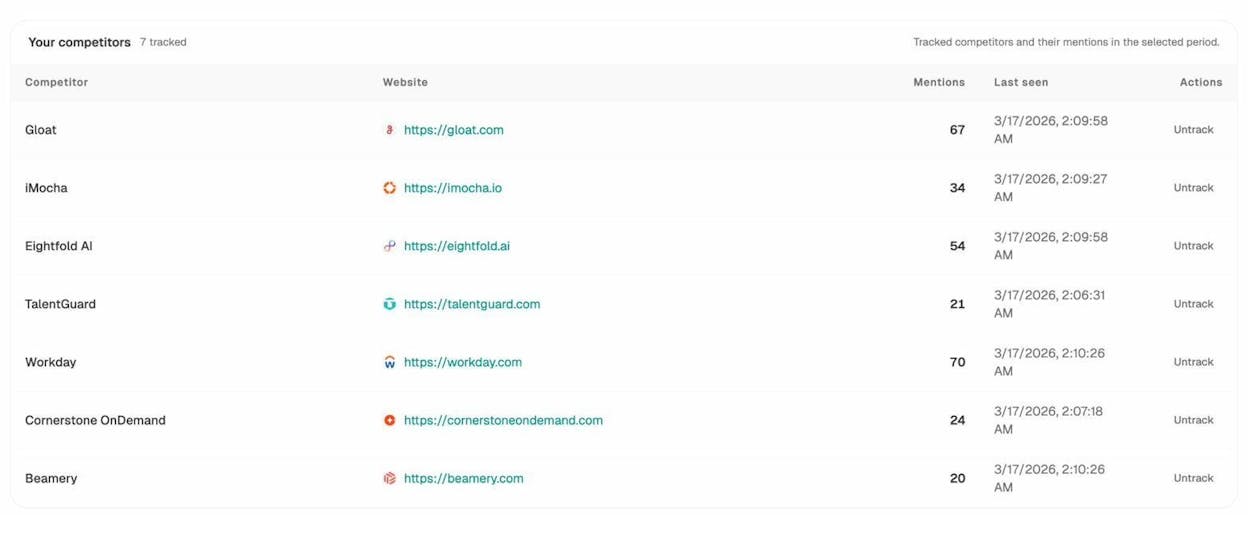
If you see a competitor’s mention count climbing while yours stays flat, it tells you the AI models are starting to favor them for queries in your space. This is the AI equivalent of watching a competitor climb the Google rankings for your target keywords.
Spot narrative shifts with the Perception Map
The Perception Map is a unique feature that plots your brand and competitors on a two-axis chart based on visibility and narrative strength. It shows you at a glance whether AI models see your brand as “Visible and Compelling” or “Visible with a Weak Story.”
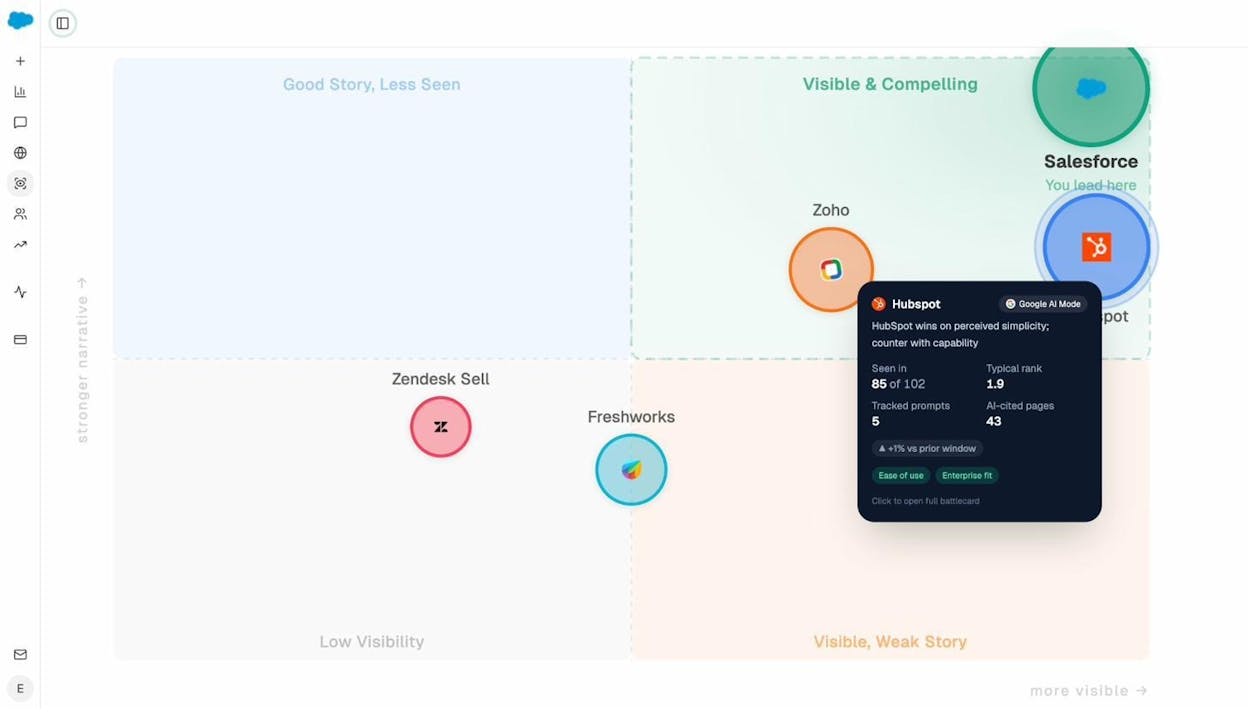
This matters for intent shifts because the narrative AI models tell about your brand can shift over time, just like Google’s search results. If the AI models start describing your competitor as the “easiest to use” when they previously described you that way, that is a perception shift you need to address.
Monitor which sources AI cites
AI models build their responses from the sources they trust. Citation Analytics in Analyze AI shows you every URL and domain that AI platforms cite when answering questions in your industry. It breaks these down by content type (blog, website, review, product page) and by domain.
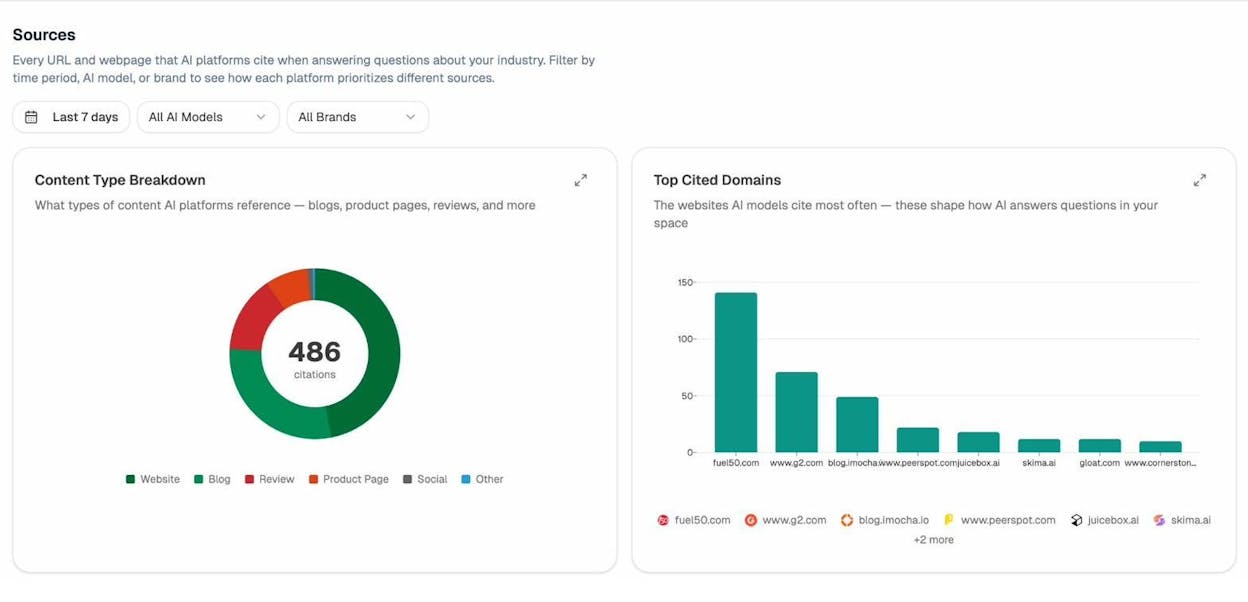
If you notice the AI models starting to cite different sources for queries that used to cite your content, that is an early signal of an intent shift in AI search. It means the models have found content they consider more relevant or authoritative for that query.
Use ad hoc searches to test intent changes
Analyze AI’s AI Search Explorer lets you run ad hoc prompt searches across ChatGPT, Google AI, and Perplexity to see how AI engines respond to any query right now. This is useful for quickly testing whether the intent behind a prompt has shifted.
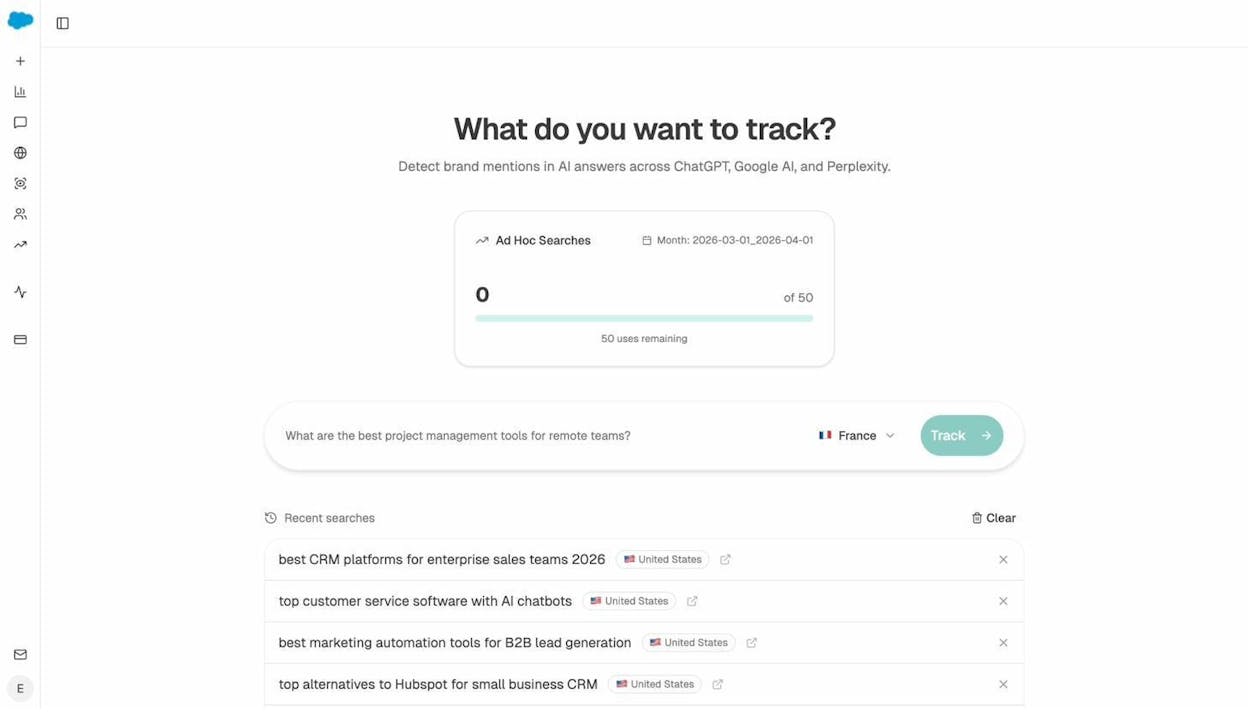
Type in a prompt that is relevant to your business and see which brands get mentioned, which sources get cited, and what narrative the AI builds. If the response looks different from what you expected based on your historical tracking, dig deeper.
Get weekly alerts on visibility changes
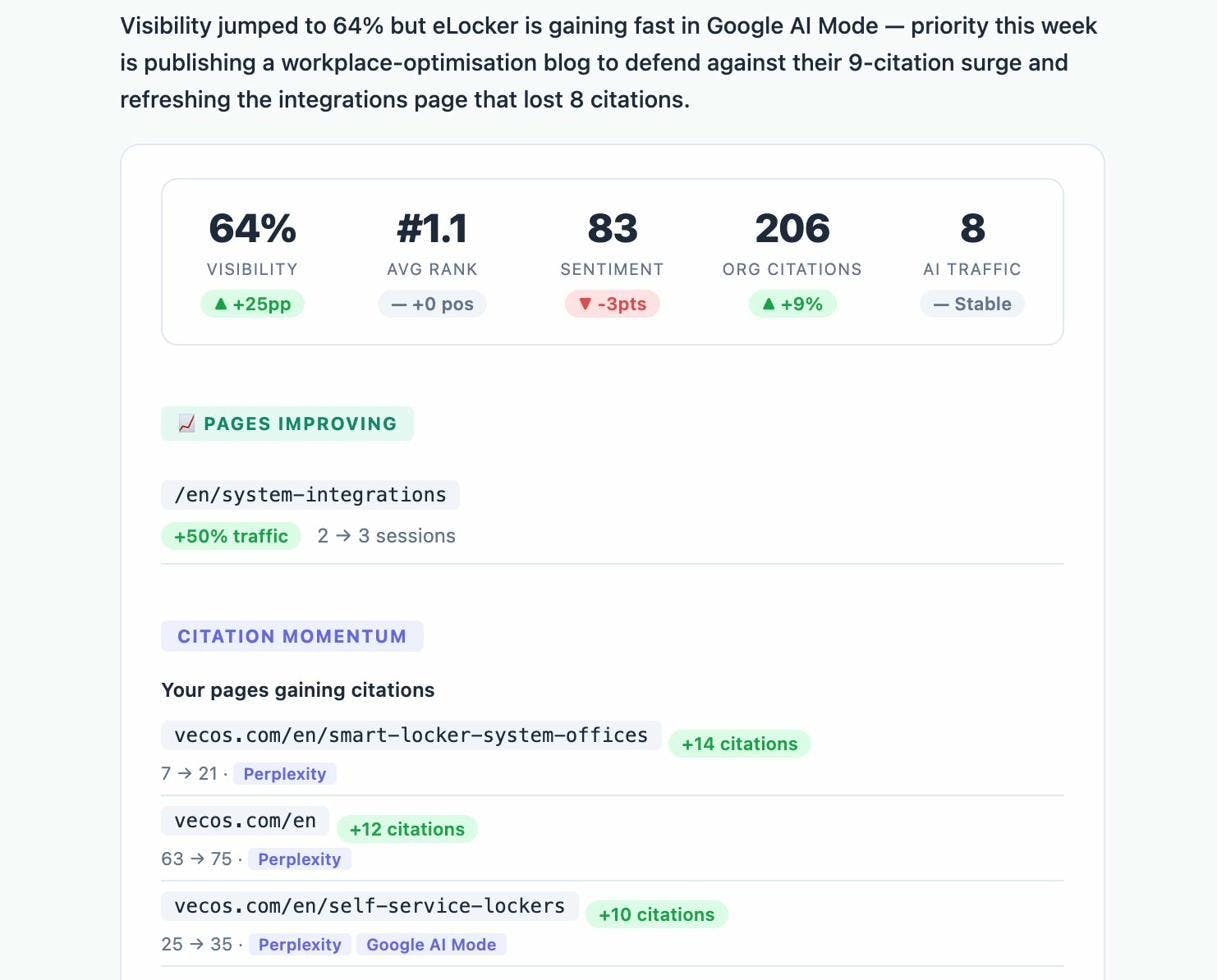
You do not need to check your dashboards every day. Analyze AI’s Weekly Email Digests send you a prioritized summary of the most important changes each Monday. If a competitor overtakes you on key prompts, if your sentiment drops, or if new citation opportunities emerge, you will know about it without logging in.
What to Do When You Spot a Search Intent Shift
Identifying the shift is only half the battle. Here is what to do once you confirm one is happening.
Determine if the shift is temporary or permanent
This is the most important decision you will make. It determines your entire response strategy.
Temporary shifts are driven by news events, viral trends, or seasonal patterns. The Corona beer example shows how a temporary shift (driven by the pandemic) eventually reverted. If the shift is temporary, maintain your existing content and wait for the trend to pass. Continue publishing and optimizing so your content is ready to reclaim its position.
Permanent shifts are driven by new brands, cultural changes, or evolving user needs. The LLM, reMarkable, and Threads examples are permanent. If the shift is permanent, you need to change your keyword strategy.
Ask yourself these questions:
-
Is the new meaning backed by a well-funded company or institution that will sustain attention?
-
Does the new meaning generate significantly more search volume than the old one?
-
Has the shift persisted for more than three months without reverting?
If you answer yes to two or more, treat it as permanent.
For recoverable shifts: Update your content
If the shift is about evolving user needs (the “high-ticket affiliate marketing” pattern), update your content to match the new dominant intent.
Study the current top-ranking pages. Identify the content type, format, and angle that now dominate. Then revise your article to align with the new intent while preserving any unique value your original content provided.
For example, if your educational guide is losing to listicles, add a substantial list section to your guide. You can often match the new intent while retaining your original informational depth as a differentiator.
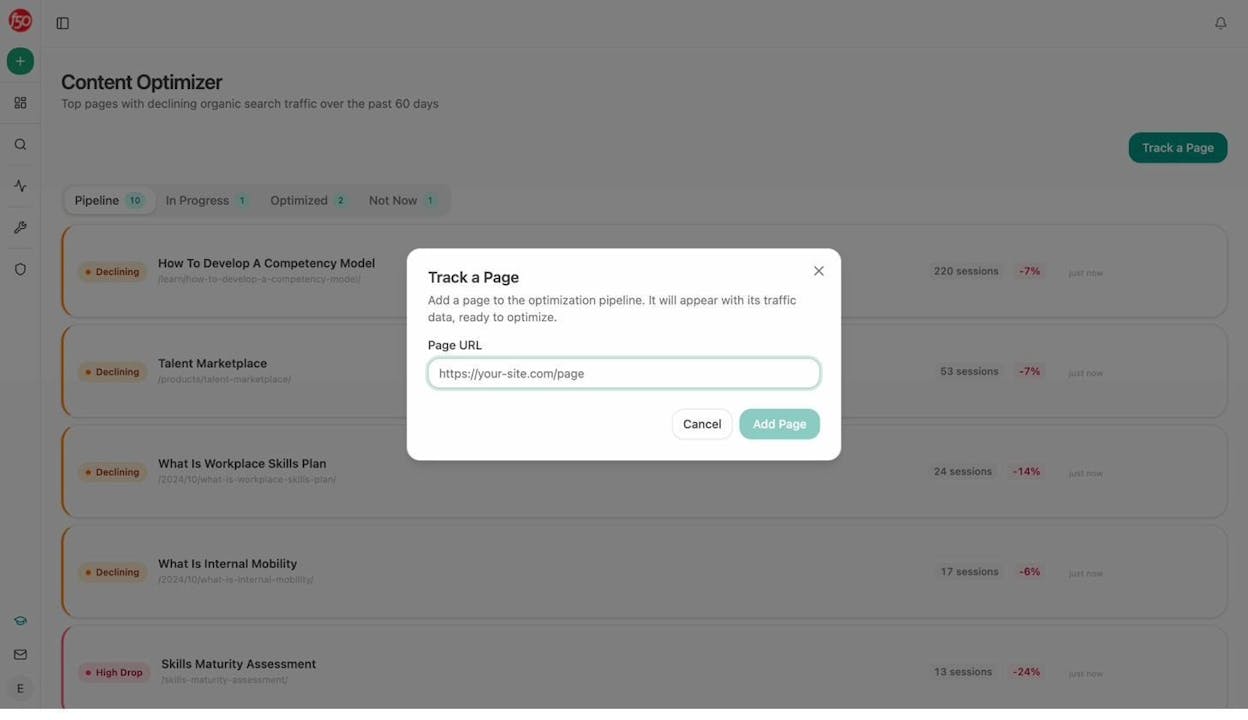
Use a tool like Analyze AI’s Content Optimizer to audit your existing page against the current SERP landscape. It will score your content on argument flow and clarity, then generate specific suggestions for what to add or change.
For permanent shifts: Pivot to long-tail keywords
If the head term is permanently lost, identify modified keywords that still carry the original intent. This usually means adding a qualifier to the keyword.
For “LLM” (the legal degree), the pivot would be to “LLM degree,” “LLM programs,” or “Master of Laws.” For “remarkable” (the adjective), the pivot would be to “remarkable definition” or “remarkable synonym.” For “threads” (sewing), the pivot would be to “sewing threads” or “embroidery thread.”
Use a keyword generator to find related long-tail variations that still carry the original intent. Then use a keyword difficulty checker to identify which of those variations are realistic to rank for.
For brand keyword shifts: Strengthen your brand signals
If your brand keyword gets hijacked (like Oasis Fashion), focus on strengthening every signal that tells Google your brand is a real entity. Update your Google Business Profile, ensure your schema markup is correct, build branded backlinks, and publish fresh content that reinforces your brand identity.
You should also create content targeting “[your brand] + qualifier” keywords as a hedge. Oasis Fashion should target “Oasis Fashion,” “Oasis clothing,” and “Oasis dresses” rather than relying on the unmodified “oasis.”
For AI search shifts: Update the sources AI trusts
If you notice an intent shift happening in AI search, the response is different from traditional SEO. AI models build their responses from the sources they cite, so you need to ensure those sources mention your brand favorably.
Check which domains AI models cite most for queries in your space using Citation Analytics. Then focus your content and link building efforts on getting mentioned on those high-authority domains.
If the AI models cite G2 reviews, Capterra, or Reddit threads when discussing your category, make sure your brand has a strong and updated presence on those platforms. The AI models will pick up the new information in their next training update or data refresh.
How to Protect Your Site from Future Search Intent Shifts
Prevention is better than reaction. Here are five strategies to reduce your vulnerability.
1. Diversify your keyword portfolio
If your organic traffic depends heavily on a single head term, you are exposed to intent shift risk. Build content around a cluster of related keywords so that losing one keyword does not devastate your traffic. This is a fundamental principle of SEO content strategy.
For example, if you rank for “project management,” also build content around “project management tools,” “project management software for startups,” “how to manage projects remotely,” and other long-tail variations. If the head term shifts, your long-tail positions remain intact.
2. Monitor your competitive landscape in both Google and AI search
Set up regular monitoring for your most important keywords in both traditional rank trackers and AI search monitoring tools.
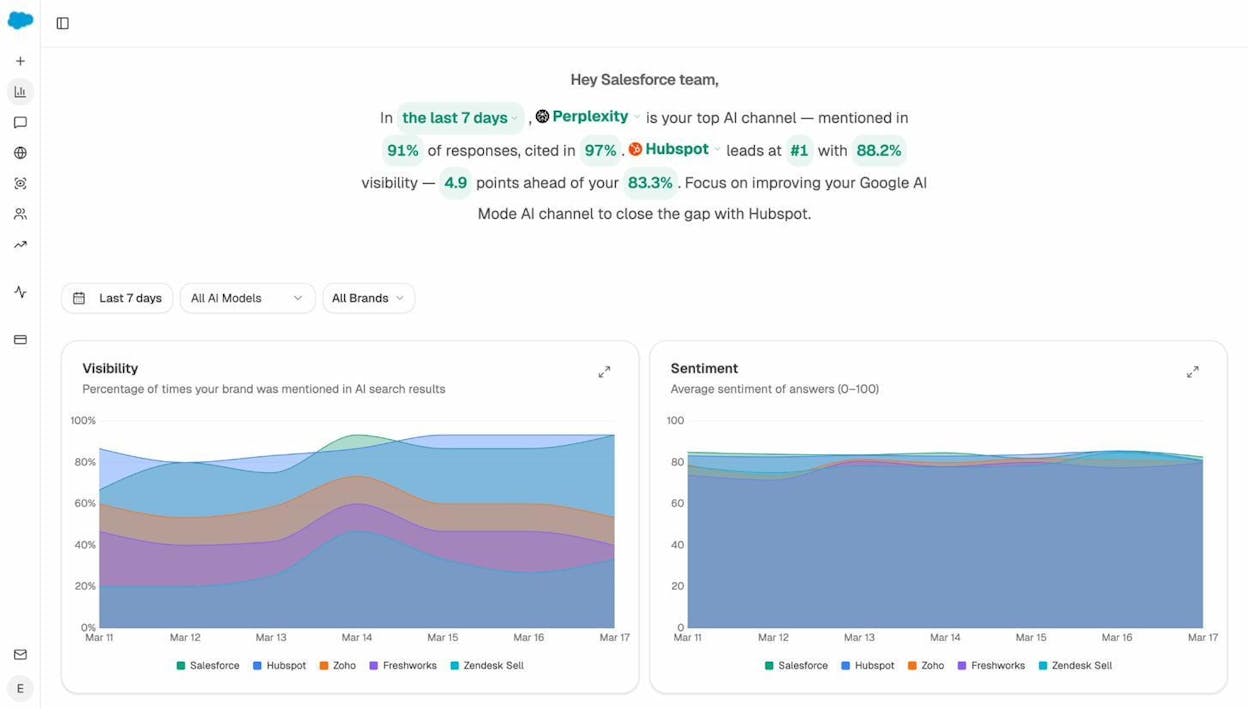
In Analyze AI, the Overview dashboard gives you a consolidated view of your visibility and sentiment across all AI engines. Combine this with your Google Search Console data and rank tracker, and you will have early warning signals for shifts in both channels.
3. Build brand authority beyond search
Brands that are well-known outside of search are more resilient to intent shifts. If people search for your brand name specifically, Google will always show your site for those branded queries. Invest in awareness channels (social media, PR, email, events) so that branded search becomes a meaningful traffic source.
The brands that suffered most from intent shifts in the examples above (Oasis Fashion, dictionary websites, law school sites) were all relying on generic, non-branded keywords. Their branded keywords were unaffected.
4. Watch for emerging brands in your keyword space
Use Google Alerts, social media monitoring, and competitor intelligence tools to watch for new companies or products that might adopt keywords in your space.
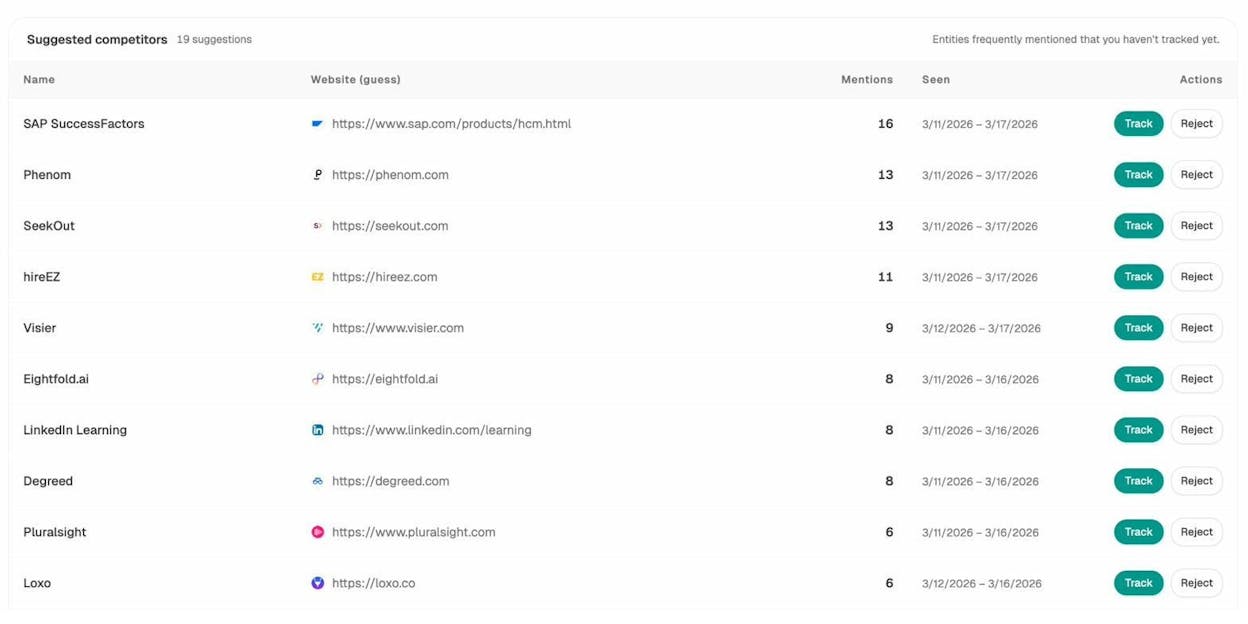
In Analyze AI, the Suggested Competitors tab surfaces brands that are being mentioned frequently by AI models in your space but that you are not yet tracking. This gives you an early heads-up on emerging competitors who might eventually displace your positions.
5. Audit your content for intent alignment regularly
At least once per quarter, review your top-performing content and check that it still matches the dominant search intent. Compare your content type, format, and angle against the current top-ranking pages.
A SERP checker can help you quickly see what is ranking for your target keywords right now. If the results look different from when you originally published, investigate whether an intent shift has occurred.
This habit is especially important for “what is” and educational content. As topics mature and audiences become more sophisticated, these keywords tend to shift from informational to commercial intent. Catching this shift early lets you update your content before it loses traffic.
Final Thoughts
Google’s search results reflect what most people want when they type a keyword. When that collective want changes, the results change with it. No amount of SEO optimization can override a genuine shift in what searchers are looking for.
The best defense is awareness. Monitor your rankings, study the SERPs, and pay attention to the world around you. When a news event, product launch, or cultural shift touches a keyword you depend on, check your results immediately.
And remember that search intent shifts are not limited to Google. AI search engines like ChatGPT, Perplexity, and Gemini are becoming major discovery channels for buyers. The brands they recommend can shift just as quickly as Google’s rankings, and often for different reasons. Monitoring both channels gives you the fullest picture of how people find you and where you might be losing ground.
SEO is not dead. AI search is not replacing traditional search. But the landscape is evolving, and the marketers who treat AI search as an additional organic channel alongside SEO, rather than ignoring it or panicking about it, are the ones who will compound their visibility over time.

Ernest

Ibrahim


