



Summarize this blog post with:


In this article, you’ll see seven Writesonic alternatives that handle the same work (AI writing, SEO content optimization, AI search visibility) without the credit math, the GEO paywall, or the per-article AI add-on. You’ll get a side-by-side TL;DR, the trade-offs of each tool, and a clear breakdown of where each one fits in your stack.
Table of Contents
Why teams leave Writesonic
Three patterns come up over and over.
The GEO paywall. Writesonic’s AI search visibility features sit behind Professional and Advanced plans. You pay a higher tier just to see your brand in ChatGPT and Perplexity. Advanced caps at 200 prompts a month, then the next step is “Enterprise, talk to us.”
Credit math. Plans charge by quality tier (Premium, Good, Average, Economy) and by article credits, and unused credits do not roll over. Teams that publish in waves waste capacity.
Limited workflow depth. Writesonic publishes to WordPress. That’s the extent of automation. The work that compounds (refreshing declining pages on a schedule, alerting on competitor visibility shifts, drafting counter-content when competitors publish) lives outside the platform.
TL;DR: 7 Writesonic alternatives at a glance
|
Tool |
Best for |
Strengths |
Tradeoffs |
|---|---|---|---|
|
Analyze AI |
Teams that want SEO, AI search, content writing, and automation on one platform |
Research-first Content Writer, Content Optimizer with editor comments, AI visibility and citation analytics, AI traffic attribution, 180+ node Agent Builder |
More breadth than visibility-only tools, so worth setting up properly |
|
Surfer SEO |
On-page SEO content optimization |
Best content score correlation with Google rankings, clean Content Editor, Grow Flow refresh cadence |
No AI search visibility, AI articles cost $29 each on top of the plan |
|
Frase |
Budget content briefs with AI writing |
Cheapest entry point, SERP-driven briefs, GSC integration |
Content score less rigorous, no AI visibility tracking |
|
Scalenut |
End-to-end AI article production at volume |
Cruise Mode automates keyword to draft, NLP content score, affordable |
No AI search layer, output needs human pass for B2B SaaS |
|
Jasper |
Brand-voice AI writing across asset types |
Brand Voice modeling, campaign workflows, strong integrations |
No native SEO score, no AI visibility, per-seat pricing scales fast |
|
Clearscope |
Premium content scoring for senior writers |
Accurate term recommendations, clean editor, enterprise trust |
No AI writer, no AI visibility, $189/month entry |
|
Profound |
Enterprise GEO tracking with compliance |
SOC-2, SSO, cross-engine visibility at scale, executive dashboards |
No content writer or optimizer, expensive, analysis-only |
1. Analyze AI: the agentic SEO and content platform that handles writing, optimization, AI search, and automation
Writesonic is an AI writer with a GEO tracker bolted on. Analyze AI was built the other way around. Underneath sits a programmable substrate of 180+ nodes wired to your AI search data, GA4, GSC, DataForSEO, Semrush, HubSpot, Notion, and your CMS. On top sits an AI Content Writer, an AI Content Optimizer, prompt tracking, citation analytics, AI traffic attribution, a competitor intelligence layer, and a perception map.
The point is consolidation. The four tabs you have open for Writesonic, Surfer, a GEO tracker, and Zapier collapse into one platform with one data layer.
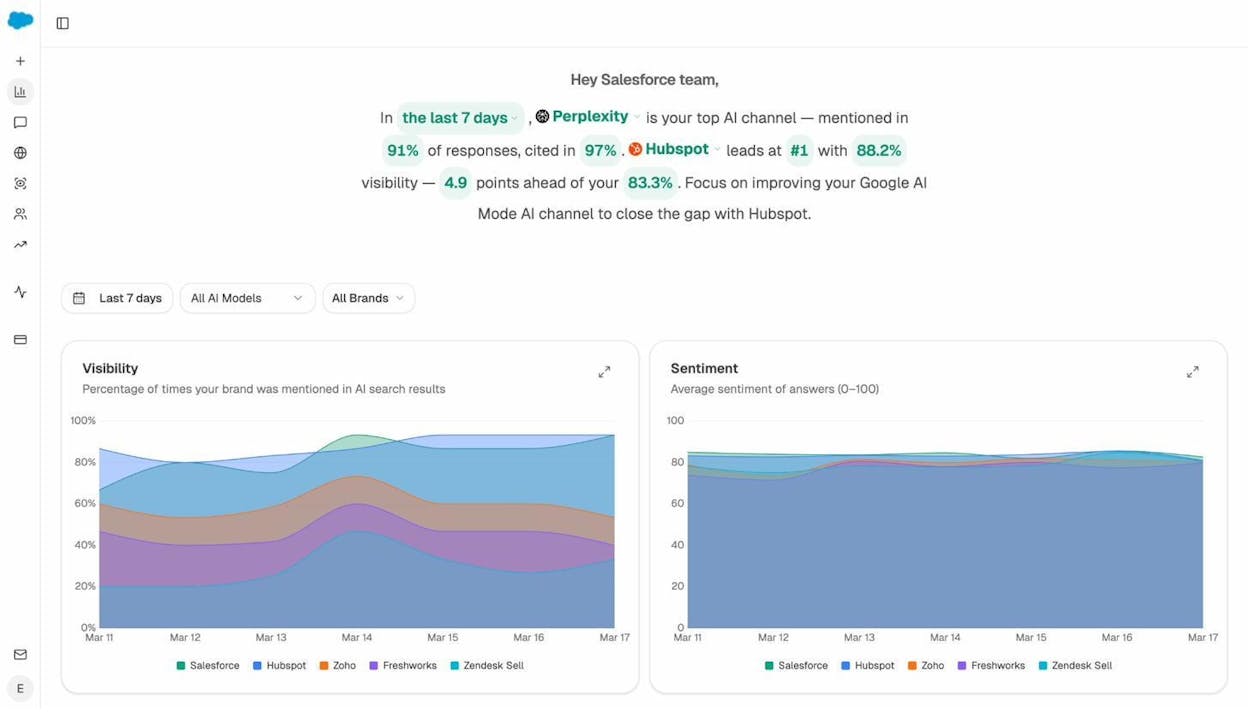
What Analyze AI does differently
The Content Writer runs a research-first methodology, not a template-first one.
In Writesonic you pick a template and fill in fields. In Analyze AI the Content Writer runs a real research pass on the target keyword, builds an outline based on what wins in SERP and in AI answers, and then writes the draft from the approved structure.
Senior writers at brands like Ahrefs and Animalz work this way for a reason. Research, then outline review, then draft. Writesonic skips the first two and hopes the template fills the gap. That’s why the output reads thin.
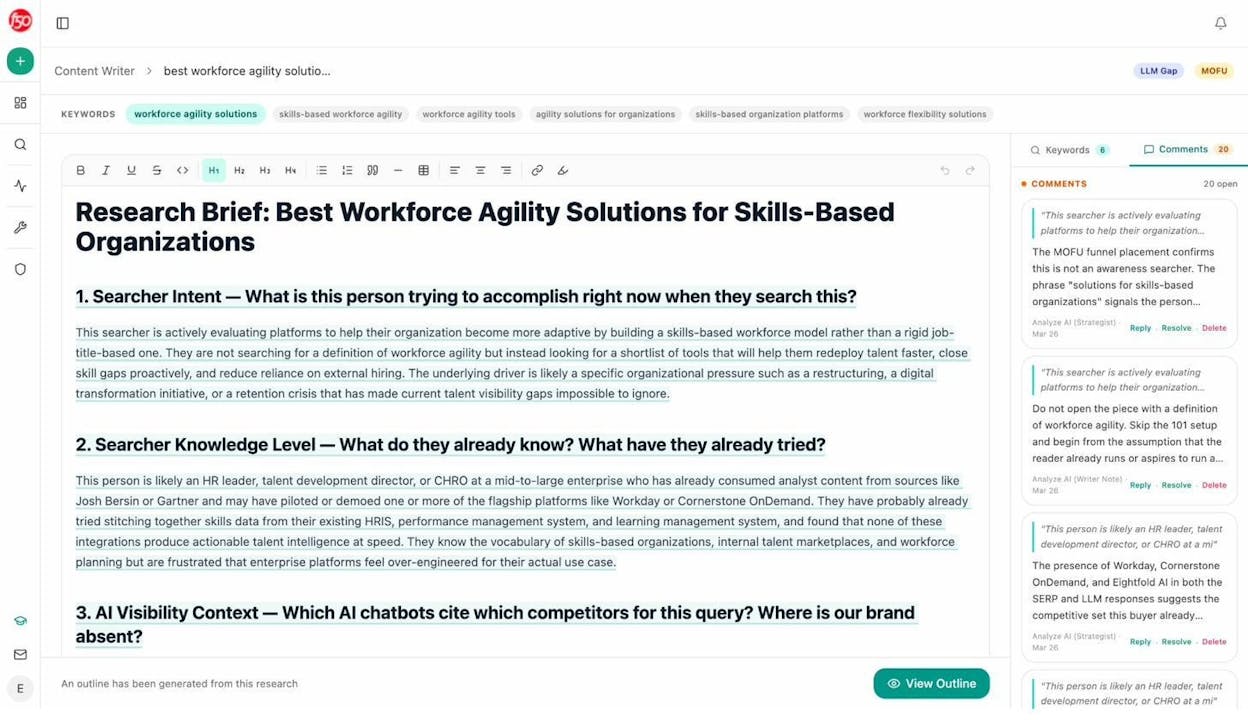
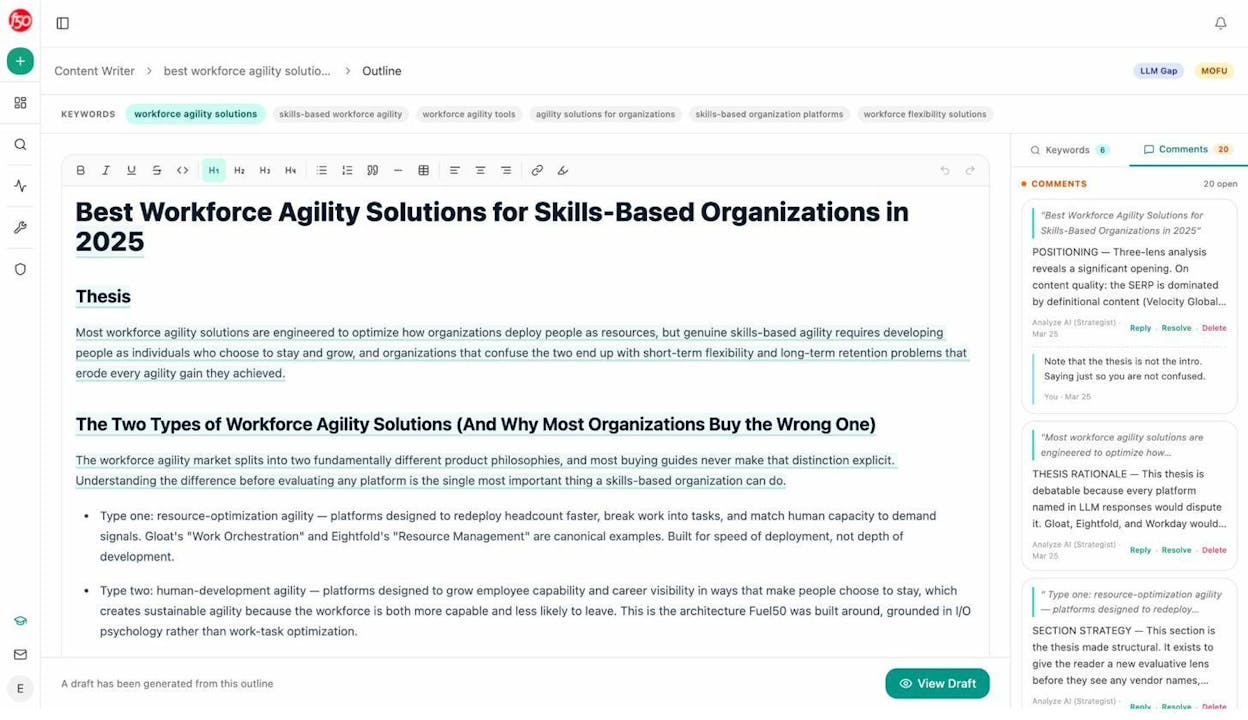
You can comment on the research, push back on weak angles, and force the outline to address gaps the SERP did not cover. The draft inherits that work.
The Content Optimizer audits live pages with editor-level comments.
Writesonic’s Action Center surfaces visibility gaps and tells you to publish more. The Content Optimizer fetches your live page, scores it for argument flow and clarity, and drops editor-style comments on what is failing (generic opening, weasel headings, missing proof) before any rewrite happens.
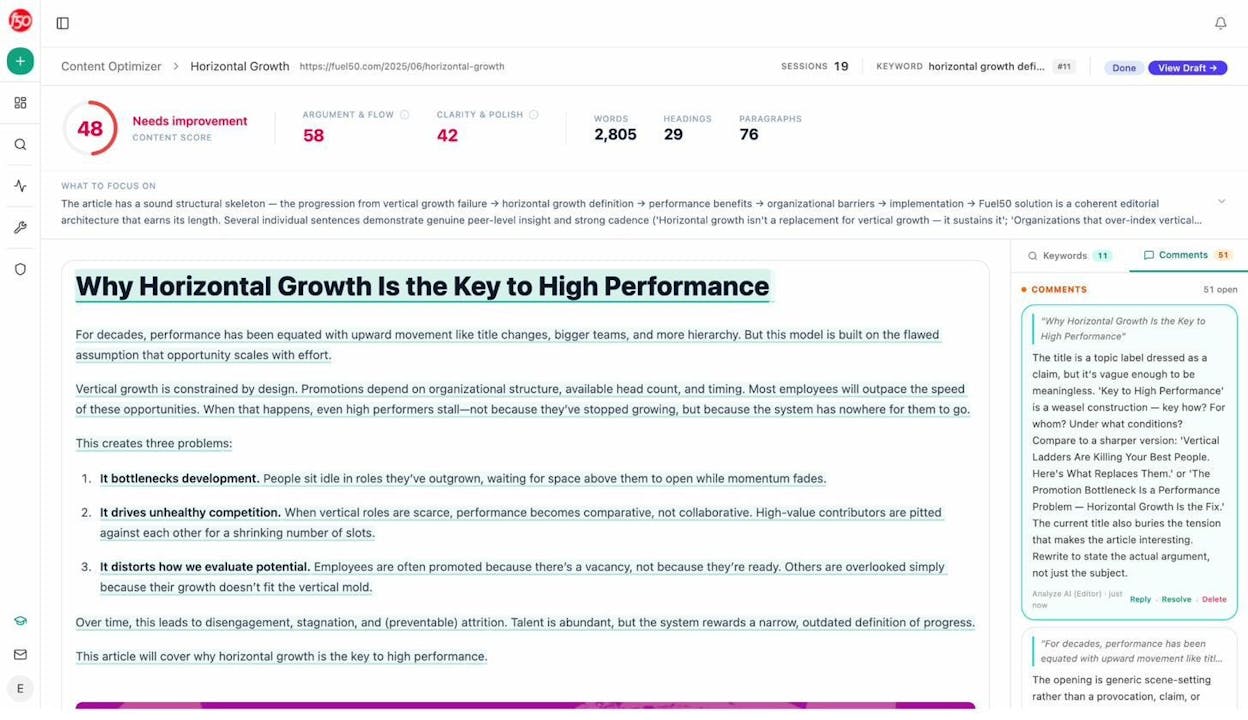
The Optimizer then produces the new draft with the diff, the new word count, the new heading count, and a QA report that verifies internal links, external links, and every claim against a source.
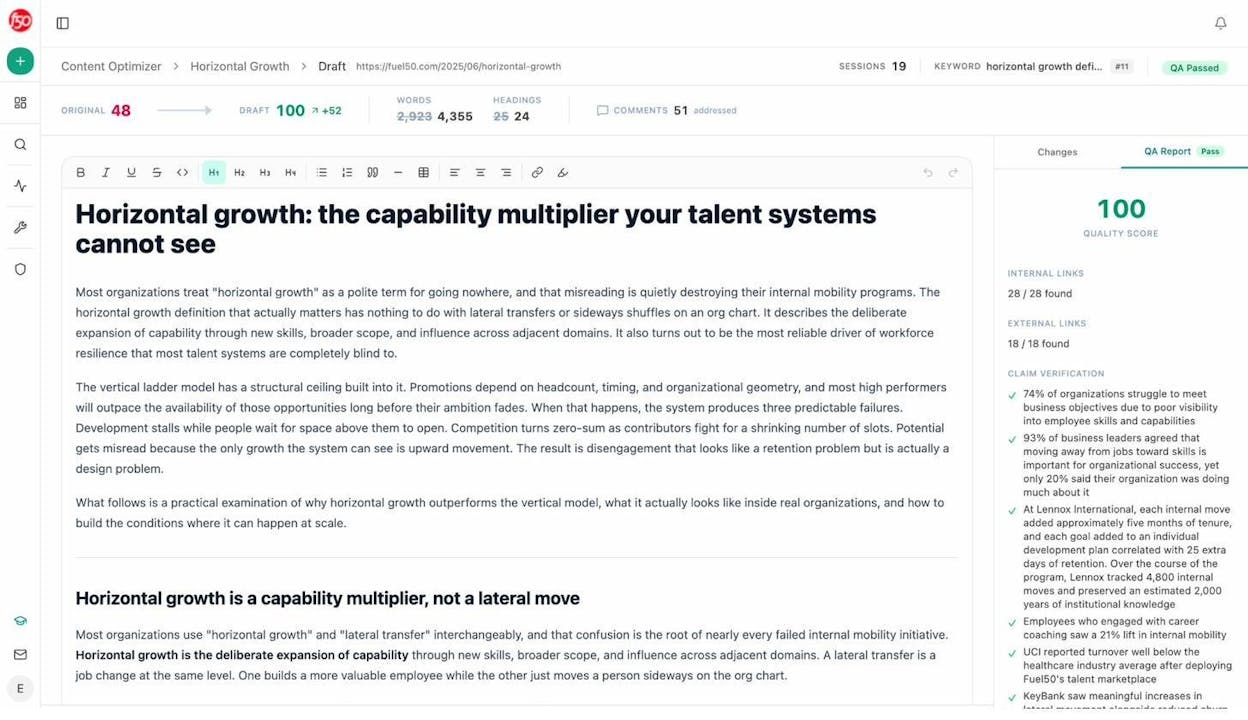
The output is closer to what a senior editor would hand back than to what a template fills in. That is the gap Writesonic never closed.
The Agent Builder runs your operations layer, not just your writing layer.
This is the part with no equivalent in Writesonic or in any other tool on this list. The Agent Builder composes workflows from 180+ nodes covering AI visibility, GA4, GSC, DataForSEO, Semrush, HubSpot, Notion, WordPress, Sanity, Contentful, Mailchimp, Hunter, Tomba, news research, web scraping, and code execution. Agents run on a button, on a schedule, or off a webhook.
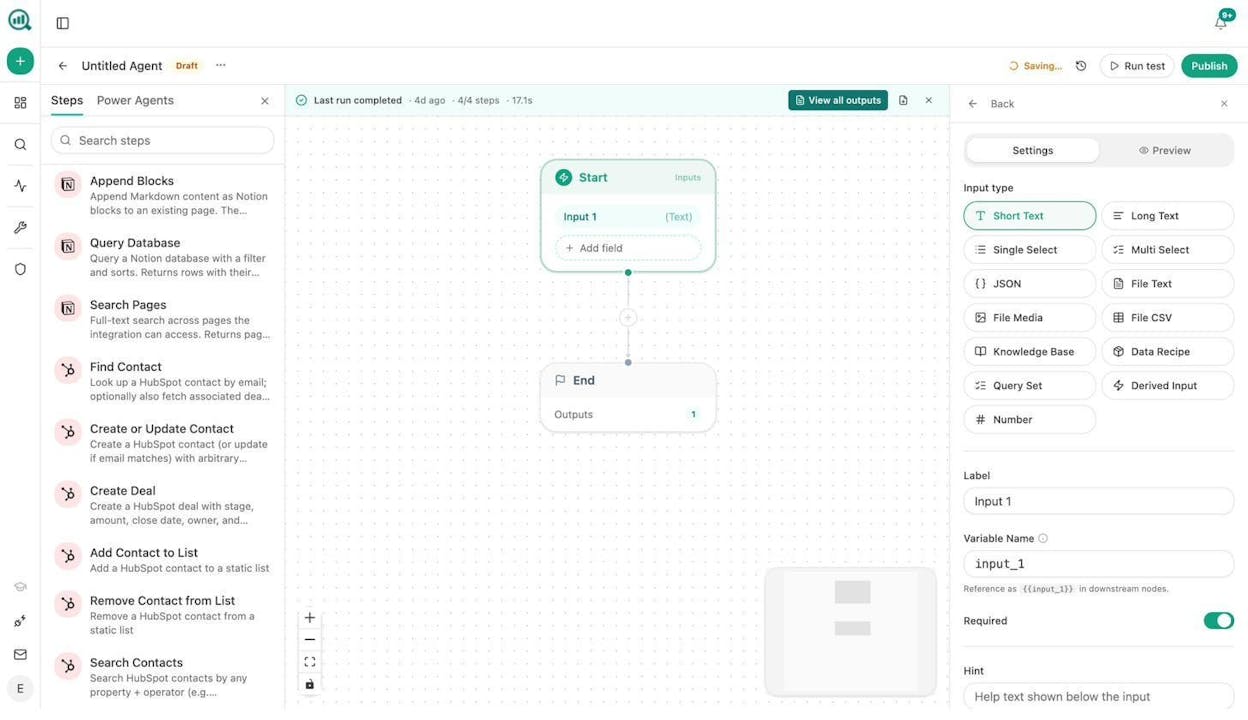
A few examples of what teams actually run.
A Monday morning agent pulls last week’s GA4 traffic, GSC top pages, AI visibility delta, new HubSpot deals, and competitor visibility shifts, then emails a one-pager to leadership at 7am. Replaces the four-hour analyst chase.
A content refresh agent scans declining pages weekly, rewrites the ones losing AI citations, runs them through the AEO scorecard, and pushes the update to WordPress if the new score passes 80.
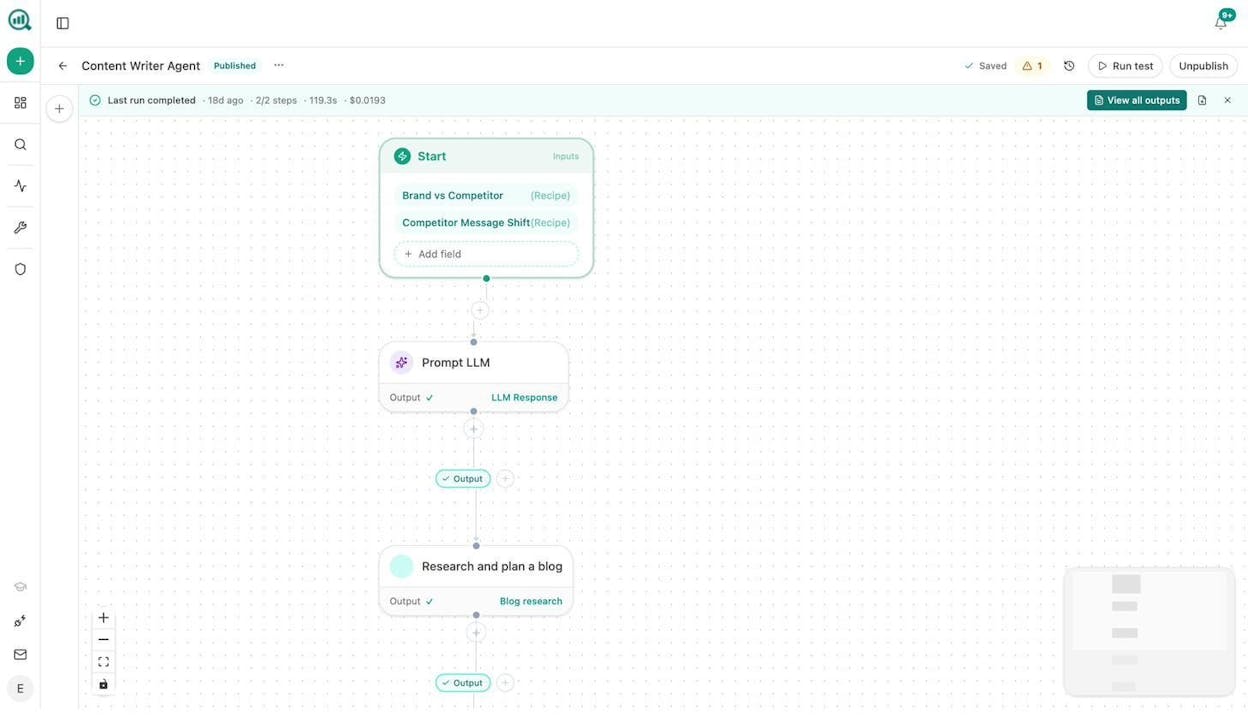
A competitor monitoring agent fires when a tracked competitor publishes, scrapes the content, drafts a counter-brief, and drops it in Notion. A crisis playbook triggers off a media-monitoring webhook, identifies the journalist, drafts three response options, and Slacks the comms team. An inbound-lead agent enriches form submissions with Hunter and Tomba, runs DataForSEO on the prospect’s domain, and creates a HubSpot contact before the AE sees it.
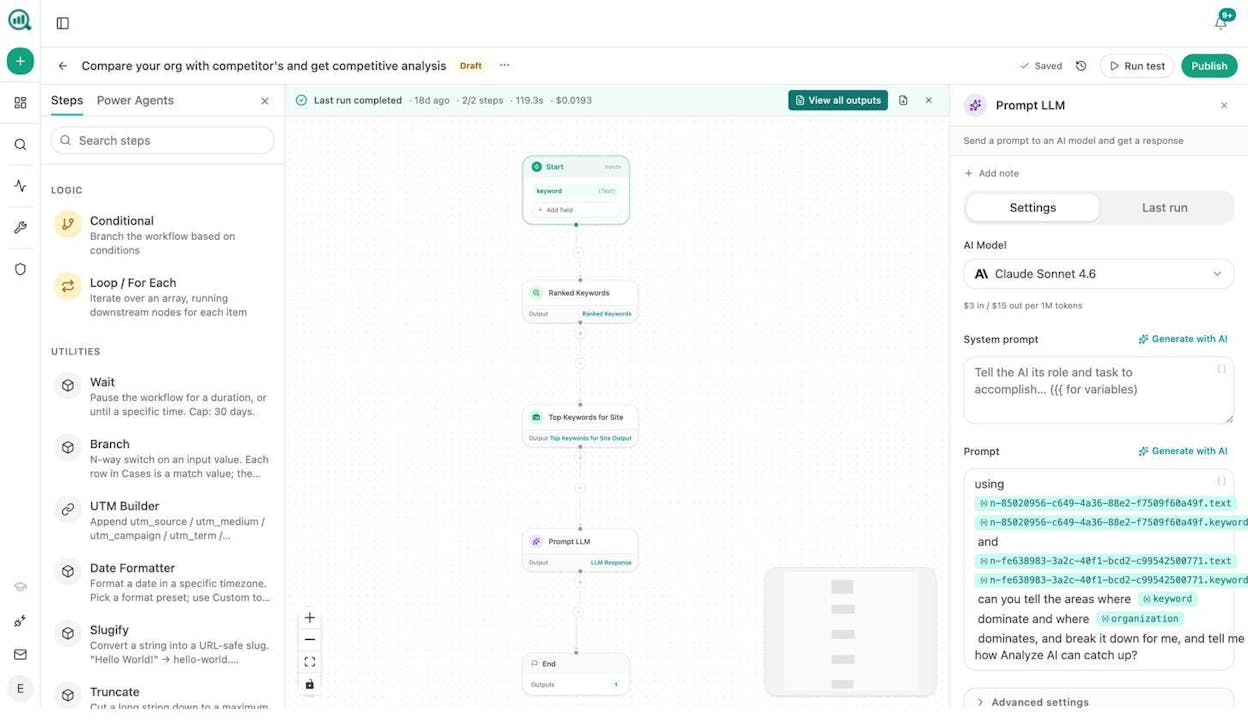
You will not build all of these. The point is that “automation” in Writesonic stops at publishing to WordPress. Automation in Analyze AI is the entire back office, and you do not need Zapier, Make, or n8n to glue it together.
AI Traffic Analytics ties visibility to sessions and conversions.
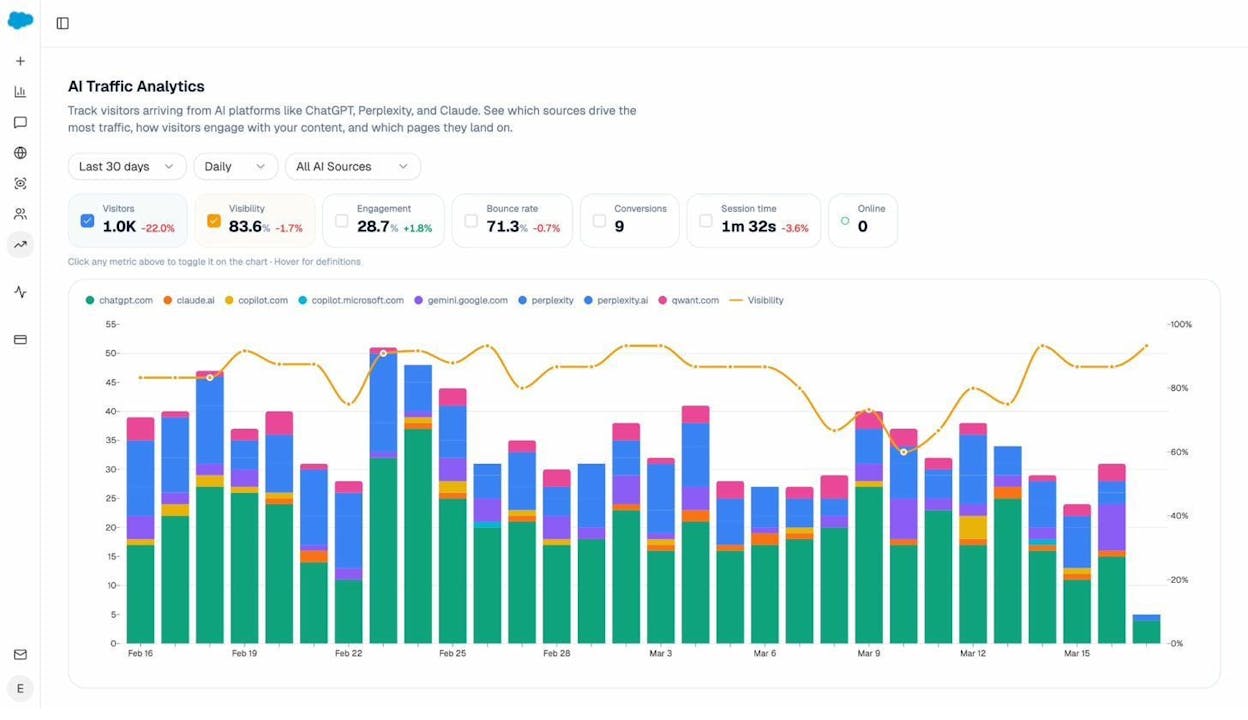
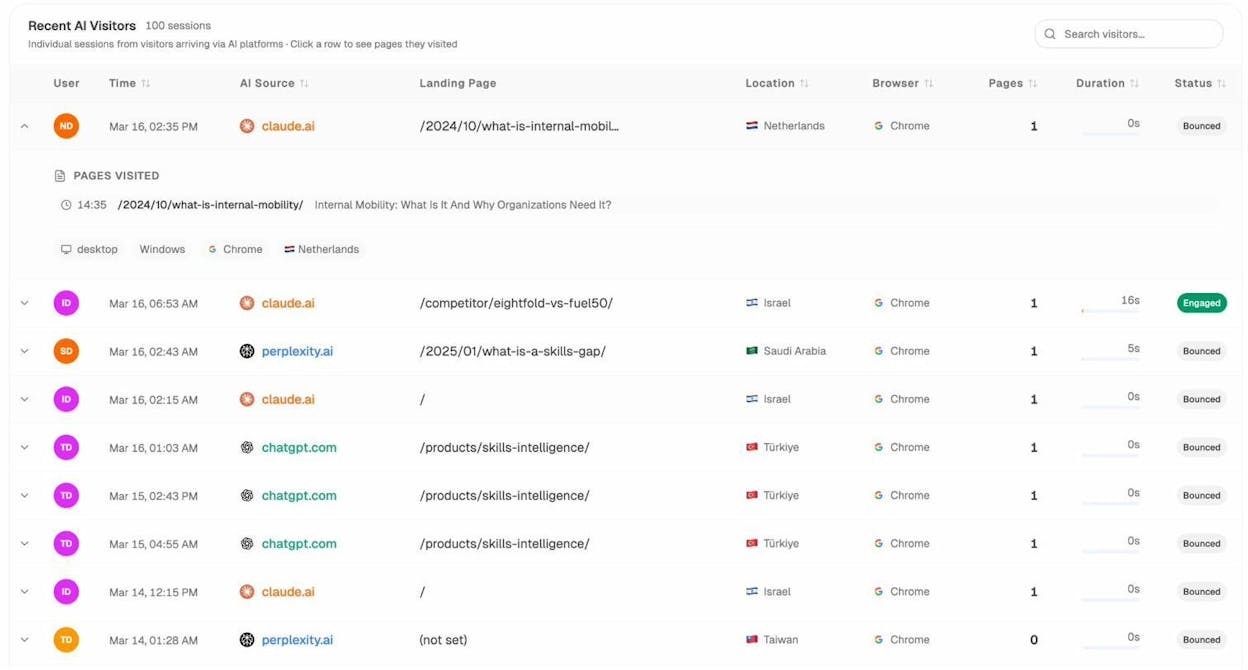
Most GEO modules (including Writesonic’s) stop at “you were mentioned.” AI Traffic Analytics shows you which AI engine sent each session, what landing page received it, and what conversion event followed. When ChatGPT sends 248 sessions and Perplexity sends 142, you know where to invest. When a comparison page converts 12% of Perplexity traffic and an old blog converts zero, you know what to strengthen.
Prompt tracking and citation analytics in one place.
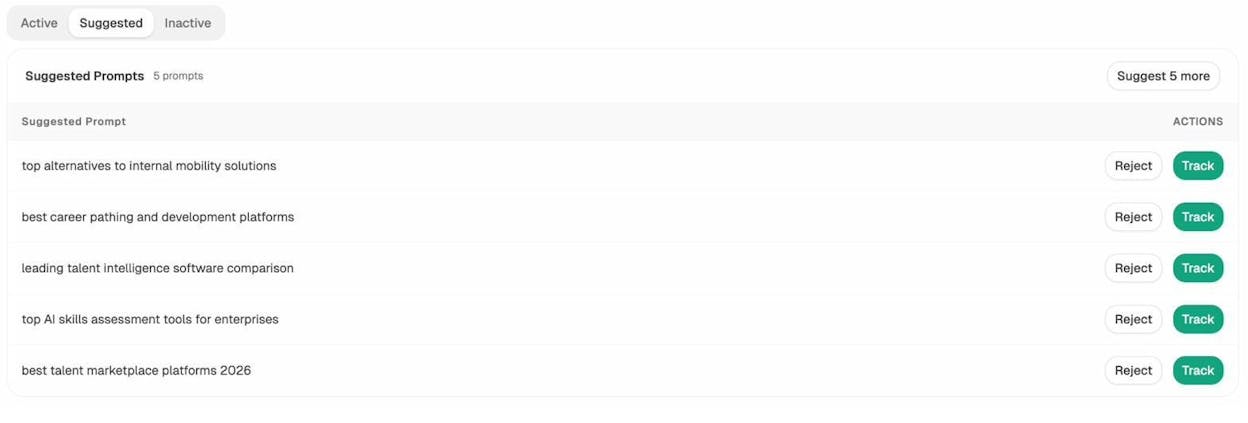
You track the prompts buyers actually use (“best Salesforce alternatives for mid-market,” “top customer service software for SMBs in 2026”). For each, you see visibility percentage, position against competitors, sentiment, and the full answer block with citations. If you do not know which prompts to track yet, Prompt Discovery suggests the bottom-of-funnel ones based on your category.
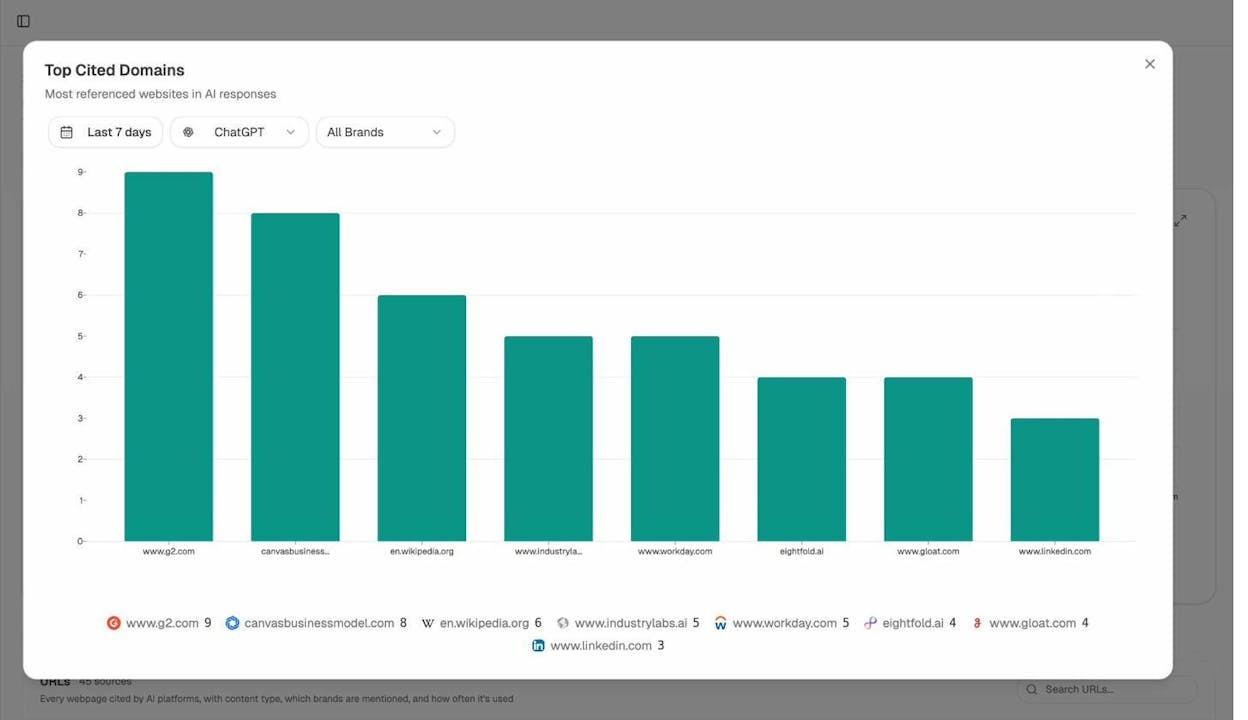
The Sources view ranks the domains and URLs that AI engines cite most often in your category. You see usage count, which models cite each domain, and when those citations first appeared. That turns generic link building into targeted citation work.
Analyze AI vs Writesonic, side by side
|
Dimension |
Analyze AI |
Writesonic |
|---|---|---|
|
Writer methodology |
Research, outline review, draft, with editor comments |
Template prompts |
|
Content optimizer |
Fetches live page, editor comments, diff, QA report |
Action Center suggestions |
|
AI visibility |
Included in every tier |
Professional plan and up |
|
AI traffic attribution |
Sessions, landing pages, conversions by engine |
AI crawler view |
|
Citation analytics |
Per-domain, per-model, with first-seen dates |
Limited |
|
Agent / workflow layer |
180+ nodes, 3 trigger modes (manual, schedule, webhook) |
WordPress publish only |
|
Integrations |
GA4, GSC, DataForSEO, Semrush, HubSpot, WordPress, Notion, Sanity, Contentful, Mailchimp, Hunter, Tomba, more |
WordPress, GSC, GA4 |
|
Pricing model |
Flat, no credit math, no per-article AI fees |
Tiered with prompt caps and AI article credits |
If Writesonic is “AI writing with a visibility add-on,” Analyze AI is a single platform that handles writing, optimization, tracking, reporting, and automation on one data layer.
→ See the full Analyze AI vs Writesonic GEO comparison
2. Surfer SEO: best Writesonic alternative for on-page content optimization
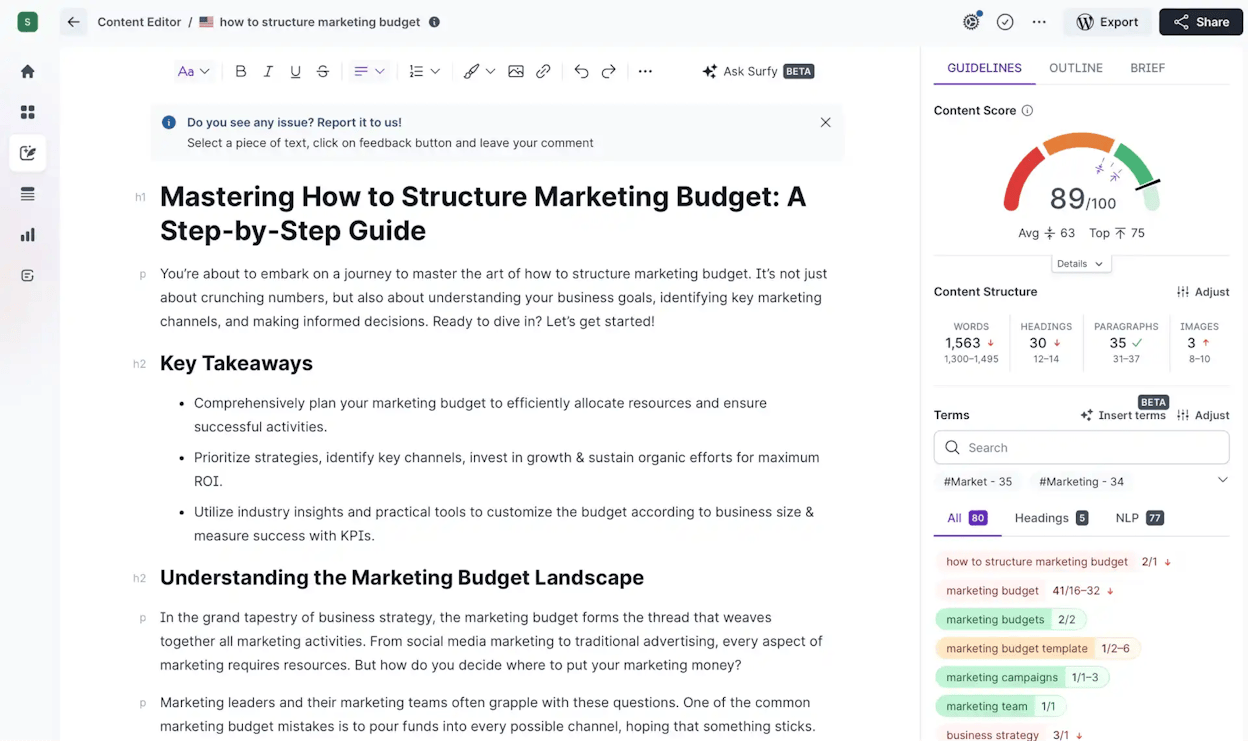
Surfer is the standard for on-page content optimization. The interface is built around the editor, with real-time content score, NLP terms, ideal word count, and structure benchmarks pulled from the top 20 to 50 ranking pages for your keyword.
Standout features
-
Content Editor with real-time scoring against the live SERP.
-
SERP Analyzer with 500+ web signals pulled per keyword.
-
Surfer AI for first drafts ($29 per article, separate credits).
-
Grow Flow for refresh cadence suggestions.
-
Native integrations with Google Docs, WordPress, and ChatGPT.
Why teams pick Surfer over Writesonic. The optimization score correlates better with Google rankings than competing tools (Surfer’s own study put it at 0.28 vs Frase at 0.10 and Clearscope at 0.175). For SEO writing teams that publish weekly, the Content Editor is the cleanest experience in the category.
Where it falls short. Surfer is a content optimization tool, not a stack. No AI search visibility tracking, no citation analytics, no automation beyond Grow Flow’s refresh queue. Surfer AI costs $29 per article on top of the Essential plan ($99/month), which compounds fast at 30+ articles a month.
→ Read the full Surfer SEO review
3. Frase: best Writesonic alternative for content briefs on a budget
![[Screenshot of the Frase brief builder with the SERP research panel on the left, headings on the right, and the questions section pulled from People Also Ask and Reddit]](https://www.datocms-assets.com/164164/1778705515-blobid14.png?auto=format,compress&w=1248&fit=max)
Frase is the entry-level pick for teams that want SERP-driven content briefs and AI writing in one tool. The brief builder pulls headings, questions, and key topics from the top-ranking pages in seconds.
Standout features
-
Brief builder with SERP research, headings, and PAA questions.
-
AI writer with templates and full-article generation.
-
Topic score with optimization recommendations.
-
Google Search Console integration for cannibalization checks.
-
Affordable entry plan ($14.99 to $44.99/month).
Why teams pick Frase over Writesonic. Price. Frase starts at under $15/month and includes both briefs and AI writing in the base plan. For solo marketers and small content teams, that is a fraction of what Writesonic’s Professional plan costs once you unlock GEO.
Where it falls short. The content score is less rigorous than Surfer’s, the AI writer benefits from heavy editing, and there is no AI search visibility tracking. If you publish 100+ pieces a year, Frase is the starting line, not the finish.
4. Scalenut: best Writesonic alternative for end-to-end AI article production
![[Screenshot of the Scalenut Cruise Mode interface showing the keyword input box, the SERP research that pulled in, the auto-generated brief, and the article draft tab]](https://www.datocms-assets.com/164164/1778705536-blobid15.png?auto=format,compress&w=1248&fit=max)
Scalenut’s signature feature is Cruise Mode, which takes a keyword and runs through SERP research, brief, and full draft in one automated flow. It is the closest workflow-level competitor to Writesonic’s content factory model.
Standout features
-
Cruise Mode for keyword to publishable draft in one flow.
-
NLP-based content score throughout the editor.
-
Keyword clustering for topic cluster planning.
-
AI image generation, SEO docs, and content planner.
-
Flat pricing (starts around $39/month).
Why teams pick Scalenut over Writesonic. The end-to-end workflow without credit-tier complexity. If your goal is to publish 20+ optimized articles a month, Cruise Mode handles the whole pipeline on flat pricing.
Where it falls short. No AI visibility tracking, no citation analytics, no workflow layer beyond writing. Cruise Mode output still benefits from a human pass, especially for B2B SaaS where claims need proof points and product specificity.
5. Jasper: best Writesonic alternative for brand-voice AI writing at scale
![[Screenshot of the Jasper Brand Voice settings panel with the company description field, the tone slider, and the audience and style rules]](https://www.datocms-assets.com/164164/1778705544-blobid16.png?auto=format,compress&w=1248&fit=max)
Jasper is the AI writer that takes brand voice seriously. You upload sample content, define rules, and Jasper produces drafts that match. For teams generating ad copy, landing page variants, social posts, and emails across multiple campaigns, the voice consistency is a real edge.
Standout features
-
Brand Voice with tone, audience, and style rules.
-
Campaign workflows that pull a brief across multiple asset types.
-
Knowledge Base for product facts, claims, and proof.
-
Templates for nearly every marketing asset type.
-
Strong integrations with Surfer, Webflow, and HubSpot.
Why teams pick Jasper over Writesonic. The brand voice engine. If your team’s content fails because every AI draft sounds like every other AI draft, Jasper’s voice modeling is closer to “this could have been our writer” than Writesonic’s templates produce.
Where it falls short. Jasper is a writer, not a search tool. No native SEO score competitive with Surfer or Frase, no AI visibility tracking, and pricing scales fast per seat. You’ll pair Jasper with a separate optimization tool and a separate GEO tracker.
6. Clearscope: best Writesonic alternative for premium content scoring
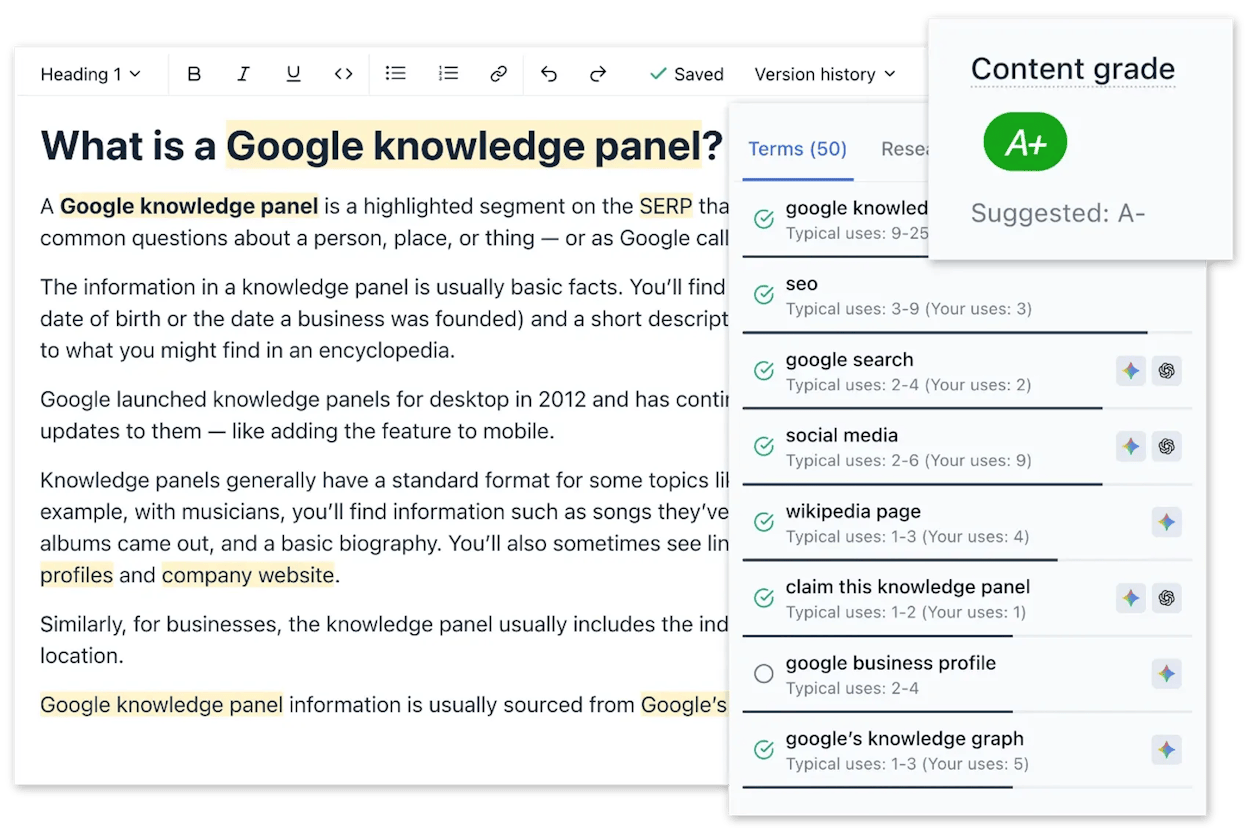
Clearscope is the high-end content optimization pick. The interface is simple, with a letter grade, a list of target terms, and benchmarks pulled from top-ranking pages. Enterprise content teams trust it because the recommendations are accurate and the workflow is uncluttered.
Standout features
-
Letter-grade content score and target term list.
-
Clean integration with Google Docs and WordPress.
-
Keyword discovery and content inventory tools.
-
High accuracy on term recommendations.
Why teams pick Clearscope over Writesonic. Where Writesonic produces drafts at volume, Clearscope helps a senior writer make every piece count. The term recommendations are closer to what an SEO-fluent editor would suggest than what a Writesonic template produces.
Where it falls short. No AI writer, no AI visibility tracking, no workflow layer. Pricing starts around $189/month, which is hard to justify for teams not already producing high-stakes content. Most Clearscope customers pair it with two other tools, the opposite of the consolidation pitch.
7. Profound: best Writesonic alternative for enterprise GEO tracking
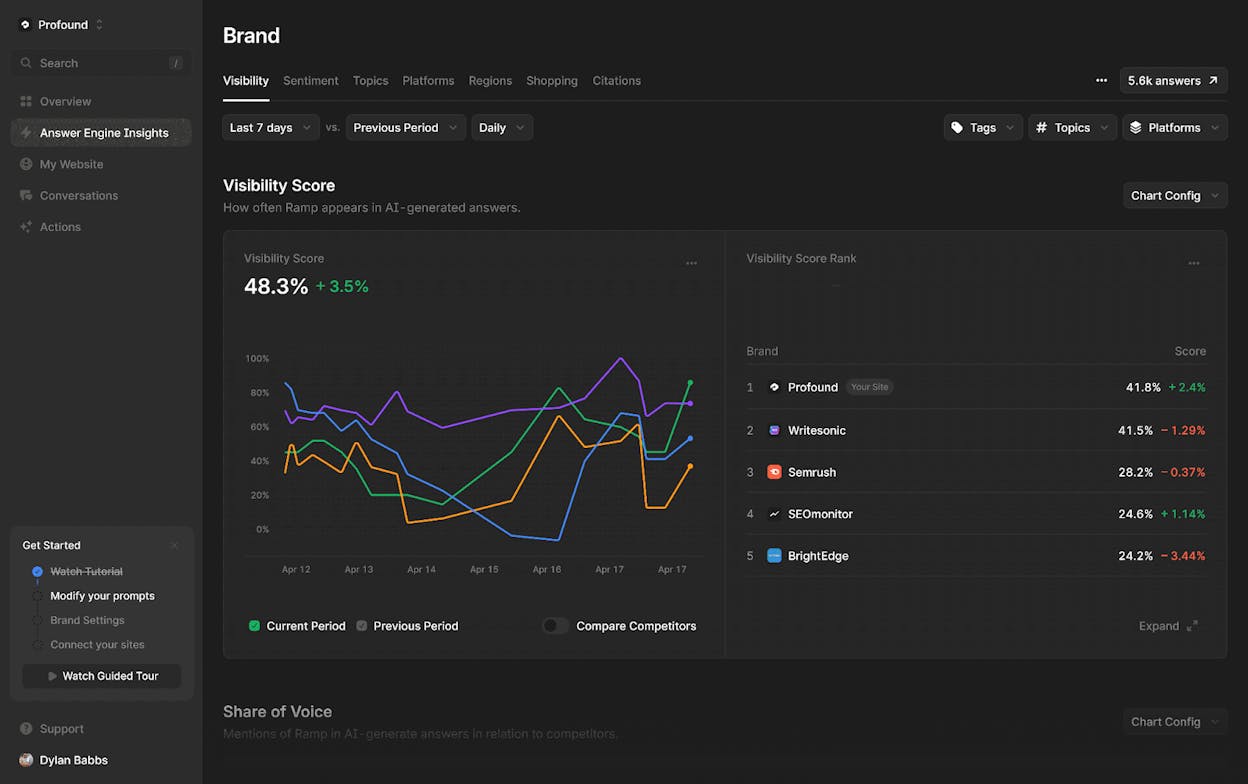
Profound is the enterprise GEO pick. The platform tracks visibility across ChatGPT, Perplexity, Gemini, Claude, and AI Overviews, layers on SOC-2 compliance, SSO, and audit logs, and feeds executive dashboards with visibility forecasts and crawler behavior insights.
Standout features
-
Cross-engine visibility tracking at large prompt volumes.
-
SOC-2 certified, SSO, audit logs, role-based access.
-
AI crawler behavior linked to visibility outcomes.
-
Executive dashboards, forecasting, and attribution analytics.
Why teams pick Profound over Writesonic. If your organization has compliance requirements and a data-mature analytics team, Profound treats AI visibility like an analytics product rather than an authoring add-on.
Where it falls short. Profound only measures. No content writer, no content optimizer, no workflow engine. Pricing puts it out of reach for mid-market teams.
→ Read the full Profound review
How to pick your Writesonic alternative
If you are leaving Writesonic for one of three reasons, here is the shortlist.
You want more content for less money. Frase or Scalenut. Both start under $50/month and include AI writing plus optimization in the base plan. Frase for briefs and small-team writing. Scalenut for higher volume with Cruise Mode.
You want better optimization. Surfer for the day-to-day editor experience. Clearscope when accuracy on every piece matters more than throughput. Neither replaces an AI search tracker.
You want AI visibility and content in one place, with automation underneath. Analyze AI. Writing, optimization, prompt tracking, citation analytics, AI traffic attribution, and 180+ workflow nodes on one data layer.
You want enterprise GEO tracking and nothing else. Profound.
The reason Analyze AI sits at the top of this list is consolidation. The six other tools each cover a slice. Writesonic covers two well and a third passably. Analyze AI covers all of it, and the Agent Builder lets you turn Monday board prep, the content refresh queue, the competitor diff, and inbound lead enrichment into background processes.

Ernest

Ibrahim


