



Summarize this blog post with:


In this article, you’ll see how five AI visibility platforms compare when you need to track, report, and improve a client’s presence across ChatGPT, Perplexity, Gemini, Copilot, and Claude. You’ll get honest pricing breakdowns (including the hidden costs most review articles skip), a feature-by-feature comparison table, and a clear picture of which platform fits which agency workflow. You’ll also learn where each tool stops and what you’ll need to fill the gap.
Table of Contents
Quick comparison: features, pricing, and what’s missing
Before diving into each platform, here’s a side-by-side view of what matters most for agency work.
|
Feature |
Analyze AI |
Scrunch |
AthenaHQ |
PromptWatch |
Surfer SEO |
|---|---|---|---|---|---|
|
Starting price |
Transparent tiers |
$250/mo (Core) |
$295/mo (credit-based) |
$99/mo |
$99/mo + $95/mo AI Tracker add-on |
|
AI engines tracked |
8+ (all plans) |
4 on Core, 9 on Enterprise |
8 (all plans, credit-gated) |
6+ |
ChatGPT only on base, more on higher tiers |
|
AI traffic attribution (GA4) |
Yes, all plans |
Yes (GA4 integration) |
Yes (GA4/Shopify) |
Yes |
No |
|
Citation analytics |
Yes |
Limited |
Enterprise only (ACE) |
Limited |
No |
|
Content writer |
Yes (research → outline → draft) |
No |
No |
Basic (article generation) |
Yes (Content Editor + AI Writer) |
|
Content optimizer |
Yes (audit + rewrite + scoring) |
Basic site audits (beta) |
Action Center recommendations |
No |
Yes (Content Score) |
|
Agent/workflow builder |
Yes (180+ nodes, 34 data recipes) |
No |
No |
No |
No |
|
Direct integrations |
GA4, GSC, HubSpot, Semrush, DataForSEO, Notion, WordPress, Slack |
GA4 |
GA4, Shopify, Webflow |
GA4 |
Google Docs, WordPress, Jasper |
|
Sentiment monitoring |
Yes |
Yes |
Yes |
Limited |
No |
|
Weekly email digests |
Yes |
No |
No |
No |
No |
|
Multi-client workspaces |
Yes |
Yes |
Yes (unlimited seats) |
Limited (plan-gated) |
Yes |
Now let’s break down each platform.
1. Analyze AI: the agentic platform for SEO, AEO, content, and GTM ops
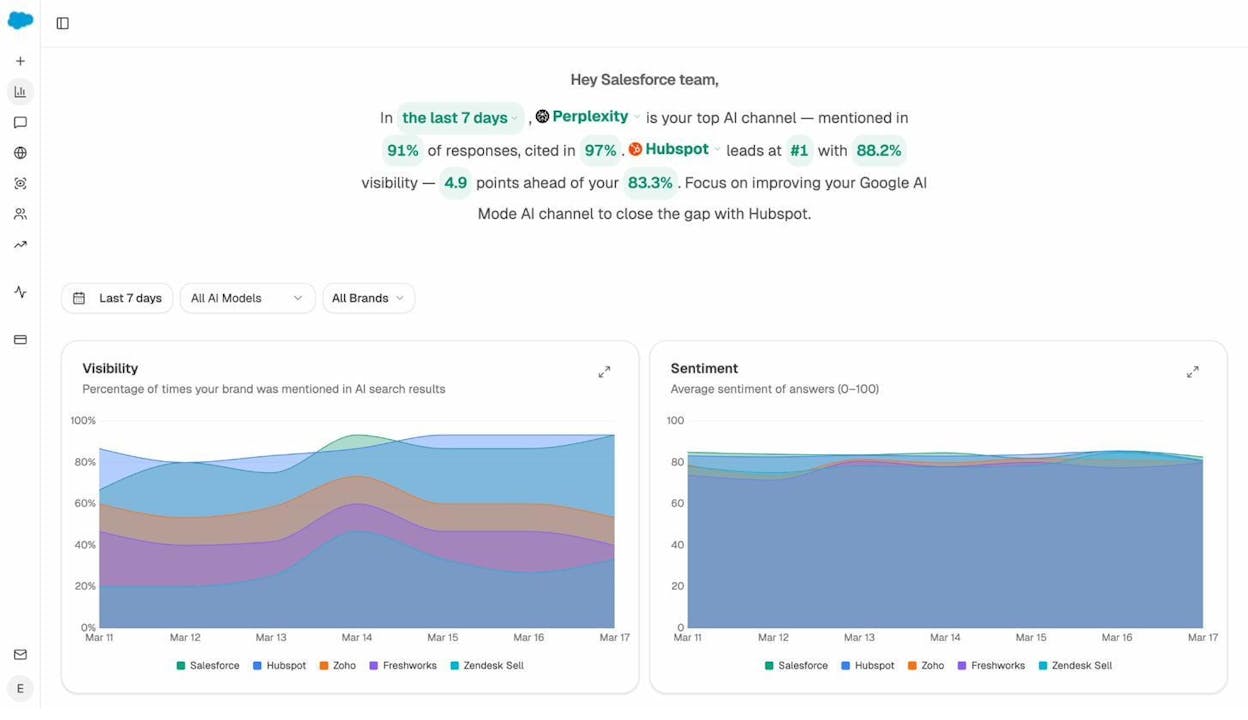
Analyze AI is the only platform on this list that treats AI search as a measurable growth channel, not just a monitoring dashboard. It connects four layers that other tools sell separately. Discovery (where you show up and where you don’t), monitoring (what’s changing and how fast), improvement (content that actually gets cited), and governance (protecting your brand narrative across models).
For agencies, the practical difference is simple. You can run a single platform across the entire client engagement. You don’t need Scrunch for monitoring, Surfer for content, and a spreadsheet to stitch the story together.
What makes it different for agencies
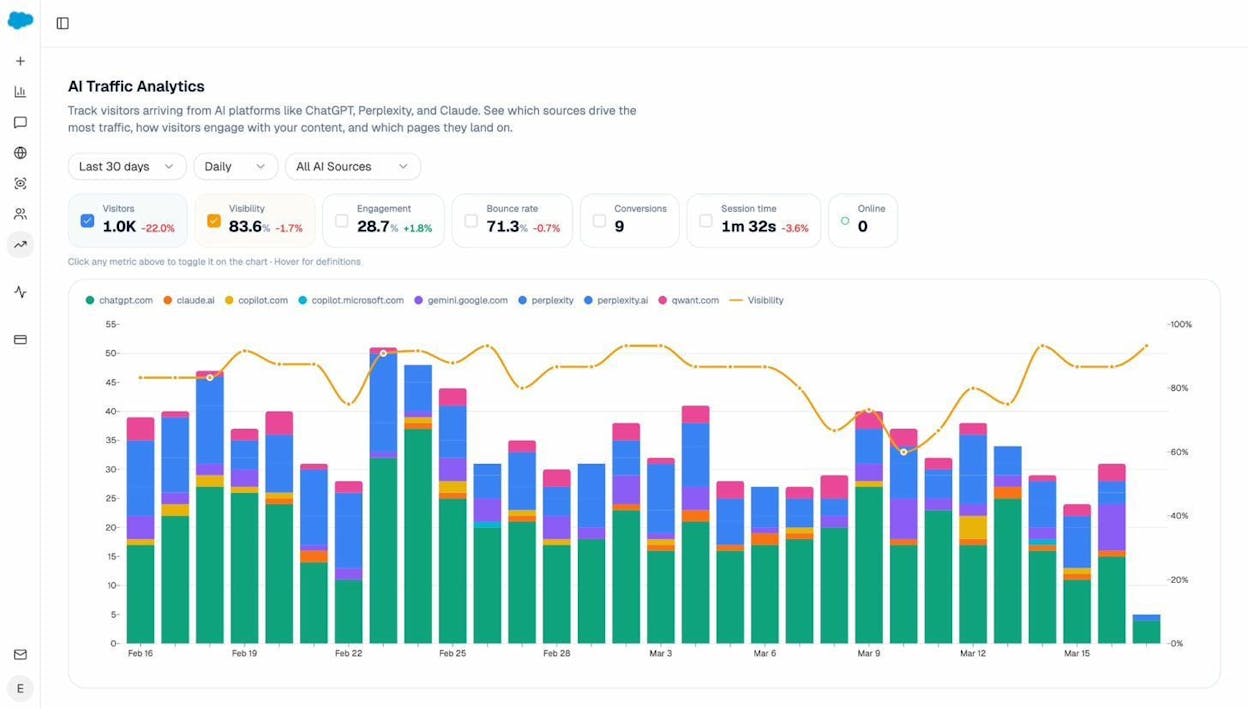
AI traffic attribution that closes the loop. Most tools tell you that a client got mentioned in ChatGPT. Analyze AI tells you which engine sent real visitors, which pages those visitors landed on, and which visits converted. When a CMO asks “is AI search actually driving pipeline?”, you answer with numbers, not screenshots.
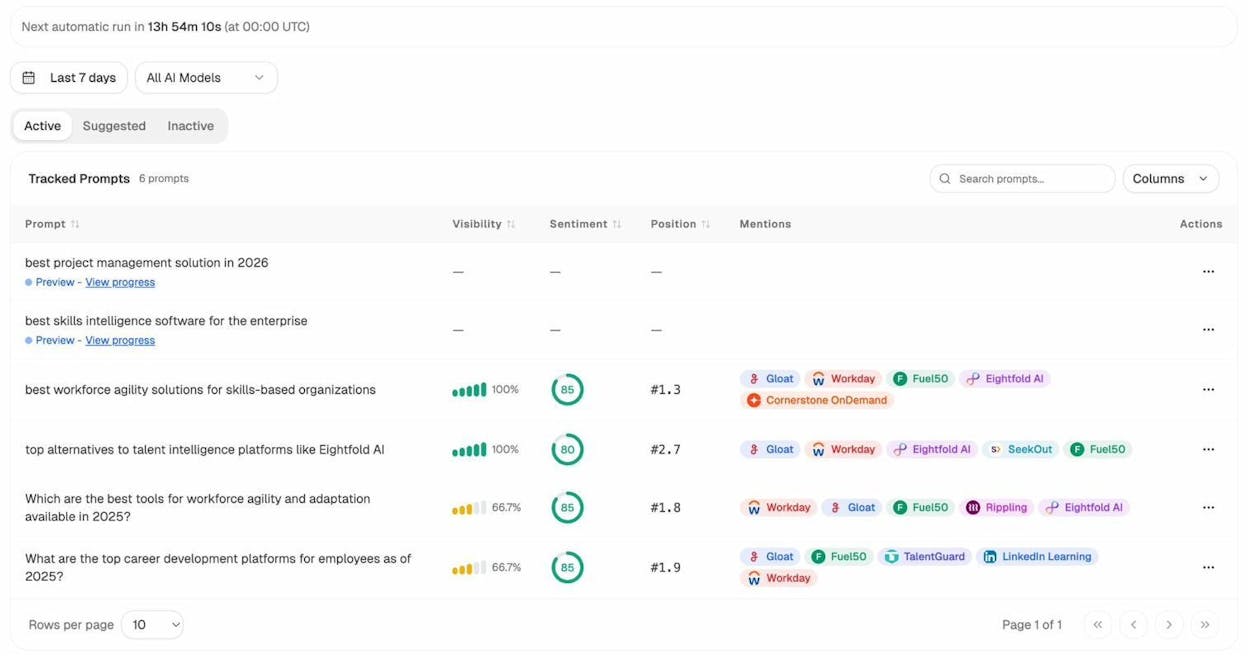
Prompt tracking that reveals demand. Instead of guessing which questions matter, you track the high-intent prompts your client’s buyers actually ask, across all major engines, daily. You see presence, position, and sentiment movement for each prompt. That turns “improve our AI visibility” from a vague goal into a ranked list of actions.
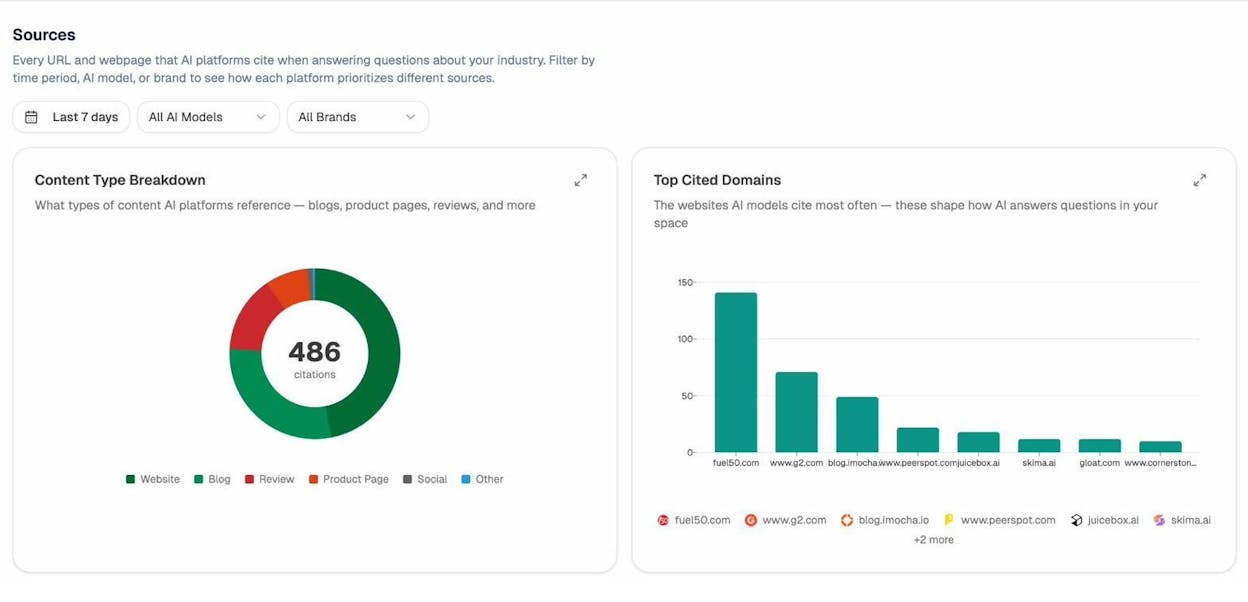
Citation analytics that drive PR strategy. The citation map shows which domains and URLs models trust in your client’s category. PR teams can now target outreach to the sources that actually influence AI answers, instead of chasing backlinks that only move Google rankings.
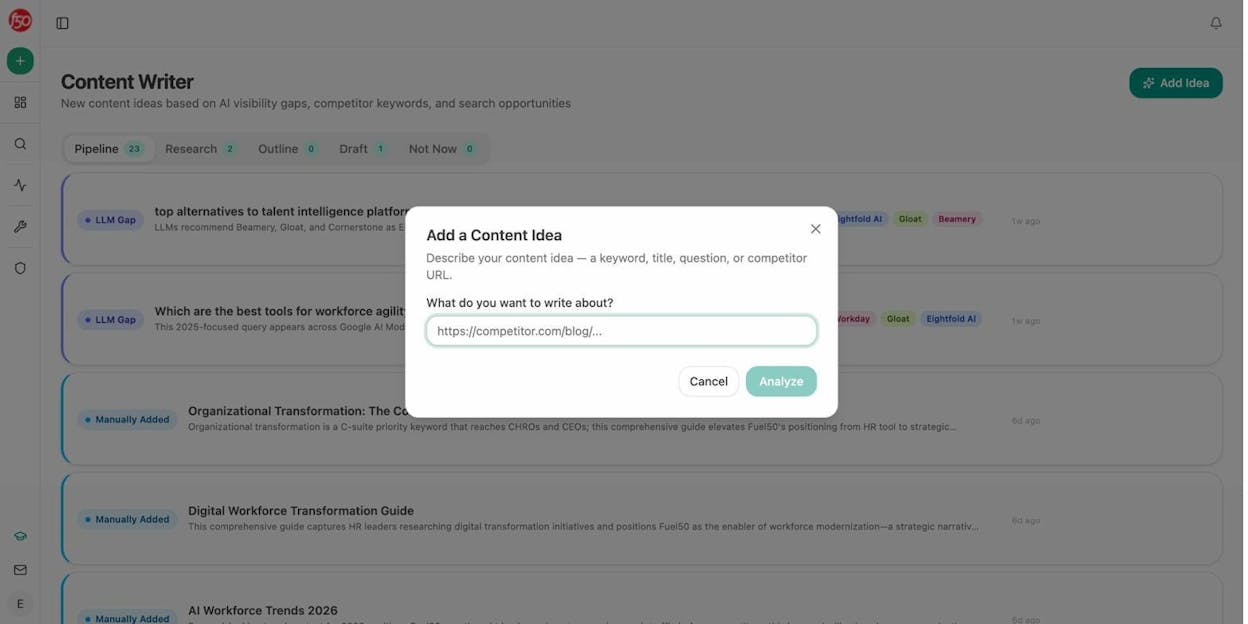
A content writer and optimizer built for both SEO and AI search. The AI Content Writer takes a topic from research through outline to draft, with AI visibility gaps and competitor analysis baked into every step. The Content Optimizer audits existing pages, flags argument gaps, and produces a rewritten version scored for both search engines and AI models.
The Agent Builder: why this matters more than any single feature
This is where Analyze AI pulls away from every other tool on this list.
The Agent Builder gives you 180+ nodes, 34 pre-built data recipes, 13 input primitives, and three trigger modes (manual, scheduled, webhook). It connects directly to GA4, Google Search Console, DataForSEO, Semrush, HubSpot, Notion, WordPress, Slack, and every major LLM.
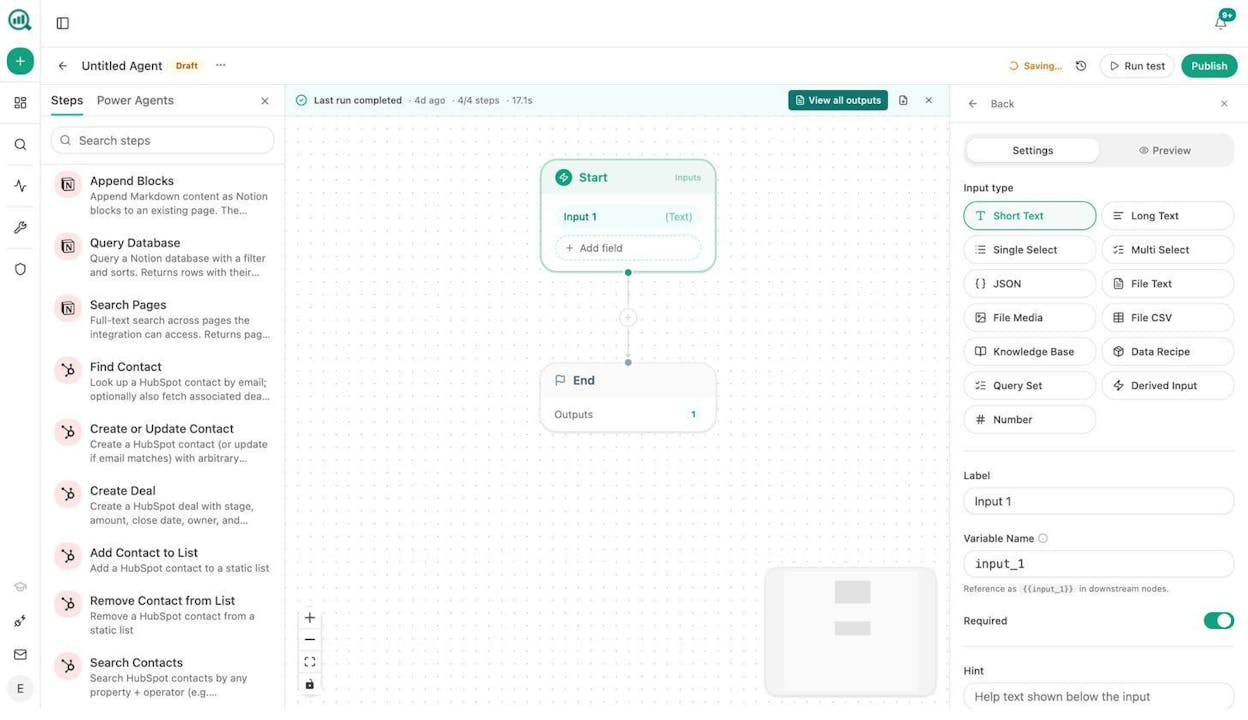
That means you can build workflows like:
-
Monday client briefing pack: a scheduled agent pulls last week’s AI visibility data, GSC top pages, new backlinks, and competitor movement, then compiles a branded DOCX report and emails it to your client’s account team. Every client, every Monday, zero analyst hours.
-
Crisis early-warning: a scheduled agent checks brand mentions and news every 15 minutes, filters for negative sentiment above a threshold, and Slacks your team with the source URLs and a draft response before the client even knows.
-
Brief-to-publish pipeline: a webhook fires when a brief moves to “approved” in Notion. The agent generates research, builds an outline, writes a full draft with brand voice injected from the Knowledge Base, scores it for AI visibility, and publishes to WordPress if it passes the quality gate.
-
Pitch-deck generator: drop a prospect’s domain into a manual agent. It pulls a DataForSEO domain overview, Semrush backlinks, a Lighthouse audit, and an AI visibility scan, then assembles a pitch deck. RFP turnaround goes from three days to 30 minutes.
No other AI visibility platform has anything close to this. Scrunch, AthenaHQ, and PromptWatch are monitoring-only. Surfer does content optimization but has no workflow engine. Analyze AI lets you build the operations layer of your agency on a single substrate.
For agencies managing 10+ clients, the Agent Builder alone replaces the time and cost of a dedicated analyst. It doesn’t just automate reporting. It automates research, content production, competitor monitoring, lead enrichment, and crisis response.
What to keep in mind
Analyze AI has the widest feature set on this list, which means there’s more to learn upfront. If you only need basic mention tracking for one or two clients, a simpler tool might be enough. But if you’re building AI visibility as a service line, the depth pays for itself fast.
2. Scrunch: best for brand-level benchmarking
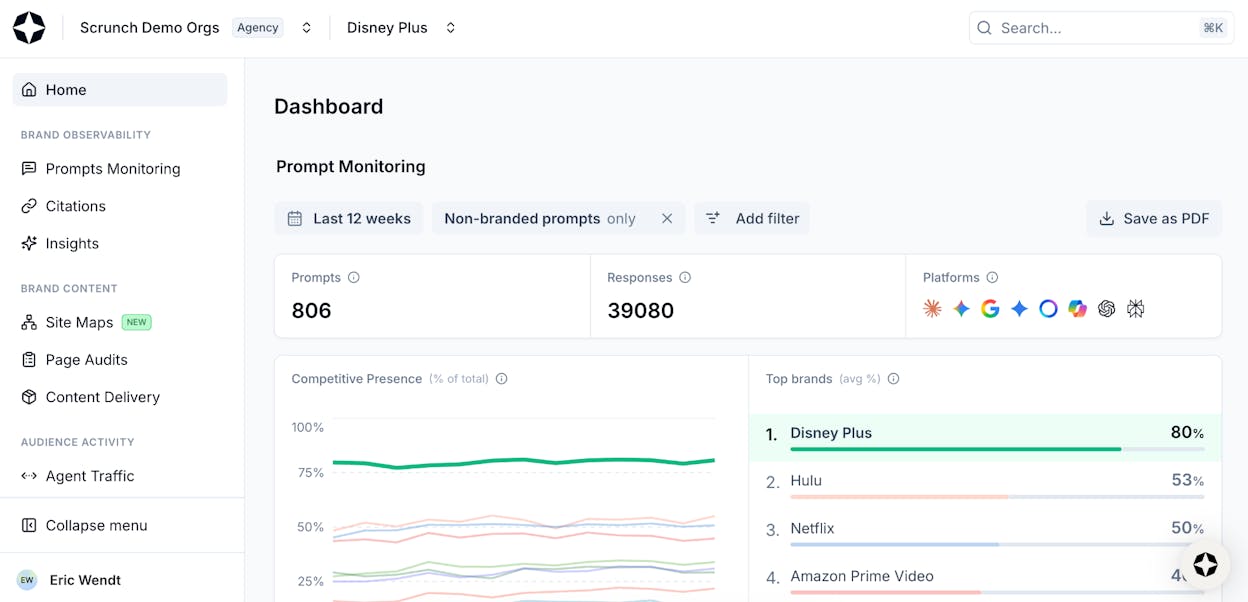
Scrunch tracks how AI assistants talk about your clients. It collects actual AI responses from ChatGPT, Claude, Gemini, and others, then organizes them by topic, source, and accuracy. You can compare your client’s AI share of voice against competitors and catch misrepresentation before it spreads.
Where Scrunch works well for agencies:
-
Multi-client workspaces with clean data separation and granular permissions.
-
Historical snapshots for before-and-after reporting. You can show a client exactly how their AI portrayal changed after a PR campaign or content refresh.
-
Misrepresentation alerts that flag when AI models describe a brand incorrectly or cite outdated content.
Where Scrunch falls short:
-
The $250/mo Core plan only tracks four AI engines (ChatGPT, Perplexity, Google AI Overviews, Copilot). Claude, Gemini, Meta AI, and Grok require Enterprise pricing, which typically starts above $1,000/mo.
-
Prompt credits deplete fast. Each engine you track counts against your limit, so 125 prompts across four engines means roughly 31 unique queries.
-
No content creation or optimization tools. Scrunch tells you what’s broken but doesn’t help you fix it. You need a separate tool (or Analyze AI) to close the loop.
-
Site audits and “Insights” features are still in beta. The actionable recommendations are surface-level for now.
Scrunch is a strong monitoring tool for agencies that already have a content and SEO stack in place. But at $250+/mo per brand with limited engine coverage on the base plan, you’re paying a premium for visibility data alone. For agencies that need monitoring plus action, Analyze AI covers both at a more predictable cost.
3. AthenaHQ: best for GEO diagnostics
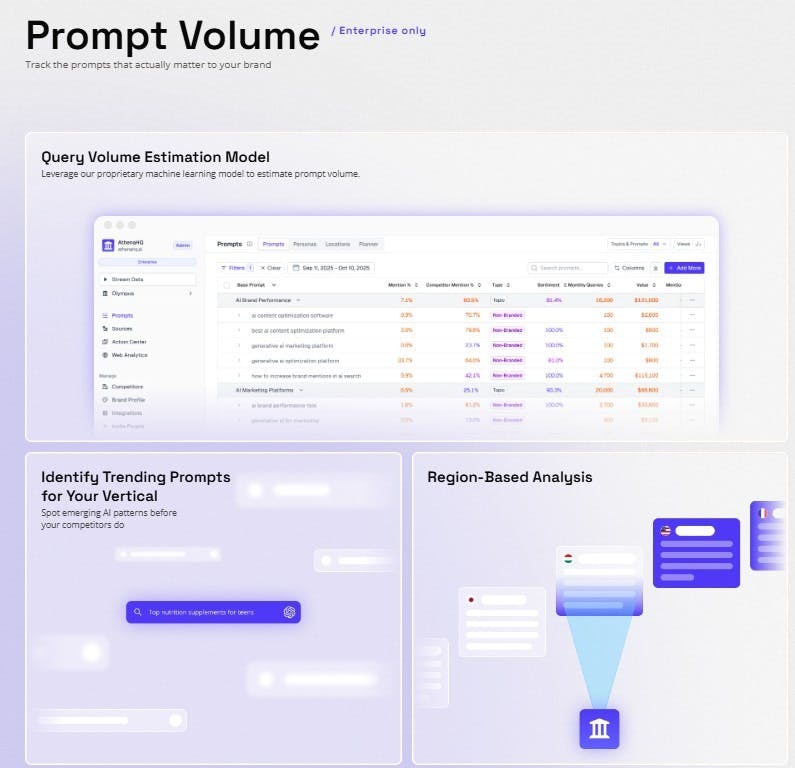
AthenaHQ was founded by former Google Search and DeepMind engineers, and it shows. The platform goes deeper on structured data diagnostics and on-page GEO analysis than most competitors. Its Action Center generates specific optimization tasks (not just scores), which makes it useful for agencies that want to move from “here’s the problem” to “here’s what to fix.”
Where AthenaHQ works well for agencies:
-
8 AI engines tracked on all plans, including Grok and Google AI Mode.
-
Action Center creates assignable, trackable optimization workflows.
-
Dedicated GEO specialist on premium plans for white-glove onboarding.
-
SOC 2 Type II certification, which clears enterprise procurement requirements.
Where AthenaHQ falls short:
-
Credit-based pricing makes your monthly bill unpredictable. The $295/mo plan includes 3,600 credits, and each AI response costs one credit. If you track 100 prompts across 8 engines, that’s 800 credits per batch. With biweekly monitoring, you burn through 1,600 credits on prompts alone before adding competitor monitoring or Ask Athena queries. Extra credits cost $100/1,250.
-
The most distinctive feature, the ACE Citation Engine, is Enterprise-only. So are API access, multi-region tracking, and BI integrations.
-
The Self-Serve plan is limited to a single country, which pushes most multi-market agencies into Enterprise pricing immediately.
-
No content writer, no workflow builder, no way to act on insights inside the platform beyond the Action Center’s recommendations.
AthenaHQ is a solid diagnostic tool for agencies with the budget to go Enterprise. But the credit model makes it hard to predict costs for agencies managing multiple clients, and the lack of content or automation tools means you’ll need additional platforms to execute on the insights AthenaHQ surfaces.
4. PromptWatch: best for crawler-level visibility
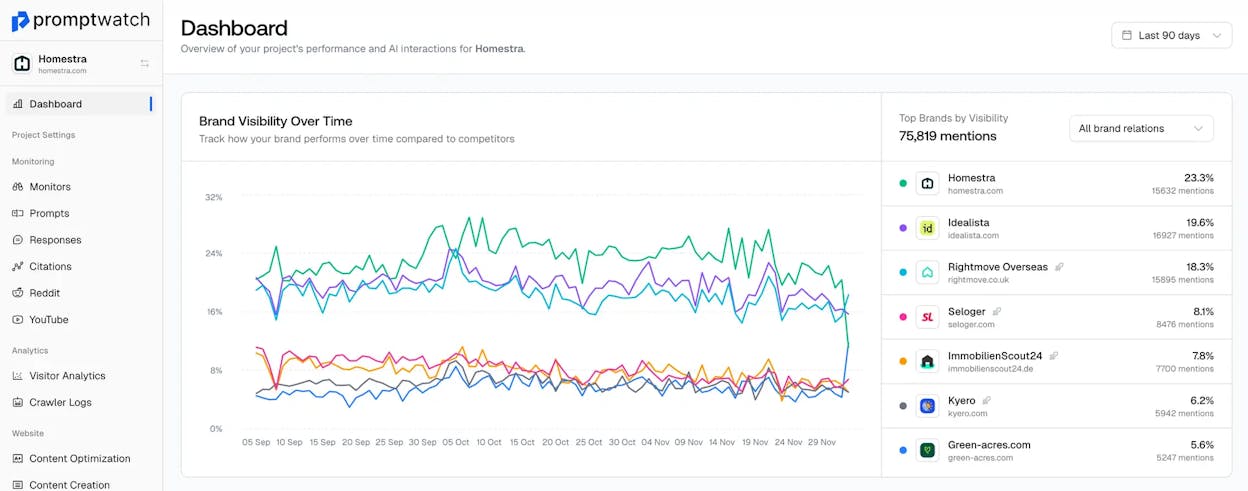
PromptWatch stands out for one thing no other tool on this list does as well. Crawler analytics. You can see exactly when and how AI bots like GPTBot and ClaudeBot access your client’s content, which pages they favor, and where crawl frequency drops off. If a client asks “why doesn’t ChatGPT ever mention us?”, you can check whether the bot has even crawled their site.
Where PromptWatch works well for agencies:
-
Crawler logs that show AI bot behavior at the page level. This is useful for diagnosing structural barriers to AI visibility that monitoring tools miss.
-
Prompt-to-traffic mapping that connects AI mentions to actual referral visits.
-
Replayable prompt testing that lets you vary question phrasing and see how outcomes change across models.
-
Pricing starts at $99/mo, which is more accessible than Scrunch or AthenaHQ for agencies testing the market.
Where PromptWatch falls short:
-
It stays firmly in the monitoring lane. No content creation, no optimization, no structured data fixes. Once you find the problem, you need other tools to solve it.
-
Scaling gets expensive. The Business plan ($579/mo) is needed for agencies managing more than two client websites.
-
Reporting and white-labeling options are less mature than Scrunch’s agency dashboards.
-
Some users report accuracy issues and a steeper learning curve than expected.
PromptWatch is the right pick for agencies that need crawl-level intelligence as part of a larger stack. Pair it with Analyze AI’s content optimizer and agent builder, and you have a workflow where PromptWatch diagnoses crawl issues while Analyze AI handles everything from tracking to content to automated client reporting.
5. Surfer SEO: best for on-page content optimization
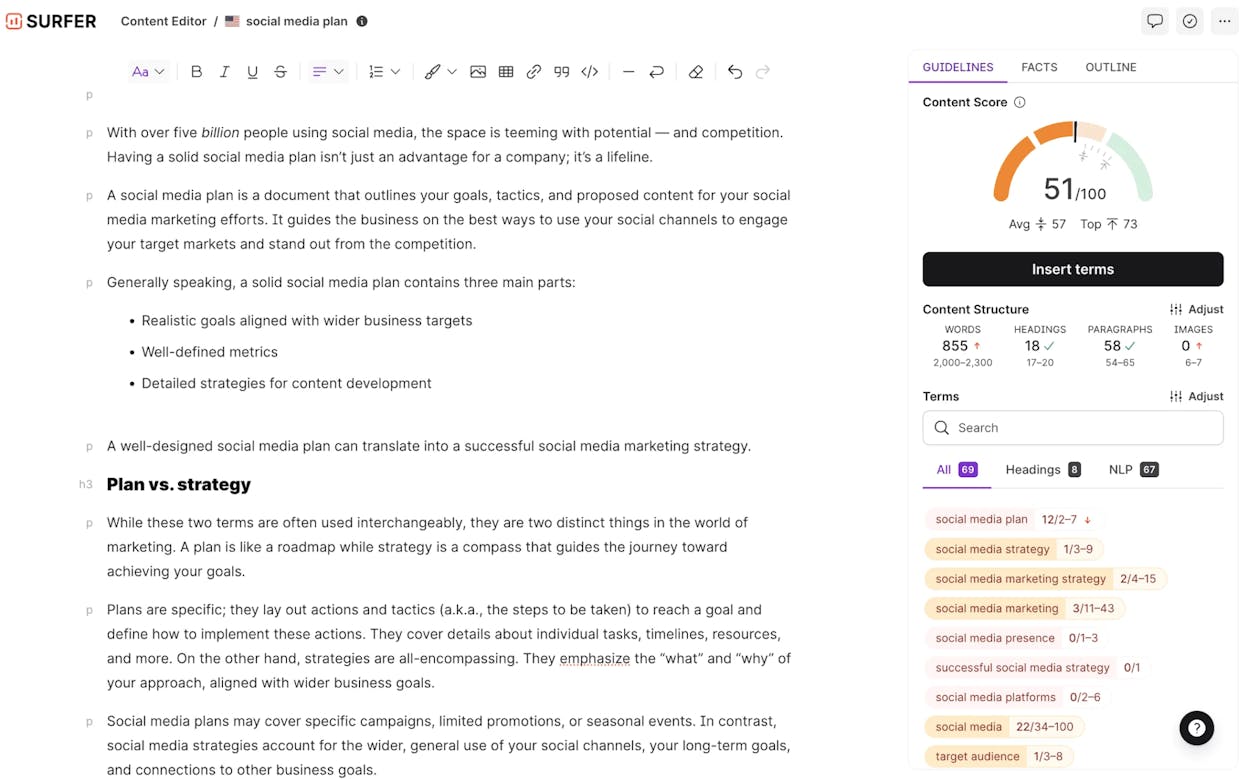
Surfer has been a content optimization staple for years, and it recently added AI visibility features. Its Content Editor analyzes top-ranking pages for a keyword and gives you specific recommendations on keyword density, structure, headings, and word count. For agencies that already produce a lot of content for clients, Surfer fits into the writing workflow with Google Docs and WordPress integrations.
Where Surfer works well for agencies:
-
The Content Score is a well-established optimization metric that clients and writers understand.
-
Topical Map helps plan content clusters to build topical authority.
-
Integrations with Google Docs, WordPress, and Jasper keep writers in their existing workflows.
-
Multi-project management and team-sharing features designed for agency scale.
Where Surfer falls short:
-
AI visibility tracking is a paid add-on ($95/mo for 25 prompts), not a core feature. At that price, you’re paying $194+/mo just for basic SEO optimization plus limited AI tracking.
-
No citation analytics, no sentiment monitoring, no competitive AI benchmarking. Surfer doesn’t tell you how AI models represent your client’s brand.
-
No AI traffic attribution. You can optimize content for AI engines, but you can’t prove whether those optimizations drove real visits or conversions.
-
The AI Writer produces content that scores well in Surfer’s own editor but typically needs heavy editing before publication.
Surfer is the strongest pure content optimization tool on this list. But it is not an AI visibility platform. It makes content better. It does not tell you whether AI models noticed, cited, or recommended that content. For the full picture, you need a monitoring and attribution layer on top.
How to pick the right platform for your agency
If your agency needs to prove AI visibility impact with attribution data and also build automated workflows that replace analyst hours, Analyze AI covers the most ground in a single platform. The Agent Builder alone justifies the investment for agencies managing 5+ clients.
If your agency only needs passive brand monitoring and already has a content/SEO stack, Scrunch or AthenaHQ can work, though you’ll pay more per brand and still need separate tools for execution.
If you need crawler diagnostics to figure out why AI bots ignore certain pages, PromptWatch fills a niche that other tools don’t cover as deeply.
If you need content optimization for traditional SEO and want to add a light AI tracking layer, Surfer is the most familiar option for teams already writing at volume.
The market is moving fast. AI search traffic is growing for brands that invest in visibility, and agencies that can measure, improve, and prove that growth are the ones winning new business. The question is not whether to track AI visibility. The question is whether your tool stack lets you act on what you find.
Start tracking your clients’ AI visibility with Analyze AI →

Ernest

Ibrahim


