



Summarize this blog post with:


Listicle outreach is one of the few link building tactics that compounds. A single placement on a high-authority “best [X] tools” article keeps sending you backlinks, branded searches, and now citations from ChatGPT and Perplexity for years. Hunter’s marketing team reported earning 96 backlinks from 54 domains, 33 new mentions, and 17 upgraded positions in three months using this approach, and other SaaS teams have hit similar numbers when the targeting and pitch are right.
The catch is that the work has gotten harder. There are more listicles than ever, editors are slower to update, and there is a new layer to think about. AI search engines now lean heavily on listicles when answering “best X” questions, which means a listicle placement is no longer just a backlink. It is also a vote that influences which brands ChatGPT, Perplexity, Gemini, and Google’s AI Mode recommend.
In this article, you’ll learn how to run a listicle outreach campaign that earns dozens of backlinks, mentions, and AI search citations in three months or less. You’ll see how to find the right listicles, qualify them, find the right person to pitch, write emails people actually reply to, negotiate without burning the relationship, and track what each placement does for you long after the email is sent.
Table of Contents
Why listicle outreach still works in 2026
Listicles answer comparison and shortlist queries. “Best CRM for startups.” “Top alternatives to Notion.” “Free SEO tools.” These queries have always converted well because the searcher is in late-stage research mode. They have moved past learning what a category is and are now choosing between vendors.
What changed is where those queries land. They used to land on a Google SERP with ten blue links. Now a meaningful share of them land in an AI answer that synthesizes a few listicles into a single paragraph and cites three to five sources.
This does not kill SEO. Our manifesto explains the position in full, but the short version is that AI search is an additional organic channel, not a replacement for the old one. Both pull from the same content surface, and a strong listicle placement now does double duty. It is still a backlink for traditional rankings, and it is also a vote in the data AI engines pull from when generating answers.
So the goal of a 2026 listicle campaign is not just “get on more lists.” It is “get on the lists that matter for both rankings and AI citations.”
Step 1. Find listicles worth pitching
The first step is to build a target list of listicles where your product could plausibly fit. There are three types worth pursuing.
|
Listicle type |
Example query |
When to prioritize |
|---|---|---|
|
Best [category] |
“best email finder” |
Always. These rank for high-intent queries. |
|
Best alternatives to [competitor] |
“best Hunter alternatives” |
When you have a clear differentiator vs a known competitor |
|
Guides that include lists |
“how to find email addresses” |
Lower priority unless the guide ranks well |
To find these, brainstorm 10 to 20 seed terms that describe what you do. For each one, search variations using common listicle modifiers. The ones that show up in almost every listicle title are best, top, free, review, tools, list, and alternatives.
So for a product like an email finder, your search list looks like this:
-
best email finder
-
top email finder tools
-
free email finder
-
best email finder for sales
-
best Hunter alternatives
-
best Apollo alternatives
Run each query through Google. Use a SERP scraper or any SERP checker to export the top ten results per query into a spreadsheet. Repeat for each variation. By the end of this pass, you should have a single CSV with every listicle that ranks on page one for any of your seed terms.
![[Screenshot: Google SERP for “best email finder” showing typical listicle pages]](https://www.datocms-assets.com/164164/1777805004-blobid1.png?auto=format,compress&w=1248&fit=max)
If you want a wider net, pull search volume and ranking pages straight from a keyword research tool and export the SERPs in bulk. This shortcut alone can replace half a day of manual SERP scraping.
![[Screenshot: Keyword research tool with bulk SERP export option]](https://www.datocms-assets.com/164164/1777805014-blobid2.png?auto=format,compress&w=1248&fit=max)
Find the listicles that AI search engines cite
This is the part most outreach guides skip. A listicle that ranks #4 on Google but gets cited every time someone asks ChatGPT “what is the best email finder?” is worth more than one that ranks #2 but never gets cited. The AI search citation is a separate signal, and you need a separate process to find it.
Open Analyze AI and go to the Citation Analytics view. The Sources tab shows every URL that AI platforms have referenced when answering queries about your category, broken down by which brands the source mentions and how often it gets used.
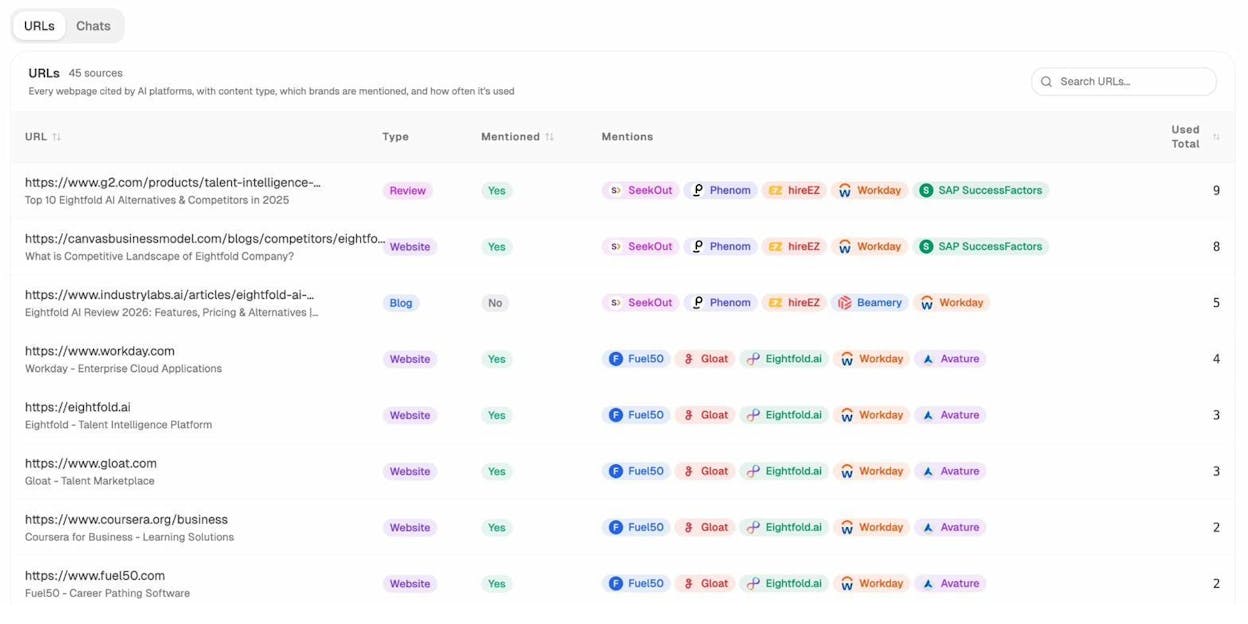
Sort the URL list by “Used Total” in descending order. The top of that list is your AI search target list. These are the listicles that ChatGPT, Perplexity, Gemini, and Copilot actively pull from when answering category questions. Add them straight into your prospect spreadsheet.
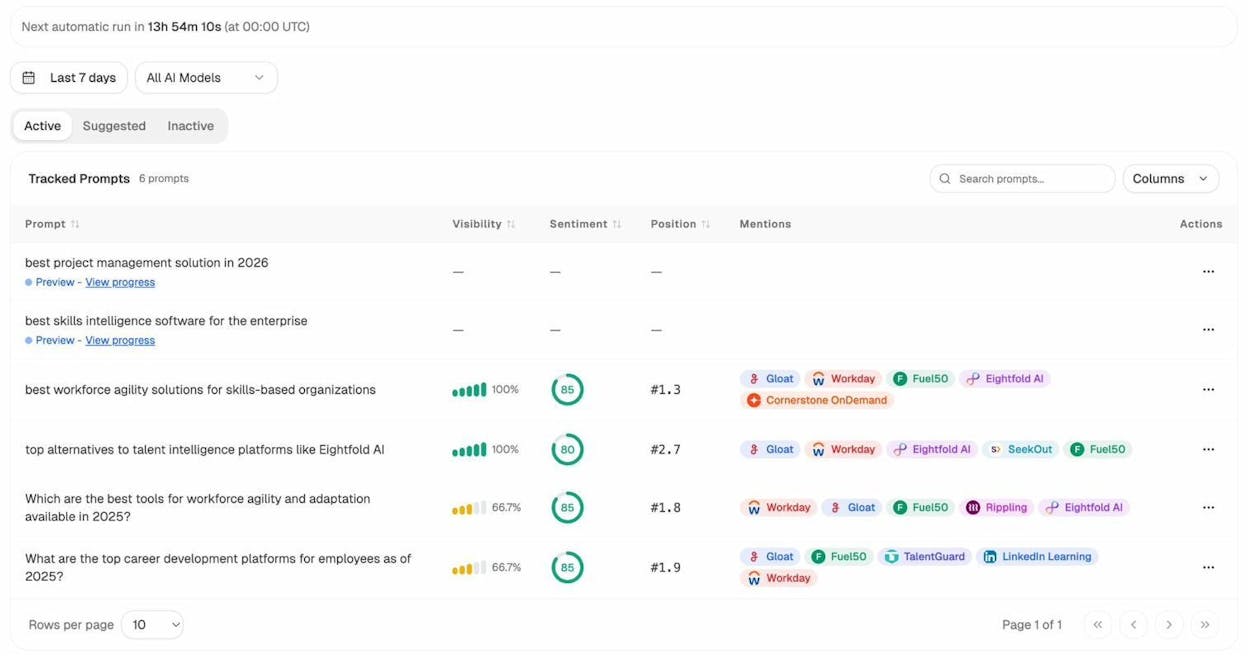
You can also flip to the Chats tab to see the actual prompts that triggered citations, which brands were mentioned, and which sources were cited.
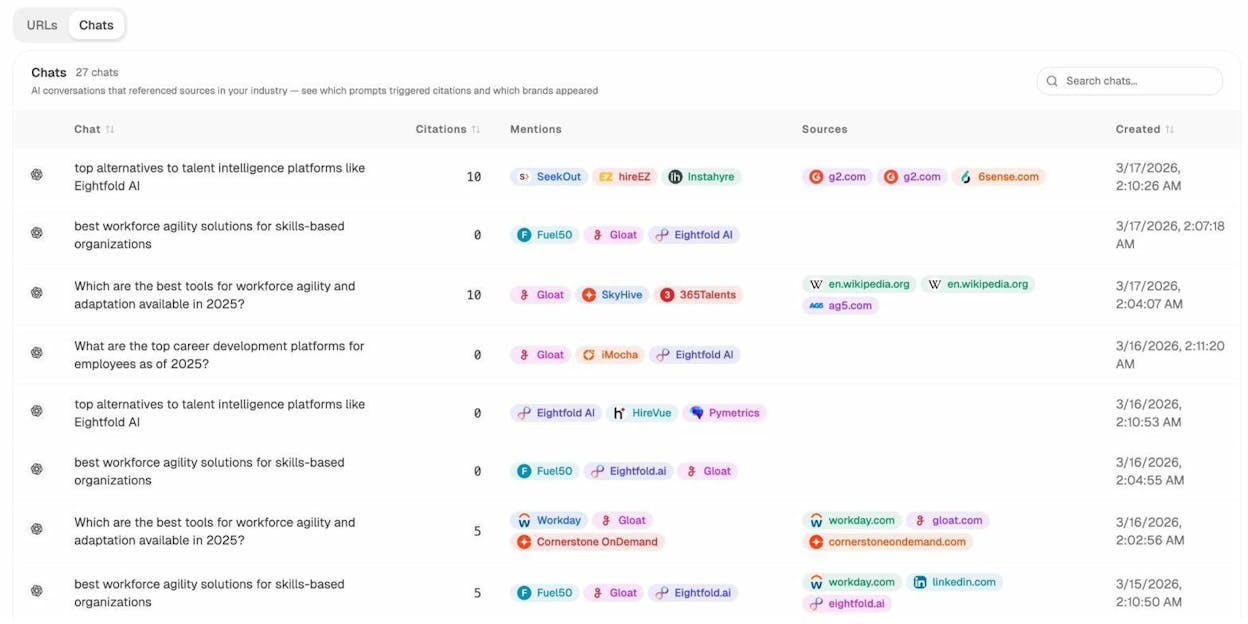
This gives you something a Google SERP cannot. The actual question someone asked. If you see “top alternatives to talent intelligence platforms like Eightfold AI” cited 10 sources in the last week, those 10 sources are now on your prospect list.
For prompts you have not thought to track yet, the Prompt Discovery feature suggests new ones based on your category and competitors.
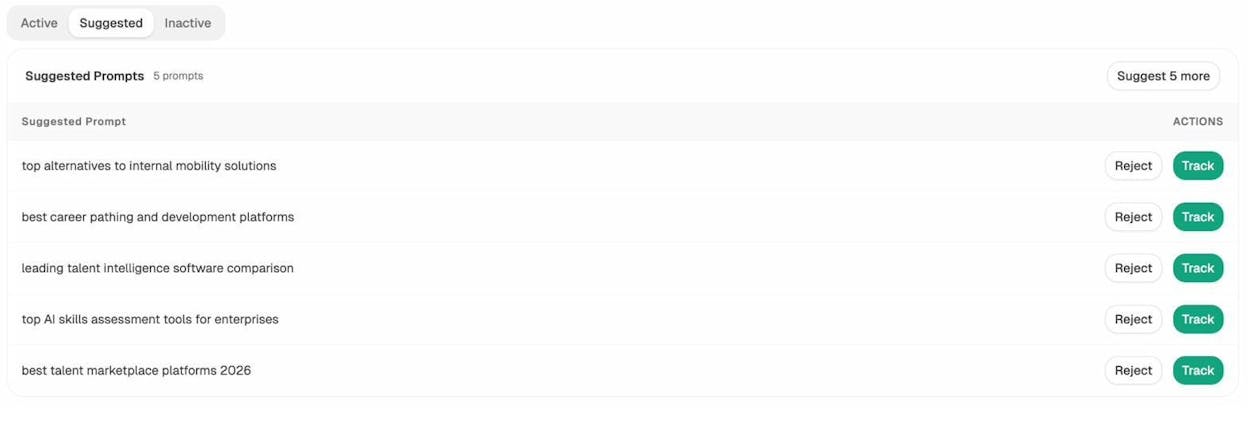
By the end of step 1, you should have a single spreadsheet with two clear segments. Listicles that rank well on Google for your seed terms, and listicles that get cited by AI engines for category prompts. Both matter.
Step 2. Qualify and segment your prospect list
You will likely end up with hundreds of URLs. Most of them are not worth pitching. The job in step 2 is to cut the list down to the listicles where a placement would actually move the needle.
Start with three filters.
Domain authority. Drop any site below DR 30. The link equity is rarely worth the time, and most of those sites do not get cited by AI search engines either. A website authority checker makes this a quick filter.
Listicle relevance. Open the page. If your product genuinely belongs there, keep it. If it is a stretch, drop it. Editors can spot a forced fit, and a forced pitch burns the relationship for any future ask.
Traffic and freshness. A listicle that was last updated in 2021 and gets 40 visits a month is rarely worth the email. Use a website traffic checker to estimate traffic, and check the publish or update date in the URL or byline.
Once you have cleaned the list, segment what is left into three buckets. The bucket determines what you pitch.
|
Segment |
Status |
Pitch angle |
|---|---|---|
|
1. Not mentioned |
Your product is not on the list |
Make the case for inclusion |
|
2. Mentioned, no link |
You are listed but unlinked |
Ask for the link |
|
3. Mentioned, ranked low |
You are #8 of 10 |
Ask for a position bump with proof |
A useful shortcut here is search operators. Adding "product name" to a search finds listicles that already mention you. Adding -"product name" finds ones that do not. Run both versions against your seed queries and your segmentation is half done before you open the spreadsheet.
For the AI search side, the Competitor Intelligence view in Analyze AI surfaces brands that get mentioned in AI answers about your category but that you do not yet track. Each one is a potential signal that there is a listicle, or a set of listicles, ranking for prompts you are absent from.
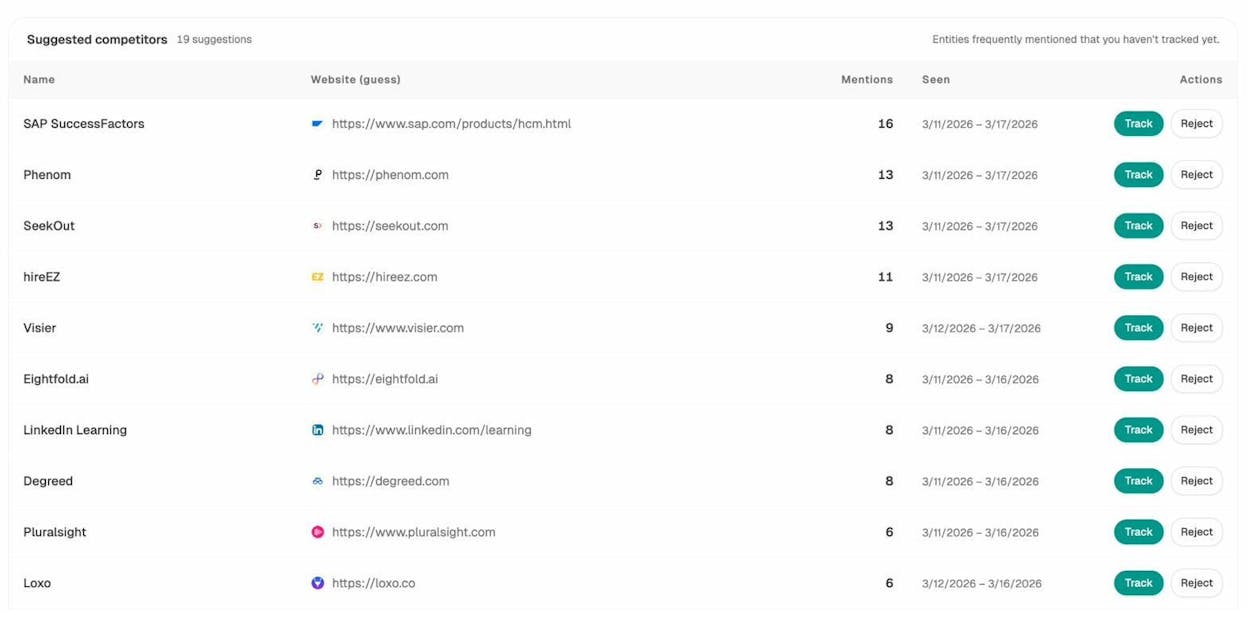
When a brand keeps appearing in AI answers and you do not, the underlying source is almost always a listicle. Click into the prompt, find the cited URL, and add it to your prospect list. This is a faster way to find AI-cited listicles than browsing Google manually.
Step 3. Find the right person to pitch
Most listicle outreach fails not because the email is bad but because it goes to the wrong inbox. A generic info@ address gets ignored. A pitch sent to a sales rep gets forwarded and lost. The pitch only works if it lands with the person who can actually edit the article.
In our experience, the highest reply rates come from these roles.
-
The author of the listicle. Their name is at the top of the post. They have the strongest motivation to keep the article fresh.
-
The blog editor or head of content. They own the editorial calendar and can push an update.
-
The content marketing manager. Especially at smaller companies where there is no dedicated editor.
Skip the founder, the CEO, and the head of sales for this kind of ask. They will not be the person making the change.
To find names, open the listicle, copy the author byline, and search for them on LinkedIn. If there is no byline, look up “[company name] content editor” or “[company name] blog editor” on LinkedIn directly.
![[Screenshot: LinkedIn search for “Ahrefs head of content”]](https://www.datocms-assets.com/164164/1777805035-blobid7.png?auto=format,compress&w=1248&fit=max)
Once you have the name, find their email. Tools like Hunter, Apollo, and Findymail let you bulk-lookup emails from a CSV of names and domains. The exact tool matters less than the workflow. Feed in name plus domain, get back verified emails, drop them in your sheet.
![[Screenshot: Bulk email finder tool with name and domain columns producing verified emails]](https://www.datocms-assets.com/164164/1777805039-blobid8.png?auto=format,compress&w=1248&fit=max)
If you only have a URL and no author name, look for an “author finder” feature in your email tool. Most modern ones can pull the author from a page and find their email in a single step.
By the end of step 3, every row in your spreadsheet should have a verified email address tied to a real person who can edit the article.
Step 4. Write a pitch that makes people want to say yes
The quickest way to get ignored is to ask for a mention without offering anything in return. A blog editor gets dozens of these emails a week. They almost all sound the same.
The quickest way to get a yes is to make the editor’s job easier or more profitable.
Here are the four levers that consistently work.
-
Make their article better. Offer to update outdated stats, add a missing tool, or rewrite a section that has slipped in rankings. Show that you have read the piece.
-
Give them something tangible. A free account, an extended trial, a generous quota. Anything that makes the placement materially valuable to them or their audience.
-
Bring traffic. Offer to share the updated article with your audience, link to it from your blog, or feature their company in your next roundup.
-
Bring revenue. If you have an affiliate program, tell them. Recurring revenue from a single mention is one of the most effective levers in this playbook.
Pick two of these per pitch. One is rarely enough. Three or more starts to feel transactional.
A pitch that uses these levers looks something like this.
Subject: Quick suggestion for your “best email finder” piece
Hi [Name],
I have been reading your guide on email finder tools and noticed you have not included [Product]. We are in the same space as the tools you mentioned and would be a strong fit for your “free plan” section since we offer 50 free searches per month, which is more generous than most.
If you would consider adding us, I would be happy to:
-
Send you a paid account so you can test it properly
-
Enroll you in our affiliate program (recurring 30% on referrals)
-
Share the updated piece with our newsletter (~12k subscribers)
I can also draft the entry for you to save you time. Would that be helpful?
Thanks, [Your name]
What this email does well:
-
It is specific. It names the section, the gap, and the angle.
-
It offers three concrete things, not a vague “let me know how I can help.”
-
It removes the editor’s biggest objection (time) by offering to draft the entry.
-
It does not oversell the product. The pitch is about value to them, not features.
![[Screenshot: Example outreach email with the four levers annotated]](https://www.datocms-assets.com/164164/1777805045-blobid9.png?auto=format,compress&w=1248&fit=max)
For the segment of prospects where you are already mentioned but without a link, the pitch is shorter and more direct.
Hi [Name],
Thanks for including [Product] in your “[listicle name]” piece. Quick ask. Would you consider linking the mention to our homepage? It would help us a lot and means readers can click through directly to learn more. Happy to return the favor with a link from our resources page if useful.
Thanks, [Your name]
For the segment where you are mentioned but ranked below competitors, lead with proof. Usage stats, customer logos, a recent product update. Then ask for a position bump.
A note on follow-ups. One follow-up roughly five business days after the first email lifts reply rates significantly. A second follow-up after another week catches a few more. A third starts to look desperate. Cap it at two.
Step 5. Negotiate without losing the deal
Most editors do not reply with a flat yes. They reply with a counter. Sometimes a price, sometimes a request for a guest post, sometimes a swap. How you respond decides whether the placement happens.
Three rules.
Do not pay for placements. Paying for inclusion is risky for three reasons. Sites that take payment usually do not care about quality, which means the listicle is weaker and the link will be devalued by Google over time. Google explicitly warns that buying links violates their guidelines. And paid placements are usually rented. Stop paying and the placement disappears.
Trade value, not money. If the editor wants something in return, offer a backlink from a relevant page on your site, a co-marketing collaboration, a guest post they can publish, or a feature in your own roundup. Most editorial relationships are built on this kind of mutual value.
Be fast. Reply the same day if you can. Editors update articles in batches, and being fast is the difference between making the next batch and waiting six months.
The most common failure mode here is rigidity. You sent a careful pitch, the editor replied with a slightly different ask, and the temptation is to insist on the original terms. Do not. The original terms are a starting point. The placement is the goal.
Step 6. Track placements and compound them
This is the step that turns a one-off campaign into a long-term channel. Most teams stop after the email gets a yes. The ones that compound treat every placement as a tracked asset.
Three things to track per placement.
Backlink and ranking impact. Use any backlink monitor or keyword rank checker to confirm the link is live and dofollow, and to watch how the listicle’s ranking moves over time. If the link is nofollow, the SEO impact is muted, but the AI citation potential is not.
AI search citation impact. A backlink might take months to move rankings. AI citations move faster. After a placement goes live, watch whether that listicle starts getting cited by AI engines for your category prompts, and whether your brand starts appearing in those answers. The AI Visibility Tracking view in Analyze AI shows mention frequency and rank position per prompt, and you can filter by AI model to see which engines pick it up first.
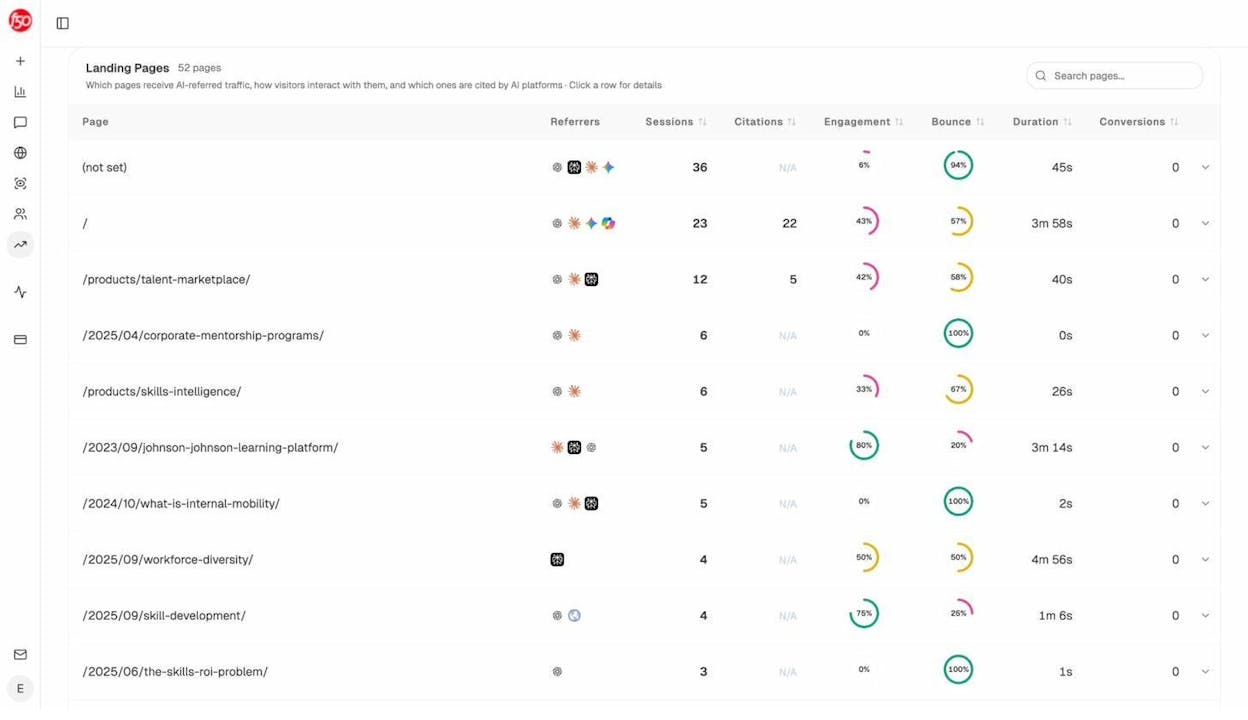
Referral traffic. Some listicles drive real clicks. Most do not. The ones that do are worth investing in further. Ask for an updated mention, suggest a featured callout, or pitch a co-marketing piece. The AI Traffic Analytics view shows which landing pages are pulling sessions and citations from AI engines.
To make the channel evergreen, set up alerts for two things. New listicles published in your category, and new prompts where competitors are cited and you are not. The Weekly Email Digests view in Analyze AI ships a weekly summary of citation gains, citation losses, and the prompts where you are losing ground.
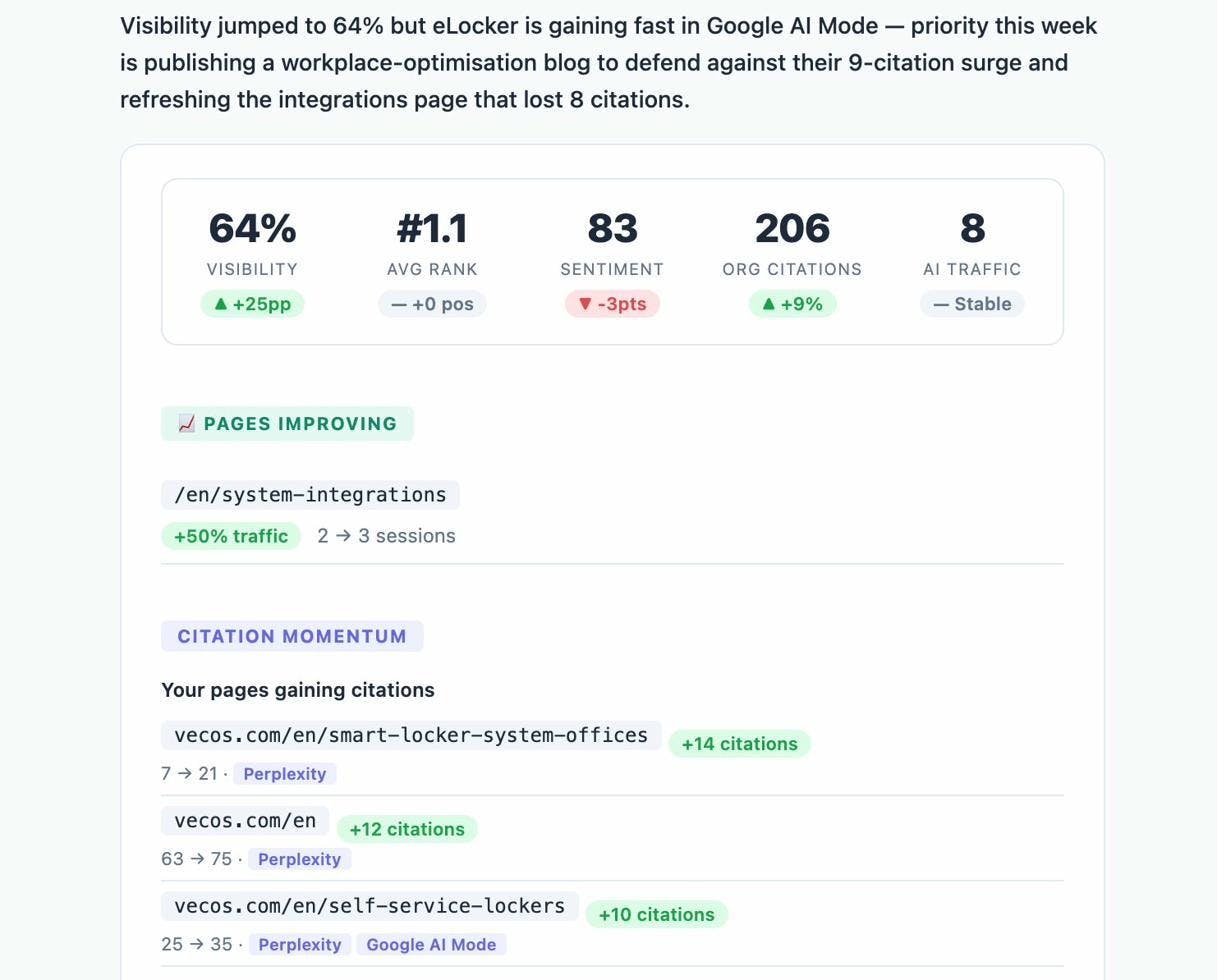
Every new listicle in your category that goes live without you in it is a fresh prospect. Every prompt where you slip is a signal to update an existing placement before the AI engines lock in a new ranking.
Final thoughts
Listicle outreach is one of the few link building tactics where a single afternoon of work can keep paying off for years. The placement compounds as the listicle ranks, gets refreshed, gets cited, and gets read.
The shift in 2026 is that you are now building two assets in parallel. A backlink graph for traditional search, and a citation graph for AI search. Both are pulled from the same source material, which is why one well-targeted listicle outreach campaign now does the work of two.
If you want to see exactly which listicles are shaping how AI engines describe your category today, start with Analyze AI and pull your Citation Analytics. The list of URLs you find there is your next quarter’s outreach target list.

Ernest

Ibrahim


