



Summarize this blog post with:


In this article, you’ll learn 10 advanced SEO tactics that go beyond the basics of keywords, content, and links. You’ll see how experienced practitioners use data, automation, and cross-channel strategy to get better results. And because SEO is not dead but evolving, you’ll also learn how each tactic applies to AI search engines like ChatGPT, Perplexity, and Gemini.
Table of Contents
1. Integrate SEO with UX and CRO
SEO brings people to your website. UX determines whether they stay. CRO determines whether they convert. If you only focus on the first part, you are leaving money on the table.
This is why learning non-SEO skills that integrate with search is so valuable for career growth.
First, it improves your communication with non-SEO teams. Developers, designers, and product managers are often the people who actually implement your recommendations. Speaking their language gets things done faster.
Second, it elevates your work beyond the basics. An SEO who can diagnose why a high-traffic landing page has a 90% bounce rate is more useful than one who can only report the bounce rate.
Third, it accelerates results. When your boss or client sees that an SEO project generated conversions instead of just traffic, the next budget conversation becomes much easier.
![[Screenshot: Google Analytics landing page report showing high traffic but high bounce rate on a key page]](https://www.datocms-assets.com/164164/1777576655-blobid1.png?auto=format,compress&w=1248&fit=max)
One framework worth studying is SXO, or search experience optimization. It focuses on the entire journey a searcher takes, from the moment they type a query to the moment they convert. It is a useful lens because it forces you to think about what happens after the click.
You can also get more tactical. Here are specific UX elements that experienced SEOs have seen impact rankings and conversions:
-
Reducing ad density. Excessive display ads, especially fixed-video ads, hurt engagement signals. If users cannot easily get to your content, they leave.
-
Removing intrusive browser notifications. Pop-ups asking users to subscribe the second they land on your page create friction. That friction shows up in your engagement metrics.
-
Simplifying navigation. If your menu has 47 items and three levels of dropdowns, you are making users think too hard. Streamline it so the most important pages are easy to find.
-
Improving contact information visibility. For businesses that depend on phone calls or form fills, making your contact info easy to find is a direct conversion lever.
-
Clarifying site identity. A visible logo paired with a clear tagline helps users immediately understand what your site is about. This matters especially for E-E-A-T signals.
![[Screenshot: Side-by-side of a cluttered vs. clean landing page layout]](https://www.datocms-assets.com/164164/1777576669-blobid2.jpg?auto=format,compress&w=1248&fit=max)
How this applies to AI search
The connection between UX and AI search might seem less obvious, but it matters more than you think. When AI engines like ChatGPT and Perplexity cite your pages, users click through to your site. If the experience is poor, they bounce immediately. AI search platforms track which cited sources actually help users. Pages with strong engagement signals after the click are more likely to continue earning citations over time.
You can actually see which of your pages receive AI-referred traffic and how visitors from AI search behave compared to visitors from Google. Use this data to identify UX problems that are specific to your AI search audience.
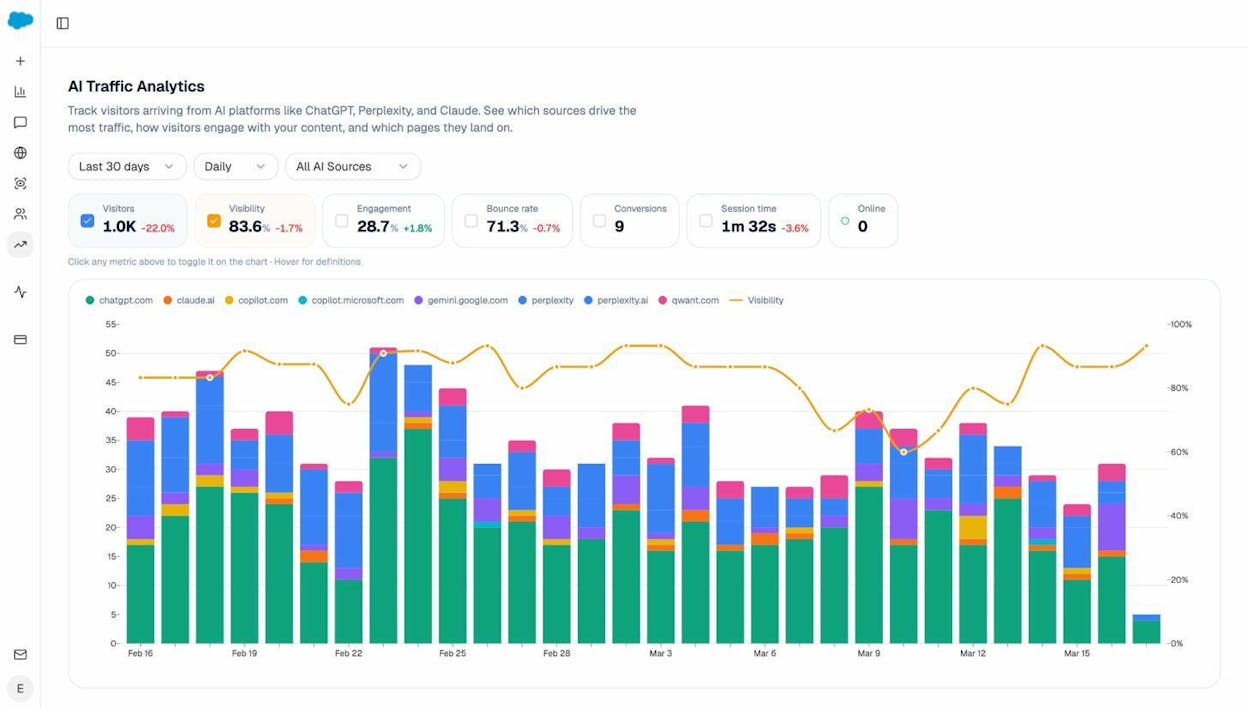
For example, if your blog posts get strong citations from Perplexity but visitors bounce at 90%, that is a signal that the content is good enough to get cited but the page experience needs work. Maybe the page loads slowly, maybe the answer is buried below three pop-ups, or maybe the content does not match what the AI search user was actually looking for.
2. Use paid ads to get more out of your SEO
Paid search and organic search are not competing channels. They are complementary ones.
The most obvious benefit is speed. SEO takes time to build momentum. Paid ads generate leads from day one. Running both at the same time means you can earn revenue while your organic strategy compounds in the background.
But the integration goes deeper than that.
Use PPC data to validate SEO targets. Before investing months of content effort into a keyword, run a small ad campaign against it. If the keyword converts at a reasonable CPA through paid, it is worth pursuing organically. If it does not convert through ads, it probably will not convert through organic either.
![[Screenshot: Google Ads keyword conversion data being used to prioritize SEO keyword targets]](https://www.datocms-assets.com/164164/1777576681-blobid4.png?auto=format,compress&w=1248&fit=max)
Dominate the SERP for your most valuable keywords. For high-intent terms like “best CRM for small business” or “project management software pricing,” occupying both a paid ad slot and an organic listing increases your total click-through rate. Studies from Google have shown that even when a brand ranks organically, running ads on the same keyword captures incremental clicks.
Retarget organic visitors. Someone who found your blog post through organic search but did not convert is now a warm lead. Use paid retargeting to bring them back with a more direct offer.
For local businesses, this combination is especially powerful. Local service ads, pay-per-click ads, map pack SEO, and traditional organic rankings can all appear on the same SERP. A business that shows up in three or four of those spots builds massive trust with the searcher.
![[Screenshot: A local SERP showing both paid and organic results for the same business]](https://www.datocms-assets.com/164164/1777576682-blobid5.png?auto=format,compress&w=1248&fit=max)
How this applies to AI search
AI search engines do not have a paid ads equivalent yet. But that does not mean paid advertising is irrelevant to your AI search strategy.
Brand awareness drives AI mentions. When more people talk about, search for, and write about your brand, AI models learn to associate your brand with relevant topics. Paid campaigns that build brand awareness (especially on platforms like LinkedIn and YouTube, which AI crawlers index heavily) contribute to that association over time.
You can track your brand visibility across AI platforms to see whether brand awareness campaigns correlate with increased AI mentions. If you notice that AI engines mention your competitors for prompts where your brand should appear, that is a signal that your overall brand presence needs strengthening, and paid brand campaigns can help.
3. Build topic clusters that cover entire subject areas
Topic clustering is a core part of modern content strategy. It involves grouping related keywords by intent, creating content for each group, and interlinking everything so search engines understand the topical relationships.
The concept is straightforward. You start by gathering a list of keywords around a subject. You group the ones with similar intent together. You create content to target each group. And you link between the pieces.
![[Screenshot: A visual map of a topic cluster showing a pillar page connected to supporting articles]](https://www.datocms-assets.com/164164/1777576692-blobid6.png?auto=format,compress&w=1248&fit=max)
Here is a simple example. If you sell project management software, a topic cluster around “project management” might include:
|
Cluster Group |
Example Keywords |
Content Type |
|---|---|---|
|
Definition |
what is project management, project management meaning |
Pillar guide |
|
Methodologies |
agile vs waterfall, scrum methodology |
Comparison and explainer posts |
|
Tools |
best project management tools, Asana vs Monday |
Listicle and comparison posts |
|
Use cases |
project management for remote teams |
Use-case focused content |
|
Skills |
project management certifications, PMP exam |
Informational posts |
You can spot potential clusters using keyword research tools. Enter your main keyword, explore matching terms, and look at how results group around parent topics. This helps you identify all the content you need to create to fully cover a subject.
![[Screenshot: Keyword research tool showing matching terms grouped by parent topic]](https://www.datocms-assets.com/164164/1777576694-blobid7.png?auto=format,compress&w=1248&fit=max)
The technique helps your content rank for a wider range of keywords and improves your website’s perceived authority on a topic.
Advanced keyword clustering with automation
If you are working on a large site with thousands of keywords, manual clustering does not scale. This is where advanced practitioners pull ahead.
You can use SEO APIs to pull keyword lists programmatically, use a large language model to identify each keyword’s intent, and then use a clustering model (like BERT or a custom-trained model) to group keywords automatically. Several SEO professionals have published workflows for this approach, including open-source scripts that you can adapt.
The result is a clustering process that handles thousands of keywords in minutes instead of hours. If you are an in-house SEO working with a limited budget, automating this kind of task is a genuine competitive advantage.
How topic clusters work in AI search
Topic clusters do not just help you rank on Google. They also increase your chances of being cited by AI search engines.
Here is why. AI models learn about your brand from the content on your site. If you have 20 well-structured, interlinked articles about “project management,” AI models are far more likely to associate your brand with that topic than if you have a single blog post.
But there is a nuance. AI engines do not just pull from one page. They synthesize information across multiple pages. So having comprehensive topic coverage means more of your content gets into the training data and retrieval indexes that power AI answers.
You can monitor which topics your brand is already visible for using Analyze AI’s prompt tracking. This shows you the prompts where your brand appears (and where it does not), so you can identify gaps in your topic coverage.
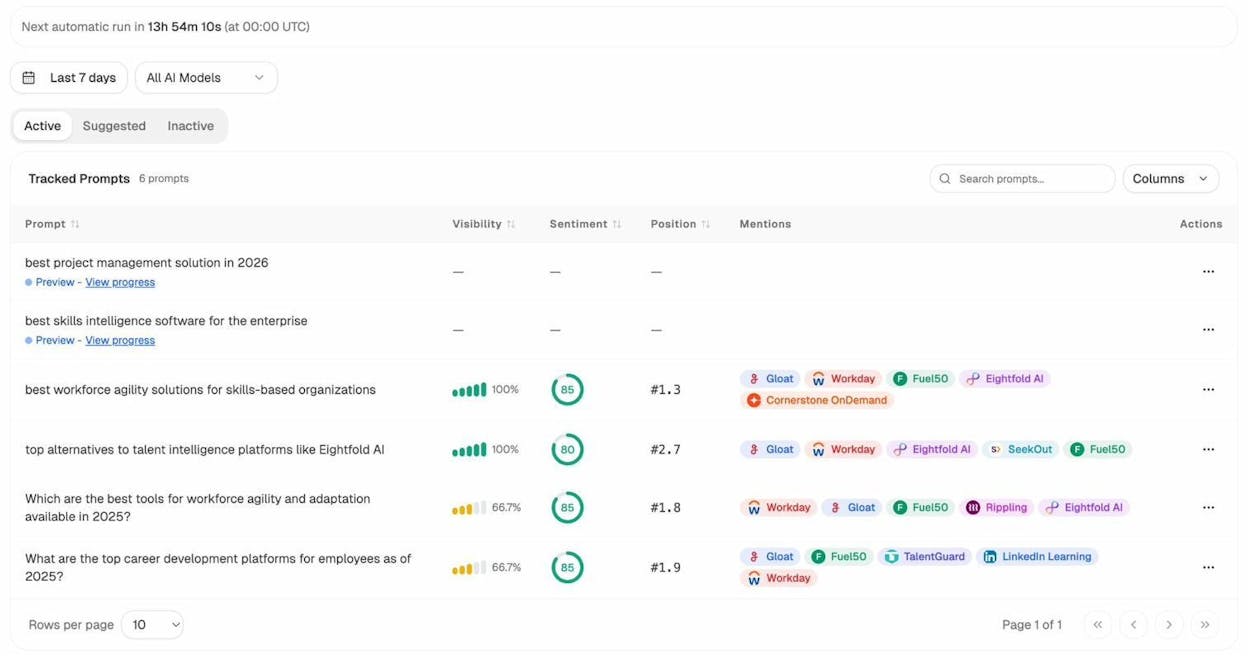
If you find that competitors appear for prompts related to a topic you should own, that is a signal to build out a topic cluster around it. The combination of Google rankings and AI visibility for the same topic cluster compounds your overall organic presence.
4. Analyze data beyond surface-level metrics
SEO produces a lot of data. The difference between a basic SEO practitioner and an advanced one is not how much data they look at. It is how they interpret it.
Here is the distinction:
|
Basic Insights |
Advanced Insights |
|---|---|
|
Organic traffic grew by 200% |
We reduced time to conversion by doing X, which generated $Y in pipeline |
|
Our top-performing content is the blog |
People who download our guide are 73% more likely to convert |
|
We rank #1 for these keywords |
Based on YoY performance, we forecast 150% growth by investing in Z |
|
53% of website visitors bounce |
Users from long-tail keywords convert at 3x the rate of head terms |
The insights on the left are available in any analytics dashboard. You do not need to think deeply about them. They are also not particularly actionable. When you share them with a CMO or a client, they often do not know what decisions to make from them.
The insights on the right connect specific actions to outcomes. They help non-SEO stakeholders see the steps you took, the results those steps generated, and why doing more of what worked makes sense. These are the insights that get budgets increased.
How to develop better analytical skills:
Start by asking “so what?” after every metric you pull. If organic traffic grew by 200%, so what? Did that traffic convert? Which pages drove the conversions? What type of content were those pages? What keywords brought users to those pages?
![[Screenshot: Google Analytics conversion report filtered by organic traffic, showing specific blog posts that drove conversions]](https://www.datocms-assets.com/164164/1777576709-blobid9.png?auto=format,compress&w=1248&fit=max)
Then learn to forecast. SEO forecasting is the skill of projecting future results based on historical data. It is how you make a business case for increasing your SEO budget. If you can show that investing $X in content over the next quarter will generate $Y in organic traffic value based on your existing conversion rates, you are speaking the language that decision-makers understand.
How this applies to AI search analytics
In AI search, the data landscape is different. There are no rankings in the traditional sense. Instead, you are tracking brand mentions, visibility percentages, sentiment scores, and citation counts across multiple AI platforms.
The same analytical mindset applies. A basic insight is “Our brand was mentioned 47 times this week across AI engines.” An advanced insight is “Our visibility dropped 12% on ChatGPT for pricing-related prompts. This correlates with a competitor publishing a new pricing page that now gets cited instead of ours. We should update our pricing content.”
Analyze AI makes this kind of analysis possible by tracking your brand visibility across ChatGPT, Perplexity, Claude, Gemini, and Copilot. You can filter by AI model, time period, and brand to see exactly where your visibility is trending.
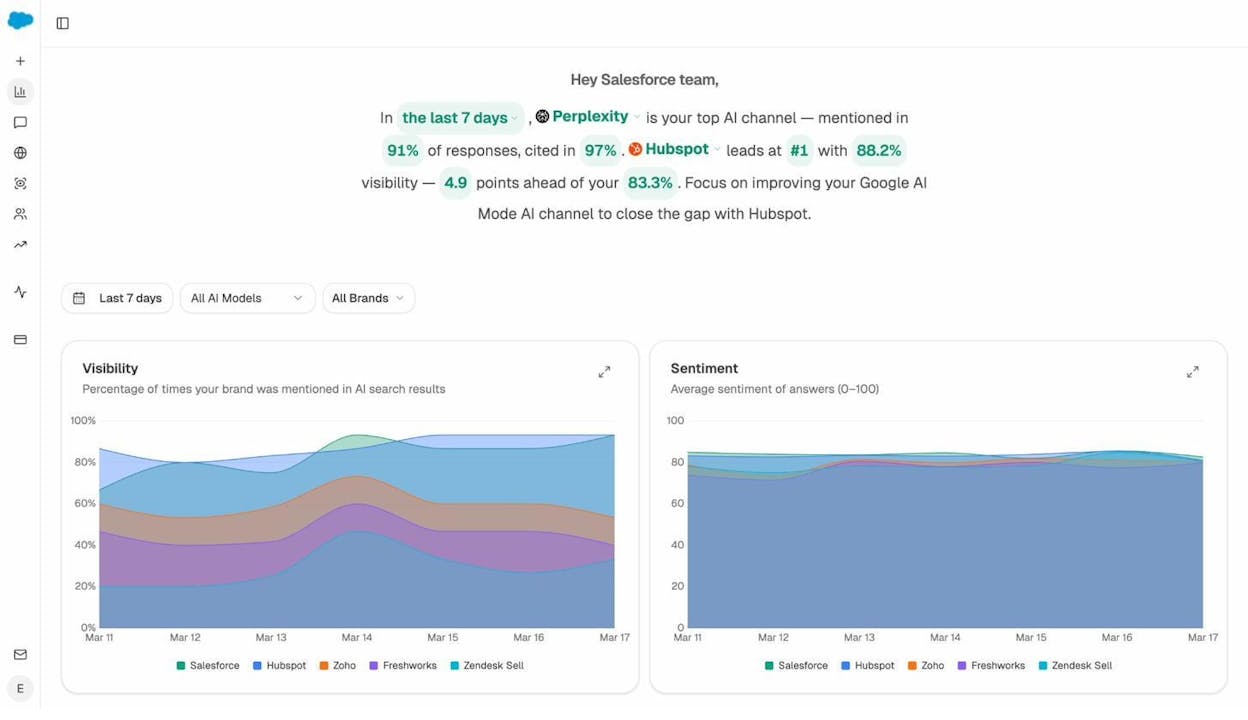
The key is connecting AI search data back to business outcomes. Use AI traffic analytics to see how many visitors arrive from AI platforms, which pages they land on, and whether those visitors convert.
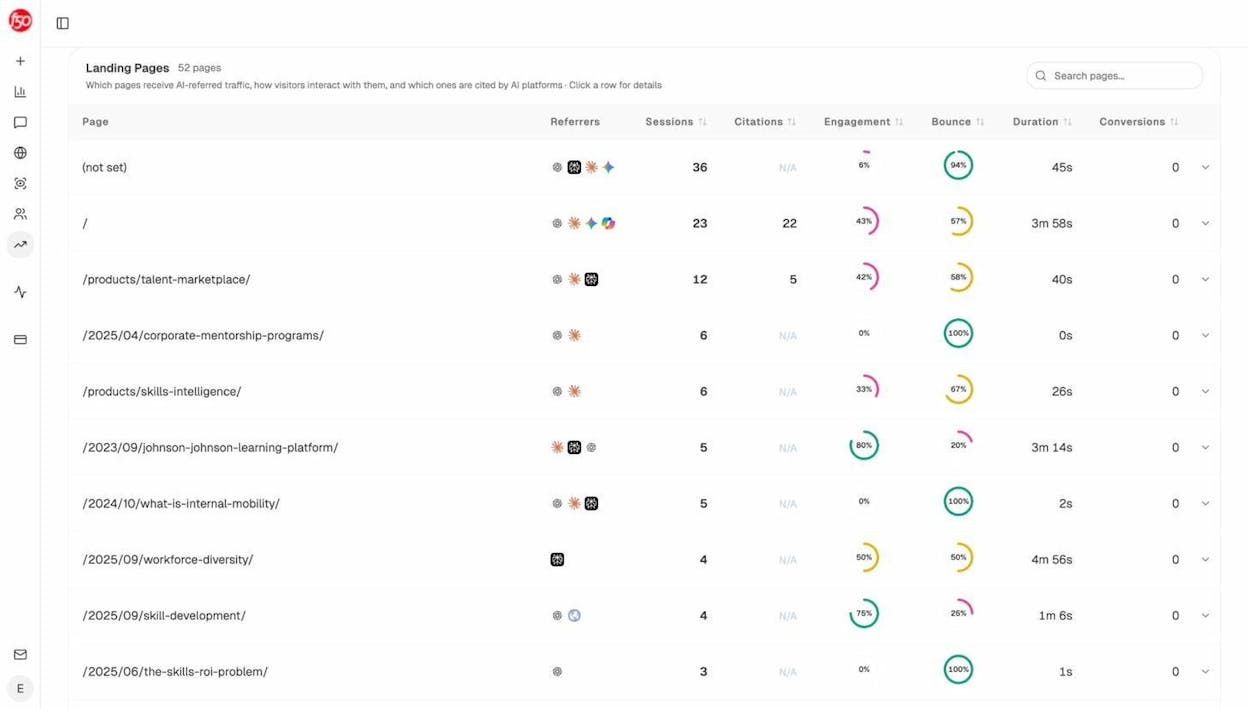
When you can show that AI search drove X visitors, Y% of whom converted, and Z dollars in revenue, you are making the same kind of advanced data argument that separates basic SEO reporting from executive-level strategy.
5. Use product and audience data in your SEO strategy
Most SEO strategies are built on data from Google Analytics, Search Console, and an SEO platform. Those are good data sources, but they are not the only ones.
Advanced practitioners incorporate data from the business itself:
|
Common Data Sources |
Advanced Data Sources |
|---|---|
|
Google Analytics |
CRM data (customer segments, lifetime value) |
|
Google Search Console |
Sales pipeline data (which leads convert, common objections) |
|
SEO platforms |
Product data (most-used features, NPS scores, churn reasons) |
|
Keyword research tools |
Accounting data (revenue by product line, seasonal patterns) |
Here is why this matters. Your SEO strategy should reflect your product’s actual strengths. Many SEO practitioners treat keyword research as a standalone activity. They find keywords with high volume and low difficulty, and that is the strategy. But without understanding the product, you might create content that ranks well but attracts the wrong audience.
Example: Say you work at a SaaS company that sells workforce planning software. Keyword research might surface terms like “free workforce planning template” with decent volume and low difficulty. But if your product costs $50,000 per year and targets enterprise buyers, ranking for “free template” keywords will bring in visitors who will never buy.
Instead, by talking to sales and product teams, you might learn that your product’s biggest differentiator is real-time headcount forecasting. That insight opens up keywords like “headcount forecasting tools” and “workforce planning with real-time data” that have lower search volume but attract exactly the right buyers.
Understanding your product’s unique selling points is not just useful for landing page copy. It is a goldmine for keyword strategy, content angles, and competitive positioning.
How product data applies to AI search
In AI search, product data becomes even more important. AI models do not rank pages. They recommend solutions. When someone asks ChatGPT “What is the best tool for headcount forecasting?”, the model recommends brands based on its understanding of what each product does.
If your content clearly explains your product’s unique capabilities with specific details, AI models are more likely to associate your brand with relevant prompts.
You can use Analyze AI’s competitor intelligence to see which competitors appear for prompts where your product should be recommended. The platform automatically surfaces suggested competitors based on mention frequency, so you can discover blind spots you did not know existed.
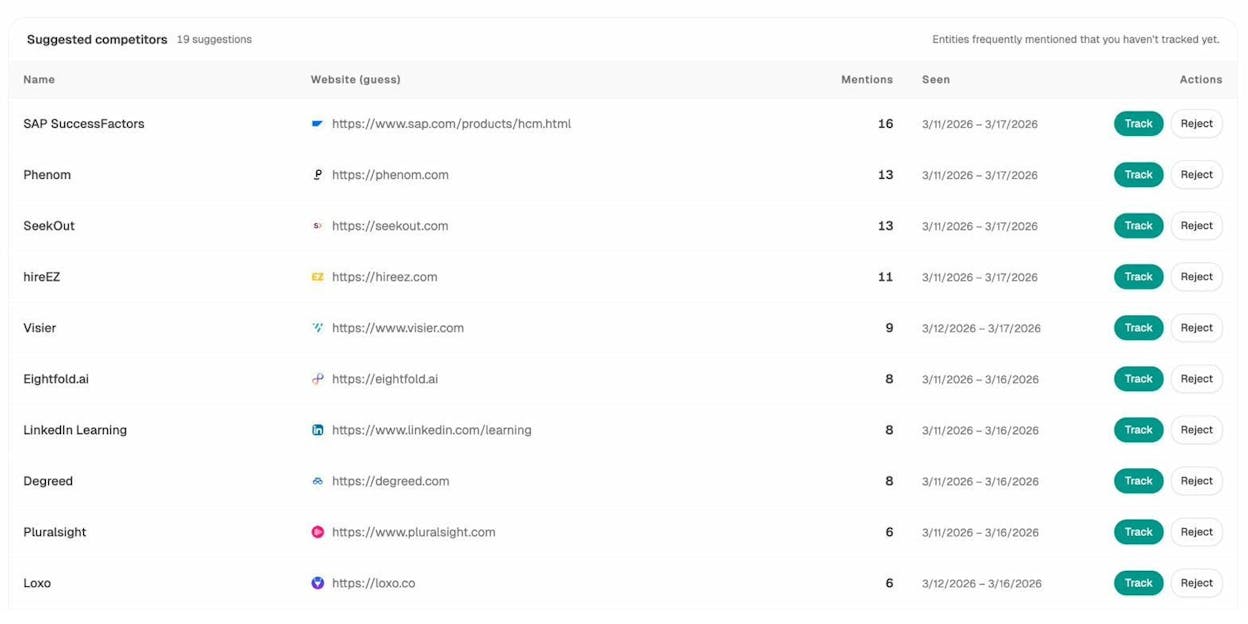
If a competitor appears 67 times for prompts in your space but your brand does not show up at all, that is a clear signal. The fix is not just writing more content. It is writing content that clearly communicates your product’s unique value in ways AI models can parse and retrieve.
6. Automate repetitive SEO tasks with AI and machine learning
Using ChatGPT to brainstorm blog post ideas is not advanced SEO. But using AI and machine learning to automate complex, time-intensive workflows is.
Here are specific use cases that experienced practitioners are getting results with.
Automate multi-lingual keyword research
International SEO was one of the most frequently mentioned advanced skills. The challenge is not just translating keywords. It is preserving local nuances and dialects while understanding search behavior in each market.
AI-powered keyword translation tools can now handle this by translating entire keyword lists while preserving local language variations. For example, the word “popcorn” translates differently across Spanish-speaking countries. A good AI translation tool shows you the multiple variations along with search metrics for each, so you can pick the right term for your target region.
This dramatically speeds up international SEO work that would otherwise take days of manual research.
![[Screenshot: AI keyword translation tool showing multiple regional variations of a keyword with search volume for each]](https://www.datocms-assets.com/164164/1777576726-blobid13.png?auto=format,compress&w=1248&fit=max)
Automate redirect mapping for site migrations
Site migrations often involve mapping hundreds or thousands of old URLs to new ones. Doing this manually is tedious and error-prone. Advanced practitioners have automated this by combining crawl data, page content, and AI-powered semantic matching.
The process looks like this: you crawl both the old and new site, extract page content, generate vector embeddings for each page, and then use cosine similarity to find the best match for each old URL on the new site. Several open-source scripts exist that implement this workflow.
![[Screenshot: A spreadsheet showing old URLs matched to new URLs with match confidence scores]](https://www.datocms-assets.com/164164/1777576728-blobid14.png?auto=format,compress&w=1248&fit=max)
Automate internal linking at scale
Internal linking is one of those tasks that everyone agrees is important but nobody has time to do properly.
Here is a simple AI-assisted process for internal link discovery:
-
Feed your sitemap to an LLM.
-
For each URL, ask it to generate contextually relevant anchor text phrases.
-
Search your site’s page content for those phrases.
-
Where matches exist, add internal links.
You can take this further with machine learning. Advanced teams have built models that create a link graph of their existing site, pair it with Search Console data, use vector embeddings to understand page content, and recommend new internal links with appropriate anchor text. These models can even work on sites with non-descriptive URLs, which makes them especially useful for large enterprise sites.
How AI search changes the automation equation
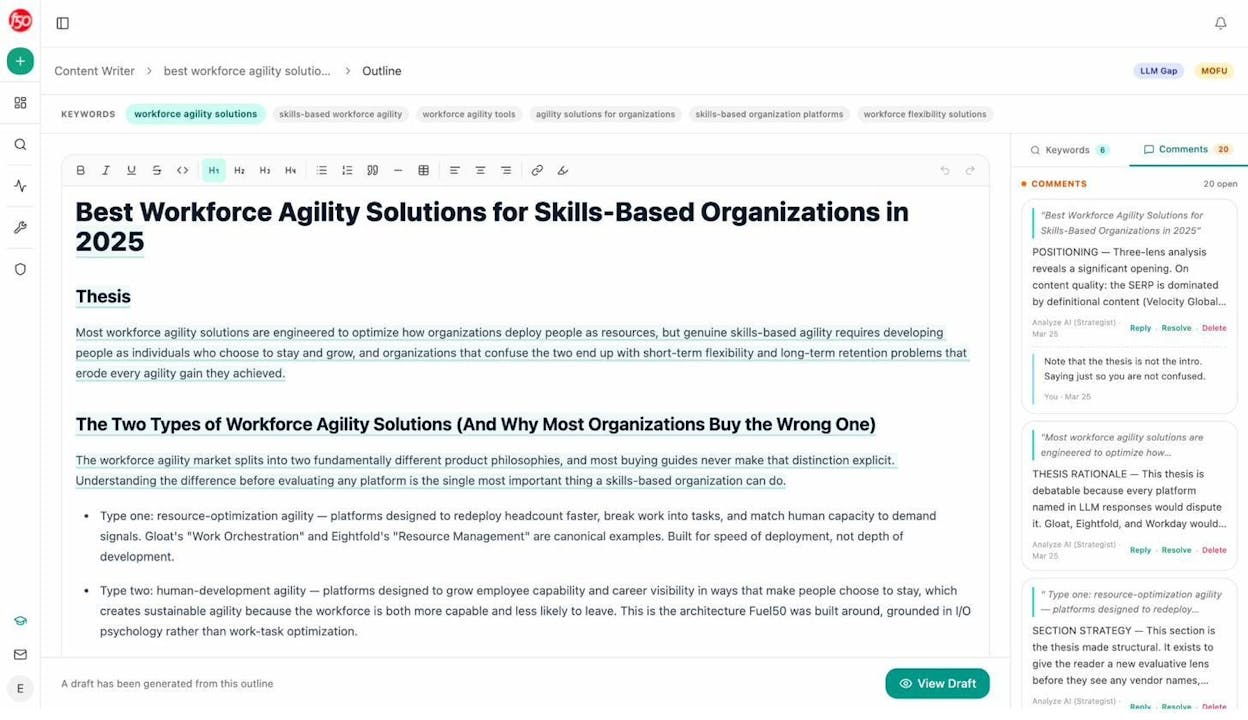
For AI search specifically, Analyze AI’s Content Writer automates a different kind of workflow. It generates content ideas based on prompts that your competitors are winning, provides research context including competitor keywords and SERP data, and produces drafts optimized for both traditional SEO and AI visibility.
The Content Optimizer takes a different approach. You give it an existing page URL, and it fetches your content, scores it on argument quality, flow, clarity, and polish, and generates an optimized draft with editorial comments explaining each change.
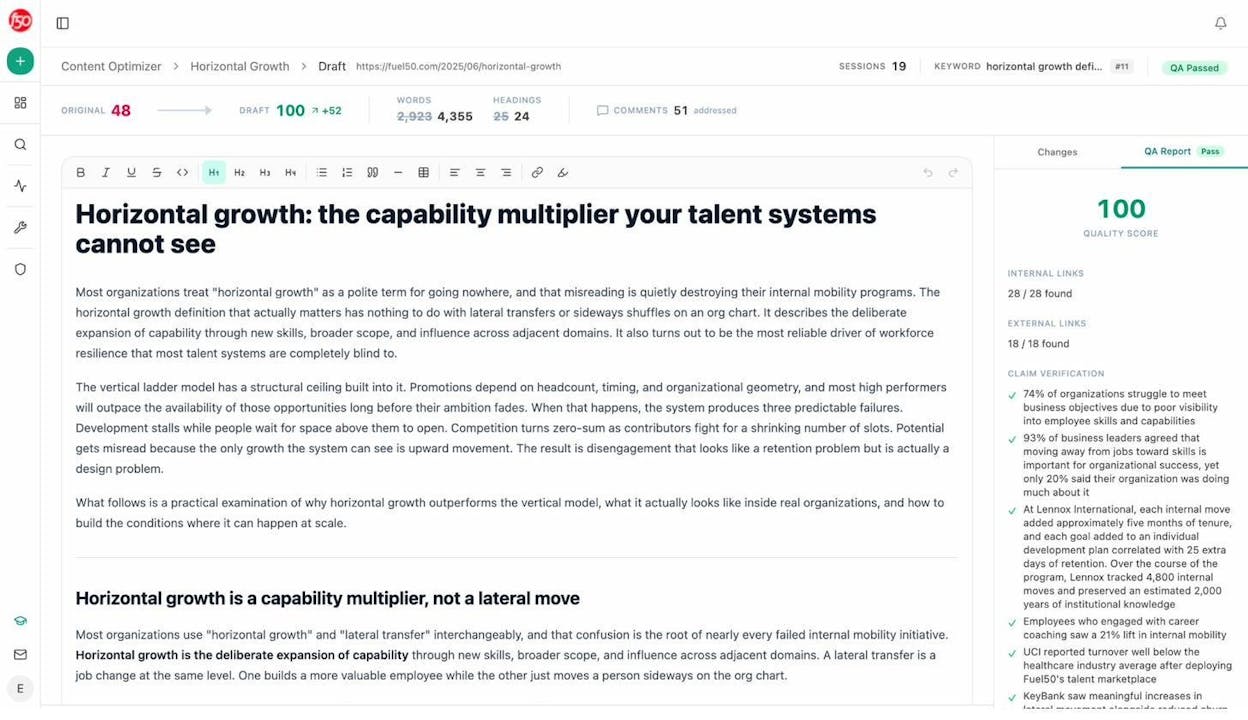
These are not generic AI writing tools. They are specifically designed to help your content perform in both Google and AI search results.
7. Double down on revenue-generating content
Everyone says “create quality content.” That is not advanced advice. What is advanced is building a content strategy that is specifically designed to generate revenue rather than just traffic.
Here is the difference:
Traffic-focused content strategy: Find keywords with the highest search volume. Create content for each one. Measure success by pageviews and organic traffic growth.
Revenue-focused content strategy: Identify the keywords and topics that are most likely to attract buyers. Create content that addresses their specific buying questions. Measure success by leads, pipeline, and revenue attributed to content.
Several revenue-generating content approaches are worth studying:
Product-led content
This approach weaves your product naturally into every piece of content. Instead of writing a generic guide on “how to do keyword research” and then mentioning your tool at the end, you make your tool a core part of the tutorial. Every step shows how the reader can accomplish the task using your product.
This is what separates content that drives conversions from content that drives vanity metrics. The reader walks away knowing how to solve their problem and understanding how your product helps them do it.
Bottom-of-funnel content
These are the pages that target people who are actively comparing solutions and ready to buy. Comparison pages, alternative pages, pricing pages, and case studies all fall into this category.
Bottom-of-funnel content typically has lower search volume than top-of-funnel educational content. But it converts at dramatically higher rates. A page targeting “Salesforce alternatives” might get 2,000 visits per month, but if 5% of those visitors start a trial, that is 100 new potential customers per month from a single page.
Programmatic SEO for BOFU keywords
For companies with large product catalogs or many use cases, programmatic SEO can generate hundreds of bottom-of-funnel pages. A project management tool might programmatically create pages for “project management for [industry]” across 50 different industries. Each page is templated but customized with industry-specific content, screenshots, and case studies.
This works when done with quality. It fails when the pages are thin and generic.
![[Screenshot: Example of a programmatic landing page targeting an industry-specific use case, with unique content and screenshots]](https://www.datocms-assets.com/164164/1777576746-blobid17.png?auto=format,compress&w=1248&fit=max)
How revenue-focused content works in AI search
In AI search, revenue-generating content takes on a different shape. When someone asks ChatGPT “What is the best CRM for small businesses?”, the model does not just recommend the brand with the most blog posts. It recommends brands that it has seen consistently associated with that specific use case across authoritative sources.
This means your comparison pages, use-case pages, and product-led content need to exist not just for Google rankings but also for AI model training and retrieval.
You can check which of your pages are actually being cited by AI platforms. This tells you which content is driving AI visibility and where to double down.
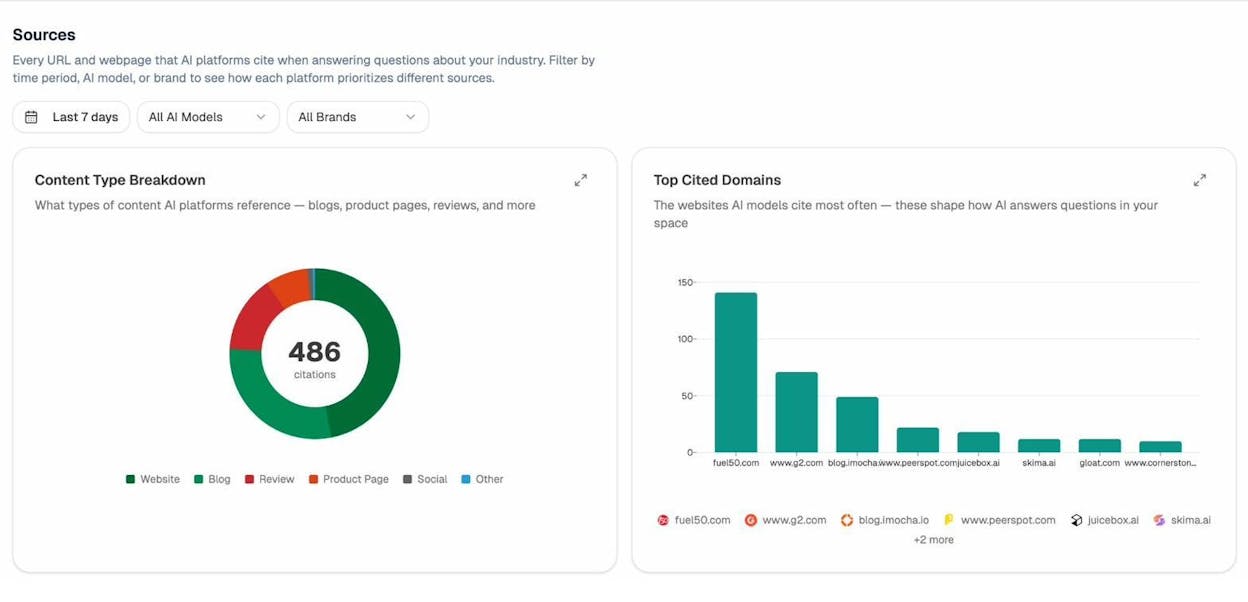
If your blog posts are getting cited but your product pages are not, that is a gap. AI models should associate your brand with solution-oriented content, not just informational content.
8. Optimize across multiple channels for maximum search exposure
Google is still the dominant platform. But it is not the only place where people discover brands through search.
Using Reddit for keyword research
Reddit is a goldmine for finding keyword opportunities that traditional tools miss. People on Reddit ask the same question in many different ways. This creates a pattern you can exploit.
Take the keyword “does oat milk cause acne.” In most keyword tools, this shows a seemingly low search volume. But people search for this answer in dozens of variations: “oat milk acne,” “can oat milk break you out,” “oat milk skin problems,” and more. The combined search volume across all those variations is significantly higher than any single keyword suggests.
![[Screenshot: Keyword tool showing a low-difficulty keyword at 0 difficulty and 50 monthly searches]](https://www.datocms-assets.com/164164/1777576754-blobid19.jpg?auto=format,compress&w=1248&fit=max)
What makes this especially useful is competition. Many of these long-tail variations have a keyword difficulty of 0. Reddit ranks in the top results for them. This means a new brand could rank above established competitors by creating a single well-researched article that comprehensively answers the question.
This strategy, rolled out across dozens of similar low-competition topics, is how new or establishing brands can enter competitive markets without needing a high domain authority.
Using social media to support SEO
Social media and SEO work together when you approach them strategically.
Start by finding topics where your existing blog content ranks well. Then identify which of those topics also have video demand by checking whether YouTube videos appear on the SERP for those keywords. Those are your best candidates for content repurposing.
![[Screenshot: An SEO tool showing keywords with video SERP features, indicating demand for video content on those topics]](https://www.datocms-assets.com/164164/1777576754-blobid20.png?auto=format,compress&w=1248&fit=max)
But repurposing does not mean copy-pasting. Blog content works because readers can skim, re-read, and follow links. Video content works because viewers want demonstrations, personality, and quick answers. You need to adapt the format to match the platform.
The same applies to LinkedIn, X, and other channels. A blog post about advanced link building strategies might become a LinkedIn carousel showing one tactic per slide. The goal is not to replicate the blog post. It is to create native content for each platform that drives people back to your site.
How multi-channel strategy applies to AI search
AI search engines pull from a wide range of sources. ChatGPT references blog posts, product pages, Wikipedia articles, YouTube descriptions, GitHub repos, LinkedIn profiles, and more. Perplexity actively indexes and cites real-time web content from social media and forums.
This means your multi-channel presence directly impacts your AI visibility. If your brand is only present on your website, AI models have limited data to associate with your brand. But if your brand appears consistently across your website, YouTube, LinkedIn, GitHub, industry publications, and review sites, AI models build a stronger and more nuanced understanding of what your brand does.
You can see this play out in Analyze AI’s Sources dashboard, which shows every URL and webpage that AI platforms cite when answering questions about your industry. Filter by AI model to see how each platform prioritizes different types of sources.
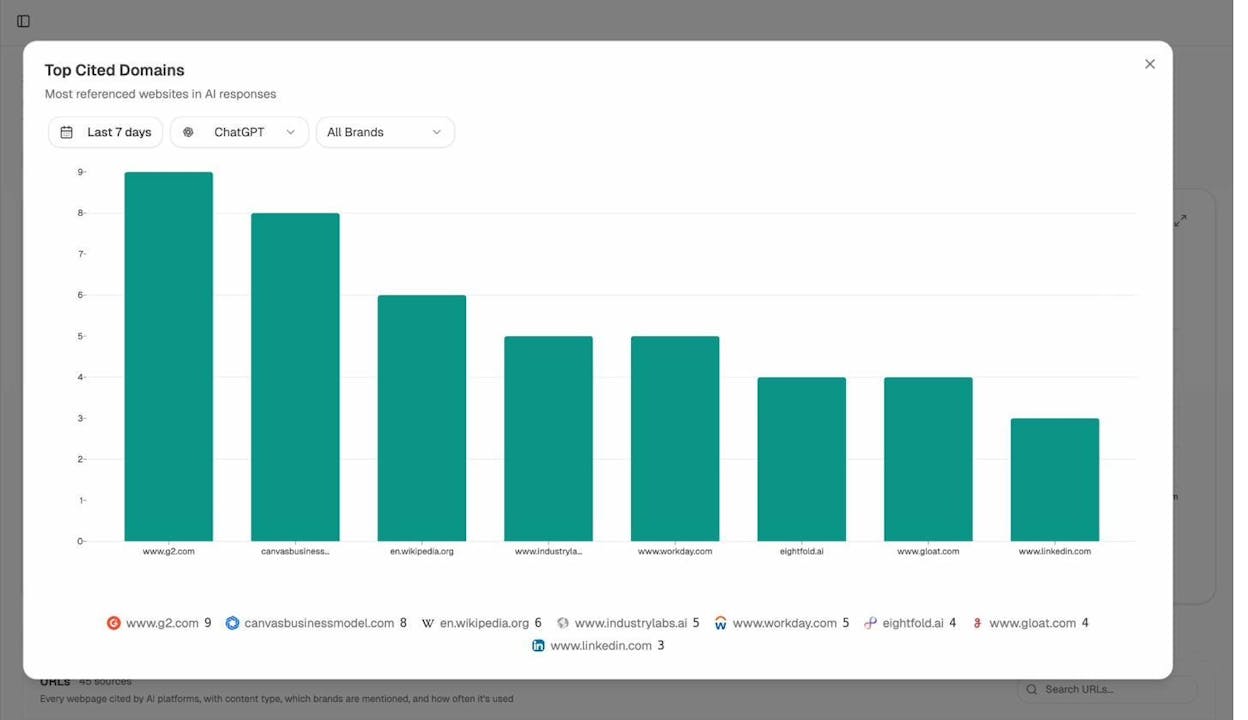
If you notice that a review site like G2 is getting cited heavily in your space, it is a signal to invest in your G2 profile. If LinkedIn content appears in citations, start publishing more thought leadership there. The data tells you where to focus your multi-channel efforts for the biggest AI visibility impact.
9. Use competitive intelligence to find and exploit gaps
Basic competitive analysis means checking what keywords your competitors rank for. Advanced competitive analysis means understanding why they rank, where they are vulnerable, and how to beat them.
Identify content gaps at scale
Content gap analysis is the process of finding keywords that your competitors rank for but you do not. Most SEO tools offer this feature. But the advanced move is what you do with the output.
Instead of creating content for every gap keyword, filter by:
-
Business relevance. Does this keyword attract buyers or just browsers?
-
Content quality of existing results. Can you create something meaningfully better?
-
Topic authority. Do you have the expertise to cover this topic credibly?
![[Screenshot: A content gap analysis tool showing keywords competitors rank for that you do not, filtered by volume and difficulty]](https://www.datocms-assets.com/164164/1777576765-blobid22.png?auto=format,compress&w=1248&fit=max)
Then cluster the gap keywords by parent topic. This gives you a list of content opportunities, not individual keywords to chase. It is a more strategic approach that results in fewer, better pieces of content.
How competitive intelligence works in AI search
In AI search, competitive intelligence looks different. Instead of comparing keyword rankings, you compare brand visibility across AI prompts.
With Analyze AI, you can see which brands appear for prompts in your space and how often. The platform shows you tracked competitors with their mention counts and automatically suggests new competitors you should watch based on how frequently they appear in AI responses.
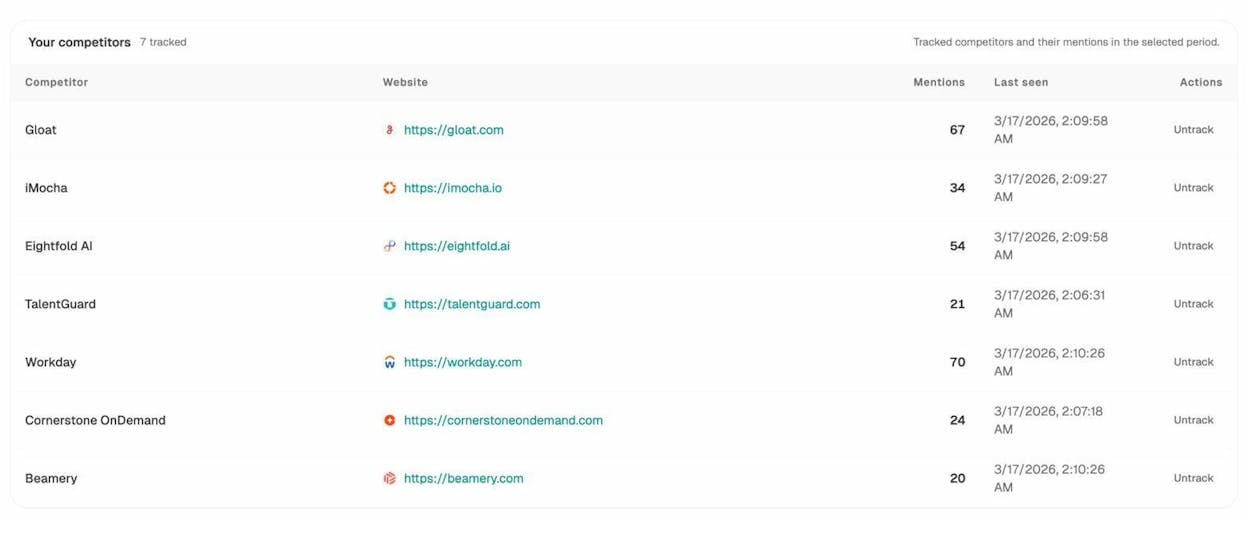
The real value is in finding the prompts where competitors appear but you do not. These are your AI search content gaps. If Gloat appears 67 times for workforce-related prompts but your brand only appears 20 times, you need to understand what content, what signals, and what associations are driving that gap.
Use Analyze AI’s Perception Map to visualize exactly how AI models perceive your brand versus competitors. It plots brands on a matrix of visibility and narrative strength, so you can see at a glance whether your brand is visible and compelling, visible but with a weak narrative, or simply invisible.
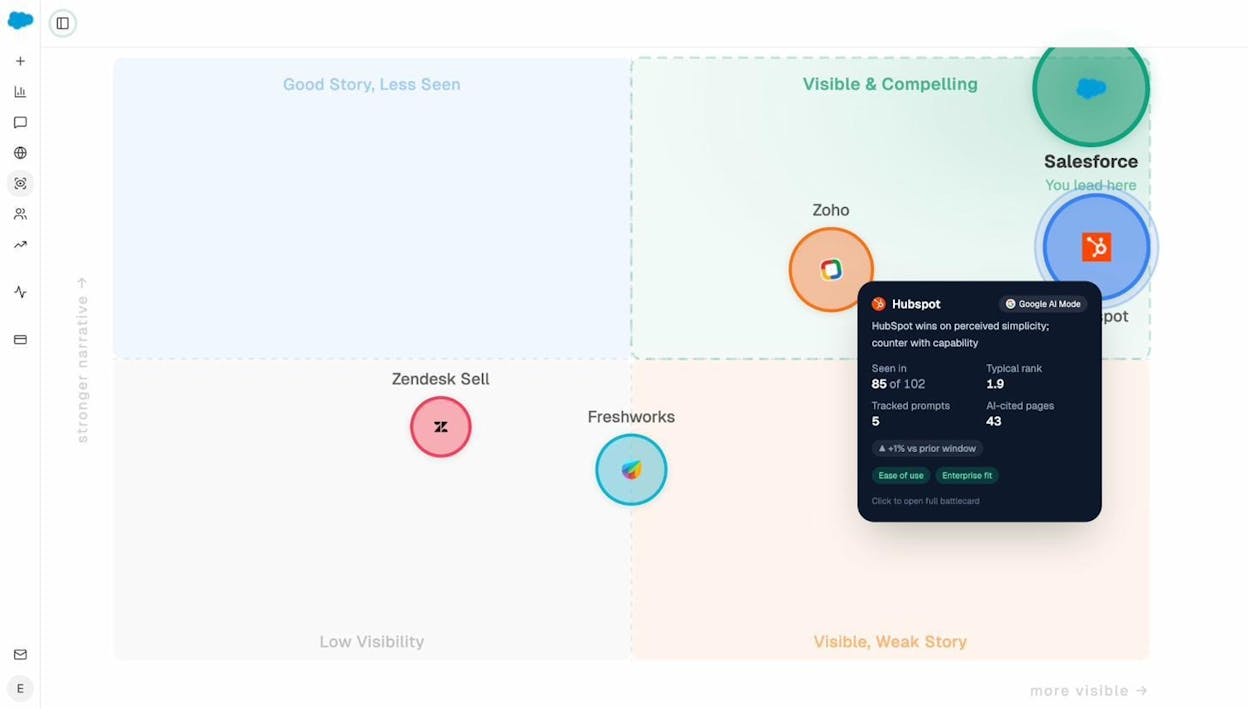
This kind of competitive intelligence is not available in traditional SEO tools. It tells you something fundamentally different: not just where you rank on Google, but how AI models understand and recommend your brand.
10. Monitor and adapt to AI search as an additional organic channel
This is the tactic that ties everything together. AI search is not replacing SEO. It is adding a new layer to it.
People are still searching on Google. They are also increasingly getting answers from ChatGPT, Perplexity, Claude, and Gemini. Both channels matter. And the brands that succeed are the ones that treat AI search as another organic channel to monitor and optimize, not a threat to panic about.
Here is what monitoring AI search looks like in practice:
Track your AI visibility over time
Just like you track keyword rankings in Google, you should track your brand’s visibility across AI platforms. This means monitoring how often your brand appears in AI responses, which AI engines mention you most, how your visibility trends over time, and how you compare to competitors.
Discover the prompts that matter to your business
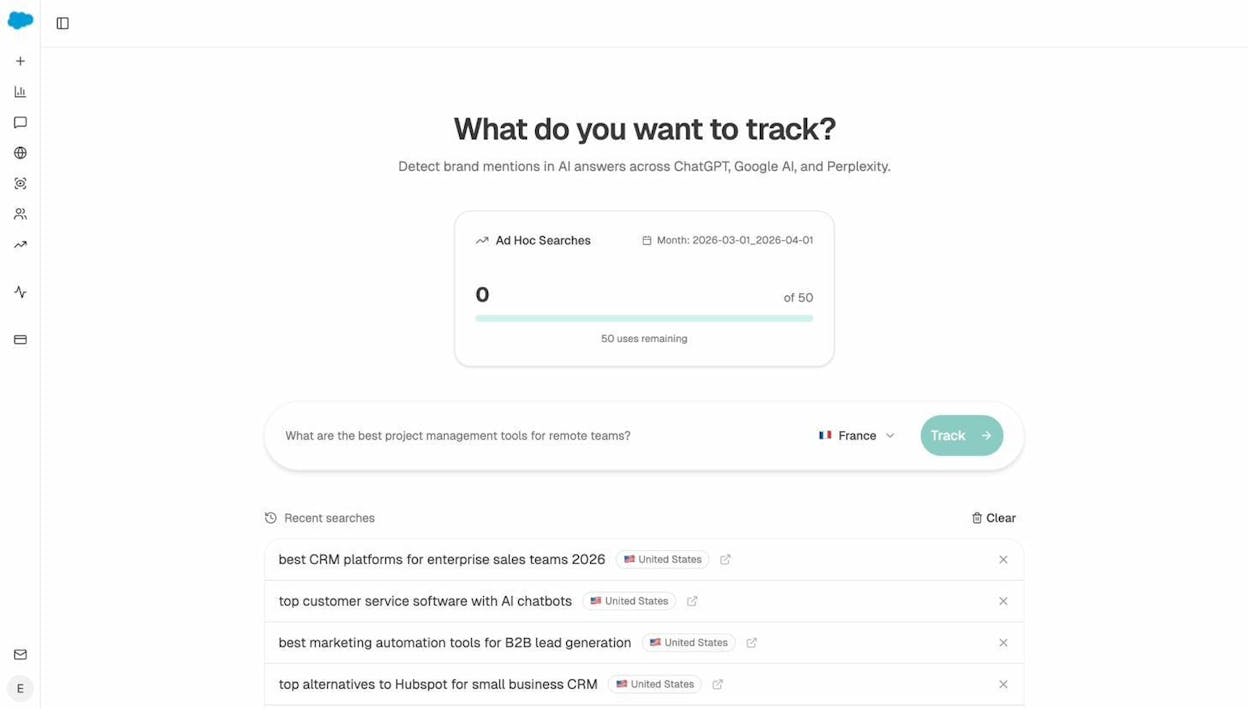
Use prompt discovery to find the prompts that trigger mentions of brands in your space. These are the AI-era equivalent of keywords. Understanding which prompts are relevant to your business tells you what content to create, what topics to cover, and what messaging to emphasize.
Measure AI traffic and its impact
Knowing that AI engines mention your brand is useful. Knowing that those mentions actually drive visitors to your site who then convert is what makes it actionable. Use AI traffic analytics to connect AI visibility to real business outcomes.
Stay informed with automated alerts
Set up weekly email digests that summarize your AI search performance. These reports keep your team informed without requiring everyone to log into a dashboard every day.
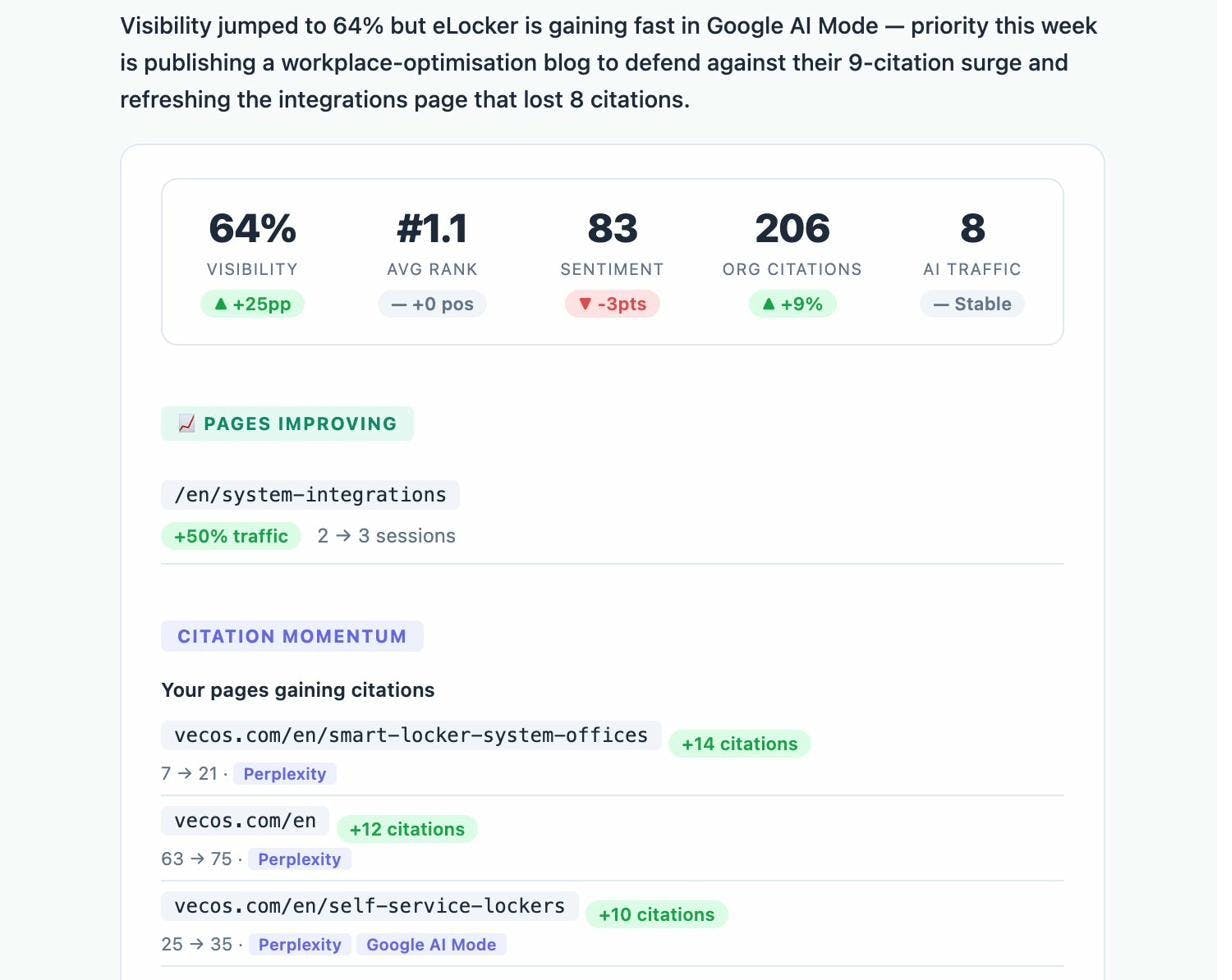
The point is not to obsess over AI search at the expense of traditional SEO. It is to build a system that monitors both channels and helps you make decisions that compound your organic presence everywhere your audience searches.
Key takeaways
Advanced SEO is not about chasing the latest tactic. It is about building skills that compound over time.
The practitioners who get the best results are the ones who integrate SEO with UX, CRO, and paid ads. Who use product and audience data instead of just keyword tools. Who automate the tedious parts of their workflow so they can focus on strategy. And who treat AI search as an additional organic channel, not a replacement for everything they already do.
Here is what to do next:
-
Audit your current approach. Which of these 10 tactics are you already doing? Which ones are you ignoring?
-
Pick one to start with. Do not try to implement all 10 at once. Pick the one that addresses your biggest gap and focus on it.
-
Connect your work to revenue. Whatever tactic you choose, make sure you can measure its impact in terms the business cares about, such as leads, pipeline, and revenue.
-
Add AI search monitoring. If you are not already tracking your brand’s visibility across AI search engines, start now. The brands that build this muscle early will have a compounding advantage. Try Analyze AI to get a complete picture of your AI search presence alongside your traditional SEO performance.
The fundamentals still matter. Keywords, content, and links are the foundation. But advanced SEO means building on that foundation with skills, data, and tools that give you an edge, whether your audience is searching on Google, asking ChatGPT, or browsing Perplexity.

Ernest

Ibrahim


