



Summarize this blog post with:


In this article, you’ll learn the real differences between organic marketing and paid marketing, when to use each, how to build an organic marketing strategy from scratch, and how AI search is creating a new organic channel that most marketers are ignoring.
Table of Contents
What Is Organic Marketing?
Organic marketing is any effort that attracts traffic, leads, or customers without paying for placement. You earn attention instead of buying it.
The most common form of organic marketing is content marketing. You create something useful, publish it where your audience already spends time, and let search engines, social platforms, or word-of-mouth do the distribution. Over time, the content compounds. A blog post that ranks on Google today can still bring traffic three years from now.
Here are the most common organic marketing channels:
-
Search engine optimization (SEO). Creating content that ranks in Google and other traditional search engines.
-
Social media marketing. Building an audience on platforms like LinkedIn, Instagram, X, or TikTok without paying for promoted posts.
-
Email marketing. Growing a subscriber list and sending newsletters, drip sequences, or product updates.
-
Guest posting. Publishing articles on other websites to build backlinks and reach new audiences.
-
Community marketing. Engaging in Reddit threads, Slack communities, Discord servers, and niche forums.
-
Video marketing. Publishing on YouTube, where videos can rank both within YouTube search and in Google results.
-
Podcasting. Building authority and brand awareness through long-form audio content.
-
AI search visibility. Getting your brand mentioned and cited in AI search engines like ChatGPT, Perplexity, Google AI Mode, and Claude. This is the newest organic channel, and it works differently from traditional SEO.
That last one is worth paying attention to. More people are getting answers directly from AI chatbots. When someone asks ChatGPT “what’s the best CRM for small businesses” and your brand is mentioned in the response, that is organic traffic you didn’t pay for. It follows the same principle as SEO. The difference is that the “search engine” is now an AI model.
What Is Paid Marketing?
Paid marketing is any effort where you pay to place your message in front of an audience. You buy attention instead of earning it.
The most common forms include:
-
Search ads (PPC). Bidding on keywords in Google Ads or Bing Ads so your page appears at the top of search results.
-
Social media ads. Running sponsored posts or display ads on Facebook, Instagram, LinkedIn, X, or TikTok.
-
Display advertising. Banner ads on websites through ad networks like Google Display Network.
-
Sponsored content. Paying publishers or influencers to feature your brand in their content.
-
Podcast advertising. Sponsoring podcast episodes with pre-roll, mid-roll, or post-roll ad spots.
-
Retargeting. Showing ads to people who have already visited your site but didn’t convert.
Paid marketing works fast. You can turn on a Google Ads campaign in the morning and have clicks by the afternoon. But the moment you stop spending, the traffic stops too.
Organic vs. Paid Marketing: Key Differences
The difference between organic and paid marketing is not just about cost. It shows up in how traffic arrives, how long results last, and how trust is built with your audience.
|
Factor |
Organic Marketing |
Paid Marketing |
|---|---|---|
|
Cost |
Time and effort upfront. No per-click cost. |
Direct spend per click, impression, or conversion. |
|
Speed |
Slow to start. SEO can take 3-6 months to gain traction. |
Almost immediate. Ads start driving traffic within hours. |
|
Longevity |
Compounds over time. A ranking blog post keeps working for years. |
Stops the moment you turn off the budget. |
|
Trust |
Higher. People trust organic results and earned mentions more than ads. |
Lower. Users know it’s paid and often skip it. |
|
Scalability |
Scales with content production and authority. Harder to scale quickly. |
Scales instantly with budget. Easy to increase or decrease. |
|
Measurability |
Harder to attribute directly. Organic touches often happen across multiple sessions. |
Very precise. You know exactly which ad drove which conversion. |
|
Click-through rates |
Organic search results get roughly 70% of all clicks on a Google results page. |
Paid ads capture the remaining 30% or less. |
|
AI search impact |
Brands with strong organic content are more likely to be cited by AI models. |
Paid ads do not appear in AI-generated answers. |
That last row is important. AI search engines like ChatGPT, Perplexity, and Google AI Mode do not show paid ads inside their answers (at least not yet, for most platforms). When a user asks an AI model for a recommendation, the model pulls from organic content. It cites blog posts, product pages, documentation, and review sites. Not ads.
This means organic marketing now has a wider reach than it did even two years ago. Your organic content can surface in traditional search results AND in AI-generated answers. Paid marketing, for now, is limited to traditional search and social platforms.
Organic vs. Paid Marketing: Which Should You Use?
Both.
This is not a diplomatic non-answer. It is the correct one. Every serious marketing team uses a combination of organic and paid channels. The ratio depends on your stage, budget, and goals.
Use paid marketing when you need speed. Launching a new product? Running a seasonal promotion? Testing a new positioning message? Paid ads let you get in front of your audience immediately. You don’t have to wait for Google to index and rank your content.
Use organic marketing when you want durability. If you want a channel that compounds over time and doesn’t require an ongoing budget to maintain, organic is the way. A blog post that ranks for a valuable keyword can deliver hundreds or thousands of visits per month for years.
Use both together for the best results. The smartest teams use paid marketing to promote their best organic content. They write a detailed guide, rank it in Google through SEO, and then run paid ads to amplify its reach on social media. The organic content builds long-term authority. The paid promotion gives it a short-term boost.
Here’s how it looks in practice for a B2B SaaS company:
-
You create a detailed blog post targeting “how to choose a project management tool.”
-
The post ranks on page one of Google after a few months. That’s your organic channel working.
-
You run LinkedIn ads pointing to that same post to reach your ICP faster. That’s paid amplifying organic.
-
The blog post gets cited by ChatGPT when users ask about project management tools. That’s AI search extending your organic reach even further.
The companies that treat organic and paid as competing strategies are leaving money on the table. The companies that treat them as complementary are the ones winning.
How to Create an Organic Marketing Strategy
If your organic marketing efforts feel scattered, it’s probably because you skipped one of these steps. Here is the process, from defining your audience to measuring results.
1. Define Your Target Audience
Every wasted piece of content traces back to the same mistake. The team created content for the wrong audience.
A classic example: a B2B accounting software company writes deep technical articles about tax code changes. The articles attract CPAs and tax professionals. But CPAs don’t buy accounting software for businesses. CFOs and small business owners do. The content got attention from the wrong people.
Before you write a single blog post or record a single video, answer these questions:
-
Who is the buyer? Not the reader. The buyer. The person who signs the check or enters the credit card.
-
What problems do they search for? Not what you want to talk about. What they actually type into Google (or ask ChatGPT).
-
Where do they spend time online? LinkedIn? Reddit? YouTube? Niche forums? This determines your channel strategy.
-
What level of knowledge do they have? A beginner guide won’t impress a VP of Marketing. An advanced teardown won’t help someone just learning the basics.
Write a target customer statement. Keep it simple. Something like: “Marketing managers at mid-market B2B SaaS companies (50-500 employees) who are responsible for driving pipeline through content and SEO.”
That statement should inform every content decision you make. If a topic doesn’t serve that audience, skip it.
![[Screenshot: HubSpot’s Make My Persona tool showing a sample buyer persona template]](https://www.datocms-assets.com/164164/1777504245-blobid1.png?auto=format,compress&w=1248&fit=max)
Recommended reading: How to Create Detailed Buyer Personas for Your Business (HubSpot)
2. Set Clear Goals
“We need to do more content marketing” is not a goal. It’s a vague intention. And vague intentions produce unfocused content.
Pick one primary goal from these four. You’ll eventually need content for all of them, but starting with one prevents you from spreading too thin.
Goal 1: Build brand awareness. You want more people to know your brand exists. Content here is top-of-funnel. Think educational blog posts, guest articles on industry publications, YouTube videos, and podcast appearances. Success metric: impressions, traffic, and brand mention volume.
Goal 2: Generate interest and demand. You want potential customers to understand the problem you solve and consider your product as a solution. Content here is mid-funnel. Think comparison pages, detailed how-to guides that feature your product, and case studies. Success metric: signups, demo requests, and engaged sessions.
Goal 3: Convert and close. You want to convince people who are already aware of your product to buy. Content here is bottom-of-funnel. Think detailed product demos, pricing pages, customer testimonials, and ROI calculators. Success metric: conversions and revenue.
Goal 4: Retain and expand. You want existing customers to keep using your product and buy more. Content here is post-sale. Think knowledge base articles, product update announcements, onboarding guides, and community content. Success metric: churn rate, NPS, and expansion revenue.
If you already have a library of content, run a content audit to see which goals are well-served and which have gaps.
3. Choose Your Channels
You don’t have the resources to be everywhere at once. Even large marketing teams prioritize two or three channels over trying to do everything.
The right channel depends on two things: your goal and where your audience actually is.
Here’s a breakdown of the most common organic marketing channels, what they’re best for, and the effort they require.
|
Channel |
Best For |
Effort Level |
Time to Results |
|---|---|---|---|
|
Blog / SEO |
Demand generation, brand awareness, thought leadership |
High (research, writing, optimization) |
3-6 months |
|
YouTube |
Brand awareness, education, product demos |
Very high (scripting, filming, editing) |
3-12 months |
|
LinkedIn (organic) |
B2B brand awareness, thought leadership, hiring |
Medium (consistent posting) |
1-3 months |
|
Email newsletter |
Nurturing leads, retention, driving repeat visits |
Medium (list building, writing) |
1-3 months |
|
Podcasting |
Brand awareness, authority building, networking |
High (recording, editing, promoting) |
6-12 months |
|
Reddit / Communities |
Brand awareness in niche audiences, early feedback |
Low to medium (genuine participation) |
1-6 months |
|
Guest posting |
Backlinks, SEO authority, reaching new audiences |
Medium to high (pitching, writing) |
1-3 months per post |
|
AI search visibility |
Being cited in AI answers, new organic traffic source |
Medium (tracking, optimization) |
Varies |
If you’re unsure where to start, default to blogging and SEO. In nearly every industry, people are searching for information related to your product on Google. And the content you create for SEO also feeds your AI search visibility, your email newsletter, and your social media presence.
To validate this, check whether people are actually searching for topics related to your business. Go to a keyword research tool and enter a few seed keywords. If there are thousands of monthly searches for topics you could write about, blogging is a strong bet.
![[Screenshot: Google Keyword Planner showing search volume for keywords related to a sample B2B niche]](https://www.datocms-assets.com/164164/1777504266-blobid2.png?auto=format,compress&w=1248&fit=max)
Don’t overlook AI search as a channel. More buyers are asking ChatGPT and Perplexity questions like “what’s the best tool for X” before they ever open Google. If your competitors show up in those answers and you don’t, you’re losing organic visibility you can’t get back with ads.
4. Do Keyword Research
If you’ve chosen blogging and SEO as a primary channel (and you probably should), keyword research is where the strategy gets tactical.
Keyword research tells you exactly what your audience is searching for, how competitive each topic is, and which content you should create first. Without it, you’re guessing.
Here’s a simple process to find the right keywords:
Step 1: Start with seed keywords. These are the broad terms related to your business. If you sell project management software, your seed keywords might be “project management,” “task management,” “team collaboration,” and “project planning.”
![[Screenshot: Typing seed keywords into a keyword research tool’s search bar]](https://www.datocms-assets.com/164164/1777504267-blobid3.jpg?auto=format,compress&w=1248&fit=max)
Step 2: Expand with a keyword tool. Use a keyword generator to find related terms, questions, and long-tail variations. Look for keywords with decent search volume and manageable difficulty.
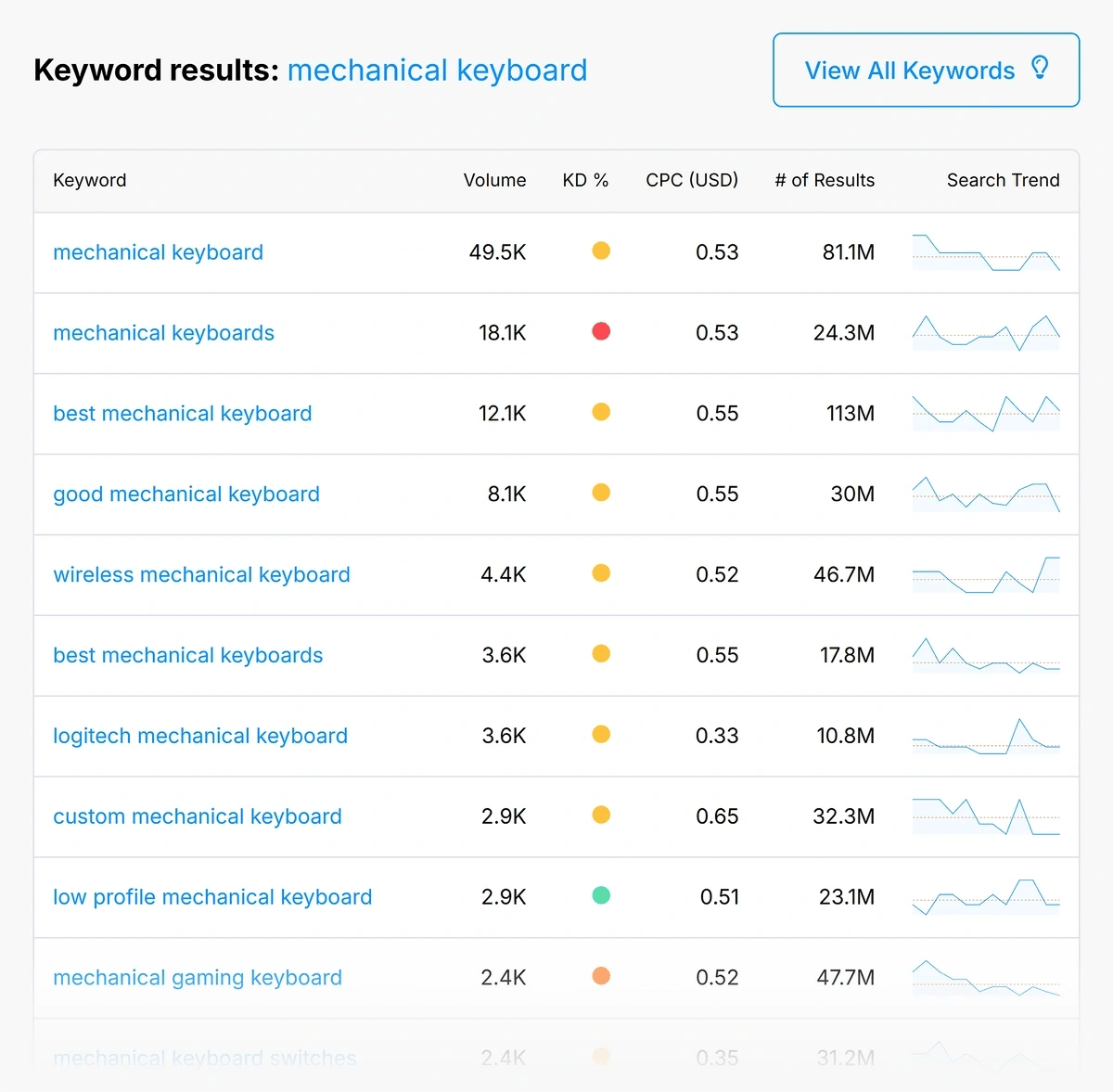
Step 3: Check the difficulty. A keyword with 10,000 monthly searches is worthless if the top 10 results are all from massive sites with thousands of backlinks. Use a keyword difficulty checker to gauge how hard each keyword is to rank for.
![[Screenshot: Keyword difficulty checker showing a difficulty score with backlink requirements]](https://www.datocms-assets.com/164164/1777504274-blobid5.png?auto=format,compress&w=1248&fit=max)
Step 4: Prioritize by business value. Not all keywords are equal. “What is project management” has high volume but attracts people who are just learning the basics. They’re not buying anything soon. “Best project management software for remote teams” has lower volume but much higher buying intent. Prioritize keywords where your product is a natural solution to the searcher’s problem.
This is what Grow and Convert calls “Pain Point SEO.” You target keywords where the person is actively feeling a pain that your product solves. These keywords may have lower volume, but they convert at much higher rates.
Step 5: Cluster your keywords. Group related keywords into clusters that can be targeted by a single page. “Project management software,” “project management tools,” and “best project management apps” can all be targeted by one well-written article. Creating separate pages for each would cause cannibalization. Learn more about keyword clustering and how it works.
![[Screenshot: A spreadsheet showing keyword clusters grouped by parent topic with total volume per cluster]](https://www.datocms-assets.com/164164/1777504286-blobid6.png?auto=format,compress&w=1248&fit=max)
5. Do Prompt Research for AI Search
Here is where most organic marketing guides stop. They cover SEO keyword research, and that’s it. But there’s a growing segment of your audience that never opens Google at all. They ask AI chatbots directly.
The prompts people type into ChatGPT, Perplexity, or Google AI Mode are different from traditional search keywords. They’re longer, more conversational, and often more specific. Someone might search Google for “CRM software” but ask ChatGPT “what CRM should a 20-person startup use if we need email automation and a free tier?”
This matters for organic marketing because if your content doesn’t address these conversational queries, it won’t get cited in AI-generated answers. And AI citations are a growing source of organic traffic.
Here’s how to approach prompt research with Analyze AI:
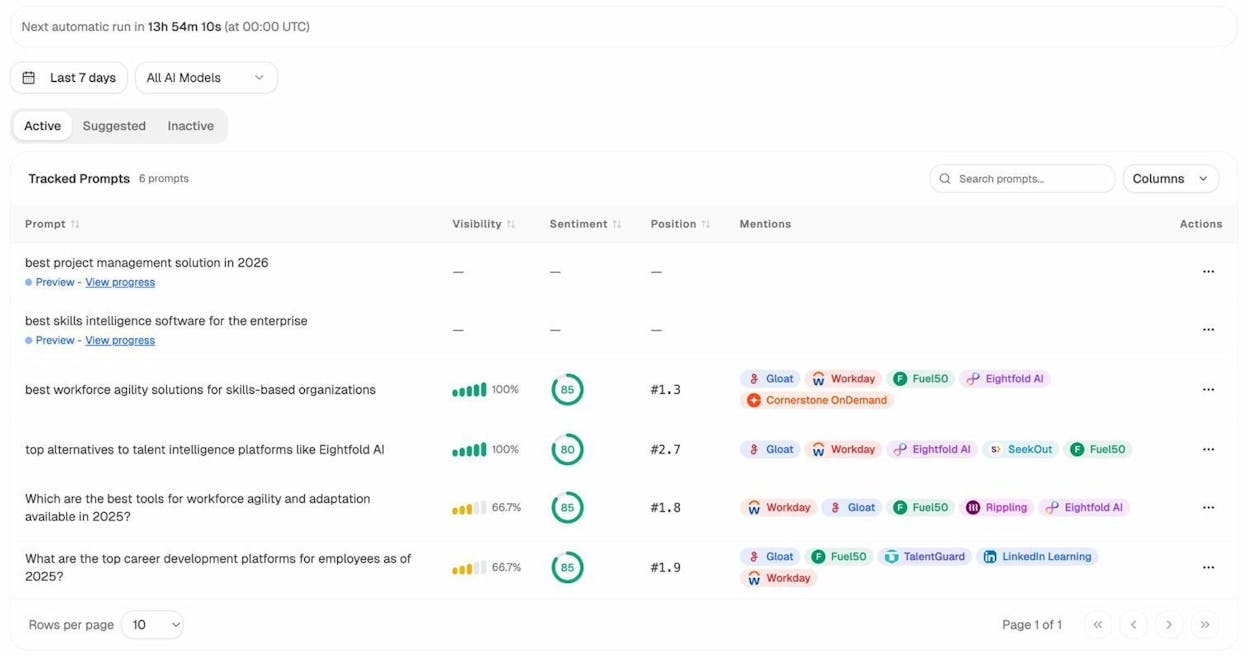
Step 1: Identify the prompts people are asking about your category. Use a tool like Analyze AI’s Prompt Tracking feature to see which AI prompts mention your brand and your competitors. This shows you what questions are actually being asked in AI search engines.
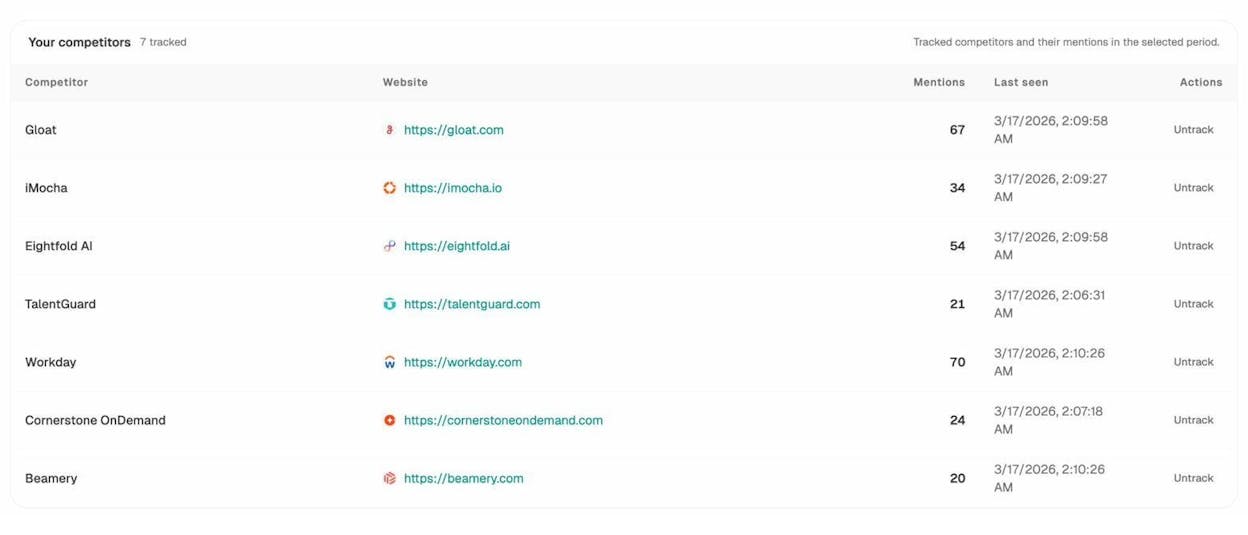
Step 2: Find the gaps. Look at prompts where your competitors appear but you don’t. These are your AI search keyword gaps. In Analyze AI, the Competitor Intelligence feature shows you exactly which brands are being mentioned in AI answers and how often.
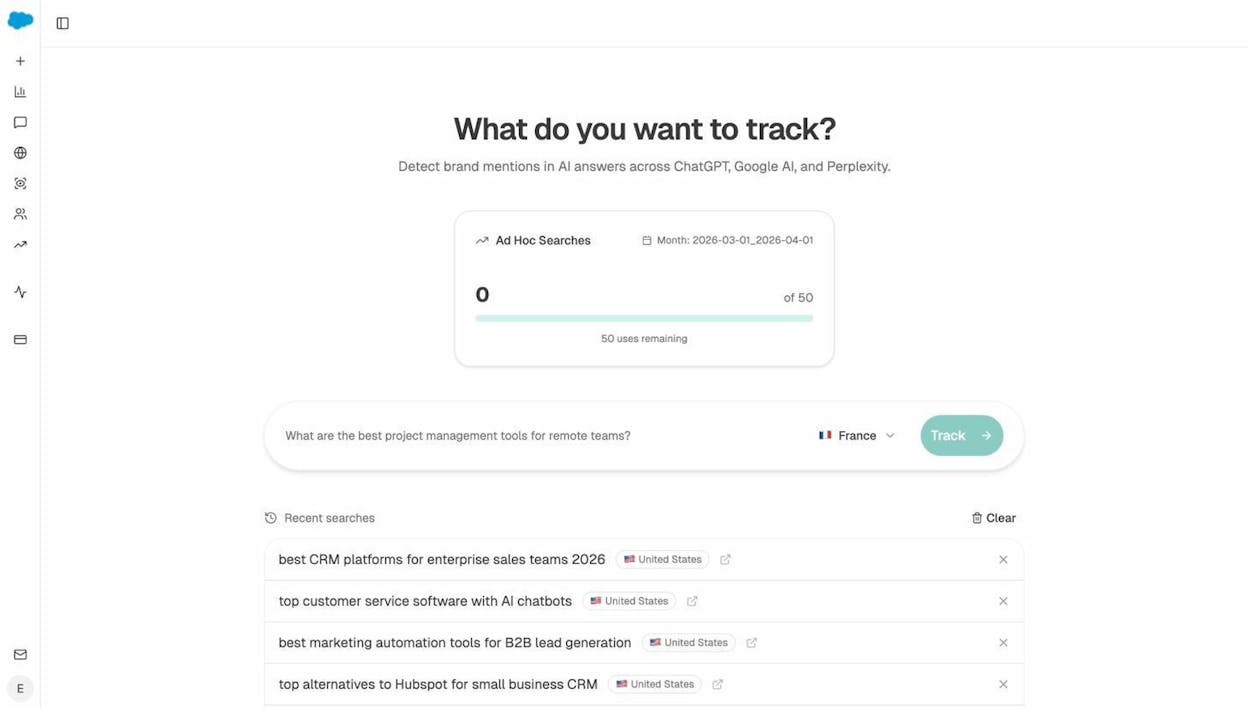
Step 3: Use ad hoc prompt searches. You can test specific prompts across multiple AI engines to see how your brand shows up in real-time. Type in a prompt like “best marketing automation tools for startups” and see which brands the AI recommends. If you’re not there, you have work to do.
The goal is to build a list of AI prompts alongside your SEO keywords. Both inform your content strategy. Your blog post should rank in Google AND get cited in ChatGPT.
6. Create Content That Ranks (and Gets Cited)
Now you have your keywords and your AI prompts. Time to create content.
The best organic content does three things: it answers the searcher’s question thoroughly, it’s better than anything else on the first page, and it’s structured in a way that AI models can easily parse and cite.
Here’s a practical framework for creating each piece:
Match the search intent. Before writing a single word, Google your target keyword and look at the top 10 results. Are they how-to guides? Listicles? Product comparisons? Definition posts? Your content needs to match what’s already ranking. If the top results are all step-by-step tutorials and you write an opinion piece, you won’t rank.
![[Screenshot: Google SERP for a sample keyword showing the types of results that rank on page one]](https://www.datocms-assets.com/164164/1777504301-blobid10.png?auto=format,compress&w=1248&fit=max)
Write a better version. Don’t just match the existing content. Beat it. More depth, more examples, more actionable steps, better visuals, original data, or a unique angle. This is what Animalz calls “information gain.” Your content needs to contain something the reader can’t find anywhere else.
Structure for both humans and AI. Use clear headings (H2s and H3s) that contain your target keywords. Write concise paragraphs. Put the answer to each question at the top of the section, not buried in the third paragraph. AI models pull from the first few sentences of a section when generating answers. If your key points are buried, they won’t get cited.
Include original examples and data. Generic advice doesn’t rank, and it doesn’t get cited by AI models either. Include real screenshots, actual case studies, original research, or at minimum, specific how-to steps that show genuine expertise. This is what Google’s E-E-A-T framework rewards, and it’s also what AI models prioritize when choosing which sources to cite.
Optimize your on-page SEO. This is the foundation. Include your target keyword in the title tag, H1, URL, and first 100 words. Use related terms naturally throughout (these are called LSI keywords). Add internal links to other relevant pages on your site. Write a compelling meta description.
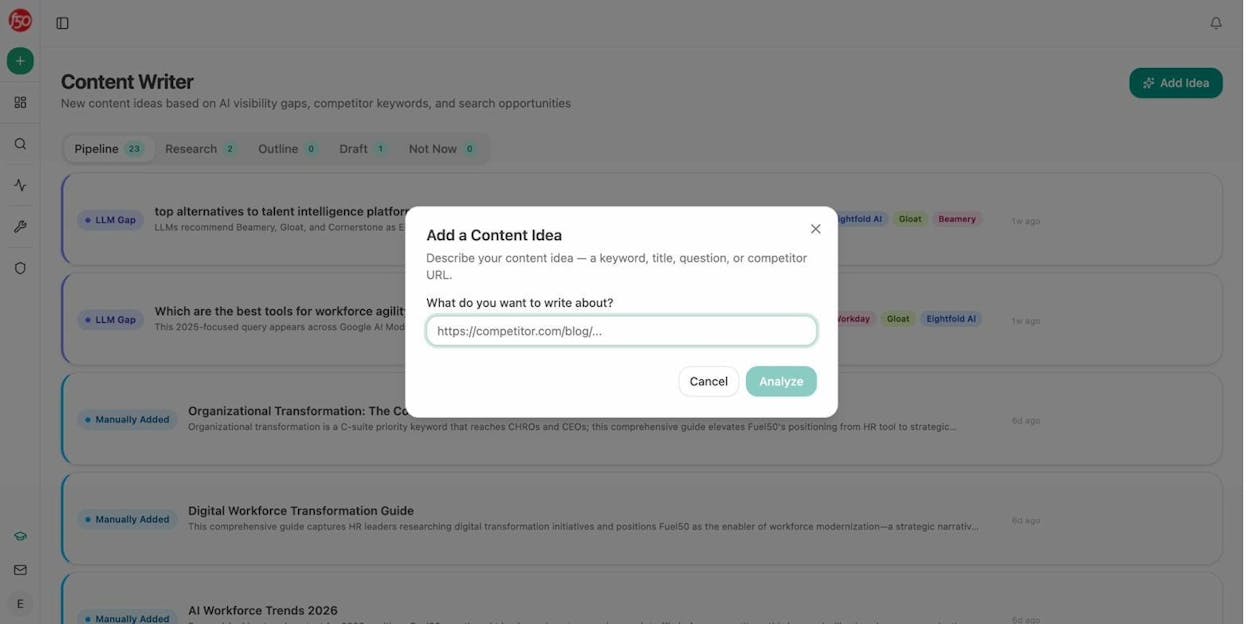
Use Analyze AI’s Content Writer for AI-optimized content. The Content Writer tool in Analyze AI helps you create content that’s optimized for both traditional SEO and AI search. You enter a keyword or competitor URL, and it generates research, an outline, and a draft that factors in LLM gaps (topics that AI models discuss but your content doesn’t cover).
7. Distribute Your Content
Creating content is half the work. Getting it in front of people is the other half.
Most organic content gets zero traffic because no one promotes it after publishing. Don’t make that mistake.
Email your list. Every time you publish something substantial, email your subscribers. They’re already interested in your brand. A new blog post gives them a reason to visit your site again.
Share on social media. Post on LinkedIn, X, or whatever platform your audience uses. Don’t just drop a link. Write a short thread or commentary that adds context and makes people want to click.
Repurpose into other formats. Turn a blog post into a YouTube video script, a LinkedIn carousel, a Twitter thread, a podcast episode, or a newsletter issue. One piece of content can feed five channels.
Build backlinks. Reach out to people who have linked to similar content and let them know about your (better) version. Write guest posts on authoritative sites with a link back to your article. Create original data and research that others will naturally want to cite. If you need help finding opportunities, check out our guide on link building tools.
Amplify with paid promotion. Yes, even within an organic strategy. Running a small paid campaign to boost a high-value blog post is one of the best uses of ad budget. You’re not paying for the content to exist. You’re paying to get it in front of more people faster.
8. Measure Your Results
If you’re not measuring, you’re not marketing. You’re just publishing.
The metrics you track depend on your goal (see Step 2). Here’s a framework:
For brand awareness: Track impressions, organic traffic, branded search volume, social followers, and brand mention volume. For AI search, track your visibility score across AI models.
For demand generation: Track organic sessions, pages per session, email signups, content downloads, and demo requests from organic sources.
For conversions: Track organic-attributed revenue, conversion rate from blog traffic, and assisted conversions (where organic content played a role in the buyer’s journey even if it wasn’t the last touch).
For retention: Track knowledge base usage, product-related blog views from existing customers, and churn rate trends over time.
For traditional SEO metrics, you can use SEO reporting tools or Google Search Console. For AI search metrics, you need a tool that tracks your visibility across AI platforms.
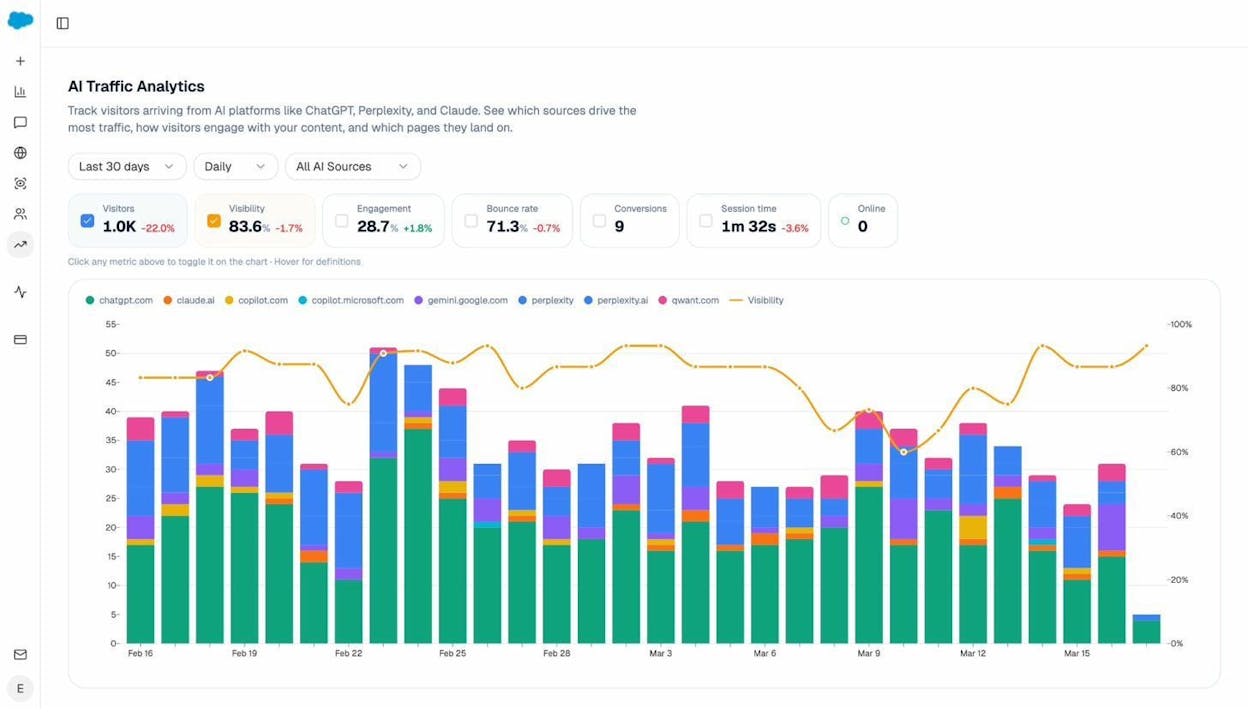
Analyze AI’s AI Traffic Analytics dashboard shows you exactly how much traffic you’re getting from AI referral sources like ChatGPT, Perplexity, Claude, and Copilot. You can see visitors, engagement, bounce rate, conversions, and session duration broken down by AI source.
You can also drill into specific landing pages to see which of your pages receive the most AI-referred traffic, and which AI platforms are sending it.
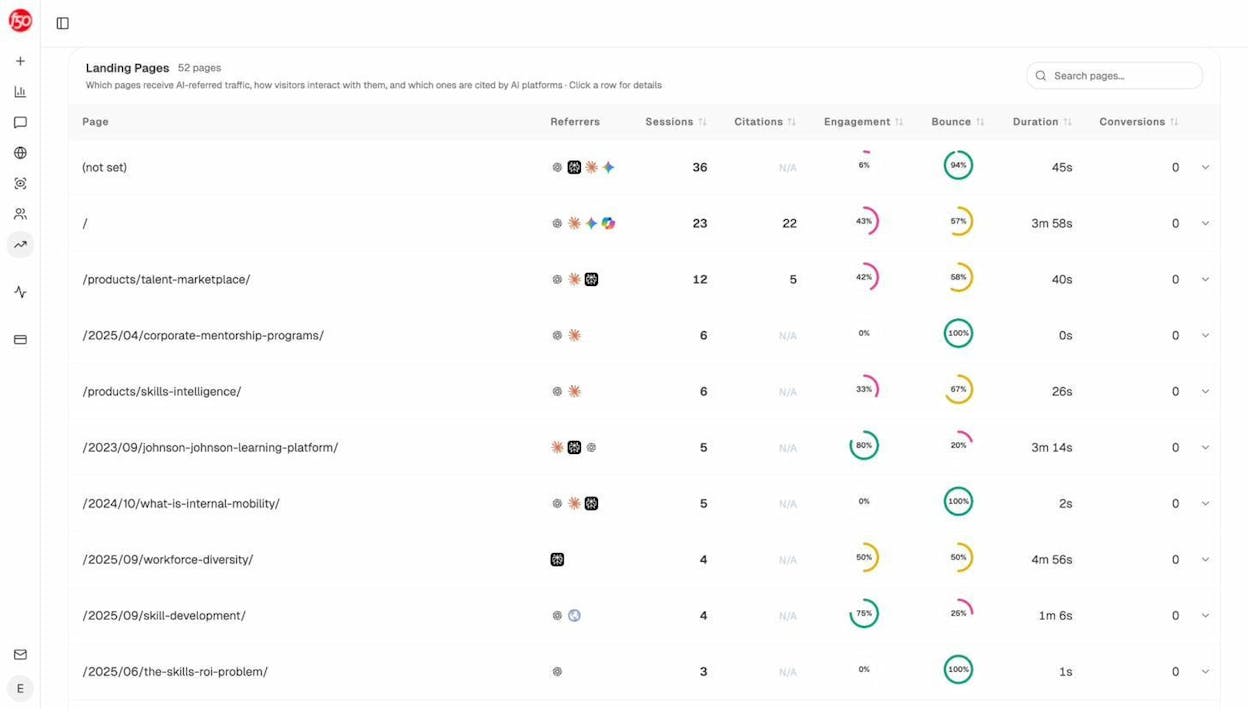
This is important because it closes the loop. You can see that a blog post you wrote for SEO is also getting picked up by ChatGPT and driving additional organic sessions. That’s the compound effect of organic marketing when you optimize for both traditional and AI search.
9. Optimize for AI Search Visibility
This step is what separates a 2024 organic marketing strategy from a 2026 one.
SEO is not dead. Google still sends the majority of organic traffic for most websites. But AI search is growing fast, and the brands that build visibility in AI answers now will have a significant advantage over those who wait.
Here’s the reality: AI models like ChatGPT and Perplexity pull their answers from existing web content. The same blog posts, product pages, and documentation that help you rank in Google also get cited in AI responses. So optimizing for AI search doesn’t mean abandoning SEO. It means doing SEO better and adding a few extra steps.
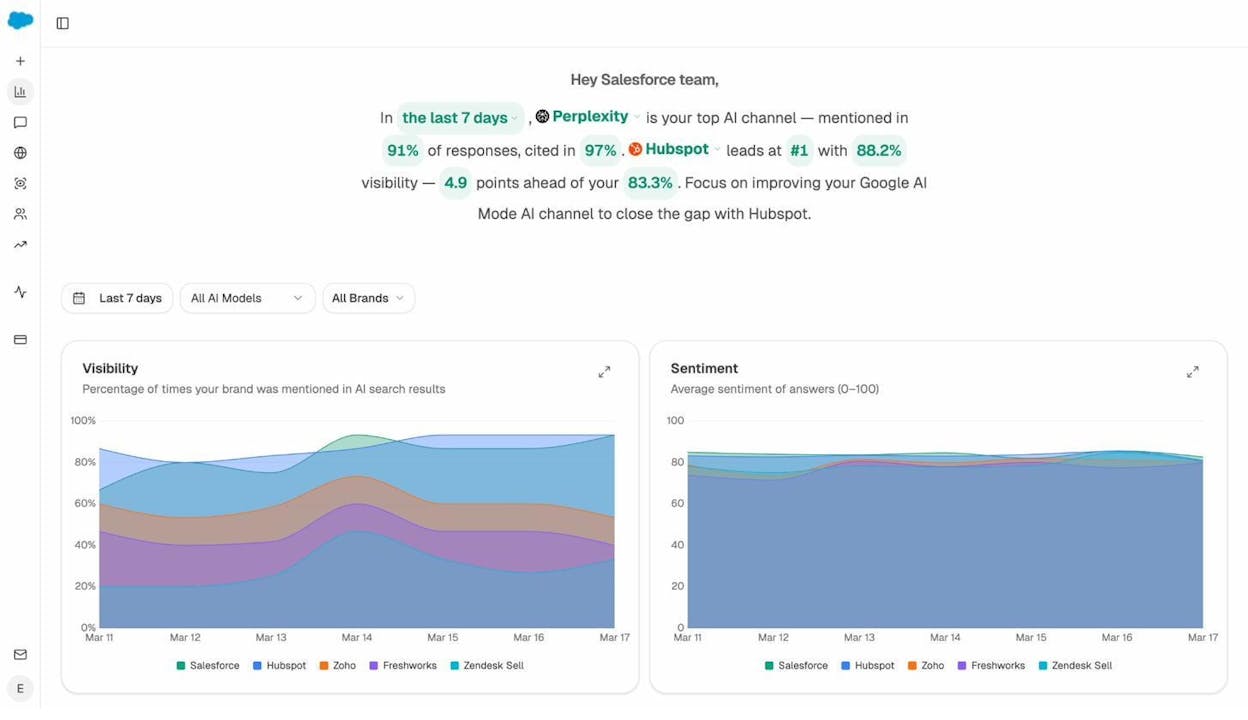
Track your AI visibility. You can’t improve what you don’t measure. Use Analyze AI’s AI Visibility Tracking to see how often your brand is mentioned across ChatGPT, Perplexity, Google AI Mode, Claude, and Copilot. The dashboard shows your visibility percentage, sentiment score, and position over time.
Identify which sources AI models trust. Not all content gets cited equally. Analyze AI’s Citation Analytics shows you which types of content (blogs, product pages, reviews, documentation) AI models cite most often in your space. It also shows which domains are the most-cited sources.
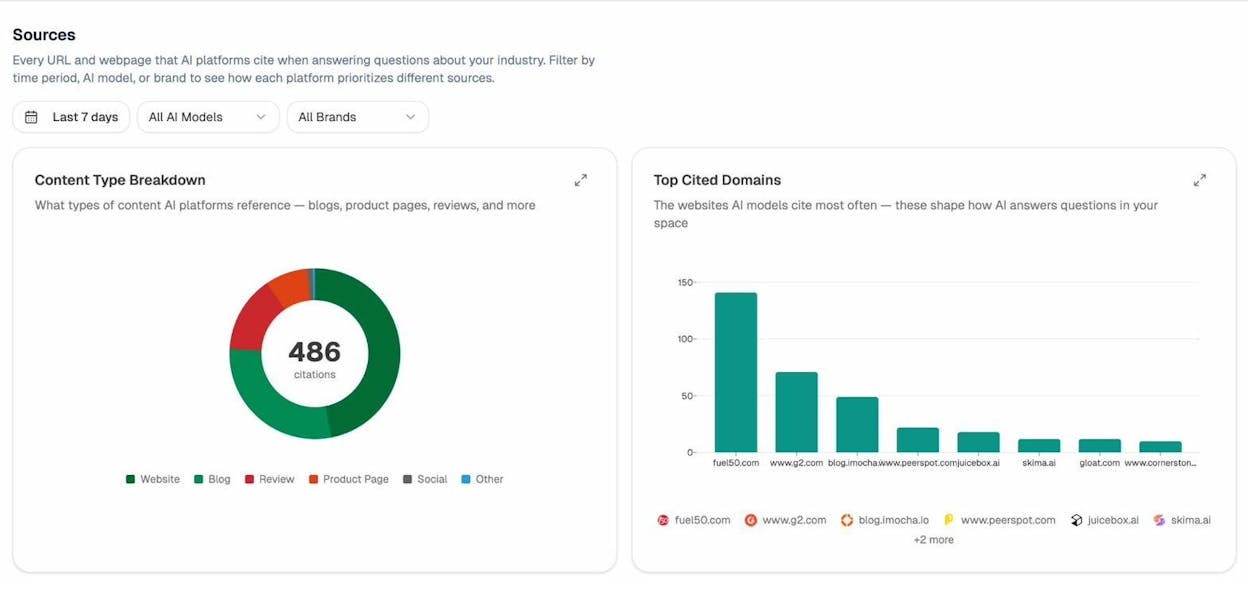
If you see that AI models in your space cite review sites and documentation pages more often than blog posts, that tells you where to focus your optimization effort.
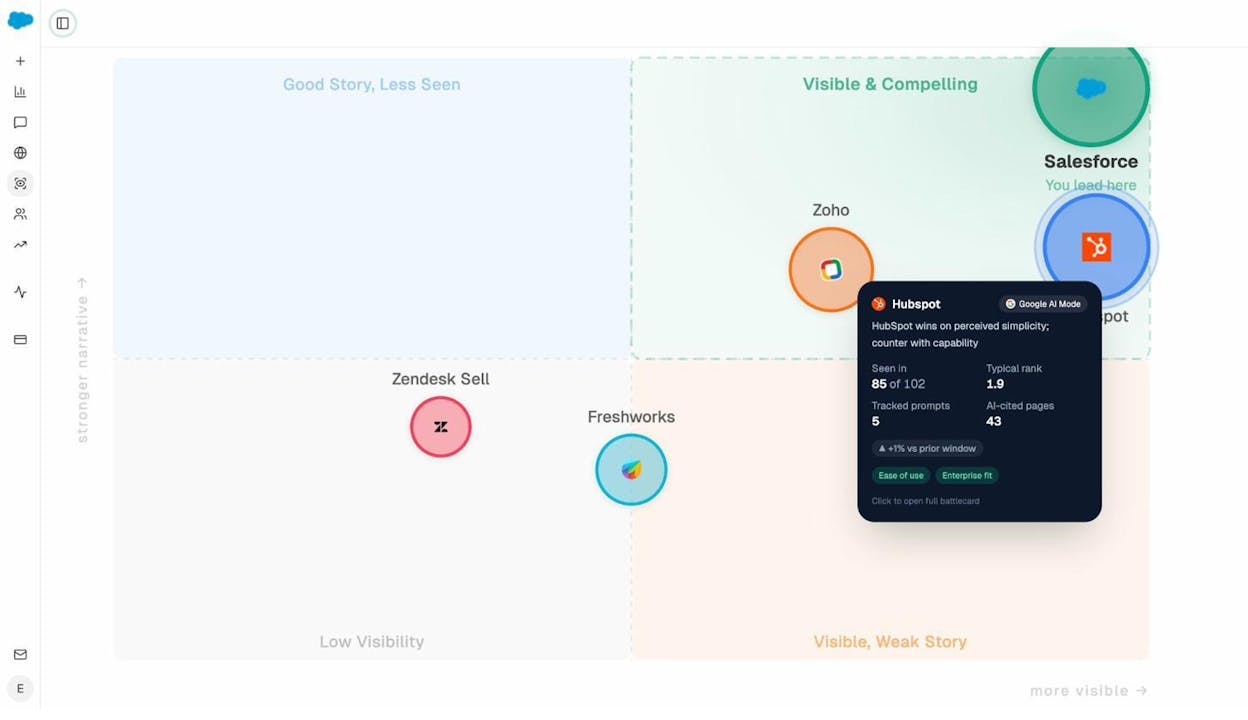
Watch your competitive position. Analyze AI’s Perception Map shows where you stand relative to competitors in AI search. It plots brands on two axes: visibility (how often you appear) and narrative strength (how positively you’re described). This gives you a clear picture of not just whether you’re mentioned, but how you’re positioned.
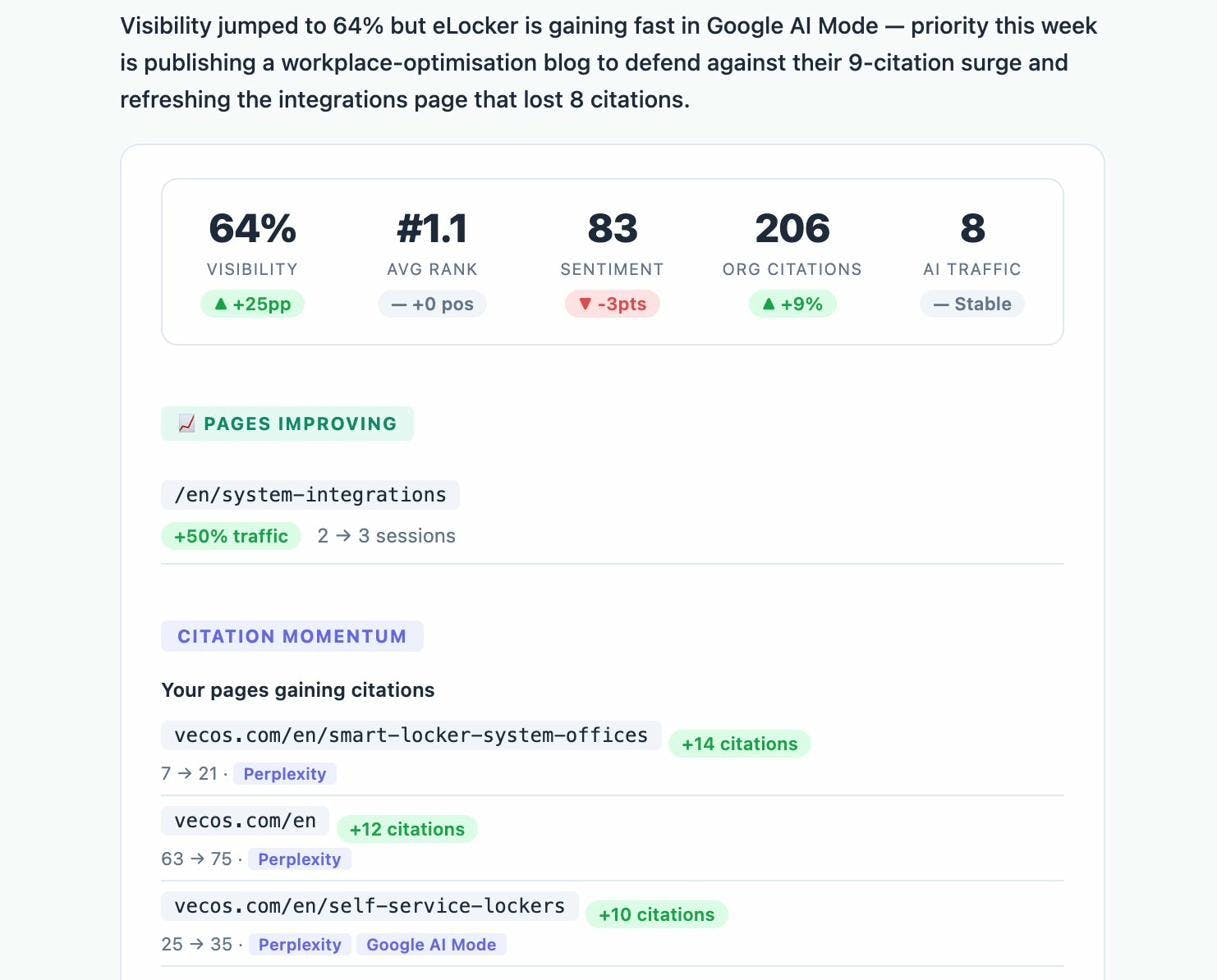
Get weekly updates without logging in. Analyze AI sends weekly email digests that summarize your AI visibility changes, pages gaining or losing citations, and competitor movements. This makes it easy to keep a pulse on your AI search performance without checking a dashboard every day.
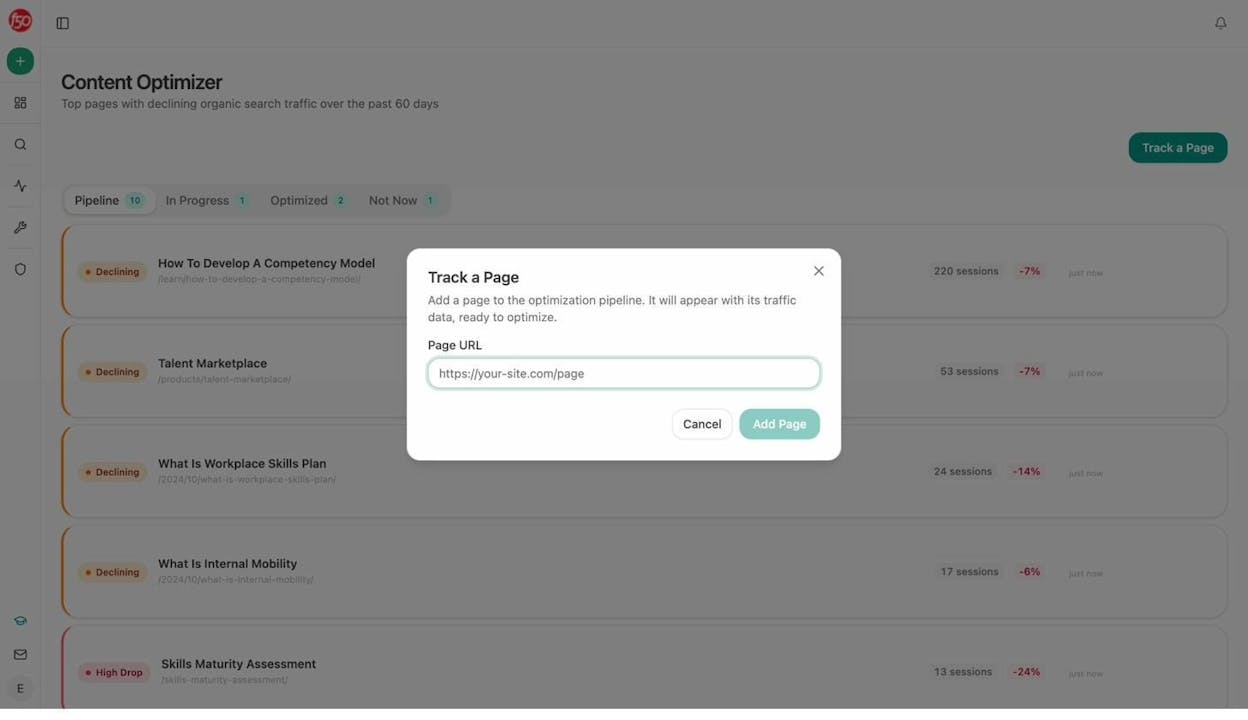
Optimize declining content. When a page starts losing organic traffic, it might also be losing AI citations. Analyze AI’s Content Optimizer surfaces pages with declining traffic and helps you update them. It fetches your existing content, scores it on argument quality, flow, clarity, and polish, and generates specific editorial suggestions.
The key principle here: everything you do for SEO also feeds your AI search visibility. Better content, clearer structure, more original data, and stronger authority all help you rank in Google AND get cited by AI models. AI search is not replacing SEO. It is an additional organic channel that rewards the same fundamentals.
5 Organic Marketing Mistakes to Avoid
Most organic marketing failures aren’t caused by bad execution. They’re caused by bad strategy decisions early in the process.
Mistake 1: Creating content for yourself instead of your audience. If your blog reads like an internal knowledge base, you’re writing for yourself. Every piece should answer a question your target customer actually has. If you can’t name the person who would search for this topic, don’t write it.
Mistake 2: Chasing high-volume keywords without considering intent. A keyword with 50,000 monthly searches is tempting. But if the intent doesn’t match your product, the traffic won’t convert. Focus on keyword types where the searcher has a problem your product solves.
Mistake 3: Publishing and forgetting. Organic marketing compounds, but only if you maintain it. Content goes stale. Competitors publish better versions. Search algorithms change. You need a regular process for updating and optimizing existing content, not just creating new pieces.
Mistake 4: Ignoring AI search entirely. If your competitors are showing up in ChatGPT and Perplexity responses and you’re not, you’re losing organic visibility every day. Tracking your AI visibility is no longer optional. It’s as important as checking your Google rankings.
Mistake 5: Trying to be on every channel at once. LinkedIn, YouTube, TikTok, a podcast, a blog, email, Reddit. You can’t do them all well. Pick one or two channels, build real traction, and then expand. Spread too thin and nothing compounds.
Final Thoughts
Organic marketing and paid marketing are not competitors. They’re teammates.
Paid marketing gives you speed. Organic marketing gives you durability. The best results come from using both together, with organic as your long-term foundation and paid as an accelerant for your best content.
What’s changed in the last two years is that organic marketing now has a new dimension. AI search is not killing SEO. It’s extending it. The content you create to rank in Google also gets cited by ChatGPT, Perplexity, and Google AI Mode. That means your organic marketing efforts have more surface area than ever before.
The brands that recognize this early and track their visibility across both traditional and AI search will compound their organic growth faster than those who wait.
If you want to see where your brand stands in AI search today, you can check your AI visibility for free or explore how Analyze AI helps marketing teams track and improve their organic visibility across every search channel.

Ernest

Ibrahim


