



Summarize this blog post with:


In this article, you’ll learn exactly how to execute the Skyscraper Technique from start to finish. You’ll see how to find content worth improving, how to make yours genuinely better (not just longer), how to run outreach that earns links, and how to apply the same principles to AI search visibility. Whether you’re building your first skyscraper post or troubleshooting one that flopped, every step here is actionable.
Table of Contents
What Is the Skyscraper Technique?
The Skyscraper Technique is a link building strategy where you find existing content that has earned a lot of backlinks, create something better, and then reach out to the people who linked to the original.
Brian Dean coined the term in 2015. His logic was simple. People naturally gravitate toward the best resource on any topic. If you can build the tallest skyscraper in your space, the links will follow.
The technique works in three steps:
-
Find relevant content with lots of backlinks.
-
Create something significantly better.
-
Reach out to the sites that linked to the original and pitch your improved version.
That third step is what separates the Skyscraper Technique from regular content marketing. You are not hoping people discover your content. You are proactively contacting the exact audience most likely to link to it, because they already linked to something similar.
How to Execute the Skyscraper Technique
Follow these three steps to implement the Skyscraper Technique. Each one includes specific tactics and tools you can use right away.
Step 1: Find Relevant Content With Lots of Backlinks
The foundation of the Skyscraper Technique is choosing the right target. You need content that has already proven it can attract links. Here are three methods to find it.
Method A: Analyze a competitor’s top pages
Pick a competitor or popular site in your niche. Enter their domain into a backlink analysis tool. Then sort their pages by the number of referring domains.
![[Screenshot: Entering a competitor domain into a backlink checker tool and viewing “Best by backlinks” or “Top pages by links” report]](https://www.datocms-assets.com/164164/1777497142-blobid1.png?auto=format,compress&w=1248&fit=max)
You are looking for content pages (not homepages or product pages) with at least 50 referring domains. These are your targets. Pages with fewer links may not give you enough outreach prospects to make the campaign worthwhile.
Skip pages that earned links for reasons you cannot replicate. For example, a company’s annual industry report gets links because of proprietary data. Unless you can run your own study, that page is not a good skyscraper target.
Method B: Search by topic
If you do not have a specific competitor in mind, search for your topic directly in a content database tool. Enter a broad keyword related to your niche and filter for pages with a minimum of 50 referring domains.
![[Screenshot: Content explorer or similar tool showing search results for a broad topic filtered by referring domains greater than 50]](https://www.datocms-assets.com/164164/1777497160-blobid2.jpg?auto=format,compress&w=1248&fit=max)
Also apply these filters to clean up results:
-
Set the language to your target language.
-
Exclude homepages.
-
Exclude pages older than five years (the content might be too outdated to improve meaningfully).
Browse the results. Look for list posts, how-to guides, and ultimate guides. These formats tend to earn links because they are reference material that other writers cite.
Method C: Use keyword difficulty as a proxy
High keyword difficulty scores often indicate that the top-ranking pages have many backlinks. Enter a broad keyword related to your niche into a keyword research tool. Then filter for keywords with a difficulty score of 40 or above.
![[Screenshot: Keyword research tool showing keywords filtered by KD score of 40+]](https://www.datocms-assets.com/164164/1777497170-blobid3.png?auto=format,compress&w=1248&fit=max)
From here, click into the SERP results for each keyword and look at how many referring domains the top pages have. If most pages in the top 10 have 50 or more backlinks, it is a strong skyscraper candidate.
This method is especially useful because it helps you find content that will also rank well. You get link building and organic traffic in one campaign.
Which method should you use? It depends on where you are starting from. If you already know your competitors well, start with Method A. If you are exploring a new niche, Method B is faster. Method C works best when you want to combine link building with an SEO keyword strategy.
Step 2: Create Something Genuinely Better
This is where most people get the technique wrong. They assume “better” means “longer.” It does not.
Adding 25 mediocre tips to an existing list of 25 does not make your content better. It makes it harder to read. Nobody wants to scroll through 5,000 words of filler to find one useful insight.
Here is a framework for actually improving content. Evaluate the original article across five dimensions and decide which ones matter most for the specific topic.
Dimension 1: Depth and detail
Look at the original article. Does it explain things at a surface level? Does it skip important steps? Does it make claims without evidence?
If so, your opportunity is to go deeper. Add explanations for every step. Include the “why” behind each recommendation. Show specific examples instead of just listing abstract tips.
For instance, if the original article says “write better headlines,” your version should show three specific headline formulas with before-and-after examples. The reader should be able to take action immediately after reading your section.
Dimension 2: Freshness
Content gets outdated fast. Screenshots from 2019 tools, statistics from studies that have been updated, broken links, references to features that no longer exist. These are all signals that the content has aged.
Your job is to update everything. Use current screenshots. Find the latest data. Replace dead links with working ones. Mention recent developments in the topic.
Dimension 3: Design and readability
A wall of text does not earn links, no matter how good the information is. If the original article is dense and hard to scan, you can win by making yours easier to consume.
Use clear headings, short paragraphs, tables for comparisons, and images that illustrate key points. If the topic benefits from a visual explanation, create a custom diagram or flowchart.
Dimension 4: Original data or perspective
This is the most powerful differentiator and the hardest to replicate. If you can include original research, case study results, survey data, or expert interviews that no one else has, your content becomes the primary source rather than a summary of existing sources.
Even without original research, you can add a unique angle. Maybe you have hands-on experience that contradicts common advice. Maybe you tested a technique and got surprising results. Real experience makes content worth linking to.
Dimension 5: Practical tools and templates
Can you give readers something they can use immediately? A spreadsheet template, a checklist, a calculator, a free tool. Interactive elements and downloadable resources make your content sticky. People come back to it and share it with their teams.
A practical example of improvement:
Suppose you find an article titled “50 Niche Site Ideas” that ranks well and has many backlinks. Many of those 50 ideas are generic. They are listed without context about profitability, competition, or how to get started.
Your skyscraper version does not need to list 100 ideas. Instead, you could list 15 carefully vetted niches. For each one, you include estimated traffic potential, monetization options, difficulty assessment, and a real example of a site that succeeded in that niche.
That version is shorter but dramatically more useful. Curation is where the value is.
Step 3: Reach Out to the Right People
You have a great piece of content. Now you need to get it in front of people who are likely to link to it.
The core outreach list comes from the backlink profiles of the content you improved. But smart outreach goes beyond just emailing everyone on that list.
Build your prospect list
Start by pulling the backlink data from the original article you improved. Paste the URL into a backlink analysis tool and export the list of referring domains.
![[Screenshot: Backlinks report for the target URL showing list of linking domains with columns for DR, traffic, anchor text]](https://www.datocms-assets.com/164164/1777497178-blobid4.png?auto=format,compress&w=1248&fit=max)
Not every link on this list is a good prospect. Apply these filters to narrow it down:
-
Language filter. Only keep sites in your target language.
-
Dofollow only. Focus on links that pass equity.
-
Remove irrelevant site types. Scrape pages, directories, and spammy sites will not respond to outreach.
-
Check if the page still exists. Use a broken link checker to see if the original link is still live. If it is broken, that is actually an even better outreach angle.
Expand your list beyond the original article
This is a step many people skip. Do not limit yourself to the backlinks of just one piece of content. Find other pages that rank for the same keyword and pull their backlinks too.
Enter your target keyword into a keyword research tool and look at the SERP overview. Identify the top 5 to 10 ranking pages and export their backlinks as well.
![[Screenshot: SERP overview showing top-ranking pages for the target keyword with referring domain counts]](https://www.datocms-assets.com/164164/1777497188-blobid5.png?auto=format,compress&w=1248&fit=max)
You can also find additional prospects by searching for your keyword in a content explorer tool and filtering for pages with at least 10 referring domains. These are pages covering the same topic that have attracted links and the people who linked to them might be interested in your improved resource.
Segment your prospects
People link for different reasons. Some linked to the original because of a specific statistic. Others linked because it was the most comprehensive guide on the topic. Others referenced a particular section.
Before you write a single outreach email, check the anchor text data for the original article. This tells you what specific elements people found worth linking to.
![[Screenshot: Anchors report showing different anchor texts used by different linking sites]](https://www.datocms-assets.com/164164/1777497197-blobid6.png?auto=format,compress&w=1248&fit=max)
Group your prospects by the reason they linked. Then craft a different email angle for each group.
For example, if one group linked to a specific data point, your email should lead with your newer, updated data. If another group linked because the article was a comprehensive guide, emphasize what your version covers that the original did not.
Write outreach emails that work
Do not use Brian Dean’s original email template. It has been copied so many times that most site owners delete it on sight. The template that says “I noticed you linked to X, I made something better, please swap the link” is burned.
Instead, follow these outreach principles:
Lead with what is different about your content. Do not just say it is “better.” Explain specifically why. Did you add original research? Update outdated statistics? Include a step that everyone else misses?
Personalize the opening. Reference something specific about the prospect’s site or article. This shows you actually visited their page and are not sending a mass blast.
Keep it short. Three to five sentences. Site owners are busy. They do not need your life story. They need a quick, compelling reason to check out your content.
Make the ask easy. Do not ask them to remove a link and add yours. Ask them to add your resource as an additional reference. It is less work for them and feels less pushy.
Here is a structure that works better than the standard template:
Subject line: Quick resource for your [topic] article
Hi [Name],
I was reading your post on [topic] and noticed you reference [specific thing from original article].
We just published [brief description of what makes your content unique, such as “an updated guide with 2026 data” or “a study based on X data points”].
It might be worth adding as an additional resource for your readers. Here is the link: [URL]
Either way, enjoyed the post.
[Your name]
This works because it is short, it explains why your content is worth linking to, and it asks for an addition rather than a swap.
How to Apply the Skyscraper Technique to AI Search
The Skyscraper Technique was designed for traditional link building. But the same principles apply to a channel that is growing fast and that most marketers are ignoring: AI search.
AI search engines like ChatGPT, Perplexity, Gemini, and Copilot do not rank pages the way Google does. They synthesize answers from multiple sources and cite the ones they pull from. The Skyscraper Technique gives you a natural advantage here, because creating the most comprehensive and authoritative resource on a topic is exactly what gets you cited by LLMs.
Here is how to adapt each step of the Skyscraper Technique for AI search visibility.
Find what AI models already cite in your space
Instead of looking at which content has the most backlinks, look at which content AI models are citing when they answer questions in your niche.
In Analyze AI, go to the Sources dashboard. This shows every URL and webpage that AI platforms cite when answering questions about your industry. You can filter by time period, AI model, and brand to see how each platform prioritizes different sources.
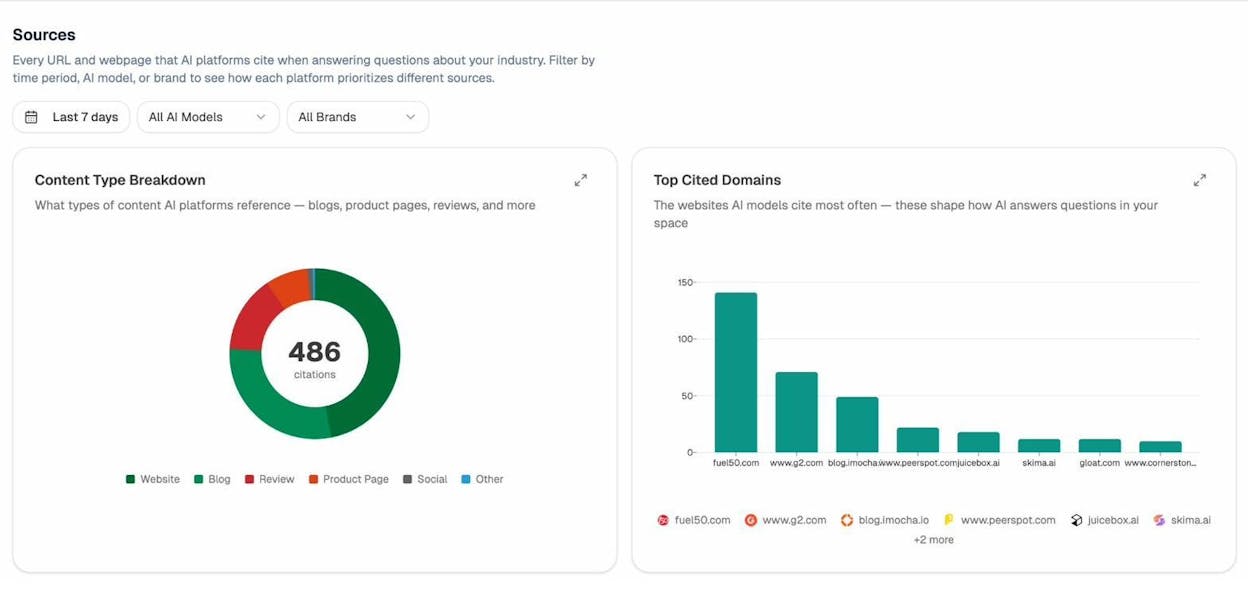
This view tells you two things. First, which domains AI models trust most in your space. Second, what types of content (blogs, product pages, reviews) get cited most often.
If a competitor’s blog post keeps getting cited across multiple AI engines, that is your skyscraper target for AI search. You can build something better and position it to replace that citation.
Identify where competitors appear and you do not
Go to the Competitor Intelligence section in Analyze AI. The platform automatically detects competitors that get mentioned in AI responses about your space and shows you exactly where they are winning.
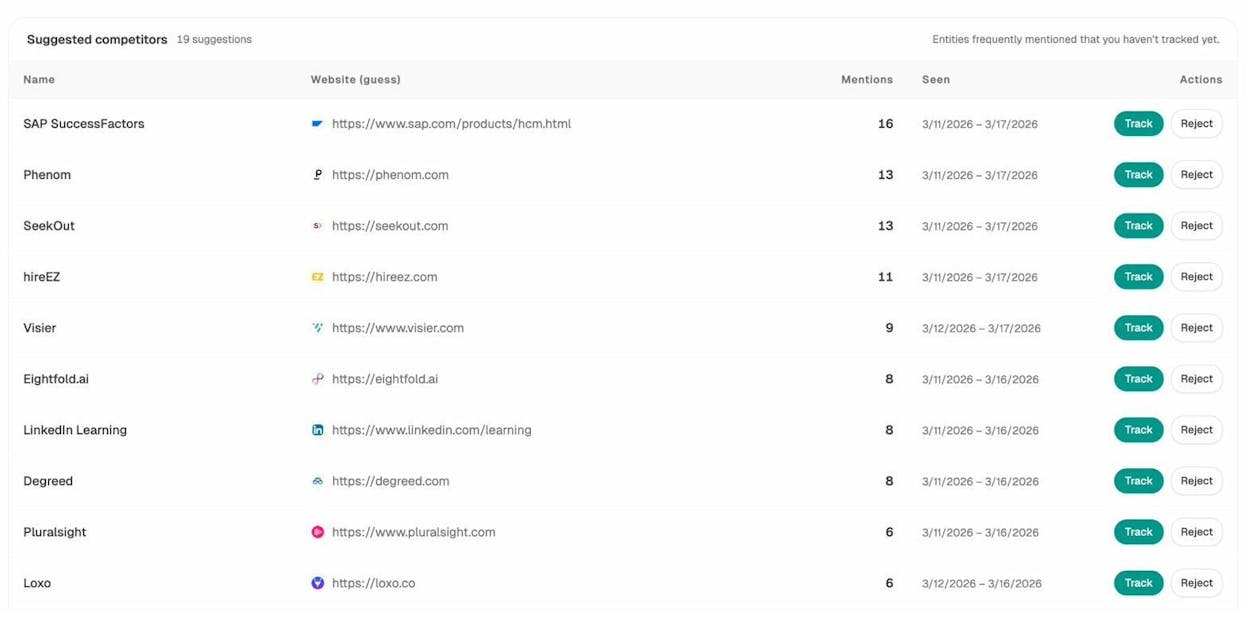
The real power here is spotting visibility gaps. The prompts where your competitors get mentioned but you do not represent direct opportunities. If you can create better content on those topics, you can insert yourself into the AI conversation.
Track your prompt-level visibility
Use the Prompt Tracking feature to monitor specific queries that matter to your business. Track the prompts where you want your brand to appear in AI answers and watch your visibility over time.
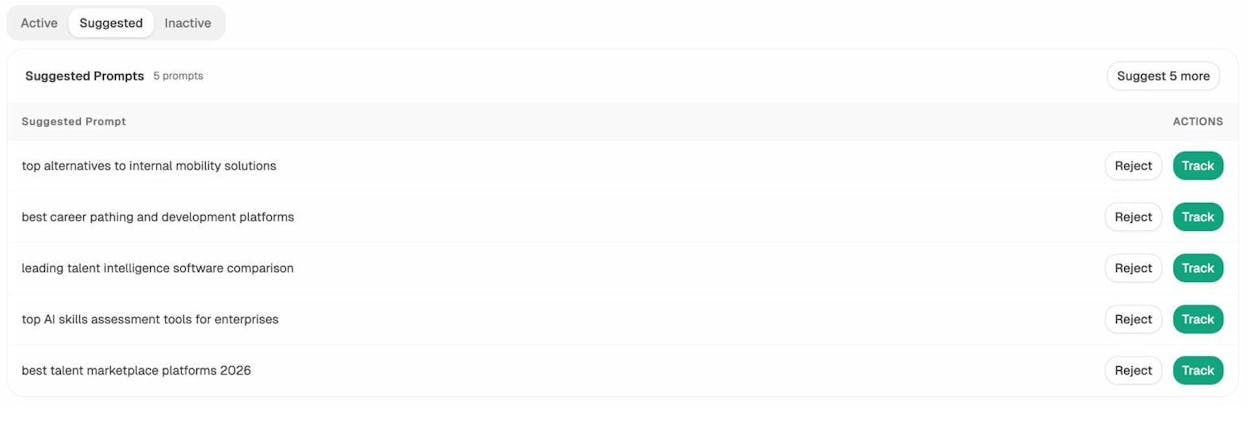
When you publish a skyscraper article, add the relevant prompts to your tracker. Over the following weeks, you can see whether AI models start citing your new content. This closes the feedback loop that traditional link building outreach cannot provide.
Use AI traffic data to validate what works
After your skyscraper content goes live, check the AI Traffic Analytics dashboard. This shows you which pages on your site receive visitors from AI platforms like ChatGPT, Perplexity, Claude, and Gemini.
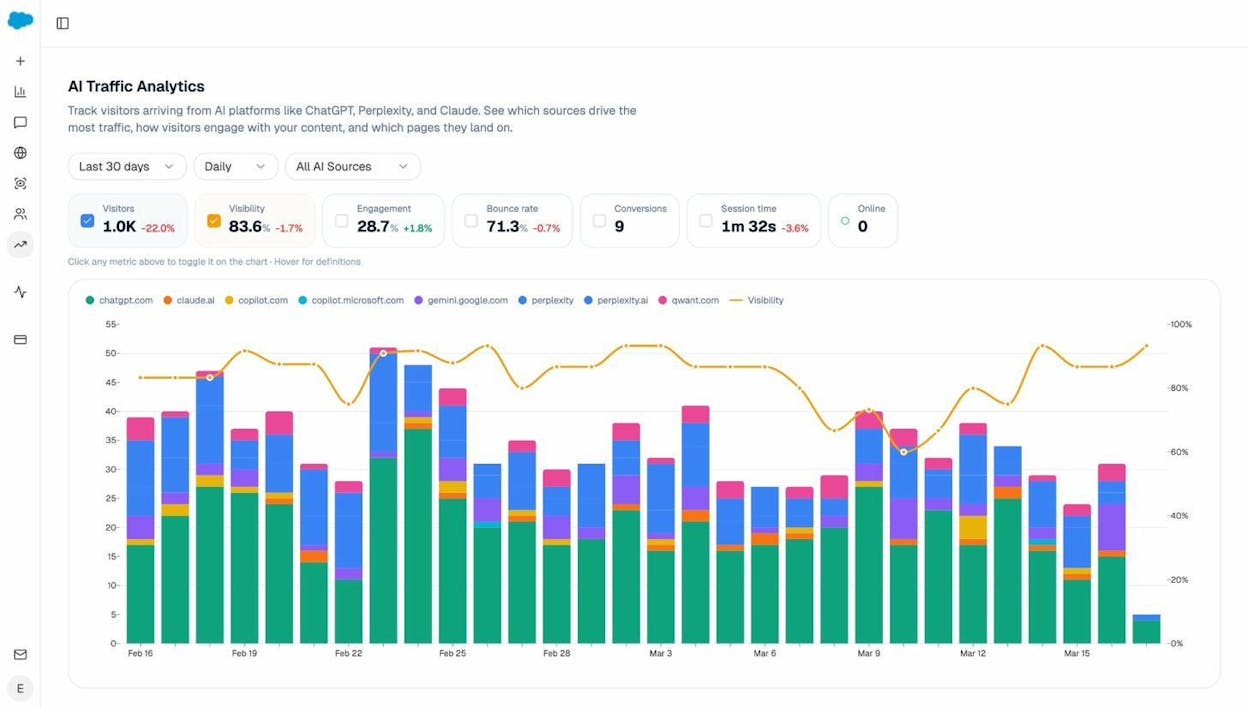
You can drill down into individual landing pages to see which AI engines are driving traffic, what prompts led to your citations, and how those visitors behave compared to organic search traffic.
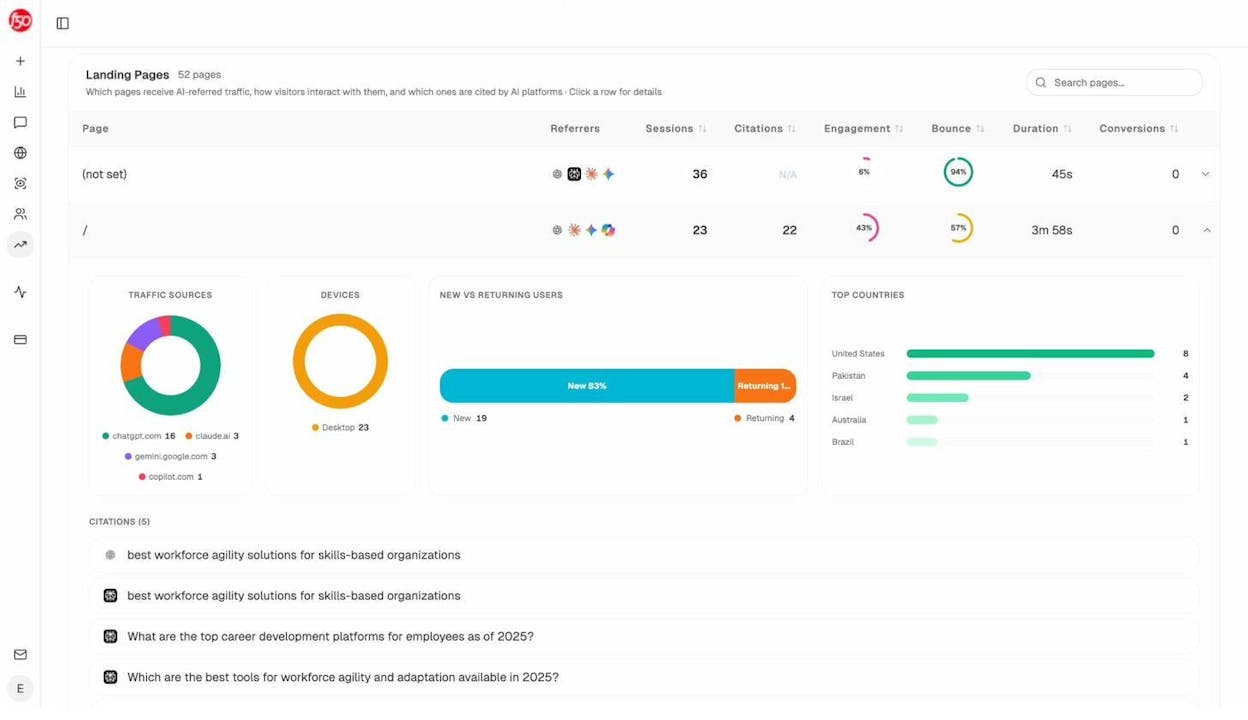
This data is valuable because it shows you patterns. If certain types of pages consistently attract AI traffic, you know what format and depth level to replicate in future skyscraper campaigns. Double down on what works.
The AI search advantage of skyscraper content
Here is why the Skyscraper Technique is especially effective for AI search. LLMs tend to cite the most comprehensive, up-to-date, and well-structured resource on a topic. That is exactly what a well-executed skyscraper article is.
When you create the definitive resource on a topic, you earn two benefits at once. You get backlinks from outreach (the traditional benefit). And you increase your chances of being cited by AI models (the emerging benefit).
This is not about choosing between SEO and AI search. It is about recognizing that both channels reward the same type of content: original, thorough, and genuinely useful.
Does the Skyscraper Technique Still Work?
The honest answer is that it depends on how well you execute it.
The technique is over a decade old now. That means it has been copied endlessly, and many site owners have received hundreds of templated outreach emails pitching “something better.” The novelty has worn off.
But the underlying principles still hold. Creating excellent content and promoting it to the right people is not a fad. It is how marketing works.
According to Aira’s State of Link Building report, only about 18% of SEOs still use the Skyscraper Technique. It ranks #20 among link building tactics. That tells you something interesting. Most SEOs have moved on, which means the competition for this approach has actually decreased.
The SEOs and marketers who still use it and get results tend to share a few traits:
-
They create content with a genuine unique selling point, not just a longer version of what already exists.
-
They have (or are building) a recognizable brand.
-
They write custom outreach emails instead of copying templates.
-
They combine link building with other promotion channels.
If you can check those boxes, the technique still works. If you are planning to copy-paste an outreach template to 500 people and hope for the best, it will not.
Why the Skyscraper Technique Fails (And How to Fix Each Problem)
Even with solid principles, many skyscraper campaigns underperform. Here are the five most common failure points and how to address each one.
1. Using the same outreach template as everyone else
Brian Dean’s original post included an outreach email template. Thousands of SEOs copied it word for word.
The template was something like this: “I noticed you linked to [article]. I made something better. Can you swap the link?”
If a website owner has seen this template a hundred times, they will delete your email immediately. And many of them have.
The fix is simple. Write your own outreach emails from scratch. Personalize them. Lead with the specific reason your content is different. And ask for an addition, not a swap.
If you are sending outreach at scale, templates are fine. Just make sure yours does not sound like everyone else’s. Test different subject lines, different angles, and different CTAs to find what gets responses in your niche.
2. Not segmenting your prospects
Sending the same email to every prospect ignores the fact that different people linked to the original content for different reasons.
Some linked because of a specific statistic. Some linked because it was the best overview on the topic. Some linked from a resource page. Each of these segments needs a different pitch.
Check the anchor text data on the original article to understand why people linked. Then group your prospects by their linking context and write a tailored pitch for each group.
For example, if a group of sites linked to the original article because it contained a specific data point (like “68% of online experiences begin with a search engine”), and your content has a newer, more accurate statistic, lead your email with that updated data.
3. Not reaching out to enough people
Link building is a numbers game. If you only email 50 people, you might get 2 to 3 links. That is not enough to move the needle.
Expand your prospect list by pulling backlinks from multiple sources:
-
The original article you improved.
-
Other top-ranking pages for the same keyword.
-
Related content that covers the same topic.
-
Resource pages in your niche that list tools and guides.
![[Screenshot: Content explorer showing results for the target keyword filtered by referring domains, to find additional prospect sources]](https://www.datocms-assets.com/164164/1777497223-blobid12.png?auto=format,compress&w=1248&fit=max)
The more qualified prospects you contact, the more links you will earn. Aim for at least 200 to 300 prospects per campaign, knowing that your response rate will likely be between 5% and 15%.
4. Thinking longer content is better content
The Skyscraper Technique’s name implies “build taller.” But height without substance is just empty floors.
Someone publishes a list of 15 tools. Another person “skyscrapers” it to 30. The next bumps it to 50. Then someone goes to 100. This is an arms race that nobody wins, least of all the reader.
The better approach is to focus on quality over quantity. A curated list of 10 tools with in-depth reviews, real usage experience, and clear recommendations is more valuable than a wall of 100 one-sentence descriptions.
Here is a quick test: Would you bookmark this content? If you read your own article and would not save it for future reference, it is not good enough to earn links.
When Brian Dean listed four dimensions for improvement (length, freshness, design, depth), he did not mean to improve all four at once by throwing more words at the page. The goal is to improve the dimensions that matter most for your specific topic.
5. Ignoring the role of brand
This is the uncomfortable truth about the Skyscraper Technique. Sometimes it does not work because nobody knows who you are.
People do not evaluate content in a vacuum. They also consider who published it. A well-known brand pitching a great article will get a higher response rate than an unknown site pitching an equally great article. That is just reality.
This does not mean the Skyscraper Technique is useless for newer brands. It means you need to set realistic expectations. Your first skyscraper campaign might earn 5 links instead of 50. That is still progress.
Brand is built through consistency. Keep publishing high-quality content. Keep promoting it. Over time, people in your niche will start recognizing your name, and your outreach response rates will improve.
One thing that can accelerate this for newer brands is tracking how AI search engines perceive your brand. In Analyze AI, the Perception Map shows where your brand sits relative to competitors in terms of visibility and narrative strength across AI engines.
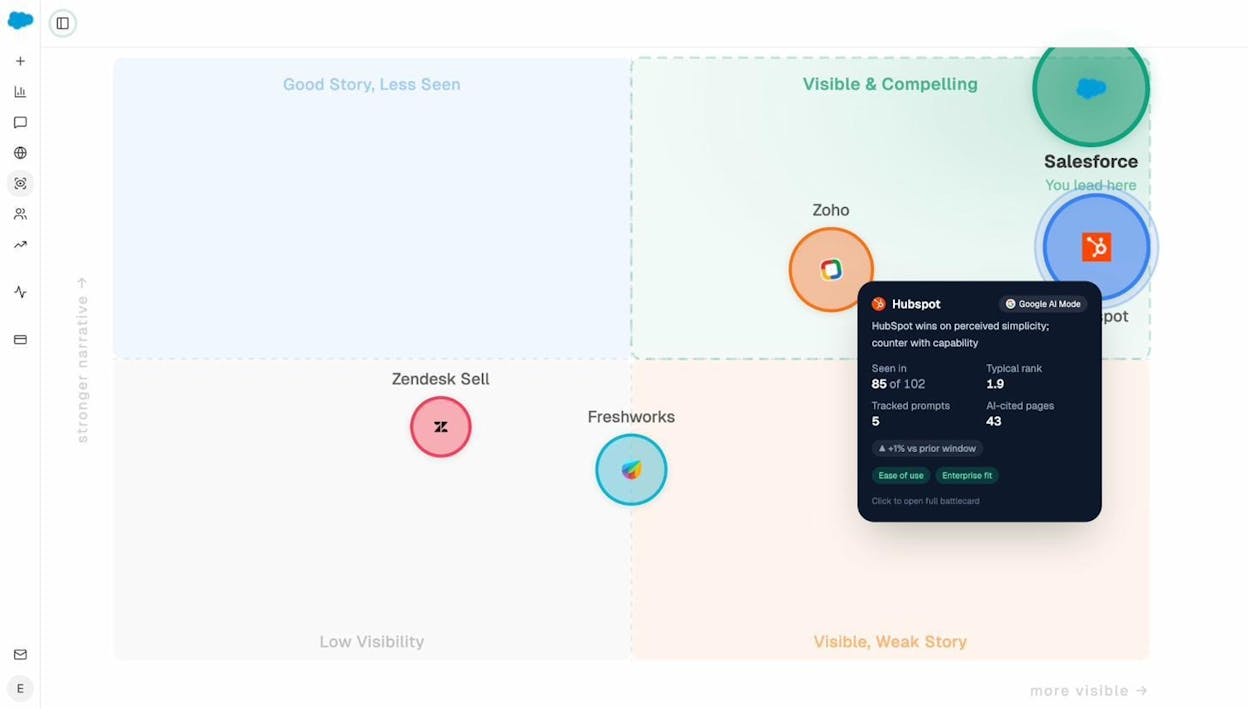
If AI engines already mention your brand positively, you can reference this in your outreach. Being cited by ChatGPT or Perplexity adds credibility that a brand-new site otherwise would not have. You are using AI sentiment data to build trust faster.
Skyscraper Technique Checklist
Before you launch your next campaign, run through this checklist.
|
Phase |
Task |
Done? |
|---|---|---|
|
Research |
Found a target article with 50+ referring domains |
☐ |
|
Research |
Verified the topic aligns with your niche and audience |
☐ |
|
Research |
Analyzed why the original earned links (data, comprehensiveness, tools) |
☐ |
|
Research |
Checked AI search citations for the same topic using Analyze AI Sources |
☐ |
|
Creation |
Improved on at least 2 of 5 dimensions (depth, freshness, design, data, tools) |
☐ |
|
Creation |
Article includes original insight, data, or perspective |
☐ |
|
Creation |
Content is well-structured with clear headings and visuals |
☐ |
|
Outreach |
Pulled backlinks from the original article and 3+ competing pages |
☐ |
|
Outreach |
Filtered and segmented prospect list by linking context |
☐ |
|
Outreach |
Have 200+ qualified prospects |
☐ |
|
Outreach |
Wrote custom outreach emails for each segment |
☐ |
|
Tracking |
Set up prompt tracking for relevant AI search queries |
☐ |
|
Tracking |
Monitoring AI traffic to the published page |
☐ |
Final Thoughts
The Skyscraper Technique works when you treat it as a framework rather than a script. Find content that has proven it can earn links. Create something meaningfully better. Promote it to the right people with personalized outreach.
The technique fails when people cut corners. Using the same template as everyone else, inflating word count instead of adding value, and ignoring brand are all shortcuts that lead to disappointing results.
And here is the part most guides miss. The Skyscraper Technique today is not just about backlinks. Every piece of comprehensive, well-structured content you create also positions you for AI search citations. AI models are looking for the same thing human linkers are looking for: the best resource on a topic.
Build content worth citing, promote it to people who care, and track the results across both traditional and AI search channels. That is how you get results with the Skyscraper Technique in 2026.

Ernest

Ibrahim


